



common oat
(Avena sativa)
Conservation • Wetland • Description • Habitat • Ecology • Use • Distribution • Taxonomy
Conservation Status |
|
|||||||
| IUCN Red List | not listed |
|||||||
| NatureServe | NNA - Not applicable SNA - Not applicable |
|||||||
| Minnesota | not listed |
|||||||
Wetland Indicator Status |
||||||||
| Great Plains | FACU - Facultative upland |
|||||||
| Midwest | FACU - Facultative upland |
|||||||
| Northcentral & Northeast | FACU - Facultative upland |
|||||||
Description |
||
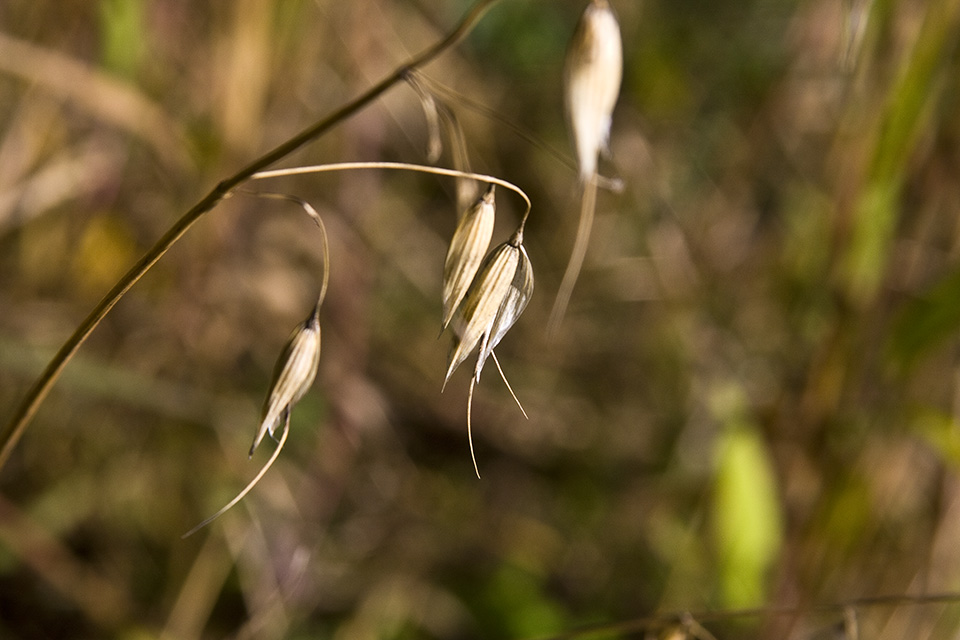
Most of the spikelets have 2 flowers. The florets do not readily separate from the glume. The lemma is hairless. The seed head usually has no awn or an imperfectly developed awn. Sometimes it has a single, ¾″ to 1½″ long awn. When the awn is present it is straight or arched but is unbent or weakly bent, and it is not twisted. The awn drops when the seed is ripe. |
||
Height |
||
16″ to 71″ |
||
Similar Species |
||
Wild oat (Avena fatua) is a more vigorous plant. Most spikelets have 3 flowers. The florets readily separate from the glume. The lemma is densely hairy on the backside. The seed head has 2 awns that are twisted, appearing spiraled, especially near the base, and has an abrupt, knee-like bend. |
||
Habitat |
||
|
||
Ecology |
||
Flowering |
||
|
||
Pests and Diseases |
||
|
||
Use |
||
|
||
Distribution |
||||
|
Sources |
|||
Nativity |
||||
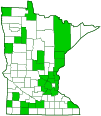
Common oat is a cultivated plant and is not native anywhere. It occasionally escapes cultivation, but it rarely persists. It is not naturalized. |
||||
Occurrence |
||||
|
||||
Taxonomy |
|||
| Kingdom | Plantae (Plants) | ||
| Subkingdom | Pteridobiotina | ||
| Phylum | Tracheophyta (Vascular Plants) | ||
| Class | Liliopsida (Monocots) | ||
Order |
Poales (grasses, sedges, cattails, and allies) | ||
Family |
Poaceae (grasses) | ||
| No Rank | BOP clade | ||
| Subfamily | Pooideae | ||
| Supertribe | Poodae | ||
| Tribe | Poeae | ||
| Subtribe | Aveninae | ||
Genus |
Avena (oats) | ||
Synonyms |
|||
Avena byzantina Avena fatua var. sativa Avena hybrida Avena sativa var. orientalis |
|||
Common Names |
|||
common oat common oats oat oatgrass oats red oat side oat tree oat wild oats |
|||
Glossary
Awn
A stiff, bristle-like appendage at the tip of the glume, lemma, or palea of grass florets.
Glume
A chaffy, empty, sterile bract at the base of a grass spikelet. Glumes usually occur in pairs, but occasionally only one is present.
Lemma
The outer, lowermost of the pair of bracts at the base of the grass floret; it ensheaths the palea.
Spikelet
The basic unit of inflorescence in grasses, composed of usually two glumes and one or more florets.
Visitor Photos |
|||||
Share your photo of this plant. |
|||||
| This button not working for you? Simply email us at info@MinnesotaSeasons.com. Attach one or more photos and, if you like, a caption. |
|||||
|
|||||
MinnesotaSeasons.com Photos |
|||||
 |
 |
||||
 |
|||||

Slideshows |
||
| Avena sativa (with translation text) cortesdm |
||
About
Uploaded on May 17, 2011 http://www.ars-grin.gov/cgi-bin/npgs/html/genus.pl?1190 |
||
Visitor Videos |
|||
Share your video of this plant. |
|||
| This button not working for you? Simply email us at info@MinnesotaSeasons.com. Attach a video, a YouTube link, or a cloud storage link. |
|||
Other Videos |
|||

Visitor Sightings |
|||||
Report a sighting of this plant. |
|||||
| This button not working for you? Simply email us at info@MinnesotaSeasons.com. Be sure to include a location. |
|||||
|
|||||
MinnesotaSeasons.com Sightings |
|||||
|
Created: Last Updated: © MinnesotaSeasons.com. All rights reserved. |