Canadian Toad - Species Profile
Conservation • Description • Habitat • Ecology • Distribution • Taxonomy
Conservation Status
IUCN Red List
LC - Least Concern
NatureServe
NNR - Unranked
S4 - Apparently Secure
Minnesota
not listed
Description
Canadian Toad is a large true toad. It occurs in Canada from Manitoba west to eastern Alberta, and in the United States from western Minnesota west to eastern North Dakota and South Dakota. It is found in or near water, in areas with relatively soft soil, in prairies, grasslands, and aspen parklands.
Adult females are 2¼″ to 3⅛″ (56 to 80 mm) in length. Males tend to be a little smaller, 2¼″ to 2⅝″ (56 to 68 mm) in length. The body is stocky.
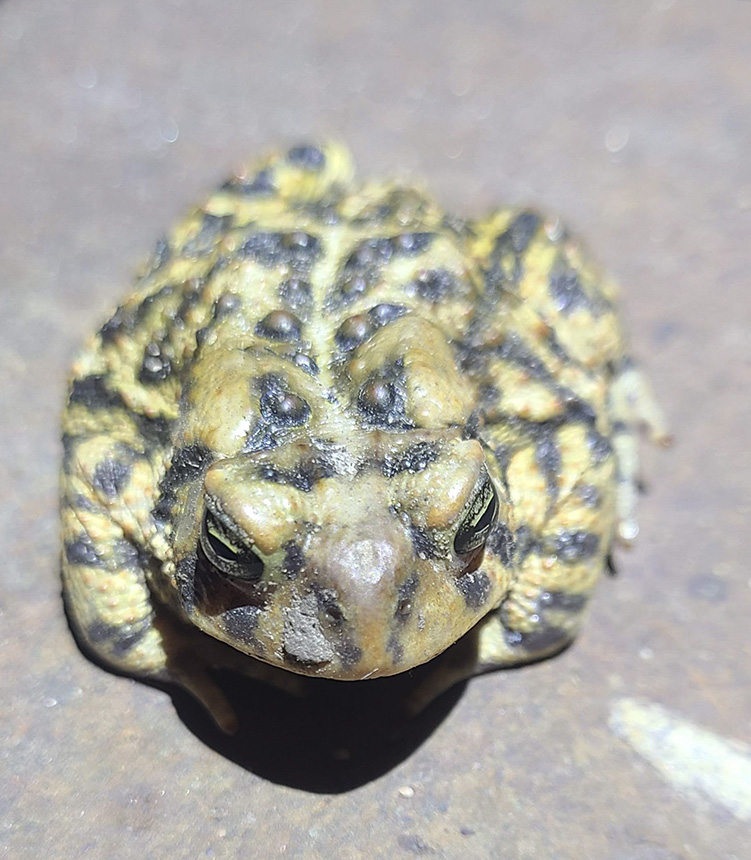
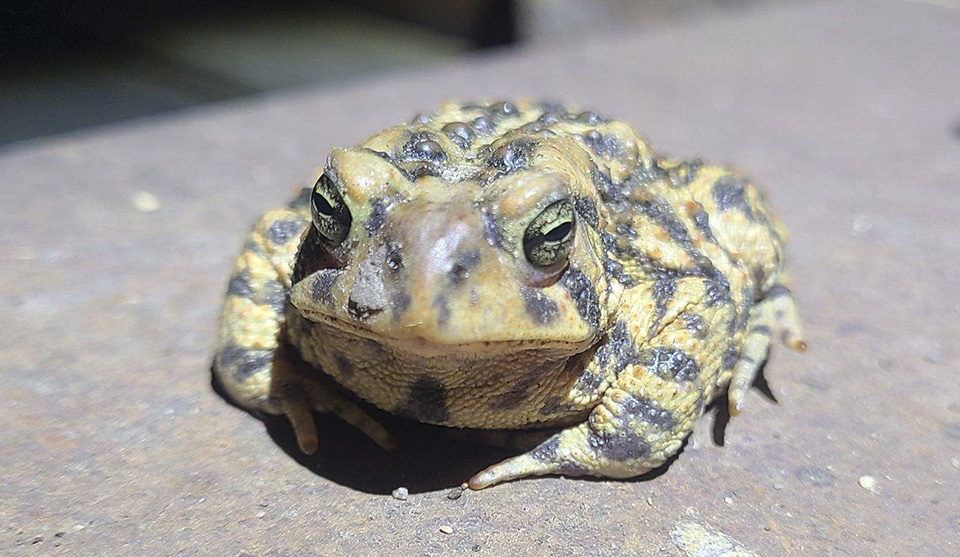
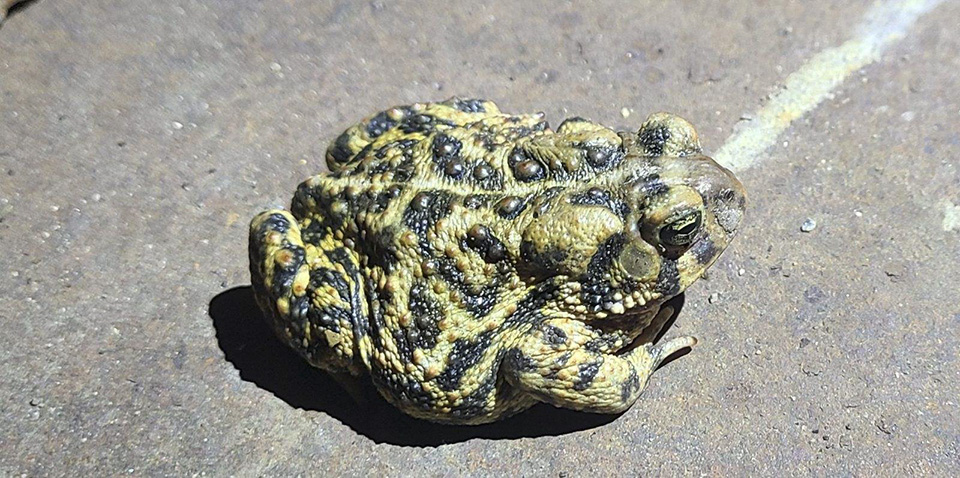
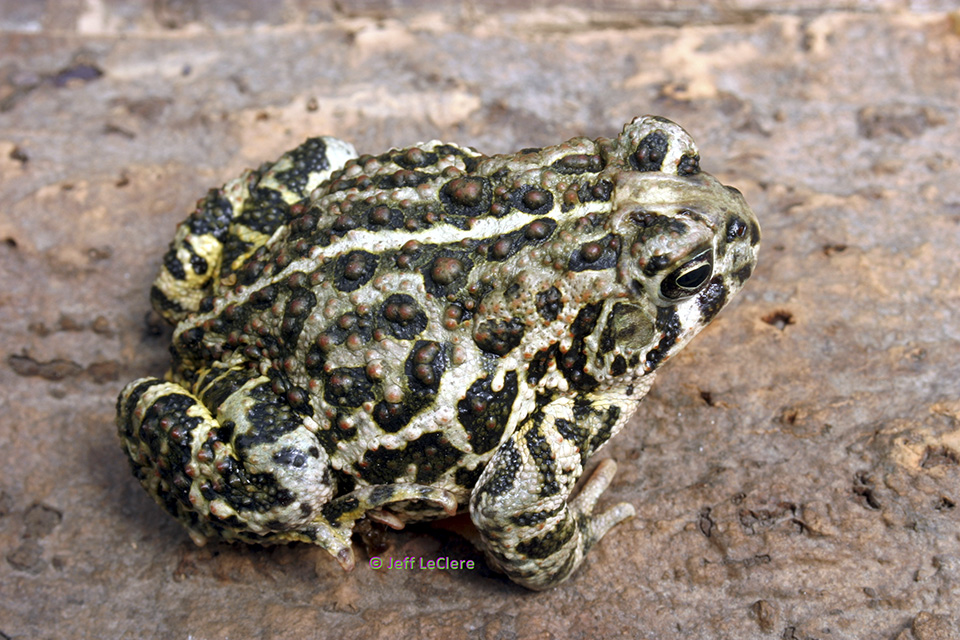
The skin is bumpy. The overall color appears brown or olive to gray. On the upper side there are two or three rows of elongated dark patches on cream-colored skin. There is often a cream-colored stripe down the middle of the back. The patches are paired, but one may be a different size and shape than its opposite. Each patch has one to a few small warts. There are similar but smaller spots on the sides of the body and on the legs.
The belly is white or cream-colored with black and gray marks.
Behind each eye there is a narrow swelling. These are the paratoid glands, which secrete a toxin to discourage predators. There are 2 cranial ridges between the eyes, but these fuse together to form a single bump (boss) between the eyes.
Size
Female: 2¼″ to 3⅛″ (56 to 80 mm)
Male: 2¼″ to 2⅝″ (56 to 68 mm)
Voice
The call of the male is a high-pitched trill lasting 2 to 10 seconds.
Similar Species
Habitat
Ecology
Behavior
Lifespan
7 to 12 years in the wild
Life Cycle
Each year between May and July the female lays single gelatinous strings of 2,000 to 7,000 eggs in the shallow water of lakes, ponds, slow streams, marshes, and roadside ditches. In one year, she may lay up to 20,000 eggs. The eggs hatch in 3 to 12 days.
In late August or September, congregations of more than 100 adults burrow into the earth, creating large mounds (mima mounds) with individual chambers in which they spend the fall and winter.
Tadpole Food
Adult Food
Worms, spiders, beetles, ants, and other insects.
Mostly insects, especially beetles and ants, but also spiders.
Distribution
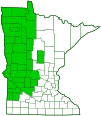
Sources
Biodiversity occurrence data published by: Minnesota Biodiversity Atlas (accessed through the Minnesota Biodiversity Atlas Portal, bellatlas.umn.edu. Accessed 1/1/2026).
USGS National Amphibian Atlas. https://armi.usgs.gov/atlas/. Accessed 1/1/2026).
Occurrence
Taxonomy
Class
Amphibia (Amphibians)
Order
Anura (Frogs and Toads)
Family
Bufonidae (True Toads)
Genus
Anaxyrus (North American Toads)
Species
This species was formerly classified Bufo hemiophrys. In 2006 all North American true toads (family Bufonidae) were transferred out of the genus Bufo by Frost et al., and several new genera were created.
Subordinate Taxa
Synonyms
Bufo americanus hemiophrys
Bufo hemiophrys
Bufo hemiophrys hemiophrys
Bufo woodhousei hemiophrys
Common Names
Canadian Toad