



Virginia bluebells
(Mertensia virginica)
Conservation • Wetland • Description • Habitat • Ecology • Use • Distribution • Taxonomy
Conservation Status |
|
|||||||
| IUCN Red List | not listed |
|||||||
| NatureServe | N5? - Secure SNR - Unranked |
|||||||
| Minnesota | not listed |
|||||||
Wetland Indicator Status |
||||||||
| Midwest | FACW - Facultative wetland |
|||||||
| Northcentral & Northeast | FAC - Facultative |
|||||||
Description |
||
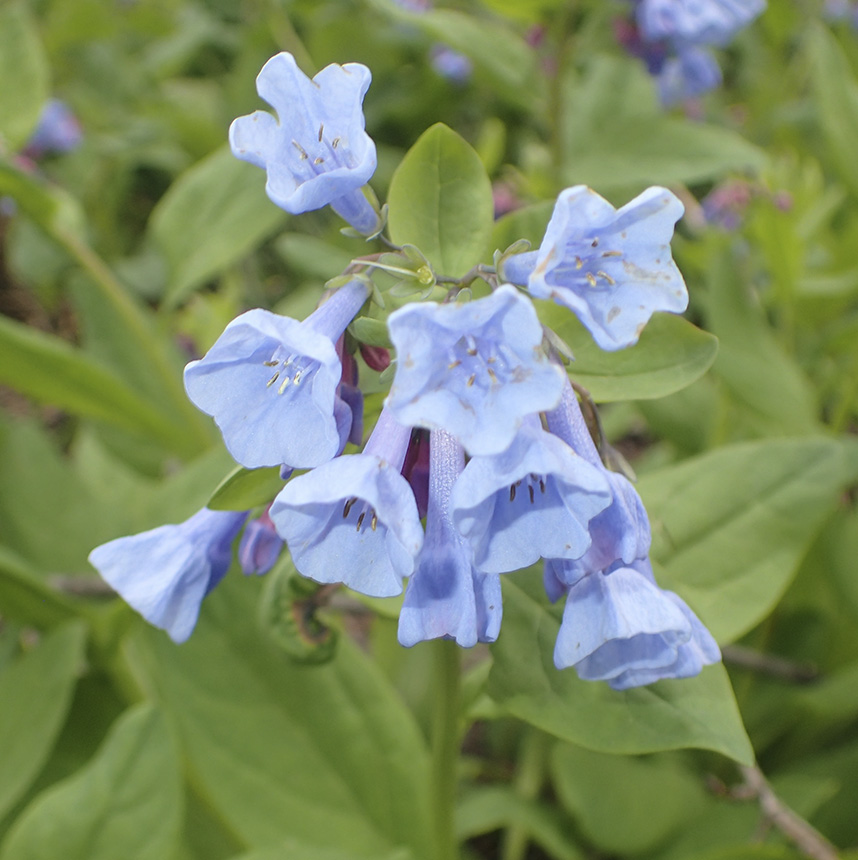
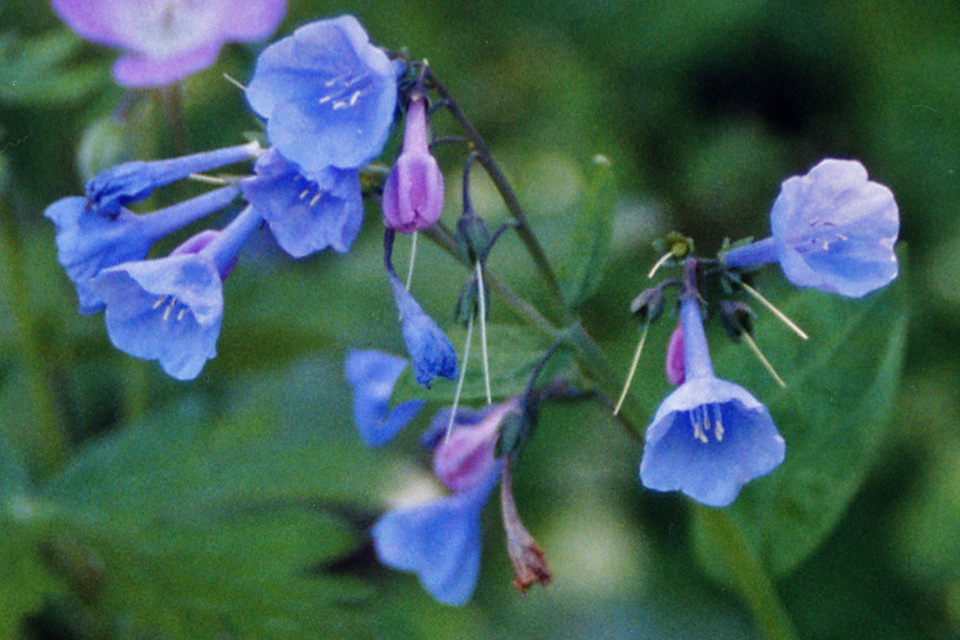
Virginia bluebells is a 12″ to 26″ tall, erect to ascending, perennial forb that rises on usually multiple stems from a caudex. It often forms colonies. The stems are fragile, fleshy, leafy, hairless, and branching near the top. The leaves are alternate, elliptic to egg-shaped with the attachment at the wide end or inversely egg-shaped with the attachment at the narrow end, 2″ to 6″ long, and up to 4⅓″ wide. They are hairless and have a soft, floppy texture. Lower leaves taper at the base to a winged leaf stalk up to 6″ long. Upper leaves are on a shorter stalk and have rounded tips. The uppermost leaves are greatly reduced in size and are attached to the stem without a leaf stalk. The margins are untoothed. The inflorescence is is a small, branched cluster at the end of the stems. The cluster is on a hairless stalk. The flowers are trumpet-shaped, ¾″ to 1″ long. There are 5 petals that are purplish pink when in bud, gradually turning light blue as they unfold. They are fused at the base into a tube that flares outward at the tip with 5 shallow lobes. The tube is longer than the expanded portion of the corolla (limb). The individual flowers are never subtended with leafy bracts. The fruit is 4 wrinkled nutlets. |
||
Height |
||
12″ to 26″ |
||
Flower Color |
||
Blue |
||
Similar Species |
||
Tall bluebells (Mertensia paniculata var. paniculata) is a taller, hairy, never colonial plant with smaller flowers. It reaches up to 40″ in height. The stems may be hairy. The leaves are hairy on both surfaces. Stem leaves have pointed tips. The flowers are ⅓″ to ½″ long. The corolla tube is 1.2 to 1.6 times as long as the tube. |
||
Habitat |
||
Moist to wet. Woods, river bottoms. |
||
Ecology |
||
Flowering |
||
May to June |
||
Pests and Diseases |
||
|
||
Use |
||
|
||
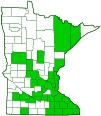
Distribution |
||||
|
Sources |
|||
| 4/22/2023 | ||||
Nativity |
||||
Native |
||||
Occurrence |
||||
|
||||
Taxonomy |
|||
| Kingdom | Plantae (Plants) | ||
| Subkingdom | Pteridobiotina | ||
| Phylum | Tracheophyta (Vascular Plants) | ||
| Class | Magnoliopsida (Dicots) | ||
Order |
Boraginales (borages) | ||
Family |
Boraginaceae (borage) | ||
| Subfamily | Cynoglossoideae | ||
| Tribe | Asperugeae | ||
Genus |
Mertensia (bluebell) | ||
| Section | Mertensia | ||
Subordinate Taxa |
|||
|
|||
Synonyms |
|||
Mertensia pulmonarioides |
|||
Common Names |
|||
bluebells eastern bluebells Roanoke-bells Virginia bluebells Virginia cowslip |
|||
Glossary
Bract
Modified leaf at the base of a flower stalk, flower cluster, or inflorescence.
Caudex
A short, thickened, woody, persistent enlargement of the stem, at or below ground level, used for water storage.
Corolla
A collective name for all of the petals of a flower.
Limb
In flowers, the expanded portion of a petal, or the expanded part of a corolla, above the throat.
Winged leaf stalk
A leaf stalk with a leaf-like or membrane-like extension along both sides.
Visitor Photos |
|||||
Share your photo of this plant. |
|||||
| This button not working for you? Simply email us at info@MinnesotaSeasons.com. Attach one or more photos and, if you like, a caption. |
|||||
Babette Kis |
|||||
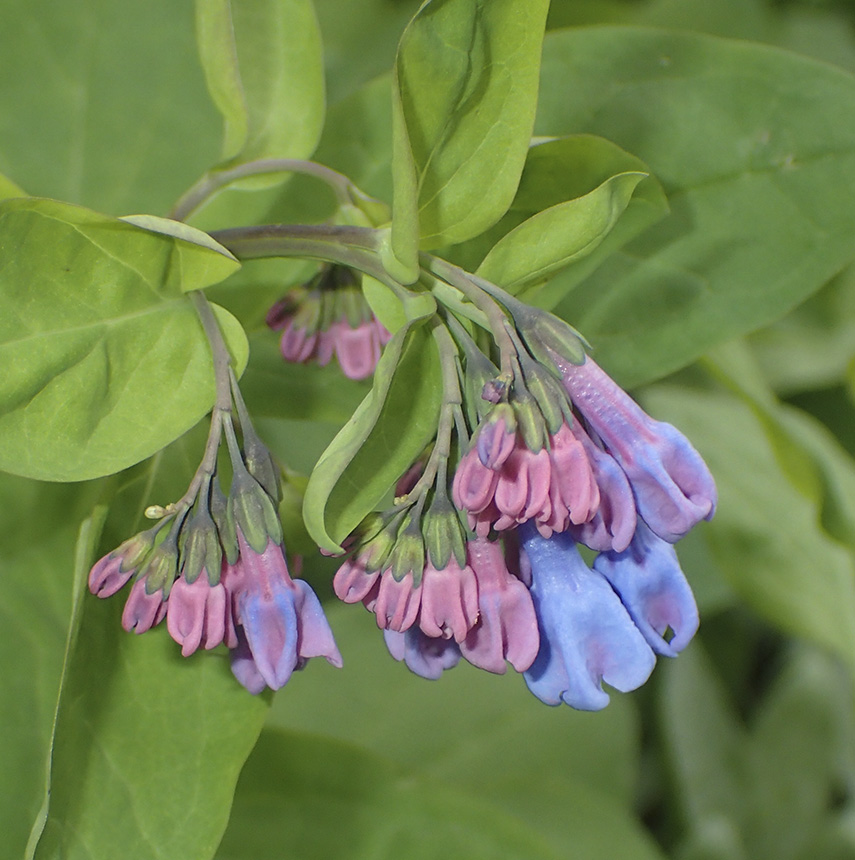
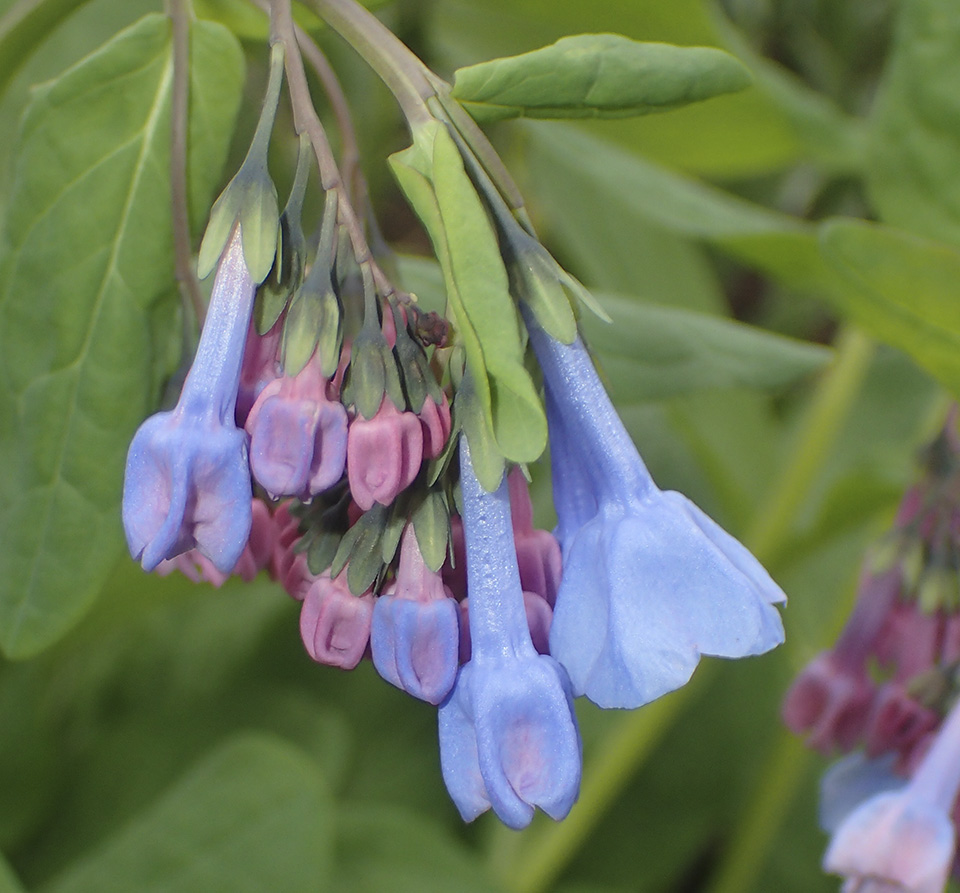
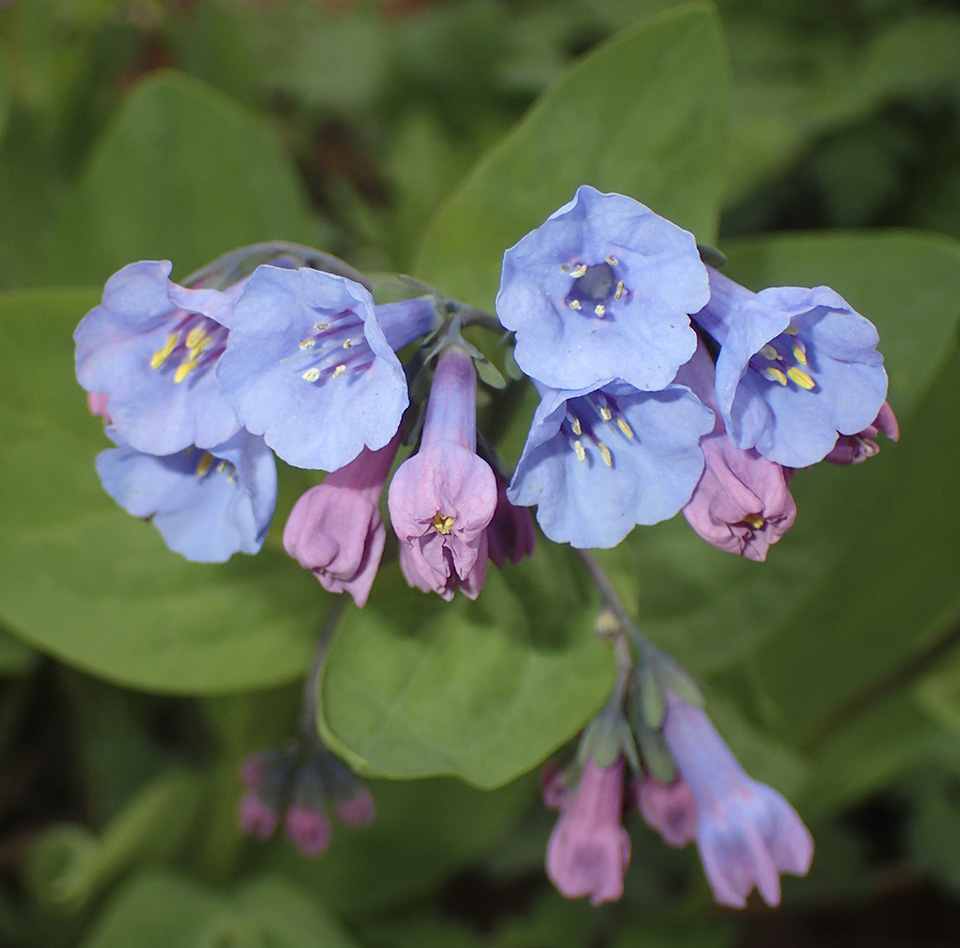
Mertensia virginica, Virginia bluebells A good spring for pictures of the subject woodland plant. They're growing in a mesic woodland with American beech and sugar maple in Racine County, WI. |
 |
||||
 |
 |
||||
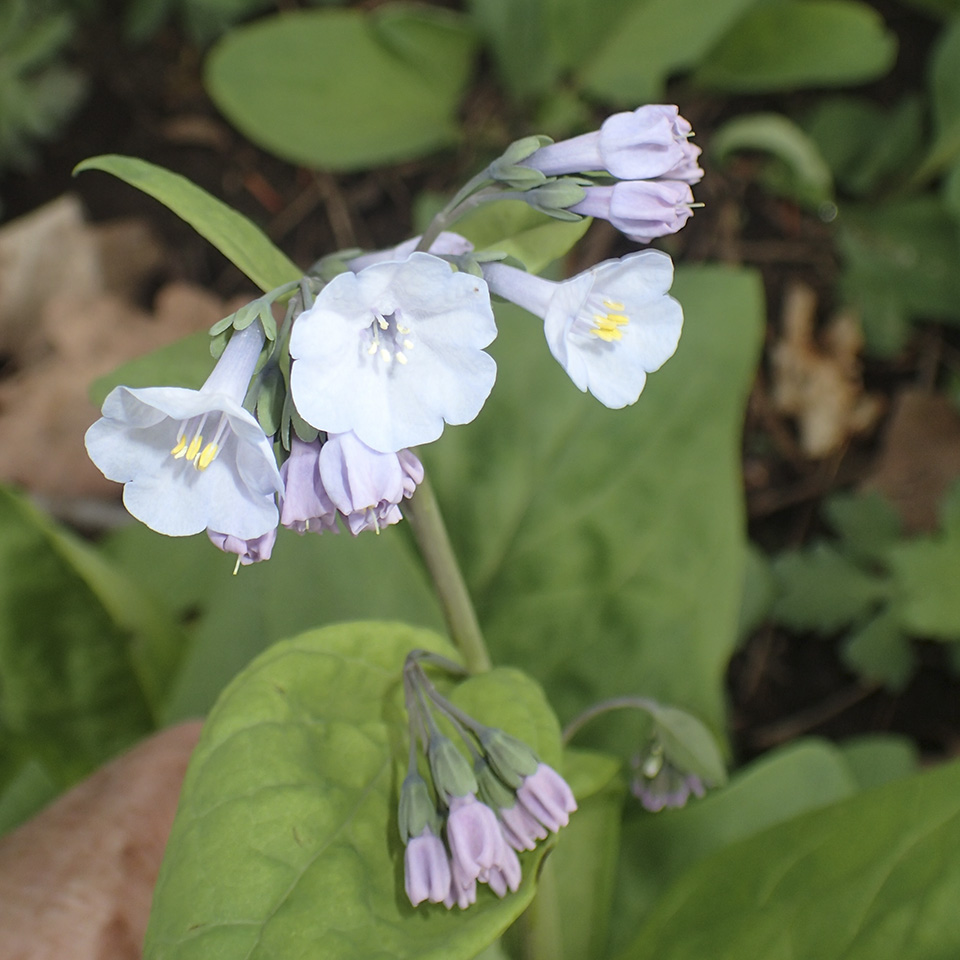
Nice color variation in these native plants, medium blue to almost white. |
 |
||||
 |
|||||
MinnesotaSeasons.com Photos |
|||||
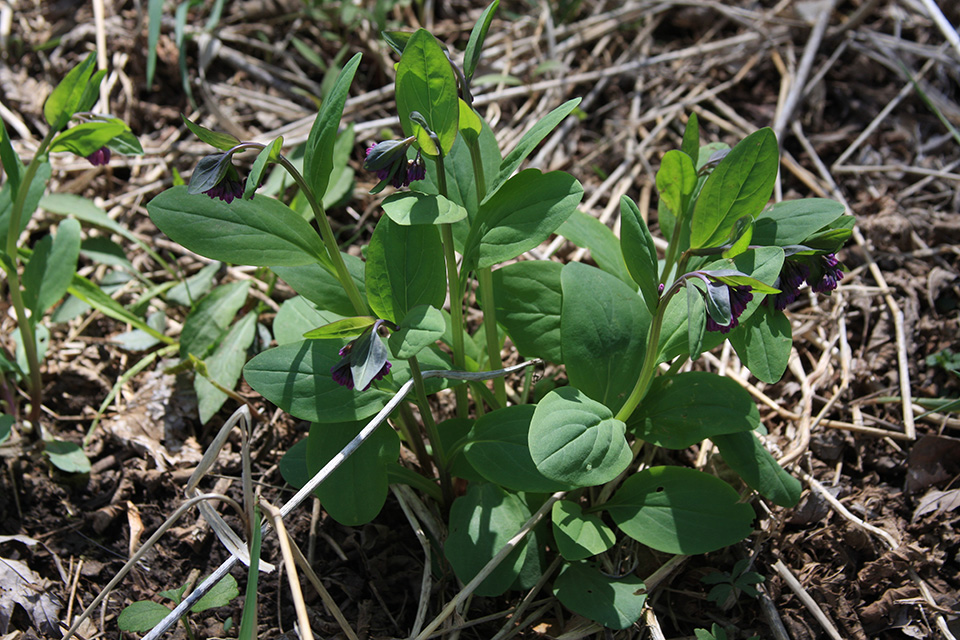
Young plant |
|||||
 |
|||||
Inflorescence |
|||||
 |
|||||

Slideshows |
||
| Virginia Bluebell J.Steinbock |
||
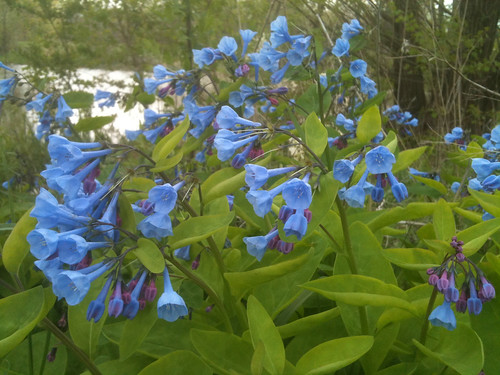
|
||
| Mertensia virginica (Virginia Bluebells) Allen Chartier |
||
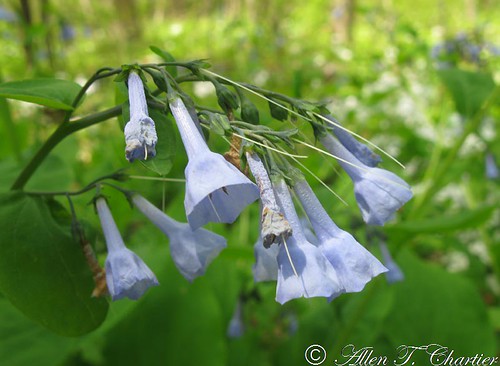
|
||
Visitor Videos |
|||
Share your video of this plant. |
|||
| This button not working for you? Simply email us at info@MinnesotaSeasons.com. Attach a video, a YouTube link, or a cloud storage link. |
|||
Other Videos |
|||
| Virginia Bluebells (Mertensia virginica) PrairieMoonNursery |
|||
About
Uploaded on Jun 4, 2010 http://www.prairiemoon.com - Early May at Prairie Moon Nursery brings the beautiful Virginia Bluebells found in a wooded edge location. |
|||
| Virginia Bluebells (Mertensia virginica) wvoutdoorman |
|||
About
Published on Apr 4, 2012 Virginia Bluebells (Mertensia virginica) |
|||
| Bluebells,Virginia. Mertensia virginica evansmedia1 |
|||
About
Uploaded on Apr 13, 2011 McCprmick's Creek State Park has an abundance of Virginia Bluebells. filmed near what is called the old state house quarry, ( no bluebells were harmed in the making of this film ) Late afternoon April 13 2011 . McCormick's Creek State Park is located just east of Spencer, Indiana. |
|||

Visitor Sightings |
|||||
Report a sighting of this plant. |
|||||
| This button not working for you? Simply email us at info@MinnesotaSeasons.com. Be sure to include a location. |
|||||
| Babette Kis 9/21/2020 |
Location: oak hickory woods near Barnes Prairie, Racine Co. WI on shagbark hickory Best not to touch the hairs on these, they're irritating to the skin. |
 |
|||
MinnesotaSeasons.com Sightings |
|||||
|
Created: Last Updated: © MinnesotaSeasons.com. All rights reserved. |