



sundial lupine
(Lupinus perennis var. perennis)
Conservation • Description • Habitat • Ecology • Use • Distribution • Taxonomy
Conservation Status |
|
|||||||
| IUCN Red List | not listed |
|||||||
| NatureServe | N3-N4 - Vulnerable to Apparently Secure SNR - Unranked |
|||||||
| Minnesota | not listed |
|||||||
Description |
||
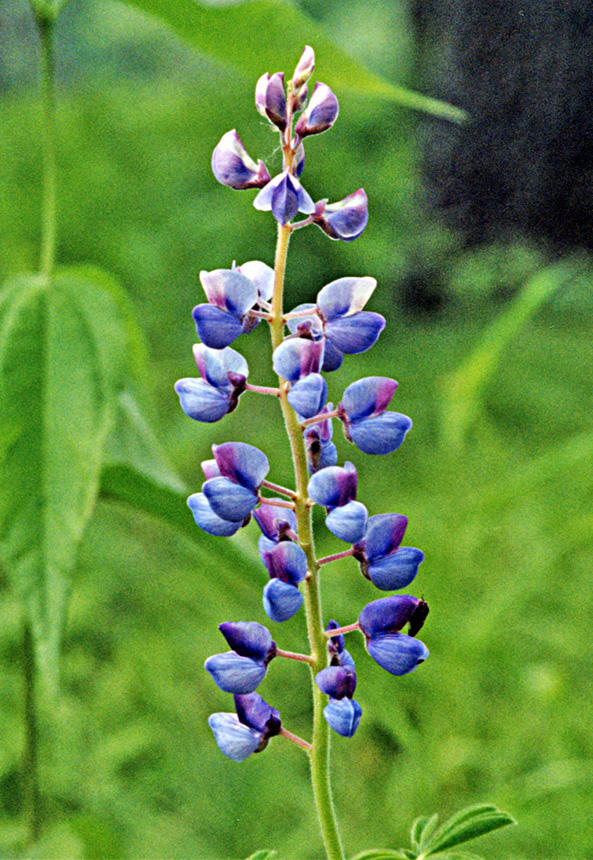
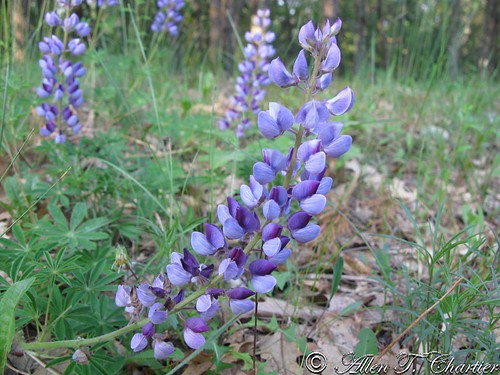
Sundial lupine is a 8″ to 24″ tall, erect, perennial forb that rises on numerous stems from a well-developed taproot. In its first year of growth this produces a rosette of basal leaves. In the second year it sends up several leafy, flowering stems. The stems are more or less erect, slightly hairy, and marked with fine, vertical, parallel lines. Stem leaves are alternate on ¾″ to 2⅓″ long leaf stalks. They are palmately divided into 7 to 11 leaflets. The leaflets inversely lance-shaped with the attachment at the narrow end, ¾″ to 2″ long, with a blunt tip. The upper surface is hairless. The lower surface is thinly hairy. The leaf stalks are longer than the leaflets. The inflorescence is an erect, 4″ to 8″ long cluster at the ends of the stems. The clusters are unbranched, sparsely flowered, and cone-shaped at the top. The flowers are about 1″ long and pea-like. The 5 petals are blue varying to pink and white, and are organized into a banner, 2 wings, and a keel formed by two petals fused together at the tip. The upper petal is shorter than the wings. The keel has a marginal fringe of hairs The fruit is a yellow-grayish-brown, hairy, oblong, flattened pod with 5 or 6 seeds. |
||
Height |
||
8″ to 24″ |
||
Flower Color |
||
Blue |
||
Similar Species |
||
Bigleaf lupine (Lupinus polyphyllus var. polyphyllus) reaches 40″ at maturity. Its leaves are divided into 11 to 17 leaflets with pointed tips. The inflorescence is densely flowered. |
||
Habitat |
||
Dry to moderate moisture. Prairies, open woods. Full to partial sun. |
||
Ecology |
||
Flowering |
||
May to June |
||
Pests and Diseases |
||
|
||
Use |
||
Sundial lupine is the only plant used as food by the larva of the endangered Karner Blue butterfly. |
||
Distribution |
||||
|
Sources |
|||
| 2/20/2023 | ||||
Nativity |
||||
Native |
||||
Occurrence |
||||
Locally common |
||||
Taxonomy |
|||
| Kingdom | Plantae (Plants) | ||
| Subkingdom | Pteridobiotina | ||
| Phylum | Tracheophyta (Vascular Plants) | ||
| Class | Magnoliopsida (Dicots) | ||
Order |
Fabales (Legumes, Milkworts, and Allies) | ||
Family |
Fabaceae (Legumes) | ||
| Subfamily | Faboideae | ||
| Tribe | Genisteae (brooms, lupines, and allies) | ||
| Genus | Lupinus (lupines) | ||
| Species | Lupinus perennis (sundial lupine) | ||
| Subspecies | Lupinus perennis ssp. perennis (sundial lupine) | ||
Variety of a Subspecies |
|||
Synonyms |
|||
Lupinus perennis f. bicolor Lupinus perennis f. leucanthus Lupinus perennis f. roseus |
|||
Common Names |
|||
lupine sundial sundial lupine wild blue lupine wild lupine |
|||
Glossary
Palmate
Similar to a hand. Having more than three lobes or leaflets that radiate from a single point at the base of the leaf.
Visitor Photos |
|||||
Share your photo of this plant. |
|||||
| This button not working for you? Simply email us at info@MinnesotaSeasons.com. Attach one or more photos and, if you like, a caption. |
|||||
Bill Reynolds |
|||||
 |
|||||
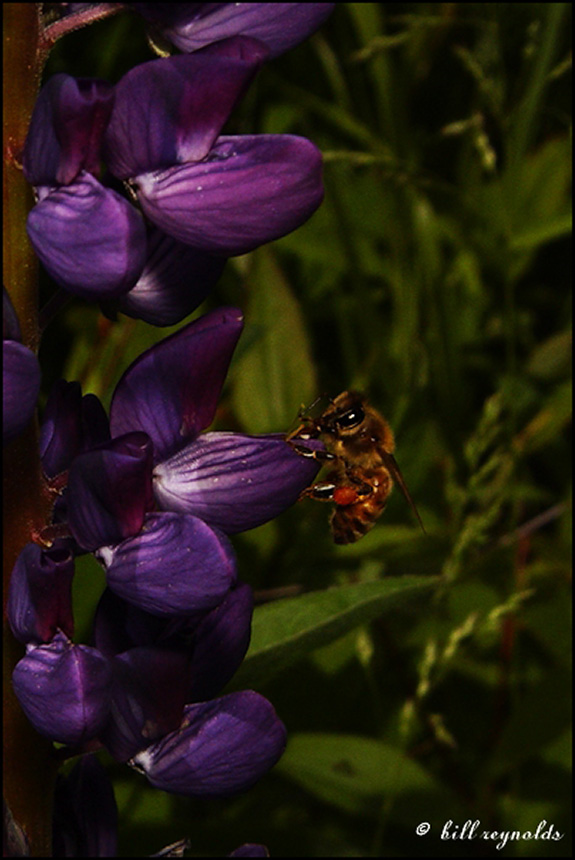
The honeybee is attempting access. They need to separate the petals before entering. |
 |
||||
MinnesotaSeasons.com Photos |
|||||
|
|||||

Slideshows |
||
| Lupinus perennis (Wild Lupine) Allen Chartier |
||
|
||
Visitor Videos |
|||
Share your video of this plant. |
|||
| This button not working for you? Simply email us at info@MinnesotaSeasons.com. Attach a video, a YouTube link, or a cloud storage link. |
|||
Other Videos |
|||
| Minnesota Native Plant - Wild Lupine (Lupinus Perennis) MNNativePlants |
|||
About
Published on Jun 9, 2013 This video shows the Minnesota Native, Lupinus Perennis, or Wild Lupine. |
|||
| Lupinus perennis (Wild lupine) Derelict Drifter |
|||
About
Published on Aug 20, 2012 Does anyone know if this is edible? |
|||
| Nelson 3 - Wild Lupine.MP4 newenglandwild |
|||
About
Uploaded on Nov 2, 2010 New England Wild Flower Society Horticulture Intern Nelson discusses Lupinus perennis (sundial lupine or wild lupine) in Garden in the Woods' New England Garden of Rare and Endangered Plants. |
|||

Visitor Sightings |
|||||
Report a sighting of this plant. |
|||||
| This button not working for you? Simply email us at info@MinnesotaSeasons.com. Be sure to include a location. |
|||||
| Bill Reynolds 6/23/2004 |
Location: St. Louis Co. MN The honeybee is attempting access. They need to separate the petals before entering. |
|
|||
MinnesotaSeasons.com Sightings |
|||||
|
Created: Last Updated: © MinnesotaSeasons.com. All rights reserved. |