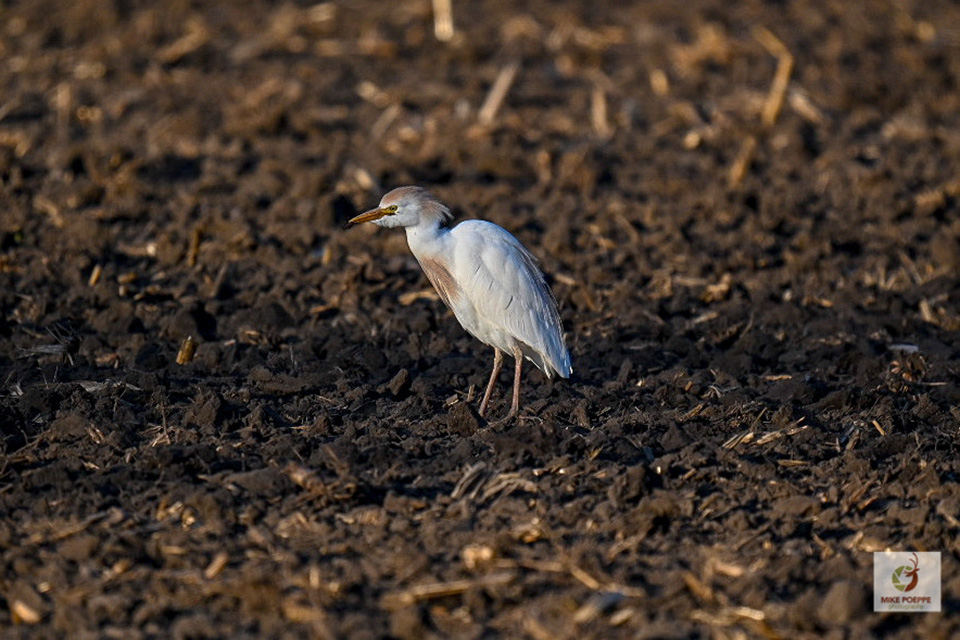
Western Cattle-Egret

(Ardea ibis)

Information

Western Cattle-Egret - Species Profile

Western Cattle-Egret - Featured photo
Photo by Kelly Krabbenhoft

Conservation Status

IUCN Red List

LC - Least Concern

NatureServe

N5B, N5N - Secure Breeding and Nonbreeding
SNRB - Unranked Breeding

Minnesota

not listed

Description

The legs and bill are yellowish-orange.

Size

Total length: 19 to 21

Wingspan: 36

Voice

Similar Species


Habitat

Marshes, agricultural fields

Ecology

Migration

Spring and fall

Nesting


Diet


Distribution

Occurrence

Rare migrant, does not breed in Minnesota

Maps

The Minnesota Ornithologists’ Union All Seasons Species Occurrence Map

Taxonomy

Class

Aves (Birds)

Order

Pelecaniformes (Pelicans, Herons, and Allies)

Family

Ardeidae (Herons, Egrets, and Bitterns)

Subfamily

Ardeinae (Typical Herons and Egrets)

Genus

Ardea (Great Herons and Egrets)

Family

Herons, Egrets, and Bitterns (family Ardeidae) were formerly classified under the order Ciconiiformes. Based on a phylogenomic study published in 2008, the family was transferred to the order Pelecaniformes.

Species split

In 1988, McAllan and Bruce split the eastern and western races of Cattle-Egret, reclassifying the former to the Bubulcus coromandus. The split was not widely accepted for a long time. Finally, in 2023, the American Ornithological Society accepted the split, and in short order, so did most other sources.

Genus

In 2024, Cattle Egret was by the AOS moved to the genus Ardea and given the official name Western Cattle-Egret.

Subordinate Taxa


Synonyms

Bubulcus ibis

Egretta ibis
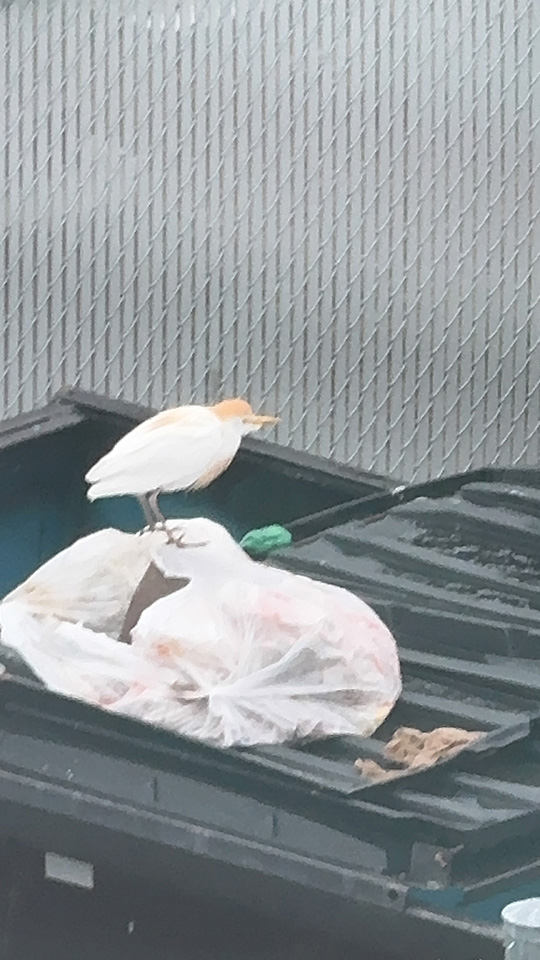
Photos

Visitor Photos

Share your photo of this bird.

This button not working for you?
Simply email us at info@MinnesotaSeasons.com.
Attach one or more photos and, if you like, a caption.

Mike Poeppe

Cattle egret

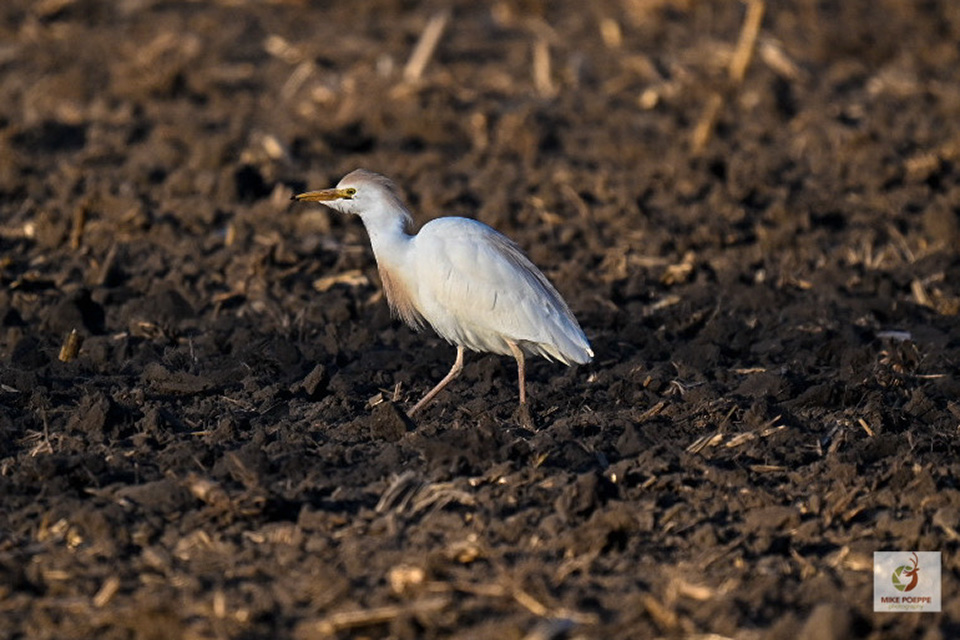
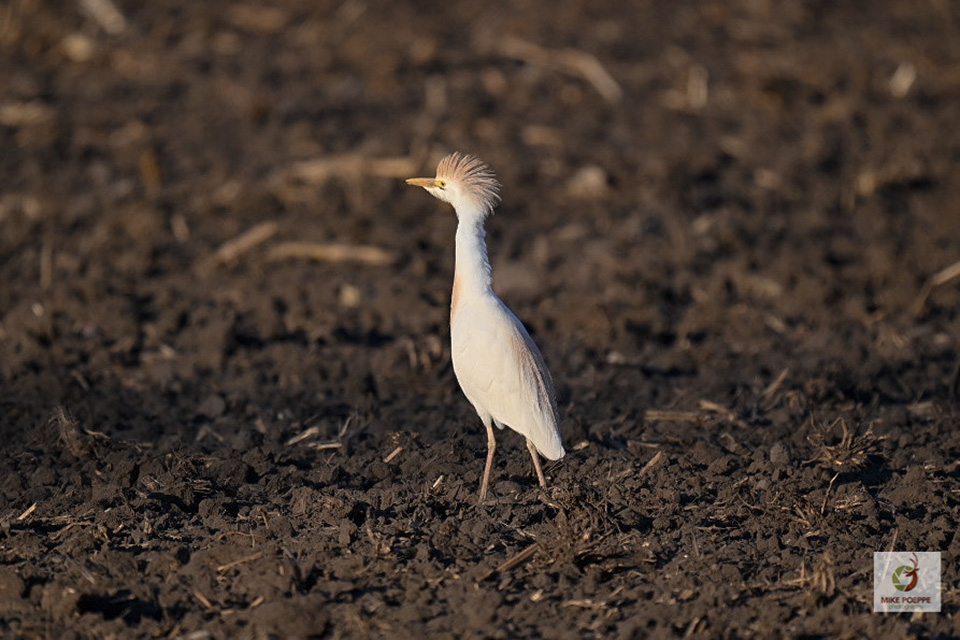
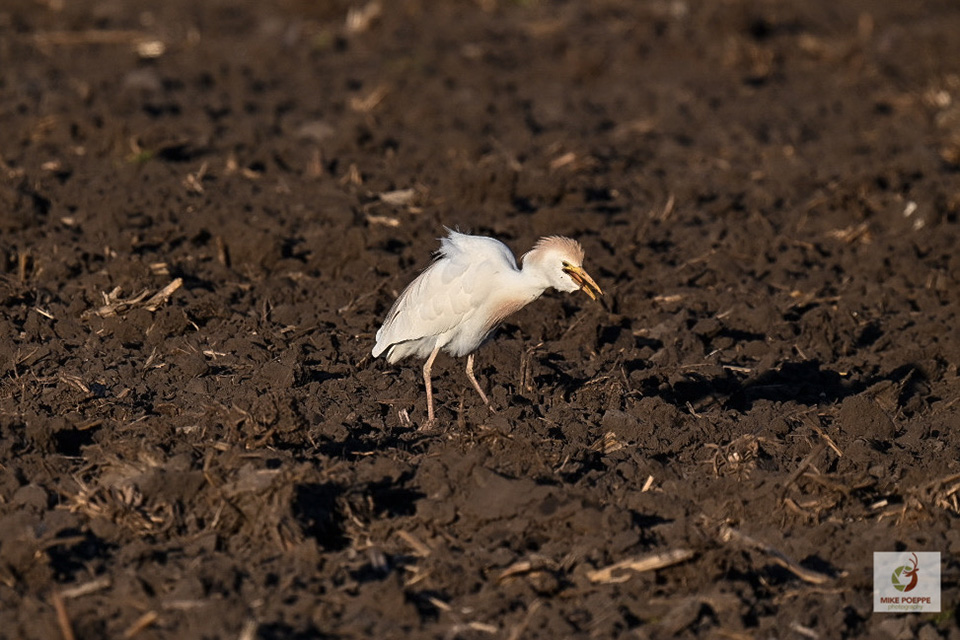
We had a visitor today just west of Houston.

Western Cattle-Egret 08
Western Cattle-Egret 09
Western Cattle-Egret 10
Western Cattle-Egret 11

Kelly Krabbenhoft

Neighbor was curious about bird in his hayland. Third day he had seen it. Photo attached from an hour observing catching caterpillars and grasshoppers.

Western Cattle-Egret 06
Western Cattle-Egret 07

E Barth

Western Cattle-Egret 05
Hanging with the cows

L Bergstrom

Hung around approx 3 hours in our yard and neighbors.

Western Cattle-Egret 01
Western Cattle-Egret 02
Western Cattle-Egret 03
Western Cattle-Egret 04

Minnesota Seasons Photos

Slideshows

Slideshows

Cattle-Egret
JMC Nature Photos

Cattle-Egret
Darlene Boucher

Bubulcus ibis
Dinis Cortes

Videos

Visitor Videos

Share your video of this bird.

This button not working for you?
Simply email us at info@MinnesotaSeasons.com.
Attach a video, a YouTube link, or a cloud storage link.

Avi Birds

Cattle Egret [Bubulcus Ibis]
Jan 11, 2023

About

In this video, we learn about the Cattle-Egret.

Other Videos

Cattle Egrets with Cattles
Menora James

About

Uploaded on Jul 8, 2011

The Egrets mostly followed the cattle. This I observed during my holidays. In this video you can see two egrets following a calf where ever he went. I think they are near them to eat the insects coming out of the grass when the cattle eat it.

I really enjoyed observing how they behaved and waited patiently around the calf. A few captures I missed and they were hilarious. They never left the cattle and seem to be attracted by a magnetic force !!

You can also see that they get on well with each otrher.

======================
Cattle-Egret - Bubulcus ibis
======================

The Cattle-Egret is a cosmopolitan species of heron (family Ardeidae) found in the tropics, subtropics and warm temperate zones. It is the only member of the monotypic genus Bubulcus, although some authorities regard its two subspecies as full species, the Western Cattle-Egret and the Eastern Cattle-Egret.Originally native to parts of Asia, Africa and Europe.

The bird is called a Cattle-Egret because it is mostly seen with grazing cattle, stalking energetically alongside the animals , running around them and in between their legs, all for seizing insects that are disturbed by the movement of cattle.

They spends most of its time in meadows or other open areas., Every day, the Cattle-Egret flies to a cattle herd, and spends the day feeding on bugs, spiders and other small animals. A delicacy for the Egrets is locusts -- when locusts swarms appear in steppes and meadows, a lot of Cattle-Egrets are sure to arrive, too. They also have no fear of humans.

Birds that feed around cattle's feet get more insects than those that feed elsewhere. The birds also sometimes sit on the animal's back and look around for possible prey, or pick off ticks from its back. Cattle don't seem to mind the presence of Cattle-Egrets.

This species differs from other Egrets in both appearance and behaviour.

The Cattle-Egret looks for food in meadows, Breeds and roosts in trees usually close to freshwater. Feeds in shallow wetlands, especially rice-paddies, but may also feed in dry grasslands.

These birds are medium-sized, reaching a length of 48-53 cm, with a wingspan of a little less than 1 meter.The bird has a short, muscular neck and when walking, the Egret looks clumsy, unlike the other Egret species that are always elegant and majestic.

In winter, both the sexes appear almost identical, with a creamy plumage, while the females' tends to be a bit lighter.

During the mating period, Cattle-Egret males grow a spectacular yellowish-orange feathers on their heads, chest and back, while the beak becomes almost red. The males, who are usually quite passive, become very loud and aggressive. The male finds a secluded place and starts showing off by stretching the neck and wings. About 10 females observe the male for quite some time, and later the male can choose one of them to mate with. After copulation, the pair finds a place for nesting -- small trees, bushes or water plants. Both the parents incubate eggs, and the chicks hatch after 24 days. Thirty days after hatching, the young Egrets start flying, and in 15 more days they become completely independent, and having a life expectancy of about 13 years.

Cattle-Egrets live in flocks of up to 20 specimen. . In the evening the group comes together again and finds a place to drink. It's interesting that Cattle-Egrets don't mind other bird colonies in their territory, and there can be up to 100 bird nests in a single tree.

BTO Bird ID - Cattle Egret
BTOvideo

About

Published on Dec 16, 2015

A white heron in the UK is likely to be a Little or Great White Egret. Occasionally Cattle-Egrets turn up, and some even stay to breed. How can you pick one of these wanderers out?

cattle egret
Wim Spronk

About

Published on Jun 10, 2013

Strange behaviour of Cattle-Egret. It moves its head from side to side with a strange movement of the neck. Could it be that it is gauging the distance to its prey?Like owls and shore birds do? But it does it while it is not hunting as well.

Cattle Egret (Bubulcus ibis) HD Video Clip 1/1
Tim Siggs

About

Published on Aug 4, 2015

The Cattle-Egret is a very familiar bird of open country, especially as the name implies, where livestock exist. It is a widespread species in many other countries including Asia, Europe and Africa. In Winter, the plumage is totally White however, in breeding plumage, the head and neck becomes orange. The Cattle-Egret breeds communally in dense colonies which are both noisy and smelly. These birds were filmed in the Lockyer Valley in South East Queensland.

Cattle egret eating ticks
Lynette Rudman

About

Published on Jun 30, 2016

Watch how this Western Cattle-Egret pulls ticks off a cow that is resting and chewing her cud, by Lynette Rudman.

Sightings

Visitor Sightings

Report a sighting of this bird.

This button not working for you?
Simply email us at info@MinnesotaSeasons.com.
Be sure to include a location.

Mike Poeppe
4/19/2026

Western Cattle-Egret

Location: west of Houston, MN

We had a visitor today just west of Houston.

Kelly Krabbenhoft
10/28/2024

Western Cattle-Egret

Location: Near Akeley, MN

Neighbor was curious about bird in his hayland. Third day he had seen it. Photo attached from an hour observing catching caterpillars and grasshoppers.

E Barth
5/2/2024

Western Cattle-Egret

Location: Elizabeth MN

Hanging with the cows

L Bergstrom
5/3/2022

Western Cattle-Egret

Location: Clarks Grove, MN

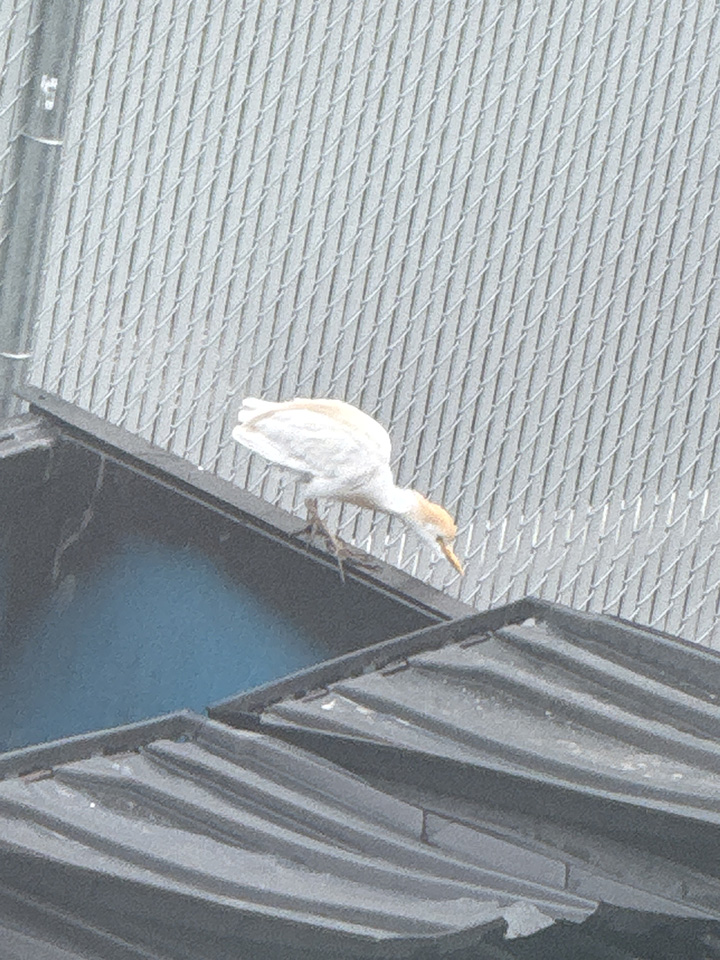
Hung around approx 3 hours in our yard and neighbors.

Kandice Shaw
5/2/2022

Location: Austin, Mn  drainage ditch adjacent to grassy field in an industrial park

LeRoy Mattson
5/21/2021

Location: Roseau MN

In my cattle yard.

Warren
8/11/2018

Location: cattle pasture with a small river running through 1 mile south of Edgerton, MN on Pipestone County Road 1

I noticed the bird as I was driving by because the cattle were actively investigating the bird.  I turned around and came by again and the cattle had settled and the egret was standing in the long grass.

Minnesota Seasons Sightings