Parasol whitetop
(Doellingeria umbellata var. umbellata)
Conservation • Wetland • Description • Habitat • Ecology • Use • Distribution • Taxonomy
Conservation Status
IUCN Red List
not listed
NatureServe
N4N5 - Apparently Secure to Secure
SNR - Unranked
Minnesota
not listed
Wetland Indicator Status
Great Plains
OBL - Obligate wetland
Midwest
FACW - Facultative wetland
Northcentral & Northeast
FACW - Facultative wetland
Description
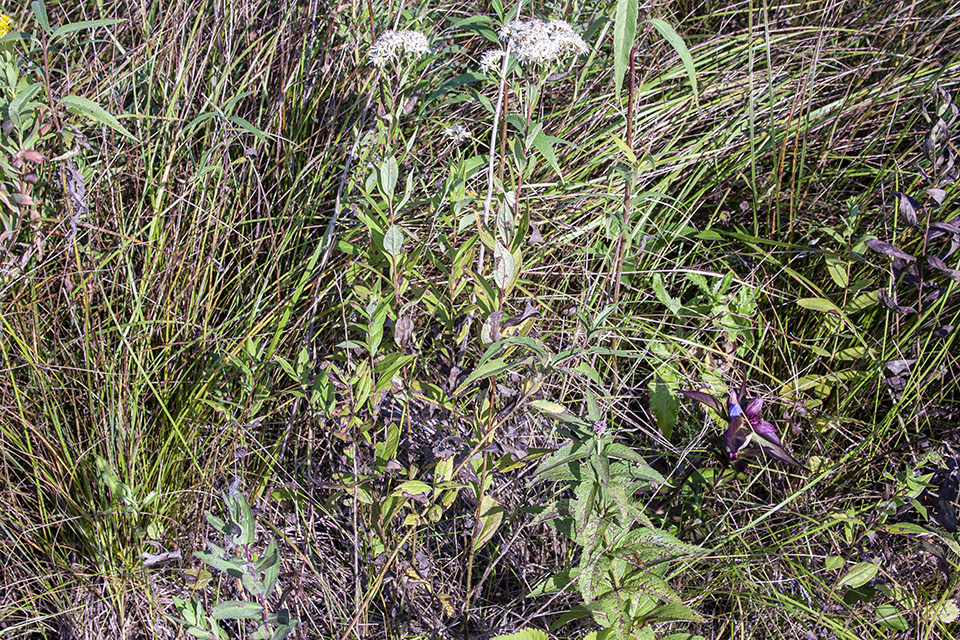
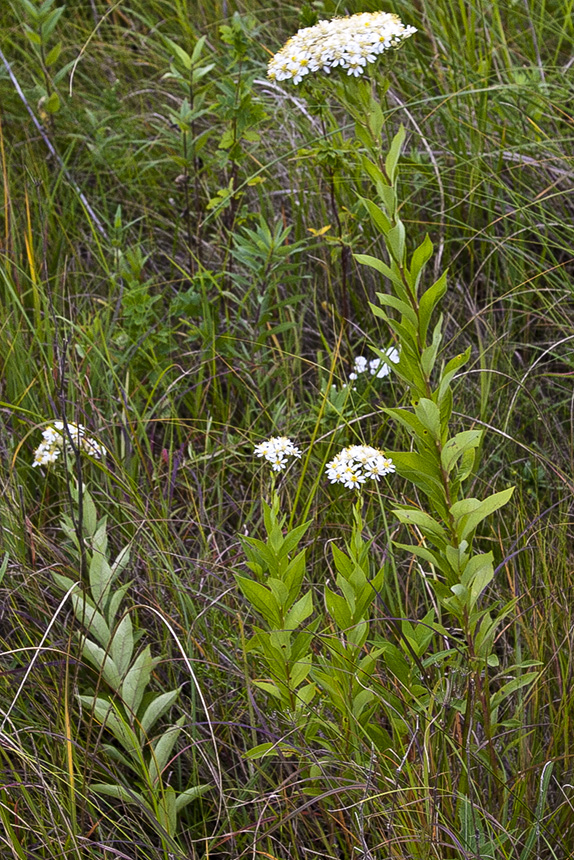
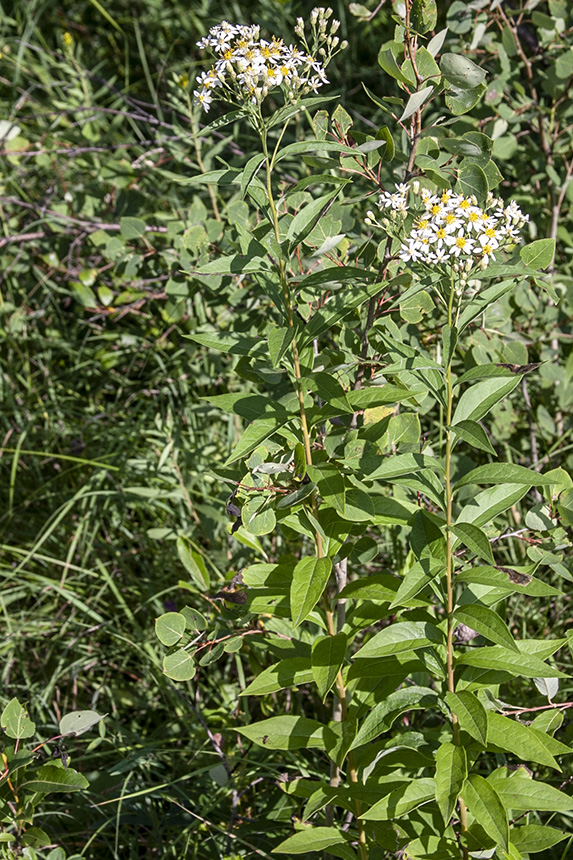
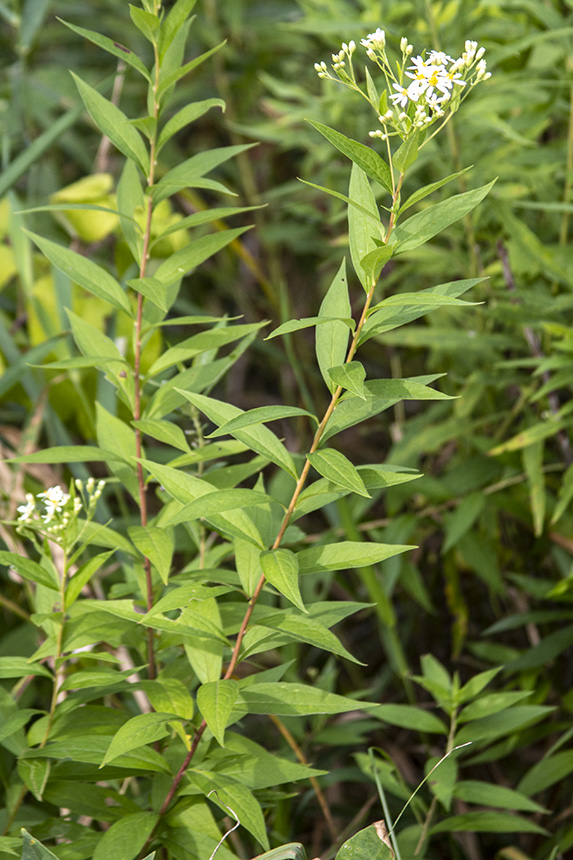
Parasol whitetop is an erect, 20″ to 78″ tall, perennial forb that rises on a single stem, rarely a few stems, from a creeping rhizome. It sometimes forms colonies.
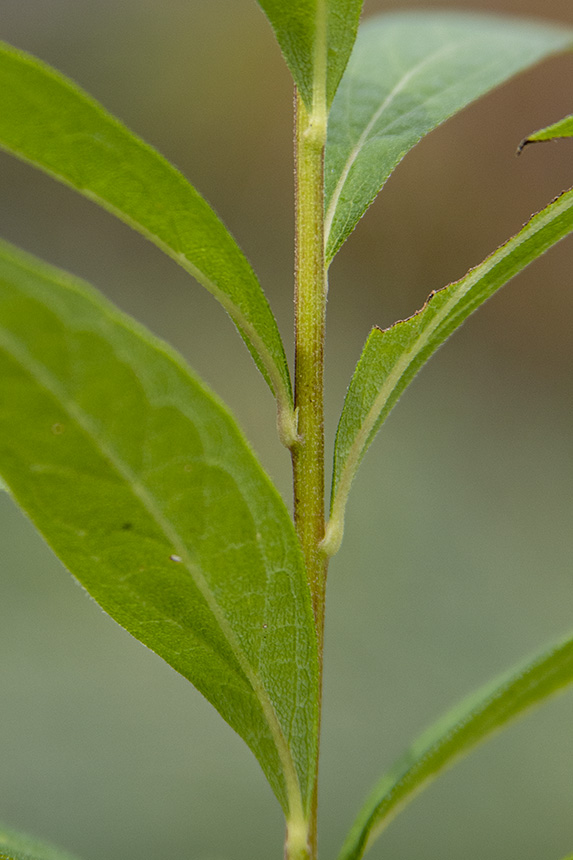
The stems are erect or ascending and have fine longitudinal lines. They are usually unbranched below the inflorescence. They are rough to the touch due to a sparse to dense covering of minute, curved hairs.
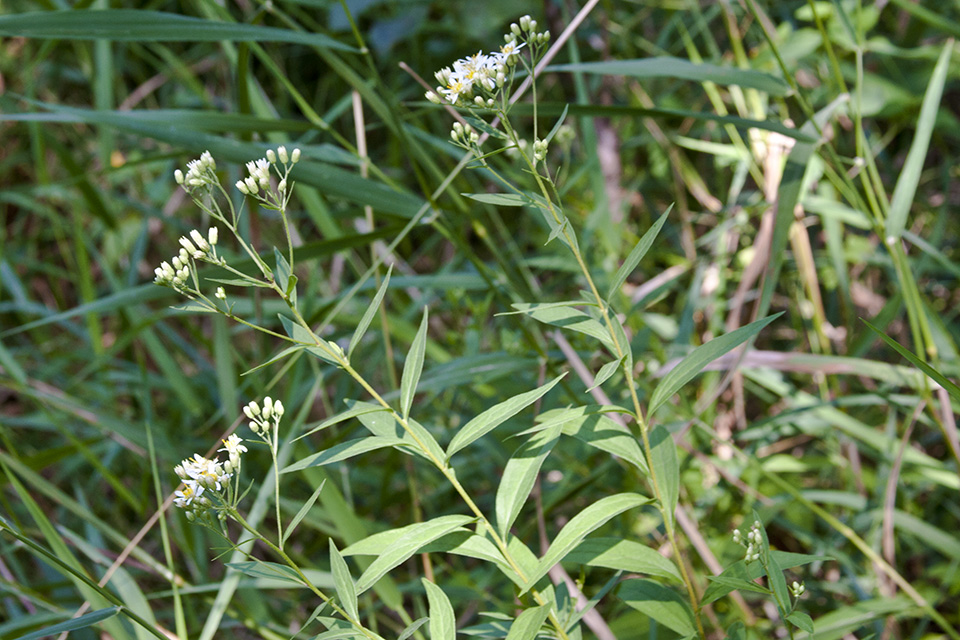
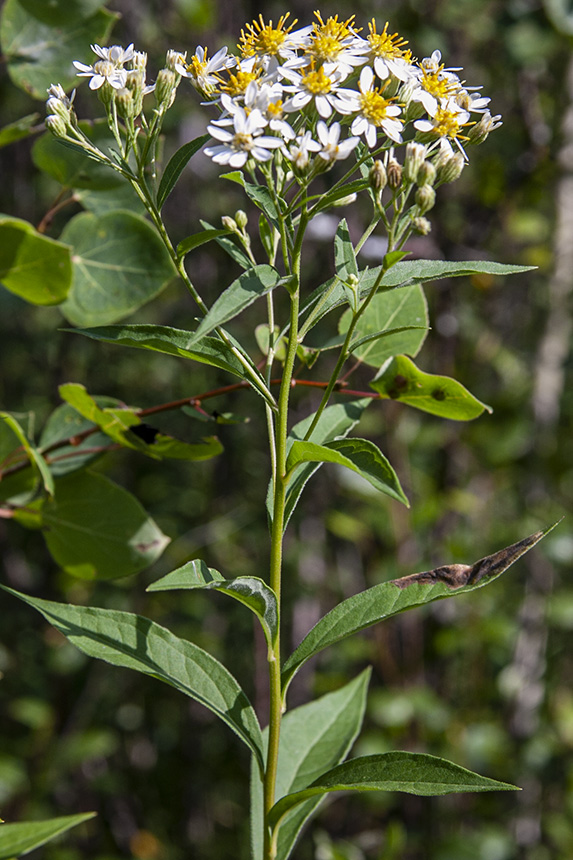
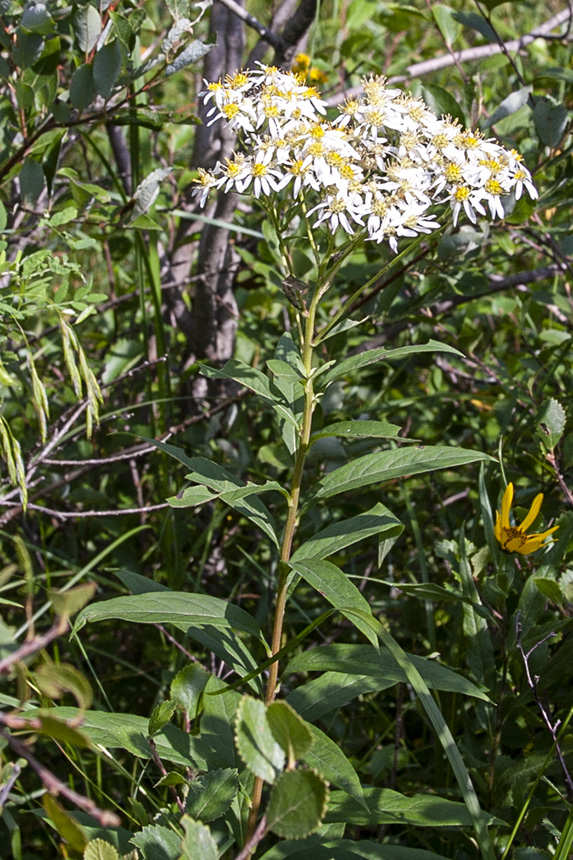
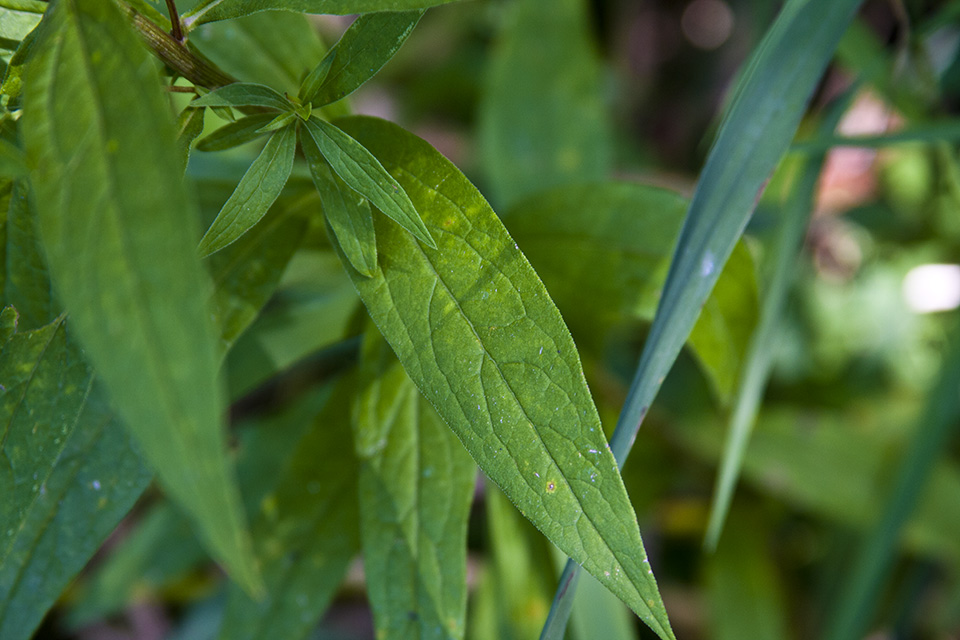
Lower leaves are absent at flowering time. Middle and upper leaves are crowded, alternate, stalkless, broadly to narrowly elliptic or lance-elliptic, 2⅜″ to 4⅓″ long, and ½″ to 1″ wide. They are not stiff. They taper gradually to the stem at the base and taper to a sharp point at the tip. The upper surface hairless or sparsely to moderately covered with short, curly hairs. The lower surface is green and hairless or sparsely covered with long, soft, shaggy hairs. The margins are untoothed, finely hairy, and rolled inward toward the upper side.
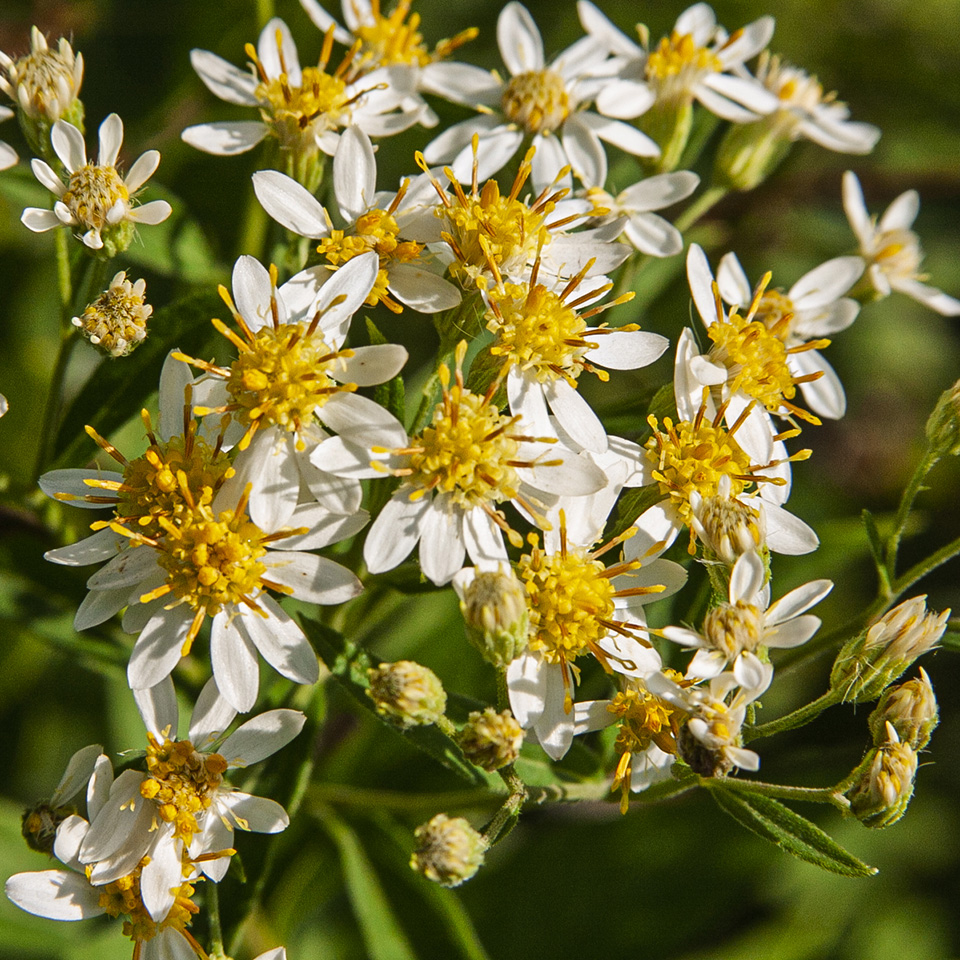
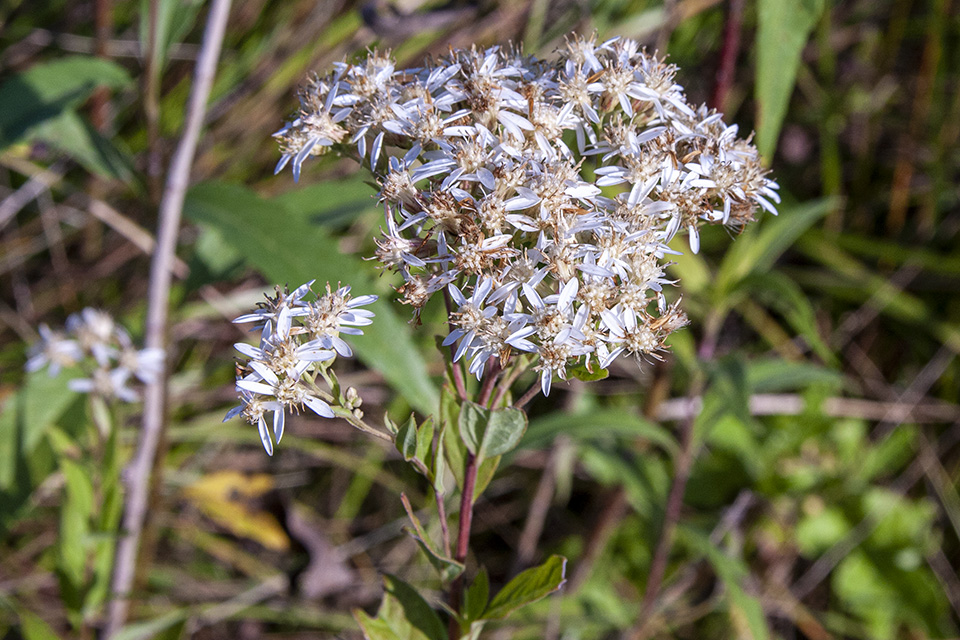
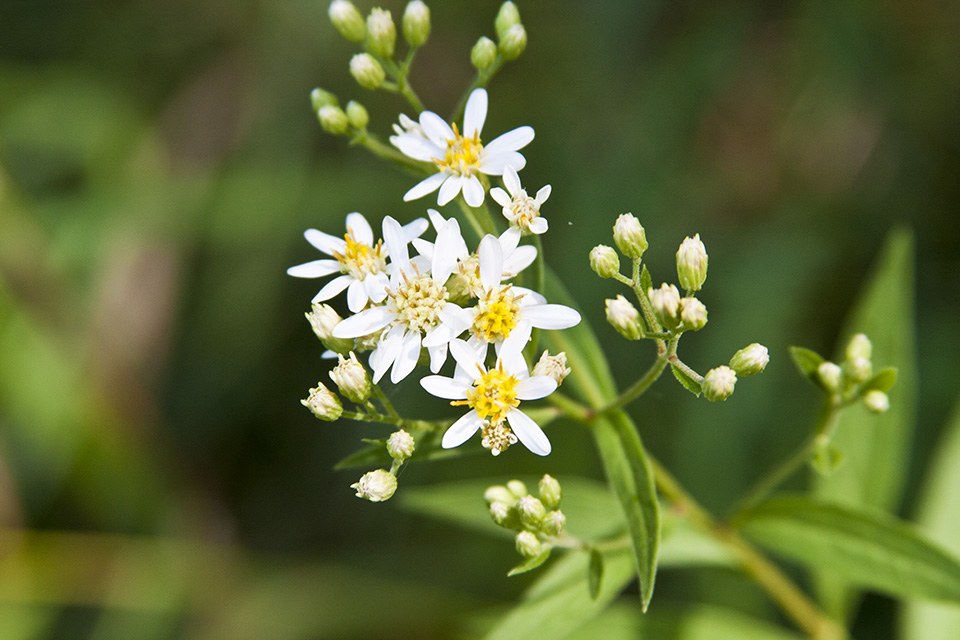
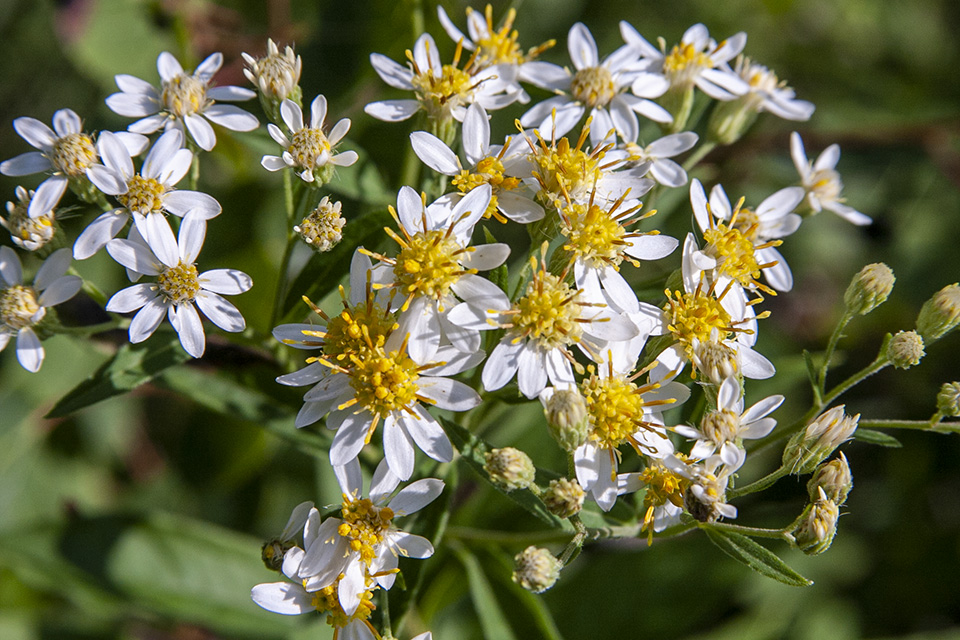
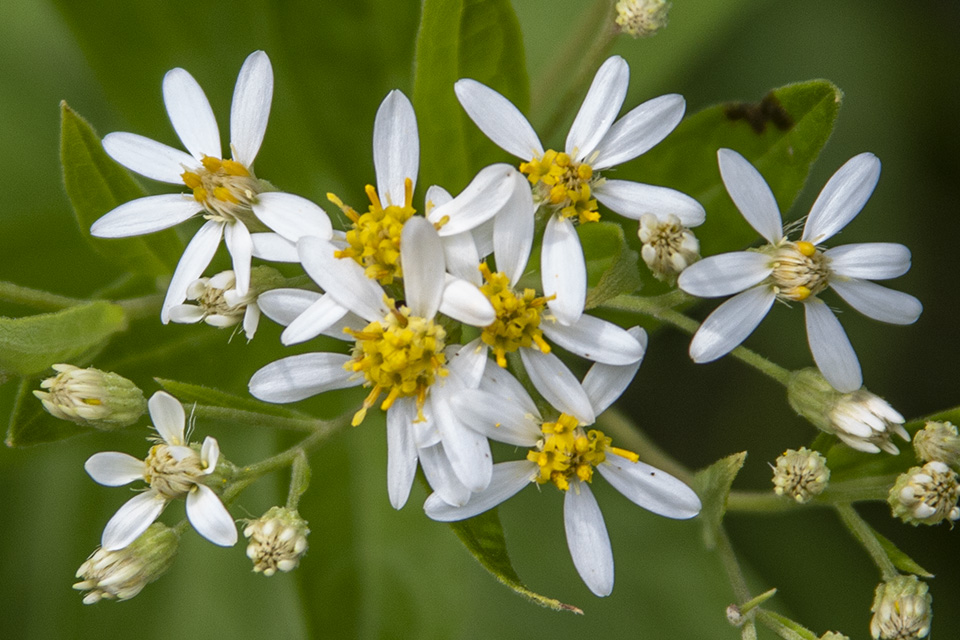
The inflorescence is a flat-topped cluster (corymb) of usually 20 to 100 flower heads at the end of the stem.
The individual flower heads are ⅔″ to 1″ wide with up to 14 white ray florets and up to 40 pale yellow disk florets.
The fruit is an achene.
Height
20″ to 78″
Flower Color
White ray florets, pale yellow disk florets
Similar Species
Hairy whitetop (Doellingeria umbellata var. pubens) lower leaf surface is gray or white due to a moderate to dense covering of fine, white, short hairs. The entire plant, including the upper leaf surfaces, is often densely covered with short, curved hairs. The flower heads are slightly smaller and have no more than 10 ray florets and 30 disk florets.
Habitat
Moist. Meadows, clearings, thickets, wood margins.
Ecology
Flowering
July to September
Pests and Diseases
Use
Distribution
Sources
Biodiversity occurrence data published by: Minnesota Biodiversity Atlas (accessed through the Minnesota Biodiversity Atlas Portal, bellatlas.umn.edu. Accessed 11/13/2026.
Midwest Herbaria Portal. 2026. https://midwestherbaria.org/portal/index.php. Accessed 11/13/2026.
Nativity
Native
Occurrence
Taxonomy
Kingdom
Subkingdom
Pteridobiotina
Phylum
Tracheophyta (Vascular Plants)
Class
Order
Asterales (Sunflowers, Bellflowers, Fanflowers, and Allies)
Family
Asteraceae (Sunflowers, Daisies, Asters, and Allies)
Subfamily
Asteroideae
Supertribe
Asterodae
Tribe
Astereae (Asters and Allies)
Subtribe
Doellingeriinae (White-top asters)
Genus
Doellingeria (Whitetops)
Species
Subordinate Taxa
Synonyms
Aster umbellatus var. umbellatus
Common Names
flat-top white aster
flat-topped aster
parasol whitetop
Visitor Photos
This button not working for you?
Simply email us at info@MinnesotaSeasons.com.
Attach one or more photos and, if you like, a caption.
Minnesota Seasons Photos
Slideshows
Visitor Videos
This button not working for you?
Simply email us at info@MinnesotaSeasons.com.
Attach a video, a YouTube or Instagram link, or a cloud storage link.
Other Videos
Visitor Sightings
This button not working for you?
Simply email us at info@MinnesotaSeasons.com.
Be sure to include a location.