sand bittercress - Species Profile
Conservation • Wetland • Description • Habitat • Ecology • Use • Distribution • Taxonomy
Conservation Status
IUCN Red List
not listed
NatureServe
N5 - Secure
SNR - Unranked
Minnesota
not listed
Wetland Indicator Status
Great Plains
FACW - Facultative wetland
Midwest
FAC - Facultative
Northcentral & Northeast
FAC - Facultative
Description
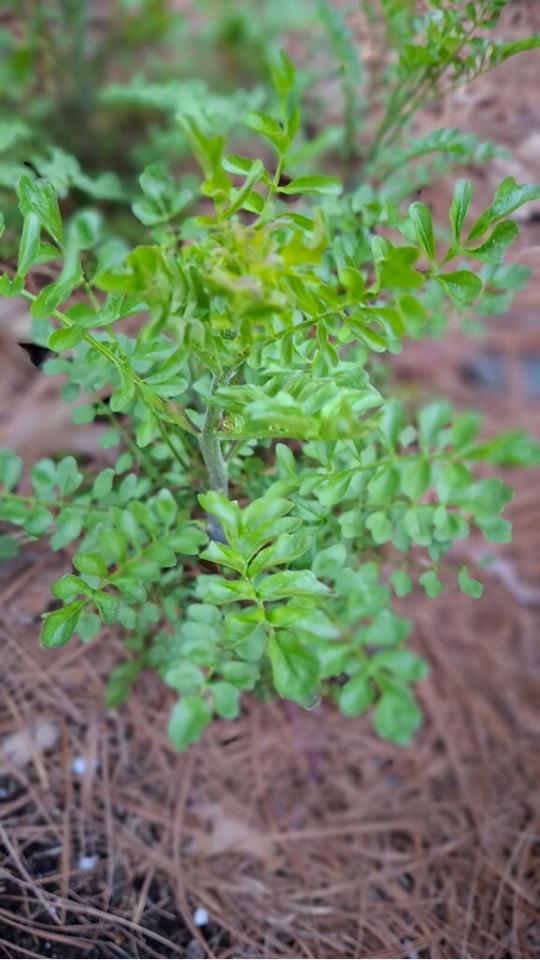
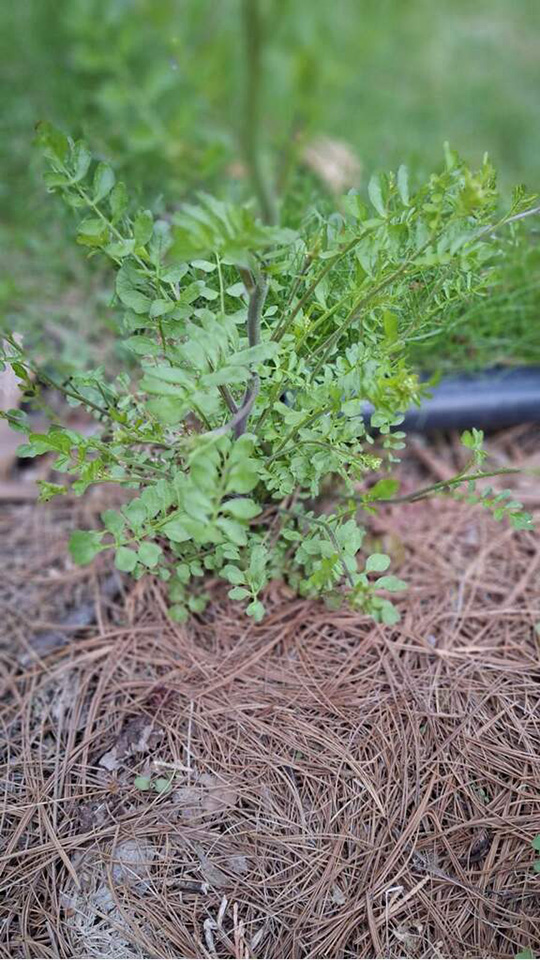
Sand bittercress, also called small-flowered bitter cress, is a common, small, early season, herbaceous plant. It occurs in the United States and southern Canada east of the Great Plains, and there are scattered, disjunct populations in the west.
The North American Cardamine parviflora var. arenicola is similar to the Eurasian Cardamine parviflora var. parviflora. While some modern authors consider them morphologically indistinguishable and lump them into a single taxon, historical treatments describe several distinct morphological differences. Nuclear DNA data supports this separation, showing the North American and Eurasian entities to be distinct evolutionary lineages.
As a “winter annual,” the plant cannot actively grow during harsh northern winters, seeds germinated in late summer form a ground-hugging basal rosette that stays dormant under snow cover. The established root system allows the plant to bolt, flower, and set seed immediately in early spring before other annuals have even sprouted.
This species grows under full sun or partial shade, in moist to dry conditions, in many kinds of soil. It is found in a wide variety of habitats, including upland forests, rocky ridges and hillsides, glades, and disturbed areas. It adapts well to human-made environments, including margins of agricultural fields, fallow fields, waste areas, flower beds, and vegetable gardens.
The species is geographically variable across its continental range, shifting noticeably in its hairiness and leaf shapes depending on latitude.
Each plant rises on one or a few stems from a shallow, fibrous, root system.
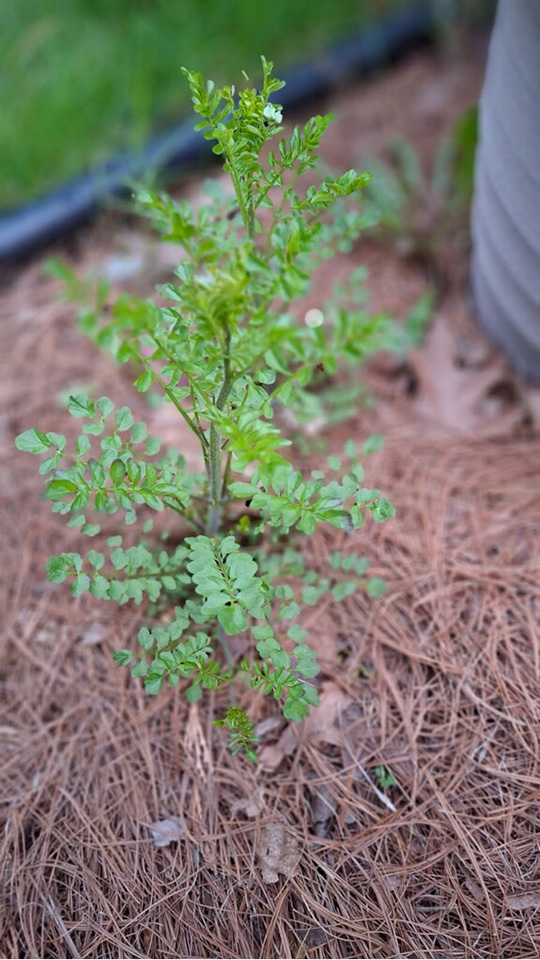
The stems are erect to spreading, slender, and often branched near the top. They are usually 4″ to 12″ (10 to 30 cm) tall but they can be up to 16″ (40 cm) tall. They may be hairless or sparsely hairy in other parts of their range, but in Minnesota they are usually densely hairy throughout. They are green, sometimes becoming reddish, especially near the base, when exposed to direct sunlight.
Basal leaves are 1½″ to 4″ (4 to 10 cm) long and pinnately divided (compound) into usually 7 to 13 leaflets. They are on 3⁄16″ to 1″ (5 to 25 mm) long or longer leaf stalks (petioles). In the northern parts of the plant’s range, the terminal leaflet is inversely egg-shaped to almost circular, up to ¼″ (7 mm) long and up to ⅜″ (10 mm) wide. It is stalkless (sessile) or on a short, up to 3⁄16″ (5 mm) long leaflet stalk (petiolule). The lateral leaflets are shaped similar to the terminal leaflet and are sometimes smaller. They may be sessile or on short petiolules. The margins are usually untoothed but sometimes have 1 or 2 irregular teeth. Basal leaves are often withered by flowering time. In other parts of the plant's range, the leaflets are narrow and similar to stem leaves.
There are usually 5 to 10 stem leaves, sometimes more. Stem leaves are ¾″ to 2⅜″ (2 to 6 cm) long and they are divided into usually 9 to 15 leaflets. Leaflets on lower stem leaves are similar to those on basal leaves. Leaflets on upper stem leaves are linear, narrowly oblong, or inversely lance-shaped, and narrowed at the bottom to a petiolule-like base. The base of the blade is not expanded along the central axis (rachis). The margins are usually untoothed but sometimes have 1 or 2 irregular teeth.
The inflorescence is an unbranched cluster (raceme) of small flowers at the end of each branch. The flowers bloom from the bottom up and the raceme continually elongates.
Each flower is about ⅛″ (4 mm) wide. There is no inflorescence leaf (bract) subtending each flower. There are 4 floral leaves (sepals), 4 petals, 6 stamens, and 1 style. The sepals are green, oblong, 1⁄32″ to 1⁄16″ (1.0 to 1.5 mm) long, and 1⁄64″ (0.3 to 0.5 mm) wide. The petals are white, inversely lance-shaped, 1⁄16″ to ⅛″ (1.8 to 2.5 mm) long, and 1⁄64″ to 1⁄32″ (0.5 to 0.8 mm) wide. The style is short and stout.
The fruit is an erect to ascending, straight, linear, ⅜″ to ¾″ (1 to 2 cm) long, 1⁄64″ to 1⁄32″ (0.5 to 1.0 mm) wide, seed capsule (silique). The silique has no prolonged tip (beak) at the end, but the style persists. As the fruits mature, the raceme greatly elongates between each fruit. The silique contains 20 to 50 pale brown seeds.
Height
4″ to 12″ (10 to 30 cm)
Flower Color
White
Similar Species
Pennsylvania bittercress (Cardamine pensylvanica) is a larger plant, up to 21⅝″ (55 cm) or taller. It grows in moist to wet areas.
Habitat
A wide variety of habitats, including upland forests, rocky ridges and hillsides, glades, disturbed areas, margins of agricultural fields, fallow fields, waste areas, flower beds, and vegetable gardens.
Ecology
Flowering
May to June in Minnesota
Pests and Diseases
Defense Mechanisms
This and other mustards (Family Brassicaceae) produce chemical compounds when cells are damaged that are toxic to most animals, fungi, and bacteria.
Use
Distribution
Sources
Biodiversity occurrence data published by: Minnesota Biodiversity Atlas (accessed through the Minnesota Biodiversity Atlas Portal, bellatlas.umn.edu. Accessed 6/1/2026).
Midwest Herbaria Portal. 2026. https://midwestherbaria.org/portal/index.php. Accessed 6/1/2026.
Cardamine parviflora L. in GBIF Secretariat (2023). GBIF Backbone Taxonomy. Checklist dataset https://doi.org/10.15468/39omei accessed via GBIF.org. Accessed 6/1/2026.
Nativity
Native
Occurrence
Common
Taxonomy
Kingdom
Subkingdom
Pteridobiotina
Phylum
Tracheophyta (Vascular Plants)
Class
Order
Brassicales (Mustards, Capers, and Allies)
Family
Brassicaceae (Mustard)
Subfamily
Brassicoideae
Supertribe
Camelinodae
Tribe
Cardamineae
Genus
Cardamine (Bittercresses and Toothworts)
Species
Cardamine parviflora (sand bittercress)
Subordinate Taxa
Synonyms
Cardamine arenicola
Common Names
dry-land bitter-cress
sand bittercress
smallflowered bittercress
small-flower bittercress
small-flowered bitter cress
small-flowered bitter-cress