



Fried Chicken Mushroom
(Lyophyllum decastes)
Conservation • Description • Habitat • Ecology • Distribution • Taxonomy
Conservation Status |
|
|||||||
| IUCN Red List | not listed |
|||||||
| NatureServe | not listed |
|||||||
| Minnesota | not listed |
|||||||
Description |
||
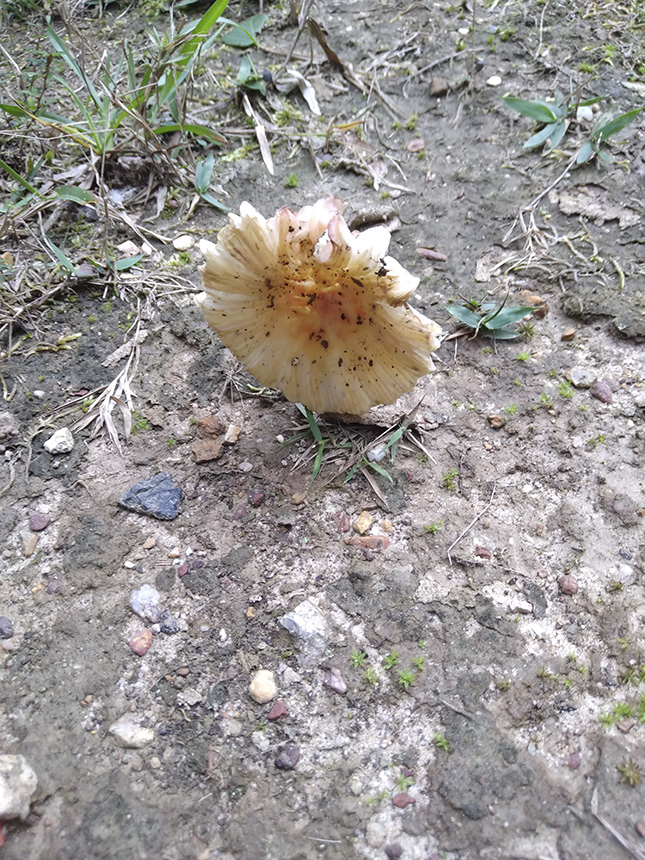
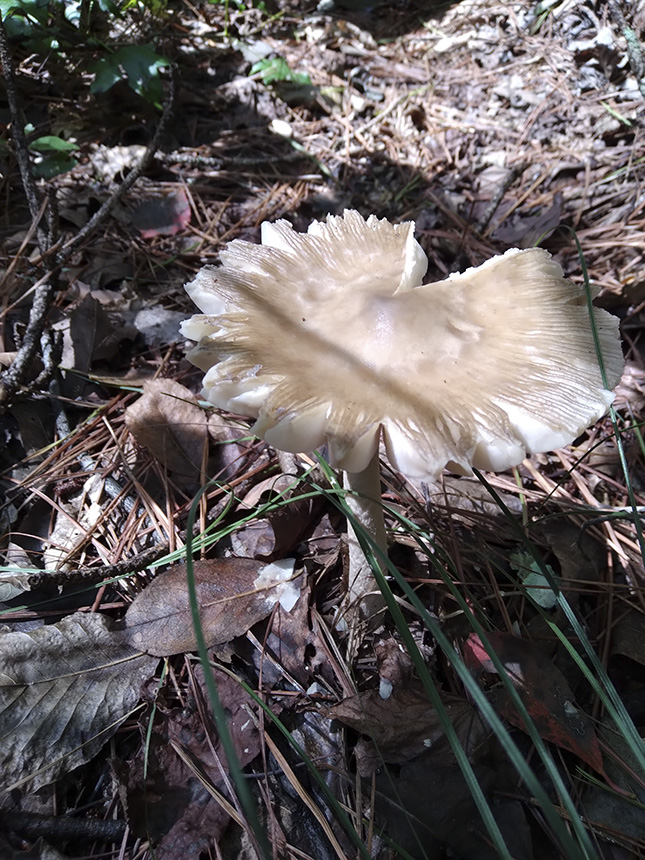
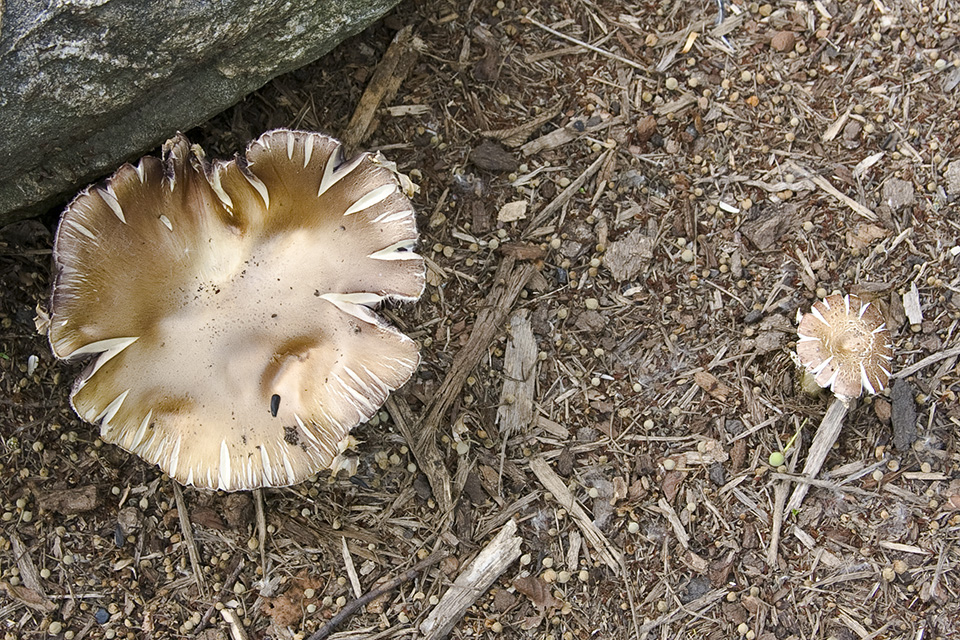
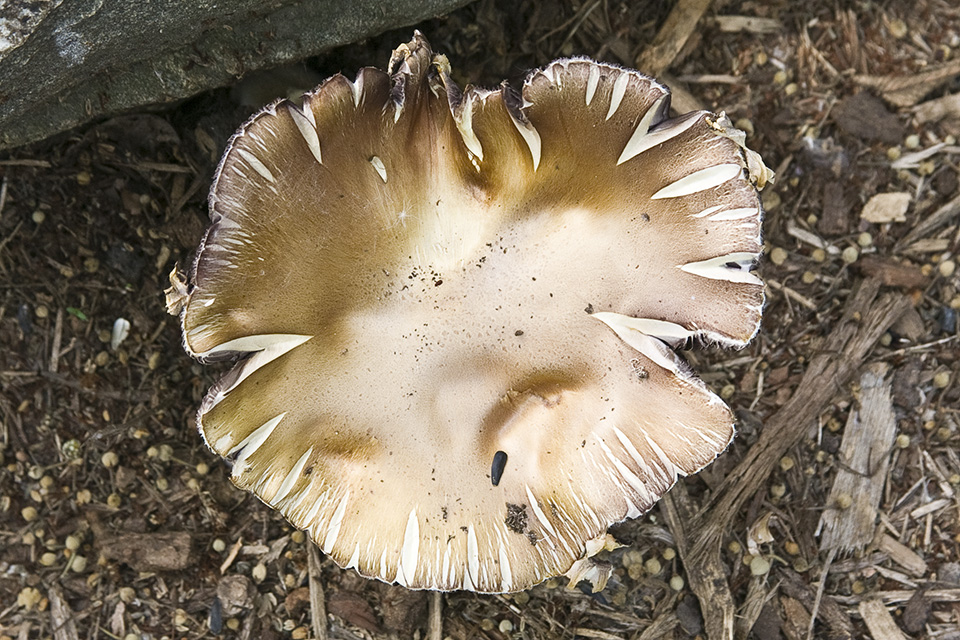
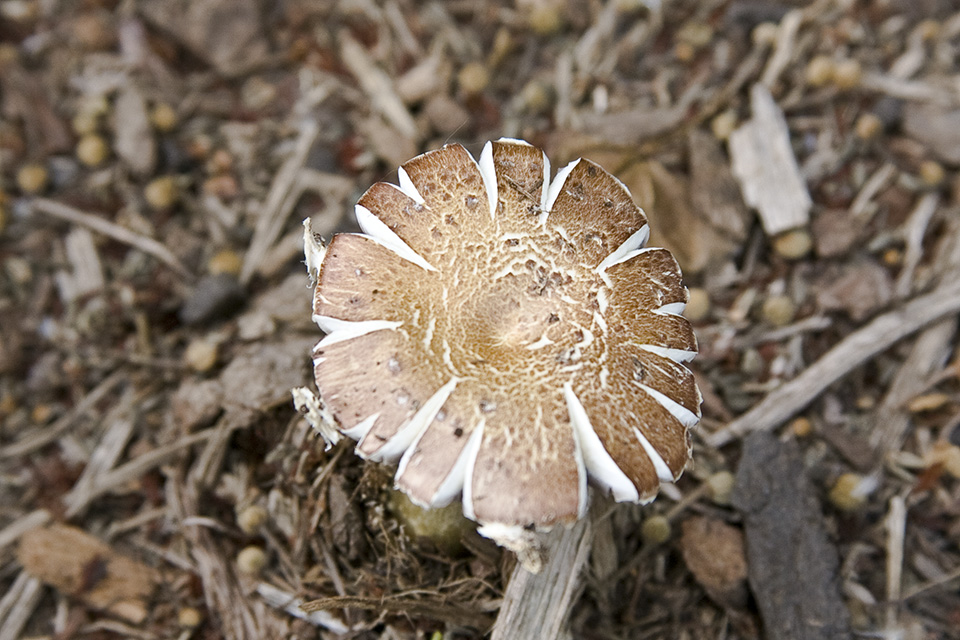
Fried Chicken Mushroom is usually a small to medium-small mushroom, sometimes a larger mushroom when growing in clusters. It grows on the ground, usually in large, compact clumps, though solitary individuals are sometimes found. The stalk is The cap is smooth, dark brown, grayish-brown, yellowish-brown, or tan, The flesh is white and has a mild odor. The gills are closely spaced and white to grayish, becoming straw-colored with age. They are attached, sometimes completely attached (adnate), sometimes extending down along the stalk (decurrent), and sometimes completely attached but with a notch near, but not at, the stalk (notched). The spore print is white. |
||
Similar Species |
||
Habitat and Hosts |
||
Roadsides, woodland trails, disturbed sites. |
||
Ecology |
||
Season |
||
Summer to fall |
||
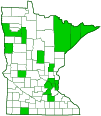
Distribution |
||||
|
Sources |
|||
| 9/20/2021 | ||||
Occurrence |
||||
Common |
||||
Taxonomy |
|||
| Kingdom | Fungi (Fungi) | ||
| Subkingdom | Dikarya | ||
| Phylum | Basidiomycota (Basidiomycete Fungi) | ||
| Subphylum | Agaricomycotina (Higher Basidiomycetes) | ||
| Class | Agaricomycetes (Mushrooms, Bracket Fungi, Puffballs, and Allies) | ||
| Subclass | Agaricomycetidae | ||
| Order | Agaricales (Common Gilled Mushrooms and Allies) | ||
| Suborder | Tricholomatineae | ||
| Family | Lyophyllaceae | ||
| Genus | Lyophyllum (domecaps) | ||
Lyophyllum decastes is a species complex. Included in the complex are a possibly 5 species that are reproductively isolated from each other and are morphologically diverse. What they have in common is that they are drab in color, they grow in disturbed sites, and the microscopic spore-producing structures (basidia) on the vertical walls of the gills contain particles that darken dramatically when heated in acetocarmine, a biological staining solution. |
|||
Synonyms |
|||
Agaricus aggregatus Agaricus decastes Agaricus decastes var. decastes Agaricus molybdinus Agaricus subdecastes Clitocybe aggregata Clitocybe aggregata f. reducta Clitocybe decastes Clitocybe molybdina Clitocybe subdecastes Gyrophila aggregata Lyophyllum aggregatum Tricholoma aggregatum Tricholoma amplum sensu |
|||
Common Names |
|||
Brauner Rasling Chicken Mushroom Clustered Domecap Fried Chicken Mushroom |
|||
Glossary
Basidium
A microscopic, club-shaped structure on the underside of the cap of club fungi that produces spores.
Universal veil
An egg-like structure that envelopes all or most of a developing gill mushroom. Remnants of the universal veil sometimes visible on a mature mushroom are patchy warts on the cap, a ring on the stalk, and a volva at the base of the stalk.
Volva
Also called cup. A cup-like covering at the base of a mushroom stem, sometimes buried. It is the remnants of the universal veil ruptured by the mushroom pushing through. It is found on Amanita, Volvariella, and some other mushrooms.
Visitor Photos |
|||||
Share your photo of this fungus. |
|||||
| This button not working for you? Simply email us at info@MinnesotaSeasons.com. Attach one or more photos and, if you like, a caption. |
|||||
Jim Southerland |
|||||
 |
 |
||||
MinnesotaSeasons.com Photos |
|||||
 |
 |
||||
 |
 |
||||
 |
|||||

Slideshows |
||
Visitor Videos |
|||
Share your video of this fungus. |
|||
| This button not working for you? Simply email us at info@MinnesotaSeasons.com. Attach a video, a YouTube link, or a cloud storage link. |
|||
Other Videos |
|||
| lyophyllum_decastes.mpeg Domenico Memoli |
|||
About
Uploaded on Oct 19, 2011 No description available. |
|||

Visitor Sightings |
|||||
Report a sighting of this fungus. |
|||||
| This button not working for you? Simply email us at info@MinnesotaSeasons.com. Be sure to include a location. |
|||||
| Jim Southerland 9/8/2021 |
Location: Bartow County Ga. |
|
|||
Jim Southerland |
Location: Bartow County Ga. |
|
|||
MinnesotaSeasons.com Sightings |
|||||
Last Updated: