



Minnesota Pseudoscorpions
Order Pseudoscorpiones
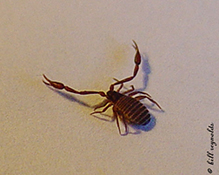
Pseudoscorpiones (Pseudoscorpions) is the order of small arachnids characterized by having pedipalps modified into long, scorpion-like pincers. There are 4,769 currently recognized Pseudoscorpion species in 532 genera in 32 families worldwide, about 420 species in 110 genera in 20 families in the United States, 26 species in 20 genera in 7 families in Canada, and at least 5 species in 4 genera in 4 families in Minnesota.
Pseudoscorpions are tiny to small, so small that they usually go unseen. They usually range in size from 3 ⁄16″ to 5⁄16″ (2 to 8 mm) in length, but the largest is ½″ (12 mm) long, and most are less than 3⁄16″ (5 mm) long. The body is pear shaped and flattened. The color varies from light tan to reddish brown to black. The pedipalps are very long and have pincer-like claws (chelae) at the tip. The chelae are used both to grasp prey and to defend against predators. There are eight legs attached to the cephalothorax. The abdomen has 11 or 12 clearly defined segments.
Pseudoscorpions live in hidden microhabitats, including in leaf litter and compost piles, under bark and rocks, inside decaying wood, and in caves. To spread to new habitats, they often hitch a ride on a wide variety of animals, including insects like beetles and flies, as well as birds, mammals, and even other arachnids like spiders.
Pseudoscorpions are generalist predators. They prey on small invertebrates in the soil, including mites and springtails, on flies and ants, and occasionally on caterpillars. Some species, including Chelifer cancroides, are synanthropic, well adapted to human environments, where they prey on common household pests. They are considered beneficial.
Recent Additions
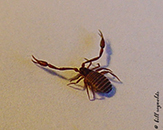
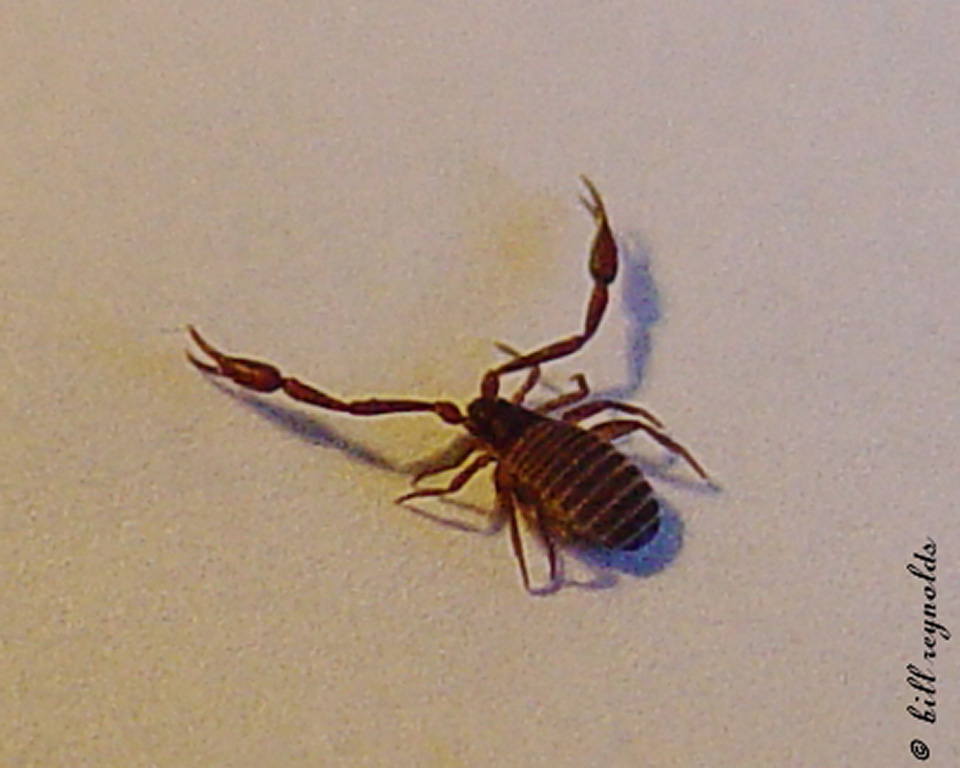
House pseudoscorpions (Chelifer cancroides) are small, exotic, predacious arachnids. They are highly synanthropic, meaning they thrive in habitats associated with humans, and they are the pseudoscorpions most commonly encountered by humans. They are most often reported in houses, barns, stables, chicken coops, bee hives, and other human-built structures. They are sometimes found in sinks or bathtubs, where they went in search of water but were unable to climb up the slippery sides to get out. They feed on a variety of small invertebrates, including mites, booklice, and fruit flies.
House pseudoscorpions are believed to be native to Europe and parts of Asia. They were introduced into North America accidentally. As the first Europeans came to the new world, they brought with them books, paper goods, hay, straw, agricultural goods, and firewood. Pseudoscorpions, feeding on pests like booklice, mites, and carpet beetle larvae, were likely transported along with the people and goods.
Other Recent Additions
This list includes only pseudoscorpions that have been recorded in Minnesota, but not all of the pseudoscorpions found in Minnesota.
| Profile | Photo | Video | |||
|---|---|---|---|---|---|
Banks’s pseudoscorpion (Pseudogarypus banksi) |
 |
||||
 |
 |
 |
|||
pseudoscorpions (family Cheliferidae) |
|||||
pseudoscorpions (family Chernetidae) |
|||||
pseudoscorpions (family Chthoniidae) |
|||||
pseudoscorpions (family Neobisiidae) |
|||||
pseudoscorpions (superfamily Cheliferoidea) |
|||||
pseudoscorpions (superfamily Neobisioidea) |
Chelifer cancroides (house pseudoscorpion)
Cheliferidae (pseudoscorpions)
Cheliferoidea (pseudoscorpions)
Chernetidae (pseudoscorpions)
Chthoniidae (pseudoscorpions)
Neobisiidae (pseudoscorpions)
Neobisioidea (pseudoscorpions)
Pseudogarypus banksi (Banks’s pseudoscorpion)
No Species Page Yet?
If you do not see a linked page for a species in the list at left you can still upload a photo or video or report a sighting for that species. Click on one of the buttons below and type in the common name and/or scientific name (if known) of the species in your photo, video, or sighting. A new page will be created for that species featuring your contribution.
These buttons not working for you?
Simply email us at info@MinnesotaSeasons.com.