



American pasqueflower
(Anemone patens var. multifida)
Conservation • Description • Habitat • Ecology • Use • Distribution • Taxonomy
|
|
|||||||||||||
Description |
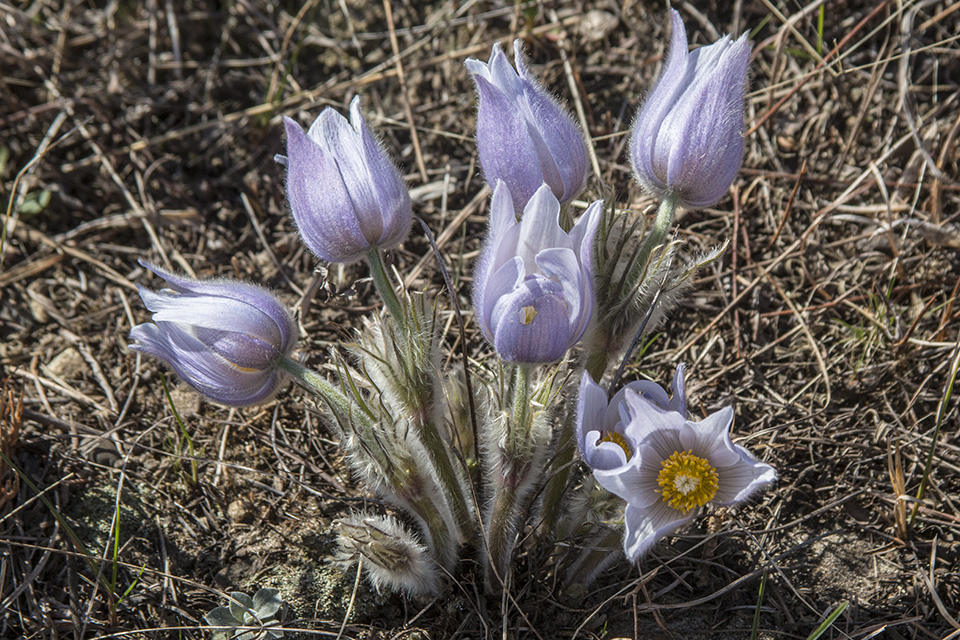
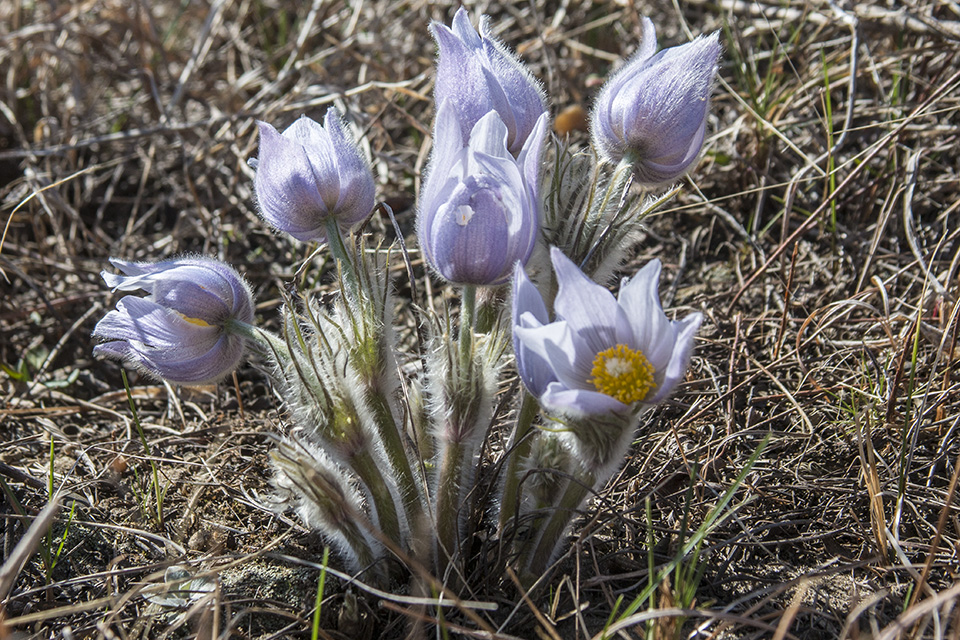
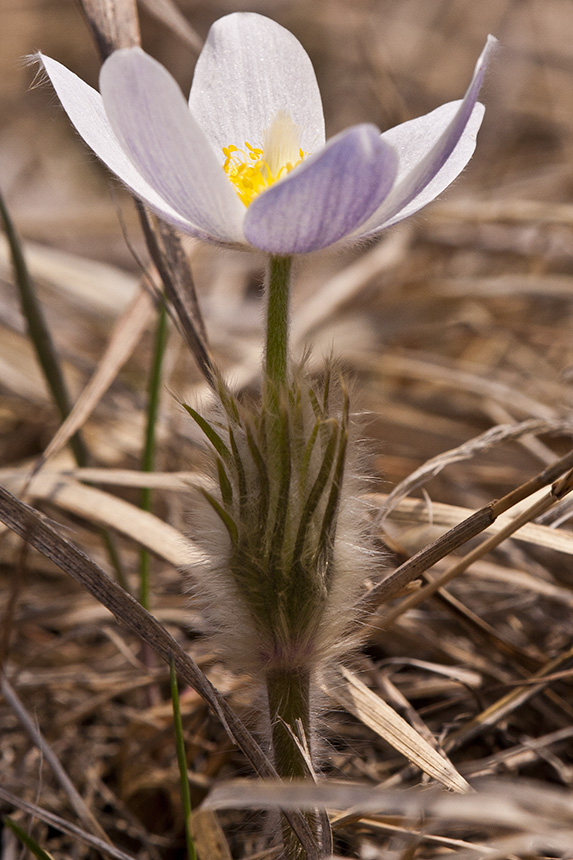
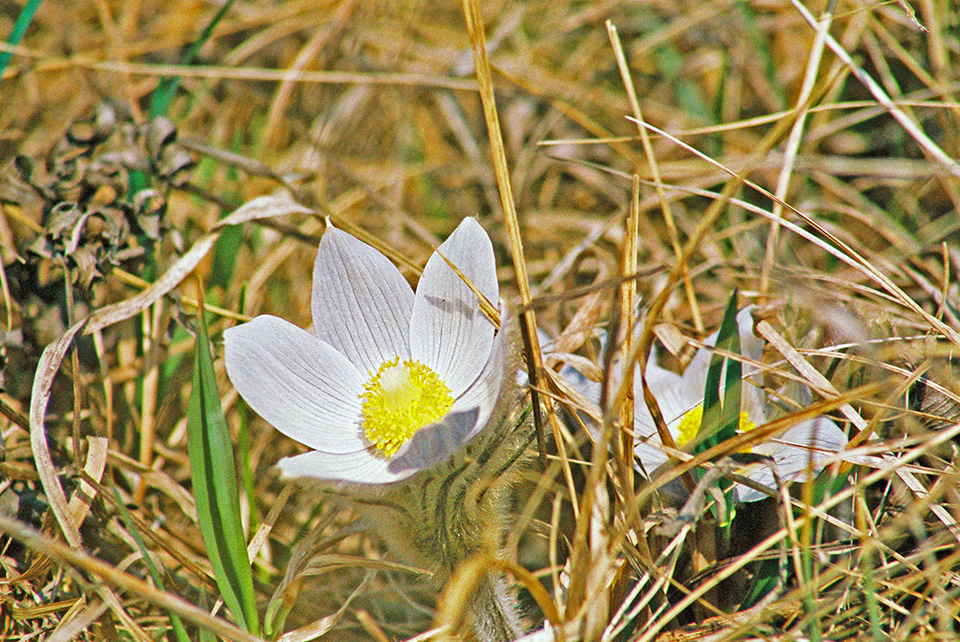
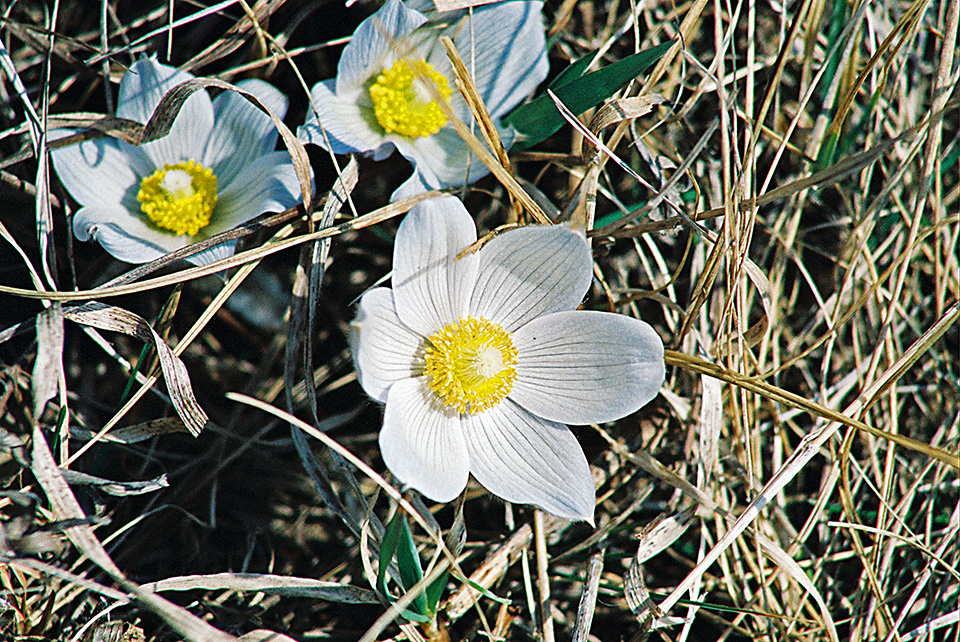
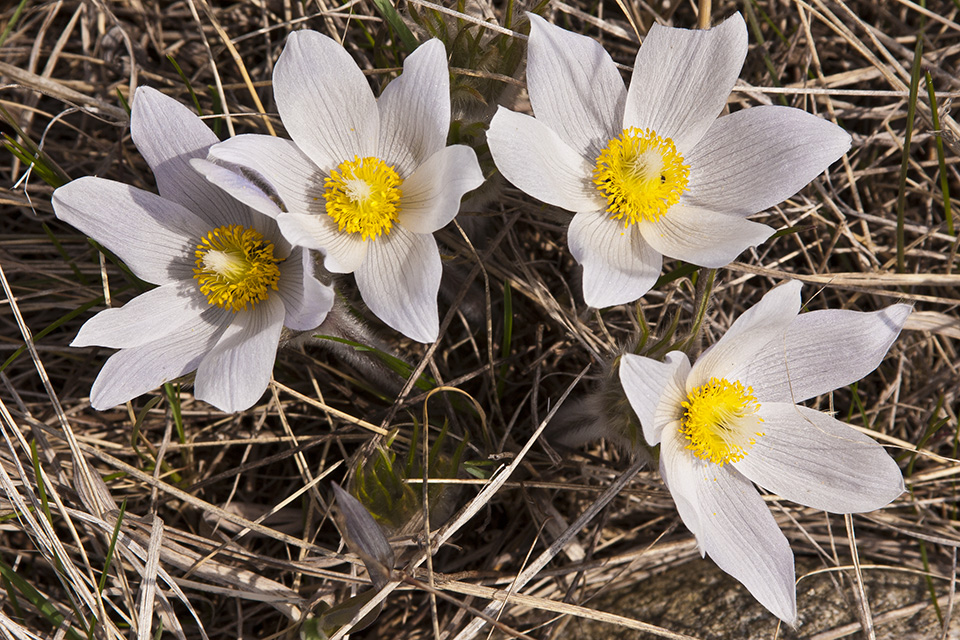
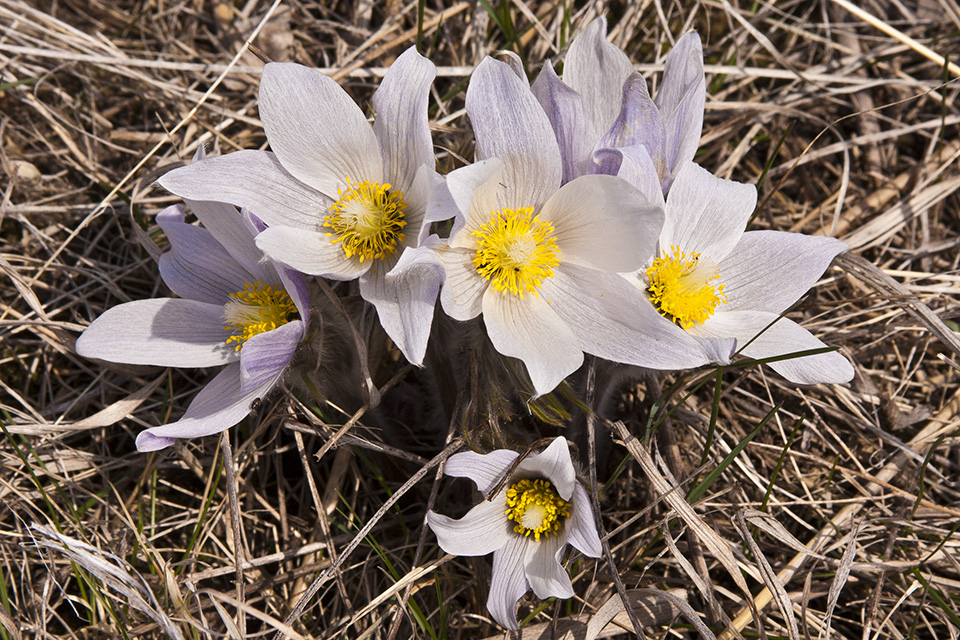
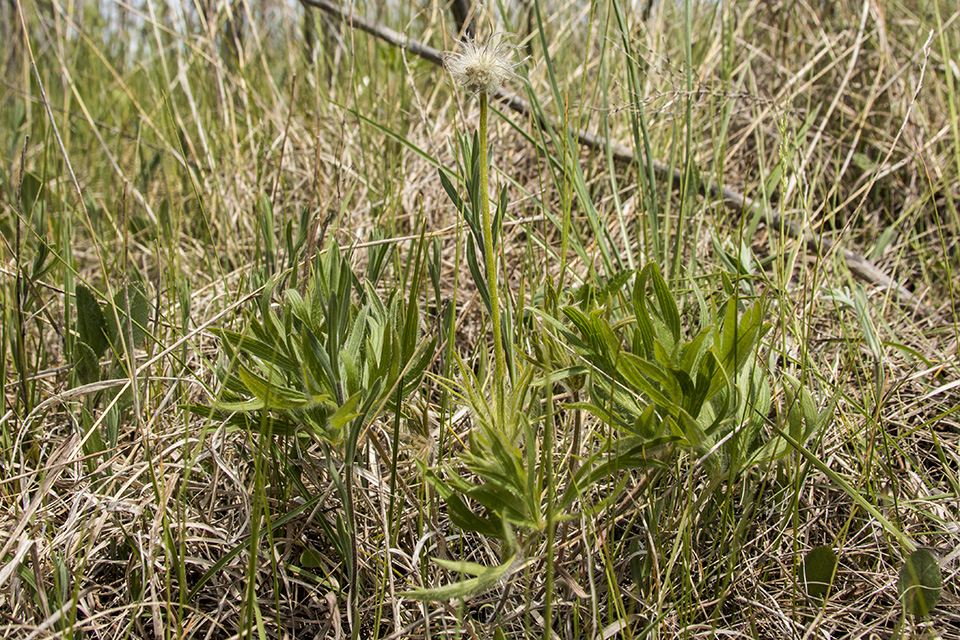
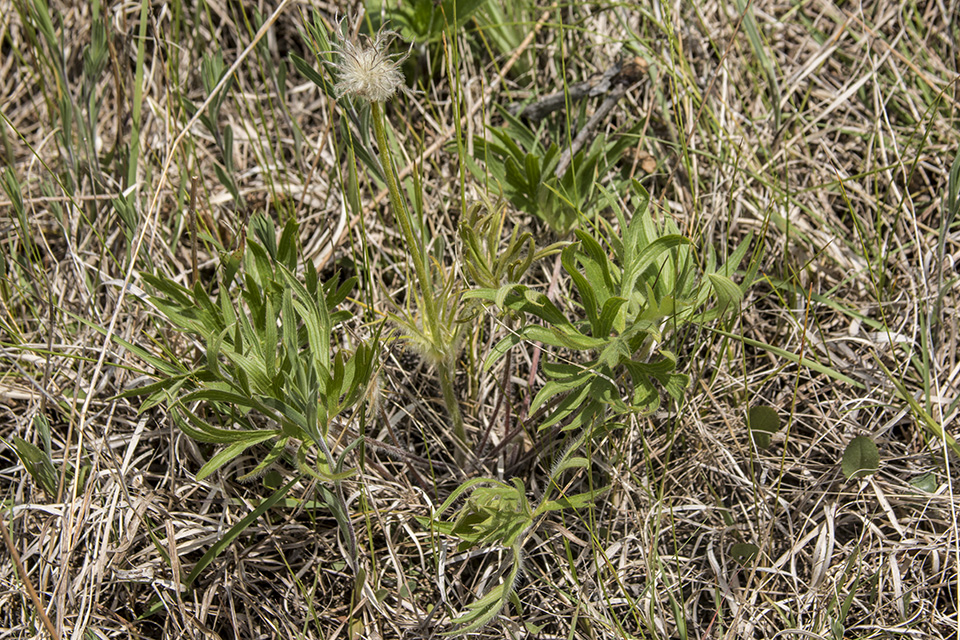
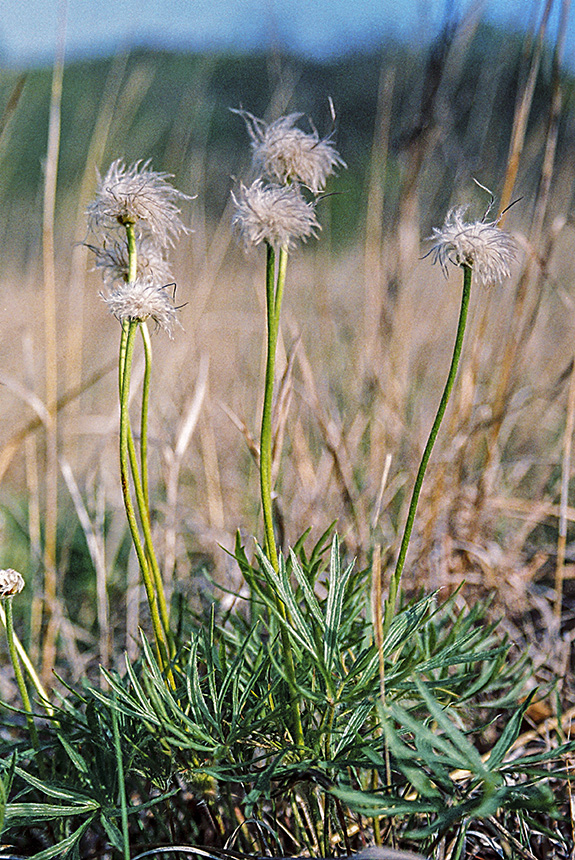
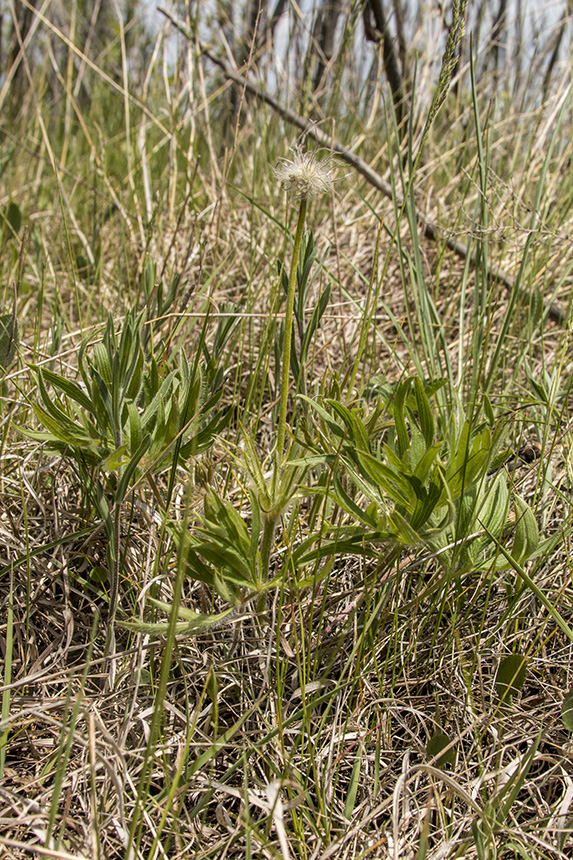
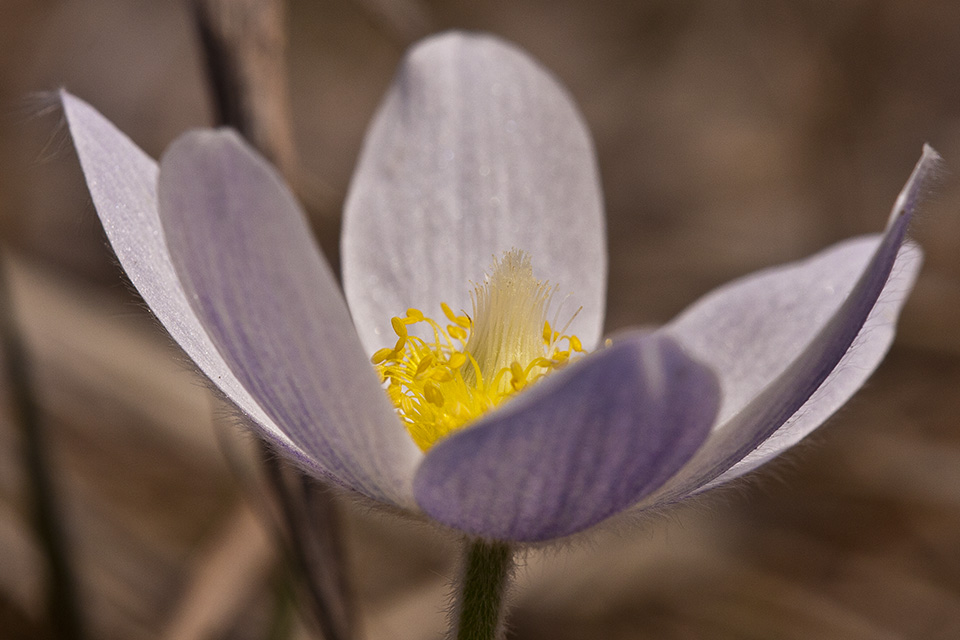
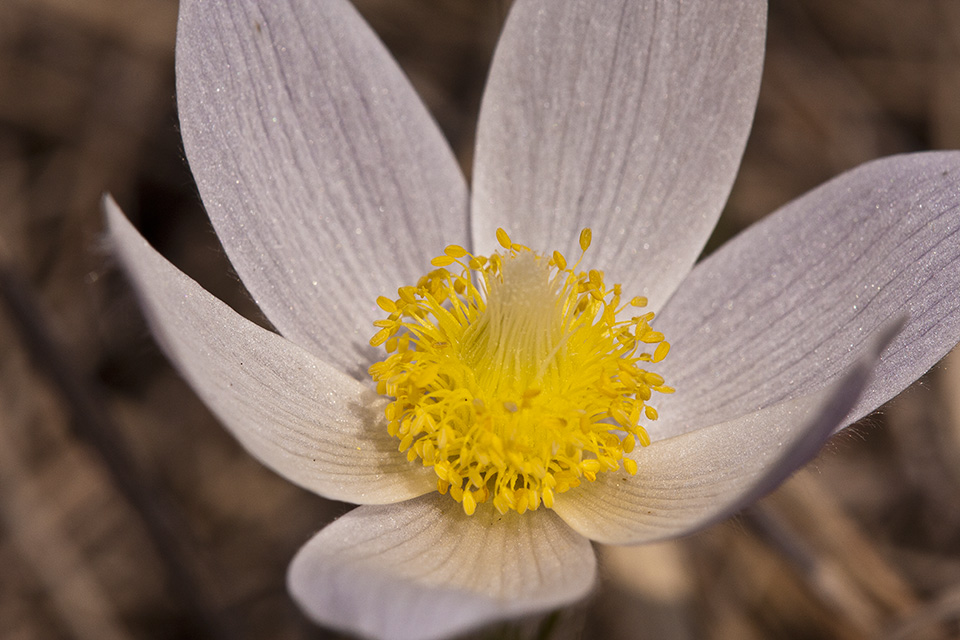
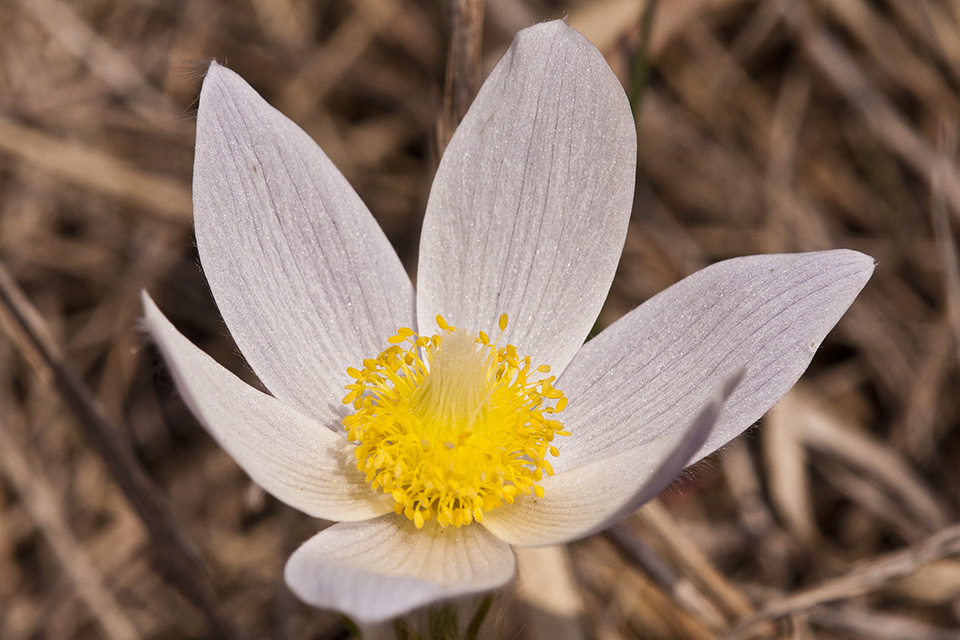
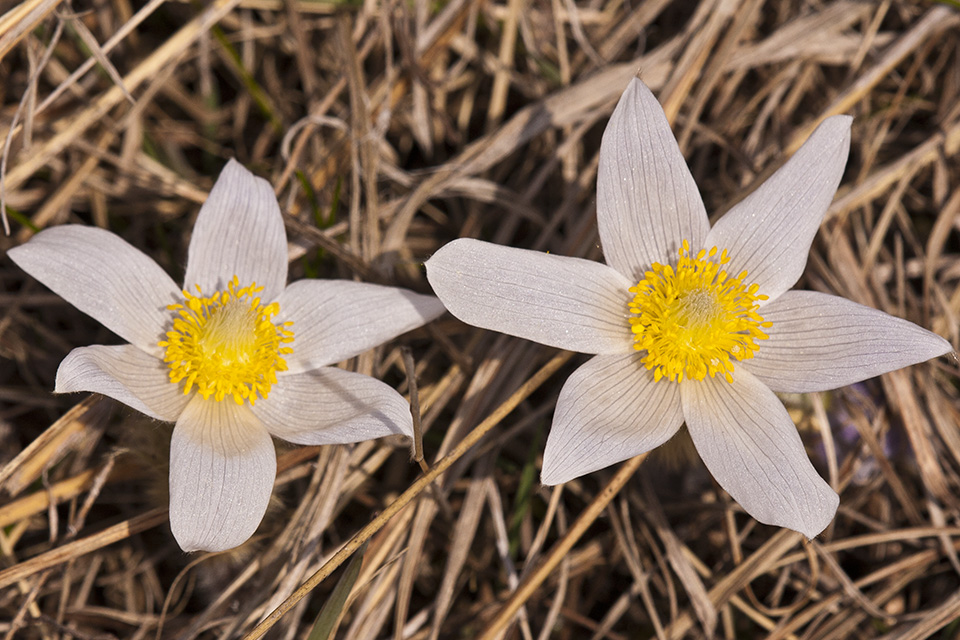
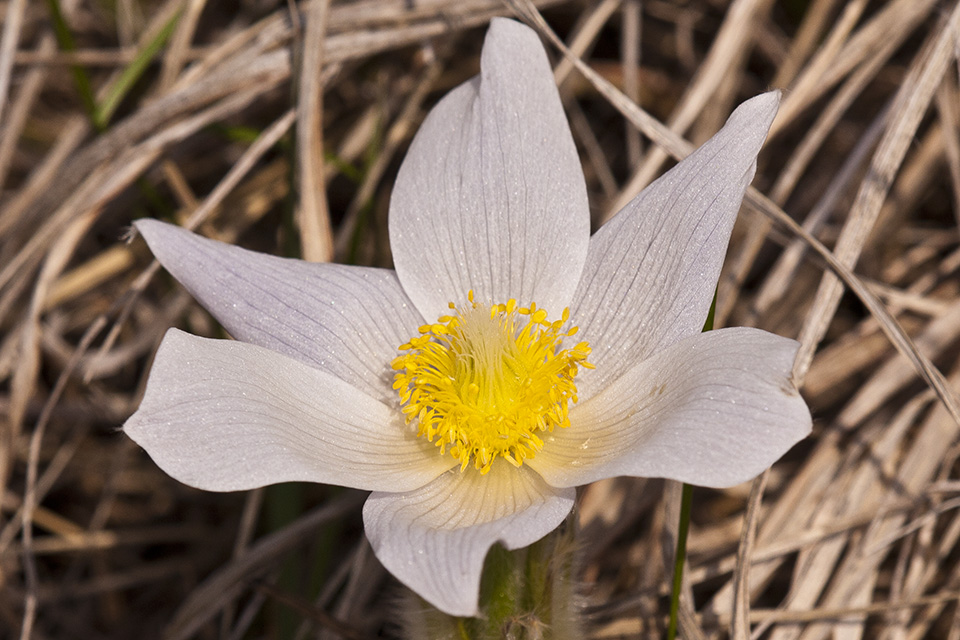
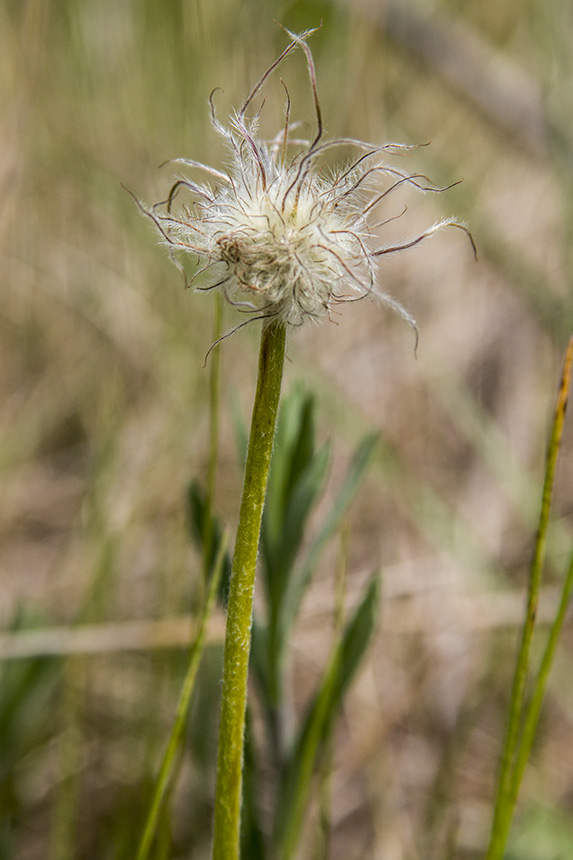
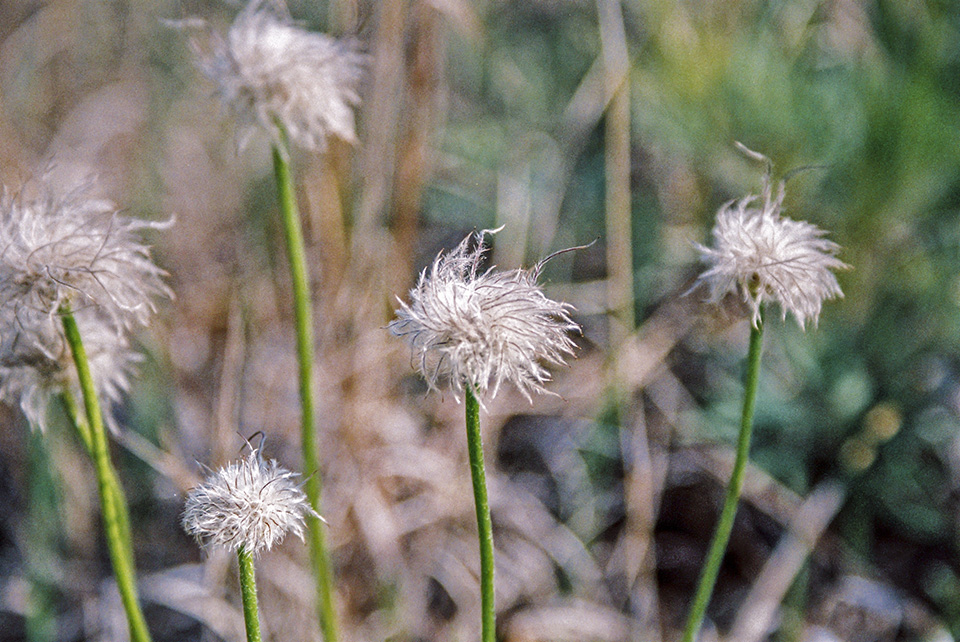
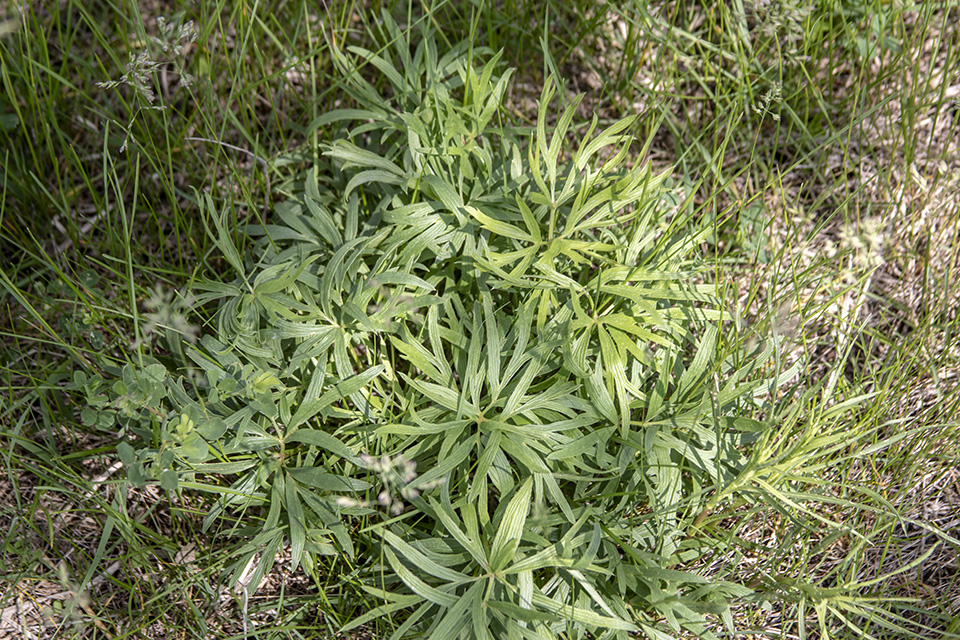
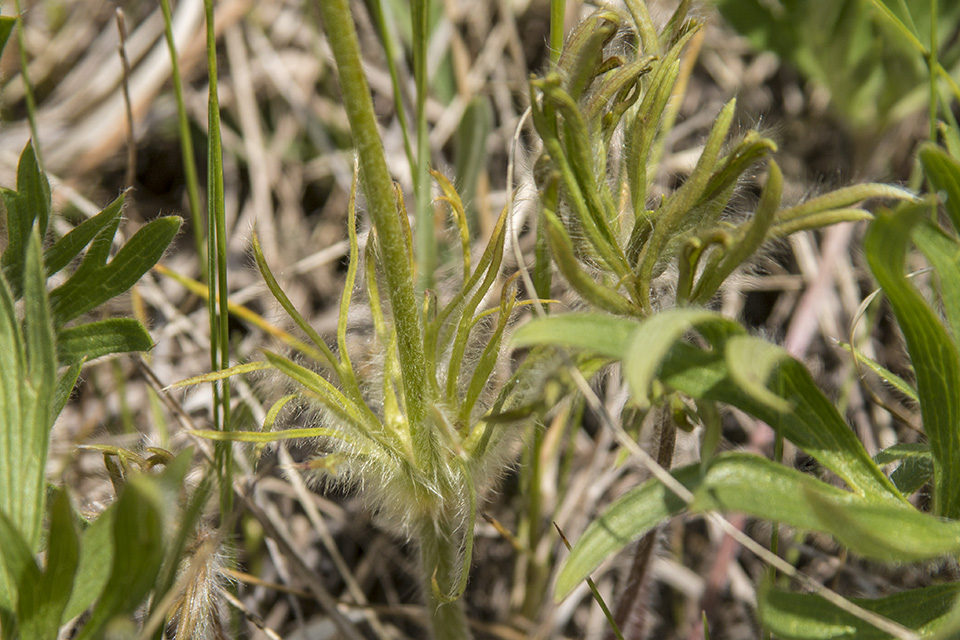
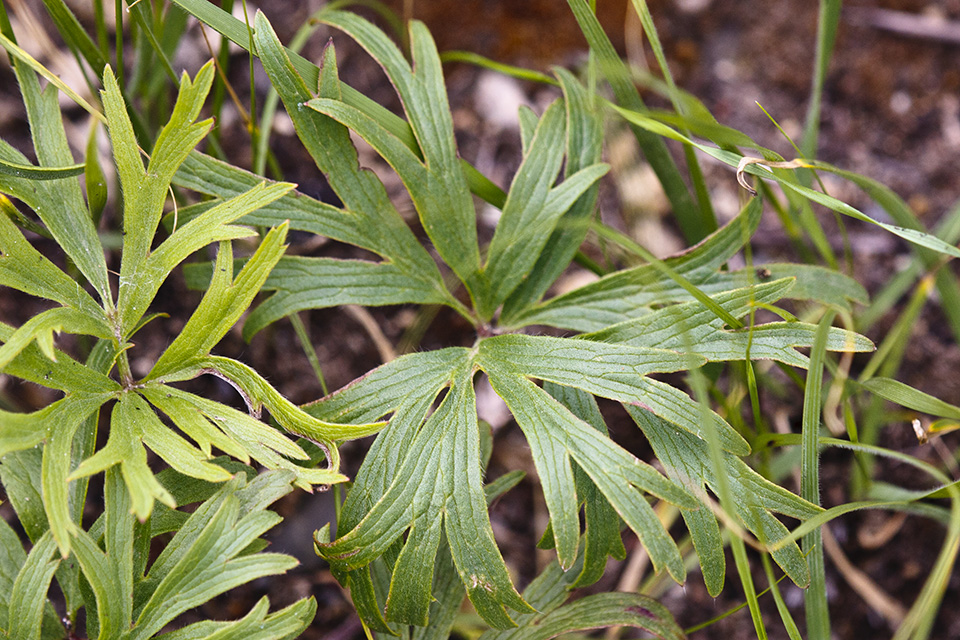
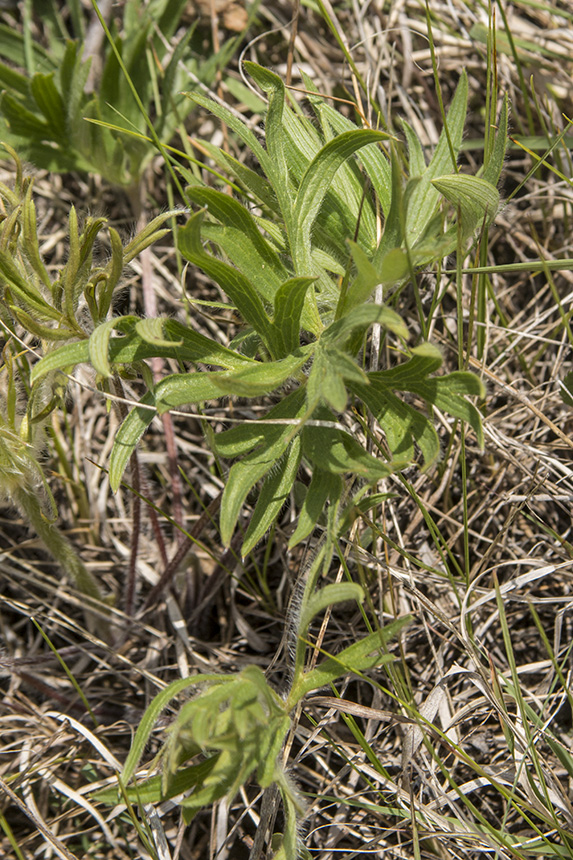
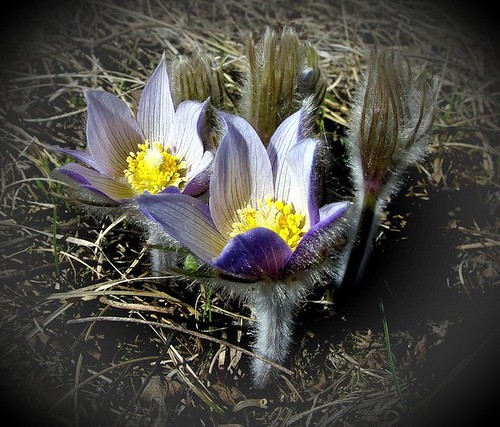
American pasqueflower, also called eastern pasqueflower, is an erect, perennial forb. On young plants it sends up basal leaves and a single flowering stem from a woody taproot. On older plants it sends up basal leaves and multiple flowering stems from an short, branched, ascending or vertical caudex. There are 3 to 10, but usually 5 to 8, basal leaves. The flowering stem has a whorl of three leaves below the inflorescence. Basal leaves are on leaf stalks that are 2″ to 5″ long though usually no longer than 4″. They are divided into 4 to 6 leaflets. Each leaflet is deeply divided into 2 more or less equal, narrow lobes. The upper surface is sparsely hairy, rarely hairless. The lower surface is densely covered with long, soft, shaggy, but unmatted hairs. Stem leaves are similar to the basal leaves but are smaller and are attached to the stem without a leak stalk. The inflorescence is a single flower at the end of a long, stout, stalk. The stalk is densely covered with long, soft, shaggy, but unmatted hairs. The flowers ar large and showy, up to 3″ across. They have 5 to 7 petal-like sepals. There are no petals. The sepals are white on the upper surface. The lower surface is densely hairy and purple or purplish-white, rarely white. There is a central, elongated, column-like cluster of white or purple styles surrounded by 150 to 200 yellow stamens. The fruit is a flattened achene with a ¾″ to 1″ long fluffy plume. |
Height |
4″ to 16″ |
Flower Color |
White sepals, yellow center |
Similar Species |
| No similar species |
Habitat |
Dry to moderate moisture. Prairies, hillsides, bluffs. Full sun. |
Ecology |
Flowering |
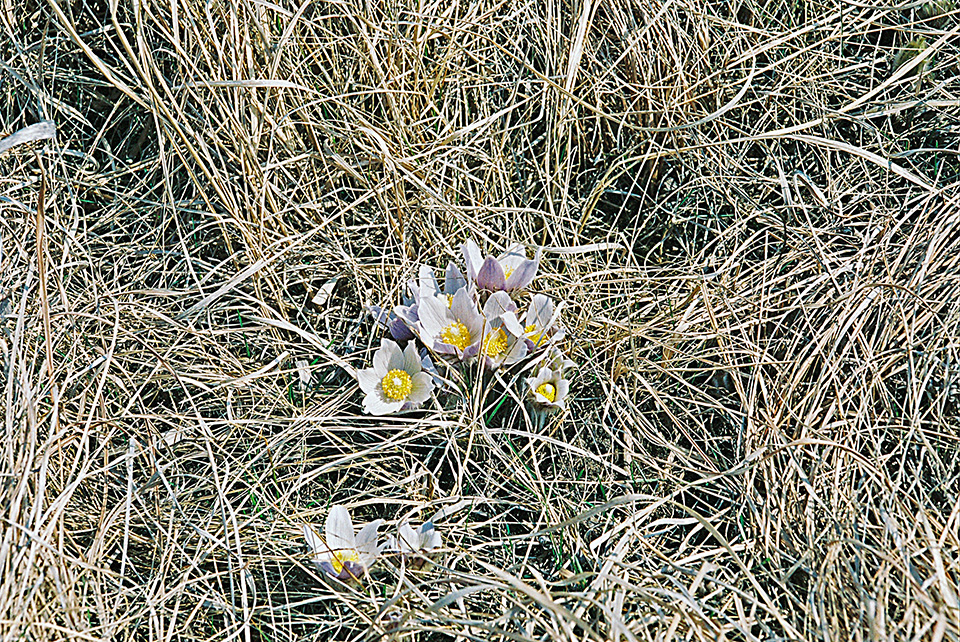
Late March to May American pasqueflower is the first wildflower to bloom in the spring on Minnesota prairies. The weather will determine when the first bloom appears. It has been seen in bloom in southern Minnesota as early as March 31. Dense silky hairs on the stout stem helps to trap warm air on cold spring nights. Look for it on south- or west-facing prairie hillsides. Though this is an early bloomer it is not an ephemeral—it does not die back to the ground after blooming. The distinctive, low, green, mounded leaves can be seen into late summer if not hidden by dense prairie grasses and forbs. In the fall the leaves turn yellow. |
Pests and Diseases |
|
Use |
This is the state flower of South Dakota. |
Distribution |
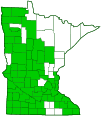
||
|
Sources |
|
| 4/7/2024 | ||
Nativity |
||
Native |
||
Occurrence |
||
Common |
||
Taxonomy |
|
Kingdom |
|
Subkingdom |
Pteridobiotina |
Phylum |
Tracheophyta (Vascular Plants) |
Class |
|
Order |
Ranunculales (Buttercups, Poppies, and Allies) |
Family |
Ranunculaceae (Buttercup) |
Subfamily |
Ranunculoideae (Anemones, Buttercups, Larkspurs, and Allies) |
Tribe |
Anemoneae (Anemones and Allies) |
Genus |
Anemone (anemones and thimbleweeds) or Pulsatilla (pasqueflowers) |
The appropriate classification of this species has been in contention for many years, and it remains so today. Genus A recent review of the issue (Mosyakin, 2016) proposed a “pragmatic circumscription.” Several clades had been revealed within Anemone sensu lato by recent molecular phylogenetic studies. Some other groups were recently recognized in the literature based on morphology. Mosyakin proposed grouping the many genera and groups into just six genera: Hepatica, Anemonastrum, Knowltonia, Pulsatilla, Anemone, and Anemoclema. The proposal has been widely but not universally accepted. Species Based on this, the correct name for the North American plants is either Pulsatilla nuttaliana or Pulsatilla patens ssp. multifida. Some sources use the narrowly circumscribed name Pulsatilla nuttaliana. These include iNaturalist, NatureServe, Plants of the World Online, and Database of Vascular Plants of Canada (VASCAN). Some sources use the widely circumscribed name Pulsatilla patens ssp. multifida. These include GBIF, NCBI, USDA Plants, and World Flora Online. Some sources reject the “pragmatic circumscription”, favoring the results supported by molecular research. They use the name Anemone patens var. multifida. These include GRIN, ITIS, and Flora of North America. In short, there is no “right” name, only your “preferred” name. |
|
Subordinate Taxa |
|
Synonyms |
|
Anemone ludoviciana Anemone multifida Anemone nuttalliana Anemone patens ssp. multifida Anemone patens var. nuttalliana Anemone patens var. wolfgangiana Anemone wolfgangiana Pulsatilla hirsutissima Pulsatilla ludoviciana Pulsatilla multifida Pulsatilla nuttaliana Pulsatilla nuttaliana ssp. multifida Pulsatilla nuttaliana ssp. nuttaliana Pulsatilla patens ssp. asiatica Pulsatilla patens ssp. hirsutissima Pulsatilla patens ssp. multifida Pulsatilla patens var. wolfgangiana |
|
Common Names |
|
American pasqueflower crocus cutleaf anemone eastern pasqueflower pasque flower pasqueflower prairie crocus prairie-crocus prairie smoke prairie-smoke pulsatille sticky pasqueflower |
|
Glossary
Achene
A dry, one-chambered, single-seeded seed capsule, formed from a single carpel, with the seed attached to the membranous outer layer (wall) only by the seed stalk; the wall, formed entirely from the wall of the superior ovary, does not split open at maturity, but relies on decay or predation to release the contents.
Caudex
A short, thickened, woody, persistent enlargement of the stem, at or below ground level, used for water storage.
Visitor Photos |
||
Share your photo of this plant. |
||
This button not working for you? |
||
Dan W. Andree |
||
 |
||
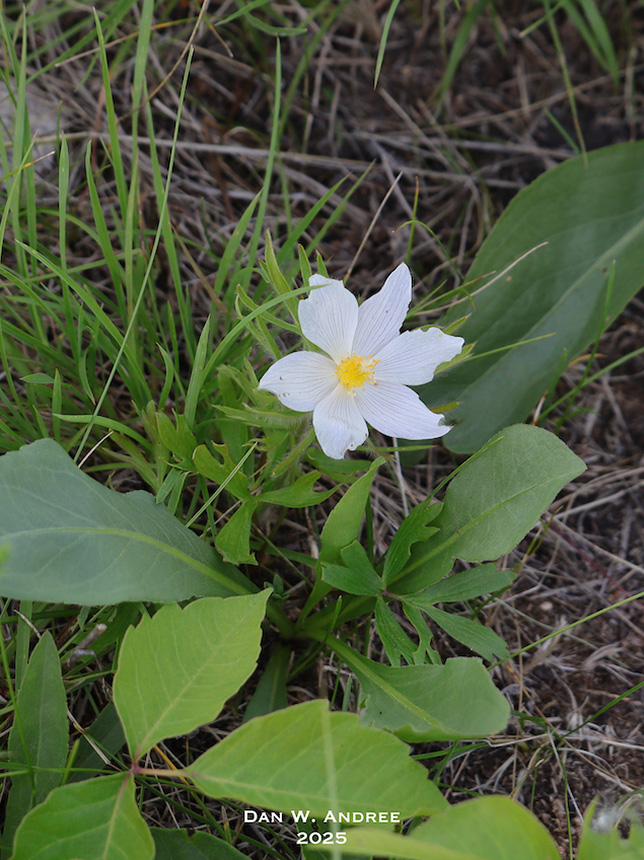
White Wild Flower... I haven't seen this kind of flower before. There was just this one at Frenchman's Bluff SNA. |
||
 |
 |
|
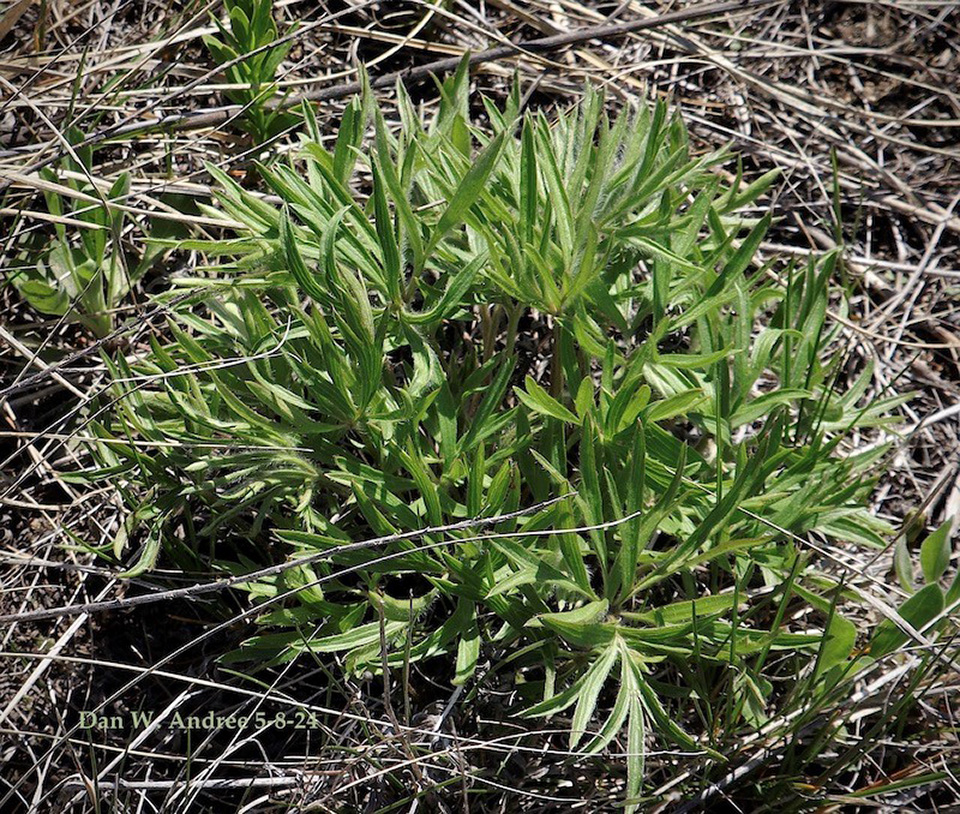
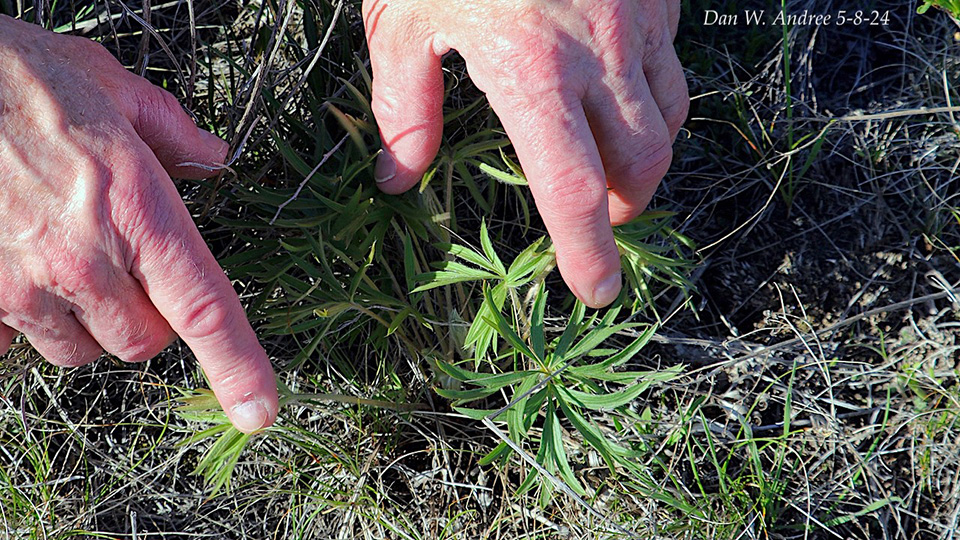
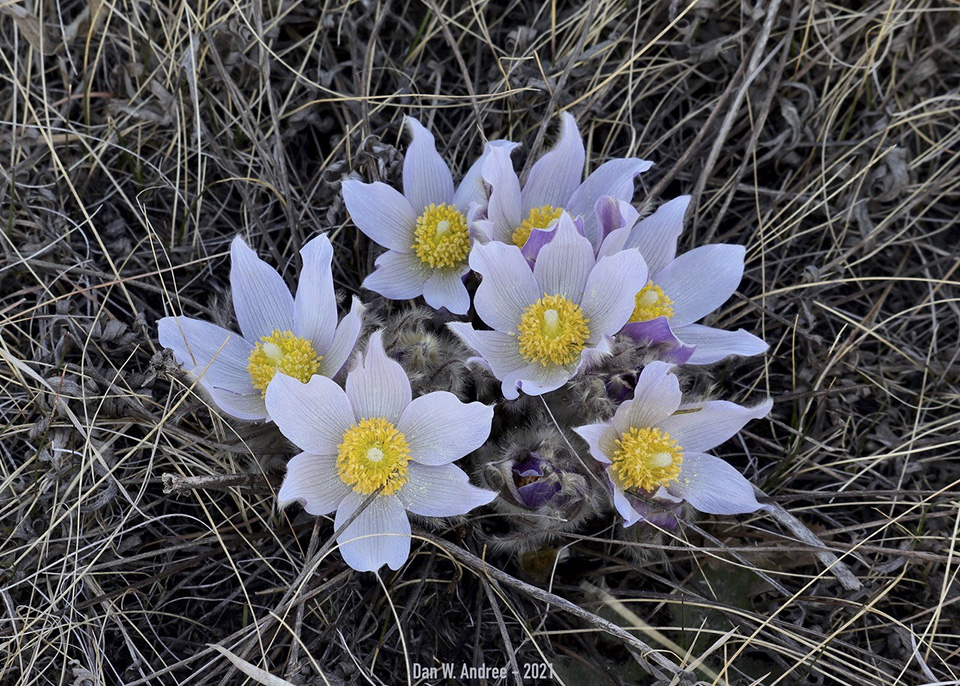
Pasque flowers in the burn area... This was at Frenchman’s Bluff SNA the area that was burned earlier this spring and regrowth already started with pasque flowers popping up and blooming already in the previously burned area. Amazing how fast regrowth is and now we have had a good shot of rain this morning and more yet predicted today so guessing things will really grow with milder temps in the forecast coming. |
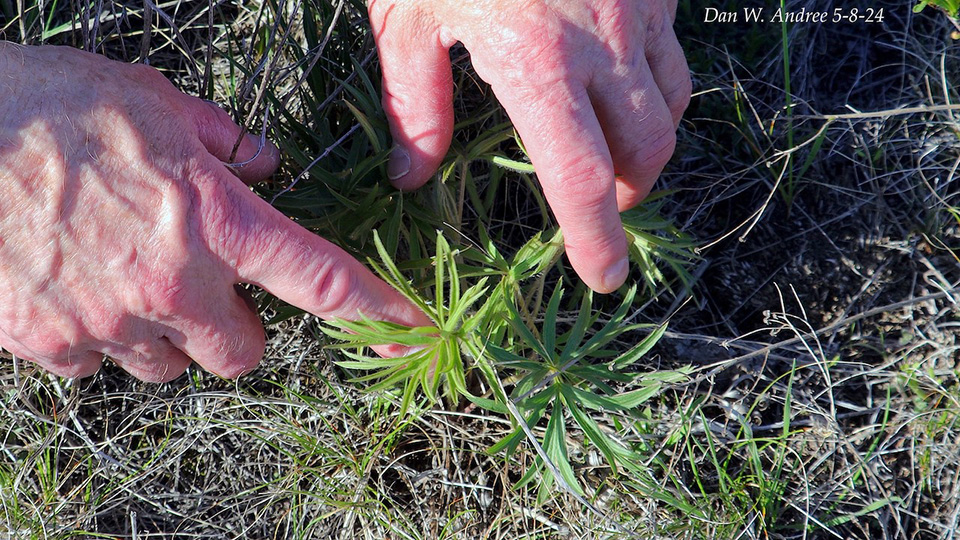
Here is another one... This is also in the burned area. |
|
 |
 |
|
 |
 |
|
 |
|
|
Small Bee or Wasp on American Pasque Flower… Seen small bees or some kind of small wasps feeding on pasque flower blossoms at Frenchman’s Bluff SNA. This was one I seen. It was pretty dry in spots out there but noticed other prairie vegetation starting to poke out of the ground. Rain is expected for the next 2-3 days so that should help further along growth. |
Here is another photo of that small bee or... small wasp. It was maybe half an inch long. The pasque flower blossom shown was fairly large for a pasque flower. |
|
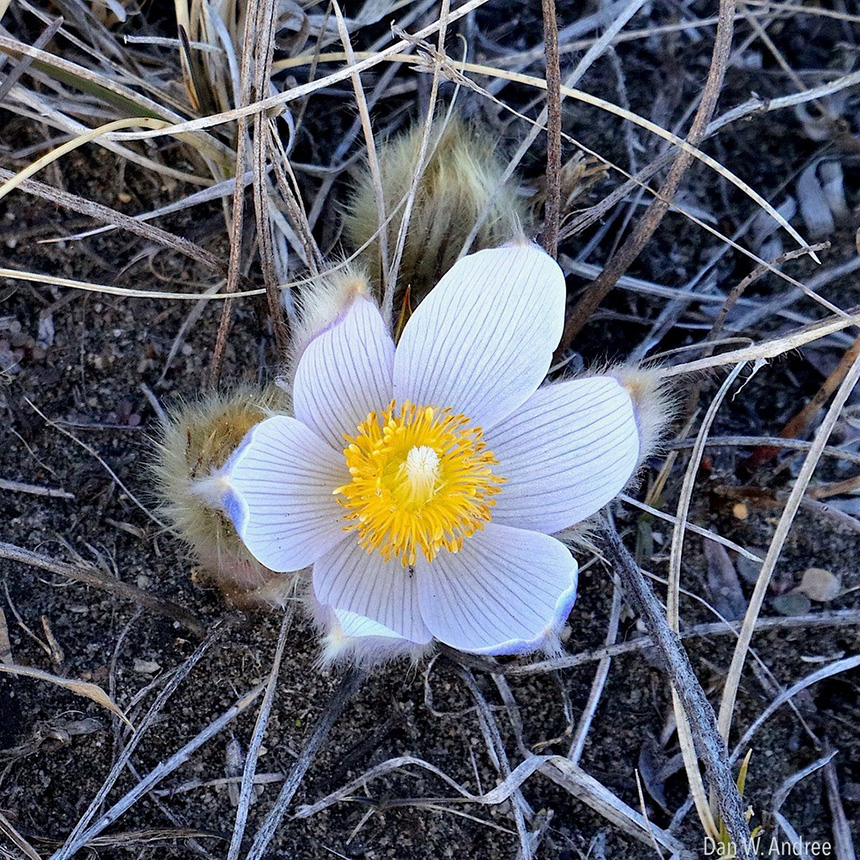
One single Pasque Flower... This one was by itself at least when I seen it 4-4-24 at Frenchman’s Bluff SNA. There wasn’t a whole lot of them blooming just a few here and there on that day but I’m sure more will be blooming in the days ahead. The first pasque flower photo I sent was also from the same prairie preserve as this one. Though we lacked snow much of the winter in this area and many other areas in Mn etc. the soil out at Frenchman’s was moist that day which I was surprised but recent strong winds the other day I'm sure dried areas since on the 4th. Today the 7th been raining light rain showers for much of the day in a wide area which is a good thing. |
 |
|
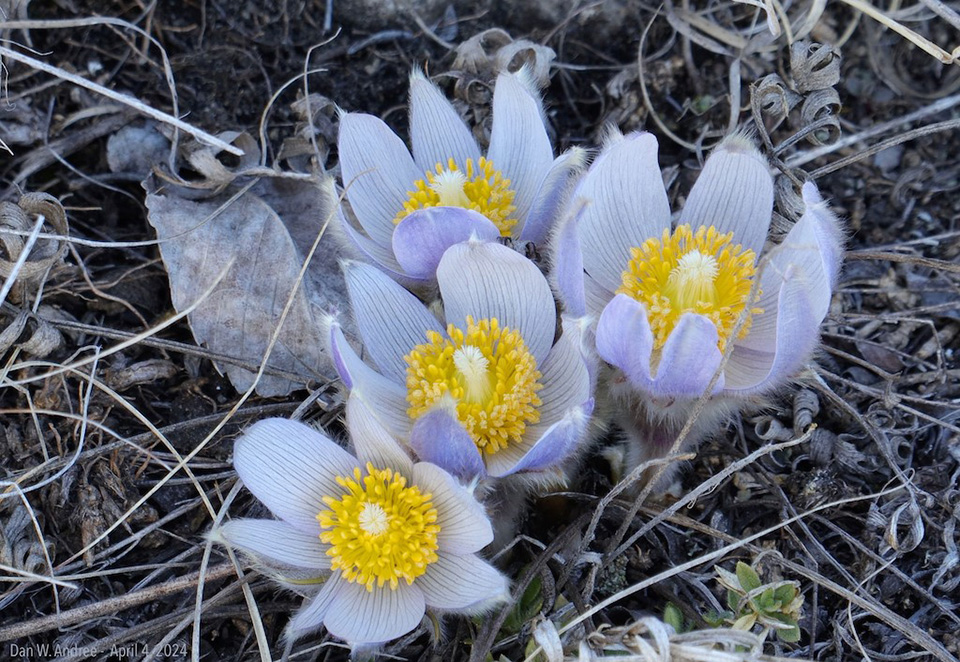
Pasque Flowers... I happened to notice these at a Prairie Preserve in Norman Co. Mn. 4-4-24 |
 |
|
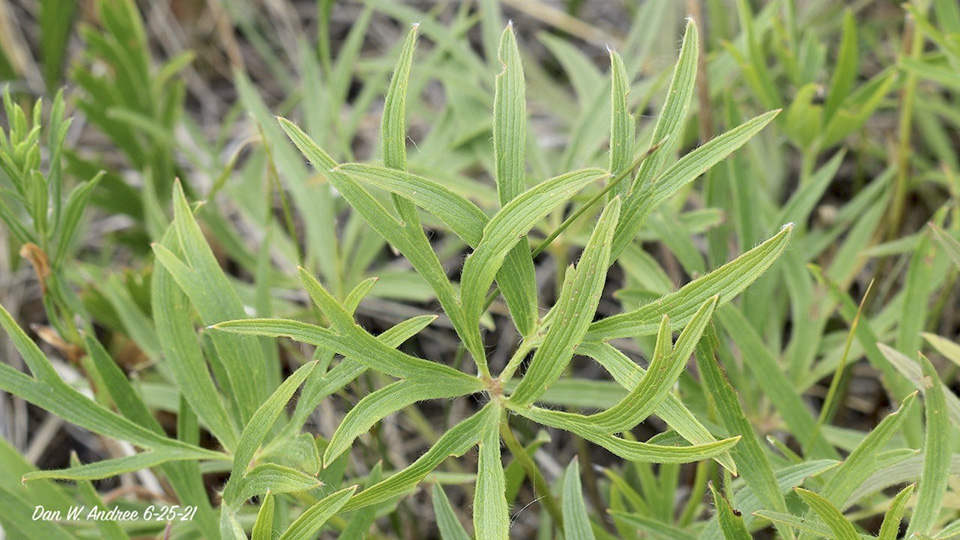
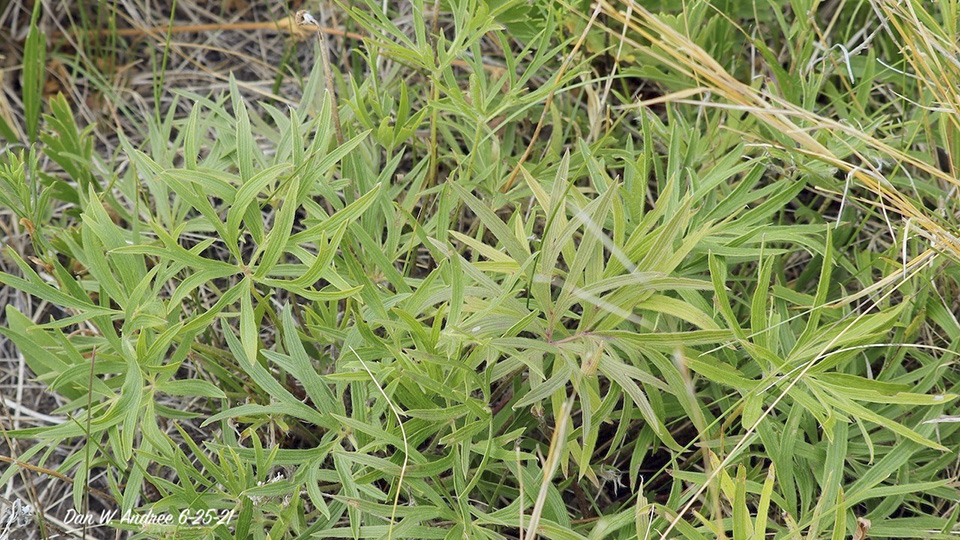
Plant growing at Frenchman's Bluff ... I was out at Frenchman’s Bluff yesterday 6-25-21 and noticed clumps of this type of plant in areas... Also it appears the west section of the SNA had a recent prescribed burn some time back in Spring 2021. It has already regrown with a lot of diversity and looks really nice. There were a few wildflowers already in bloom and a Black Swallowtail was hanging around on the top of the big hill or bluff. Seemed like the burn was from the top of the big hill/bluff and over to the west SNA boundary. The area of the SNA where you walk in etc. that was left as is. Anyway I plan on going back out there again sometime to see what else takes place. |
 |
|
 |
||
 |
 |
|
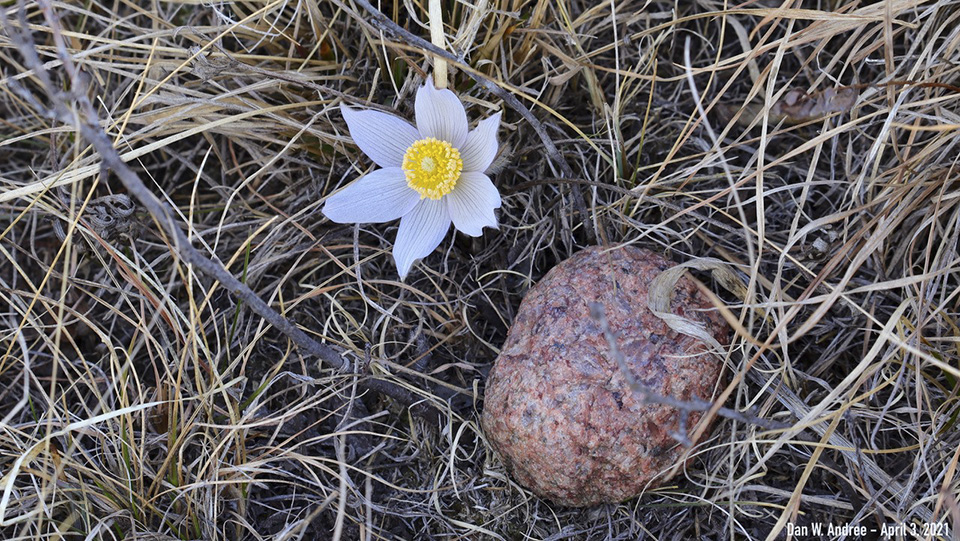
Pasque Flower and Granite Stone... |
||
| Pasque Flowers.... |
|
|

Nancy Falkum |
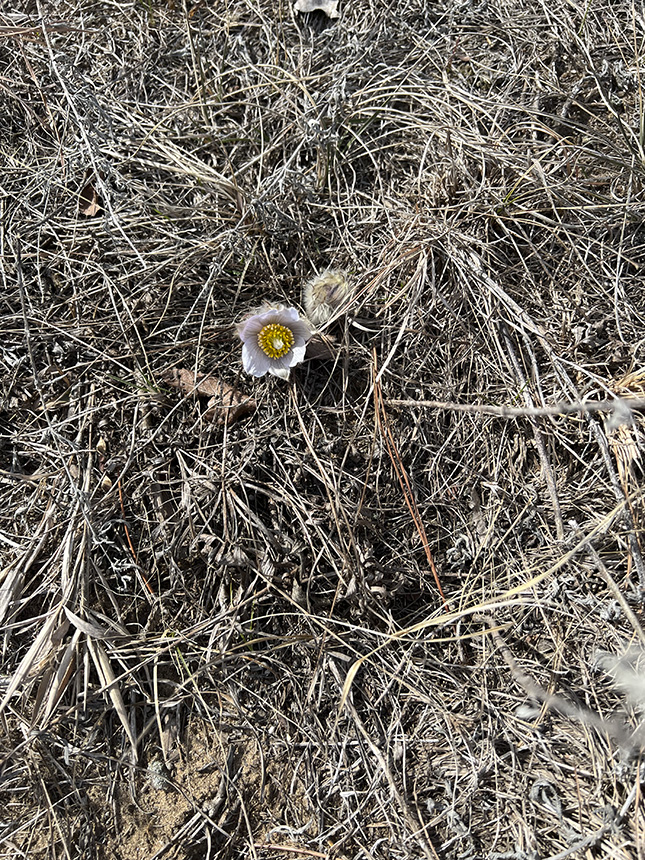 |
first Pasqueflower! |
MinnesotaSeasons.com Photos |
||
 |
 |
|
Young plant |
Young plant |
|
 |
|
|
Young plant |
||
|
||
|
||
|
Young plant |
|
 |
 |
|
Mature plant |
Mature plant | |
 |
 |
|
Mature plant |
Mature plant | |
 |
||
Mature plant |
||
 |
 |
|
Plant in fruit |
Plant in fruit |
|
 |
 |
|
Plant in fruit |
Plant in fruit |
|
 |
 |
|
Flower |
Flower |
|
 |
 |
|
Flower |
Flower |
|
 |
 |
|
Flower |
Infructescence |
|
 |
 |
|
Infructescence |
Mounded leaves |
|
 |
 |
|
Stem leaves |
Basal leaves | |
 |
||
Basal leaves |

Slideshows |
Prairie crocus - Collins Hill 2007 |
|
Wild Prairie Crocus |
|
Visitor Videos |
||
Share your video of this plant. |
||
This button not working for you? |
||
|
Other Videos |
||
Pulsatilla nuttalliana (American pasqueflower, prairie pasqueflower, prairie crocus) in Winnipeg |
About
Sep 8, 2023 Date - the first half of May 2023 |
Anemone patens (Pasque flower) - Native wildflower information! |
About
May 9, 2023 In this video Allison talks a bit about the popular Pasque flower also known by its scientific name, Anemone patens. This native plant is available for sale at our garden centers. www.prairieresto.com |
Pulsatilla nuttalliana / Prairie Pasqueflower |
About
Apr 8, 2024 |
Sweat bee (Lasioglossom sp.) on Pasqueflower (Anemone patens) |
About
Apr 12, 2016 USA, MN, Goodhue County, Warsaw Township, Sogn Valley Farm, "Crocus Hill." 3 April 2016. |

Visitor Sightings |
||
Report a sighting of this plant. |
||
This button not working for you? |
||
Dan W. Andree |
Location: Frenchman’s Bluff SNA I haven't seen this kind of flower before. There was just this one at Frenchman's Bluff SNA. |
|
John Valo |
This is American pasqueflower. You probably didn’t recognize it because you haven’t seen it blooming this late in the year. Neither have I. According to Lynsey Nass, Minnesota Master Naturalist, the record latest pasqueflower in Hennepin County was on May 1 in 1978. The record latest pasqueflower in Washington County was on July 27 in 2003. According to Flora of North America, the blooming period for American pasqueflower is April through August. However, this includes areas as far north as Alaska and elevations up to 3,800 meters (12,487 feet). |
|

Dan W. Andree |
Location: Frenchman’s Bluff SNA Here is another one... This is also in the burned area. |
 |
Dan W. Andree |
Location: Frenchman’s Bluff SNA |
 |
Dan W. Andree |
Location: Norman Co. Mn.
|
 |
Dan W. Andree |
Location: Frenchman’s Bluff SNA Seen small bees or some kind of small wasps feeding on pasque flower blossoms at Frenchman’s Bluff SNA. This was one I seen. It was pretty dry in spots out there but noticed other prairie vegetation starting to poke out of the ground. Rain is expected for the next 2-3 days so that should help further along growth. |
|
Dan W. Andree |
Location: Norman Co. Mn. I happened to notice these at a Prairie Preserve in Norman Co. Mn. 4-4-24 |
 |
| Nancy Falkum 4/10/2022 |
Location: Kellogg Weaver Dunes SNA, Weaver Dunes Unit first Pasqueflower!
|
 |
| Dan W. Andree 6/25/2021 |
Location: Frenchman’s Bluff SNA I was out at Frenchman’s Bluff yesterday 6-25-21 and noticed clumps of this type of plant in areas... Also it appears the west section of the SNA had a recent prescribed burn some time back in Spring 2021. It has already regrown with a lot of diversity and looks really nice. There were a few wildflowers already in bloom and a Black Swallowtail was hanging around on the top of the big hill or bluff. Seemed like the burn was from the top of the big hill/bluff and over to the west SNA boundary. The area of the SNA where you walk in etc. that was left as is. Anyway I plan on going back out there again sometime to see what else takes place. |
|

| Dan W. Andree 4/4/2021 |
Location: Frenchman’s Bluff SNA |
|

| Dan W. Andree 4/3/2021 |
Location: Frenchman’s Bluff SNA Only seen a couple they seemed to be just starting to bloom. This single bloom was next to this granite stone. |
|

MinnesotaSeasons.com Sightings |
||
Created: Last Updated: © MinnesotaSeasons.com. All rights reserved. |