



Deptford pink
(Dianthus armeria ssp. armeria)
Conservation • Wetland • Description • Habitat • Ecology • Use • Distribution • Taxonomy
Conservation Status |
|
|||||||
| IUCN Red List | not listed |
|||||||
| NatureServe | NNA - Not applicable SNA - Not applicable |
|||||||
| Minnesota | not listed |
|||||||
Wetland Indicator Status |
||||||||
| Great Plains | UPL - Obligate upland |
|||||||
| Midwest | UPL - Obligate upland |
|||||||
| Northcentral & Northeast | UPL - Obligate upland |
|||||||
Description |
||
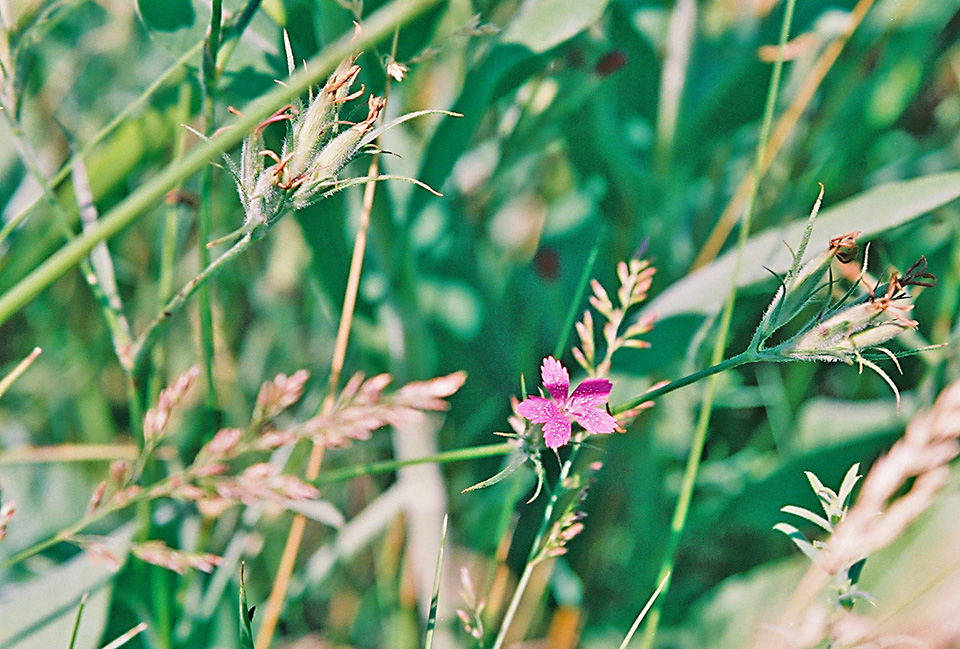
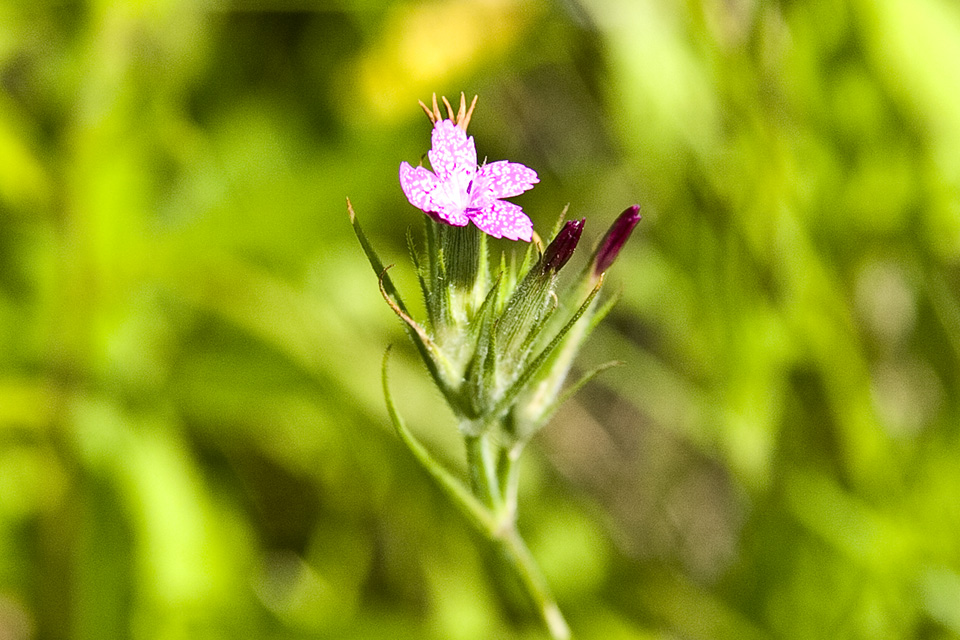
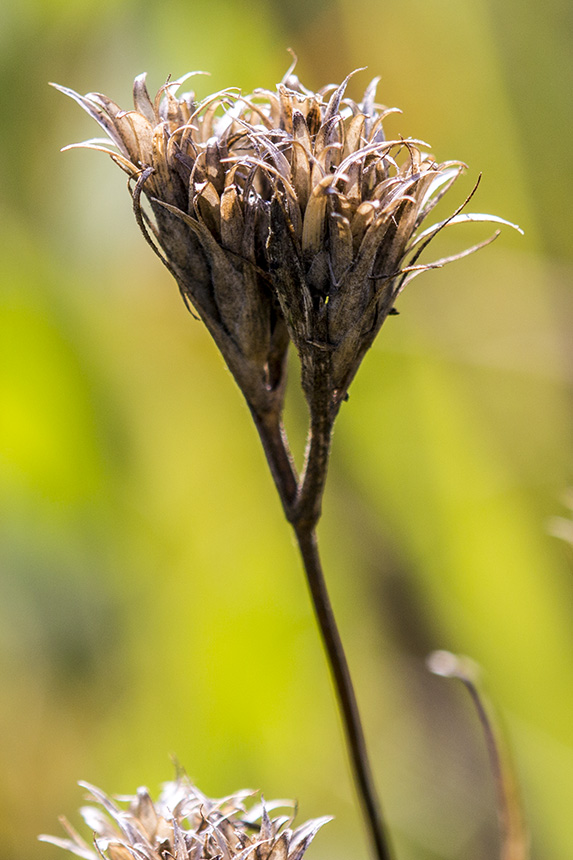
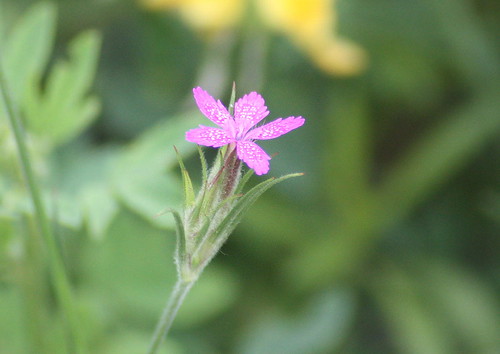
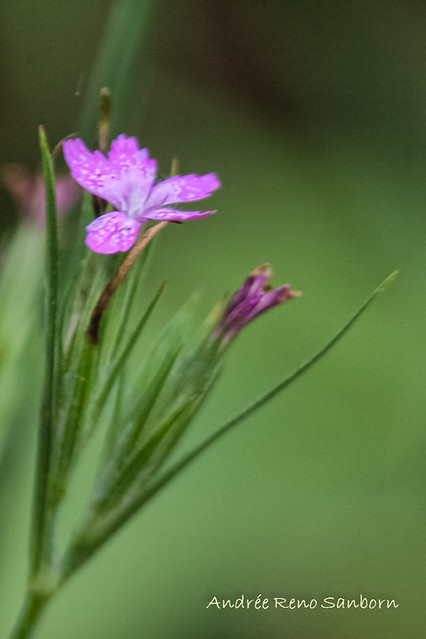
Deptford pink is a 8″ to 24″ tall, erect, annual or biennial forb that rises on one to several stems from a slender taproot. The stems are erect, round, hollow, and usually unbranched, occasionally forked above the middle. They are hairless near the base but moderately covered with curled hairs at the nodes and near the top. There are many basal leaves and 5 to 10 pairs of stem leaves. Stem leaves are opposite, linear to narrowly inversely lance-shaped, ¾″ to 4″ long, and ⅛″ to 3 ⁄16″ wide. They are attached to the stem without a stalk. Basal leaves are tapered to a blunt tip, stem leaves are sharply pointed at the tip. The upper and lower surfaces are minutely hairy. The margins are untoothed. The inflorescence is occasionally a solitary flower or, more commonly, an open cluster of 3 to 6 flowers at the end of the stem and branches. The flowers appear almost stalkless on 1 ⁄32″ to ⅛″ long stalks. The flowers are ⅓″ to ½″ wide. There are 5 sepals fused at the base into a tube (calyx) up to ⅝″ long and ⅛″ in diameter, then separated into 5 lobes. The calyx has 20 to 25 parallel veins and is densely hairy. The calyx lobes are linear and are tapered to a sharply-pointed tip. At the base of the calyx there are 1 to 3 pairs of bracts forming a secondary calyx (epicalyx). The bracts are green, linear, ascending, stiff, hairy, and as long or longer than the sepals. There are 5 pinkish-red to purplish-red petals with numerous white spots. The petals are narrowed at the base (clawed) and expanded at the tip into ⅛″ to 5 ⁄16″ long lobes. The lobes are irregularly toothed at the tip. There are 10 stamens with pink anthers and 2 styles. The fruit is a ⅜″ to ⅝″ long capsule with 40 to 100 or more seeds. |
||
Height |
||
8″ to 24″ |
||
Flower Color |
||
Pinkish-red to purplish-red with white spots |
||
Similar Species |
||
Maiden pink (Dianthus deltoides) calyx is hairless. The petals are broader. |
||
Habitat |
||
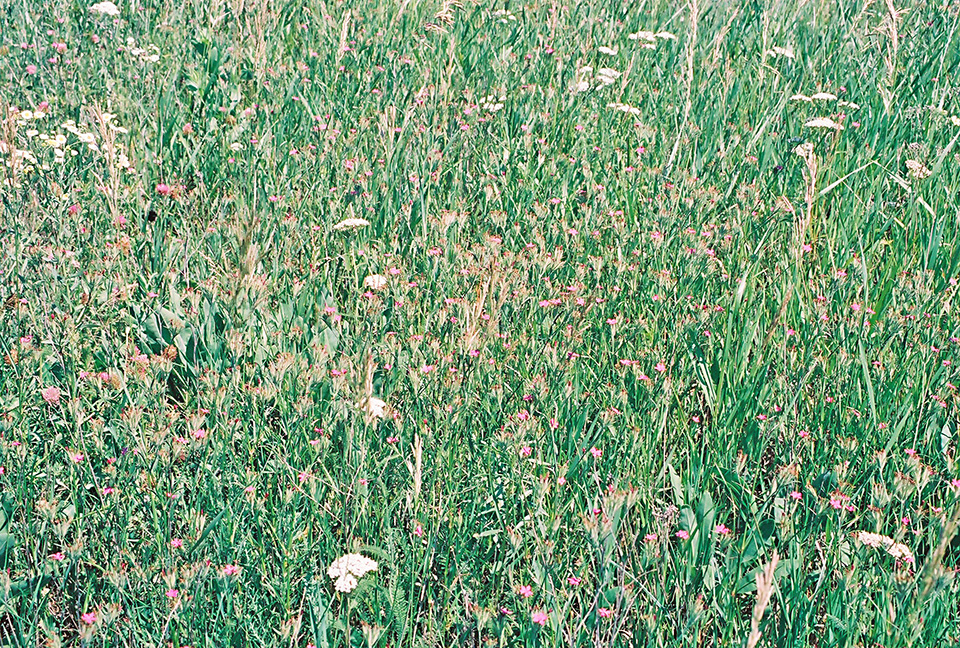
Upland prairies, forest openings, roadsides, railroads, disturbed sites |
||
Ecology |
||
Flowering |
||
July to August |
||
Pests and Diseases |
||
|
||
Use |
||
|
||
Distribution |
||||
|
Sources |
|||
| 4/9/2023 | ||||
Nativity |
||||
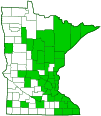
Native to Western Asia and Europe. Introduced, escaped from cultivation and naturalized in the United States. |
||||
Occurrence |
||||
|
||||
Taxonomy |
|||
| Kingdom | Plantae (Plants) | ||
| Subkingdom | Pteridobiotina | ||
| Phylum | Tracheophyta (Vascular Plants) | ||
| Class | Magnoliopsida (Dicots) | ||
| Subclass | Caryophyllidae | ||
Order |
Caryophyllales (Pinks, Cactuses, and Allies) | ||
Family |
Caryophyllaceae (Pink) | ||
| Subfamily | Caryophylloideae | ||
| Tribe | Caryophylleae | ||
Genus |
Dianthus (carnations) | ||
| Species | Dianthus armeria (Deptford pink) | ||
There are two subspecies of Deptford pink. Only ssp. armeria occurs in North America. |
|||
Subordinate Taxa |
|||
|
|||
Synonyms |
|||
|
|||
Common Names |
|||
Deptford pink Deptford’s Pink Grass Pink |
|||
Glossary
Bract
Modified leaf at the base of a flower stalk, flower cluster, or inflorescence.
Calyx
The group of outer floral leaves (sepals) below the petals, occasionally forming a tube.
Claw
A stalk-like narrowed base of some petals and sepals.
Epicalyx
A whorl of bracts, just below the calyx, resembling a secondary, outer calyx.
Linear
Long, straight, and narrow, with more or less parallel sides, like a blade of grass.
Node
The small swelling of the stem from which one or more leaves, branches, or buds originate.
Sepal
An outer floral leaf, usually green but sometimes colored, at the base of a flower.
Visitor Photos |
|||||
Share your photo of this plant. |
|||||
| This button not working for you? Simply email us at info@MinnesotaSeasons.com. Attach one or more photos and, if you like, a caption. |
|||||
|
|||||
MinnesotaSeasons.com Photos |
|||||
Plant |
|||||
 |
|||||
Inflorescence |
|||||
 |
 |
||||
 |
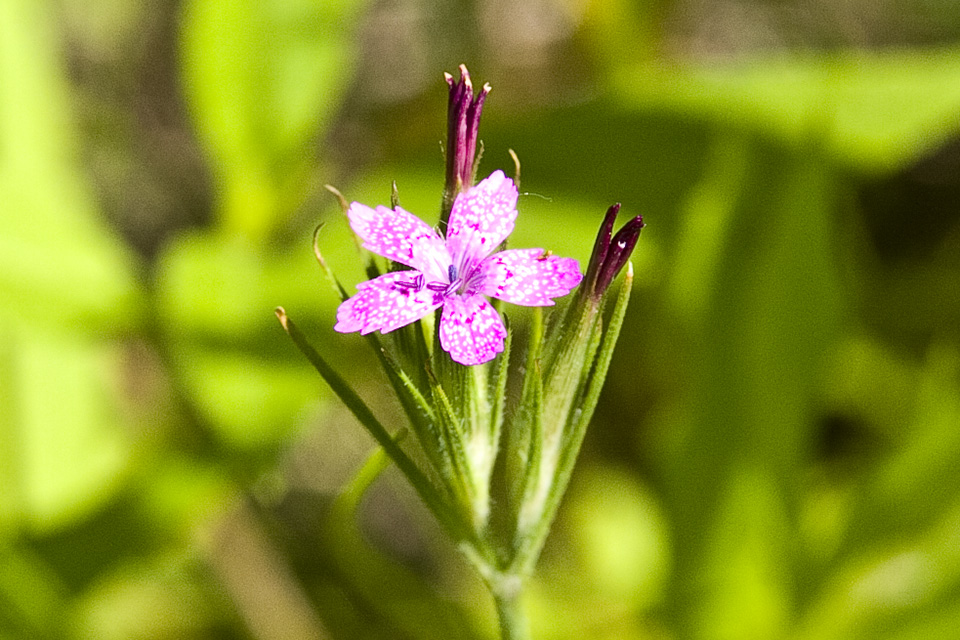 |
||||
Flower |
|||||
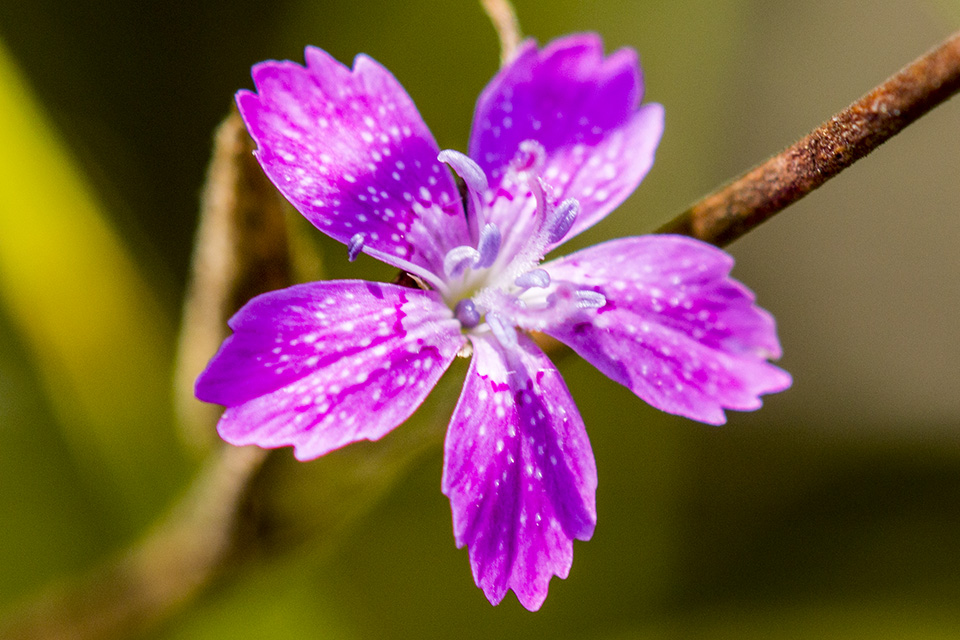 |
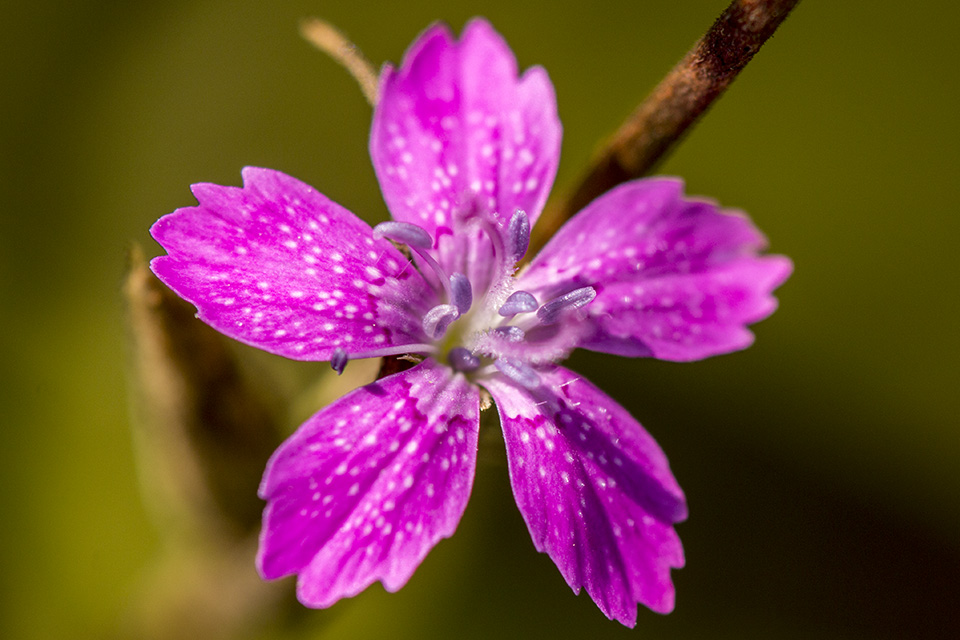 |
||||
Infructescence |
|||||
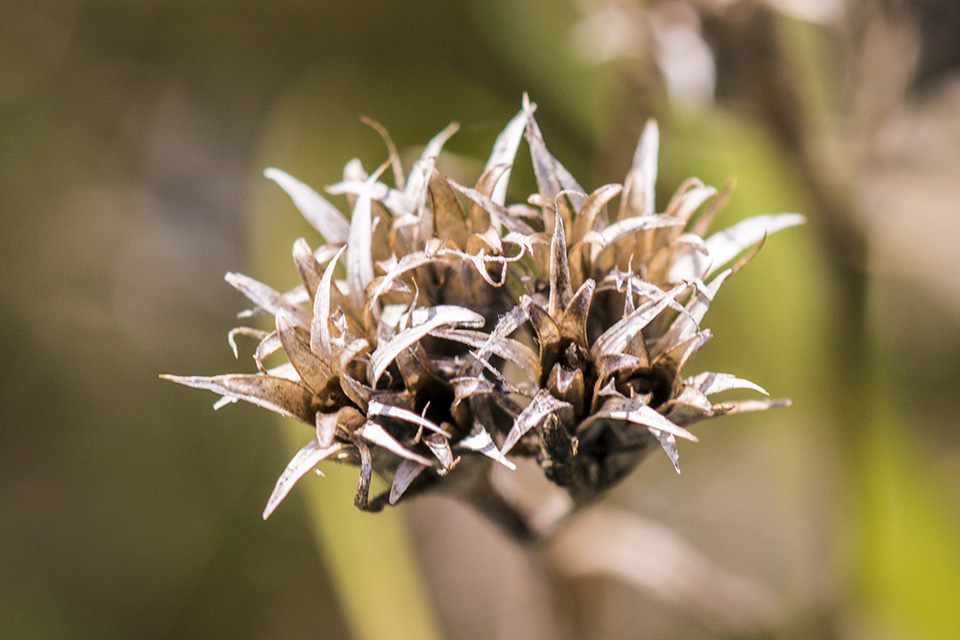 |
 |
||||

Slideshows |
||
| Deptford Pink DianesDigitals |
||
|
||
About
Copyright DianesDigitals |
||
| Deptford Pink (Grass Pink) (Dianthus armeria) Andree Reno Sanborn |
||
|
||
| Deptford Pink Project Species Recovery Trust |
||
About
Published on Nov 28, 2014 Interview with BBC Radio Devon about the Deptford Pink project in the southwest, what work we're doing and why saving species is so important. |
||
Visitor Videos |
|||
Share your video of this plant. |
|||
| This button not working for you? Simply email us at info@MinnesotaSeasons.com. Attach a video, a YouTube link, or a cloud storage link. |
|||
Other Videos |
|||

Visitor Sightings |
|||||
Report a sighting of this plant. |
|||||
| This button not working for you? Simply email us at info@MinnesotaSeasons.com. Be sure to include a location. |
|||||
|
|||||
MinnesotaSeasons.com Sightings |
|||||
|
Created: Last Updated: © MinnesotaSeasons.com. All rights reserved. |