



heart-leaved four o’clock
(Mirabilis nyctaginea)
Conservation • Wetland • Description • Habitat • Ecology • Use • Distribution • Taxonomy
Conservation Status |
|
|||||||
| IUCN Red List | not listed |
|||||||
| NatureServe | N5? - Secure SNR - Unranked |
|||||||
| Minnesota | not listed |
|||||||
Wetland Indicator Status |
||||||||
| Great Plains | UPL - Obligate upland |
|||||||
| Midwest | UPL - Obligate upland |
|||||||
| Northcentral & Northeast | UPL - Obligate upland |
|||||||
Description |
||
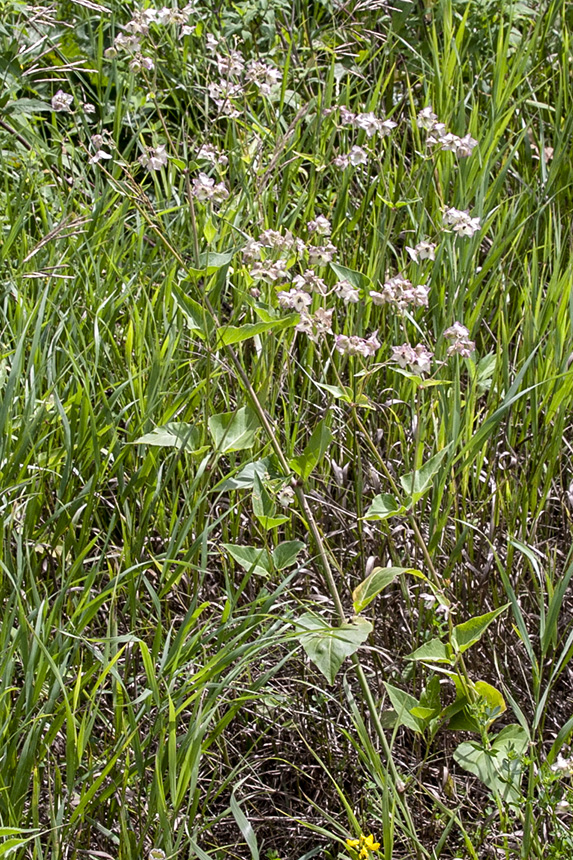
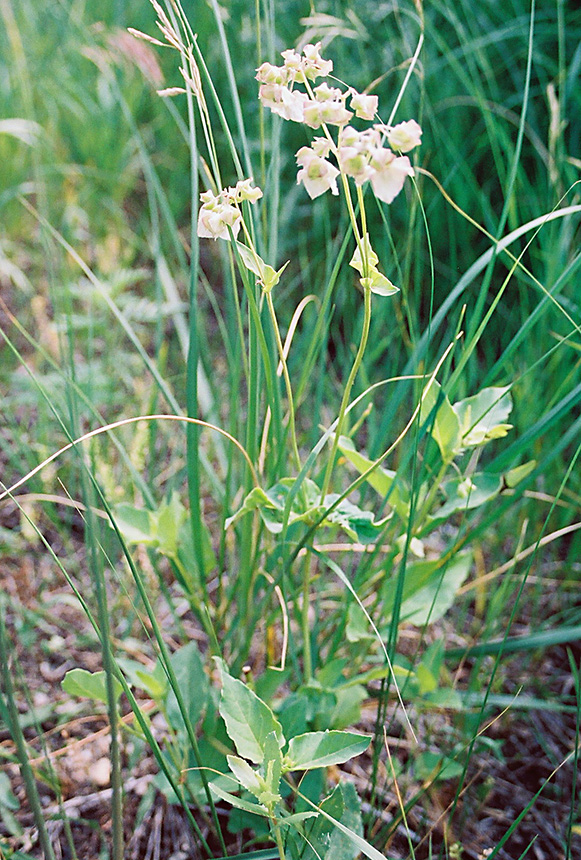
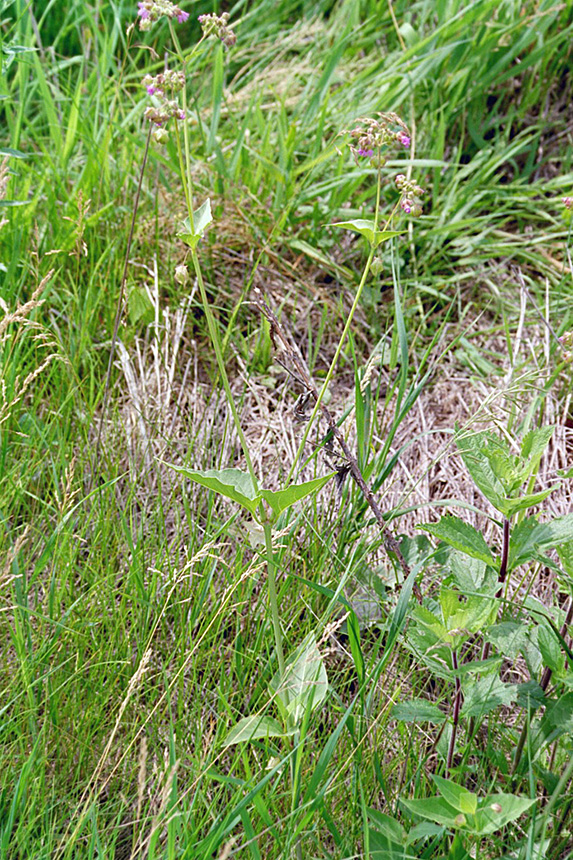
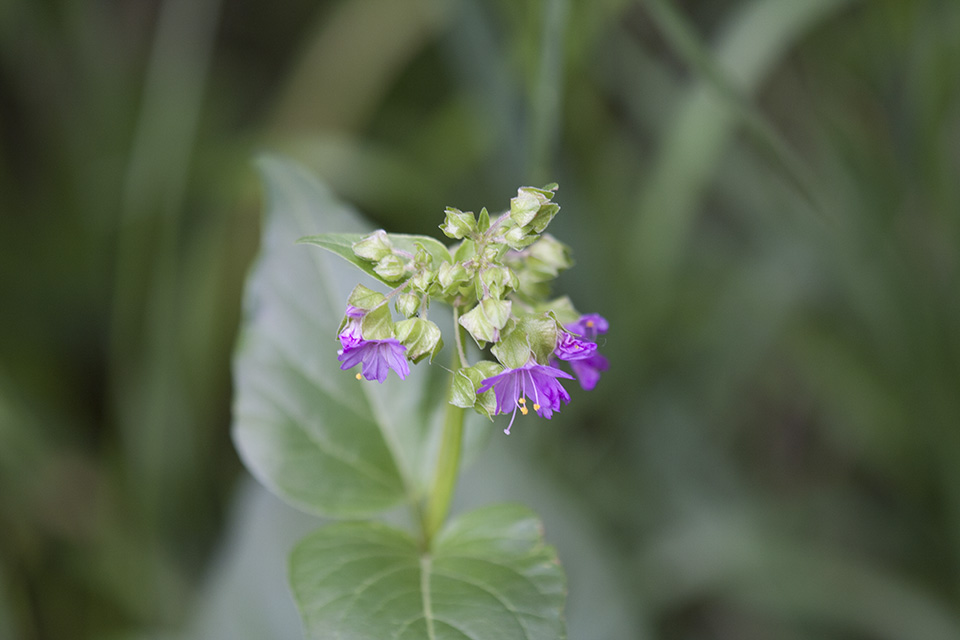
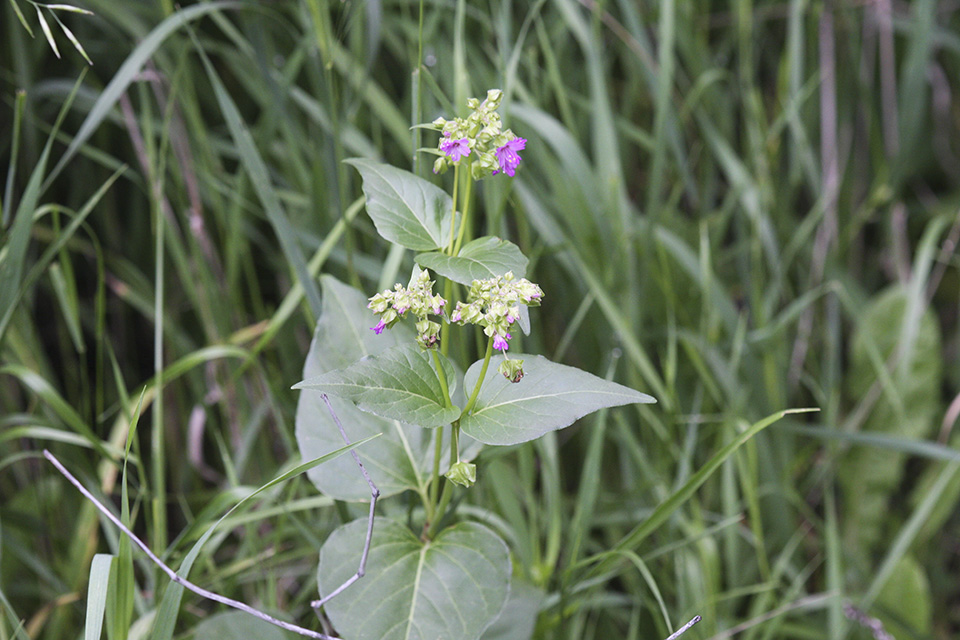
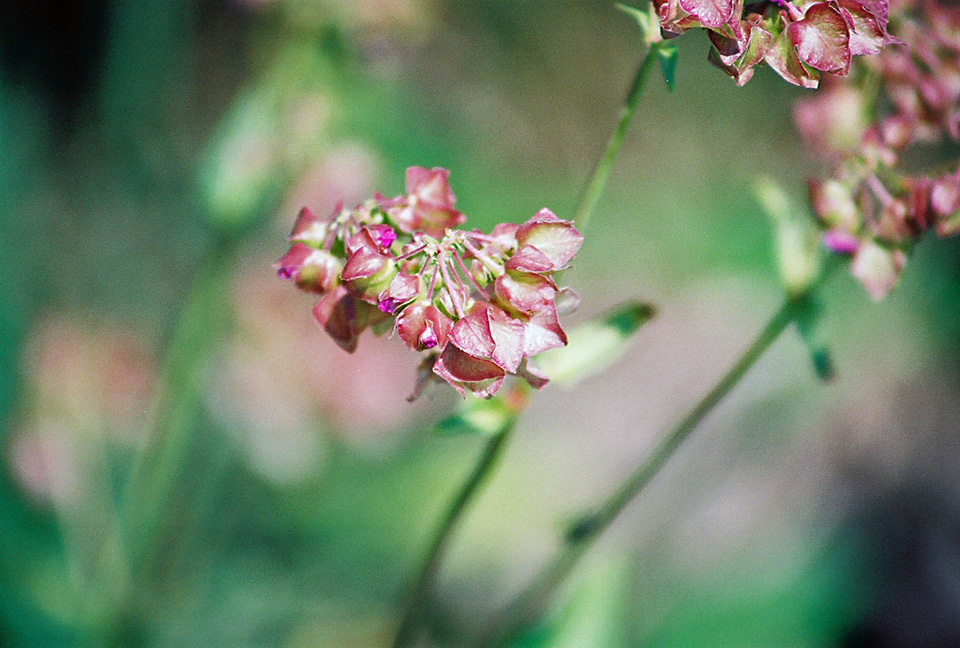
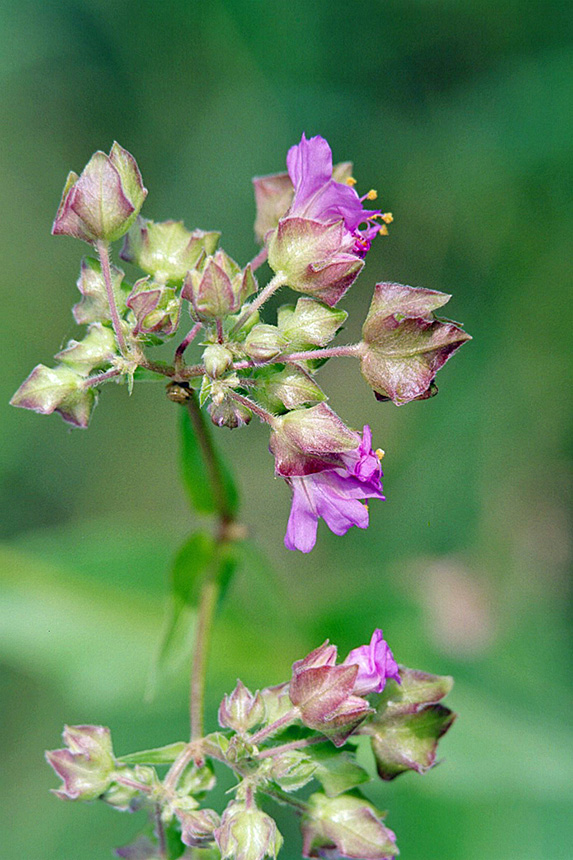
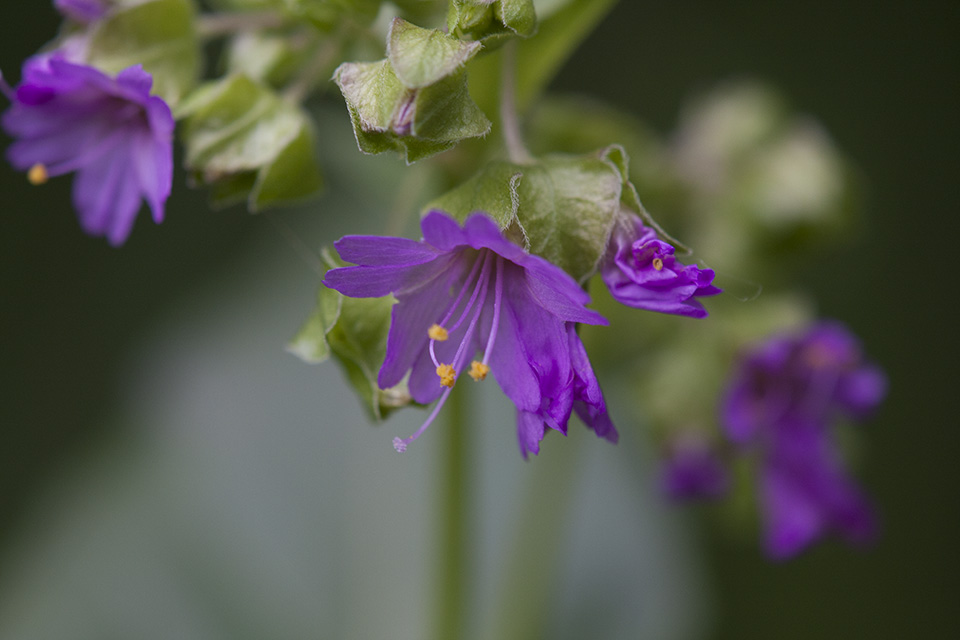
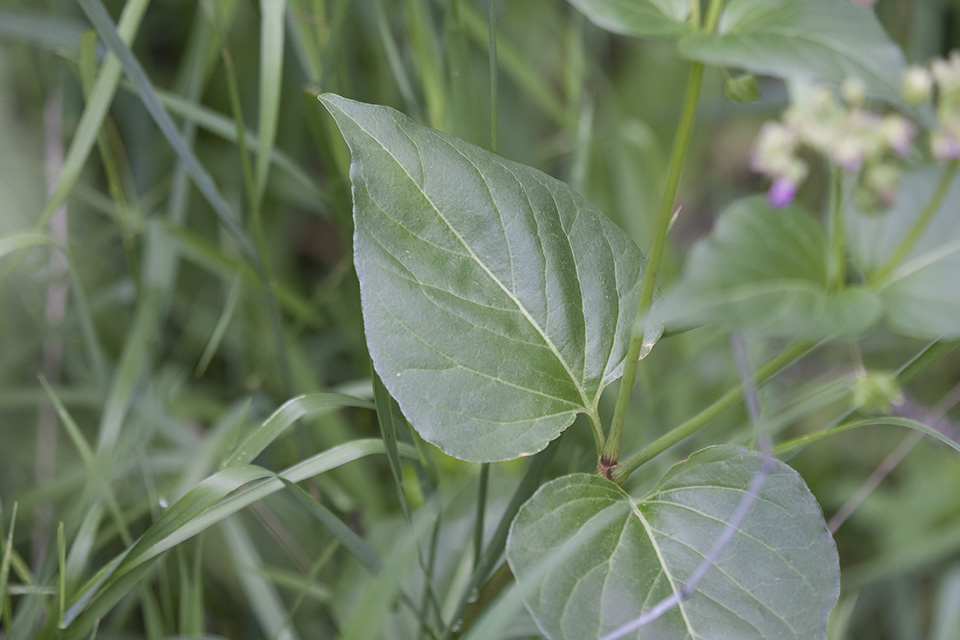
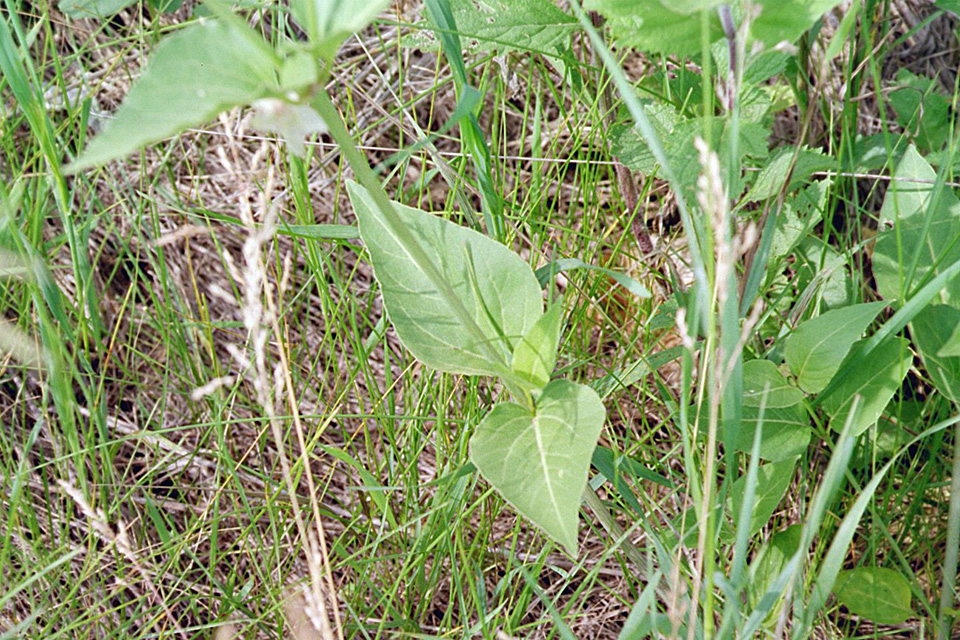
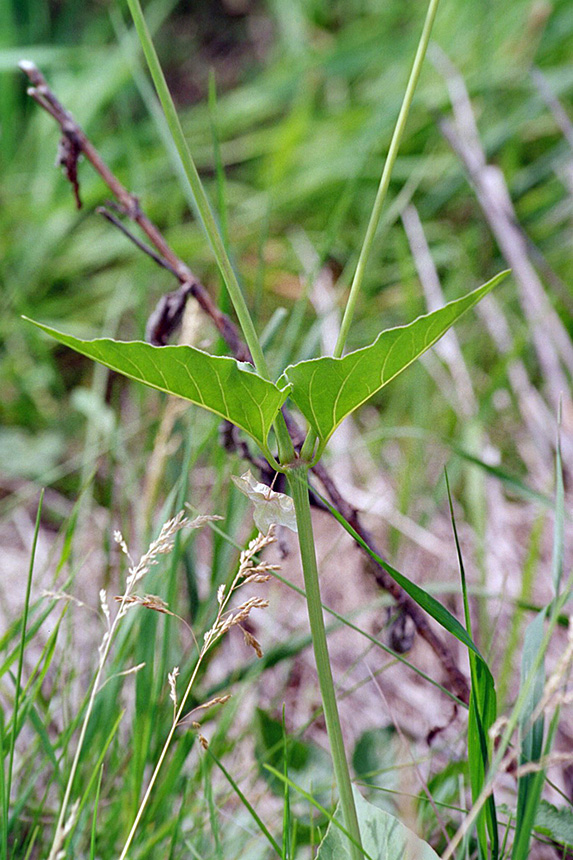
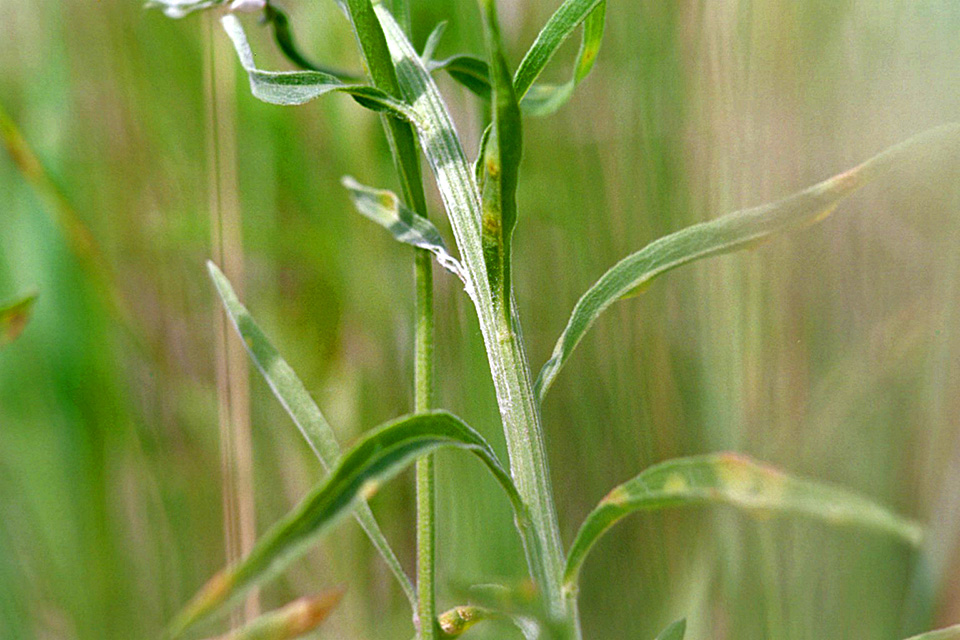
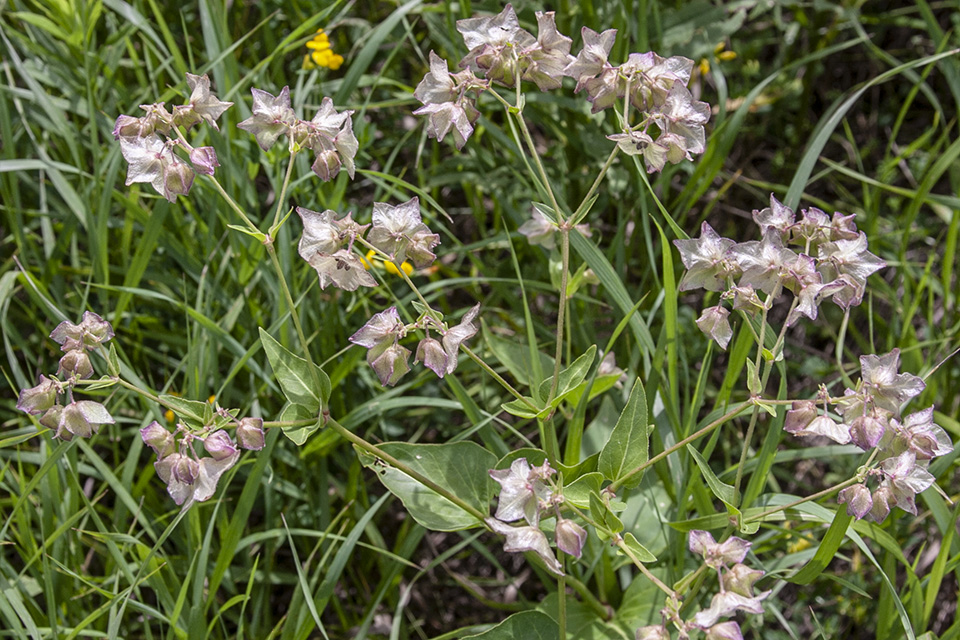
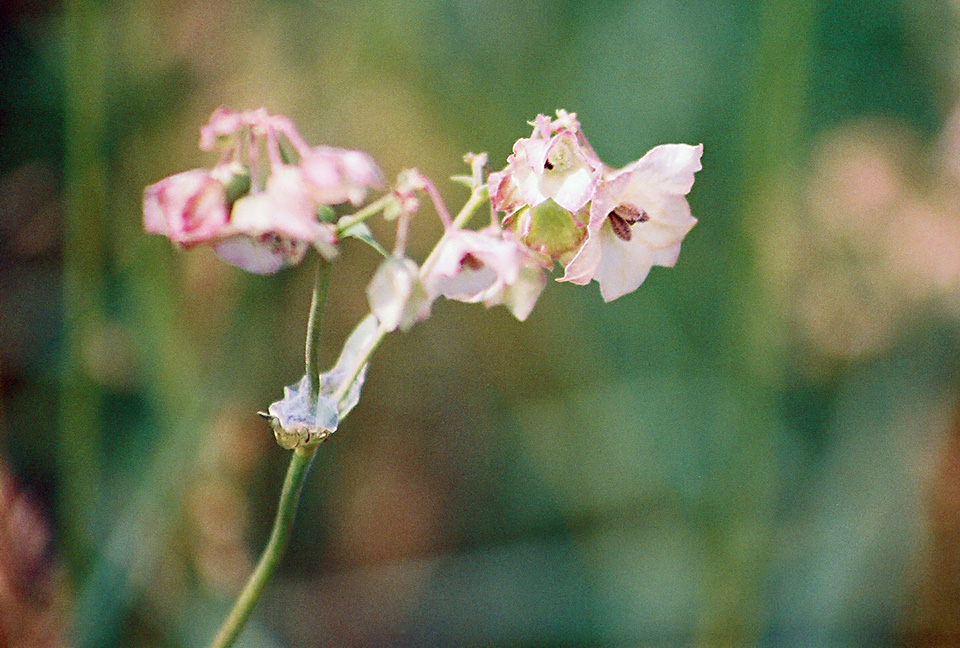
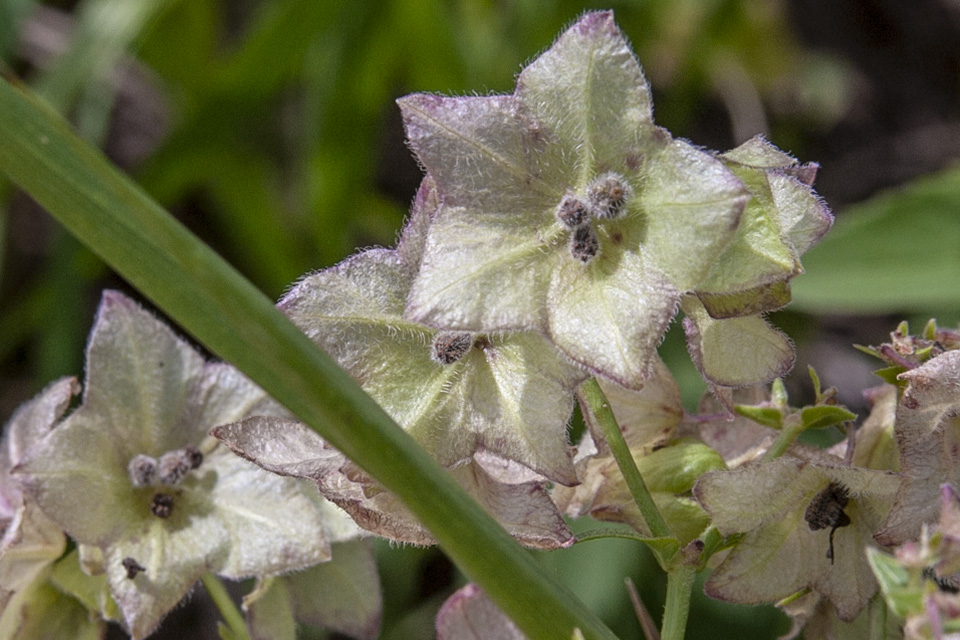
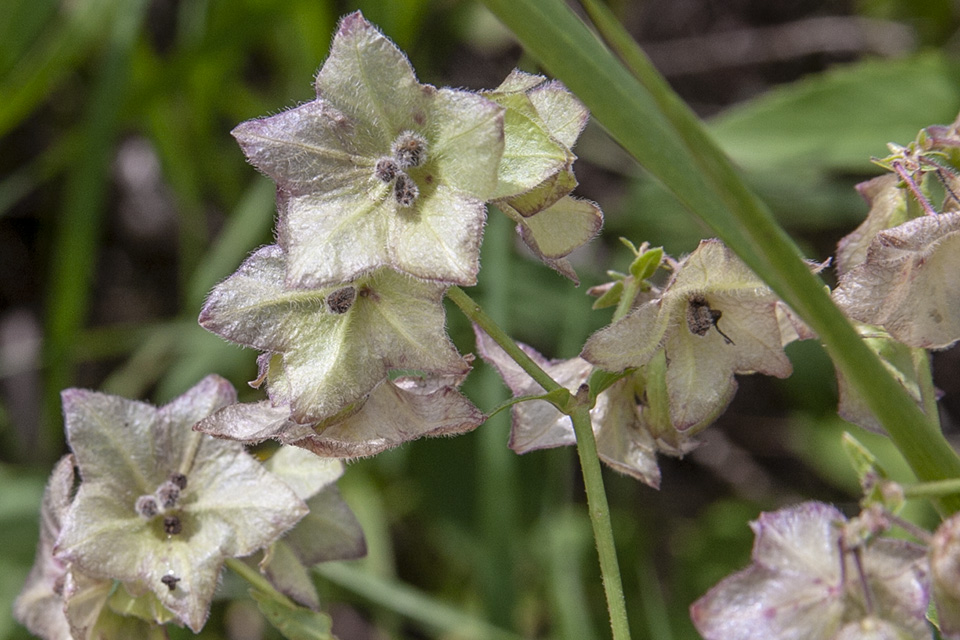
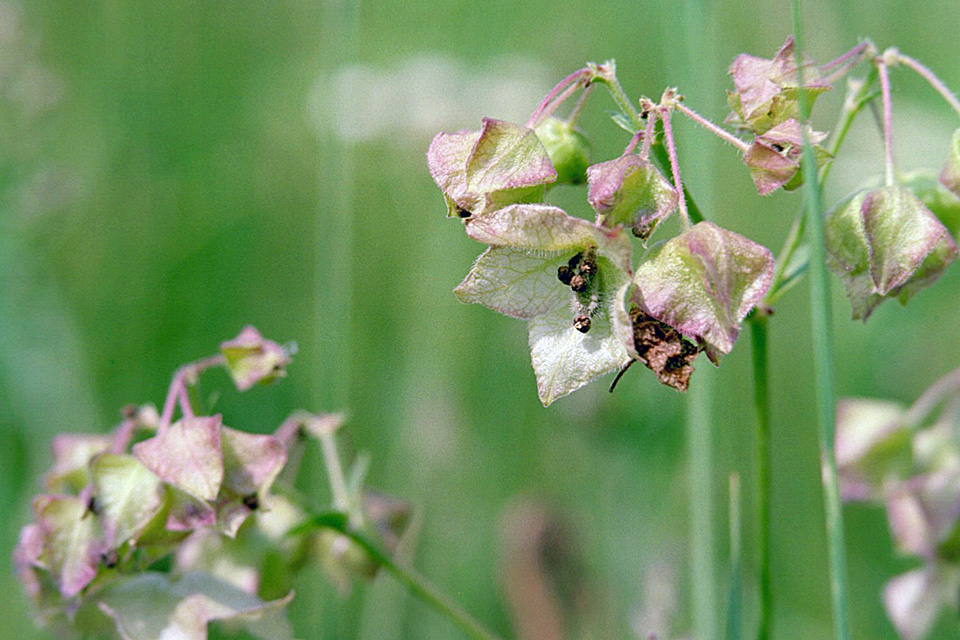
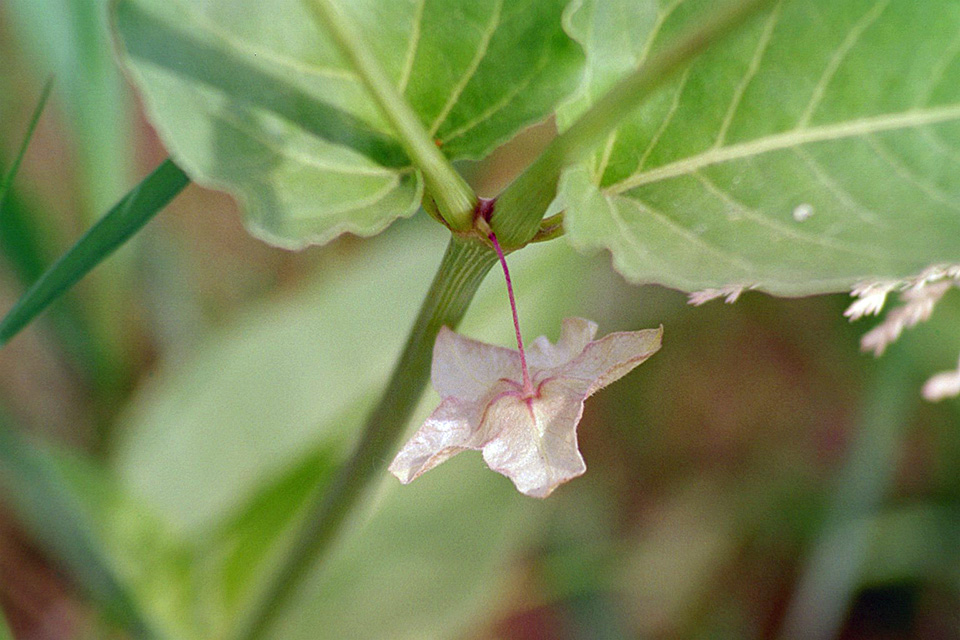
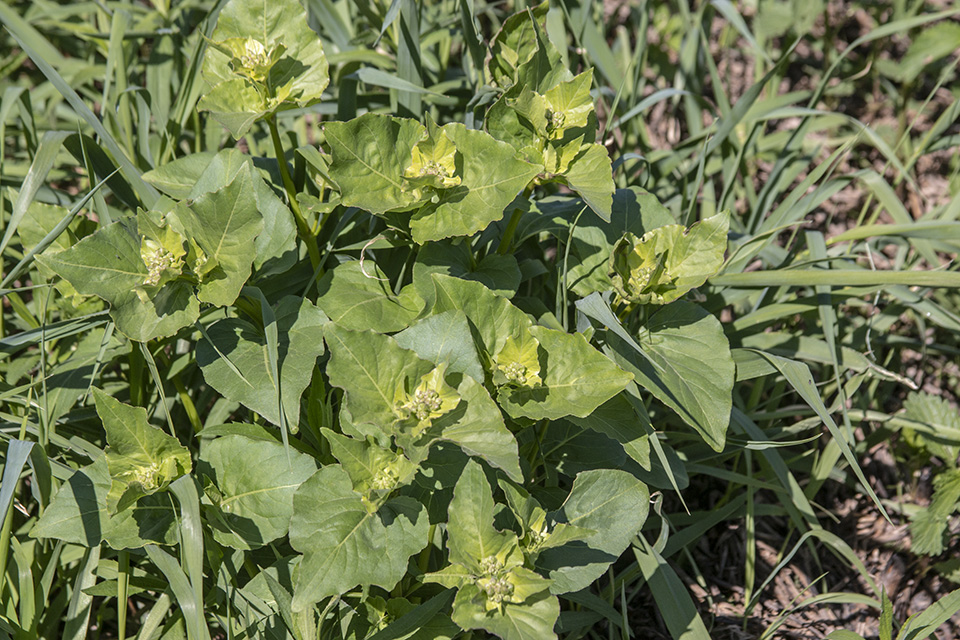
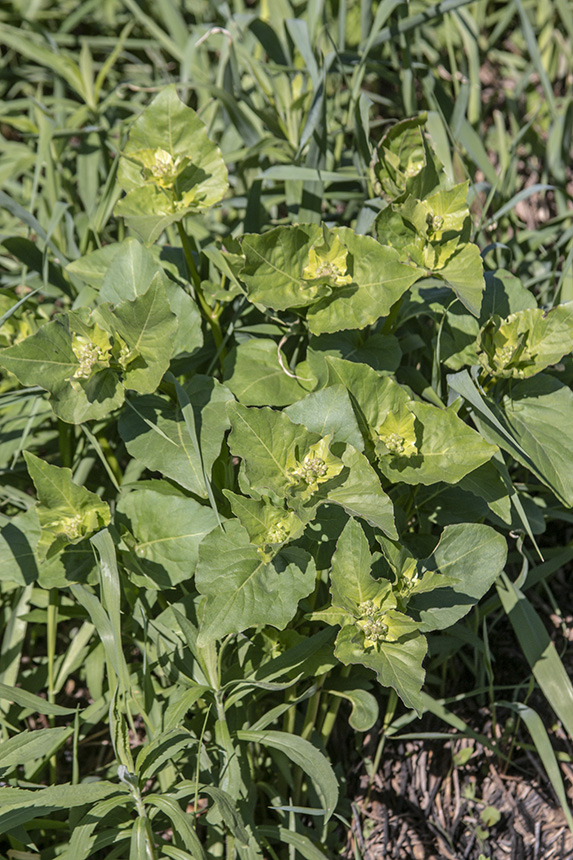
Heart-leaved four o’clock is a 1′ to 3′ tall, erect, perennial forb rising from a thick, dark, fleshy or woody, taproot. The stems are hairless near the bottom and have 2 lines of fine, short hairs further upwards. They are usually erect or curve upward from the base, occasionally they recline on the ground with the tips ascending. They are forked near the top. Only the lower ⅔ of the stems are leaved. The leaves are opposite, untoothed, green, thin, and usually hairless though sometimes sparsely hairy. They are 1″ to 4″ long, ¾″ to 2½″ wide. They are egg-shaped to round lance-shaped or sometimes triangular. The bases are heart-shaped, blunt, or rounded. The tips are pointed. They are on ¼″ to 1″ long leaf stalks and are held ascending at a 45° to 80° angle. The inflorescence is several branched clusters at the end of each stem branch and in the upper leaf axils. The clusters appear at the end of long, forked, hairy branches. The clusters have 3 to 5 flowers each. The flowers are ⅜″ wide. They have little or no fragrance. There are 5 pink to purple petal-like sepals. The sepals are fused at the base forming a tube, then flare outward. There are 5 bracts, ⅛″ to ¼″ long, at the base of the flower that are fused into a pale green, often tinged pinkish, saucer-shaped or broadly bell-shaped cup. The flowers open in the late afternoon, giving this plant its common name, remain open all night, and close in the morning. The fruit is a one-seeded achene. It is subtended by the persistent, saucer-shaped fused bracts that have increased in size as the fruit developed, becoming ⅓″ to ⅔″ long. |
||
Height |
||
1′ to 3′ |
||
Flower Color |
||
Pink to purple |
||
Similar Species |
||
Hairy four o’clock (Mirabilis albida) has a hairy stem. The leaves are on shorter leaf stalks, are hairy, narrow and lance-shaped, and taper to the base. The bract cups are hairy. The flower clusters are in leaf axils, are loosely clustered on branches, or are scattered in open, widely spreading clusters, not at the end of the stems. Narrow-leaved four o’clock (Mirabilis linearis) has linear leaves and larger flowers with much longer tubes. |
||
Habitat |
||
Dry. Prairies, disturbed sites. Full sun. |
||
Ecology |
||
Flowering |
||
May to August |
||
Pests and Diseases |
||
|
||
Use |
||
|
||
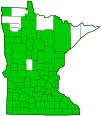
Distribution |
||||
|
Sources |
|||
| 7/11/2022 | ||||
Nativity |
||||
Native |
||||
Occurrence |
||||
|
||||
Taxonomy |
|||
| Kingdom | Plantae (Plants) | ||
| Subkingdom | Pteridobiotina | ||
| Phylum | Tracheophyta (Vascular Plants) | ||
| Class | Magnoliopsida (Dicots) | ||
Order |
Caryophyllales (Pinks, Cactuses, and Allies) | ||
Family |
Nyctaginaceae (four o’clock) | ||
| Tribe | Nyctagineae | ||
| Genus | Mirabilis (four o’clocks) | ||
| Subgenus | Oxybaphus | ||
Subordinate Taxa |
|||
|
|||
Synonyms |
|||
Allionia nyctaginea Mirabilis collina Oxybaphus nyctagineus |
|||
Common Names |
|||
heartleaf four o’clock heartleaf four-o’clock heart-leaf four-o’clock heart-leaf umbrella-wort heart-leaved four o’clock heart-leaved umbrella-wort pale umbrella-wort prairie four o’clock white four-o’clock wild four o’clock wild four-o’clock umbrella-wort |
|||
Glossary
Achene
A dry, one-chambered, single-seeded seed capsule, formed from a single carpel, with the seed attached to the membranous outer layer (wall) only by the seed stalk; the wall, formed entirely from the wall of the superior ovary, does not split open at maturity, but relies on decay or predation to release the contents.
Axil
The upper angle where the leaf stalk meets the stem.
Bracts
Modified leaves at the base of a flower stalk or flower cluster.
Linear
Long, straight, and narrow, with more or less parallel sides, like a blade of grass.
Sepal
An outer floral leaf, usually green but sometimes colored, at the base of a flower.
Visitor Photos |
|||||
Share your photo of this plant. |
|||||
| This button not working for you? Simply email us at info@MinnesotaSeasons.com. Attach one or more photos and, if you like, a caption. |
|||||
Dan W. Andree |
|||||
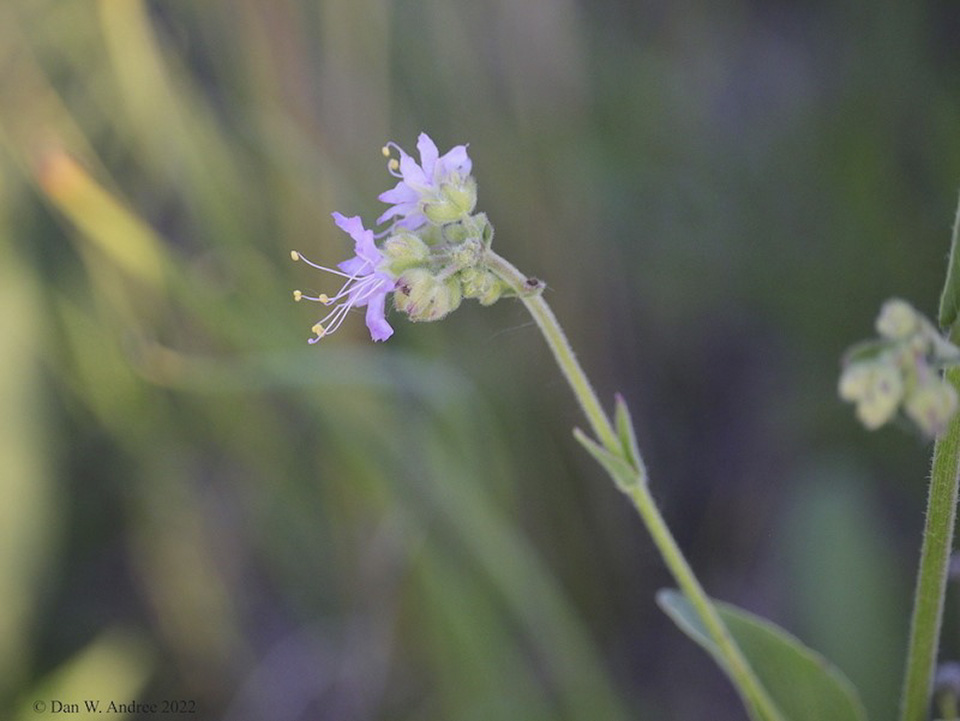
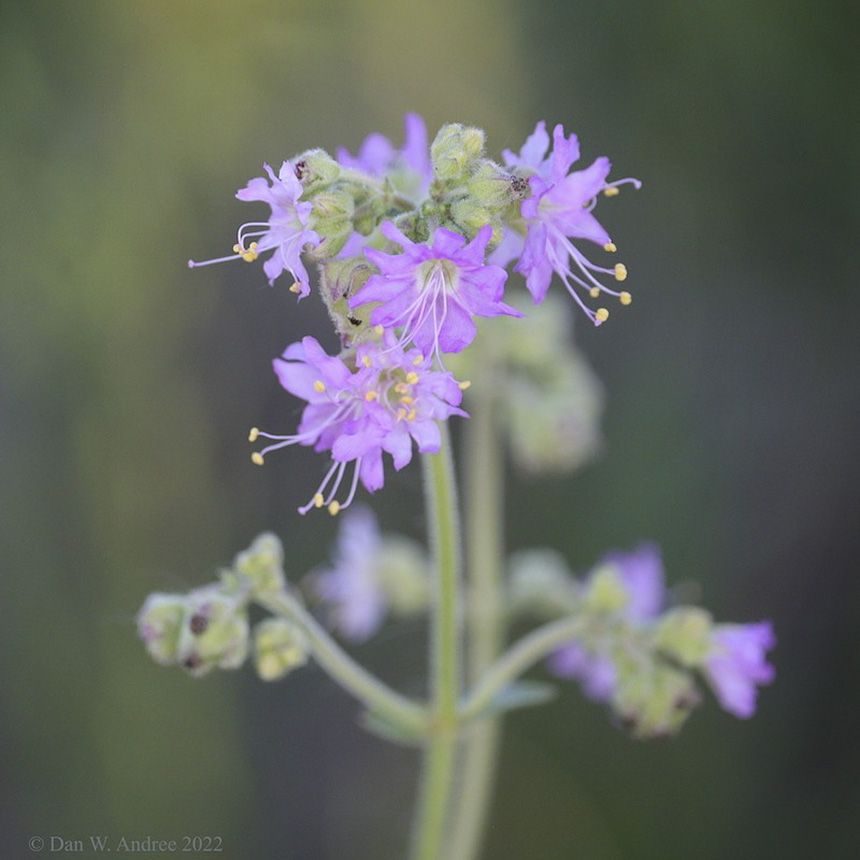
A Wildflower I never seen before... I noticed it the other day at Frenchman’s Bluff SNA and thought it was a plant I hadn’t come across before so thought I’d send a couple photos of it. |
 |
||||
 |
|||||
MinnesotaSeasons.com Photos |
|||||
Plant |
|||||
 |
 |
||||
 |
 |
||||
Inflorescence |
|||||
 |
 |
||||
 |
 |
||||
Flowers |
|||||
 |
 |
||||
Leaves |
|||||
 |
 |
||||
 |
|||||
Stem |
|||||
 |
|||||
Infructescence |
|||||
 |
 |
||||
 |
|||||
Fruiting Head |
|||||
 |
 |
||||
 |
 |
||||
Early Spring |
|||||
 |
 |
||||
 |
|||||

Slideshows |
||
Visitor Videos |
|||
Share your video of this plant. |
|||
| This button not working for you? Simply email us at info@MinnesotaSeasons.com. Attach a video, a YouTube link, or a cloud storage link. |
|||
Other Videos |
|||

Visitor Sightings |
|||||
Report a sighting of this plant. |
|||||
| This button not working for you? Simply email us at info@MinnesotaSeasons.com. Be sure to include a location. |
|||||
| Dan W. Andree 7/7/2022 |
Location: Frenchman’s Bluff SNA, Norman Co. Mn. A Wildflower I never seen before... I noticed it the other day at Frenchman’s Bluff SNA and thought it was a plant I hadn’t come across before so thought I’d send a couple photos of it. |
 |
|||
MinnesotaSeasons.com Sightings |
|||||
|
Created: Last Updated: © MinnesotaSeasons.com. All rights reserved. |