Carbon Balls - Species Profile
Conservation • Description • Habitat • Ecology • Distribution • Taxonomy
Conservation Status
IUCN Red List
not listed
NatureServe
not listed
Minnesota
not listed
Description
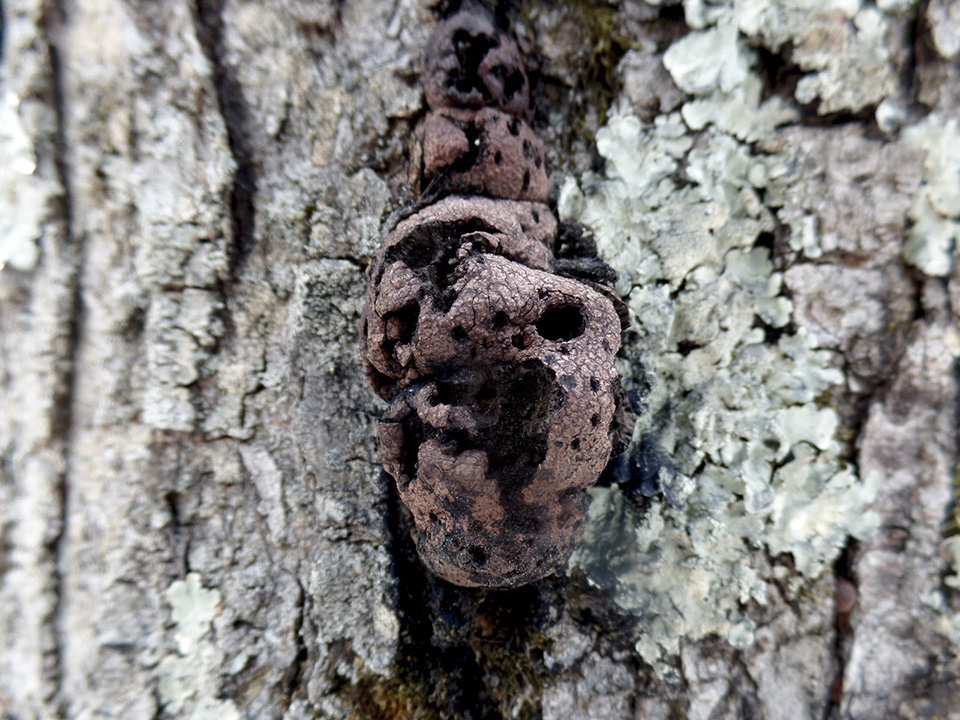
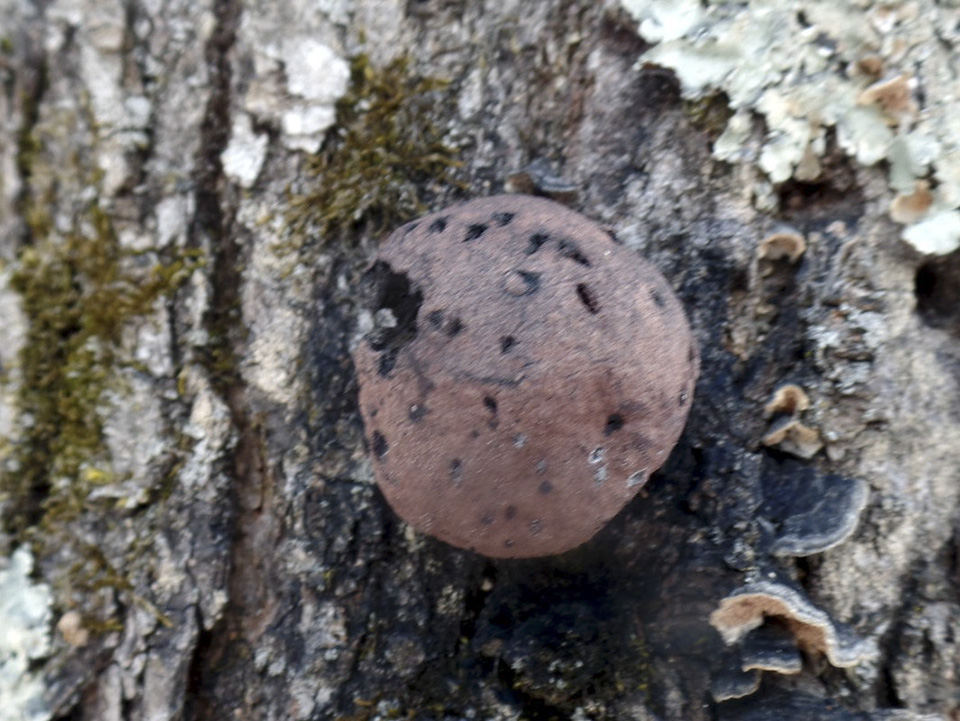
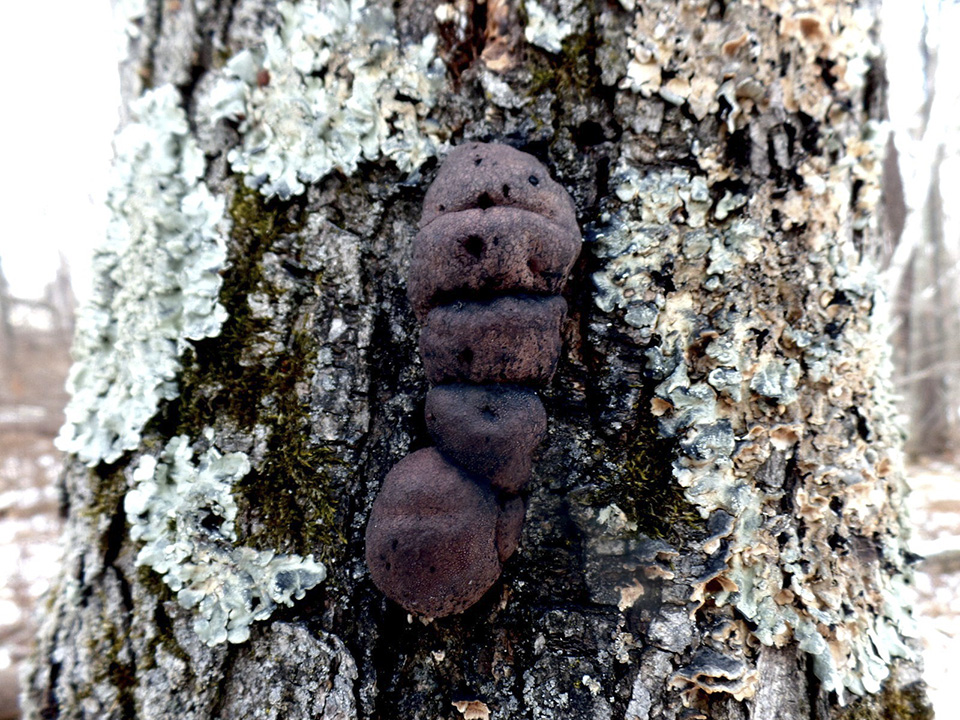
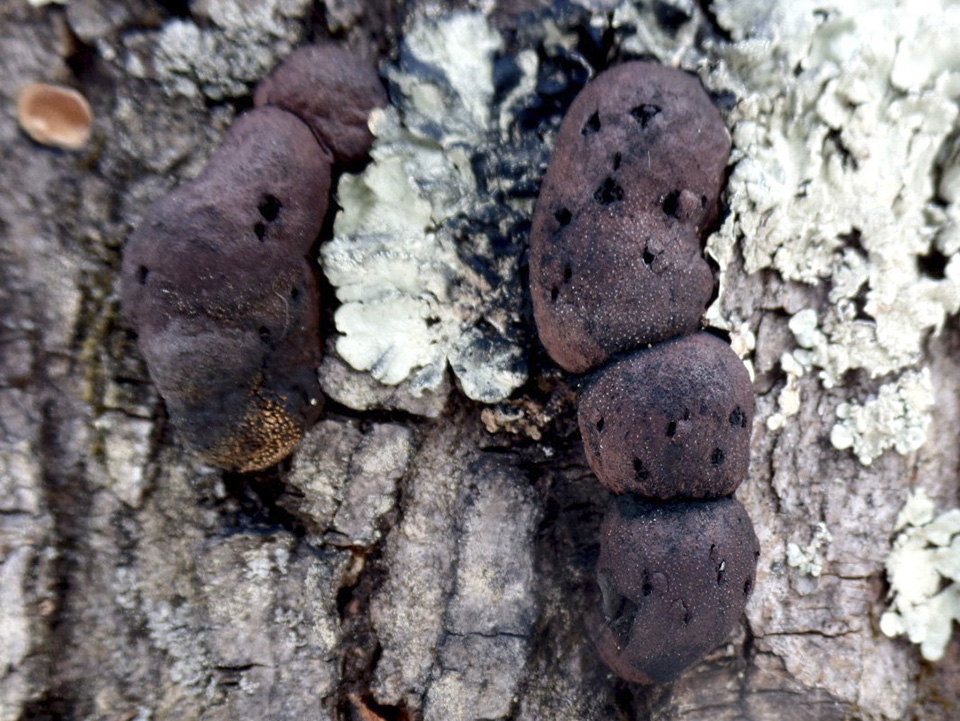
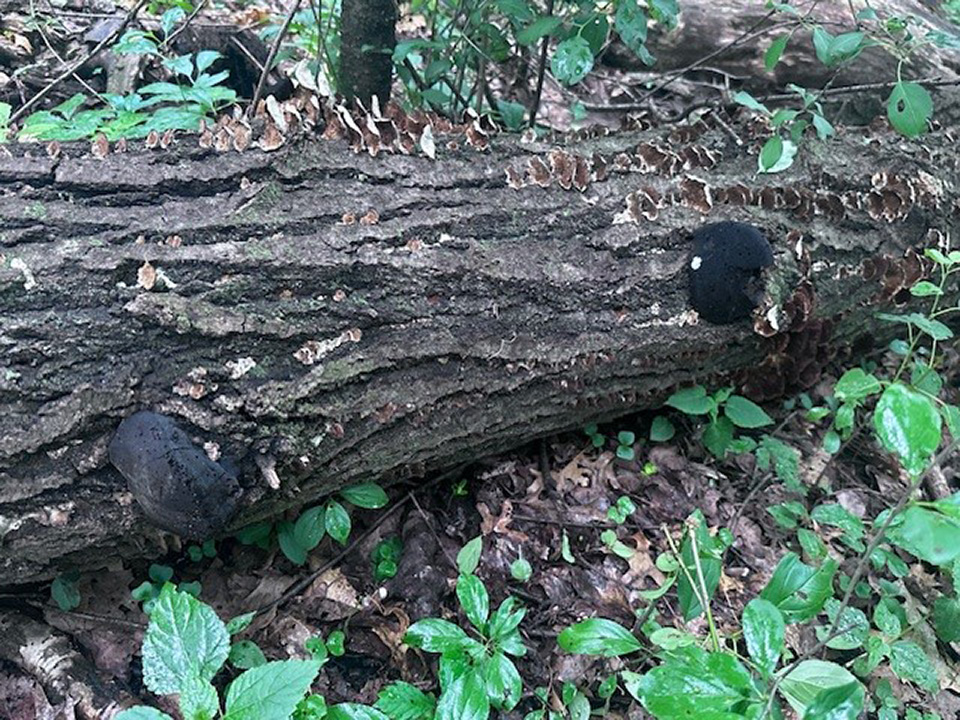
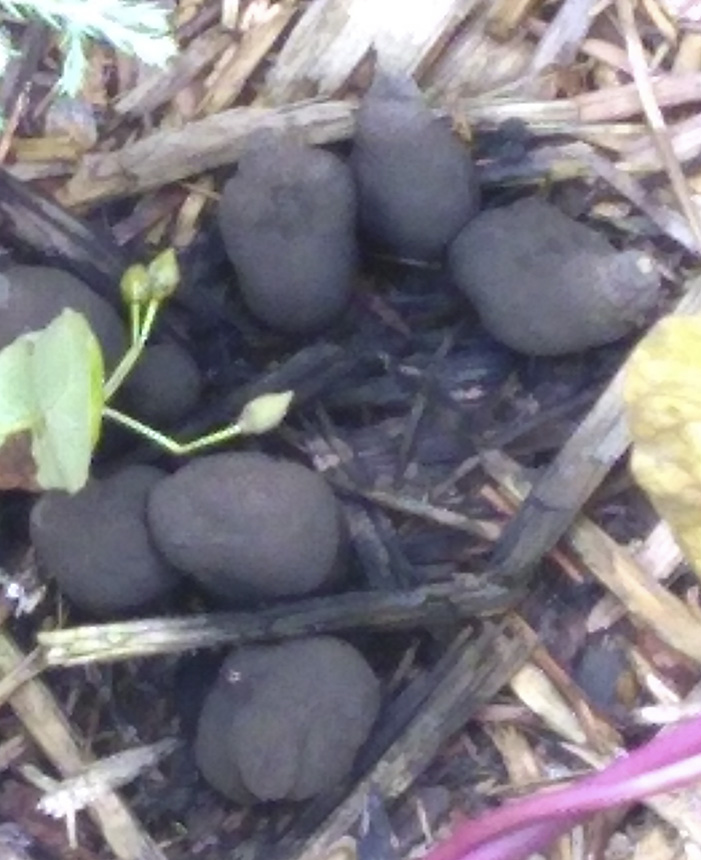
Carbon Balls is a common, wood-decaying fungus. It occurs on in Europe, Asia, North America, and South America. It grows singly, in groups, or in masses, on dead or dying deciduous wood (saprobic), including oak, birch, and maple. It causes a white rot that produces a condition known as “calico wood”.
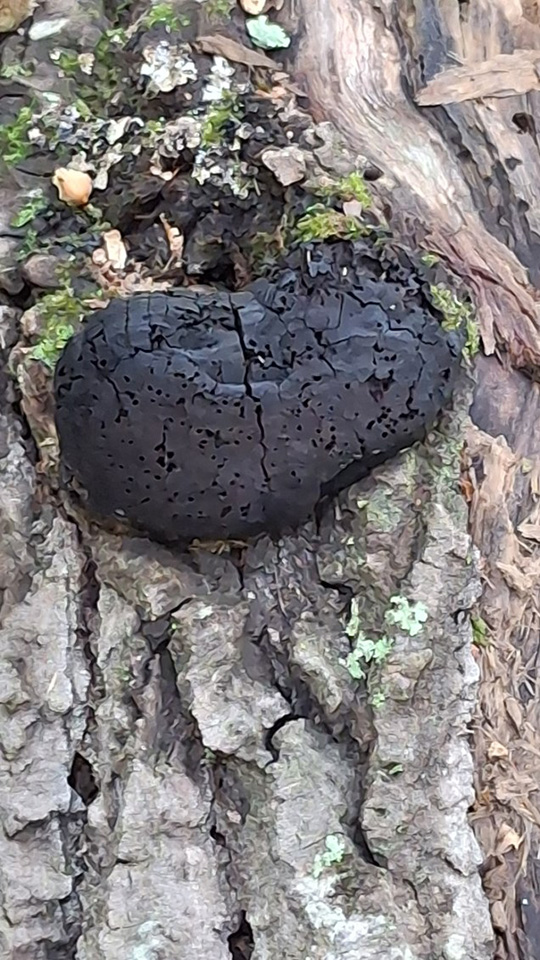
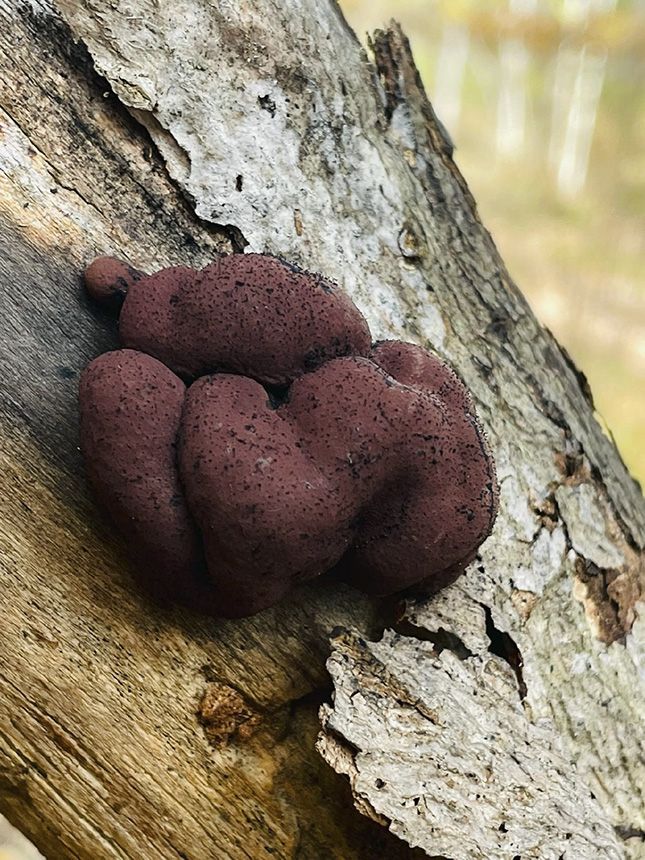
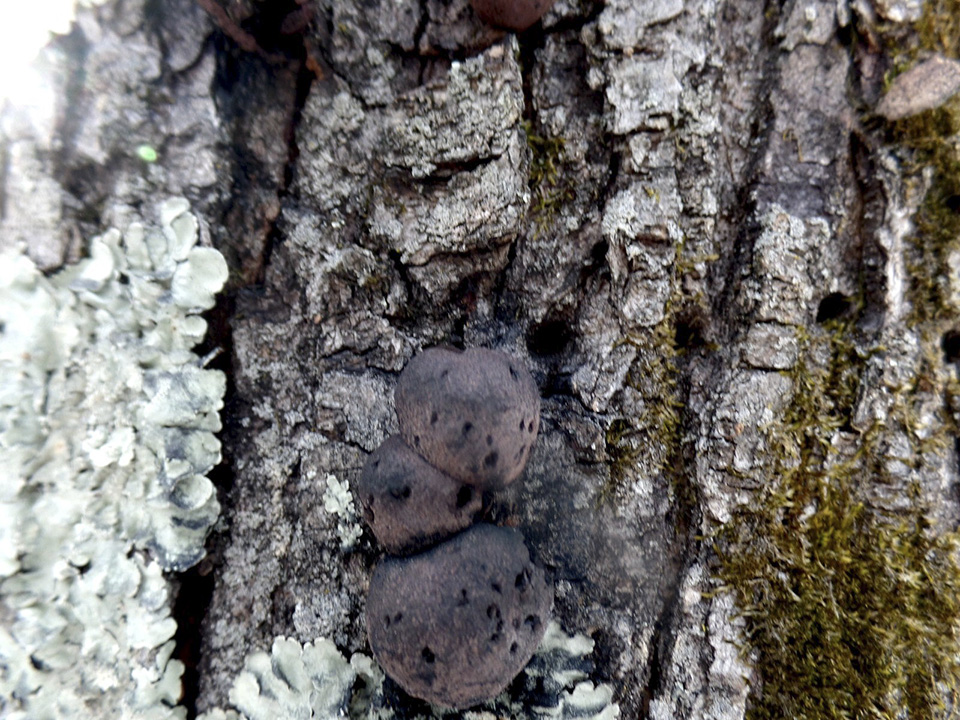
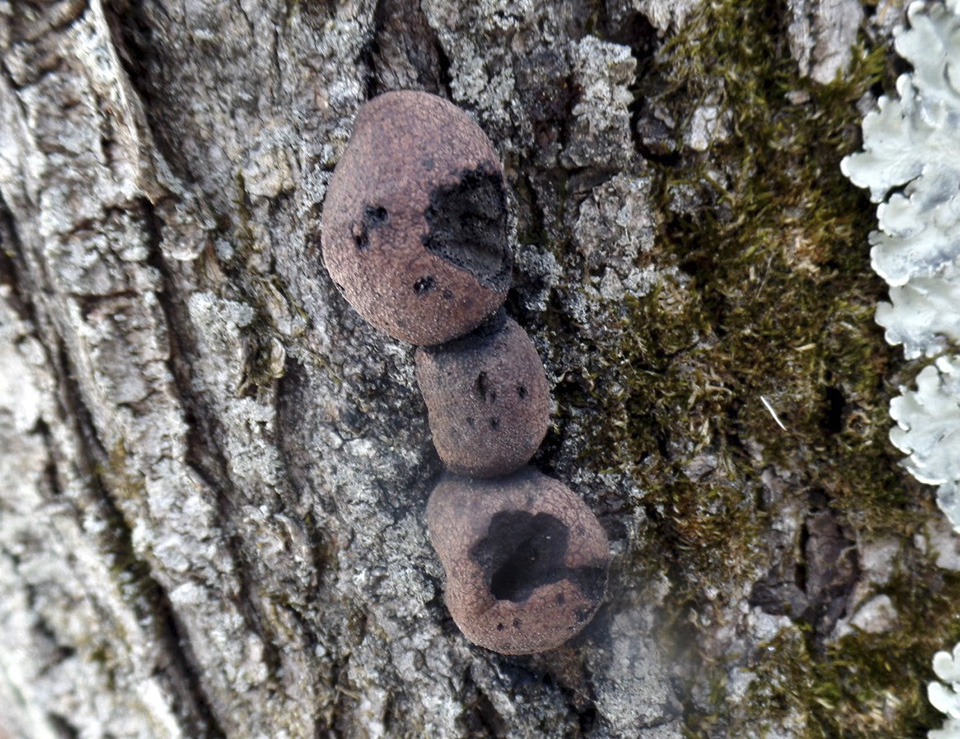
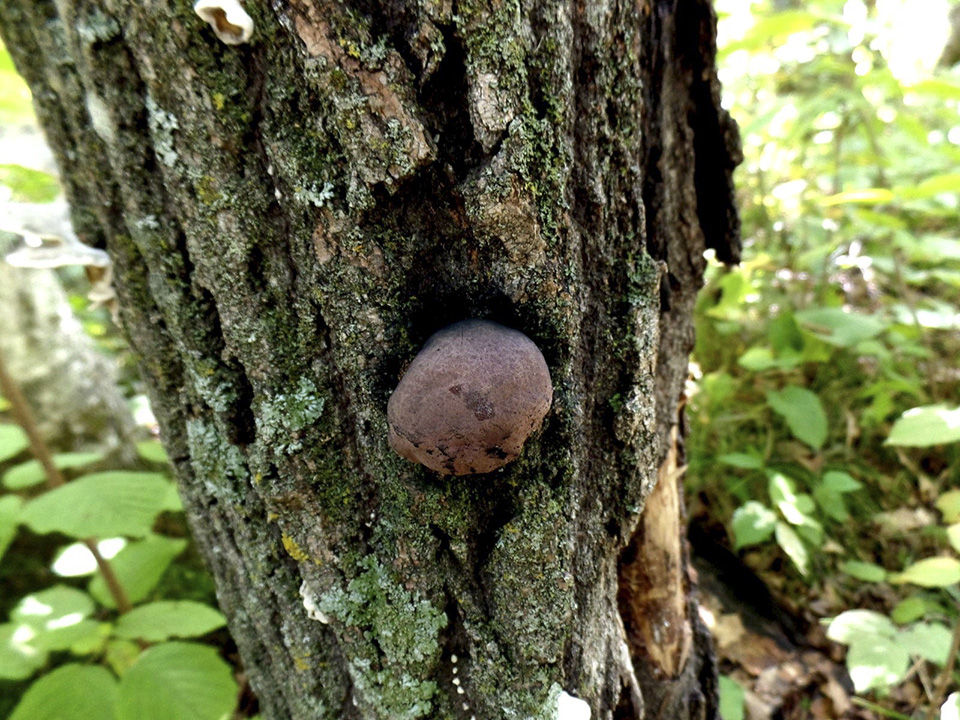
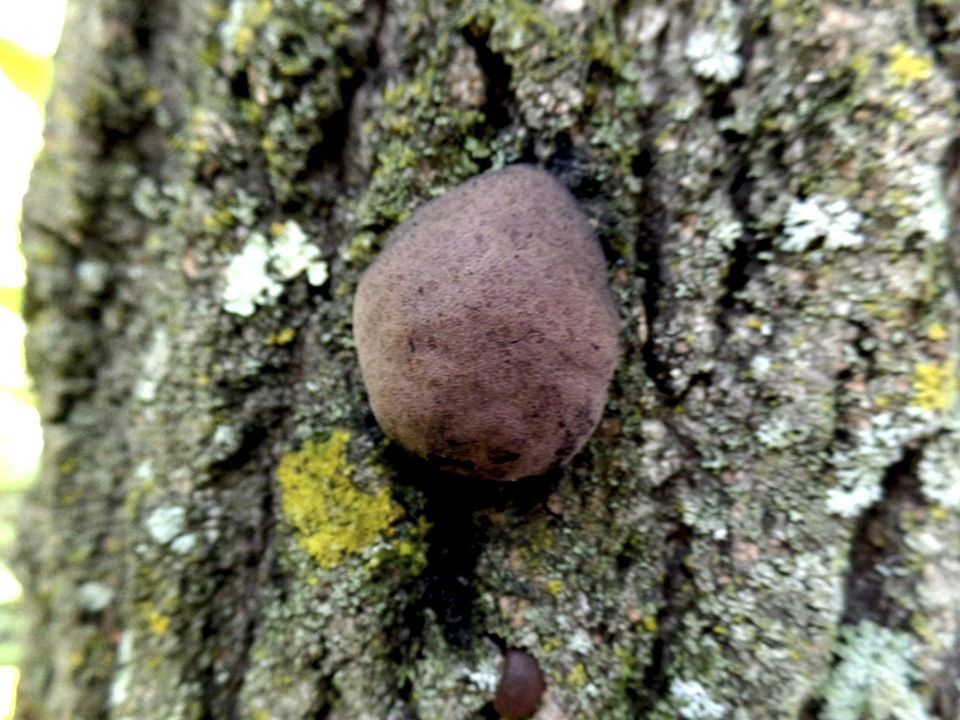
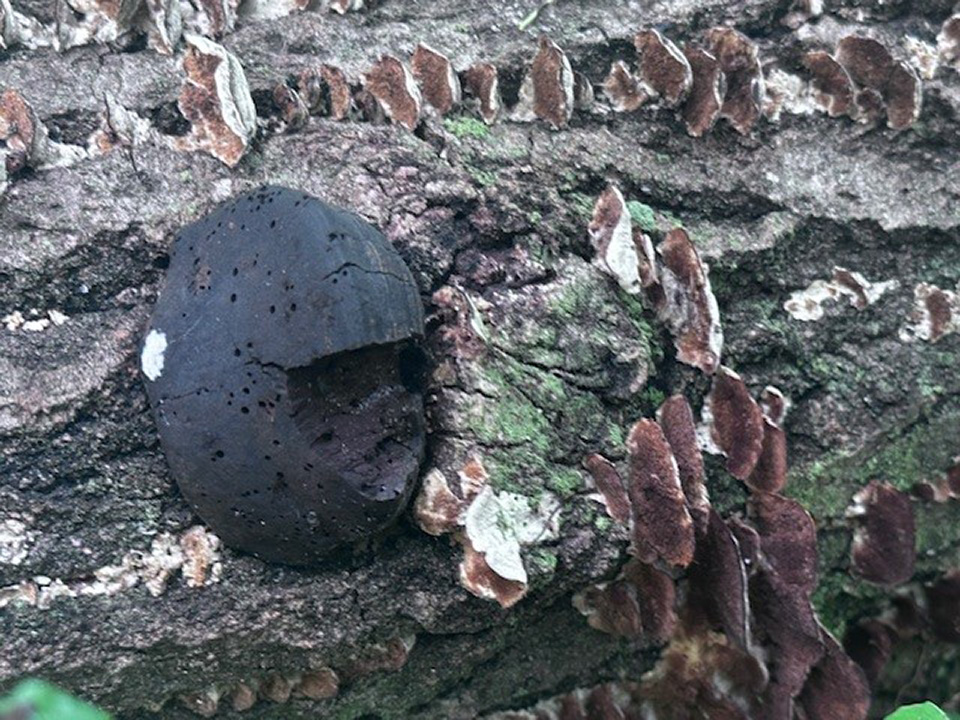
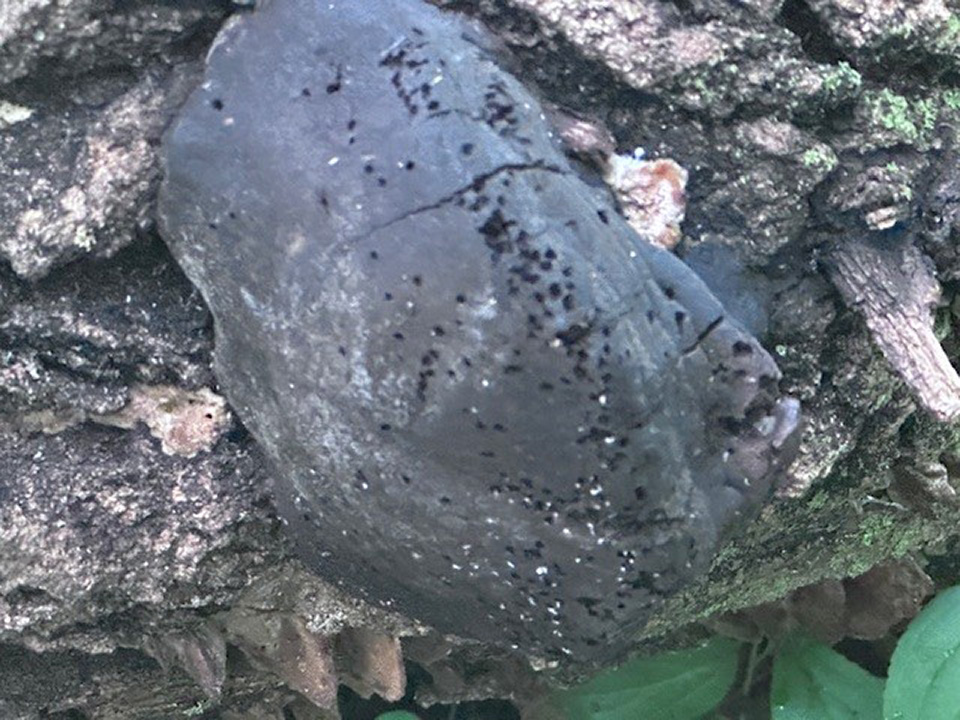
The fruiting body is ¾″ to 3¾″ in diameter and stalkless. It is usually ball-shaped, sometimes irregularly shaped, especially when growing in groups. When young, it is brown and dense, and it releases asexual spores (conidia) on its surface. The conidia are colorless but may appear whitish when massed. The flesh is dense and purplish-brown. At maturity the surface is black, shiny, and densely covered with minute, pimply bumps. These bumps are tiny, spore-bearing chambers (perithecia) just under the surface. When the spores are mature, the perithecia bursts open during the night, ejecting up to an inch or more large numbers of black spores. These spores are often visible on the bark near the fungus long after they have worn off the fruiting body. Spores are produced from late spring to late fall.
Carbon Balls is long lived and continues growing over several years. Each year a new outer surface is formed. Slicing it vertically reveals black and white concentric rings, each ring representing an entire growing season. The flesh is hard or corky and easily crumbled, becoming less dense as it ages. It is not edible.
The spore print is black. A natural spore print can often be seen on the bark near the base of the fungus.
Similar Species
Habitat and Hosts
Dead deciduous wood
Ecology
Season
Year round
Distribution
Sources
Biodiversity occurrence data published by: Minnesota Biodiversity Atlas (accessed through the Minnesota Biodiversity Atlas Portal, bellatlas.umn.edu. Accessed 9/24/2026).
Daldinia childiae J.D. Rogers & Y.M. Ju in Bánki, O., Roskov, Y., Döring, M., Ower, G., Hernández Robles, D. R., Plata Corredor, C. A., Stjernegaard Jeppesen, T., Örn, A., Pape, T., Hobern, D., Garnett, S., Little, H., DeWalt, R. E., Miller, J., Orrell, T., Aalbu, R., Abbott, J., Abreu, C., Acero P, A., et al. (2026). Catalogue of Life (2026-08-26 XR). Catalogue of Life Foundation, Amsterdam, Netherlands. https://doi.org/10.48580/dgyy9
Mycology Collections Portal (MyCoPortal) https://www.mycoportal.org/portal/collections/index.php). Accessed 9/24/2026.
Occurrence
Common
Taxonomy
Kingdom
Fungi (Fungi)
Subkingdom
Dikarya
Phylum
Ascomycota (Sac Fungi)
Subphylum
Pezizomycotina
Class
Sordariomycetes
Subclass
Xylariomycetidae
Order
Xylariales
Family
Hypoxylaceae
Genus
Daldinia
Complex
Complex Daldinia childiae
Species
For decades, virtually every North American field guide defaulted to using King Alfred’s Cakes (Daldinia concentrica) for any carbonaceous, ringed Daldinia found on decaying hardwoods. However, detailed morphological, chemical, and phylogenetic work (Ju et al., 1997) and subsequent worldwide reviews of the genus demonstrated that Daldinia concentrica is heavily restricted to Europe, where it grows almost exclusively on ash (Fraxinus).
In North America, what was historically labeled D. concentrica actually comprises a few distinct species. Carbon Balls (Daldinia childiae) is by far the most common and widespread species across eastern and central North America.
Subordinate Taxa
Synonyms
Common Names
Carbon Balls