limoniid crane fly - Species Profile
Conservation • Description • Habitat • Ecology • Distribution • Taxonomy
Conservation Status
IUCN Red List
not listed
NatureServe
N5 - Secure
Minnesota
not listed
Description
Metalimnobia cinctipes is a common, medium-sized, crane fly. It occurs in the United States from Maine to Florida, west to South Dakota and Mississippi. It also occurs across southern Canada.
Adults are active from April through September in Minnesota. They are found in forests. The larvae are found in fleshy fungi or in mycelium growing on rotting logs.
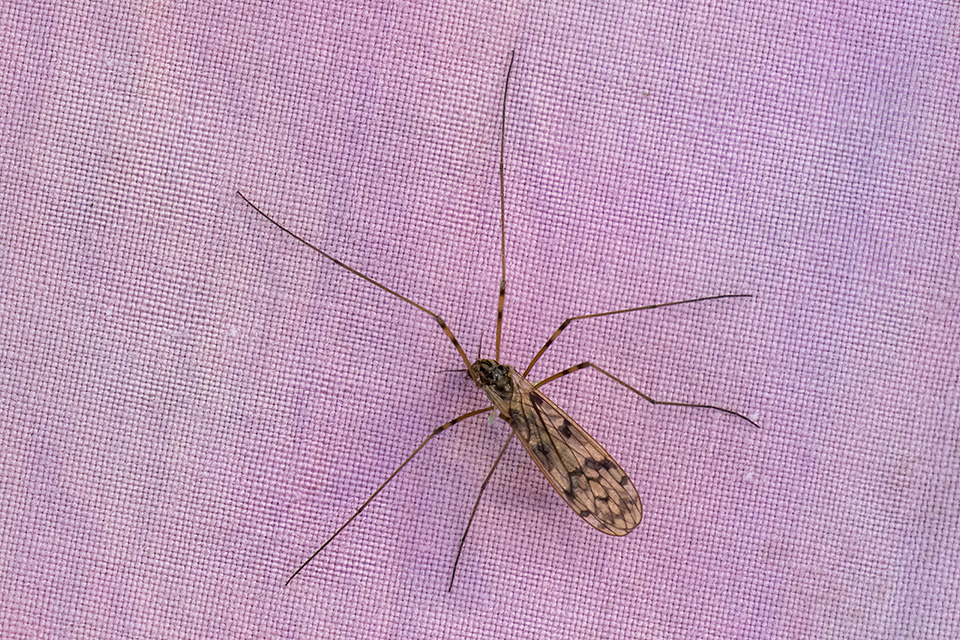
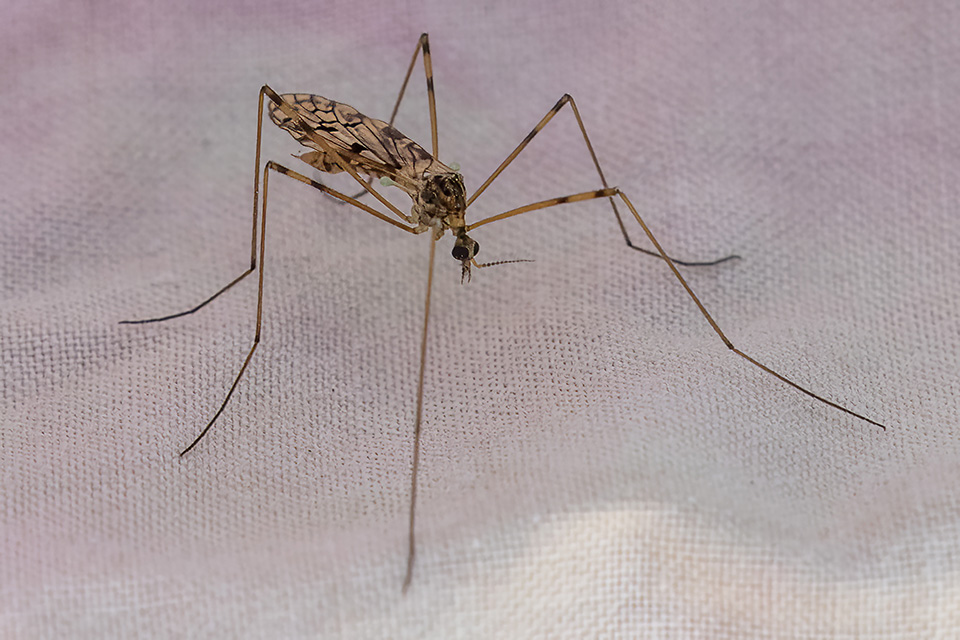
Adults are ½″ to ⅝″ (12.7 to 15.2 mm) in length. The body is brownish yellow with dark brown markings and smoky brown tinting.
The head is brownish yellow. On the top of the head (vertex) there is a large dark brown spot divided by a narrow brownish-yellow line. The eyes are large. The antennae have 14 segments, the scape and pedicel at the base and 12 flagellomeres. The scape, pedicel, and first flagellomere are brownish yellow, the rest of the flagellomeres are dark brown. The flagellomeres are oval and they each have a single, long, ascending hair (verticil) on the outer margin. They are closely spaced – there is not a distinct narrow extension at the tip of each one. The snout (rostrum) and finger-like sensory mouthparts (palps) are smoky brown.
The thorax is brownish yellow with four dark brown stripes and several brown spots. The two middle stripes are separated by a narrow brownish-yellow line. The rounded “shoulders” (humeri) on the large second thoracic segment are brownish yellow with a small brown dot. The balancing organs (halteres) have long, brownish-yellow stems. The knobs are tinged smoky brown at the base and pale cream colored at the tip.
The legs are very long, slender, and pale. On each leg, the first visible segment, technically the third segment (femur), has two dark brown bands near the tip separated by a broader brownish-yellow band between them, and the tip itself is brownish yellow. The last part of each leg (tarsus), corresponding to the foot, has five segments. The first segment is brownish yellow, and the remaining segments are tinged smoky brown.
The abdomen is brownish yellow with a brown band across the rear half of each segment.
The wings are somewhat brownish yellow. There are four brown spots near the leading edge (costal margin). The third one is a double spot, and the fourth one is usually ring-like, hollow in the middle. There is a pale, smoky brown band across the wing near the tip. The vein on the costal margin and the first longitudinal vein are yellowish. The remaining veins are brown. The crossveins are broadly tinged smoky brown.
Size
Total length: ½″ to ⅝″ (12.7 to 15.2 mm)
Similar Species
Habitat
Forests
Ecology
Season
April through September in Minnesota
Behavior
Life Cycle
Larva Food
Adult Food
Distribution
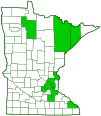
Occurrence
Common
Taxonomy
Order
Suborder
Nematocera
Infraorder
Tipulomorpha (Crane Flies)
Superfamily
Tipuloidea (Typical Crane Flies)
Family
Limoniidae (Limoniid Crane Flies)
Subfamily
Limoniinae
Tribe
Limoniini
Genus
Metalimnobia
Subordinate Taxa
Synonyms
Limnobia cinctipes
Limonia cinctipes
Common Names
This species has no common name. The common name for the family Limoniidae is limoniid crane flies, and it is applied here.