wood nettle gall midge - Species Profile
Conservation • Description • Habitat • Ecology • Distribution • Taxonomy
Conservation Status
IUCN Red List
not listed
NatureServe
not listed
Minnesota
not listed
Description
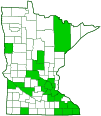
Wood nettle gall midge is a common small fly. It occurs in the United States from New Hampshire to North Carolina, west to North Dakota and Arkansas. It occurs in southern Canada from New Brunswick to Manitoba.
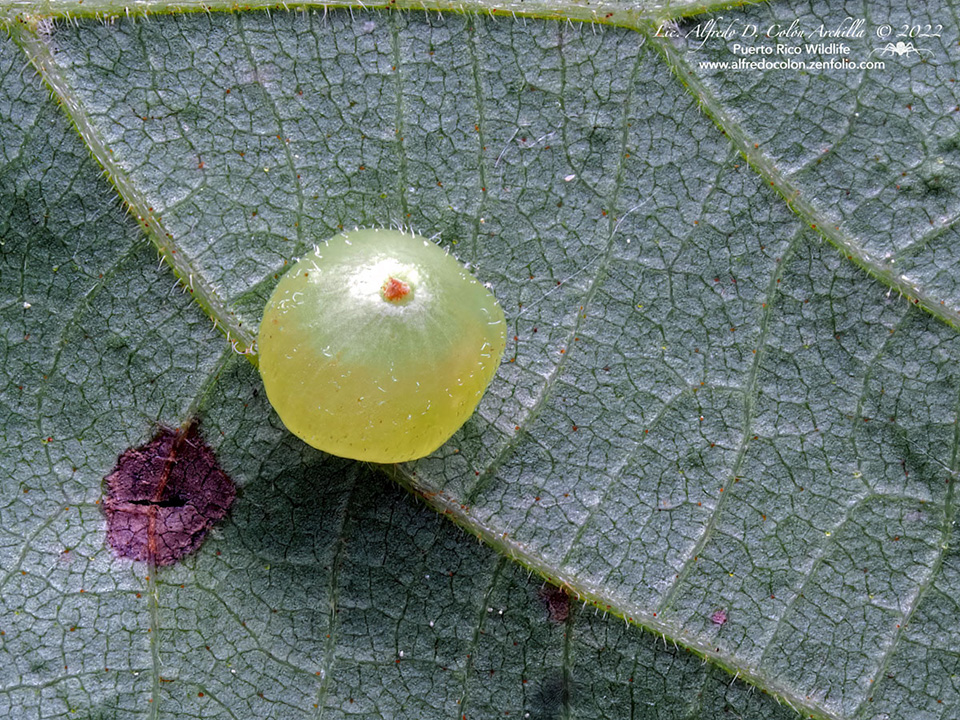
Wood nettle gall midge is best identified by the distinctive growths (galls) the larvae produce. The galls appear in June on the upper surface of leaves of Canadian woodnettle (Laportea canadensis). Later in the summer galls also appear on the stems and leaf stalks (petioles).
The gall is egg-shaped or spherical, smooth, 5⁄16″ to ½″ (8 to 12 mm) long, and ⅛″ to 3⁄16″ (4.0 to 5.0 mm) wide. It is translucent and usually light green, sometimes whitish or red. It is attached to the leaf by a narrow stalk (pedicel), and there is a short, nipple-like, extension at the tip.
Size
Similar Species
Habitat
Ecology
Season
Two generations per year: June through September
Behavior
Life Cycle
Mature larvae of the second generation overwinter in the gall.
Larva Food/Hosts
Canadian woodnettle (Laportea canadensis)
Adult Food
Distribution
Occurrence
Common
Taxonomy
Order
Suborder
Nematocera
Infraorder
Bibionomorpha (Gnats and Allies)
Superfamily
Sciaroidea (Fungus Gnats and Gall Midges)
Family
Cecidomyiidae (Gall and Forest Midges)
Subfamily
Cecidomyiinae (Gall Midges)
Supertribe
Lasiopteridi
Tribe
Dasineurini
Genus
Dasineura
Subordinate Taxa
Synonyms
Common Names
wood nettle gall midge
