bigleaf lupine - Species Profile
Conservation • Wetland • Description • Habitat • Ecology • Use • Distribution • Taxonomy

Conservation Status
IUCN Red List
not listed
NatureServe
N4N5 - Apparently Secure to Secure
SNR - Unranked
Minnesota
not listed
Wetland Indicator Status
Midwest
FACU - Facultative upland
Northcentral & Northeast
FACU - Facultative upland
Description
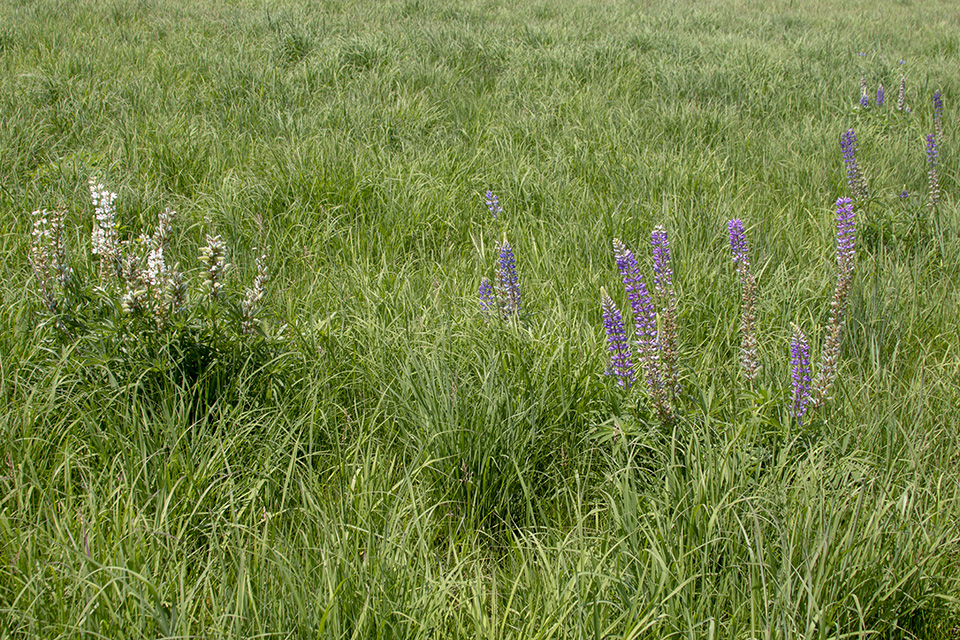
Bigleaf lupine, also called large-leaved lupine, is an erect, perennial forb that rises from a deep taproot. It can get from 20″ to 60″ tall, though in Minnesota it is usually 36″ to 40″ tall at maturity.
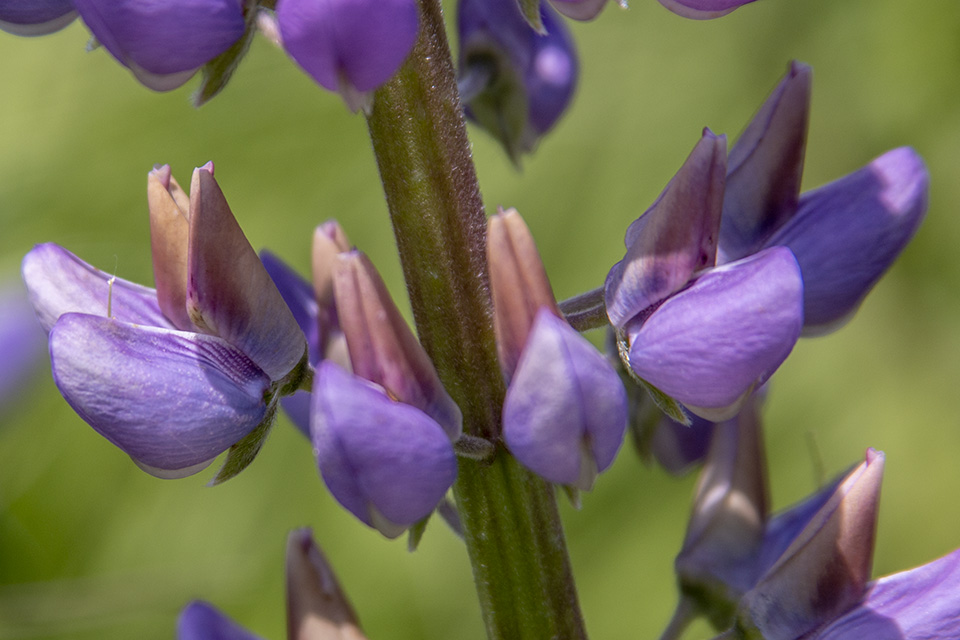
In the first year it develops a rosette of basal leaves. In the second year it sends up flowering stems. The stems are erect, unbranched, stout, round, and thinly hairy.
Stem leaves are alternate and are palmately divided into 11 to 17 leaflets. Lower leaves are on leaf stalks that are up to 17¾″ long, upper leaves are on shorter stalks.
The leaflets of the lower leaves are inversely lance-shaped, up to 6″ long and ⅝″ wide. The longest leaflets are about ½ as long as the leaf stalk. The upper surface is hairless or almost hairless. The lower surface is hairy. The margins are untoothed.
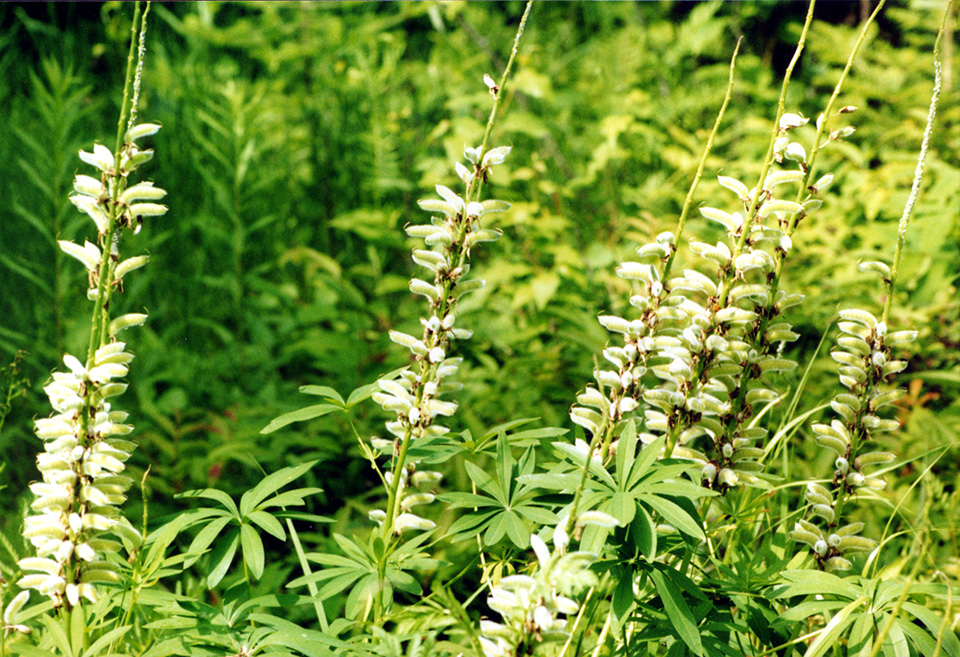
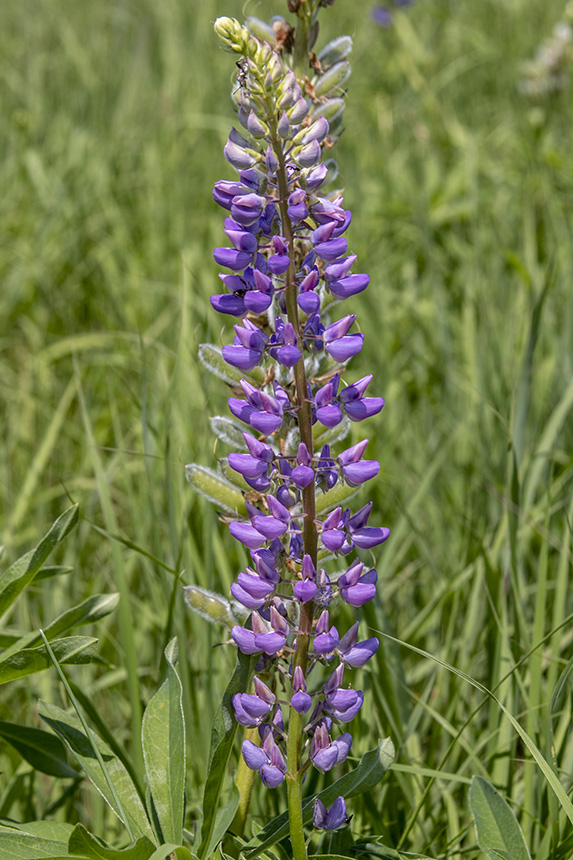
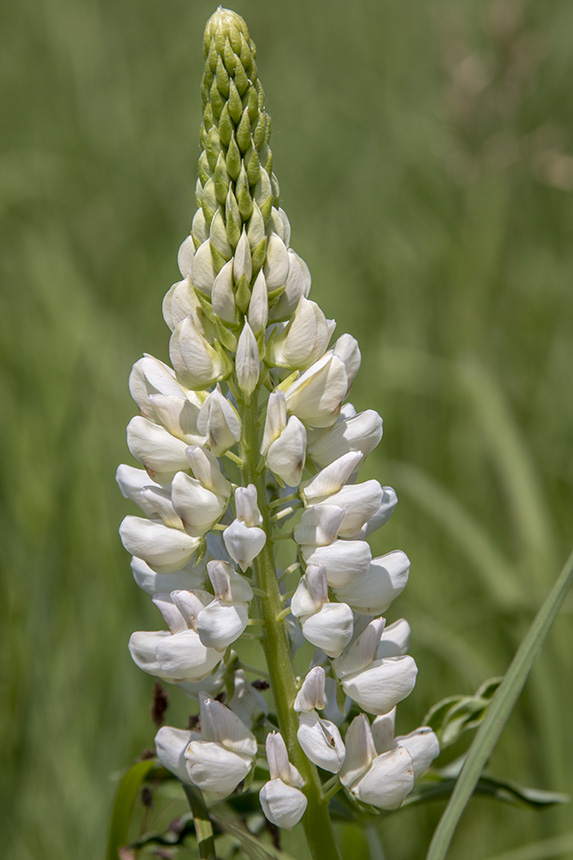
The inflorescence is a dense, cone-shaped, 8″ to 16″ tall spike with up to 80 flowers.
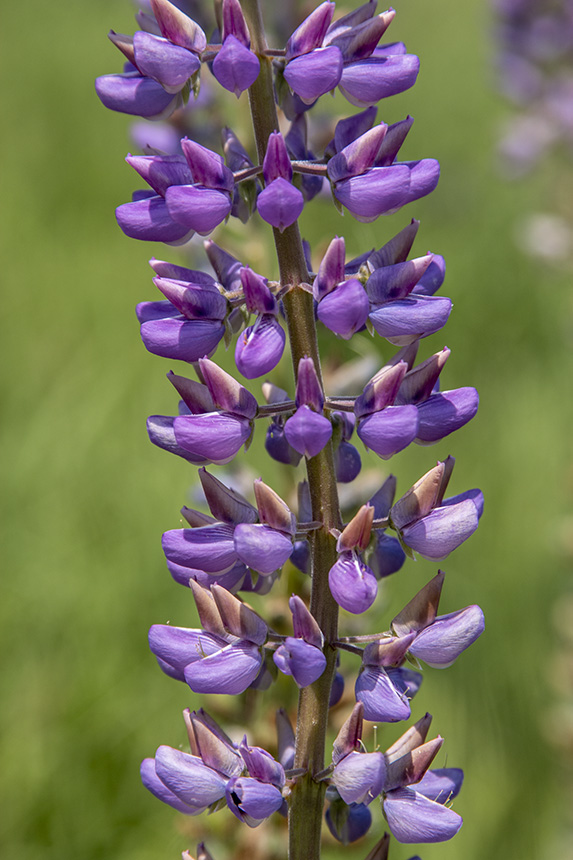
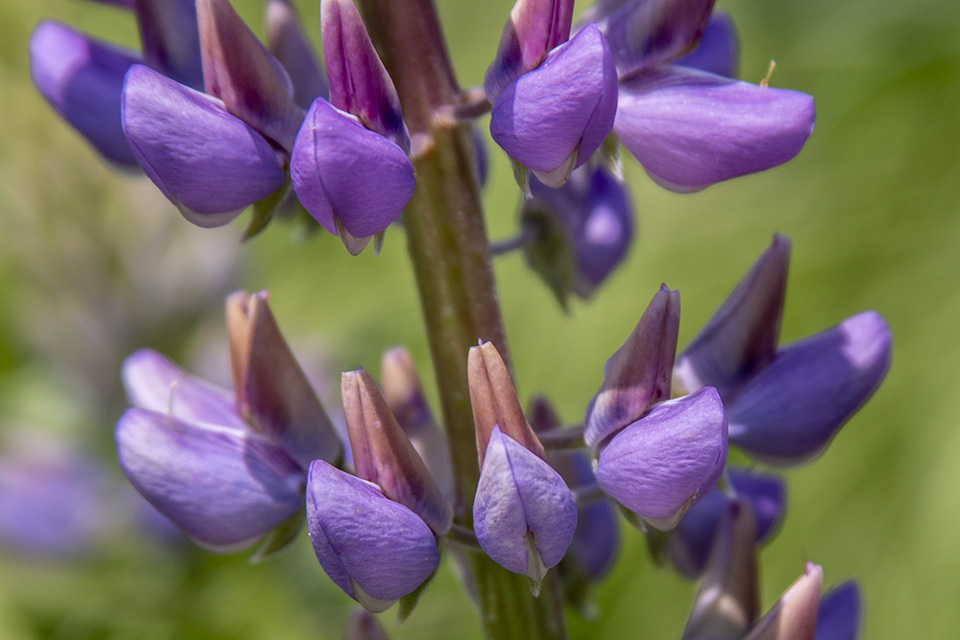
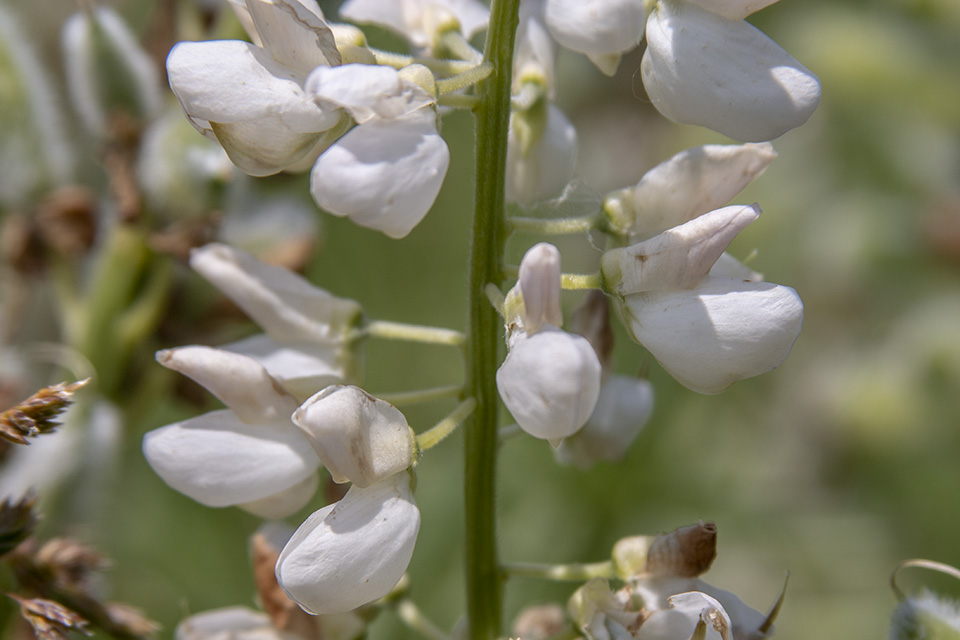
The individual flowers are ⅜″ to ⅝″ long. The 5 petals are shades of violet or blue and form a butterfly-like corolla, typical of plants in the Pea family. They are organized into a banner petal at the top, two lateral wing petals, and between the wings two petals fused into a keel. The banner is curved upward. There are 10 stamens; 5 with short filaments and long anthers, and 5 with long filaments and short anthers.
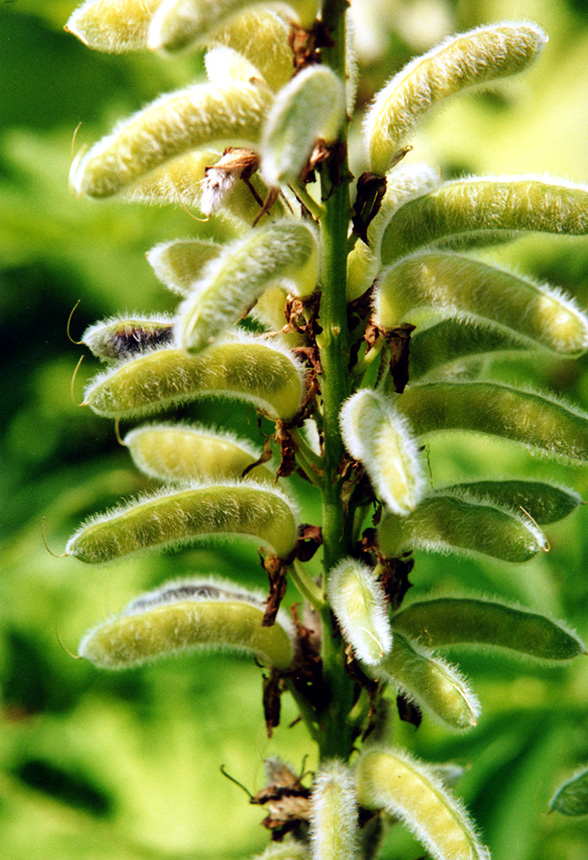
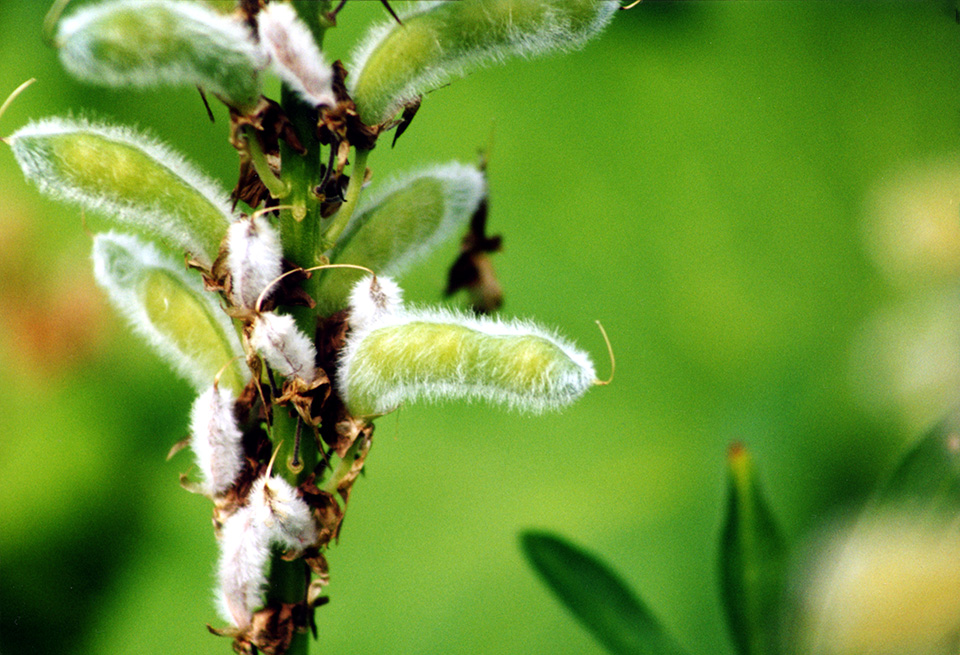
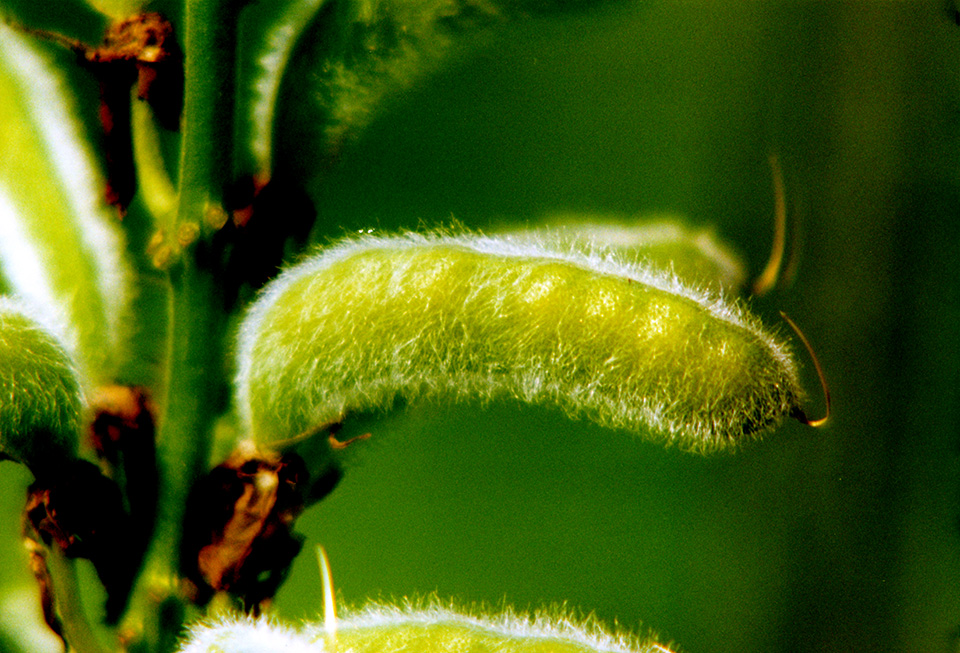
The fruit is a densely hairy, ¾″ to 2¼″ long pod containing 3 to 9 seeds. When ripe the pods open explosively, spreading the seeds a short distance.
Height
36″ to 40″
Flower Color
Violet or blue
Similar Species
Sundial lupine (Lupinus perennis var. perennis) is a smaller plant, no more than 24″ at maturity. Its leaves are divided into 7 to 11 leaflets.
Habitat
Moist. Forest edges, fields, shores, roadsides. Full sun to light shade.
Ecology
Flowering
June to July
Pests and Diseases
Use
Distribution

Sources
Biodiversity occurrence data published by: Minnesota Biodiversity Atlas (accessed through the Minnesota Biodiversity Atlas Portal, bellatlas.umn.edu. Accessed 9/12/2026).
Midwest Herbaria Portal. 2026. https://midwestherbaria.org/portal/index.php. Accessed 9/12/2026.
Lupinus polyphyllus Lindl. in Bánki, O., Roskov, Y., Döring, M., Ower, G., Hernández Robles, D. R., Plata Corredor, C. A., Stjernegaard Jeppesen, T., Örn, A., Pape, T., Hobern, D., Garnett, S., Little, H., DeWalt, R. E., Miller, J., Orrell, T., Aalbu, R., Abbott, J., Abreu, C., Acero P, A., et al. (2026). Catalogue of Life (2026-08-26 XR). Catalogue of Life Foundation, Amsterdam, Netherlands. https://doi.org/10.48580/dgyy9
Most sources show this species restricted to just a handful of counties, mostly in the norhteast quarter of the state. The two sightings in the Metro Area (Washington and Dakota Counties) are from a county park and a private nature center. The counties in light green on the map represent citizen science observations from iNaturalist and Pl@ntNet (GBIF).
Nativity
Native to the Alaska, Colorado, Idaho, Montana, Nevada, Oregon, Washington, and Wyoming. Introduced and escaped cultivation in the midwest.
Occurrence
Uncommon in Minnesota
Taxonomy
Kingdom
Subkingdom
Pteridobiotina
Phylum
Tracheophyta (Vascular Plants)
Class
Order
Fabales (Legumes, Milkworts, and Allies)
Family
Fabaceae (Legumes)
Subfamily
Faboideae
Tribe
Genisteae (Brooms, Lupines, and Allies)
Genus
Lupinus (Lupines)
Species
Lupinus polyphyllus (bigleaf lupine)
Subspecies
Lupinus polyphyllus ssp. polyphyllus (bigleaf lupine)
Variety of a Subspecies
This is a variety of a subspecies. Some sources list this as Lupinus polyphyllus ssp. polyphyllus, and some as Lupinus polyphyllus var. polyphyllus. Some sources list it as Lupinus polyphyllus ssp. polyphyllus var. polyphyllus, but the ICN (International Code of Nomenclature for algae, fungi, and plants) rules governing the naming of plant species, makes it clear that this is not correct. Following ICN rules, a taxa “may also be referred to” with the inclusion of the intervening name (in this case, “ssp. polyphyllus”), but that does not constitute a formal name.
Subordinate Taxa
Synonyms
Lupinus matanuskensis
Lupinus polyphyllus ssp. polyphyllus var. albiflorus
Lupinus pseudopolyphyllus
Lupinus stationis
Common Names
big-leaf lupine
big-leaved lupine
bigleaf lupine
blue-pod lupine
common lupine
garden lupine
large-leaf lupine
large-leaved lupine
marsh lupine
Washington lupine