



Great Egret
(Ardea alba)
Conservation • Description • Habitat • Ecology • Distribution • Taxonomy
|
|
||||||||||||||
Description |
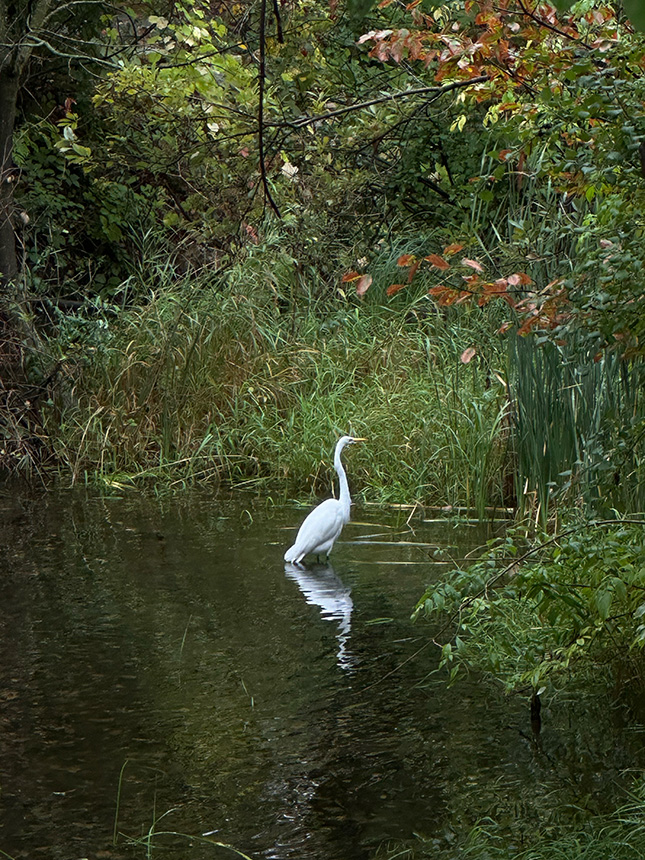
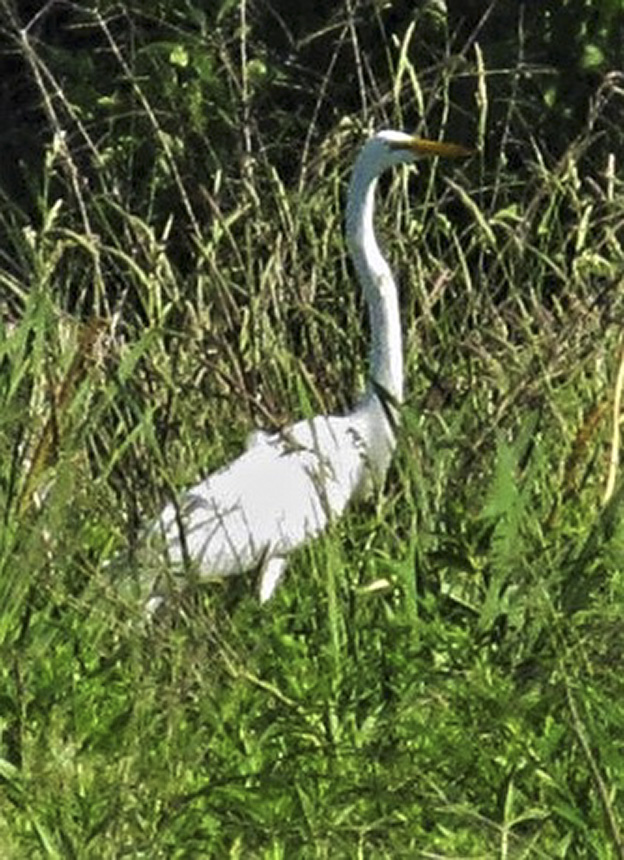
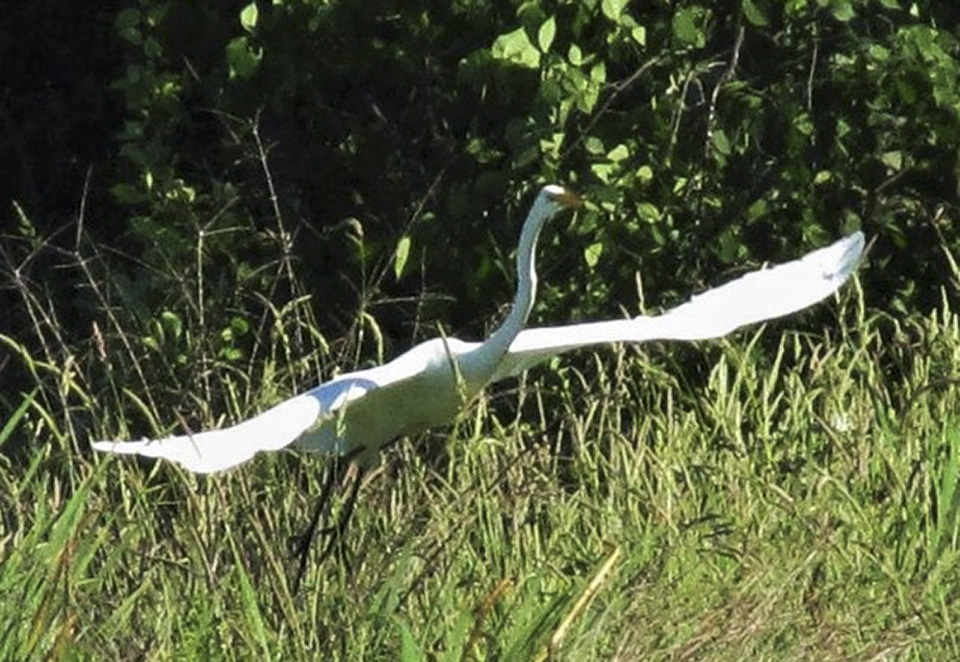
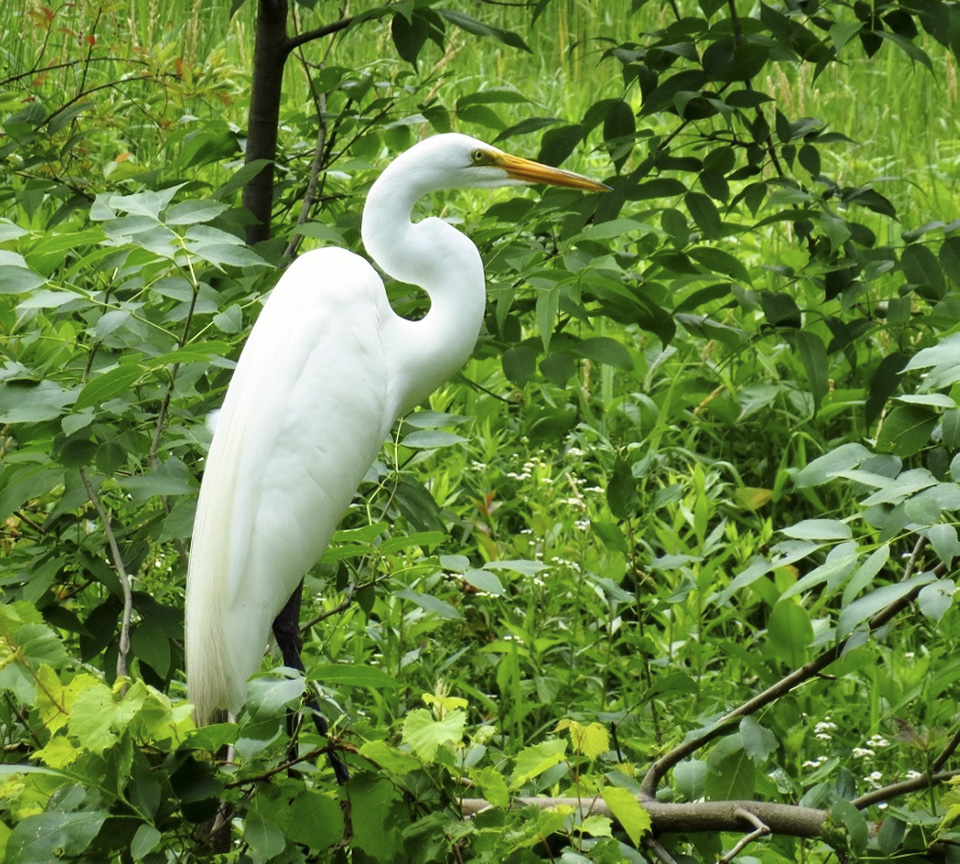
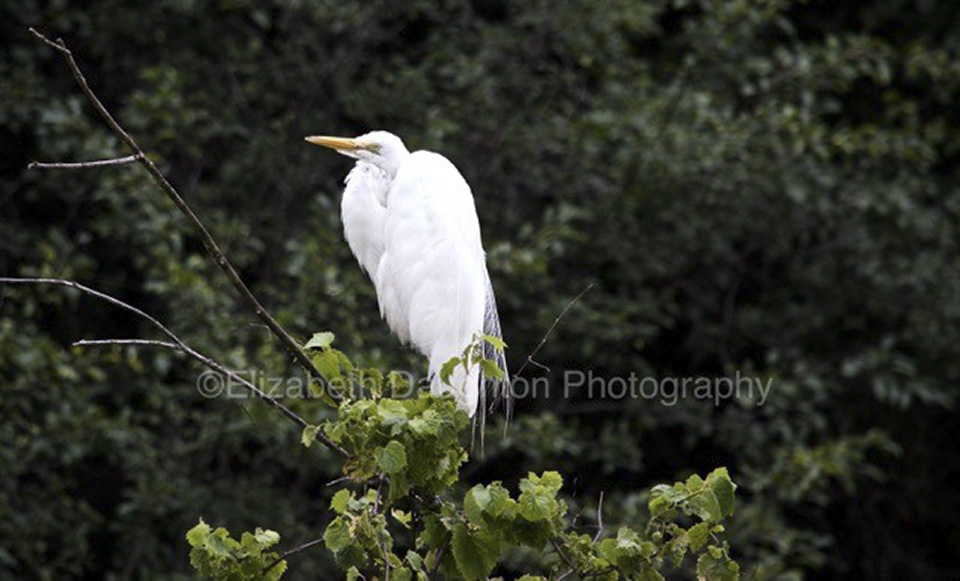
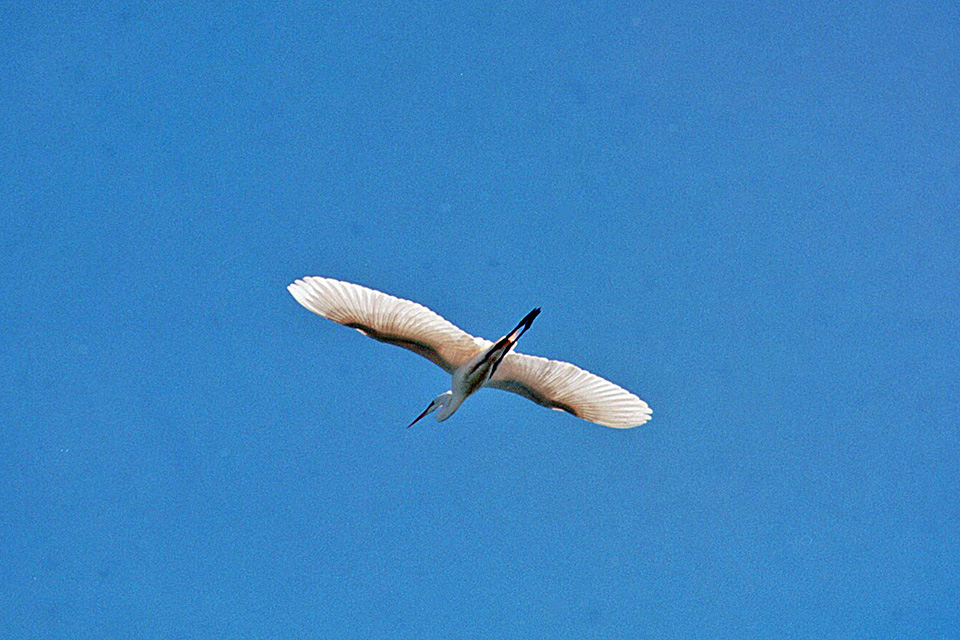
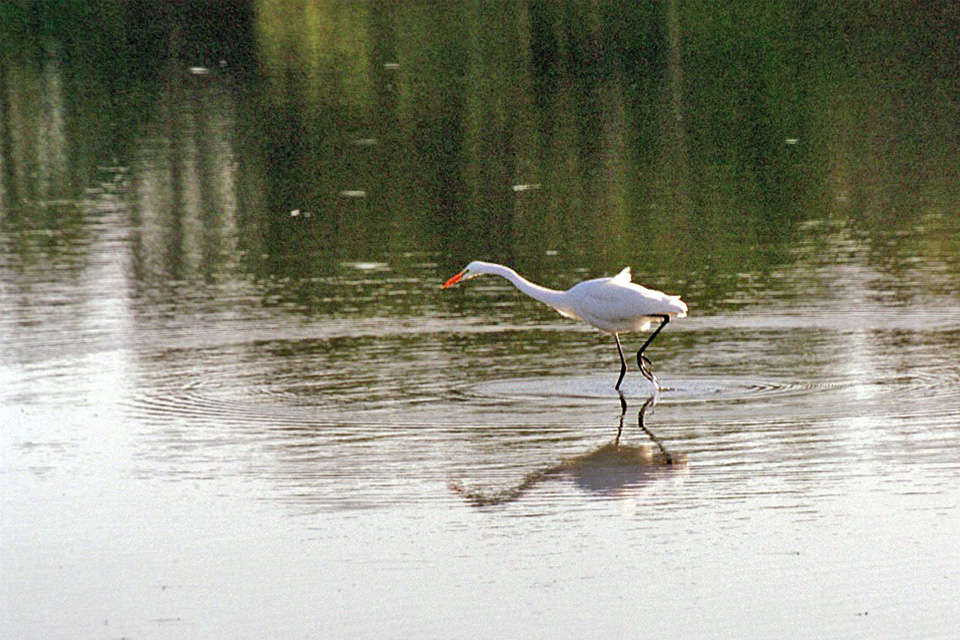
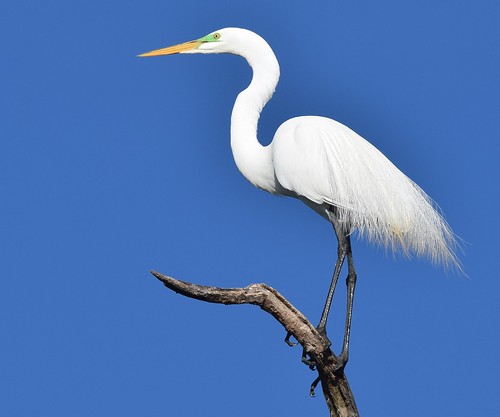
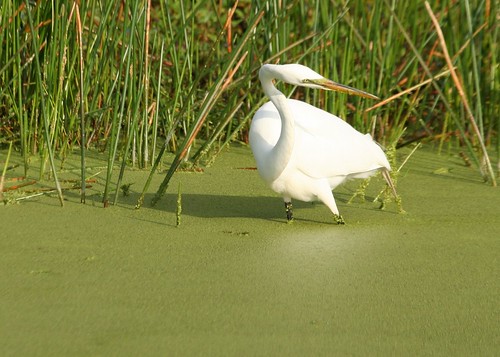
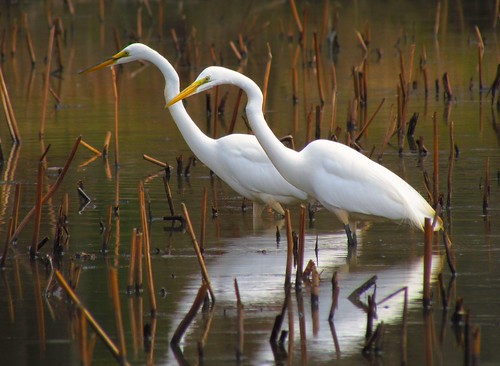
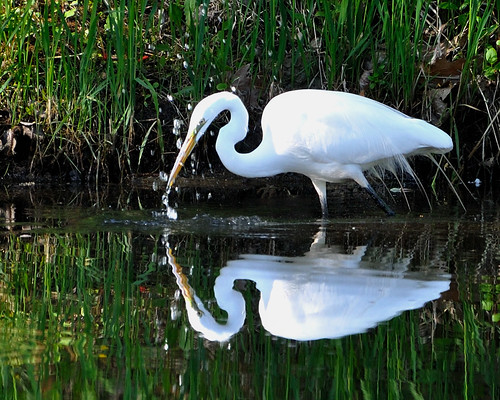
Great Egret is a large, slender heron. It is the symbol for the National Audubon Society. The common name is a misnomer, as this is actually a heron, in the genus Ardea (great herons). Adults are 36″ to 42″ long and have a wingspan of 48″ to 60″. They weigh 32 to 40 ounces. Males are larger than females. They live about 15 years. The plumage is completely white. The neck is very long. Small patches of skin between the eyes and bill (lores) are green. The bill is long, stout, straight, and yellow. The legs are long and black. The feet are black. In flight their neck is pulled back forming an "S" curve and they trail their feet. |
Size |
36″ to 42″ in length 48″ wingspan |
Voice |
|
|
Loud, low-pitched, rapid cuk-cuk-cuk. |
Similar Species |
Cattle Egret (Bubulcus ibis) is a stockier, much smaller bird, 19″ to 21″. The bill and legs are orange. Snowy Egret (Egretta thula) is a smaller bird, 22″ to 26″. The bill is black. The feet are yellow, though the legs, like those of the Great Egret, are black. |
Habitat |
Freshwater, mud flats, tidal shallows, marshes, irrigation canals, open riverbanks. |
Ecology |
Migration |
April to September |
Nesting |
Nesting is usually in colonies in wetlands and wooded swamps, often with Great Blue Herons and Double-crested Cormorants. Occasionally, a pair will nest alone. The nest is a platform of sticks, twigs, and stems in a tree or tall shrub over water. The clutch is 1 to 6 (average 3) pale, greenish-blue eggs. |
Food |
Frogs, lizards, snakes, crayfish, fish, mice, birds, aquatic and other insects. |
Distribution |
Occurrence |
Common migrant and breeder |
Maps |
The Minnesota Ornithologists’ Union All Seasons Species Occurrence Map |
Taxonomy |
|
Class |
Aves (Birds) |
Order |
Pelecaniformes (pelicans, herons, ibises, and allies) |
Family |
Ardeidae (bitterns, egrets, herons) |
Subfamily |
Ardeinae (typical herons and egrets) |
Genus |
Ardea (great herons) |
Bitterns, egrets, and herons (family Ardeidae) were formerly classified under the order Ciconiiformes. Based on a phylogenomic study published in 2008, the family was transferred to the order Pelecaniformes. |
|
Subordinate Taxa |
|
African Egret (Ardea alba melanorhynchos) American Great Egret (Ardea alba egretta) Eastern Great Egret (Ardea alba modesta) Western Great Egret (Ardea alba alba) |
|
Eastern Great Egret is sometimes treated as a separate species, Ardea modesta. |
|
Synonyms |
|
Casmerodius albus |
|

Glossary
Lores
Small patches of skin between a bird’s eye and bill, one below each eye.
Visitor Photos |
||
Share your photo of this bird. |
||
This button not working for you? |
||
Henry Elmer |
||
 |
|
|
 |
|
|

Alexandra C. |
||
 |
||
Dan W. Andree |
||
 |
 |
|
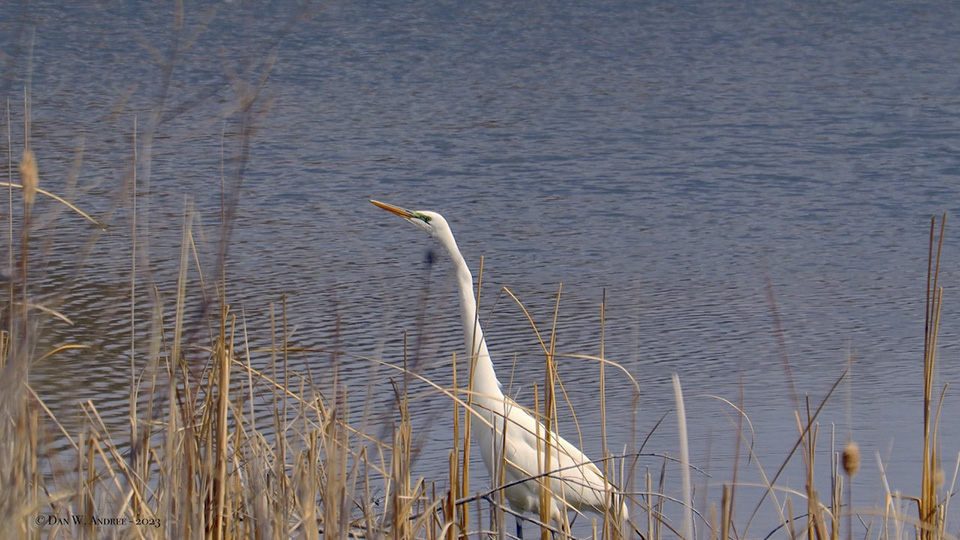
Great Egret... …this one flew into a pond area I was at and walked along the shoreline hunting for food. It did catch something to eat. I think stickleback minnows since it looked like a small minnow and only minnows I seen were stickleback. Neat bird. |
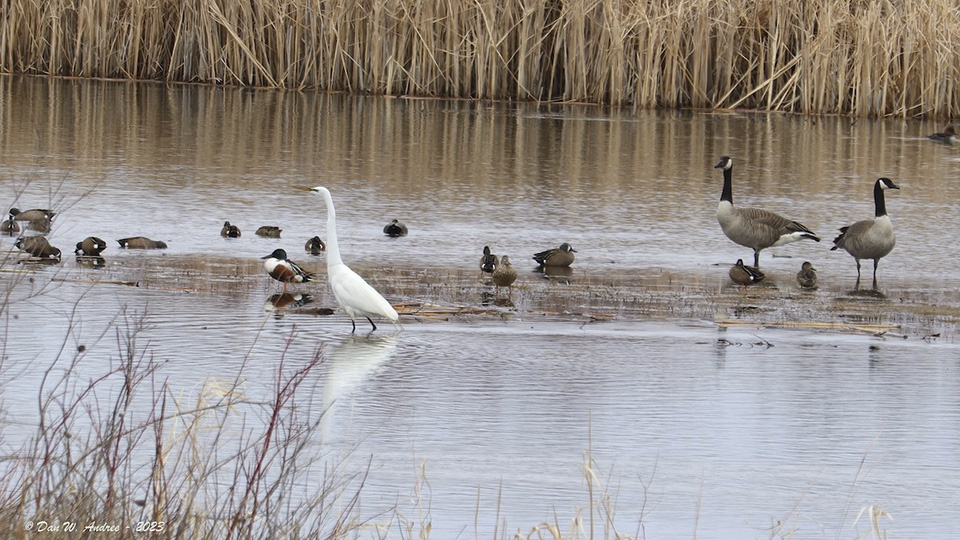
The other photo is the same Great Egret and a bunch of other ducks and a couple of geese the same day etc. It landed by all the other ducks and geese then walked along the shore hunting for food. I filmed it. It eventually flew away. Only one I seen and only that one day. I been to that pond several other times since but the egret hasn’t returned. At least not while I was there. I feel fortunate I encountered one. Rarely seen any in this area. |
|
 |
||
I believe this is a White Egret... or Great Egret...Not sure though. I took this photo back in early April 2019. I noticed it walking along a pool of standing water at the Ada, Mn. Golf Course. A pretty cool, tall white bird. |
||
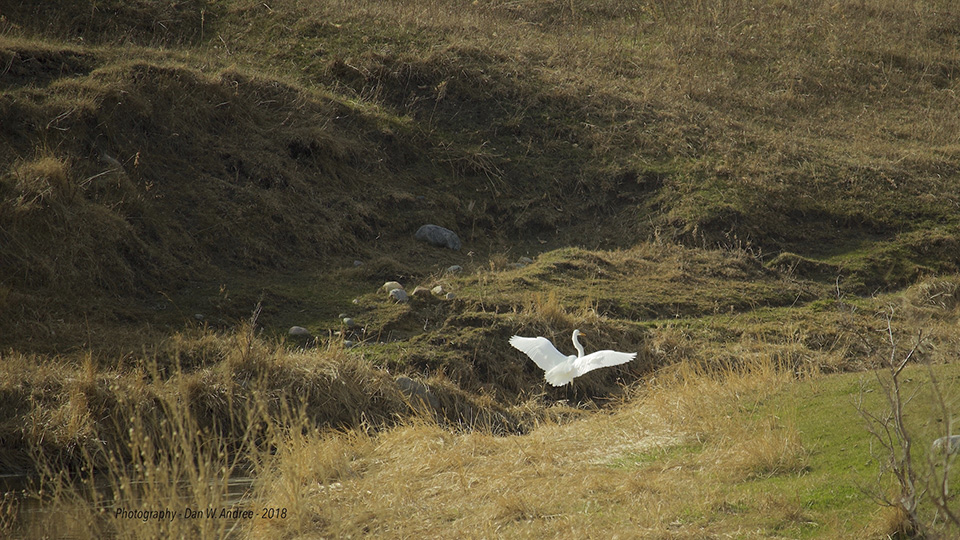
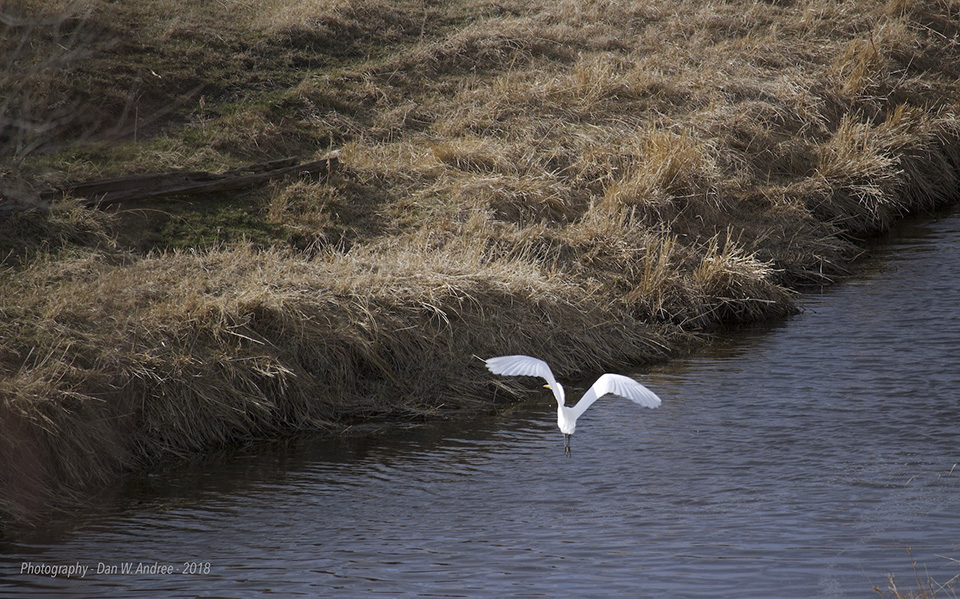
Great Egret... It was hanging around a creek in rural Norman Co. Mn. April 27, 2018. It was rather far away even with my lens at full zoom. Seldom seen one in this area. Spring migration one can sometimes catch views of migrating birds that may nest elsewhere. I probably wouldn’t of thought of photographing the plain landscape had it not been for the contrasting bright white egret adding beauty of its own to it. |
 |
|
 |
 |
|
Margot Avey |
||
 |
 |
|
Dan Johnson |
||
 |
 |
|
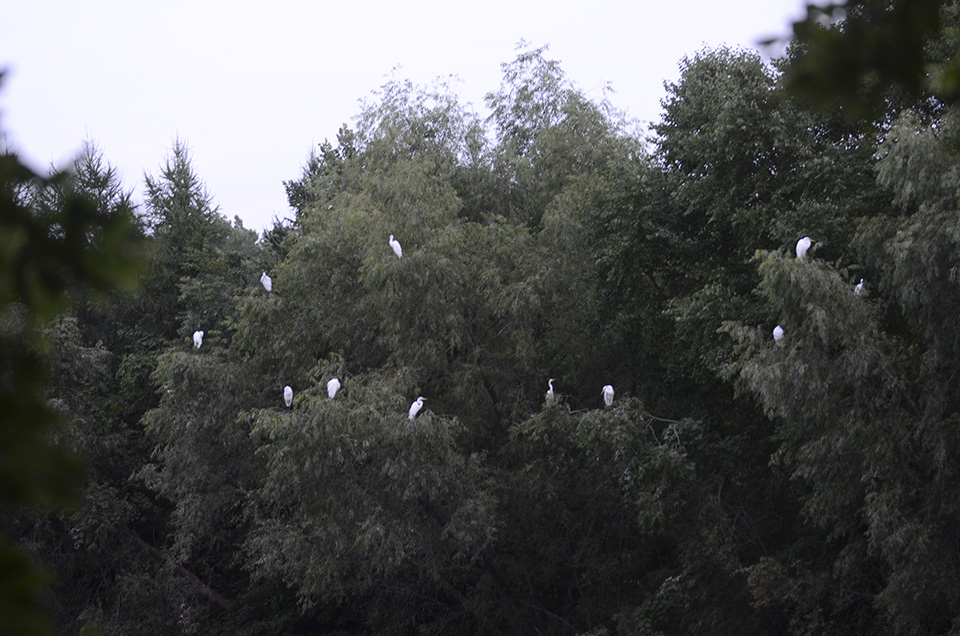
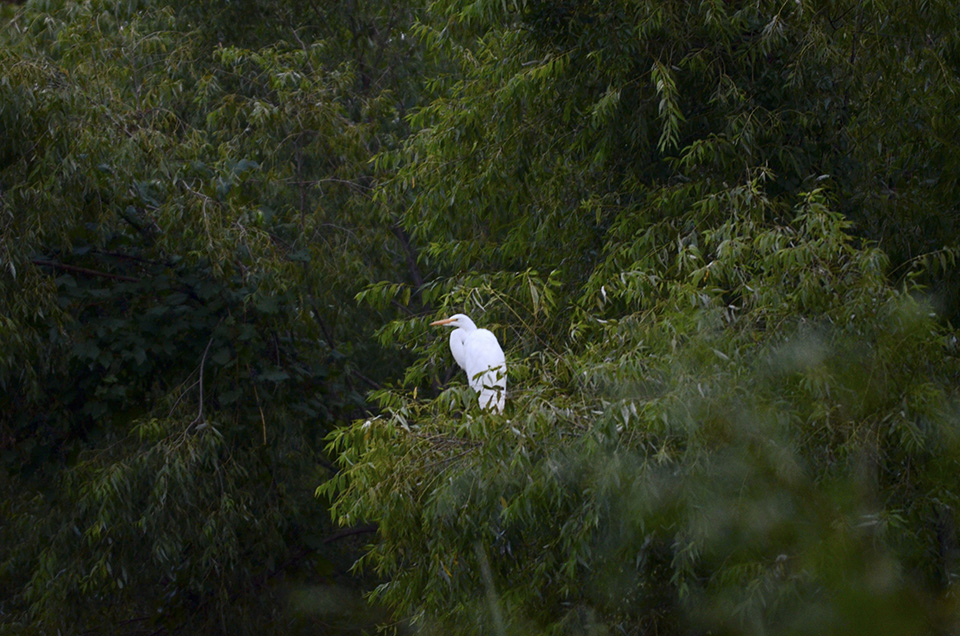
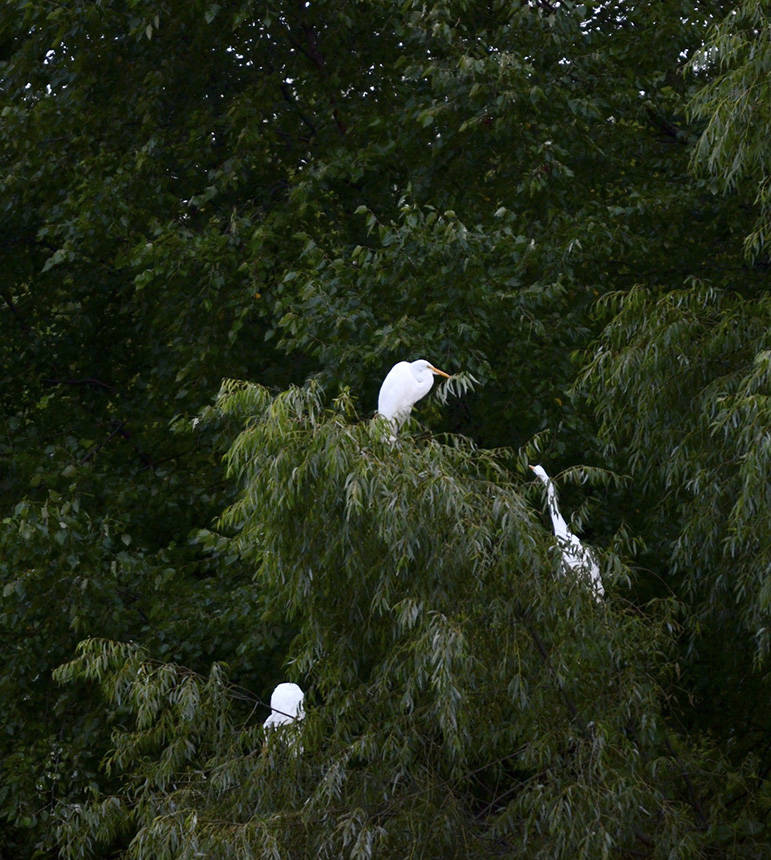
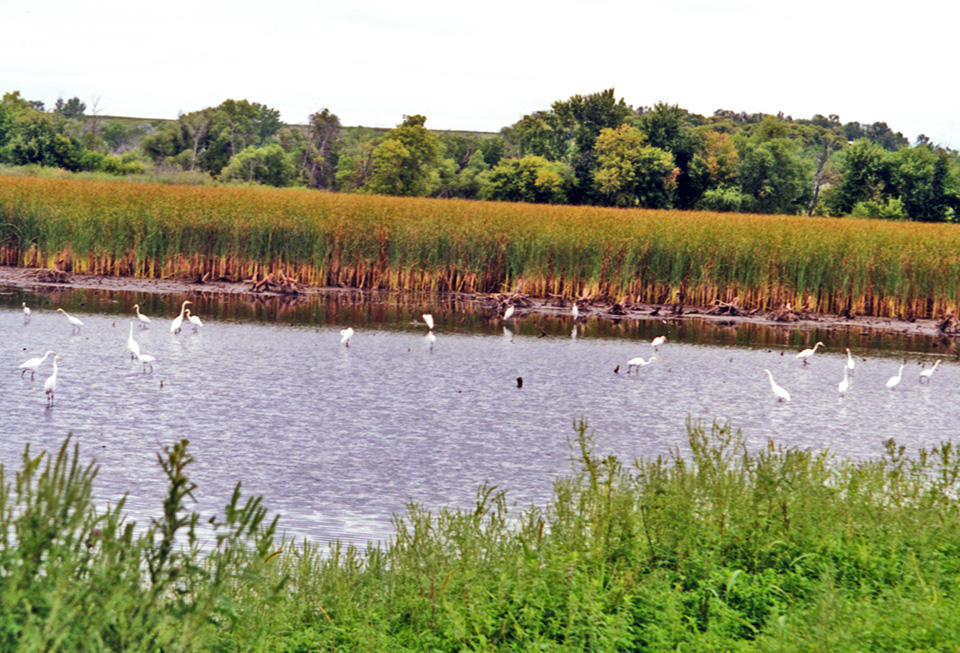
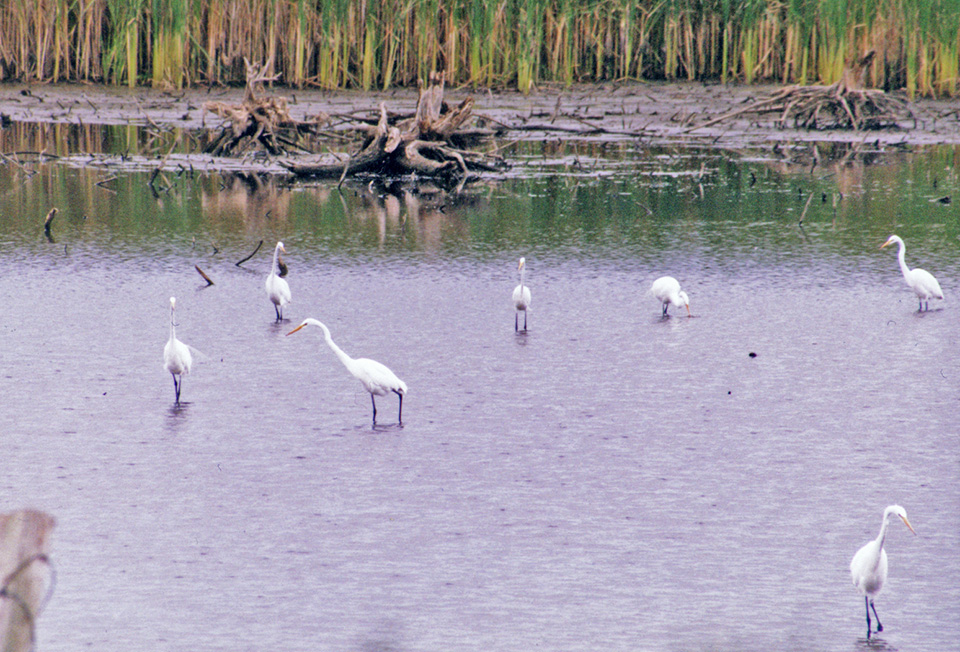
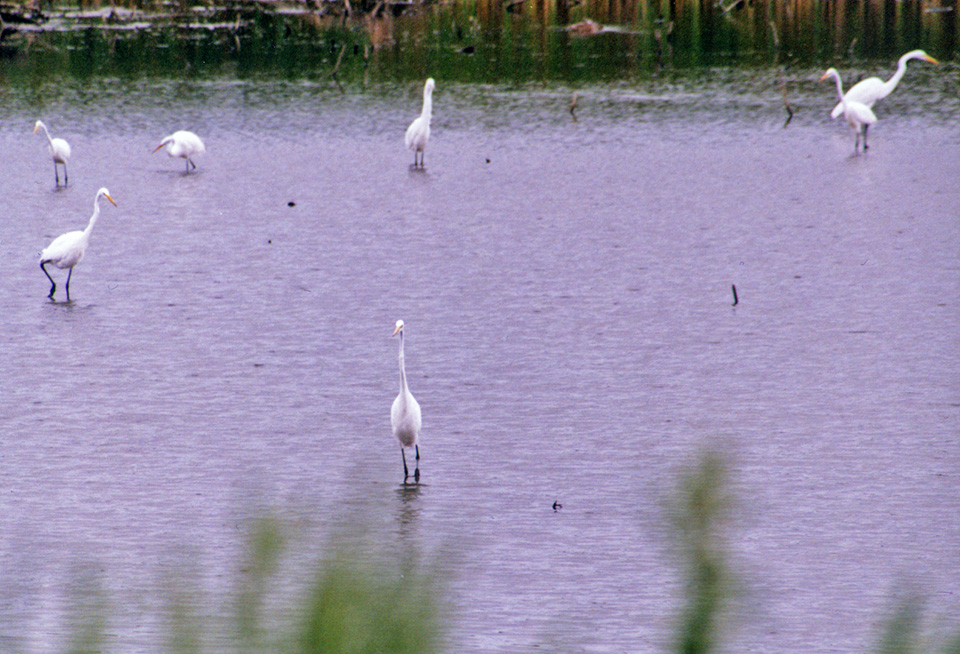
A gathering of Egrets |
||
 |
||
Erica Erickson |
||
 |
||
Ramona Abrego |
||
 |
 |
|
 |
 |
|
Lynn Rubey |
||
 |
||
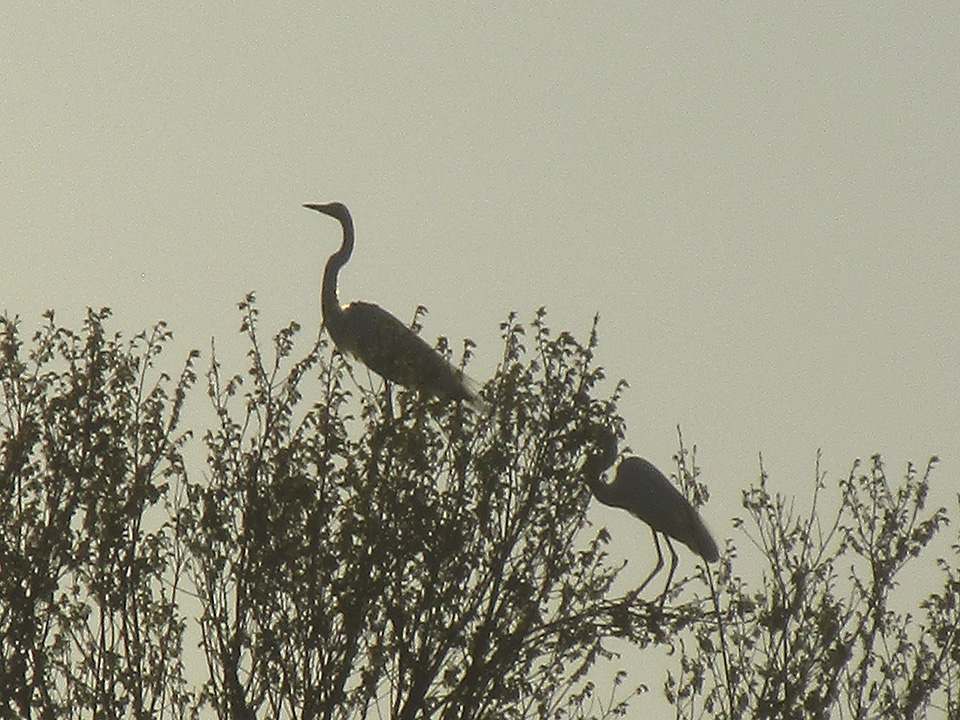
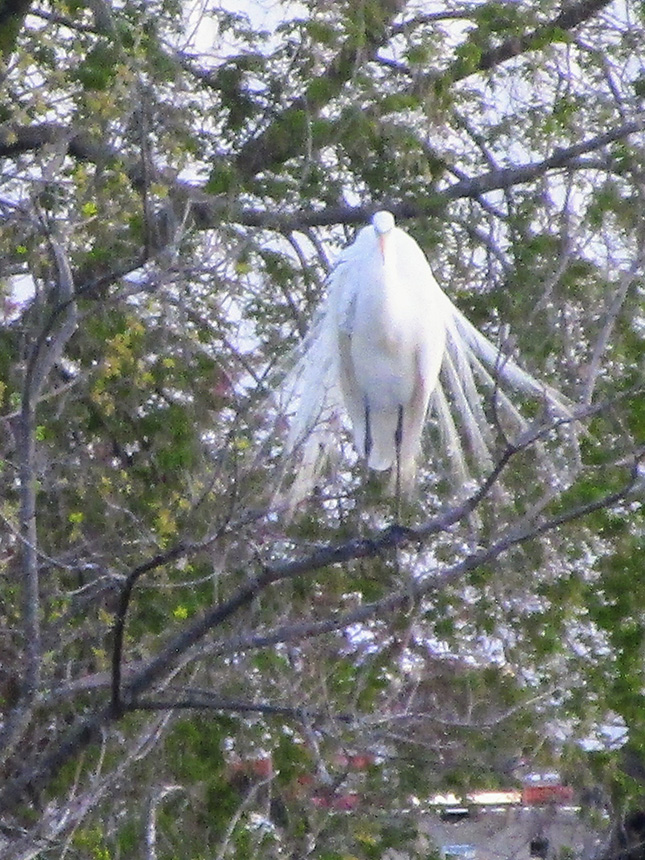
Great Egret perched in a tree above the marsh in The Big Stone National Wildlife Refuge. The green color around the eeye during breeding season is nearly gone. |
||
Kirk Nelson |
||
 |
||
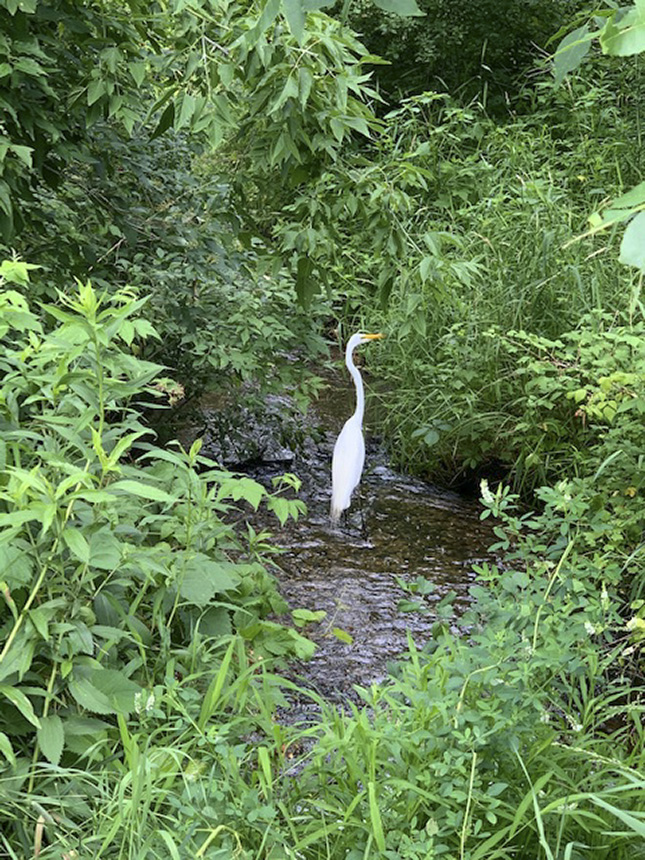
6/24/2018 – Egrets are quite common around Minnesota, but I have never gotten as close to one as I did today, about 20 feet. They usually fly away when you start moving closer. This one perched there above the stream for several minutes while I watched and took photos. |
||
Wayne Rasmussen |
||
 |
 |
|
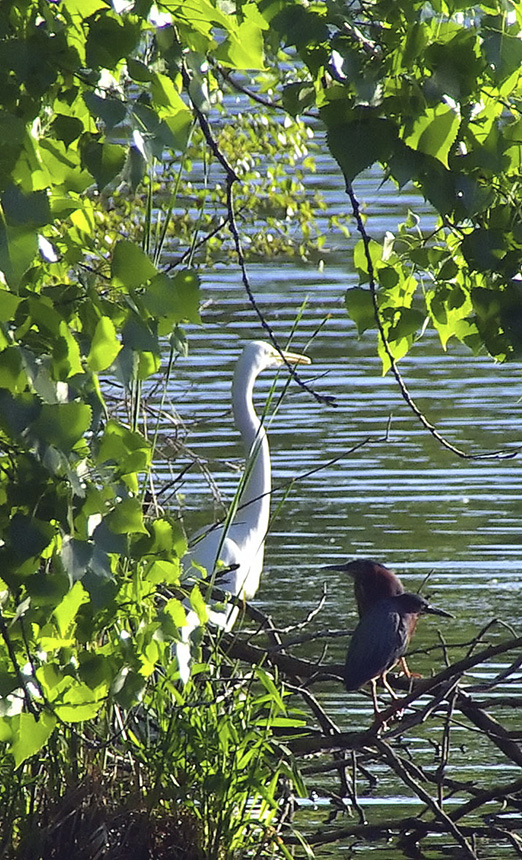
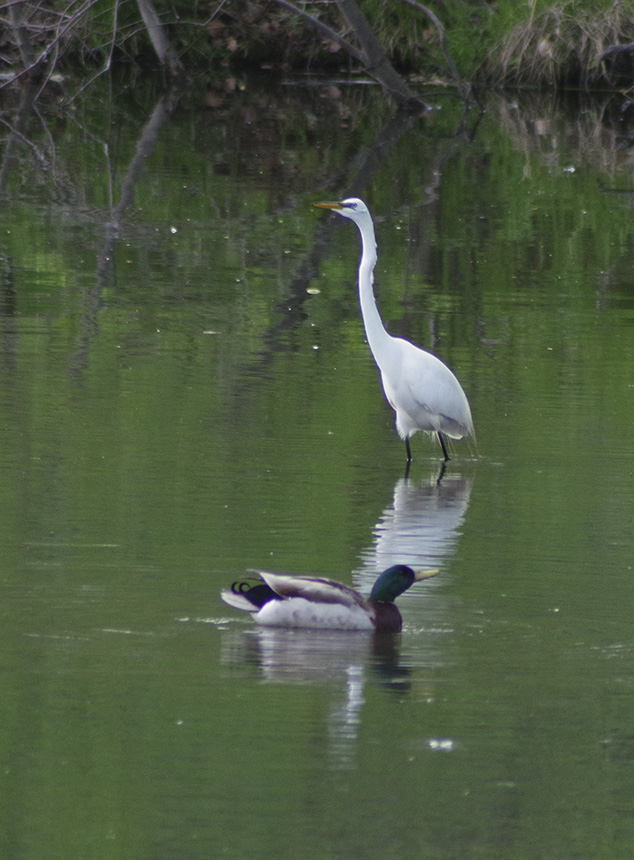
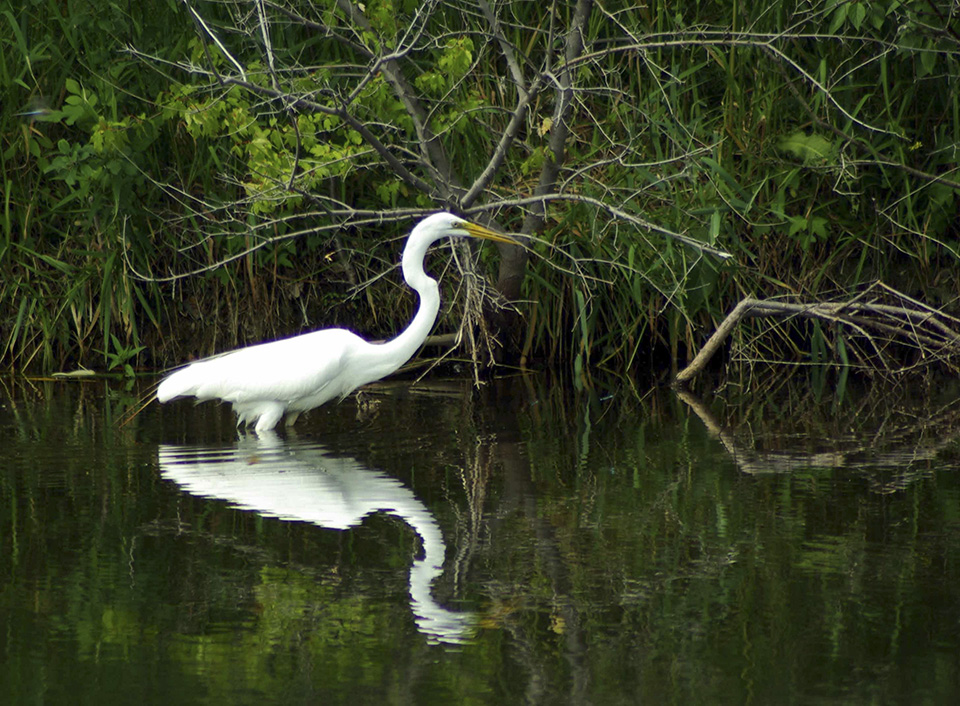
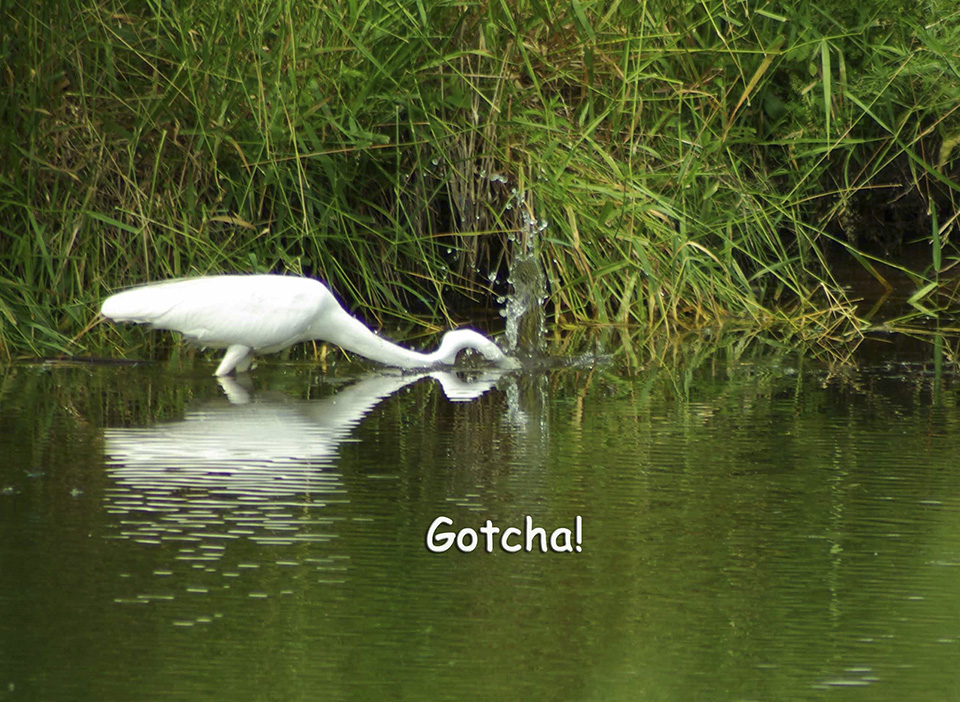
White Egrets are occasional visitors to Maplewood Hts Park even though the Blue Heron tries to protect his territory with ferocity. |
||
 |
 |
|
Elizabeth Daughton |
||
 |
 |
|
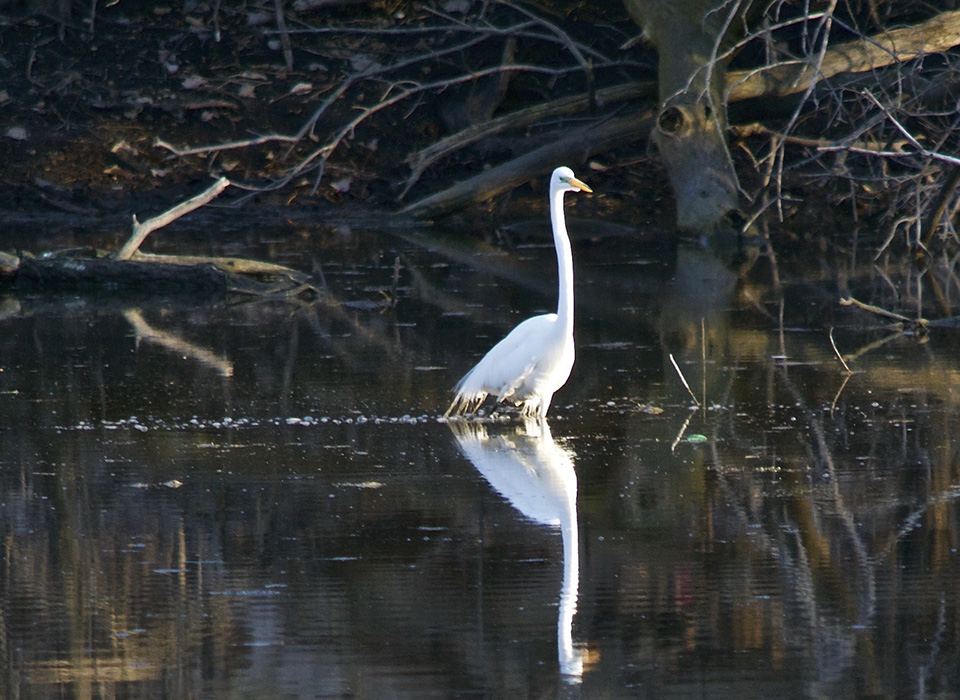
The egret explored a small pond and searched for food on September 3. |
||
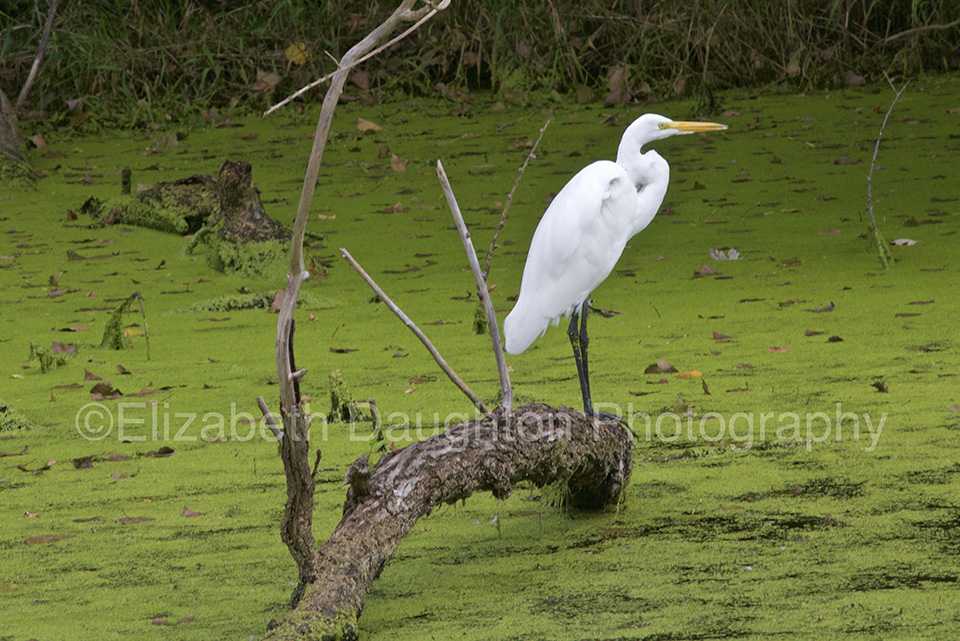
Great egret, Colonial Church pond, Edina, April 1. |
||
 |
 |
|
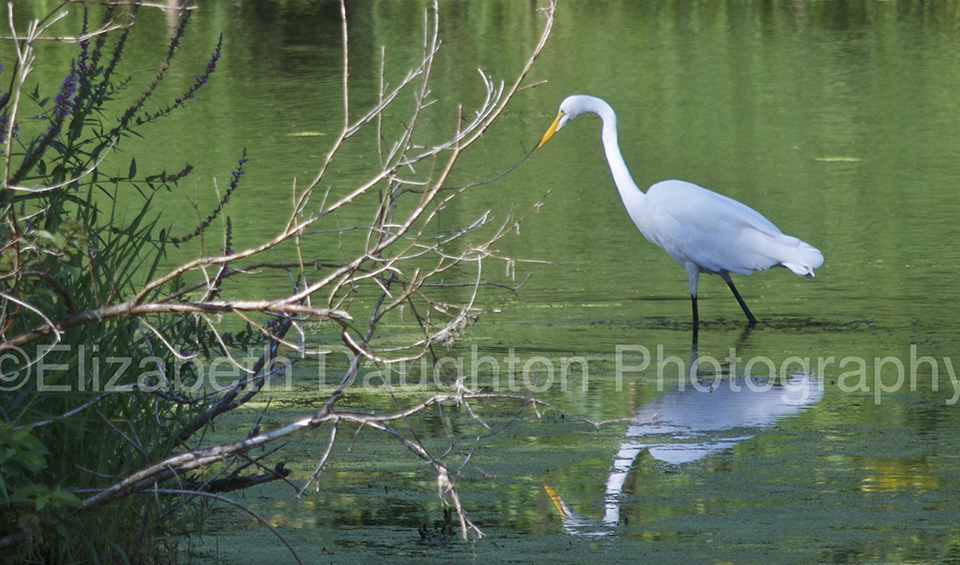
An egret walks through the shallows at the Colonial Church pond, Edina. |
||
|
||
|
||
|
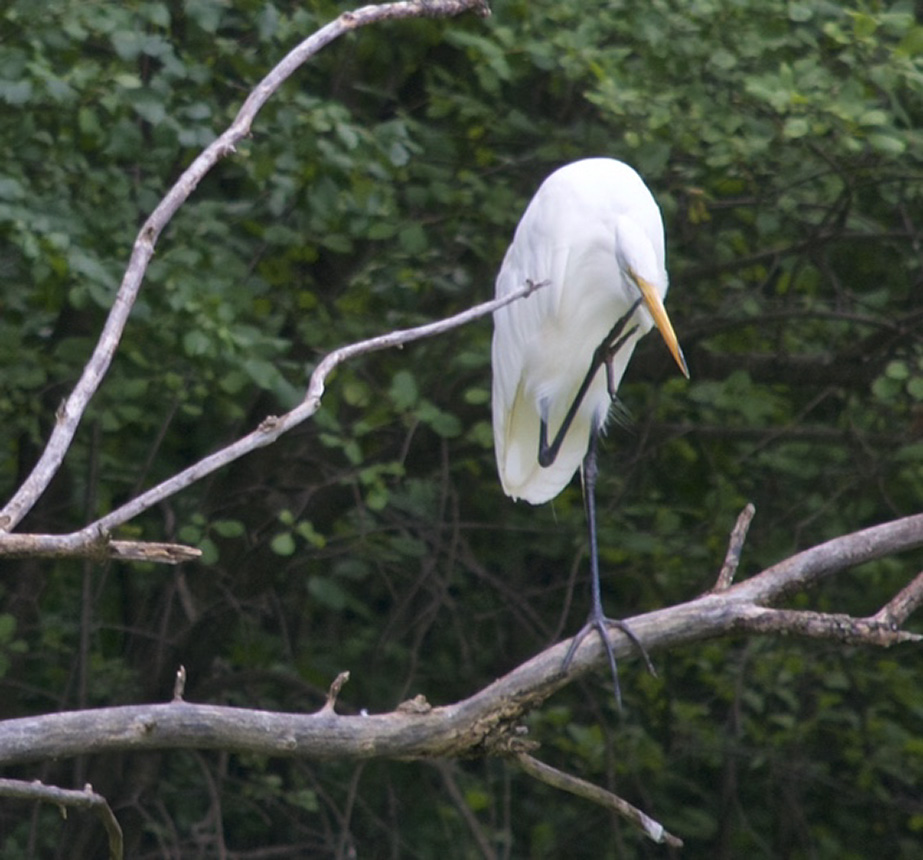
The great egret balanced on one leg while cleaning his feathers. |
|
 |
 |
|
The egret, surprised by my presence, flees to a nearby tree where he perches over a pond. |
A great egret lives in a tree overlooking the pond. |
|
MinnesotaSeasons.com Photos |
||
 |
 |
|
 |
 |
|
 |

Slideshows |
Great Egret |
|
Great Egret |
|
Great Egret |
|
Great Egret |
|

Visitor Videos |
||
Share your video of this bird. |
||
This button not working for you? |
||
Avi Birds |
Great Egret [Ardea Alba] |
About
In this video, we look at the great egret. |
Other Videos |
||
Great Egrets on the UL Lafayette Campus |
About
Uploaded on Sep 24, 2008 http://morayeel.louisiana.edu/SeaweedsLab/phycomirth.html American alligators (Alligator mississippiensis) can also be seen swimming in the swamp. This solitary egret was filmed on September 24, 2008 by SUzanne Fredericq. The species can be distinguished from other white egrets and herons by size, yellow bill that may have a black ridge, and black legs and feet. Note the characteristic sideways neck- and head-bobbing (triangulation) behavior prior to catching a prey. |
Great Egret Rookery |
About
Published on Jun 10, 2012 Fergus Falls MN. Great Egrets return each year to nest in a few trees in one of our secluded parks. |
Great Egrets in Fergus Falls |
About
Published on May 8, 2013 Great Egrets in Breeding plumage, during mating season when they put on interesting displays trying to attract a mate. Taped at Grotto Lake rookery where both Great Egrets and Double-crested Cormorants have built their nests in a tree located in the lake. |

Visitor Sightings |
||
Report a sighting of this bird. |
||
This button not working for you? |
||
Henry Elmer |
Location: Clayton, WI |
 |
| Alexandra C. 9/25/2023 |
Location: Golden Valley, MN |
|
| Annie Norum 6/18/2023 |
Location: Farmington, MN Saw flying overhead this morning around 8:15 am. Second time seeing this in the last couple of weeks. |
|
| Dan W. Andree 4/24/2023 |
Location: Pond in Norman Co. Mn …this one flew into a pond area I was at and walked along the shoreline hunting for food. It did catch something to eat. I think stickleback minnows since it looked like a small minnow and only minnows I seen were stickleback. Neat bird. |
|
Amanda |
Location: just North of Benson Mn HWY 27 |
|
| Margot Avey 5/13/2022 |
Location: Golden Valley, MN |
|
Chris |
Location: Just north of Cambridge, MN |
|
| Dan Johnson 8/23/2020 |
Location: Bassett Creek Park, Crystal, MN A gathering of Egrets |
|
| Erica Erickson 7/7/2020 |
Location: Lebanon Hills Regional Park, Eagan MN |
|
| Ramona Abrego | Location: Washington County |
|
| Lynn Rubey 6/19/2019 |
Location: Big Stone National Wildlife Refuge Great Egret perched in a tree above the marsh in The Big Stone National Wildlife Refuge. The green color around the eeye during breeding season is nearly gone. |
|
| Dan W. Andree April 2019 |
Location: Ada, Mn. I believe this is a White Egret...or Great Egret...Not sure though. I took this photo back in early April 2019. I noticed it walking along a pool of standing water at the Ada, Mn. Golf Course. A pretty cool, tall white bird. |
|
| Kirk Nelson 6/24/2018 |
Location: Lebanon Hills Regional Park Egrets are quite common around Minnesota, but I have never gotten as close to one as I did today, about 20 feet. They usually fly away when you start moving closer. This one perched there above the stream for several minutes while I watched and took photos. |
|
| Wayne Rasmussen 5/17/2018 |
Location: Maplewood Heights Park |
|
| Dan W. Andree 4/27/2018 |
Location: rural Norman Co. Mn. It was hanging around a creek.... It was rather far away even with my lens at full zoom. Seldom seen one in this area. Spring migration one can sometimes catch views of migrating birds that may nest elsewhere. I probably wouldn’t of thought of photographing the plain landscape had it not been for the contrasting bright white egret adding beauty of its own to it. |
|
| Eilleene Stawarski 9/22/2017 |
Location: Mississippi River near SCSU. I was amazed to see it on the bank. Then it flew right over my head. It certainly was large with a great wing span. |
|
| Elizabeth Daughton 4/1/2017 |
Location: Colonial Church pond |
|
| Elizabeth Daughton 9/3/2016 |
Location: Bredesen Park, Edina, MN. The egret explored a small pond and searched for food on September 3. |
|
| Elizabeth Daughton 8/23/2016 |
Location: Hennepin County An egret walks through the shallows at the Colonial Church pond, Edina. |
|
| Elizabeth Daughton 8/12/2016 |
Location: pond next to the Colonial Church, Edina. The egret, surprised by my presence, flees to a nearby tree where he perches over a pond. |
|
| Elizabeth Daughton 8/7/2016 |
Location: 2 great egrets live near the pond at the Colonial Church, Edina the egrets live about ten yards from each other and may be a pair. A great blue heron lives nearby. For the past two days, one egret has been moving twigs in a tree overlooking the pond. |
|
| Wayne Rasmussen 6/8/2016 |
Location: Maplewood Heights Park White Egrets are occasional visitors to Maplewood Hts Park even though the Blue Heron tries to protect his territory with ferocity. |
|
| Michael C. Davis 8/13/2015 |
Location: Snail Lake Park For the last week there have been upwards of 40 Egrets roosting in the trees at dusk. They roost on the northwest side of the loop trail. Before they go up into the trees they hang out in the marsh that the loop trail circles and are often quite close to the trial, usually on the eastern side of the trail. |
|
| TLV 6/9/2014 |
Location: SW edge of Birch Lake, White Bear Lake, MN Early evening, a tall, slender, stately white bird, which from its appearance could only have been a Great Egret, walked slowly across the shoreline of our property on Birch Lake. It took its time, paying little attention to anything around it, stood for a few moments at the point where open water meets a reed bed, then gracefully took flight and headed NE across the lake and out of view. I stood about 90 feet away watching the whole time. |
|
MinnesotaSeasons.com Sightings |
||

|
Created: Last Updated: © MinnesotaSeasons.com. All rights reserved. |