



Old Man of the Woods
(Strobilomyces strobilaceus)
Conservation • Description • Habitat • Ecology • Distribution • Taxonomy
Conservation Status |
|
|||||||
| IUCN Red List | not listed |
|||||||
| NatureServe | not listed |
|||||||
| Minnesota | not listed |
|||||||
Description |
||
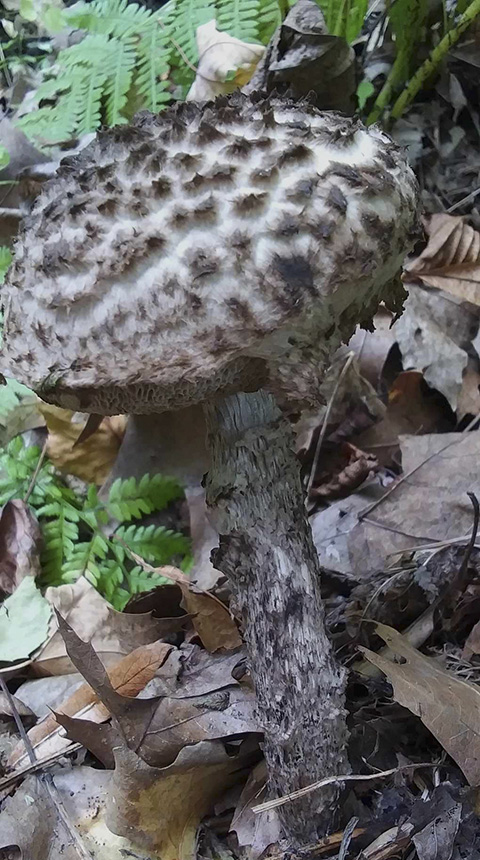
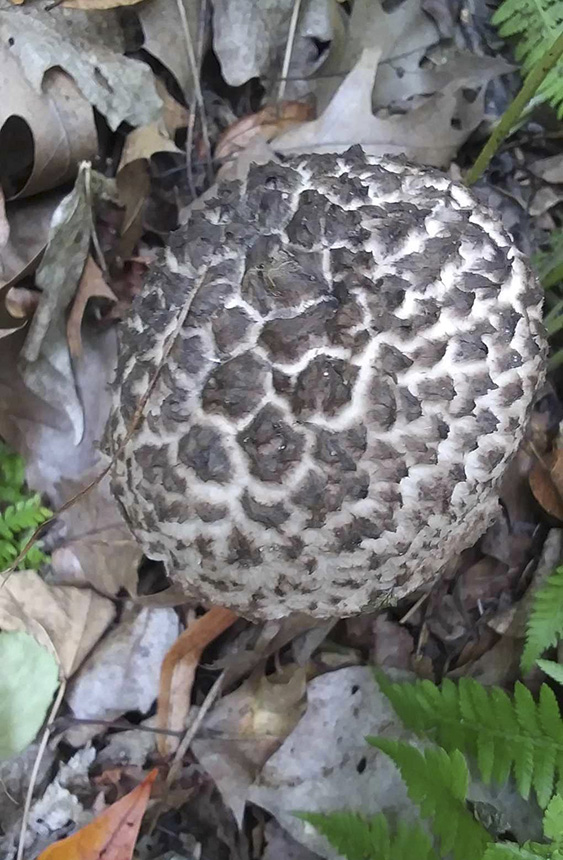
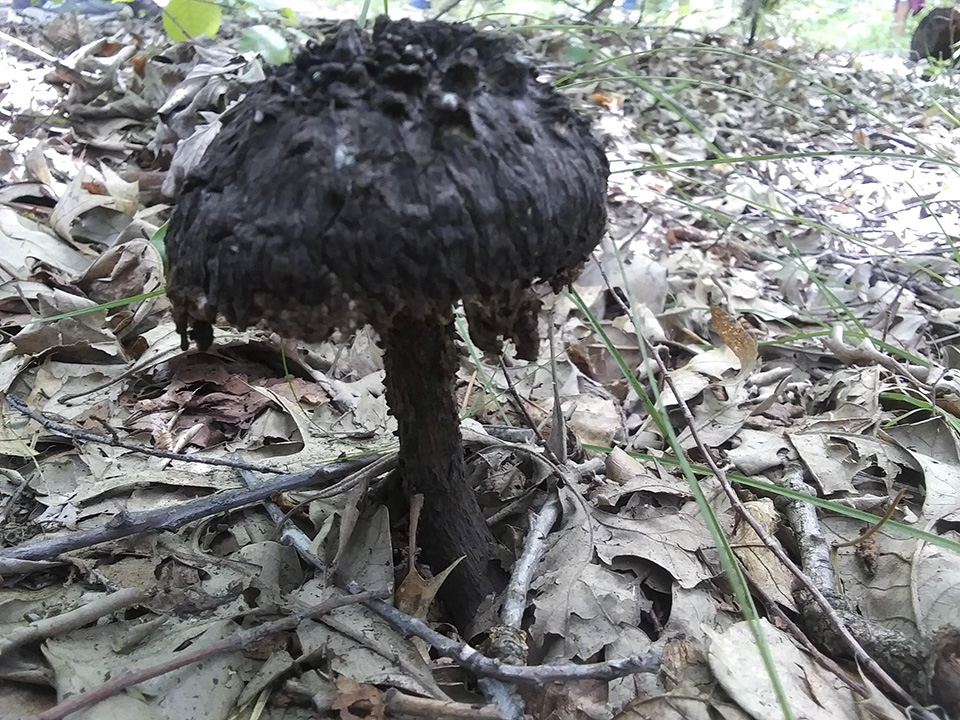
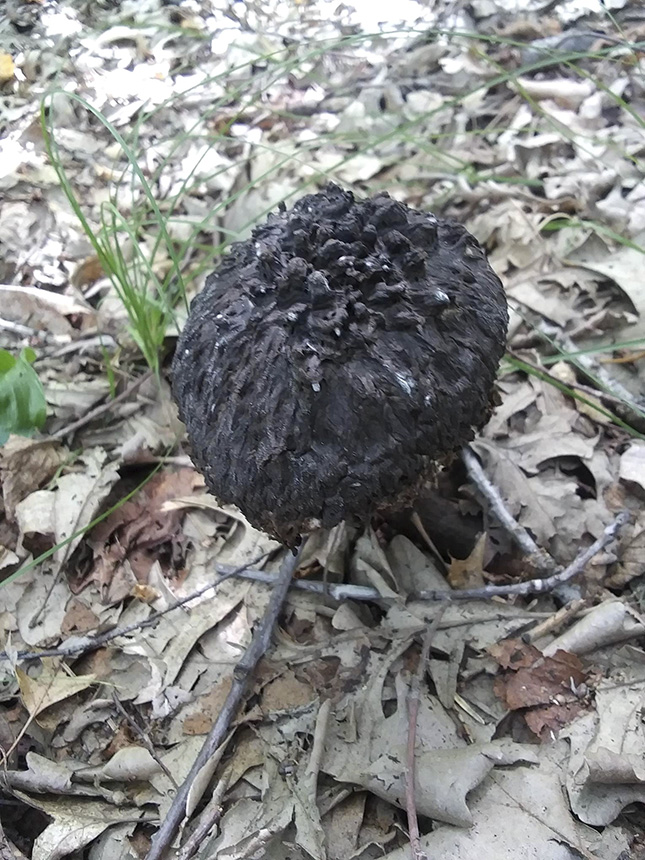
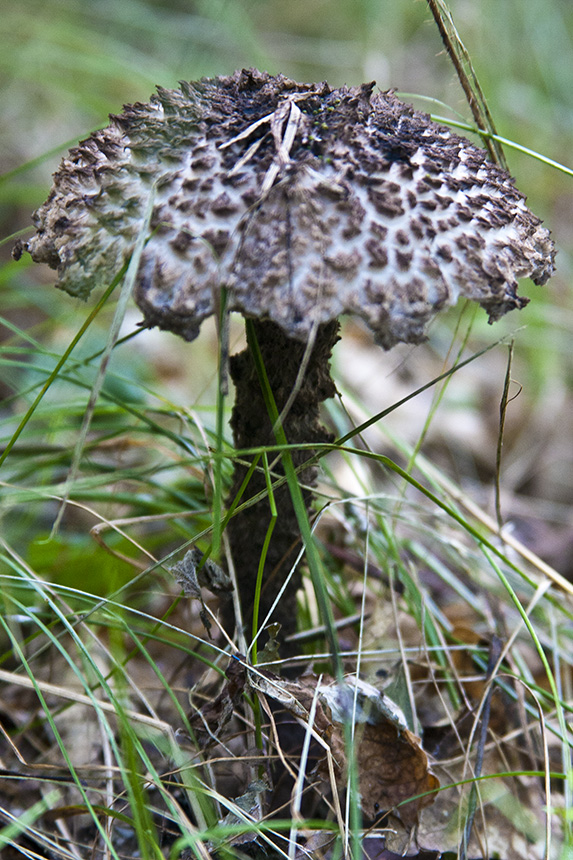
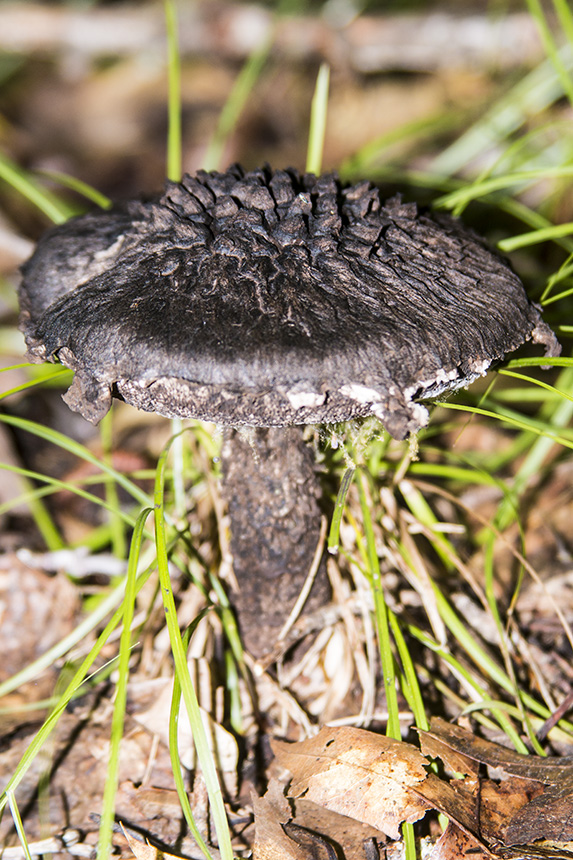
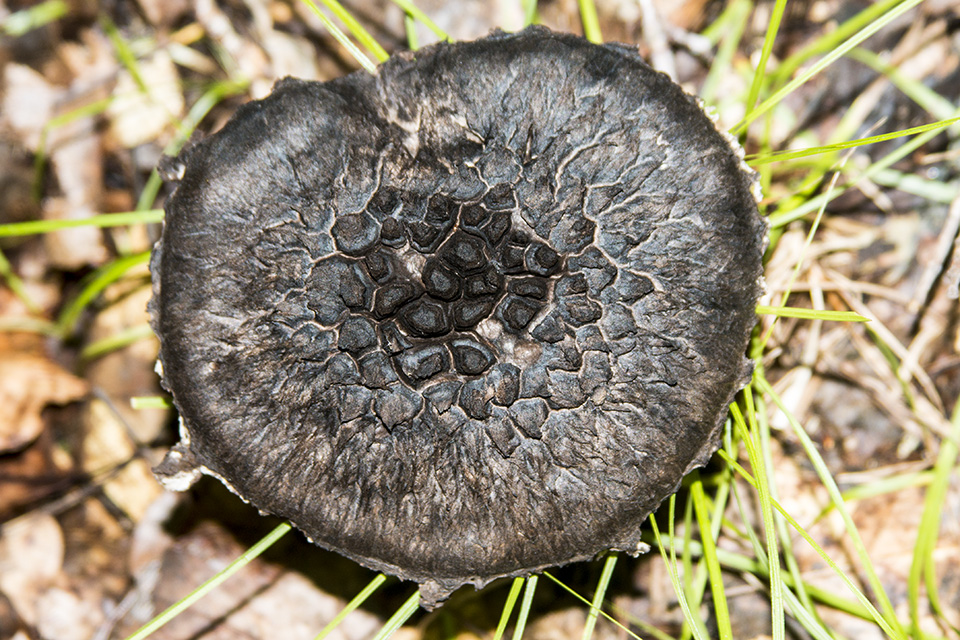
Old Man of the Woods is a common mushroom easily recognized by it’s dark, shaggy cap and stem. It is found either singly or in groups under hardwoods, especially oaks, and sometimes under conifers. It obtains its nutrients from the rootlets of trees (mycorrhizal). It appears in the summer and fall, August to October. The cap is 1½″ to The are no gills. There is a sponge-like layer of tubes on the underside of the cap. The tube layer peals easily and cleanly away from the cap. The mouths of the tubes (pores) tubes are whitish or gray when young, becoming nearly black with age. When bruised, they turn at first reddish, then dark brownish to black in about an hour. The stalk is firm, dry, solid, 1½″ to The spores are black to blackish-brown. |
||
Similar Species |
||
Habitat and Hosts |
||
Beneath oaks and other hardwoods and sometimes conifers. |
||
Ecology |
||
Season |
||
August to October |
||
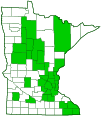
Distribution |
||||
|
Sources |
|||
| 1/21/2023 | ||||
Occurrence |
||||
Common |
||||
Taxonomy |
|||
| Kingdom | Fungi (Fungi) | ||
| Subkingdom | Dikarya | ||
| Phylum | Basidiomycota (Basidiomycete Fungi) | ||
| Subphylum | Agaricomycotina (Higher Basidiomycetes) | ||
| Class | Agaricomycetes (Mushrooms, Bracket Fungi, Puffballs, and Allies) | ||
| Subclass | Agaricomycetidae | ||
| Order | Boletales (boletes and allies) | ||
| Suborder | Boletineae | ||
| Family | Boletaceae (boletes) | ||
| Genus | Strobilomyces | ||
Synonyms |
|||
Boletus cinereus Boletus floccopus Boletus strobilaceus Boletus strobiliformis Strobilomyces floccopus Strobilomyces strobiliformis |
|||
Common Names |
|||
Old Man of the Woods Old-Man-of-the-Woods |
|||
Glossary
Basidium
A microscopic, club-shaped structure on the underside of the cap of club fungi that produces spores.
Mycorrhizal
A symbiotic, usually beneficial relationship between a fungus and the tiny rootlets of a plant, usually a tree.
Pore
In boletes and polypores; the mouth-like opening at the end of the spore-producing tube.
Universal veil
An egg-like structure that envelopes all or most of a developing gill mushroom. Remnants of the universal veil sometimes visible on a mature mushroom are patchy warts on the cap, a ring on the stalk, and a volva at the base of the stalk.
Volva
Also called cup. A cup-like covering at the base of a mushroom stem, sometimes buried. It is the remnants of the universal veil ruptured by the mushroom pushing through. It is found on Amanita, Volvariella, and some other mushrooms.
Visitor Photos |
|||||
Share your photo of this fungus. |
|||||
| This button not working for you? Simply email us at info@MinnesotaSeasons.com. Attach one or more photos and, if you like, a caption. |
|||||
Luciearl |
|||||
 |
 |
||||
 |
 |
||||
MinnesotaSeasons.com Photos |
|||||
Mushroom |
|||||
 |
 |
||||
|
|||||
Cap |
|||||
 |
 |
||||
Spore Surface |
|||||
 |
|||||

Slideshows |
||
| August Mushrooms:Old Man of the Woods foxtrapper1972 |
||
About
Published on Aug 14, 2012 Central Pennsylvania mushroom find |
||
Visitor Videos |
|||
Share your video of this mammal. |
|||
| This button not working for you? Simply email us at info@MinnesotaSeasons.com. Attach a video, a YouTube link, or a cloud storage link. |
|||
Other Videos |
|||
| Szyszkowiec łuskowaty Strobilomyces strobilaceus eljot0355 |
|||
About
Published on Sep 28, 2012 Ochrona: Znajduje się na czerwonej liście grzybów wielkoowocnikowych w Polsce ze statusem "R -- rzadki". W Polsce prawnie chroniony. Niejadalny, jako jedyny grzyb rurkowy z bryłowatymi łuskami jest niemożliwy do pomylenia. |
|||
| strobilomyces_strobilaceus.mpeg Domenico Memoli |
|||
About
Uploaded on Oct 26, 2011 No description available. |
|||
| Old Man of the Woods, Amanita, and Cinnabar Chanterelles MiWilderness |
|||
About
Uploaded on Aug 14, 2010 If you're going to hunt mushrooms you should know what an Amanita is. I also show the habitat I find cinnabars in. |
|||

Visitor Sightings |
|||||
Report a sighting of this fungus. |
|||||
| This button not working for you? Simply email us at info@MinnesotaSeasons.com. Be sure to include a location. |
|||||
| Luciearl 9/19/2023 |
Location: Cass County |
 |
|||
| Lundypi 7/8/2023 |
Location: St. Croix Bluffs Regional Park |
||||
| Luciearl 8/2022 |
Location: Crow Wing State Park |
 |
|||
MinnesotaSeasons.com Sightings |
|||||
Last Updated: