



edible valerian
(Valeriana edulis var. ciliata)
Conservation • Wetland • Description • Habitat • Ecology • Use • Distribution • Taxonomy
Conservation Status |
|
|||||||
| IUCN Red List | not listed |
|||||||
| NatureServe | N3 - Vulnerable S2 - Imperiled |
|||||||
| Minnesota | Threatened |
|||||||
Wetland Indicator Status |
||||||||
| Great Plains | FAC - Facultative |
|||||||
| Midwest | FACW - Facultative wetland |
|||||||
| Northcentral & Northeast | FACW - Facultative wetland |
|||||||
Description |
||
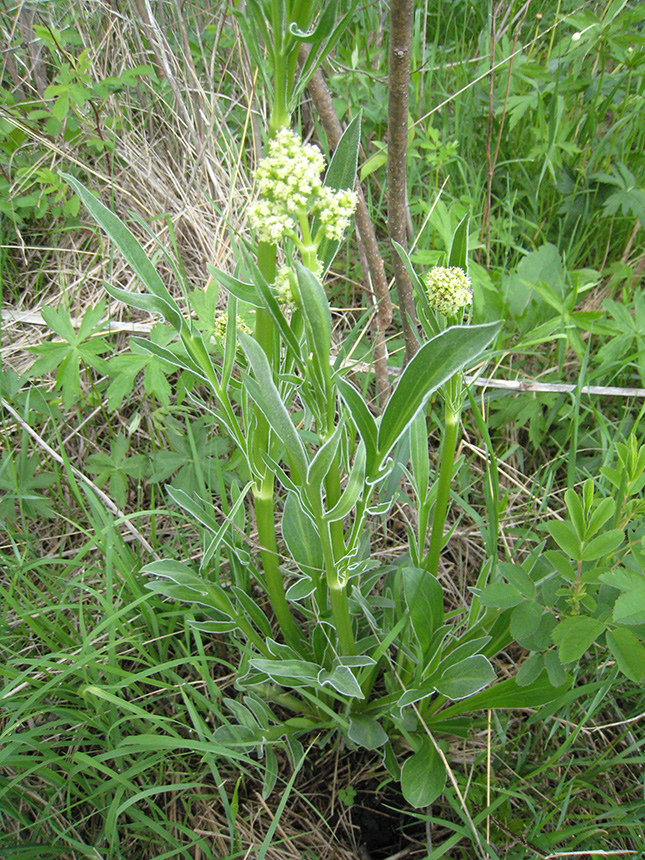
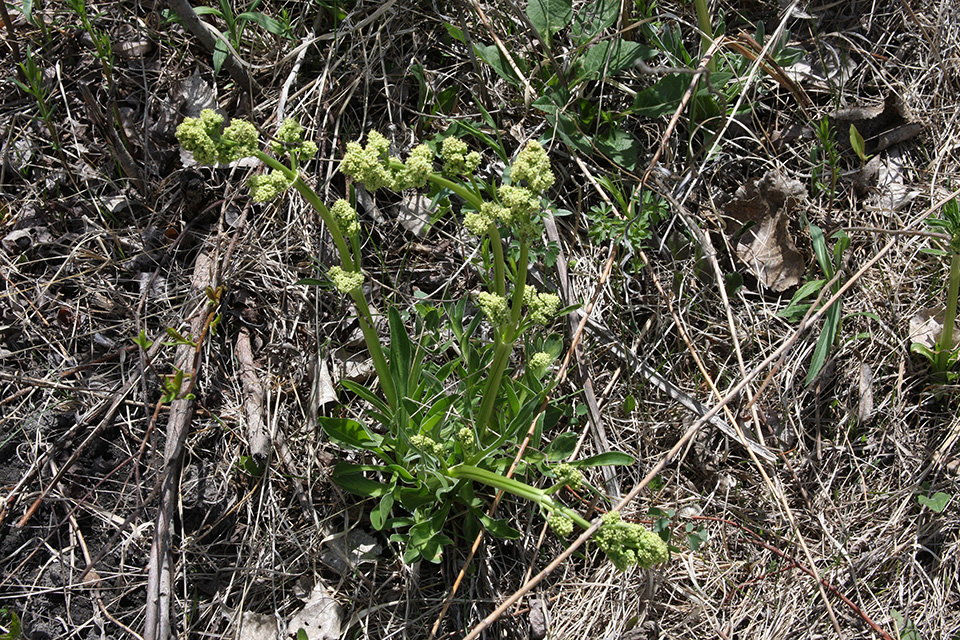
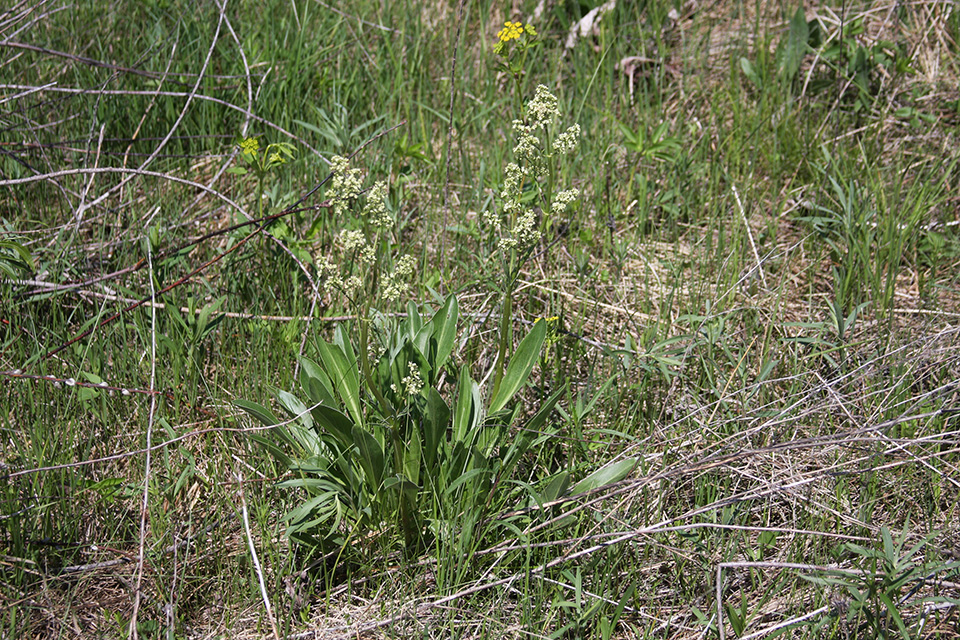
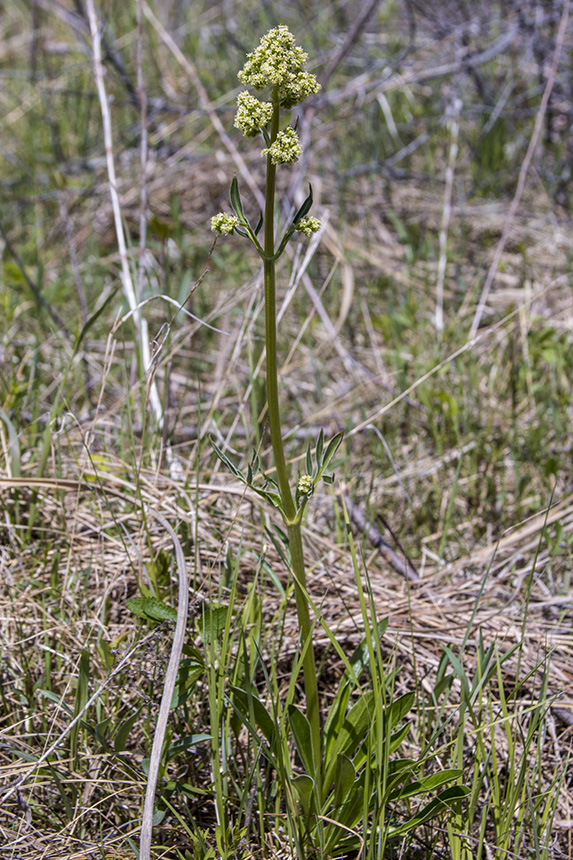
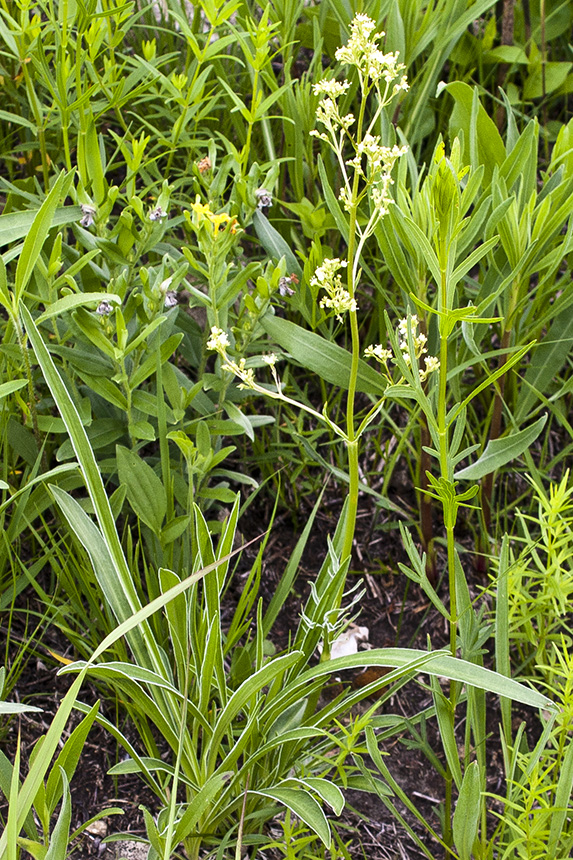
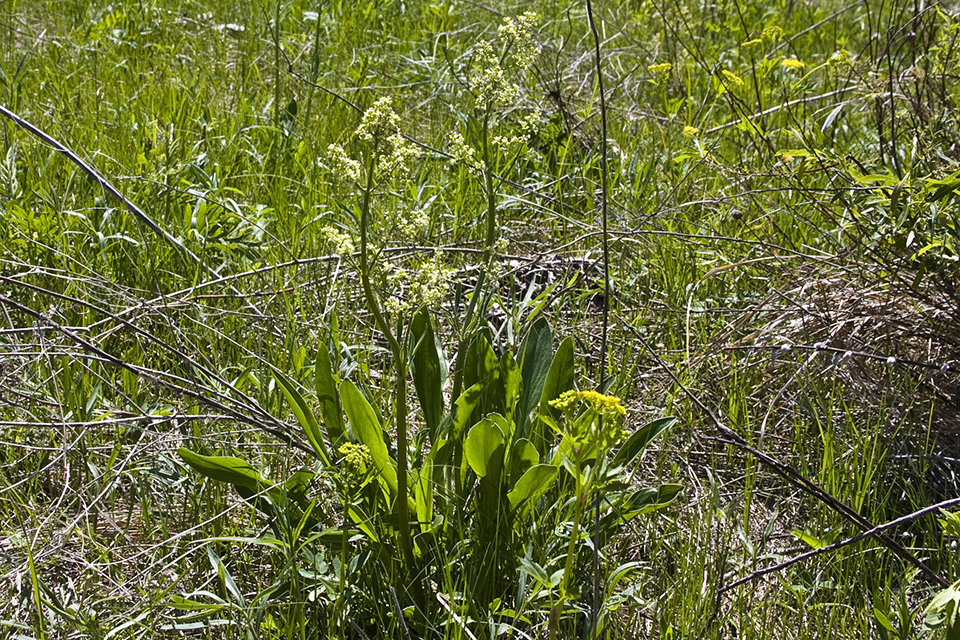
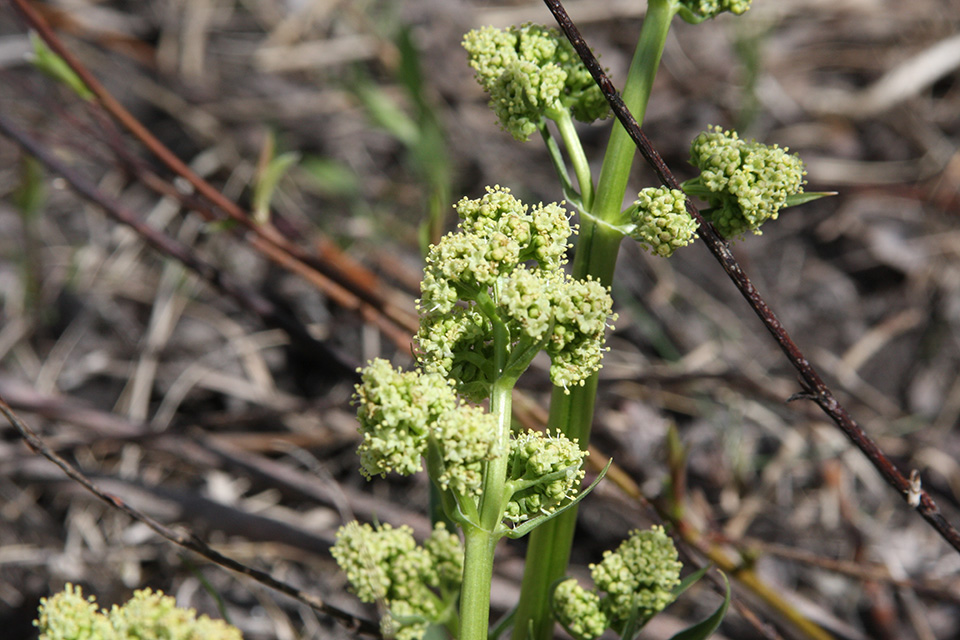
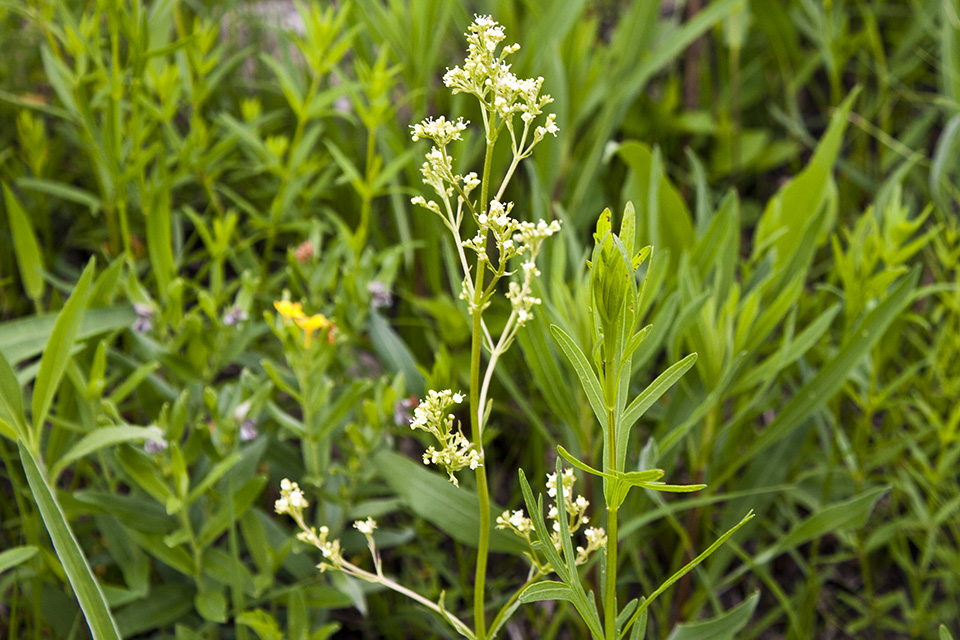
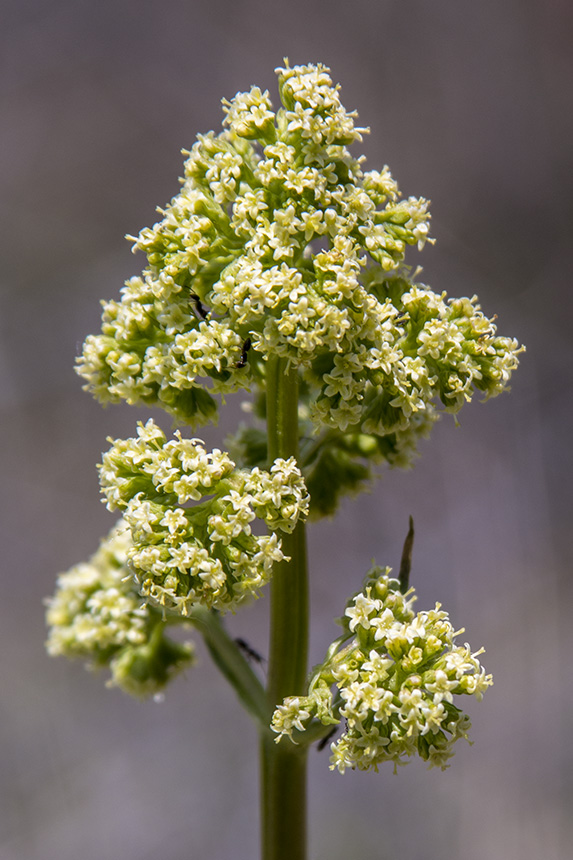
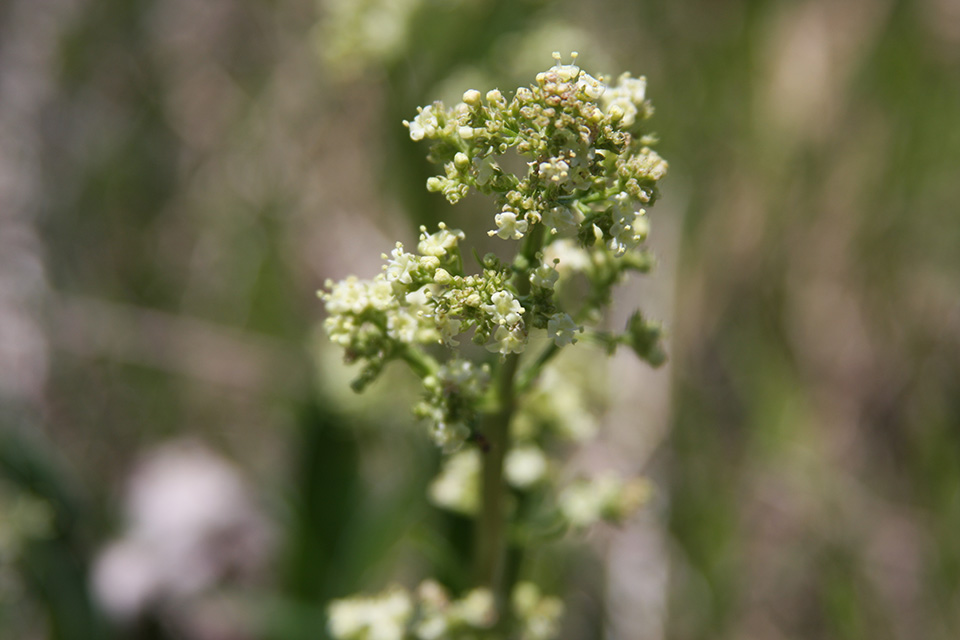
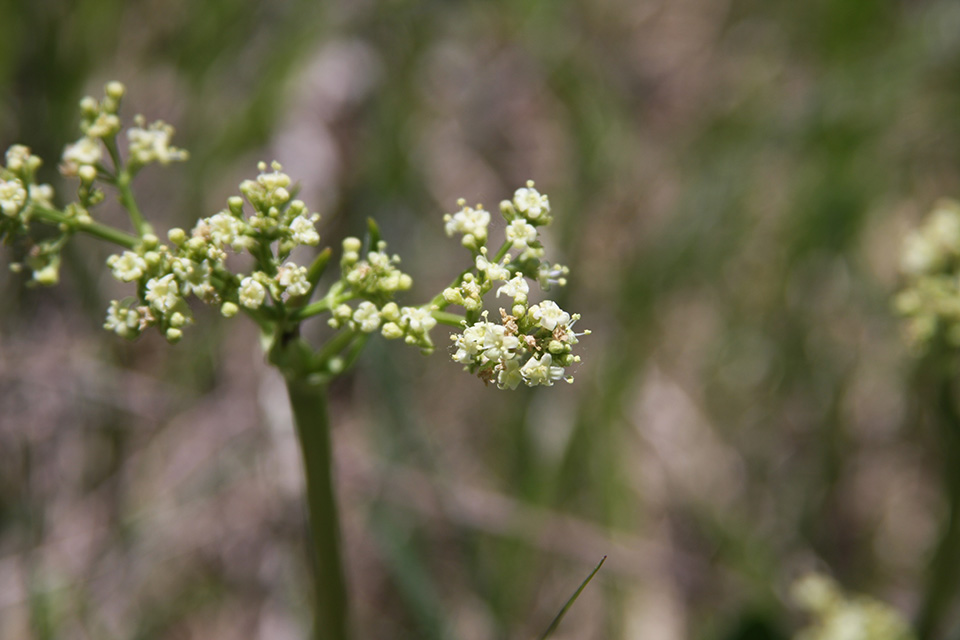
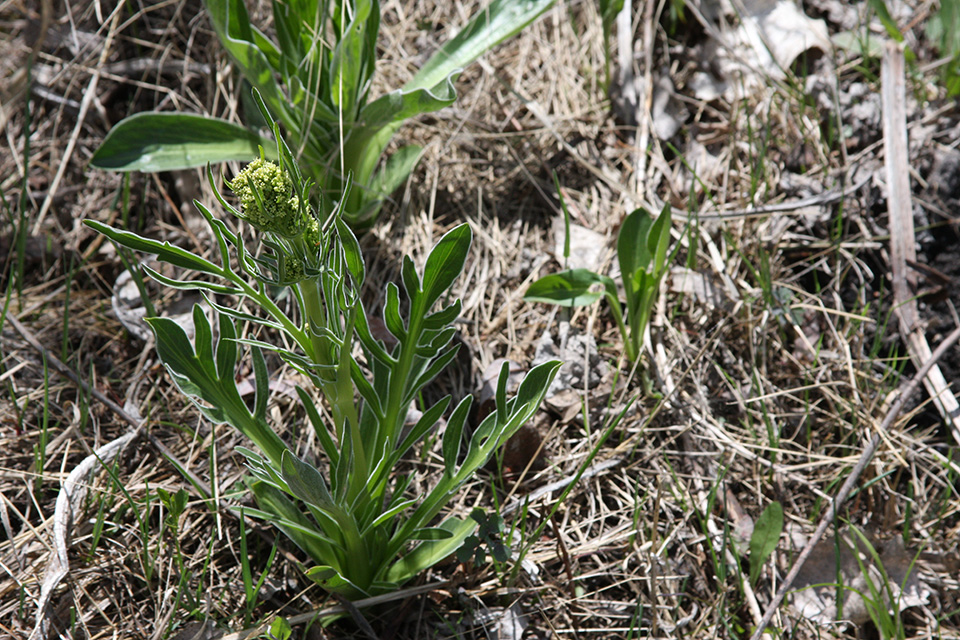
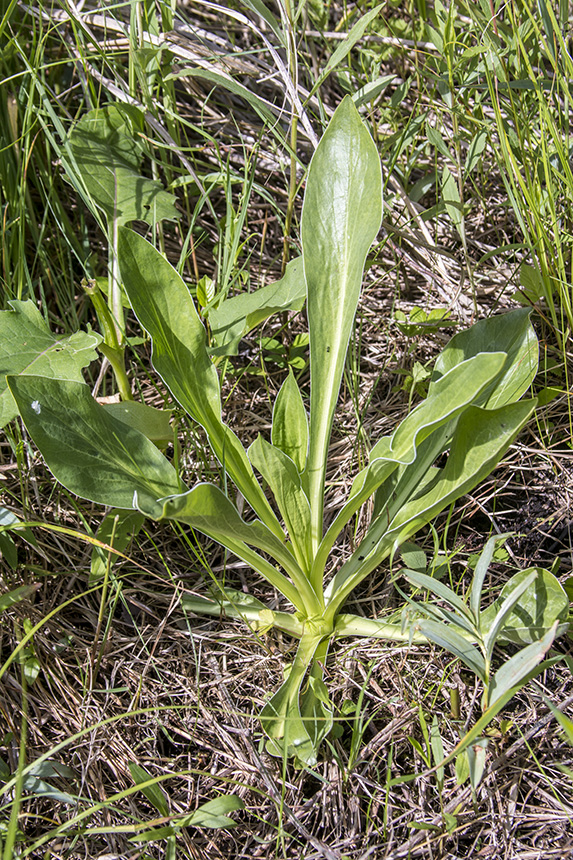
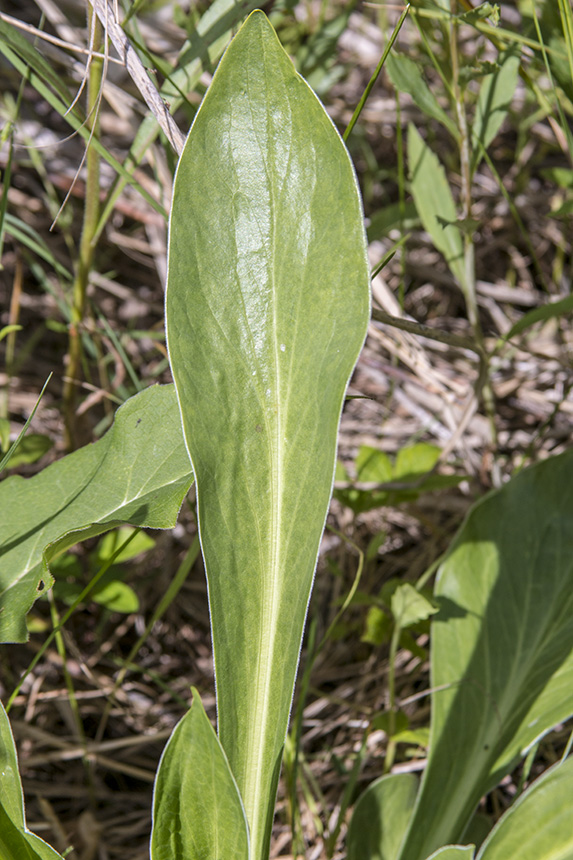
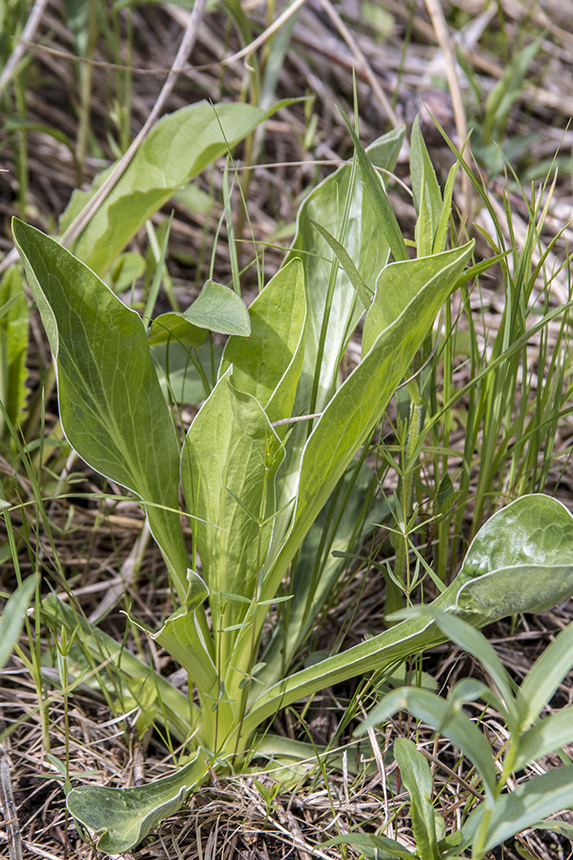
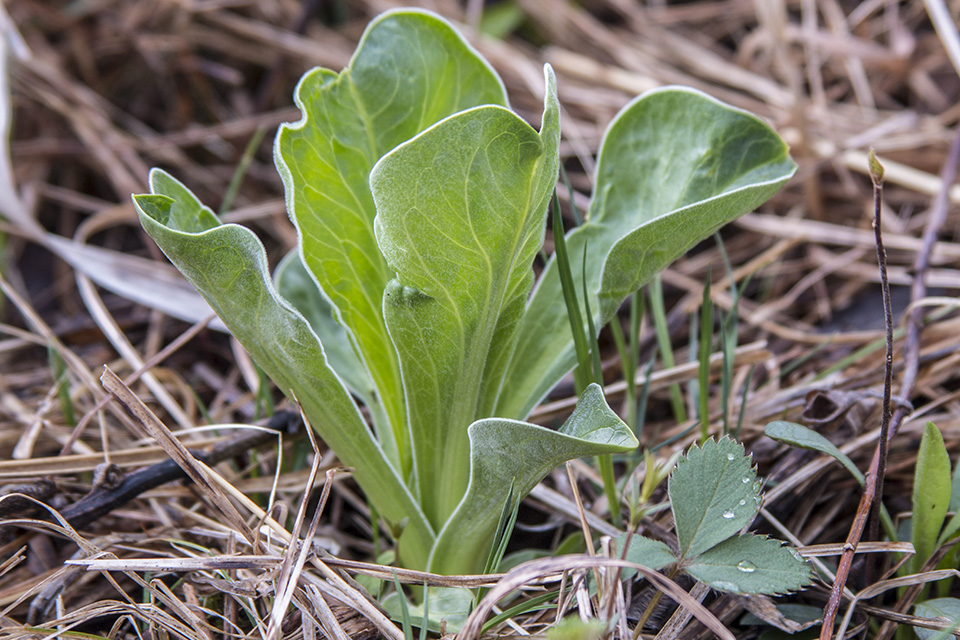
Edible valerian is an erect, long-lived, perennial forb that rises from a long, stout, yellow, cone-shaped taproot and a short, branched caudex. It is usually 12″ to 20″ tall, though large individuals can be up to 48″ tall. The stems are erect and hairless or nearly hairless. Basal leaves are short-stalked, thick, linear to inversely lance-shaped, 4″ to 12″ long, and 3 ⁄16″ to 1″ wide. They are nearly parallel veined and usually unlobed, but rarely have 1 or 2 basal lobes. Young leaves are more or less hairy. The upper and lower surfaces of mature leaves are hairless. The margins are untoothed and have a dense fringe of hairs. Stem leaves are few, opposite, stalkless, and shorter than the basal leaves. They are divided into a few ascending, lance-shaped or sickle-shaped lobes (pinnatifid) branching off of a broad, flat central axis. The inflorescence is a long, dense cluster at the end of the stem. The cluster has many lateral branches which spread widely with age. Male and female flowers are borne on separate plants, though a plant may have a few bisexual flowers. Male and bisexual flowers are 3 ⁄32″ to ⅛″ wide. Female flowers are about 1 ⁄32″ wide. The flowers have 5 cream-colored petals, 3 stamens, and a 3-lobed stigma. The sepals are modified into several to many feather-like segments that are rolled up when the plant is in flower. When the plant is in fruit the segments unroll and spread widely. The fruit is a hairless, narrow, egg-shaped, 3 ⁄16″ long achene. |
||
Height |
||
12″ to 20″ |
||
Flower Color |
||
Cream |
||
Similar Species |
||
Eastern swamp saxifrage (Micranthes pensylvanica) has basal leaves and a leafless, hairy flowering stalk. Garden heliotrope (Valeriana officinalis) has basal and stem leaves that are pinnately divided into 11 to 21 toothed leaflets. |
||
Habitat |
||
Wet to moderate moisture. Calcareous fens, wet meadows, upland prairies, lowland prairies, railroads, cliff ledges, rock outcrops. Full sun. |
||
Ecology |
||
Flowering |
||
May to mid-June |
||
Pests and Diseases |
||
|
||
Use |
||
|
||
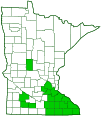
Distribution |
||||
|
Sources |
|||
| 4/14/2023 | ||||
Nativity |
||||
Native |
||||
Occurrence |
||||
Rare |
||||
Taxonomy |
|||
| Kingdom | Plantae (Plants) | ||
| Subkingdom | Pteridobiotina | ||
| Phylum | Tracheophyta (Vascular Plants) | ||
| Class | Magnoliopsida (Dicots) | ||
| Subclass | Caryophyllidae | ||
Order |
Dipsacales (honeysuckles, moschatels, and allies) | ||
Family |
Caprifoliaceae (honeysuckle) | ||
| Subfamily | Valerianoideae (valerians and allies) | ||
Genus |
Valeriana (valerian) | ||
| Species | Valeriana edulis (edible valerian) | ||
Subordinate Taxa |
|||
There are two varieties of edible valerian. Only var. ciliata occurs in Minnesota. |
|||
Synonyms |
|||
Valeriana ciliata Valeriana edulis ssp. ciliata |
|||
Common Names |
|||
common valerian edible valerian hairy valerian tobacco root tobacco-root |
|||
Glossary
Achene
A dry, one-chambered, single-seeded seed capsule, formed from a single carpel, with the seed attached to the membranous outer layer (wall) only by the seed stalk; the wall, formed entirely from the wall of the superior ovary, does not split open at maturity, but relies on decay or predation to release the contents.
Caudex
A short, thickened, woody, persistent enlargement of the stem, at or below ground level, used for water storage.
Linear
Long, straight, and narrow, with more or less parallel sides, like a blade of grass.
Pinnate
On a compound leaf, having the leaflets arranged on opposite sides of a common stalk. On a bryophyte, having branches evenly arranged on opposite sides of a stem.
Pinnatifid
Deeply cut, more than half way to the midrib but not to the midrib, into lobes that are spaced out along the midrib; the lobes do not form separate leaflets.
Sepal
An outer floral leaf, usually green but sometimes colored, at the base of a flower.
Visitor Photos |
|||||
Share your photo of this plant. |
|||||
| This button not working for you? Simply email us at info@MinnesotaSeasons.com. Attach one or more photos and, if you like, a caption. |
|||||
Crystal Boyd |
|||||
 |
|||||
MinnesotaSeasons.com Photos |
|||||
Plant |
|||||
 |
 |
||||
 |
 |
||||
 |
 |
||||
 |
|||||
Inflorescence |
|||||
 |
 |
||||
 |
 |
||||
Flowers |
|||||
 |
 |
||||
Stem Leaves |
|||||
 |
 |
||||
Basal Leaves |
|||||
 |
 |
||||
 |
 |
||||
Young Plant |
|||||
 |
 |
||||

Slideshows |
||
Visitor Videos |
|||
Share your video of this plant. |
|||
| This button not working for you? Simply email us at info@MinnesotaSeasons.com. Attach a video, a YouTube link, or a cloud storage link. |
|||
Other Videos |
|||

Visitor Sightings |
|||||
Report a sighting of this plant. |
|||||
| This button not working for you? Simply email us at info@MinnesotaSeasons.com. Be sure to include a location. |
|||||
| Crystal Boyd 5/31/2013 |
Location: Minnesota Valley National Wildlife Refuge, Black Dog Unit |
|
|||
MinnesotaSeasons.com Sightings |
|||||
|
Created: Last Updated: © MinnesotaSeasons.com. All rights reserved. |