



prairie spiderwort
(Tradescantia occidentalis var. occidentalis)
Conservation • Wetland • Description • Habitat • Ecology • Use • Distribution • Taxonomy
Conservation Status |
|
|||||||
| IUCN Red List | not listed |
|||||||
| NatureServe | N5? - Secure SNR - Unranked |
|||||||
| Minnesota | not listed |
|||||||
Wetland Indicator Status |
||||||||
| Great Plains | UPL - Obligate upland |
|||||||
| Midwest | UPL - Obligate upland |
|||||||
| Northcentral & Northeast | UPL - Obligate upland |
|||||||
Description |
||
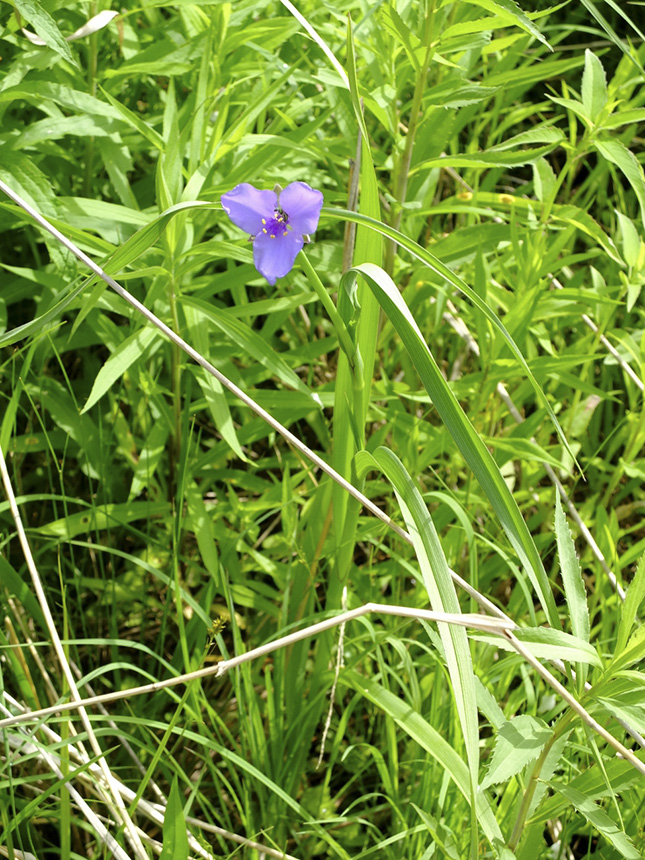
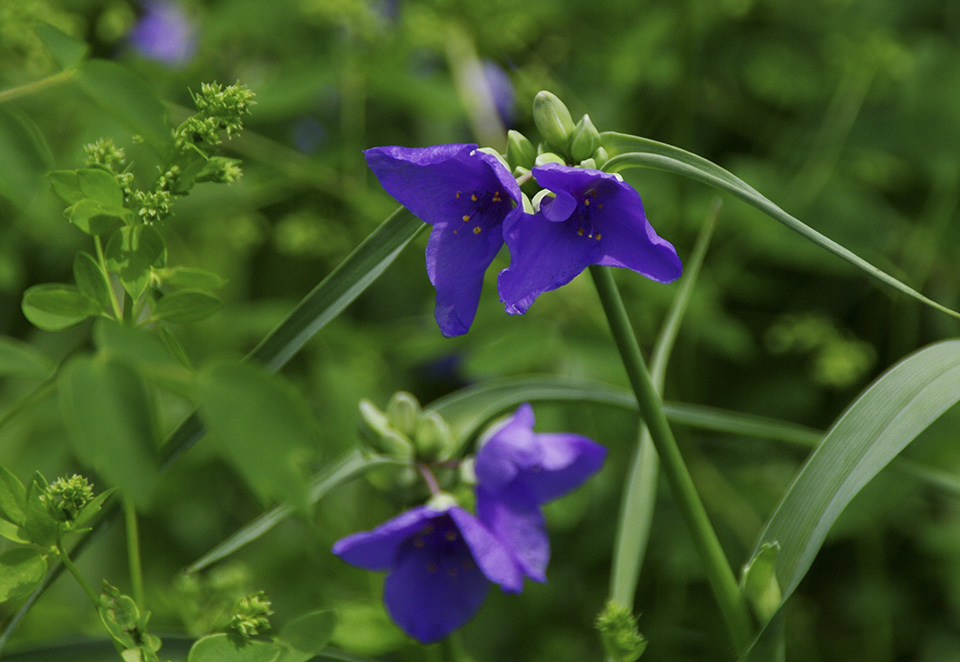
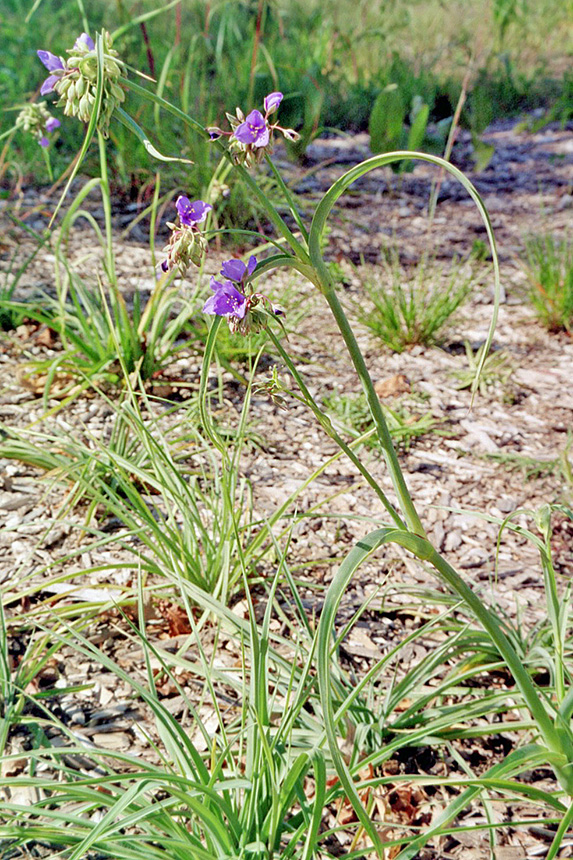
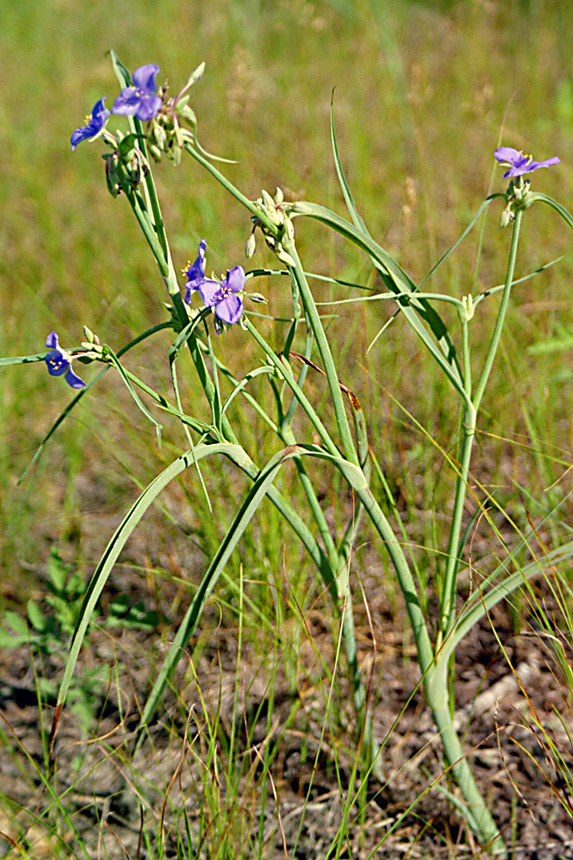
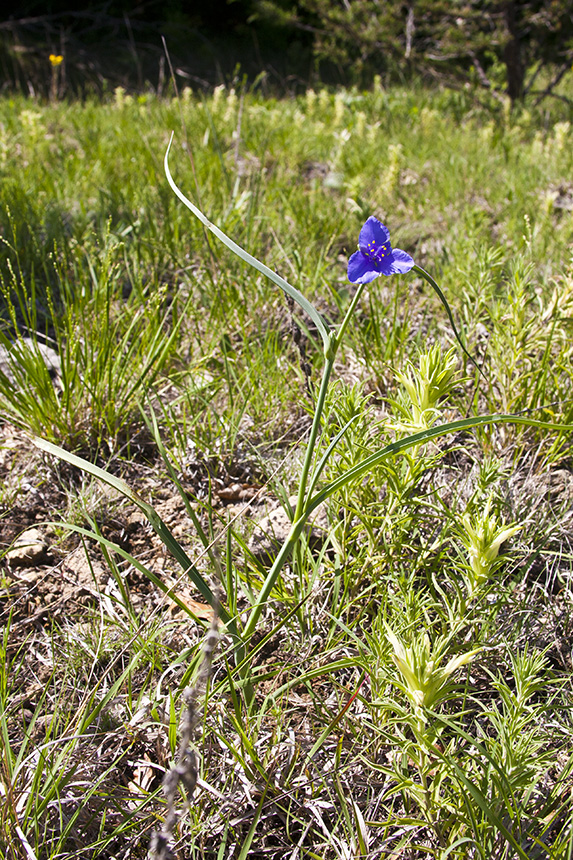
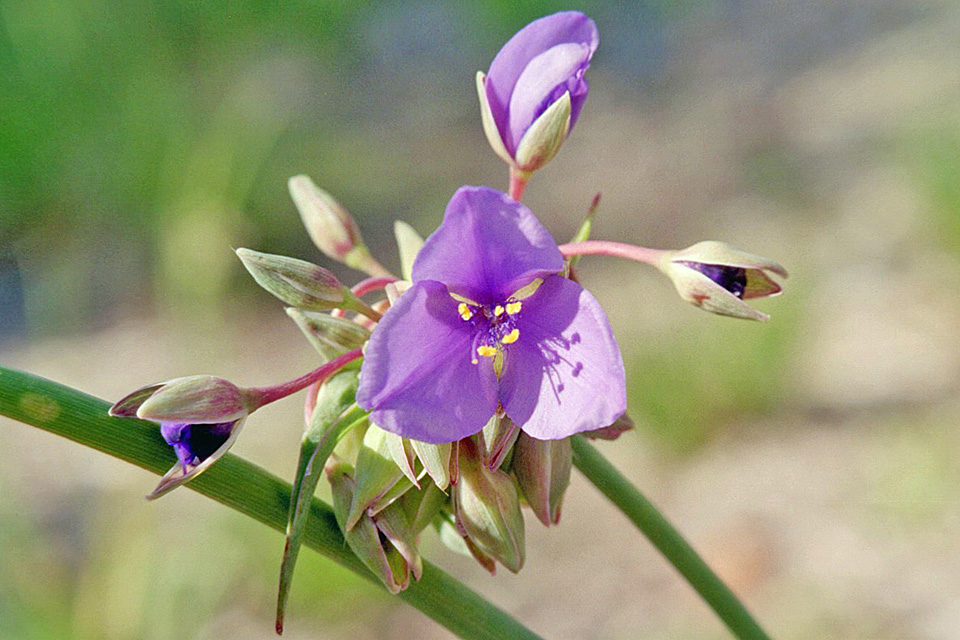
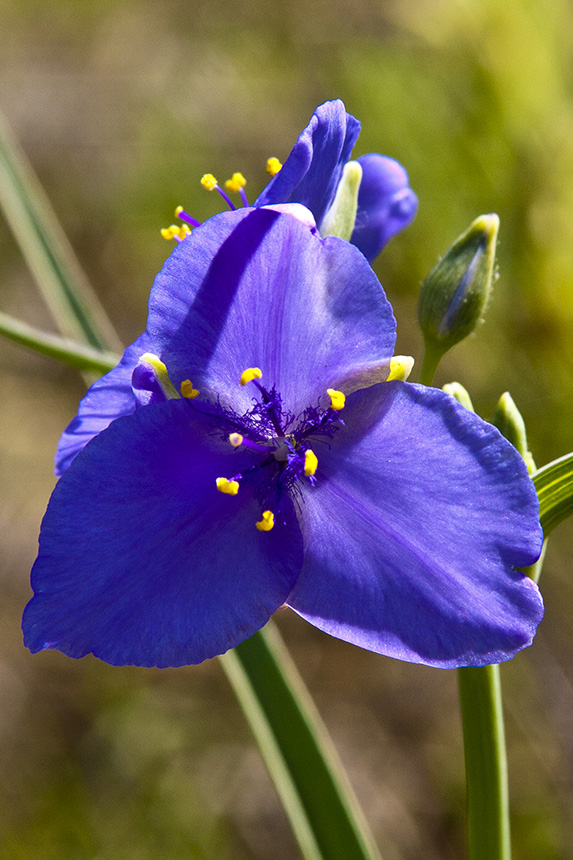
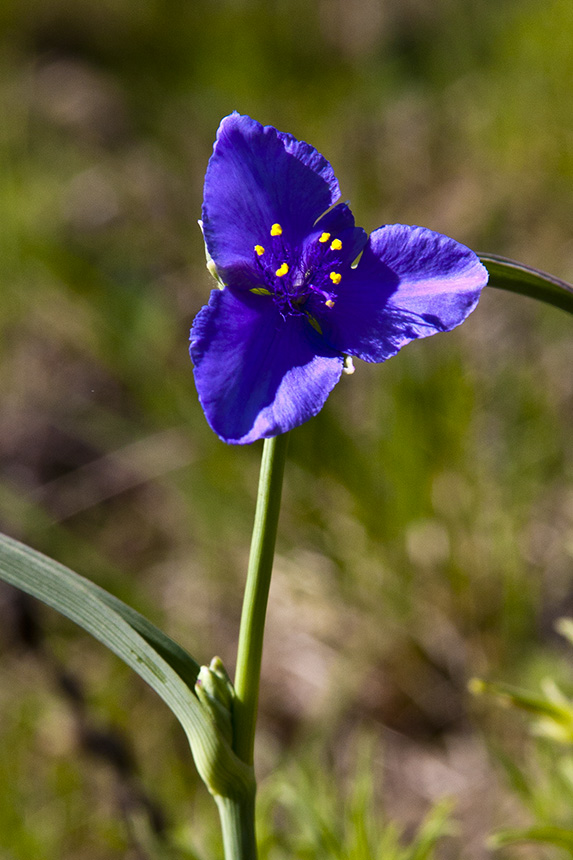
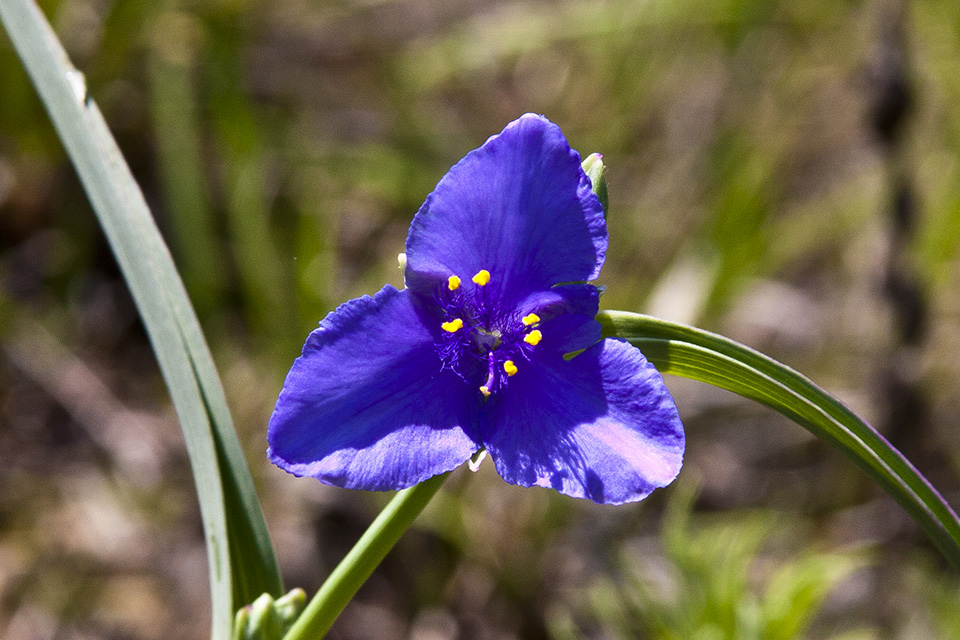
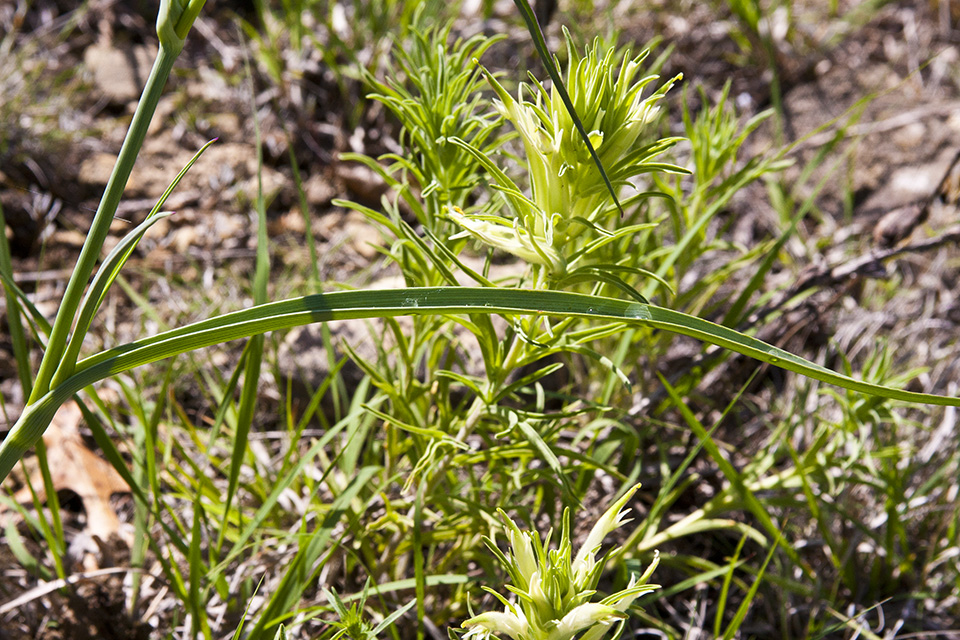
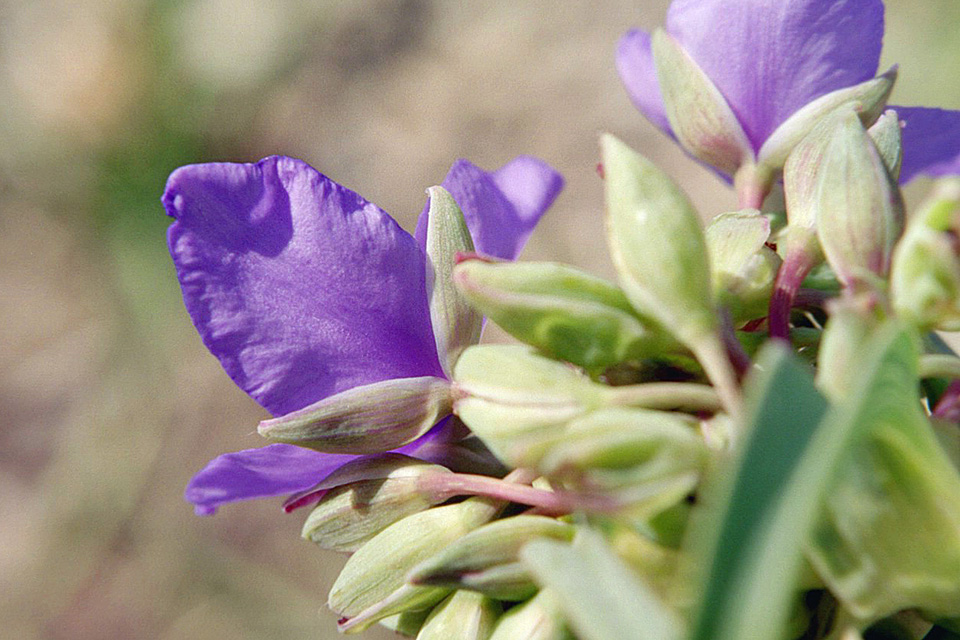
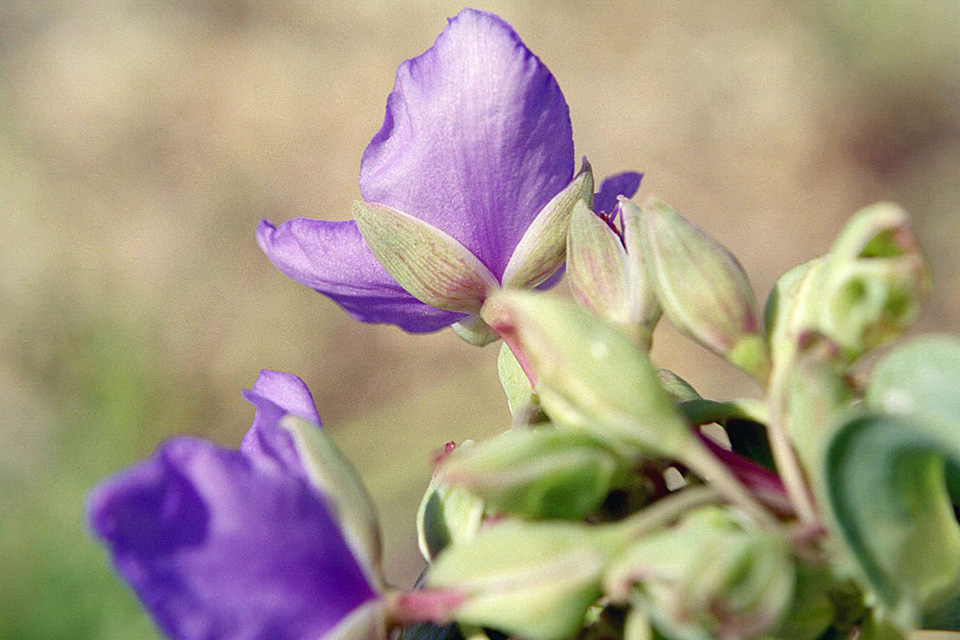
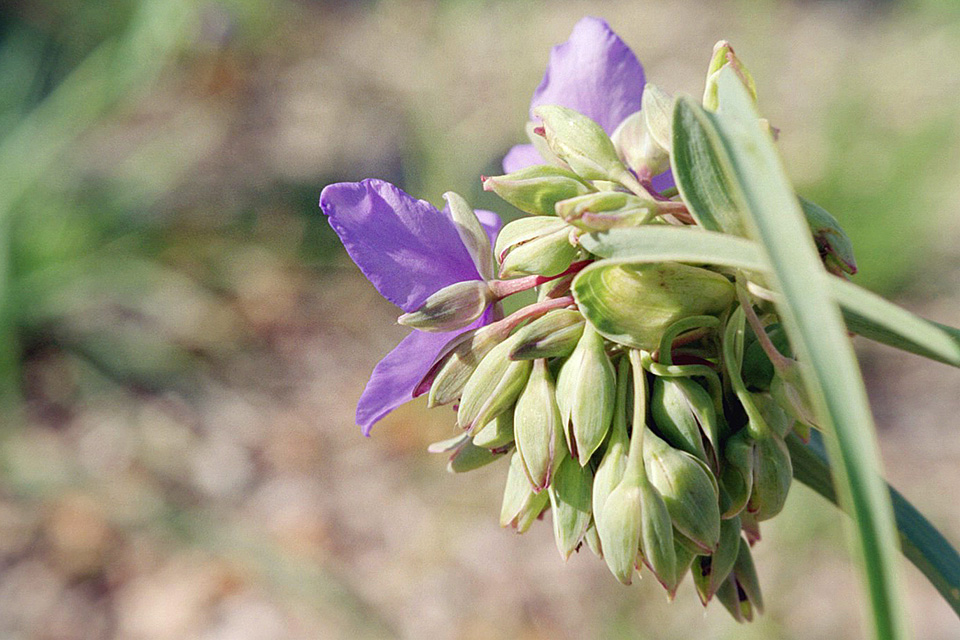
Prairie spiderwort is a 16″ to 40″ tall, erect, perennial forb that rises on 1 to many stems from thick, fleshy, fibrous roots. The stems are erect or ascending, often branched, usually hairless, green, and covered with a whitish, waxy or powdery film (glaucous). There are 2 to 6 nodes on the stem and up to 10″ between nodes. The leaves are alternate, linear, 3½″ to 12″ long, and 1 ⁄16″ to ½″ wide but usually less than ⅜″ wide. They are hairless, bright green, glaucous, and rolled inward, not keeled. The upper leaves are as narrow or narrower than the part of the leaf that surrounds the stem when it is opened and flattened. The base of the leaf sheaths the stem. The tip tapers to a point with concave sides along the tip. The margins are untoothed and rolled inward toward the upper side. The inflorescence is a tight, umbrella-like cluster of up to 25 flowers arising from the same point. They appear at the end of the stem, at the ends of branches, and often on long stalks rising from the leaf axils. A pair of bracts below the inflorescence are similar to the leaves and about the same size, 2″ to 8″ long. The flowers are 1″ to 1½″ wide. They are on ⅓″ to 1⅛″ long stalks which droop when in bud, becoming erect when the flower opens. The flower stalks and sepals are sparsely hairy with minute, glandular hairs, the hairs no more than 1 ⁄64″ (0.5 mm) long. The sepals may have a tuft of hairs at the tip. The 3 petals are bright blue to rose or magenta and broadly egg-shaped. There are 6 stamens with bright yellow anthers. The petals last only one day, opening in the morning then turning to jelly in the mid-day heat. The central flowers bloom first. There is no floral scent. The fruit is a papery, nearly round to oblong capsule ¼″ or less in diameter with 2 to 6 seeds. |
||
Height |
||
8″ to 24″ |
||
Flower Color |
||
Bright blue to rose or magenta |
||
Similar Species |
||
Bracted spiderwort (Tradescantia bracteata) stems are usually unbranched and bright green. The leaves are bright green and keeled, not rolled inward. Neither the stems nor the leaves are glaucous. The bracts are 2″ to 12″ long, often longer and wider than the leaves. The sepals and flower stalks are densely hairy with both long and short hairs. Ohio spiderwort (Tradescantia ohiensis) is a taller plant, 16″ to 40″ tall at maturity. The stems are glaucous. The leaves are glaucous and flat, not rolled inward. The bracts are 2″ to 8″ long and no wider than the leaves. The sepals and flower stalks are usually hairless. |
||
Habitat |
||
Dry or moderate moisture. Prairies, meadows, roadsides. Full sun. |
||
Ecology |
||
Flowering |
||
June to July |
||
Pests and Diseases |
||
|
||
Use |
||
|
||
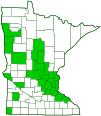
Distribution |
||||
|
Sources |
|||
| 3/1/2023 | ||||
Nativity |
||||
Native |
||||
Occurrence |
||||
|
||||
Taxonomy |
|||
| Kingdom | Plantae (Plants) | ||
| Subkingdom | Pteridobiotina | ||
| Phylum | Tracheophyta (Vascular Plants) | ||
| Class | Liliopsida (Monocots) | ||
| Subclass | Commelinidae | ||
Order |
Commelinales (spiderworts and allies) | ||
Family |
Commelinaceae (spiderworts) | ||
| Subfamily | Commelinoideae | ||
| Tribe | Tradescantieae | ||
| Subtribe | Tradescantiinae | ||
Genus |
Tradescantia (spiderworts) | ||
Subgenus |
Tradescantia | ||
Subordinate Taxa |
|||
|
|||
Synonyms |
|||
Tradescantia occidentalis var. melanthera Tradescantia occidentalis var. typica |
|||
Common Names |
|||
prairie spiderwort western spiderwort |
|||
Glossary
Axil
The upper angle where the leaf stalk meets the stem.
Bract
Modified leaf at the base of a flower stalk, flower cluster, or inflorescence.
Glandular hairs
Hairs spread over aerial vegetation that secrete essential oils. The oils act to protect against herbivores and pathogens or, when on a flower part, attract pollinators. The hairs have a sticky or oily feel.
Glaucous
Pale green or bluish gray due to a whitish, powdery or waxy film, as on a plum or a grape.
Keeled
Folded, as in a grass blade, or with a raised ridge, as in a grass sheath; like the keel of a boat.
Linear
Long, straight, and narrow, with more or less parallel sides, like a blade of grass.
Node
The small swelling of the stem from which one or more leaves, branches, or buds originate.
Sepal
An outer floral leaf, usually green but sometimes colored, at the base of a flower.
Sheath
The lower part of the leaf that surrounds the stem.
Visitor Photos |
|||||
Share your photo of this plant. |
|||||
| This button not working for you? Simply email us at info@MinnesotaSeasons.com. Attach one or more photos and, if you like, a caption. |
|||||
Kirk Neslon |
|||||
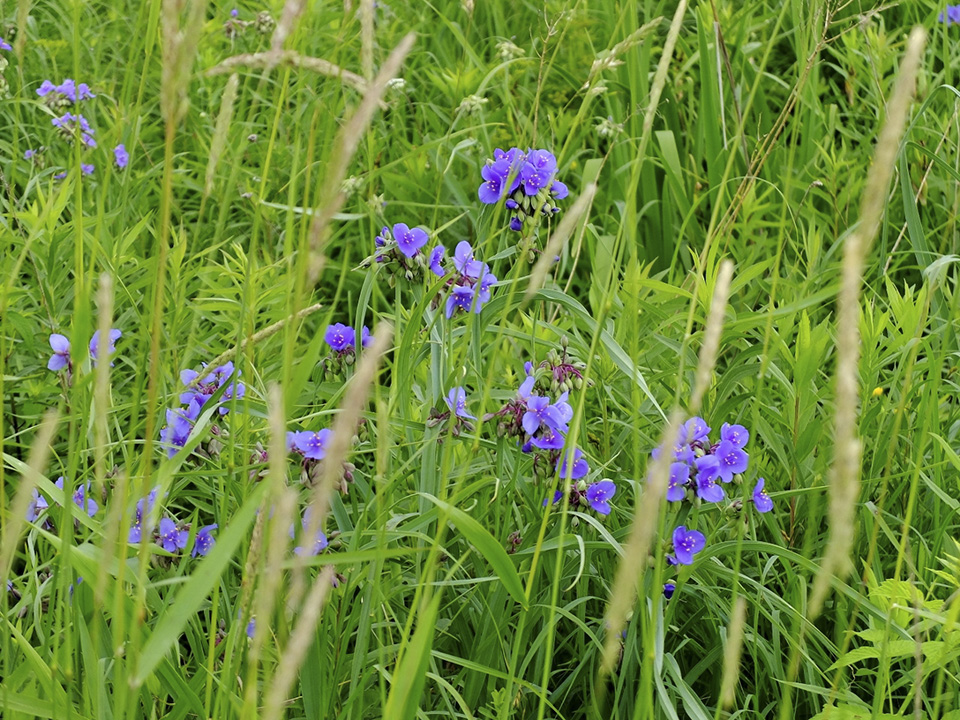
Prairie spiderwort at Lebanon Hills Regional Park. Prolific along the road leading in to the Visitors Center. |
 |
||||
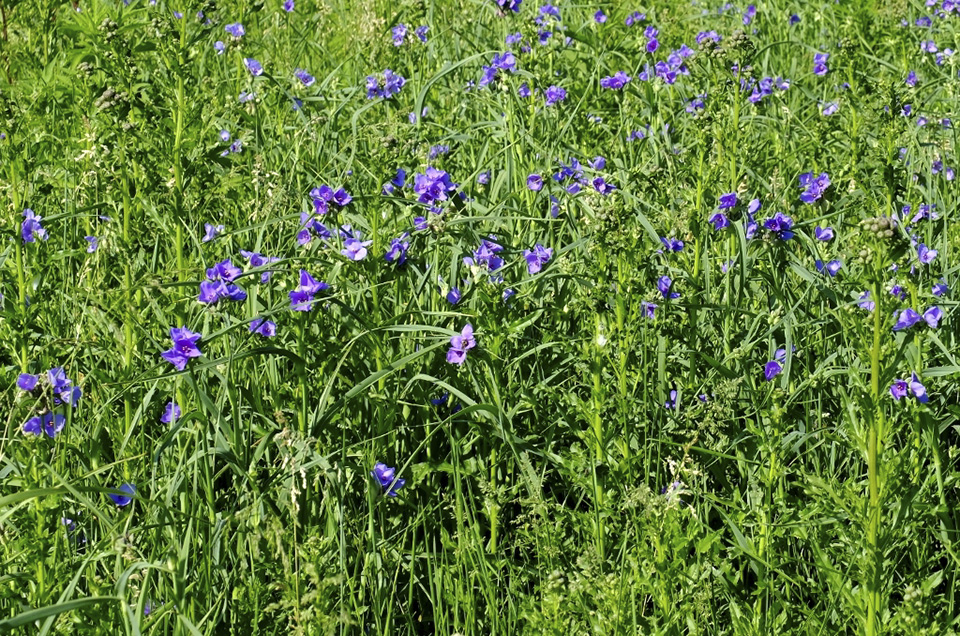
Prairie spiderwort at Crosby Farm Regional Park |
|||||
 |
|||||
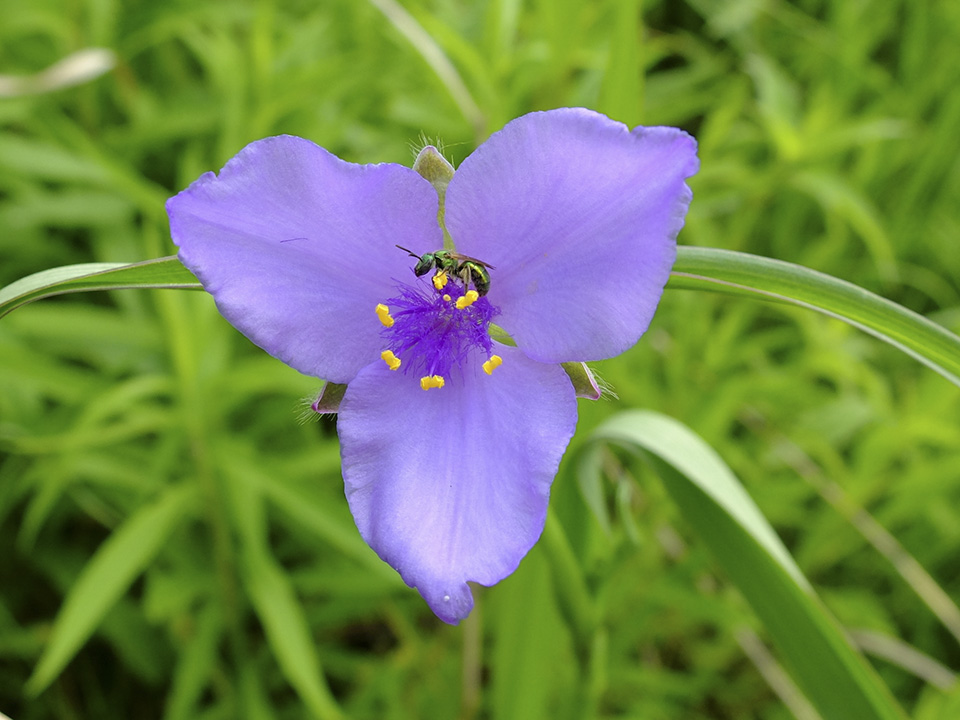
Flower |
|||||
 |
|||||
Plant and flower |
|||||
 |
|||||
Wayne Rasmussen |
|||||
 |
|||||
MinnesotaSeasons.com Photos |
|||||
Plant |
|||||
 |
 |
||||
 |
|||||
Inflorescence |
|||||
 |
|||||
Flower |
|||||
 |
 |
||||
 |
|||||
Leaves |
|||||
 |
|||||
Sepals |
|||||
 |
 |
||||
Buds |
|||||
 |
|||||

Slideshows |
||
Visitor Videos |
|||
Share your video of this plant. |
|||
| This button not working for you? Simply email us at info@MinnesotaSeasons.com. Attach a video, a YouTube link, or a cloud storage link. |
|||
Other Videos |
|||
| Minnesota Native Plant - Western Spiderwort (Tradescantia Occidentalis var. Occidentalis) MNNativePlants |
|||
About
Published on Jun 24, 2013 This video shows the Western Spiderwort (Tradescantia Occidentalis var. Occidentalis). A beautiful Minnesota native plant that looks great in the morning throughout June and July. |
|||
| Honeybees on Spiderwort MrILoveTheAnts |
|||
About
Published on Jun 2, 2014 The Western Spiderwort, which is also native to the east go figure started flowering and honeybees started collecting the pollen. The species name is Tradescantia occidentalis. |
|||
| Spiderwort Time-lapse Reva McKinney |
|||
About
Published on Jun 25, 2013 Testing out the time-lapse feature on my spiderwort plant in my garden. The blooms open and close in the mornin' and evenin'. :) All rights to the music are reserved by the artist. |
|||

Visitor Sightings |
|||||
Report a sighting of this plant. |
|||||
| This button not working for you? Simply email us at info@MinnesotaSeasons.com. Be sure to include a location. |
|||||
| Judy Luhman 6/9/2020 |
Location: Detroit Lakes, MN volunteer growing in our flowerbed |
||||
| Kirk Nelson 6/25/2017 |
Location: Lebanon Hills Regional Park Prolific along the road leading in to the Visitors Center |
|
|||
| Kirk Nelson 6/8/2017 |
Location: Crosby Farm Regional Park |
|
|||
| Wayne Rasmussen 6/9/2016 |
Location: Joy Park & Preserve in Maplewood, MN |
|
|||
| Kirk Nelson 5/29/2016 |
Location: Crosby Farm Regional Park, St.Paul, Ramsey County |
|
|||
MinnesotaSeasons.com Sightings |
|||||
Created 6/25/2005
Last Updated: