White-lined Sphinx - Species Profile
Conservation • Description • Habitat • Ecology • Distribution • Taxonomy
Hodges #
7894
Conservation Status
IUCN Red List
not listed
NatureServe
N5 - Secure
SNR - Unranked
Minnesota
not listed
Description
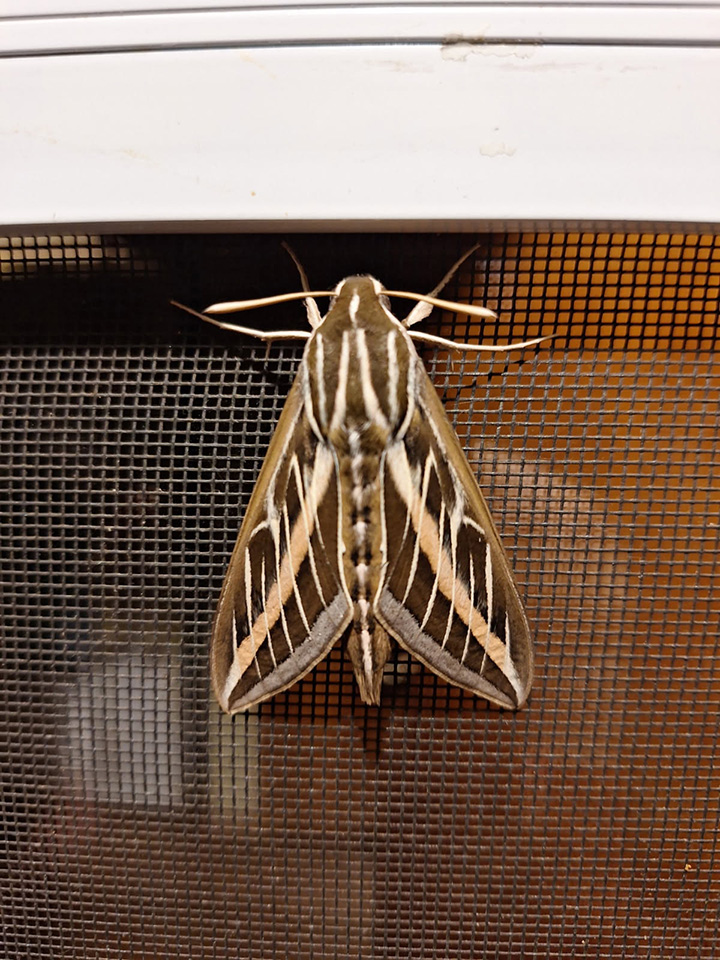
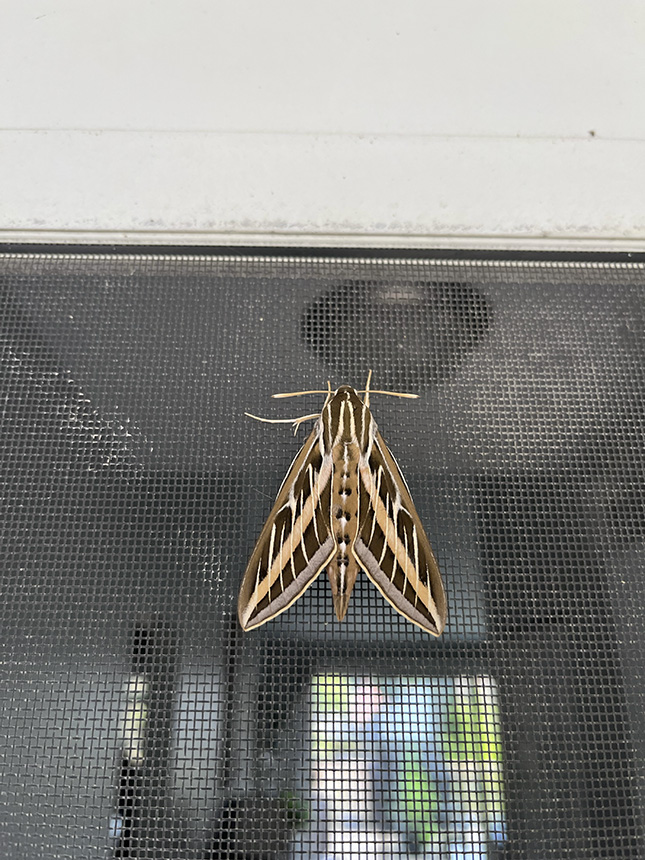
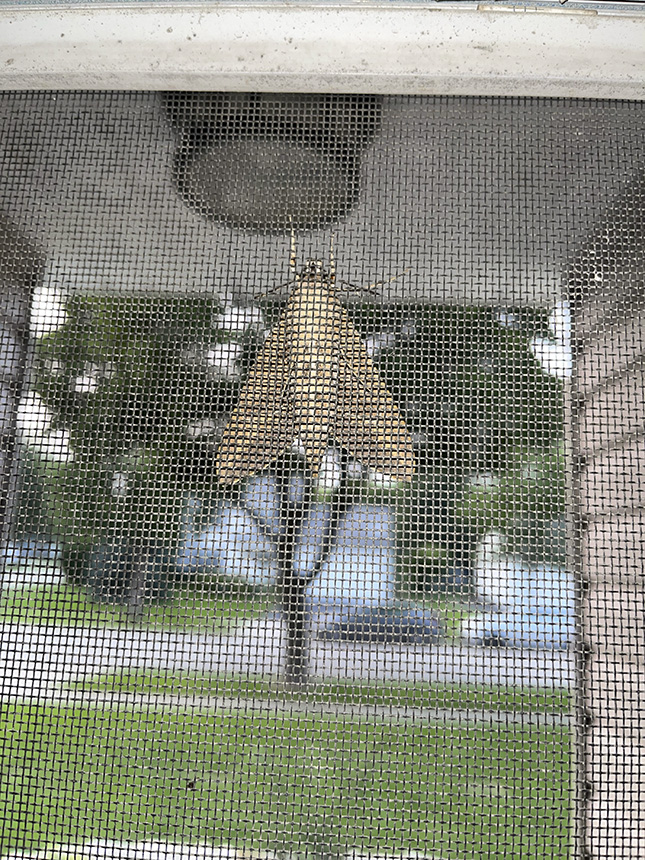
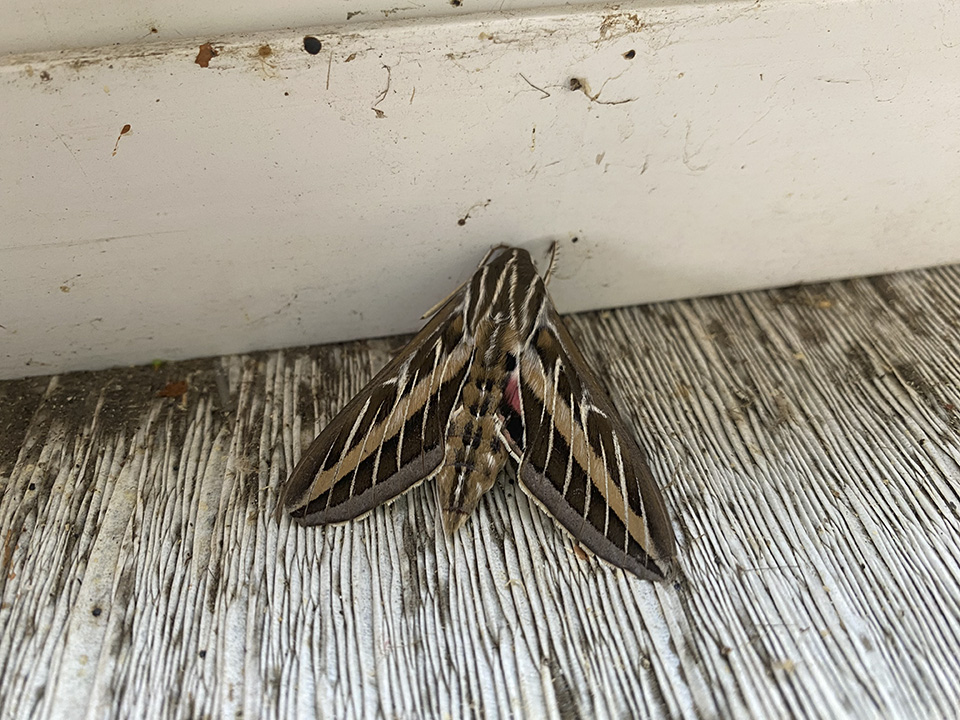
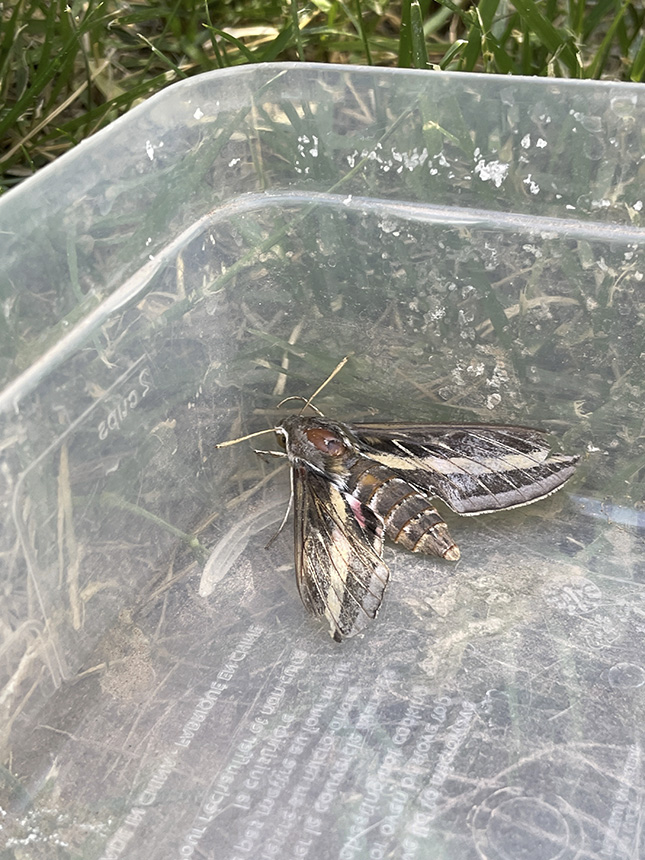
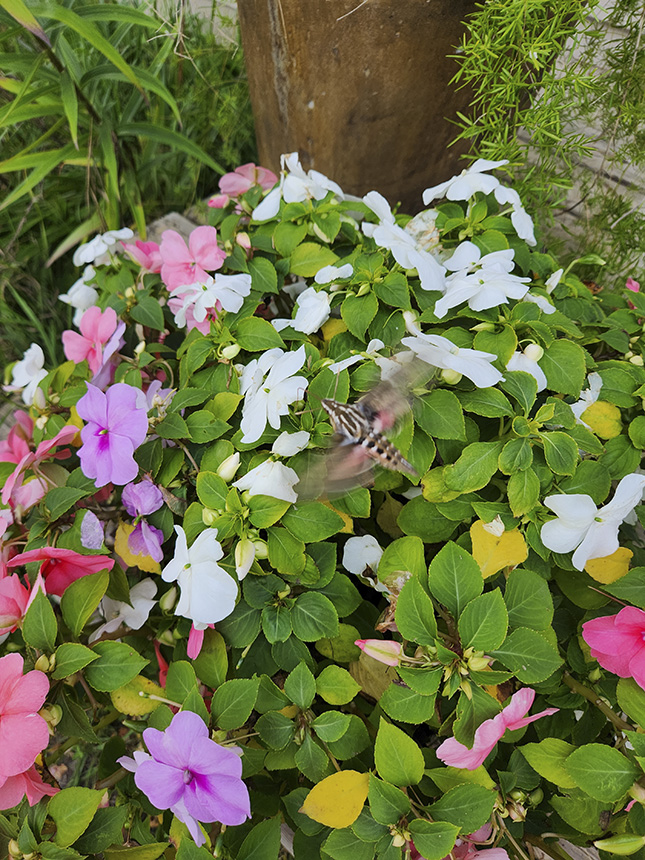
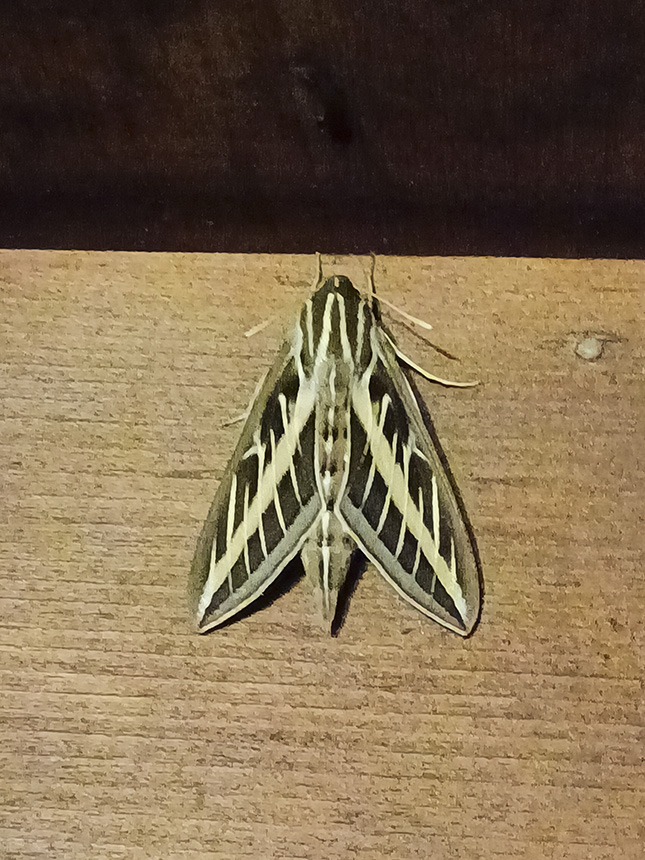
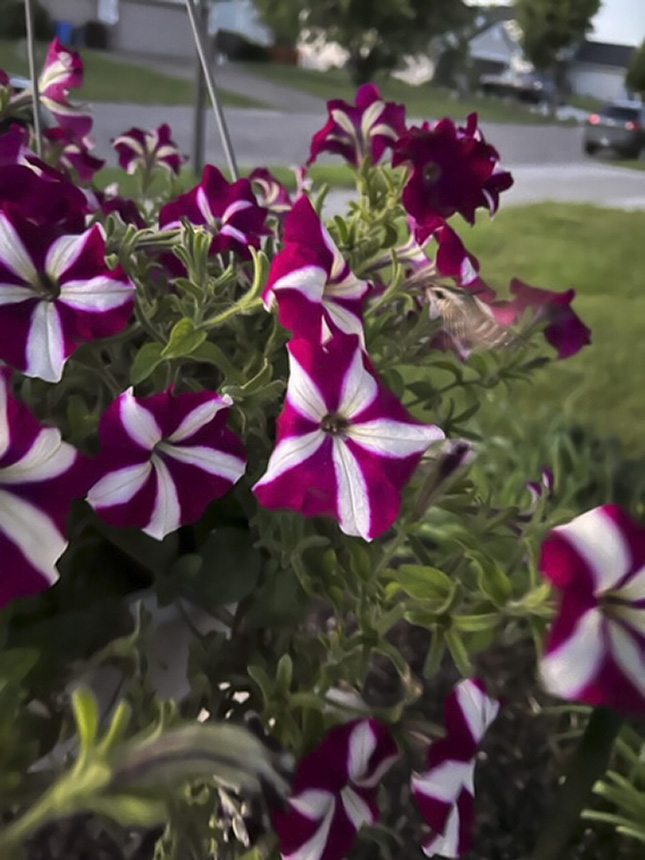
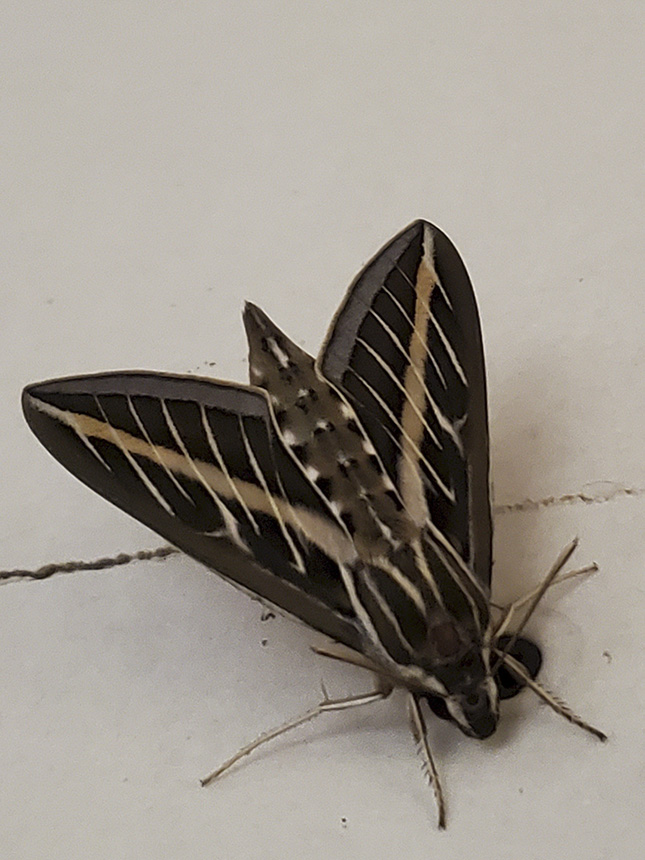
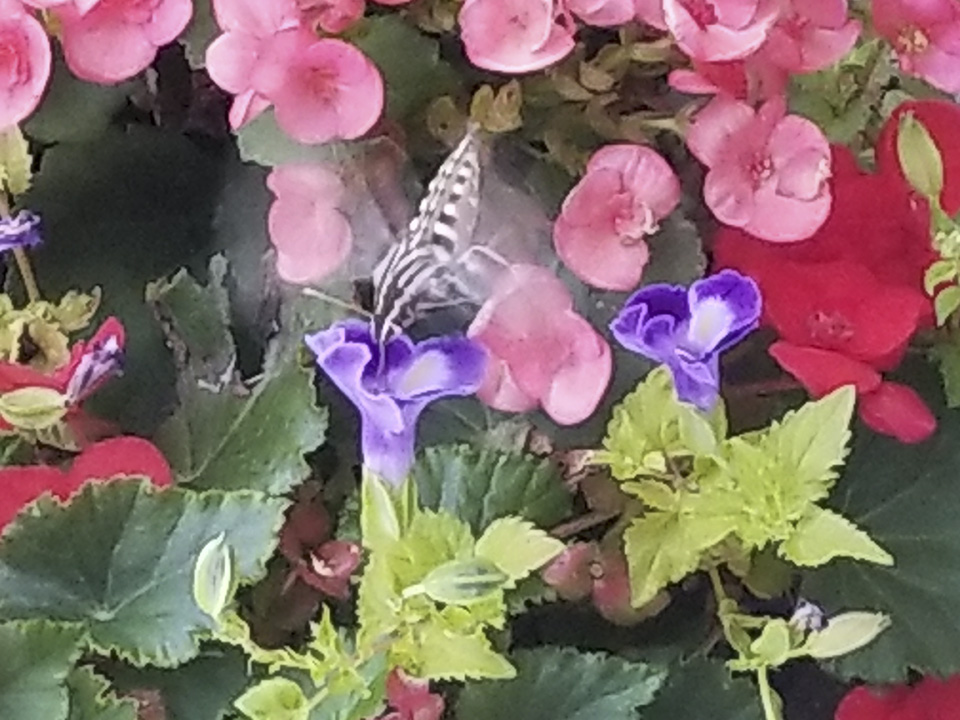
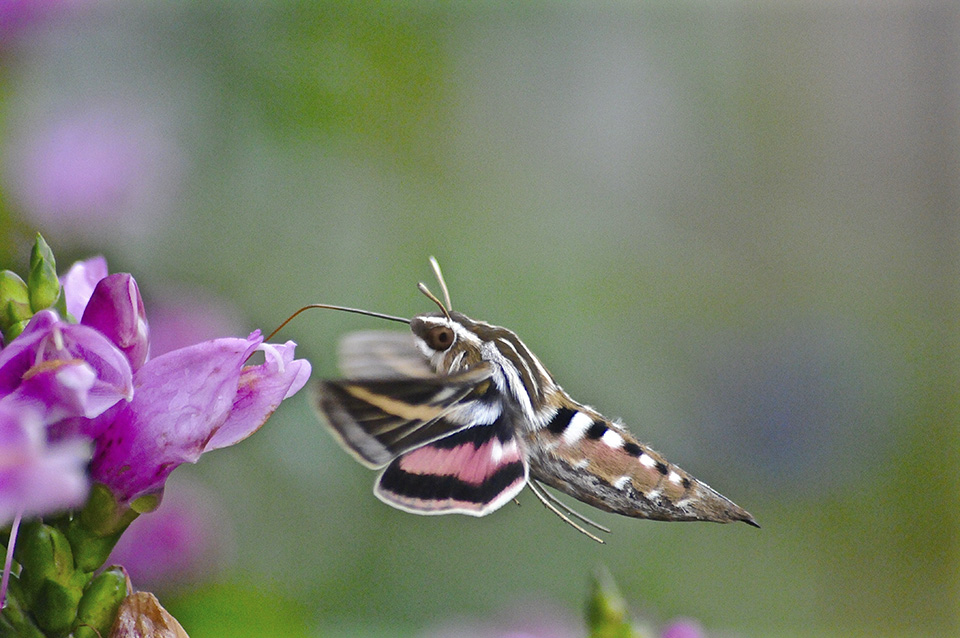
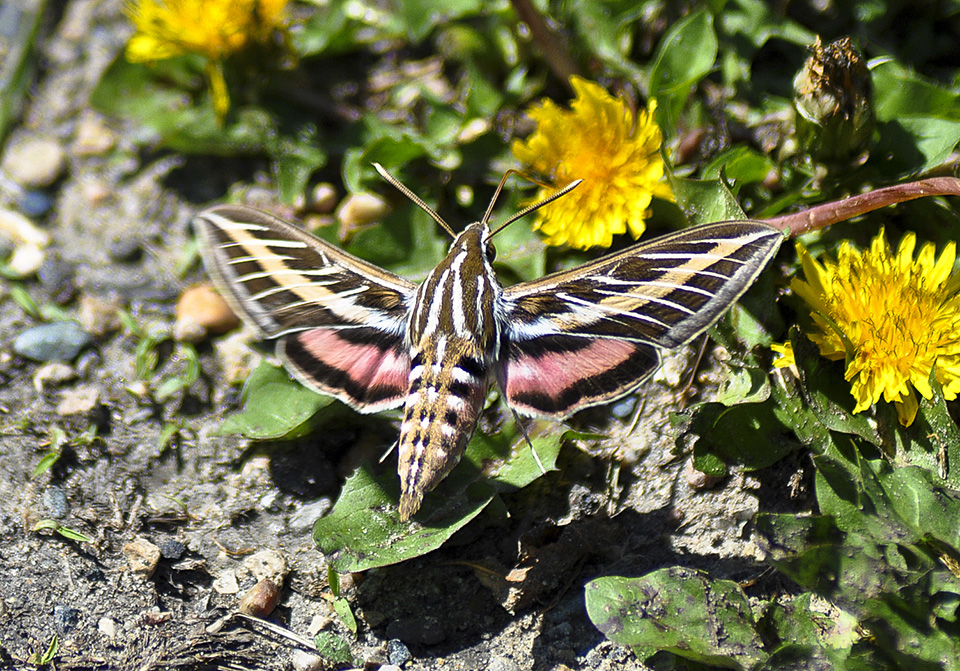
White-lined sphinx is a common, large to very large, sphinx moth. In poor light or at a distance it is easily mistaken for a hummingbird, due to similarities in both appearance and behavior. It has a wingspan of 2 7 ⁄16″ to 3 9 ⁄16″.
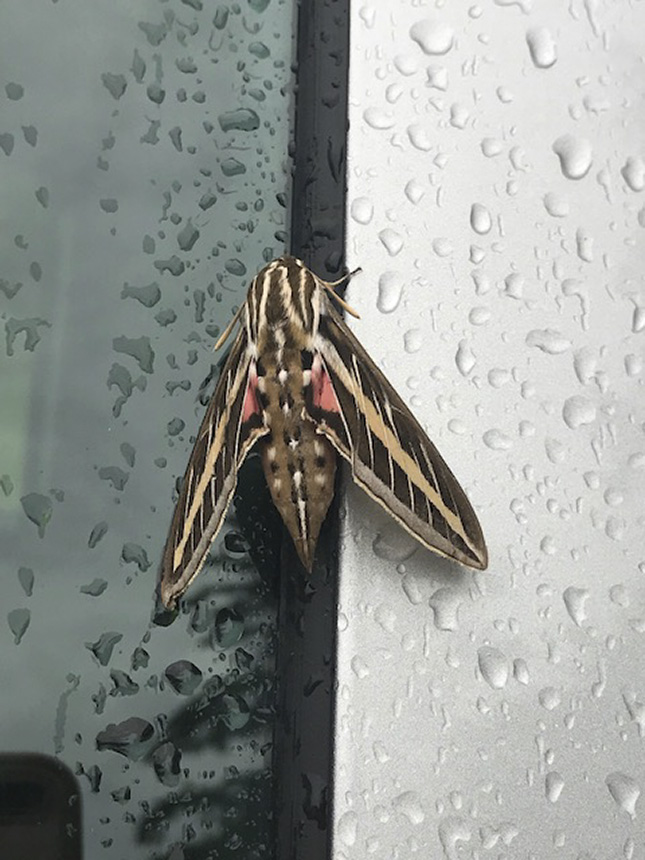
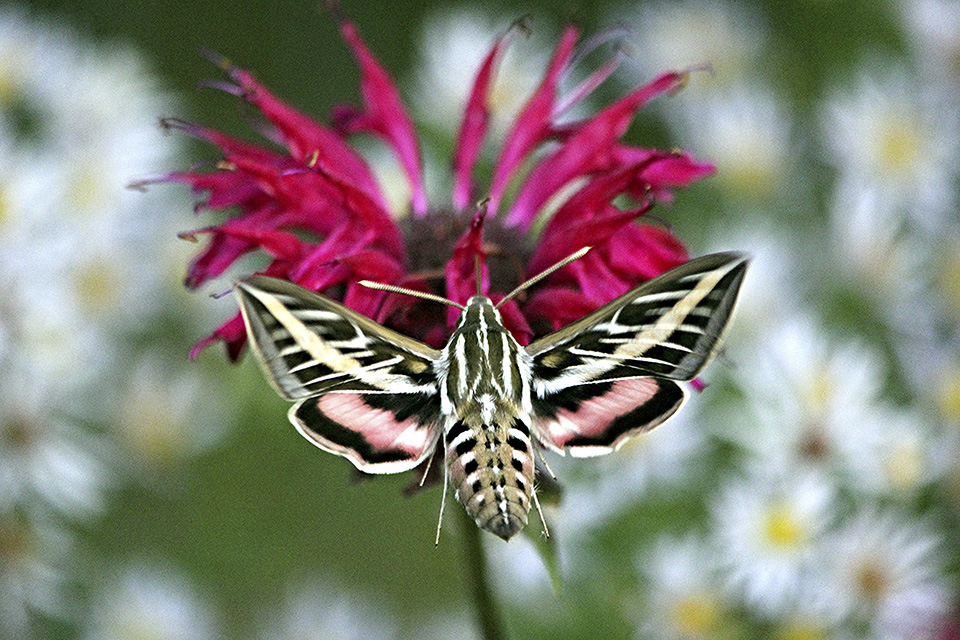
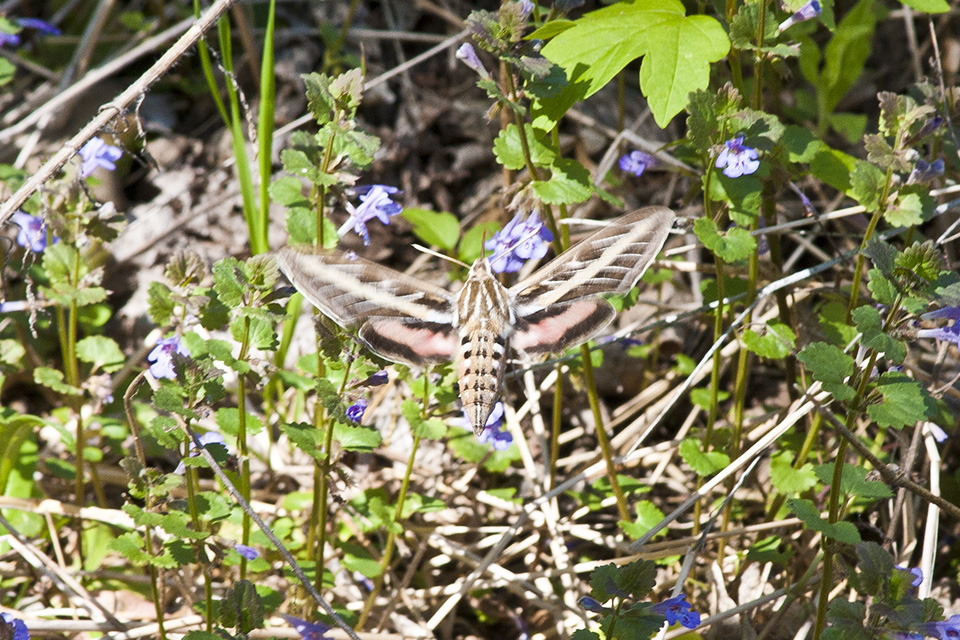
The forewing is long and narrow with a smooth, slightly convex outer margin. The upperside is dark olive brown. A narrow tan band extends diagonally from the inner margin near the base to the wing tip. There are creamy white streaks along the veins; a pale spot in the basal area; and a small, irregular, white patch in the median area. The trailing edge (terminal area) has a broad, pale, gray or grayish-brown band, a narrow, dark, marginal border, and a short white fringe. The leading (costal) margin has a broad, pale brown border.
The hindwing is black with a white fringe; a narrow, light brown, marginal border; and a central, broad, pink band extending diagonally from the inner margin near the body to the outer margin near the apex.
The appendage (tegula) covering the forewing base is dark olive brown with a prominent white fringe, a thin black, marginal border, and a white stripe in the middle.
The thorax is dark olive brown with three white stripes, one middorsal and two subdorsal, extending forward from the base of the tegula.
The abdomen is black-and-white banded on the upper (dorsal) surface. A thin, white, middorsal stripe is bordered by two narrow black stripes and two broad pale brown stripes.
The head is dark olive brown with two subdorsal stripes that extend over the eyes to the mouth.
The antenna is thickened and club-like. The proboscis is long and is coiled under the head when not in use.
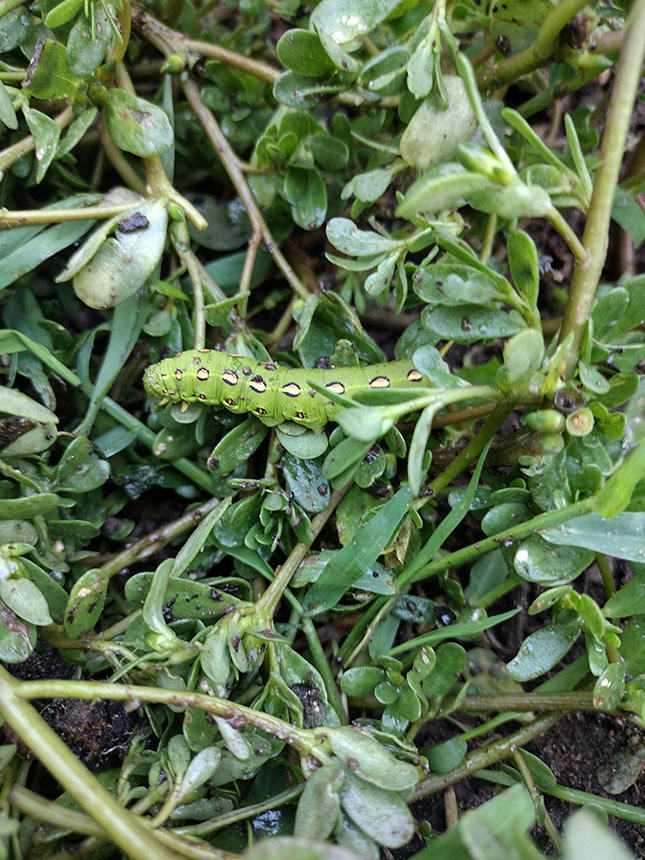
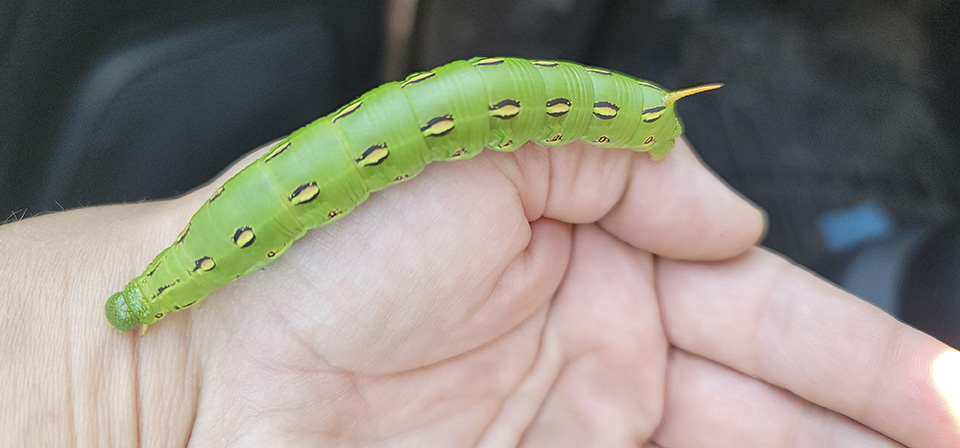
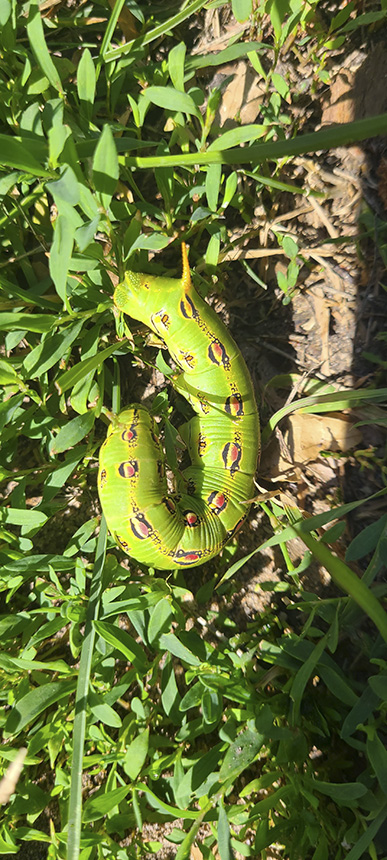
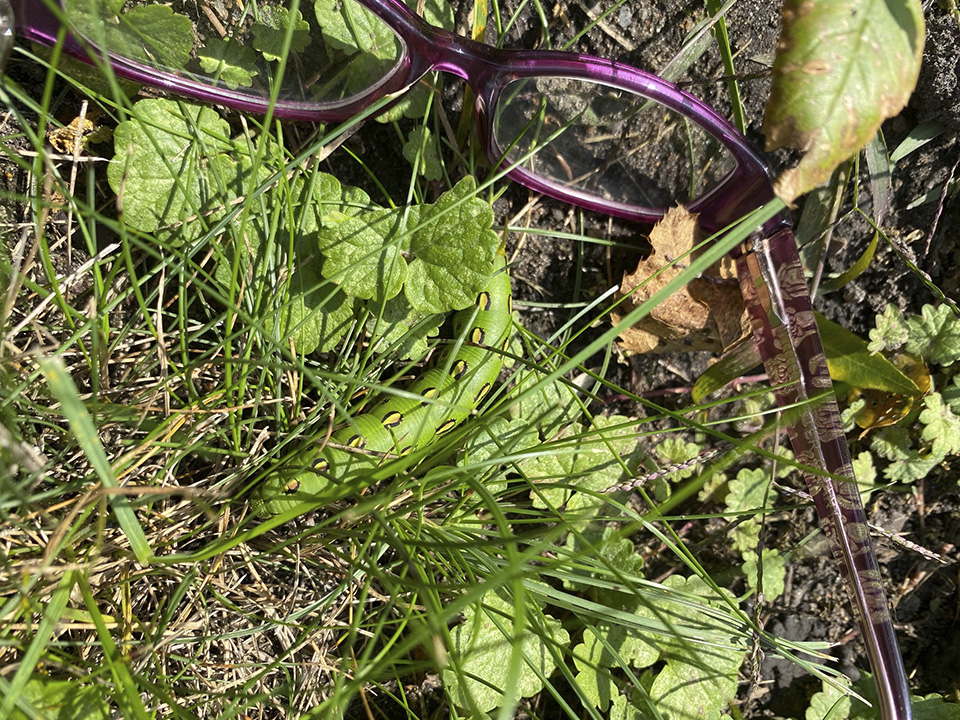
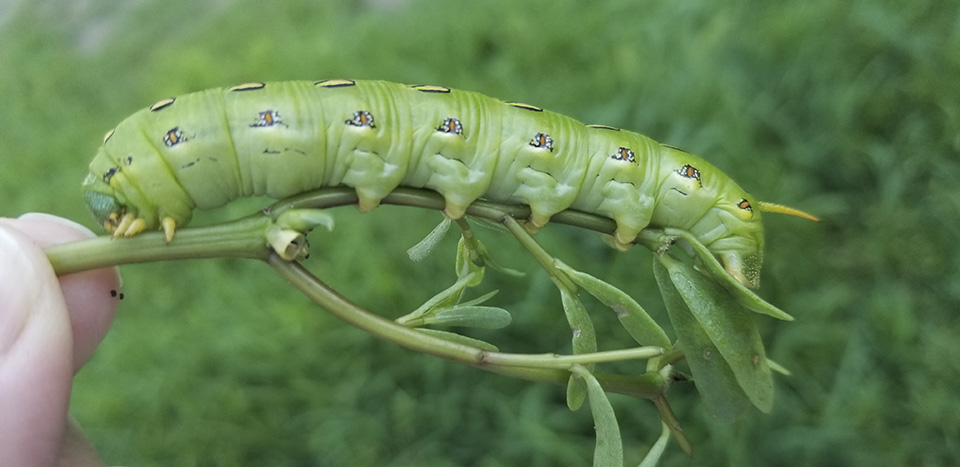
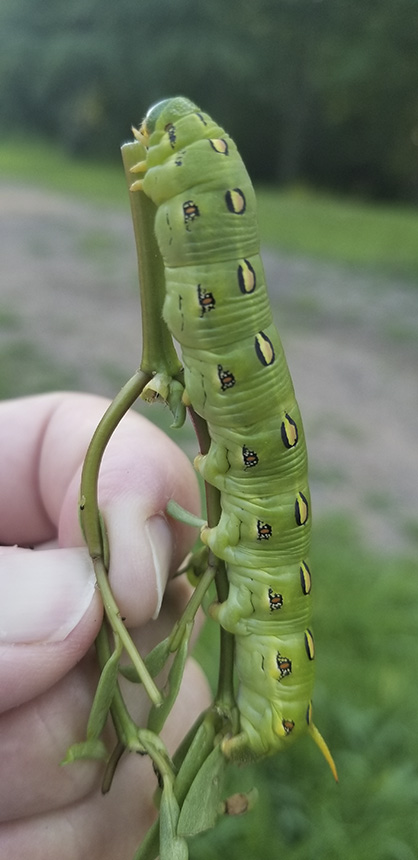
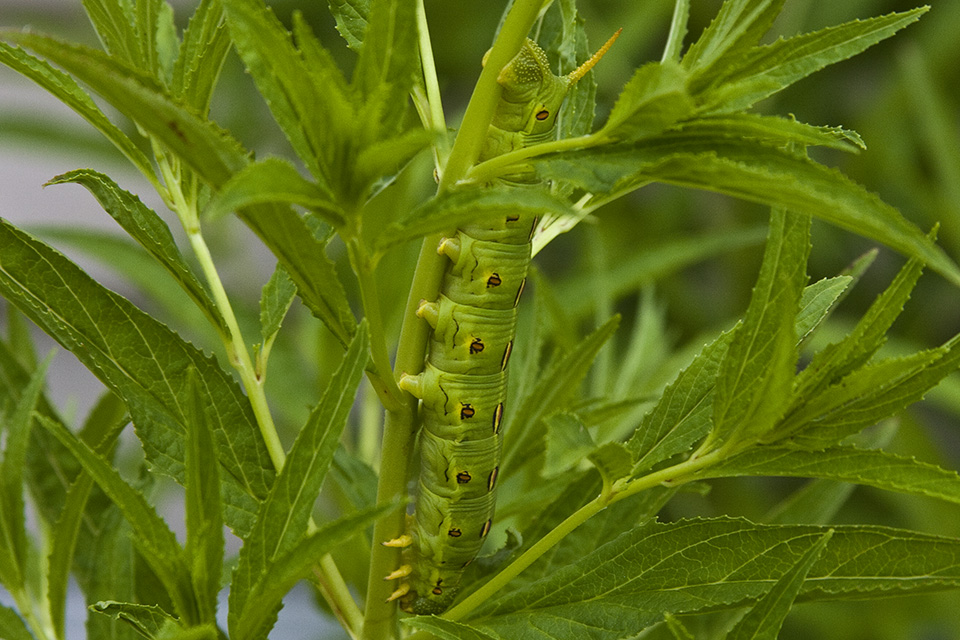
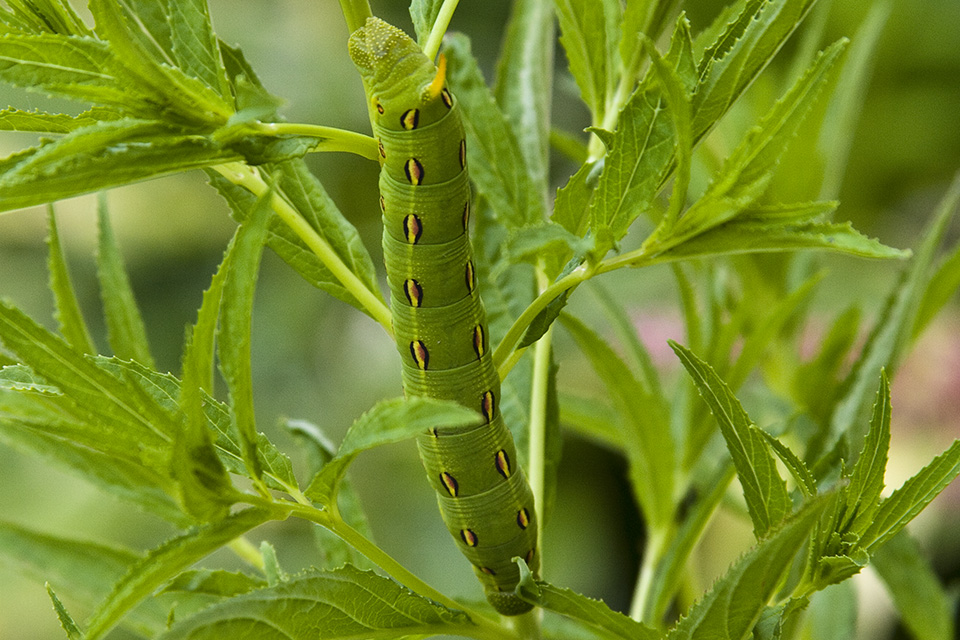
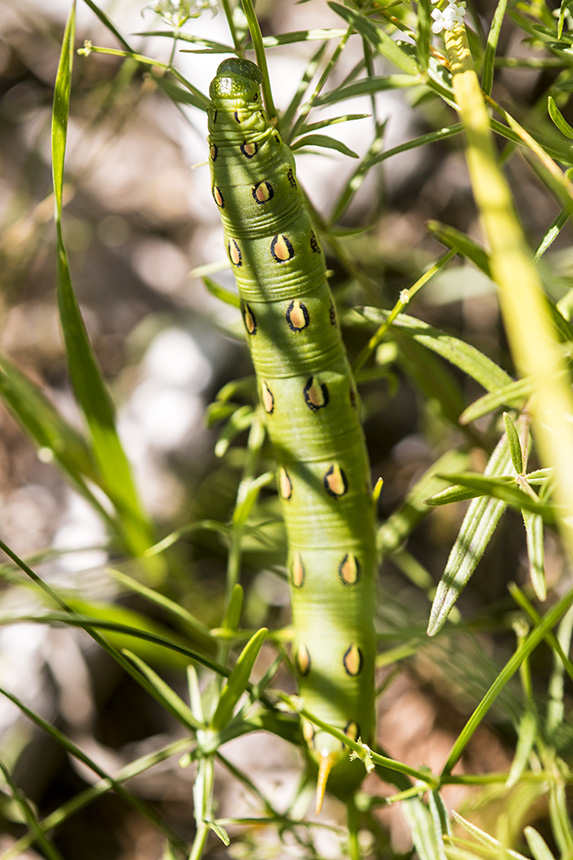
The caterpillar is up to 2¾″ long. It may be either bright green or yellow and black. The head, prothoracic shield and anal plate are always the same color, either orange or green, and are dotted with minute pale spots. The markings on the thorax and abdomen are extremely variable. Many forms have a subdorsal stripe extending from the first thoracic segment to the eighth abdominal segment. On some forms this stripe is replaced by a row of black-rimmed, creamy yellow spots. Some forms have small to extensive black areas speckled with tiny, yellow or white, vertically aligned dots. A stout yellow to orange, often partially or completely blackened, horn extends from the middorsal surface of the eighth abdominal segment. The legs on the thorax and leg-like structures (prolegs) on the abdomen are usually orange.
Mature caterpillars can be found from July onward.
Size
Wingspan: 2 7 ⁄16″ to 3 9 ⁄16″
Similar Species
Habitat
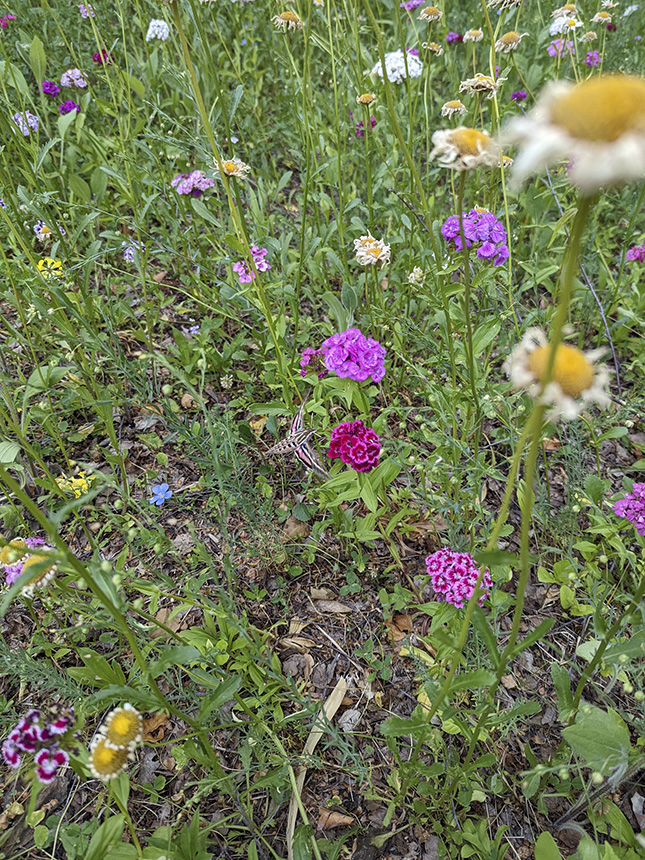
Meadows, gardens, woodland openings, and other open areas.
Ecology
Season
Two broods: May to October
Behavior
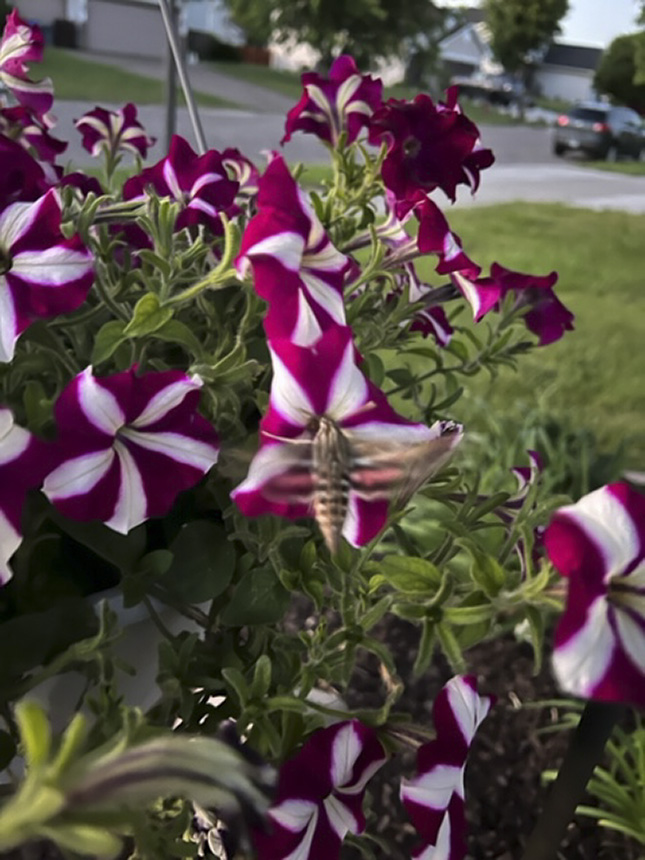
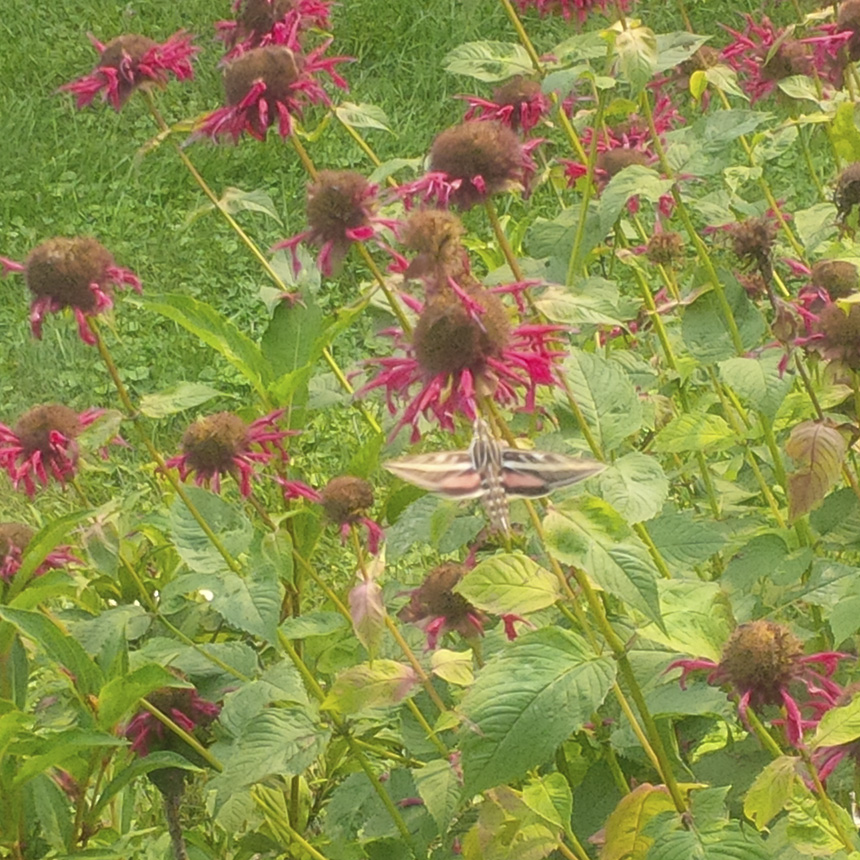
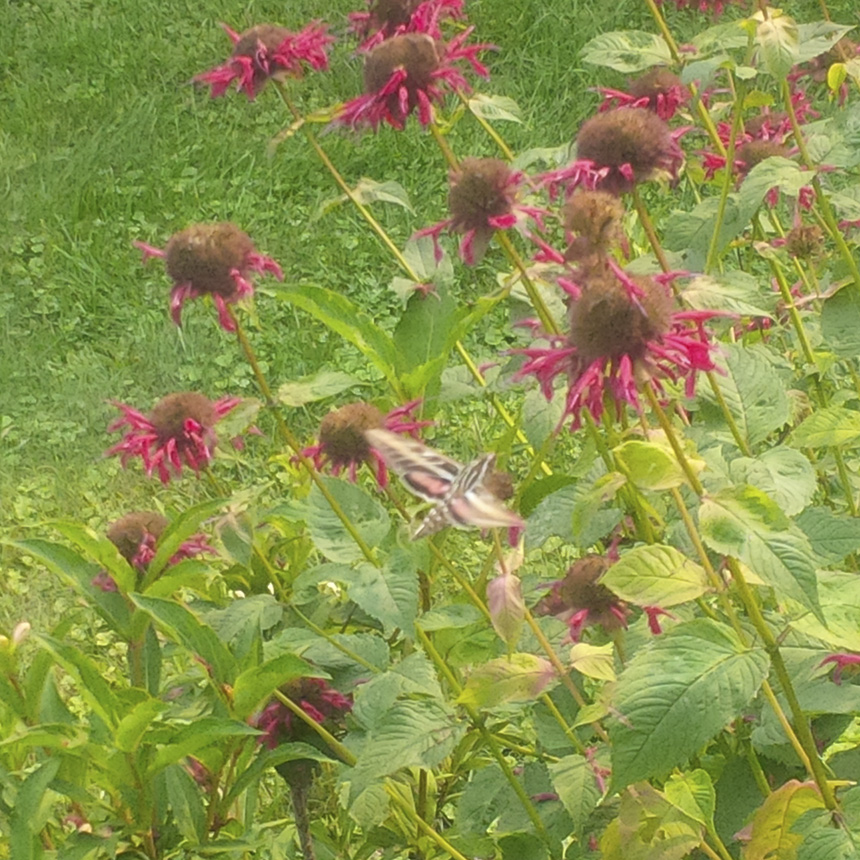
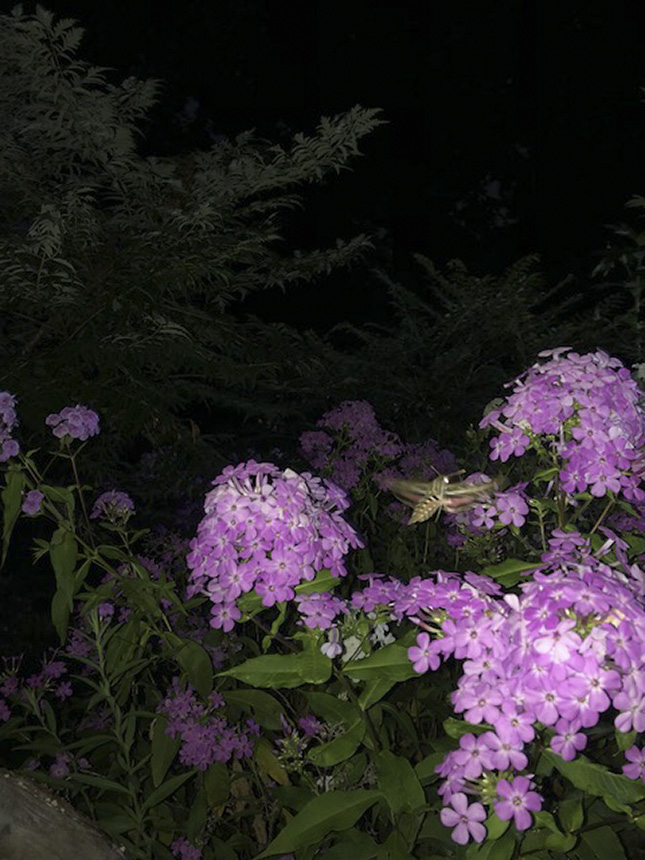
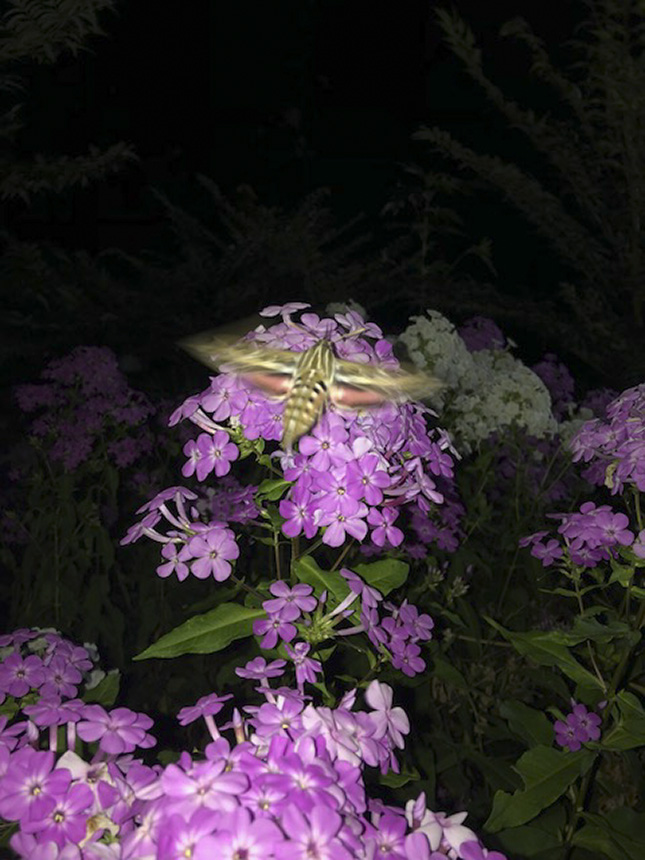
This moth is often spotted hovering with rapidly-beating wings near a flower. While they usually fly from dusk to dawn, they also sometimes fly during the day.
Life Cycle
Females attract males by releasing pheromones. Caterpillars moult five times before pupating. They pupate for 2 to 3 weeks in shallow burrows in the ground. The second brood overwinters as pupae.
Larva Food/Hosts
Foliage of willow herb (Epilobium spp.), four o’clock (Mirabilis spp.), apple (Malus spp.), evening primrose (Oenothera spp.), elm (Ulmus spp.), grape (Vitis spp.), and common purslane (Portulaca oleracea).
Adult Food
Flower nectar of many species, especially those with tubular flowers, including ground ivy (Glechoma hederacea).
Distribution
Sources
7, 21, 24, 27, 30, 75, 82, 83.
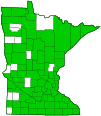
Biodiversity occurrence data published by: Minnesota Biodiversity Atlas (accessed through the Minnesota Biodiversity Atlas Portal, bellatlas.umn.edu. Accessed 10-15-2026).
Hyles lineata Fabricius, 1775 in Bánki, O., Roskov, Y., Döring, M., Ower, G., Hernández Robles, D. R., Plata Corredor, C. A., Stjernegaard Jeppesen, T., Örn, A., Pape, T., Hobern, D., Garnett, S., Little, H., DeWalt, R. E., Miller, J., Orrell, T., Aalbu, R., Abbott, J., Abreu, C., Acero P, A., et al. (2026). Catalogue of Life (2026-08-26 XR). Catalogue of Life Foundation, Amsterdam, Netherlands. https://doi.org/10.48580/dgyy9
Quinn, Edward. M., and Ron Danielson. April 27, 2009. A Survey of Lepidoptera in Three Priority Areas of the Minnesota State Parks System. https://files.dnr.state.mn.us/eco/nongame/projects/consgrant_reports/2009
/2009_quinn_danielson.pdf.
Occurrence
Common
Taxonomy
Order
Lepidoptera (Butterflies and Moths)
Superfamily
Bombycoidea (Hawk, Sphinx, Silk, Emperor, and Allied Moths)
Family
Subfamily
Macroglossinae
Tribe
Macroglossini
Subtribe
Choerocampina
Genus
Hyles
Subordinate Taxa
Synonyms
Celerio lineata
Deilephila lineata
Hyles daucus
Hyles florilega
Hyles linearis
Hyles lineatoides
Hyles vitis
Common Names
white lined sphinx
white-lined hawk moth
white-lined sphinx
white-lined sphinx moth