



balsam groundsel
(Packera paupercula)
Overview • Description • Distribution • Taxonomy
Overview |
|
|||||||
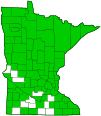
Balsam groundsel is a common, native, North American wildflower. In the United States it occurs from Maine to northern Georgia, west to Washington and New Mexico. It is absent from the Great Plains and mostly absent from the southwest. It also occurs in Alaska and in every Canadian province. Balsam groundsel is found in prairies and meadows and on stream banks. It grows under full or partial sun in wet to moist soil containing loam, sandy loam, or rocky material. It blooms from May to August. |
||||||||
Balsam groundsel is a highly variable species that readily hybridizes with similar, closely related species. The offspring have intermediate characteristics, giving rise to several subspecies, varieties, and forms. Four subspecies are currently recognized by most sources. Of these, three occur in Minnesota. |
||
Description |
||
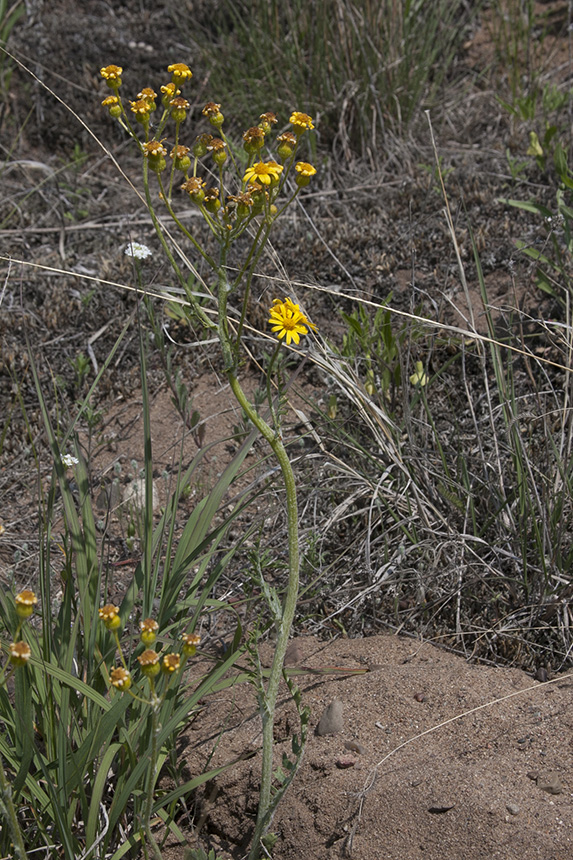
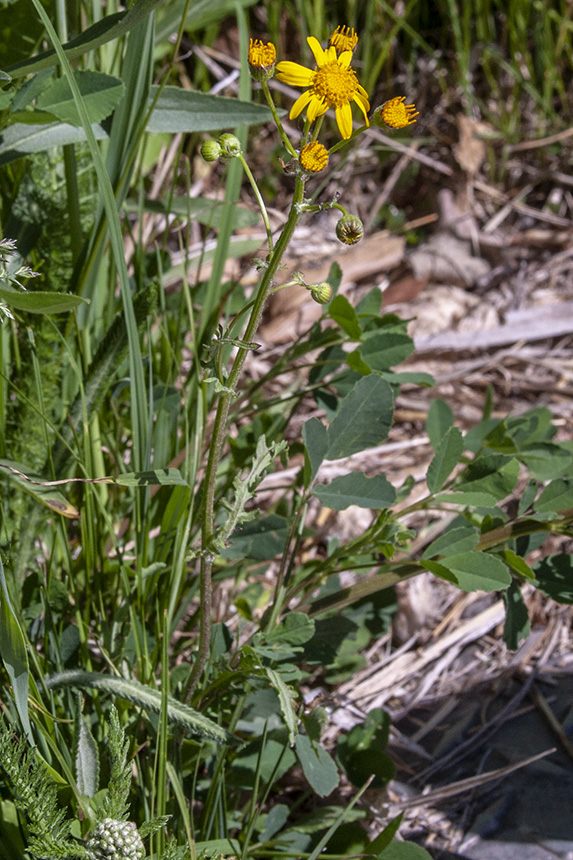
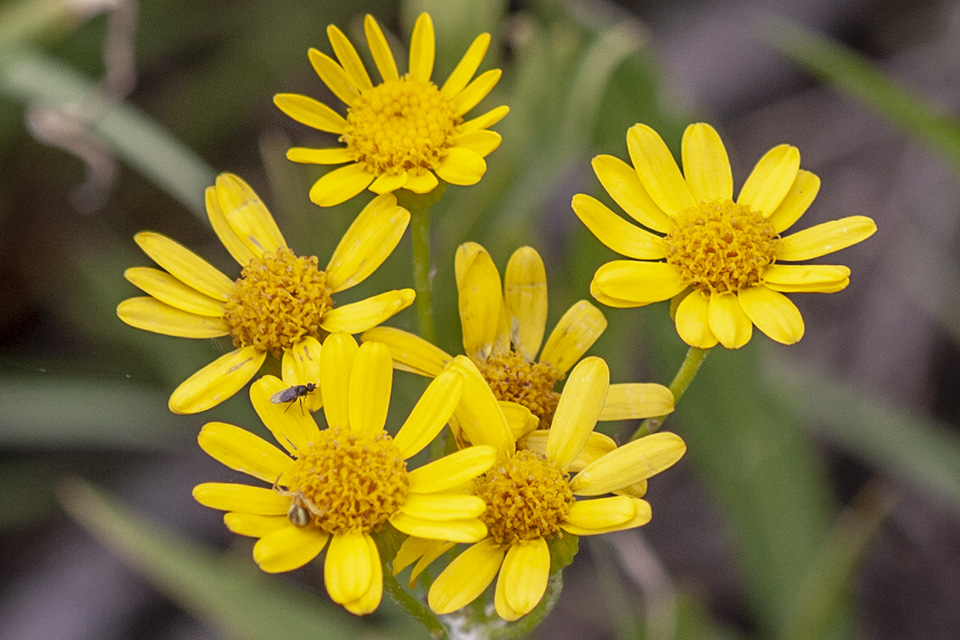
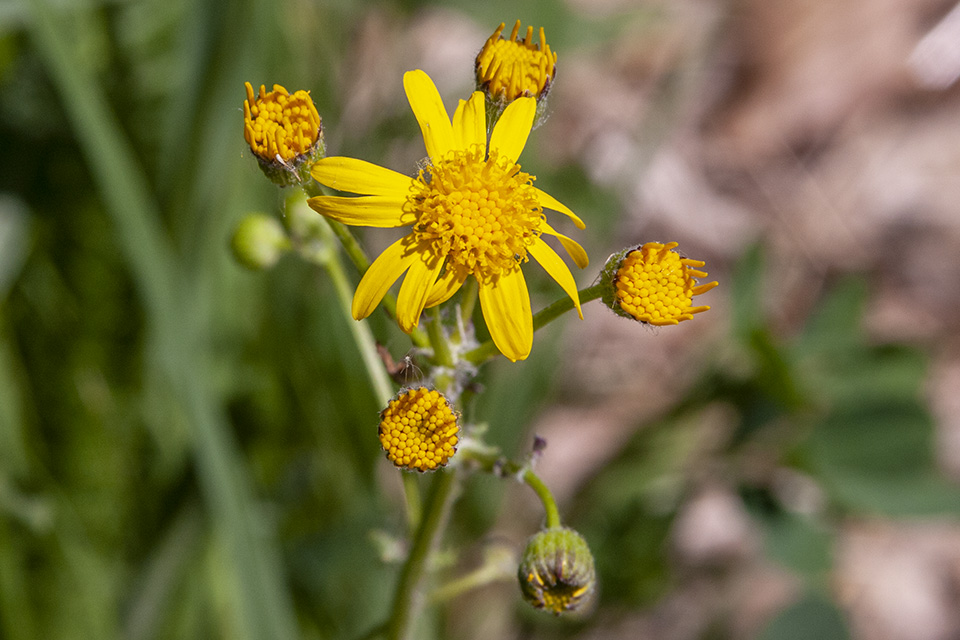
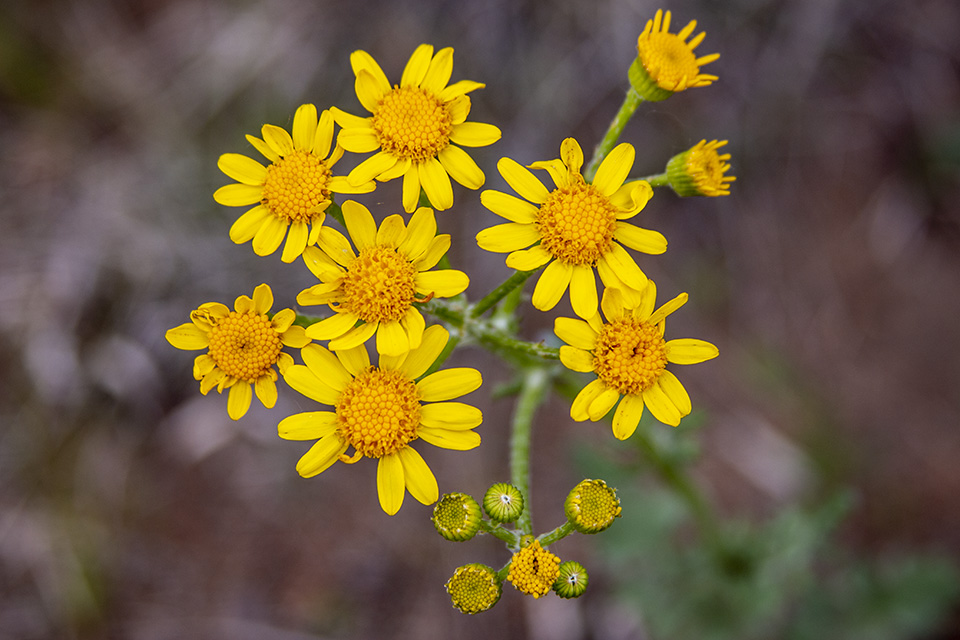
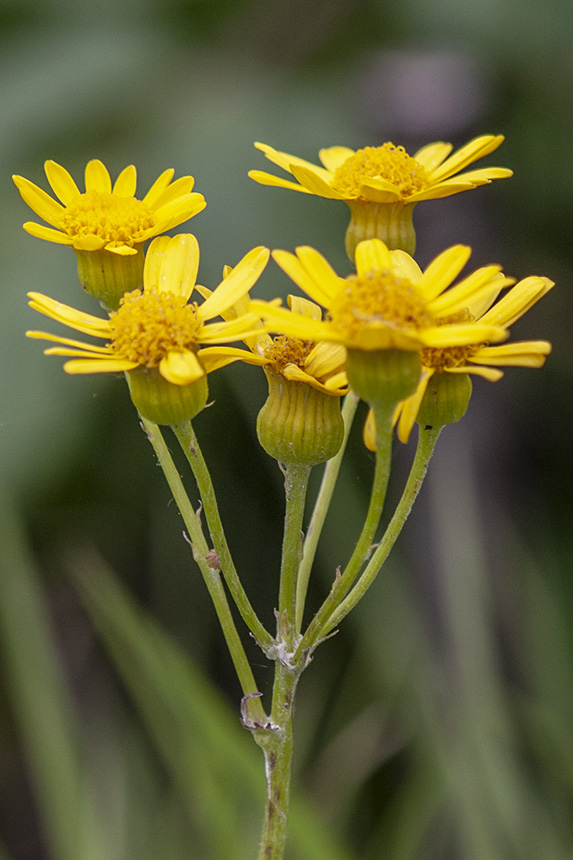
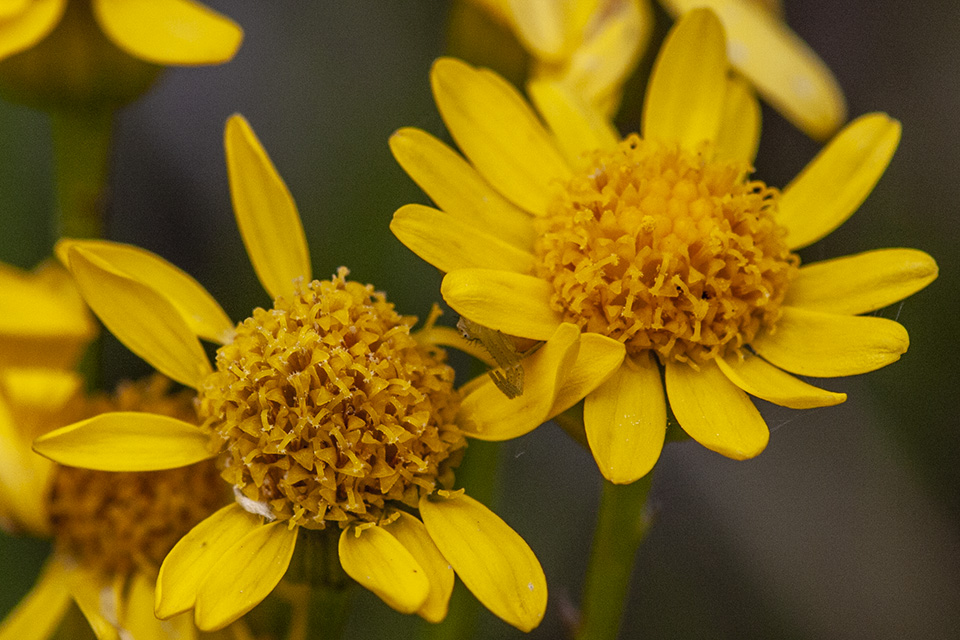
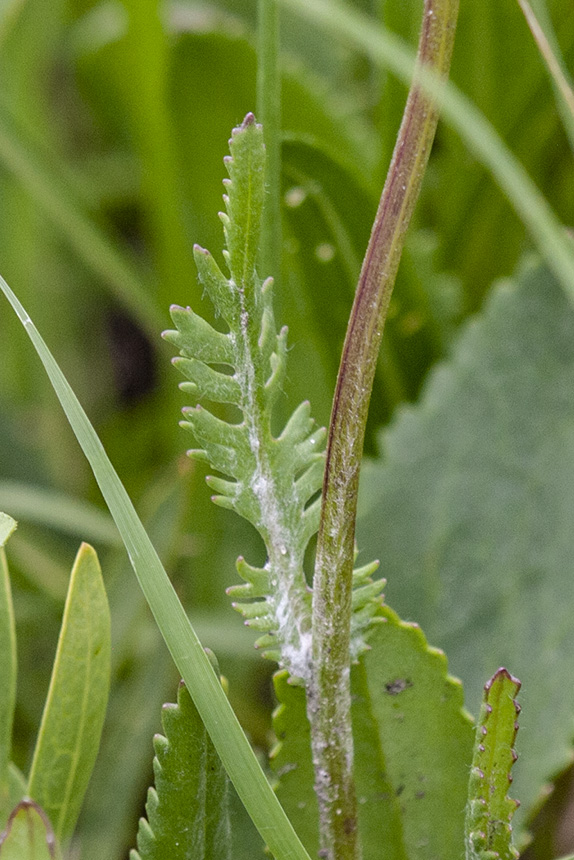
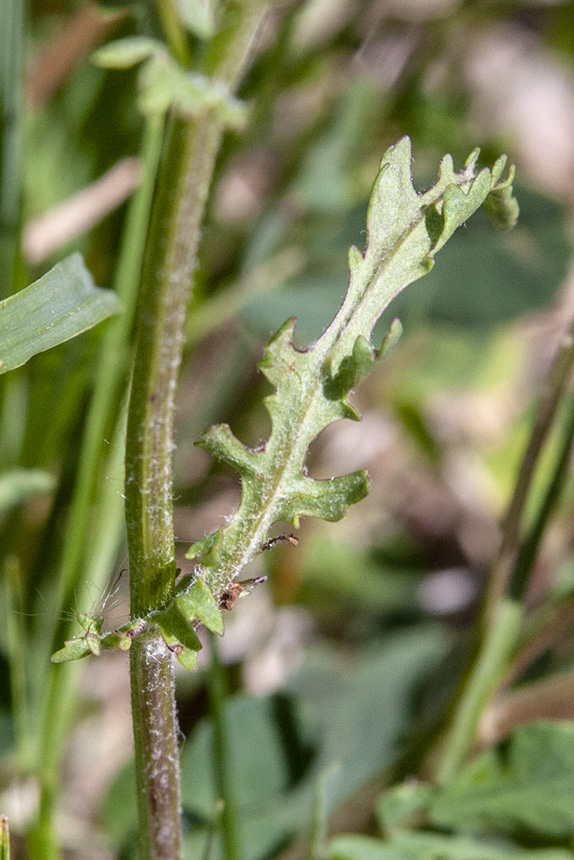
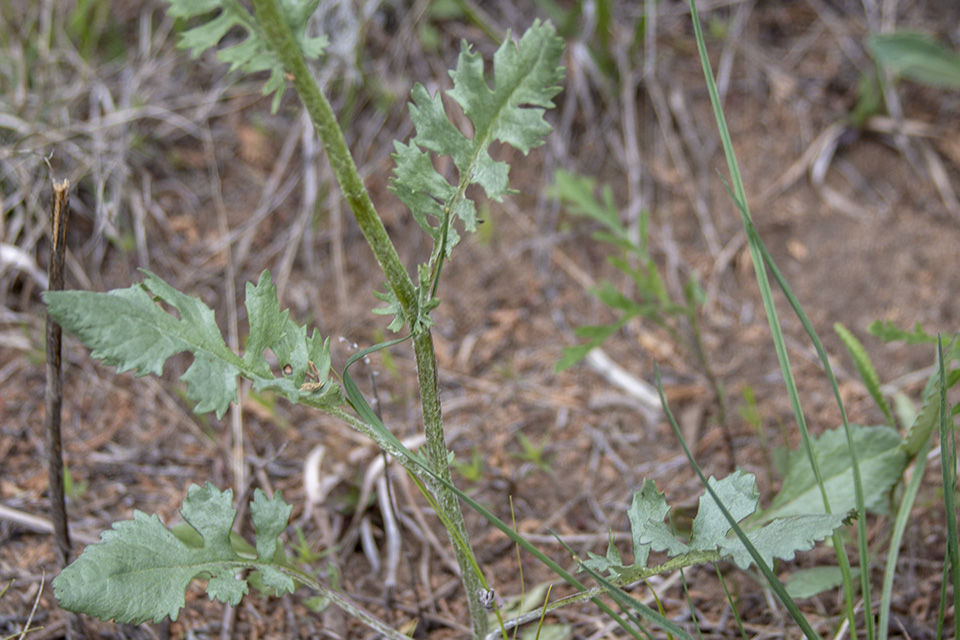
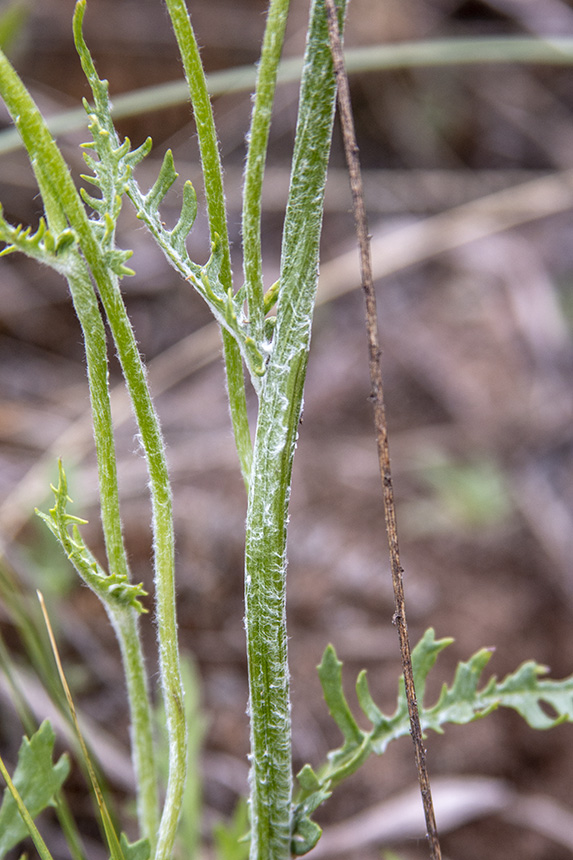
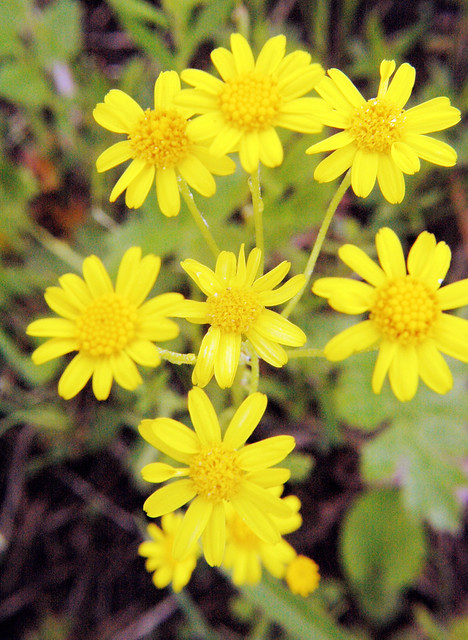
Balsam groundsel is a 4″ to 24″ tall, erect, perennial forb. It is abundant and widespread. It rises on usually 1 stem, occasionally 2 to 4 loosely clustered stems, from a slender or stout, erect to horizontal rootstock. Older plants form a small underground caudex. It often forms dense colonies. It sometimes reproduces vegetatively by short or creeping rhizomes, but rarely produces above-ground, creeping stems (stolons). The stems are erect, light green, hollow, and cylinder-shaped with shallow ridges. When young they are lightly covered with tufts of short, matted, woolly hairs. They soon become almost hairless except at the base and in the leaf axils. Basal leaves are narrowly egg-shaped to elliptic or inversely lance-shaped. They are on long leaf stalks. They are 1⅛″ to 2⅜″ long, ⅜″ to ¾″ wide. They are tapered, sometimes widely, at the base, and rounded or bluntly pointed at the tip. They are usually unlobed, but sometimes have a few narrow, irregular lobes near the base. The lower surface is hairless or sparsely to moderately hairy with inconspicuous hairs. The margins may be sharply toothed or have rounded teeth. Basal leaves are persistent, usually present when the plant is in flower. Stem leaves are alternate. Lower stem leaves are stalked, deeply lobed (pinnatifid), and sometimes much larger than the basal leaves. As they ascend the stem the leaves become gradually smaller, deeply pinnately lobed, and stalkless or nearly stalkless. The upper and lower surfaces are hairless except sometimes for patches of dense, cobwebby hairs near the base. The margins are sharply toothed. The inflorescence is a dense or loose, branched cluster of less than 20, usually 2 to 10, flower heads at the end of the stem. The outer heads are on longer flower stalks than the inner heads, resulting in a flat topped cluster. The flower stalks are hairless and usually have a small, leaf-like bract at the base. The flower heads are ½″ to 1¼″ wide. There are 13 or 21 green bracts united for most of their length into a cylinder-shaped flower cup (calyx), and separated at the tip into pointed, thin, purple-tipped lobes. The calyx is usually hairless, sometimes with cobwebby hairs near the base. There are 8 or 13 yellow ray florets and 50 to 65 or more yellow disk florets. The fruit is an achene. |
||
Distribution |
||||
|
Sources |
|||
| 2/17/2023 | ||||
Nativity |
||||
Native |
||||
Occurrence |
||||
Common |
||||
Taxonomy |
|||
| Kingdom | Plantae (Plants) | ||
| Subkingdom | Pteridobiotina | ||
| Phylum | Tracheophyta (Vascular Plants) | ||
| Class | Magnoliopsida (Dicots) | ||
Order |
Asterales (Sunflowers, Bellflowers, Fanflowers, and Allies) | ||
Family |
Asteraceae (Sunflowers, Daisies, Asters, and Allies) | ||
| Subfamily | Asteroideae | ||
| Supertribe | Senecionodae | ||
| Tribe | Senecioneae (groundsels and allies) | ||
| Subtribe | Senecioninae | ||
| Genus | Packera (American groundsels and ragworts) | ||
The 64 species in the genus Packera were formerly included in the genus Senecio. |
|||
Subordinate Taxa |
|||
Appalachian groundsel (Packera paupercula var. appalachiana) false tomentose balsam groundsel (Packera paupercula var. pseudotomentosa) northern meadow groundsel (Packera paupercula var. paupercula) savanna balsam groundsel (Packera paupercula var. savannarum) |
|||
Most sources, including ITIS, GBIF, NatureServe, Plants of the World Online, and World Flora Online, recognize four varieties of Packera paupercula. Other sources, including NCBI, GRIN, and USDA PLANTS, do not recognize any varieties. Flora of North America (FNA) contends that the differences are due to hybridization and introgression, and do not justify recognition as varieties. |
|||
Synonyms |
|||
Senecio balsamitae Senecio crawfordii Senecio gaspensis Senecio gaspensis var. firmifolius Senecio pauperculus Senecio pauperculus var. balsamitae Senecio pauperculus var. crawfordii Senecio pauperculus var. firmifolius Senecio pauperculus var. neoscoticus Senecio pauperculus var. praelongus Senecio pauperculus var. thompsoniensis Senecio tweedyi |
|||
Common Names |
|||
balsam groundsel balsam ragwort Canadian butterweed northern meadow groundsel northern ragwort |
|||

Glossary
Axil
The upper angle where the leaf stalk meets the stem.
Bractlet
A small, often secondary bract within an inflorescence; a bract that is borne on a petiole instead of subtending it.
Calyx
The group of outer floral leaves (sepals) below the petals, occasionally forming a tube.
Caudex
A short, thickened, woody, persistent enlargement of the stem, at or below ground level, used for water storage.
Node
The small swelling of the stem from which one or more leaves, branches, or buds originate.
Pinnatifid
Deeply cut, more than half way to the midrib but not to the midrib, into lobes that are spaced out along the midrib; the lobes do not form separate leaflets.
Rhizome
A horizontal, usually underground stem. It serves as a reproductive structure, producing roots below and shoots above at the nodes.
Stolon
An above-ground, creeping stem that grows along the ground and produces roots and sometimes new plants at its nodes. A runner.
Visitor Photos |
|||||
Share your photo of this plant. |
|||||
| This button not working for you? Simply email us at info@MinnesotaSeasons.com. Attach one or more photos and, if you like, a caption. |
|||||
|
|||||
MinnesotaSeasons.com Photos |
|||||
Plant |
|||||
 |
 |
||||
Inflorescence |
|||||
 |
 |
||||
 |
 |
||||
Flower Head |
|||||
 |
|||||
Middle Stem Leaf |
|||||
 |
 |
||||
Lower Stem Leaves |
|||||
 |
|||||
Stem |
|||||
 |
|||||

Slideshows |
||
| Senecio pauperculus BALSAM RAGWORT Frank Mayfield |
||
|
||
Visitor Videos |
|||
Share your video of this plant. |
|||
| This button not working for you? Simply email us at info@MinnesotaSeasons.com. Attach a video, a YouTube link, or a cloud storage link. |
|||
Other Videos |
|||

Visitor Sightings |
|||||
Report a sighting of this plant. |
|||||
| This button not working for you? Simply email us at info@MinnesotaSeasons.com. Be sure to include a location. |
|||||
|
|||||
MinnesotaSeasons.com Sightings |
|||||
|
Created: Last Updated: © MinnesotaSeasons.com. All rights reserved. |