



black maple
(Acer saccharum ssp. nigrum)
Conservation • Wetland • Description • Habitat • Ecology • Use • Distribution • Taxonomy
Conservation Status |
|
|||||||
| IUCN Red List | not listed |
|||||||
| NatureServe | N5? - Secure SNR - Unranked |
|||||||
| Minnesota | not listed |
|||||||
Wetland Indicator Status |
||||||||
| Midwest | FACU - Facultative upland |
|||||||
| Northcentral & Northeast | FACU - Facultative upland |
|||||||
Description |
||
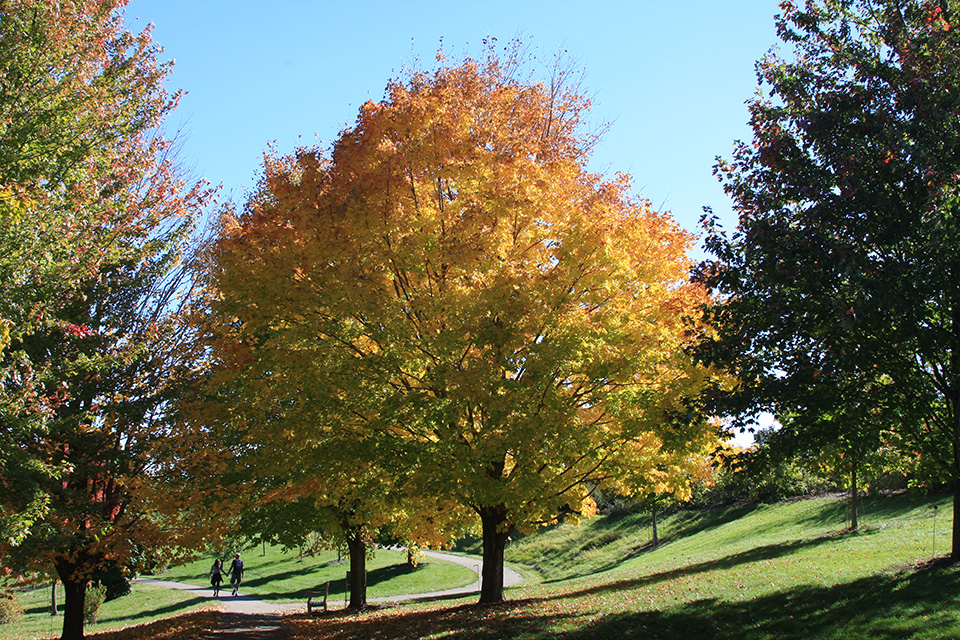
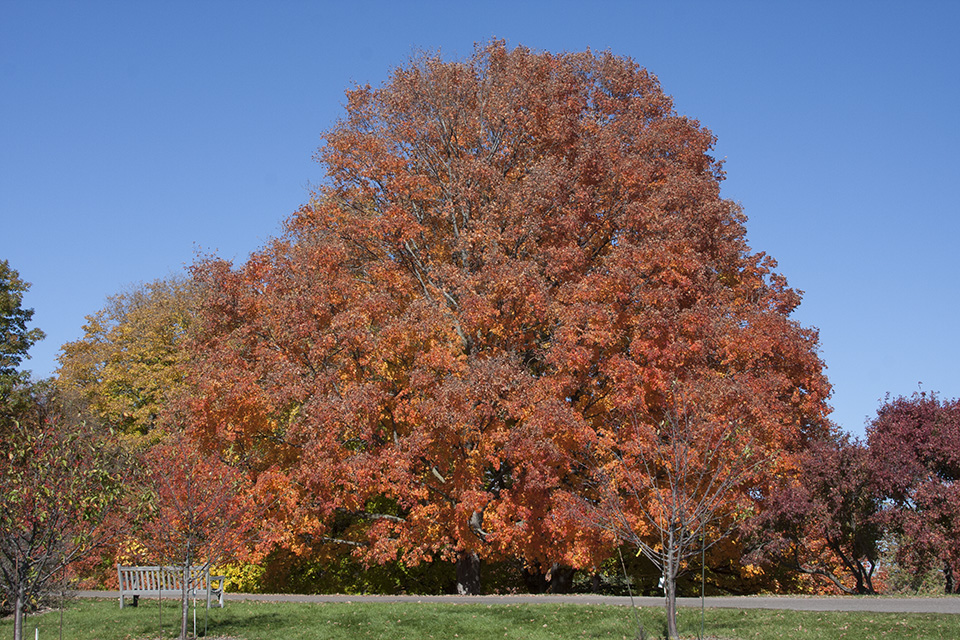
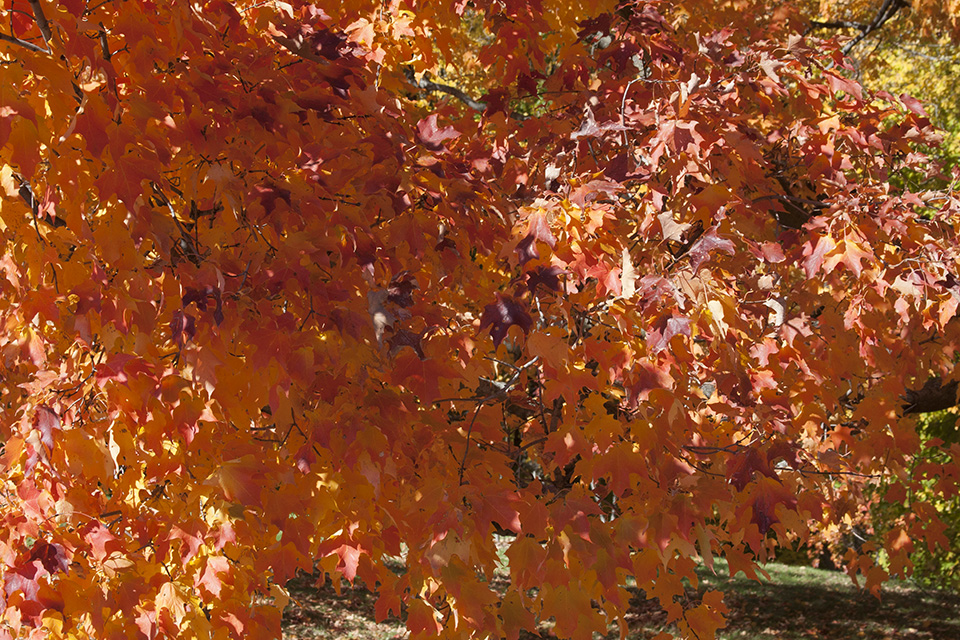
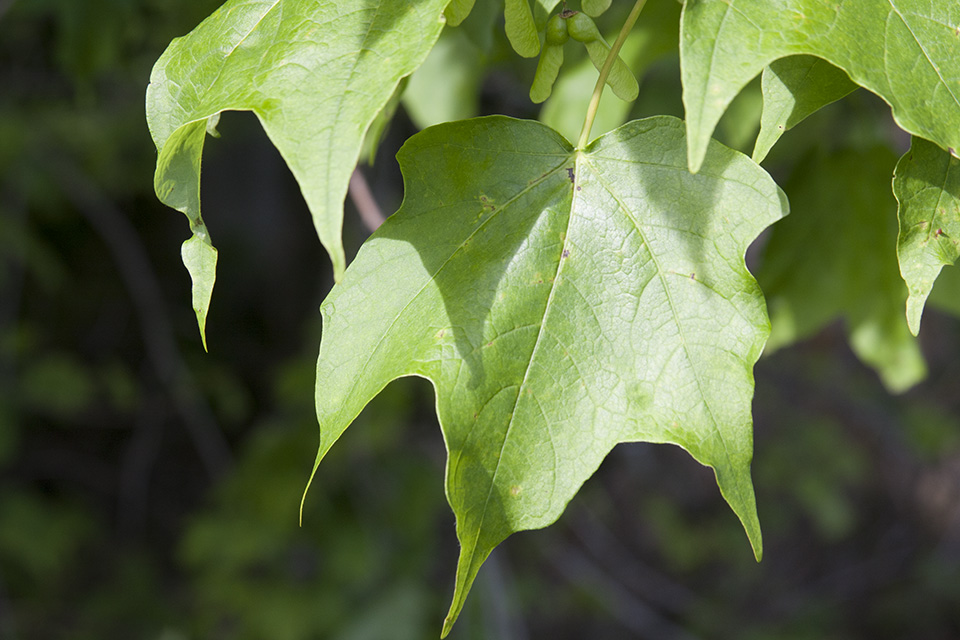
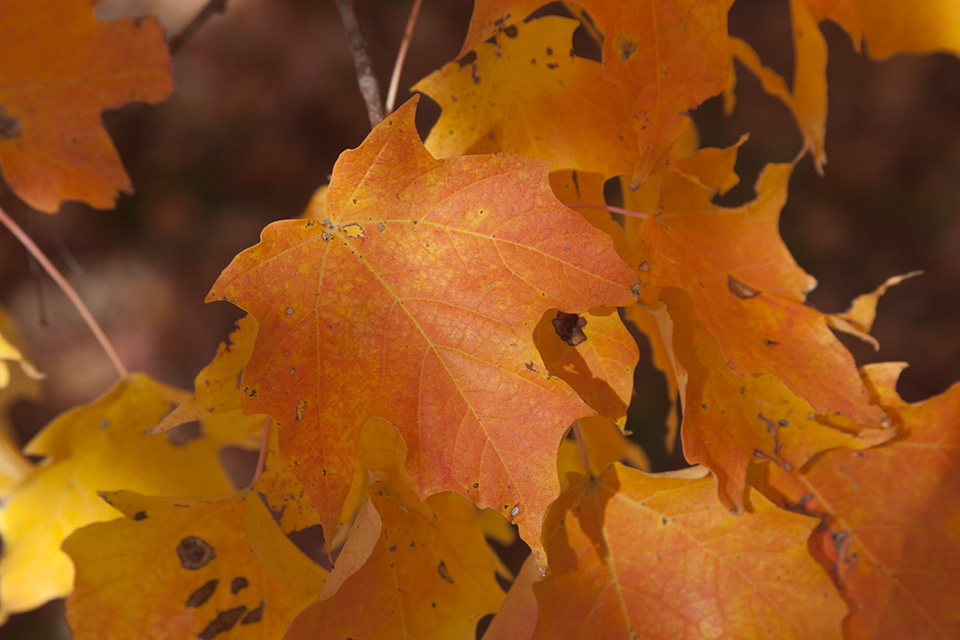
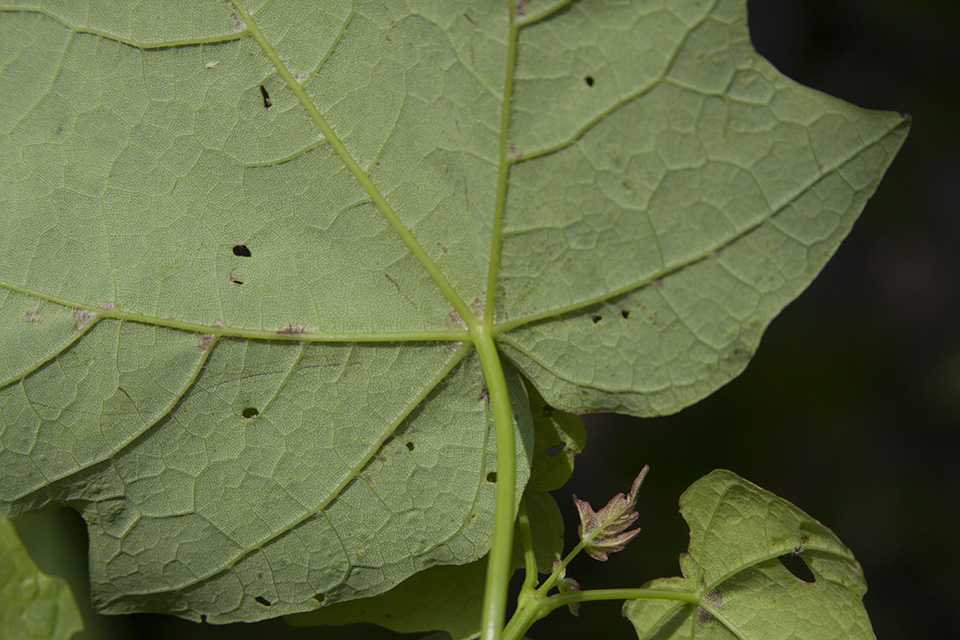
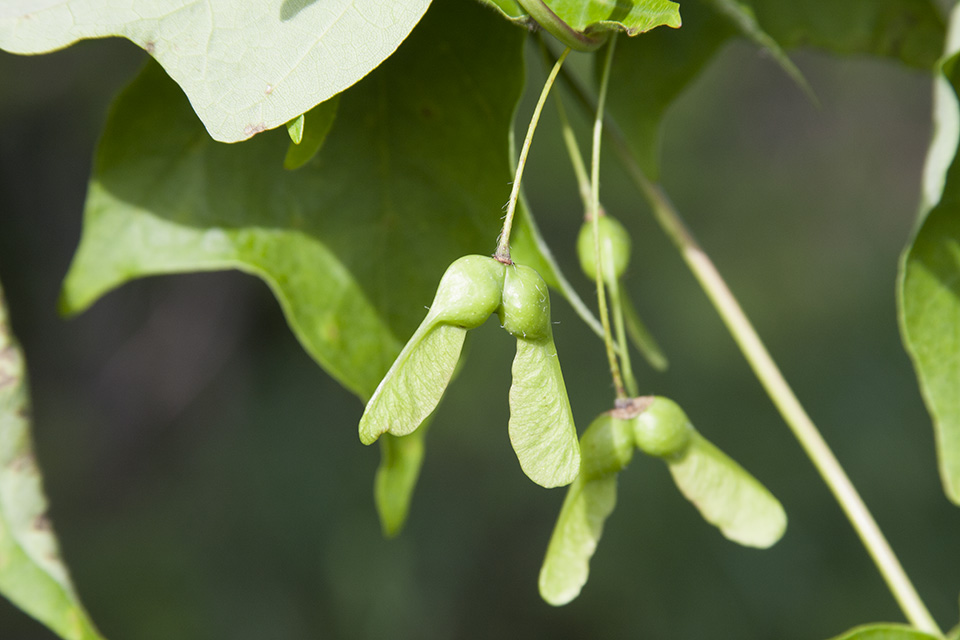
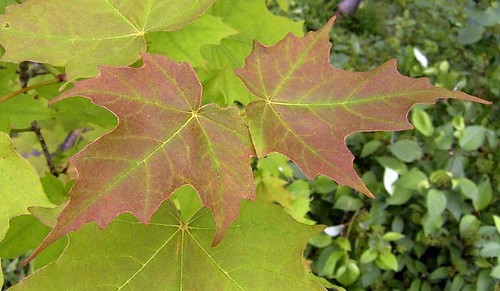
Black maple is a long-lived, slow-growing, deciduous, hardwood tree rising on a single trunk from deep, widely spreading roots. It is the most common maple in eastern North America. In Minnesota mature trees are usually 40′ to 70′ tall and 24″ to 36″ in diameter, though large individuals can reach over 80′ in height. They can live 300 to 400 years, but typically live 150 to 175 years. The foliage is dense and forms a dense canopy, which restricts understory and turf growth. The crown is dense, broad, round, symmetrical, smooth, and round-topped. The trunk is straight and much branched. The bark on young trees is light gray and smooth or warty. On mature trees the bark is dark gray with deep, irregular furrows and thick, long, irregular plates that curl at the top and bottom edges. Older bark is highly variable in appearance. It may be brown, gray, or nearly black, with orangish interior bark. It may have vertical plates curled at the top and bottom, it may be semi-ridged, or it may have overlapping shingles. The branches are opposite, short, sturdy, and ascending. Older, lower branches droop. The twigs are thin, reddish-brown to green, smooth, hairless, and dull, not shiny. They appear in a V-shape on the branches. The younger twigs have obvious, small, warty, pore-like openings (lenticels) that are raised well above the bark surface. At the end of the twig is a brown, ¼″ to ⅜″ long, sharply pointed winter bud with tight scales. The buds are dark brown, ¼″ long, and hairy. They are composed of dark brown to nearly black, overlapping scales. The leaves are opposite, 3″ to 6″ long, and 3″ to 5″ wide. They are on leaf stalks that are 2⅓″ to 4″ long and hairy. There is a pair of prominent stipules at the base of the leaf stalk, but these may fall off later in the season. The blades are palmately lobed with usually 3, rarely 5, abruptly-pointed lobes. The space between the lobes (sinus) is rounded. The sinus at the base of the leaf is often closed and the two bottom lobes often overlap. The upper surface is dark green and hairless. The lower surface is yellowish-green with dense, brownish, velvety hairs. The margins have a few indistinct teeth, but are not double-toothed and have no fine teeth. Fresh leaves droop at the sides and at the tip, appearing wilted. In the fall the leaves turn yellow to brownish-yellow. Fallen leaves break down quickly. The leaf scars have 3 dots. Male and female flowers are borne on the same tree. Female flowers are usually found in the buds at the end of the twigs. Male flowers are usually found in the lateral buds. They appear identical, having both stamens and pistils, but usually only one of the organs is functional. They appear in late April or early May and are usually fully formed before the leaves appear. They are lime green and hang downward in tassel-like clusters of 8 to 14 flowers on ¾″ to 2″ long, hairy, drooping stalks. Male and female flowers occur over the entire crown. In the lower crown only male flowers occur. The flowers are pollinated by wind and bees. The fruit is a pair of dry seed cases with papery wings attached (double samara). The samaras (or keys) occur in clusters that droop downward from long stalks. The stalks are about the same length as the wings. The seed cases are plump, attached the the stalk, and slightly connected to each other. The wings are typically ⅝″ to 1 3 ⁄16″ long, 3 ⁄16″ to ⅝″ wide, and are parallel to each other or slightly spreading. The overall shape of the two keys is that of a horseshoe. Usually only one seed case contains a single, viable seed, although sometimes both contain seeds, sometimes both are empty. The keys are green initially, turning yellowish green when the seeds are mature, then brown in the fall. They fall just before the leaves. Paired keys separate when they are shed. The seeds are ¼″ to ⅜″ long and bright reddish-brown. The sap is clear, not milky. |
||
Height |
||
40′ to 70′ |
||
Record |
||
The champion black maple in Minnesota is on private property near Oronoco, in Olmsted County. In 1998 it was measured at 78′ tall and 81″ in circumference (28″ in diameter), with a crown spread of 45′. |
||
Flower Color |
||
Lime green |
||
Similar Species |
||
Sugar maple (Acer saccharum ssp. saccharum) bark is lighter, thinner, and less deeply furrowed, but this may not be obvious. The leaf stalk is sometimes hairy and does not have stipules at the base. The upper surface of the leaf blade is lighter. The under surface is either hairless or with hairs just along the veins. Leaves do not droop at the sides or at the tip. The base of the leaf stalk is smaller. The sinus at the base of the leaves is open and the two bottom lobes do not overlap. It hybridizes readily with black maple, producing a range of characteristics that make it difficult to distinguish between the two. Norway maple (Acer platanoides) has milky sap. The leaves are wider. |
||
Habitat |
||
Moist. Bottomland woods, floodplains, stream terraces, valleys, ravines. Highly shade tolerant when young, full to partial sun later. |
||
Ecology |
||
Flowering |
||
April to May |
||
Pests and Diseases |
||
|
||
Use |
||
|
||
Distribution |
||||
|
Sources |
|||
| 2/21/2023 | ||||
Nativity |
||||
Native |
||||
Occurrence |
||||
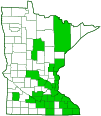
Uncommon |
||||
Taxonomy |
|||
| Kingdom | Plantae (Plants) | ||
| Subkingdom | Pteridobiotina | ||
| Phylum | Tracheophyta (Vascular Plants) | ||
| Class | Magnoliopsida (Dicots) | ||
Order |
Sapindales (Soapberries, Cashews, Mahoganies, and Allies) | ||
Family |
Sapindaceae (Soapberry) | ||
| Subfamily | Hippocastanoideae | ||
| Tribe | Acereae | ||
Genus |
Acer (Maples) | ||
| Section | Acer | ||
| Series | Saccharodendron | ||
| Species | Acer saccharum (sugar maple) | ||
The classification of black maple has been controversial since it was first described over 100 years ago. Some authorities, including NCBI, GRIN, World Flora Online, and Plants of the World Online, classify this plant as a subspecies of sugar maple, Acer saccharum ssp. nigrum. Others, including USDA PLANTS, ITIS, BONAP, GBIF, NatureServe, and iNaturalist, consider it a closely related but separate species, Acer nigrum. A chloroplast DNA analysis of the two maples (Skepner and Krane, 1997) showed that they are genetically “very similar and do not require separate taxonomic designations.” The U.S. Department of Agriculture Forest Service lists it as Acer nigrum in Silvics of North America. However, in the profile of black maple in that publication they state the following: |
|||
In most practical forest treatments, because of its similarities in wood properties, black maple has been included with sugar maple and treated as a subspecies. |
|||
Synonyms |
|||
Acer nigrum Acer nigrum var. palmeri Acer saccharum ssp. nigrum Acer saccharum var. nigrum Acer saccharum var. viride Saccharodendron nigrum |
|||
Common Names |
|||
black maple black sugar maple hard maple rock maple sugar maple |
|||
Glossary
Lenticel
A corky, round or stripe-like, usually raised, pore-like opening in bark that allows for gas exchange.
Palmate
Similar to a hand. Having more than three lobes or leaflets that radiate from a single point at the base of the leaf.
Samara
A dry fruit consisting of a seed attached to a papery wing; one seeded in Elms and Ashes, two-seeded in Maples.
Sinus
A space, indentation, or cleft, usually on a leaf, between two lobes or teeth.
Stipule
A small, leaf-like, scale-like, glandular, or rarely spiny appendage found at the base of a leaf stalk, usually occurring in pairs and usually dropping soon.
Visitor Photos |
|||||
Share your photo of this plant. |
|||||
| This button not working for you? Simply email us at info@MinnesotaSeasons.com. Attach one or more photos and, if you like, a caption. |
|||||
|
|||||
MinnesotaSeasons.com Photos |
|||||
Tree |
|||||
 |
 |
||||
Leaves |
|||||
 |
|||||
Leaf |
|||||
 |
 |
||||
 |
 |
||||
Fruit |
|||||
 |
|||||

Slideshows |
||
| Black Maple DianesDigitals |
||
|
||
About
Copyright DianesDigitals |
||
Visitor Videos |
|||
Share your video of this plant. |
|||
| This button not working for you? Simply email us at info@MinnesotaSeasons.com. Attach a video, a YouTube link, or a cloud storage link. |
|||
Other Videos |
|||
| How to ID Acer nigrum Laura Deeter |
|||
About
Uploaded on Oct 23, 2008 Key identifying characteristics for Acer nigrum |
|||
| Trees with Don Leopold - black maple ESFNature |
|||
About
Published on Dec 12, 2013 Don Leopold demonstrates the characteristics of black maple. Content produced by Christopher Baycura for the SUNY College of Environmental Science and Forestry (SUNY-ESF). |
|||

Visitor Sightings |
|||||
Report a sighting of this plant. |
|||||
| This button not working for you? Simply email us at info@MinnesotaSeasons.com. Be sure to include a location. |
|||||
|
|||||
MinnesotaSeasons.com Sightings |
|||||
|
Created: Last Updated: © MinnesotaSeasons.com. All rights reserved. |