



narrow-leaved hawk’s-beard
(Crepis tectorum)
Conservation • Description • Habitat • Ecology • Use • Distribution • Taxonomy
Conservation Status |
|
|||||||
| IUCN Red List | not listed |
|||||||
| NatureServe | NNA - Not applicable SNA - Not applicable |
|||||||
| Minnesota | not listed |
|||||||
Description |
||
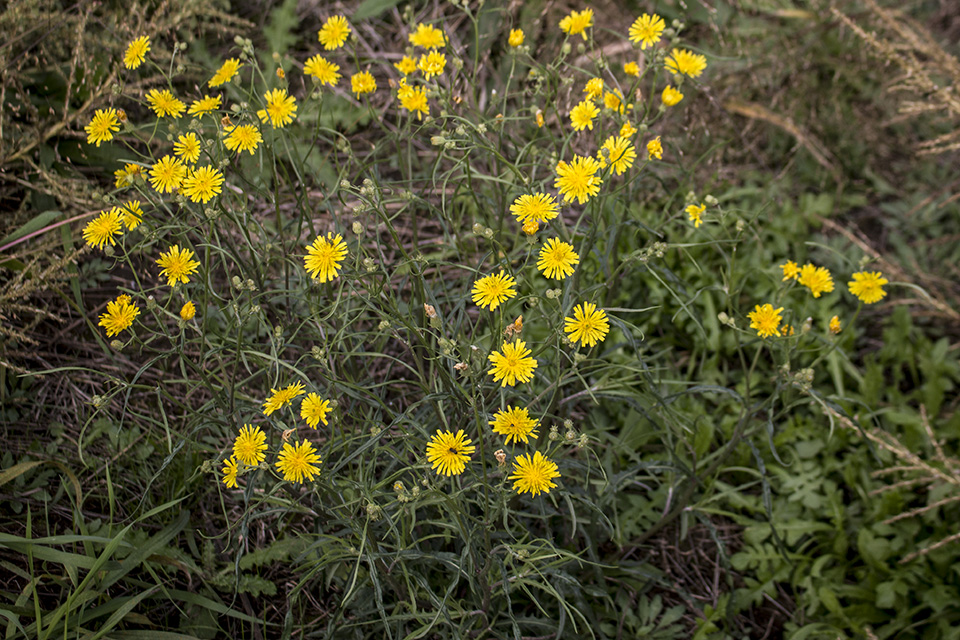
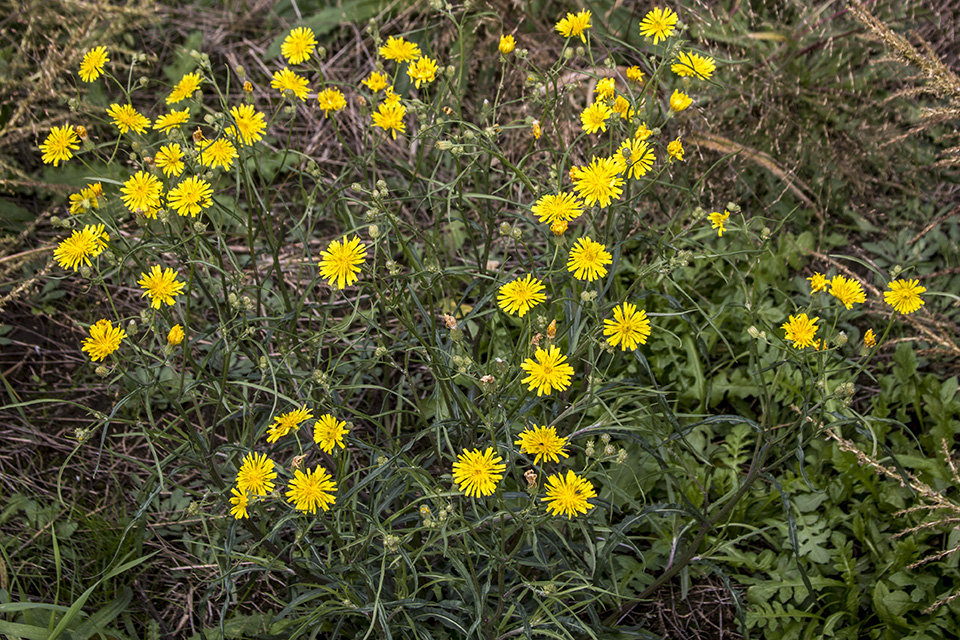
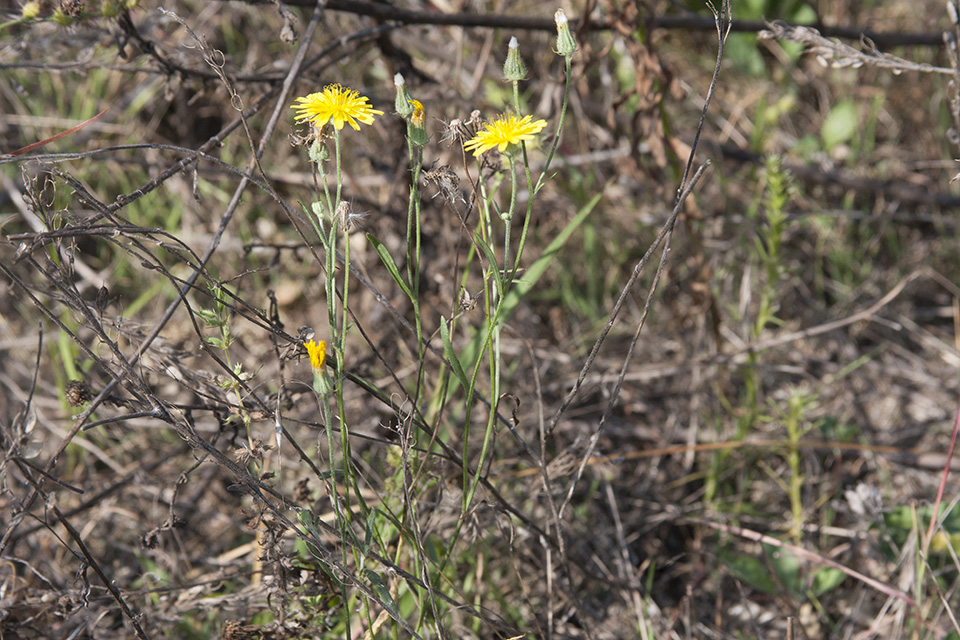
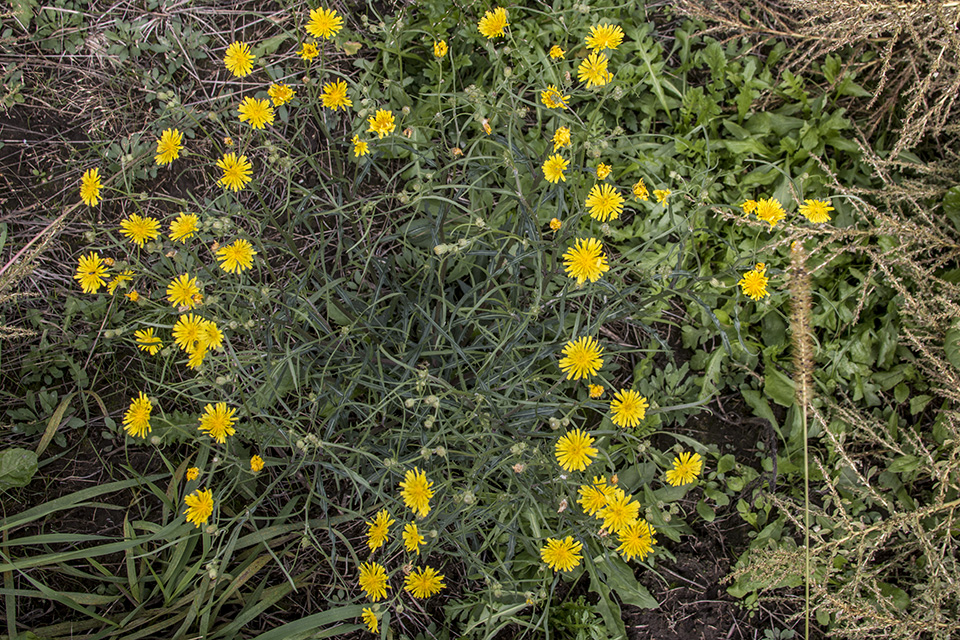
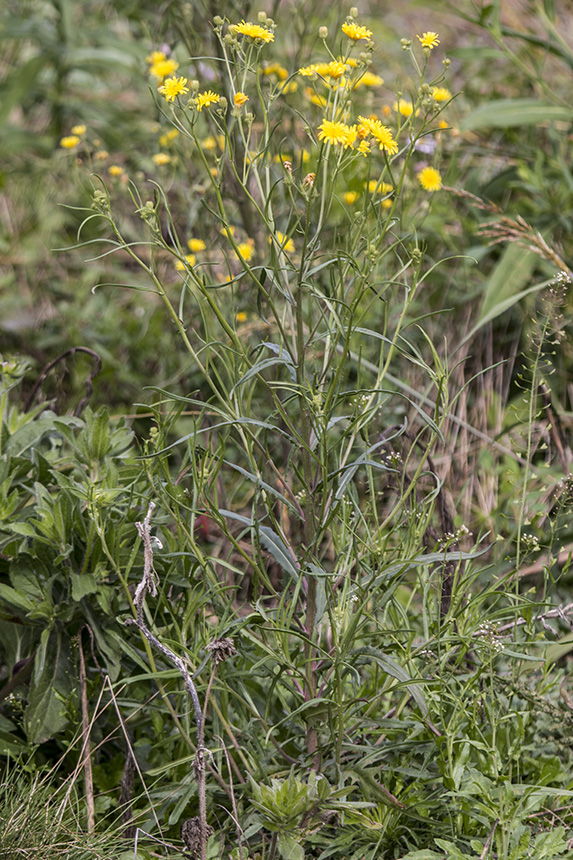
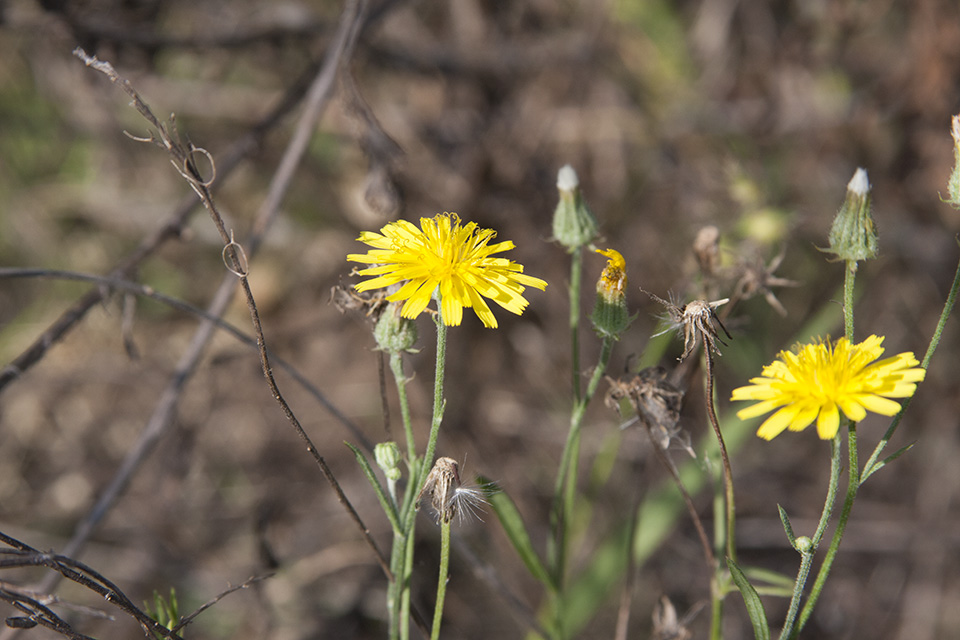
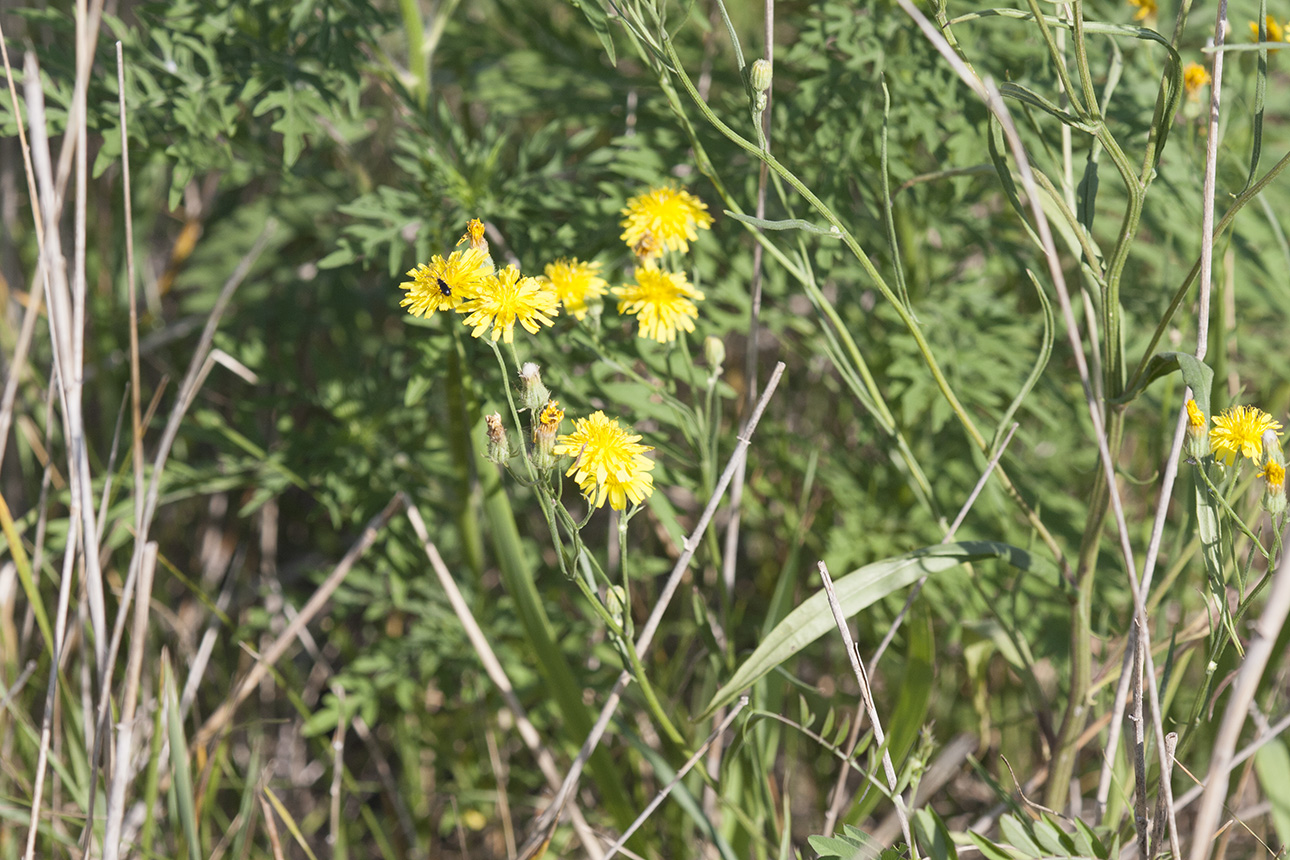
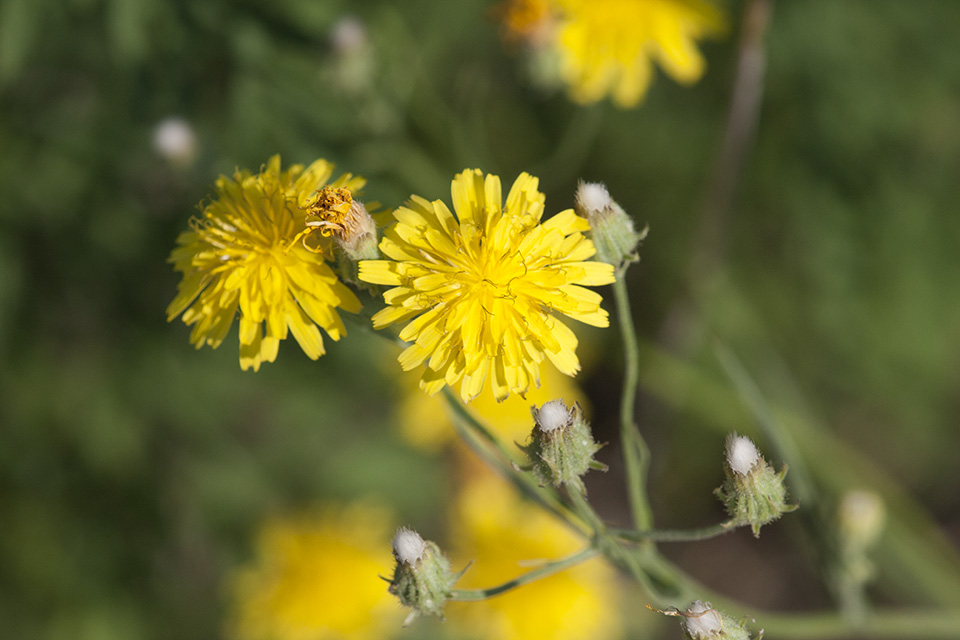
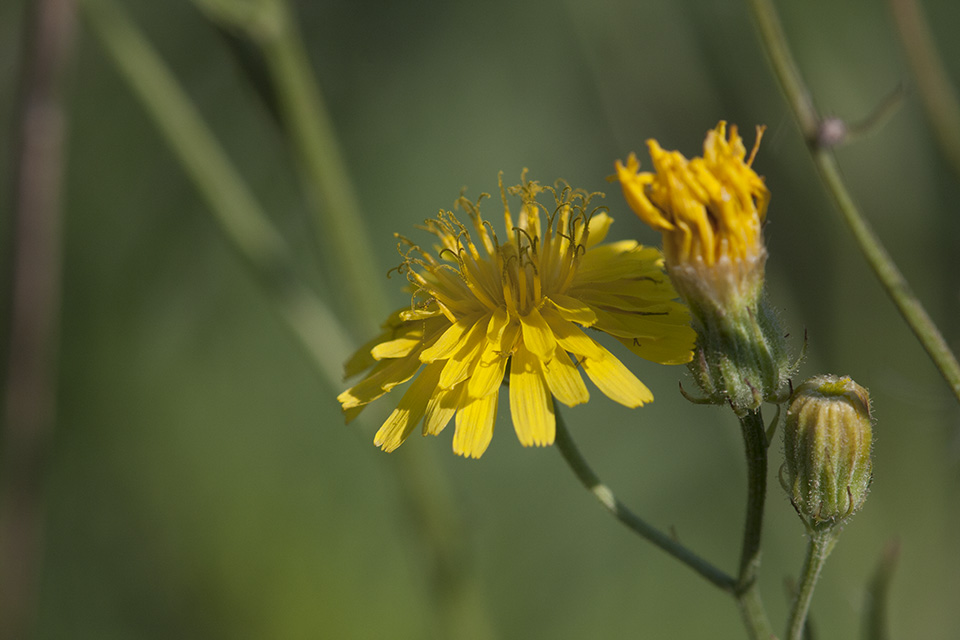
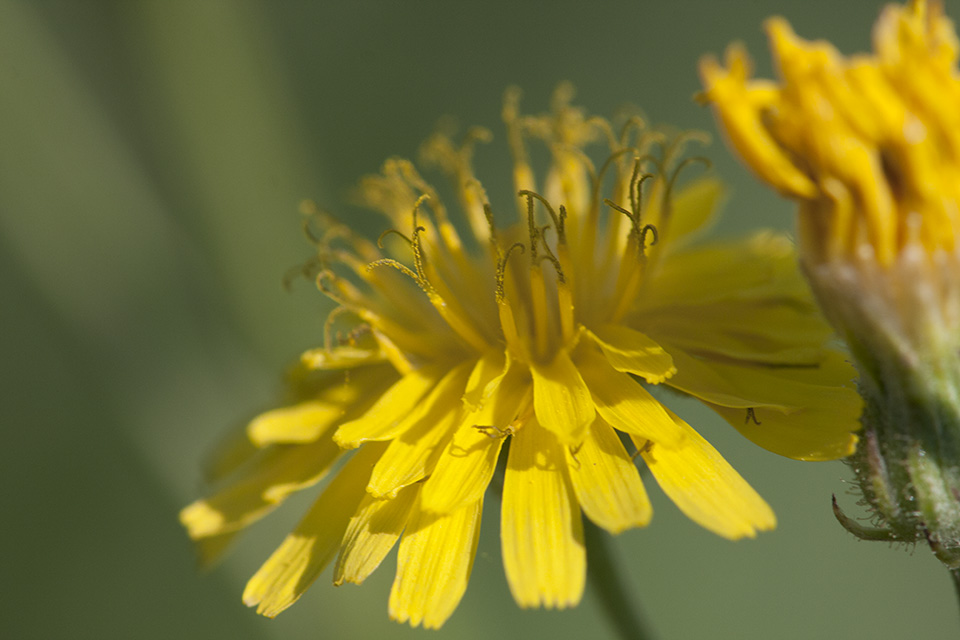
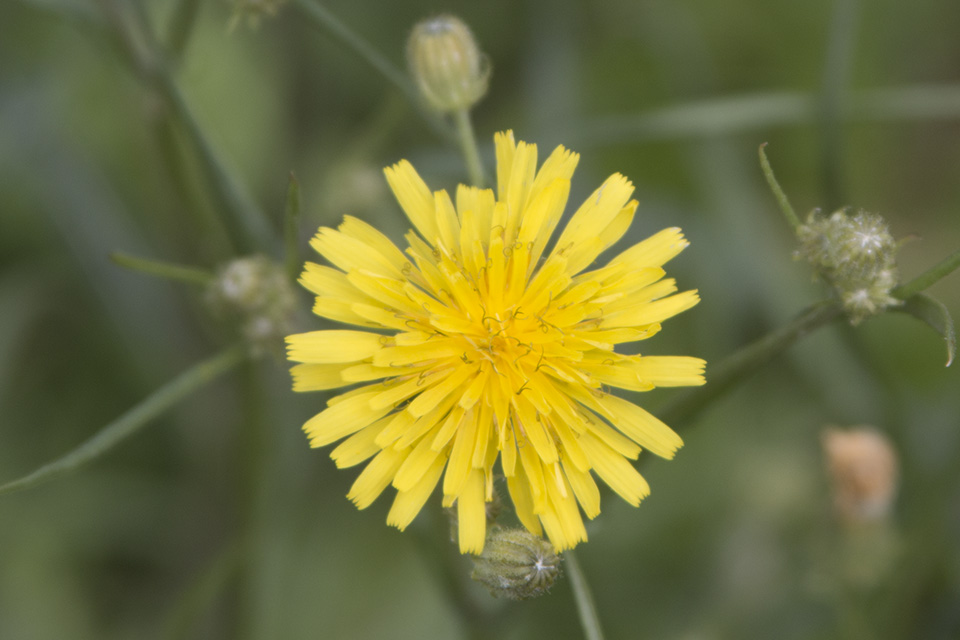
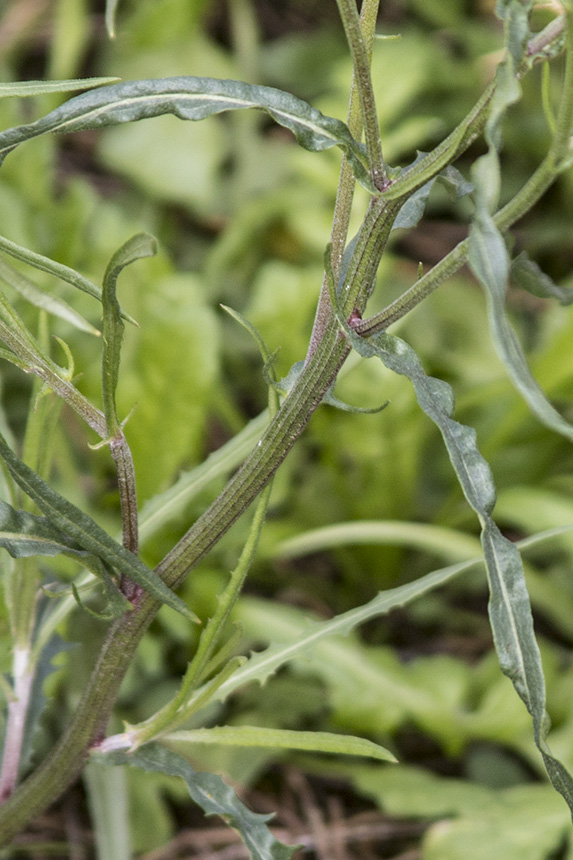
Narrow-leaved hawk’s-beard is a 8″ to 40″ tall, erect, annual forb that rises on a single stem from a small, shallow taproot. The stems are erect or ascending, slender, finely ridged, hollow, and few- to many-branched. They are sparsely to densely, but inconspicuously, covered with short, matted or tangled, soft, woolly hairs, at least near the base and just below the flower heads. They are sometimes rough to the touch due to an additional covering of firm, stiff hairs. There are often short, gland-tipped hairs near the branch tips. When broken the stem and leaves exude a milky juice. Basal leaves are lance-shaped or inversely lance-shaped, 2″ to 6″ long, and ⅜″ to 1½″ wide. They are usually on short leaf stalks though occasionally they are stalkless. They are often irregularly lobed. When they, are the indentations (sinuses) are cut at least half way but not all the way to the midrib (pinnatifid), and the lobes are sharply pointed with the points directed downwards. The upper surface is hairless. The lower surface is hairless or sparsely and inconspicuously covered with minute, curled, cobwebby hairs. Lower stem leaves are similar, alternate, and stalkless, becoming smaller as they ascend the stem. The margins may be shallowly lobed, toothed, or neither. Upper stem leaves are nearly linear. The inflorescence is a branched cluster (panicle) of several flower heads at the end of each stem and branch. There are usually 5 to 20 flower heads on the plant, though there may be 100 or more. The flower heads are on slender, hairy stalks. The flower heads are about 1″ wide. At the base of the flower head there are 2 series of bracts. The inner series is a bell-shaped whorl (involucre) of 12 to 15 lance-shaped bracts. They are hairy on the outer surface and also minutely hairy on the inner surface, though this may not be visible without a hand lens. The outer series of about 12 bracts (calyculi) are awl-shaped, much shorter, and spreading to loosely ascending. The corolla consists of 30 to 70 yellow, ⅜″ to ⅝″ long, ray florets that do not have any red on them. The fruit is a dark reddish or purplish, spindle-shaped, 10-ribbed achene with a tuft of white, fine, soft hairs (pappus) attached. The ends are not beaked. The inner achenes are ⅛″ to 3 ⁄16″ long and have smooth ribs. The outer achenes are 3 ⁄16″ to ¼″ long and have minutely roughened ribs. |
||
Height |
||
8″ to 40″ |
||
Flower Color |
||
Yellow |
||
Similar Species |
||
|
||
Habitat |
||
Dry. Fields, forest clearings, wooded slopes, dry stream beds, disturbed sites. Sandy soil. |
||
Ecology |
||
Flowering |
||
June to October |
||
Pests and Diseases |
||
|
||
Use |
||
|
||
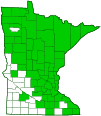
Distribution |
||||
|
Sources |
|||
| 5/16/2023 | ||||
Nativity |
||||
Native to Asia and Europe. Introduced and naturalized in North America. |
||||
Occurrence |
||||
Common |
||||
Taxonomy |
|||
| Kingdom | Plantae (Plants) | ||
| Subkingdom | Pteridobiotina | ||
| Phylum | Tracheophyta (Vascular Plants) | ||
| Class | Magnoliopsida (Dicots) | ||
Order |
Asterales (Sunflowers, Bellflowers, Fanflowers, and Allies) | ||
Family |
Asteraceae (Sunflowers, Daisies, Asters, and Allies) | ||
| Subfamily | Cichorioideae (Chicories, Dandelions, and Allies) | ||
| Tribe | Cichorieae (Lettuce, Chicory, Dandelion, and Salsify) | ||
| Subtribe | Crepidinae (Dandelions, Hawksbeards, and Rattlesnake Roots) | ||
| Genus | Crepis (hawksbeards) | ||
Subordinate Taxa |
|||
|
|||
Synonyms |
|||
Common Names |
|||
narrow-leaf hawk’s-beard narrow-leaf hawksbeard narrow-leaved hawk’s-beard narrow-leaved hawksbeard narrowleaf hawksbeard narrowleaved hawk’s beard narrowleaved hawksbeard |
|||
Glossary
Achene
A dry, one-chambered, single-seeded seed capsule, formed from a single carpel, with the seed attached to the membranous outer layer (wall) only by the seed stalk; the wall, formed entirely from the wall of the superior ovary, does not split open at maturity, but relies on decay or predation to release the contents.
Beak
A comparatively short and stout, narrow or prolonged tip on a thickened organ, as on some fruits and seeds.
Glandular hairs
Hairs spread over aerial vegetation that secrete essential oils. The oils act to protect against herbivores and pathogens or, when on a flower part, attract pollinators. The hairs have a sticky or oily feel.
Involucre
A whorl of bracts beneath or surrounding a flower, flower head, or flower cluster.
Panicle
A pyramidal inflorescence with a main stem and branches. Flowers on the lower, longer branches mature earlier than those on the shorter, upper ones.
Pappus
The modified calyx composed of awns, scales, bristles, or feather-like hairs in plants of the Aster family such as thistles and dandelions.
Pinnatifid
Deeply cut, more than half way to the midrib but not to the midrib, into lobes that are spaced out along the midrib; the lobes do not form separate leaflets.
Sinus
A space, indentation, or cleft, usually on a leaf, between two lobes or teeth.
Visitor Photos |
|||||
Share your photo of this plant. |
|||||
| This button not working for you? Simply email us at info@MinnesotaSeasons.com. Attach one or more photos and, if you like, a caption. |
|||||
|
|||||
MinnesotaSeasons.com Photos |
|||||
Plant |
|||||
 |
 |
||||
 |
 |
||||
 |
 |
||||
Inflorescence |
|||||
 |
 |
||||
Flower Head |
|||||
 |
 |
||||
 |
 |
||||
Upper Stem Leaves |
|||||
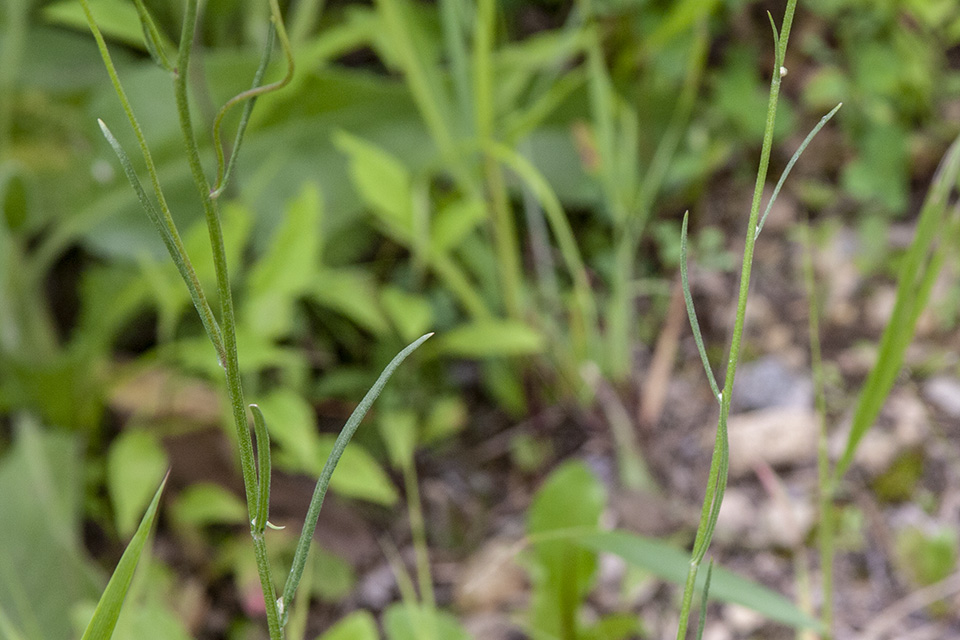 |
|||||
Middle Stem Leaves |
|||||
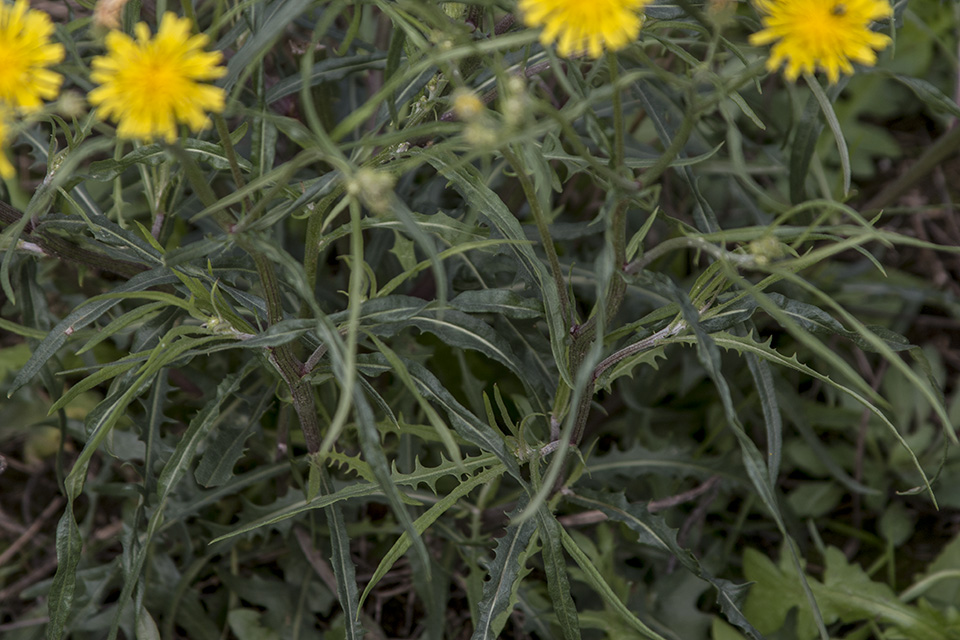 |
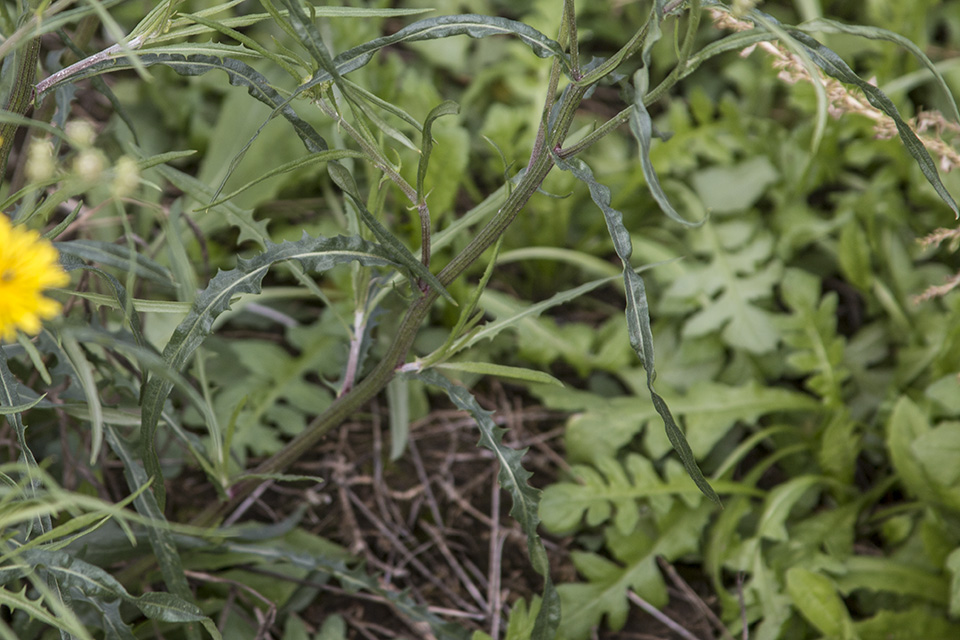 |
||||
Stem |
|||||
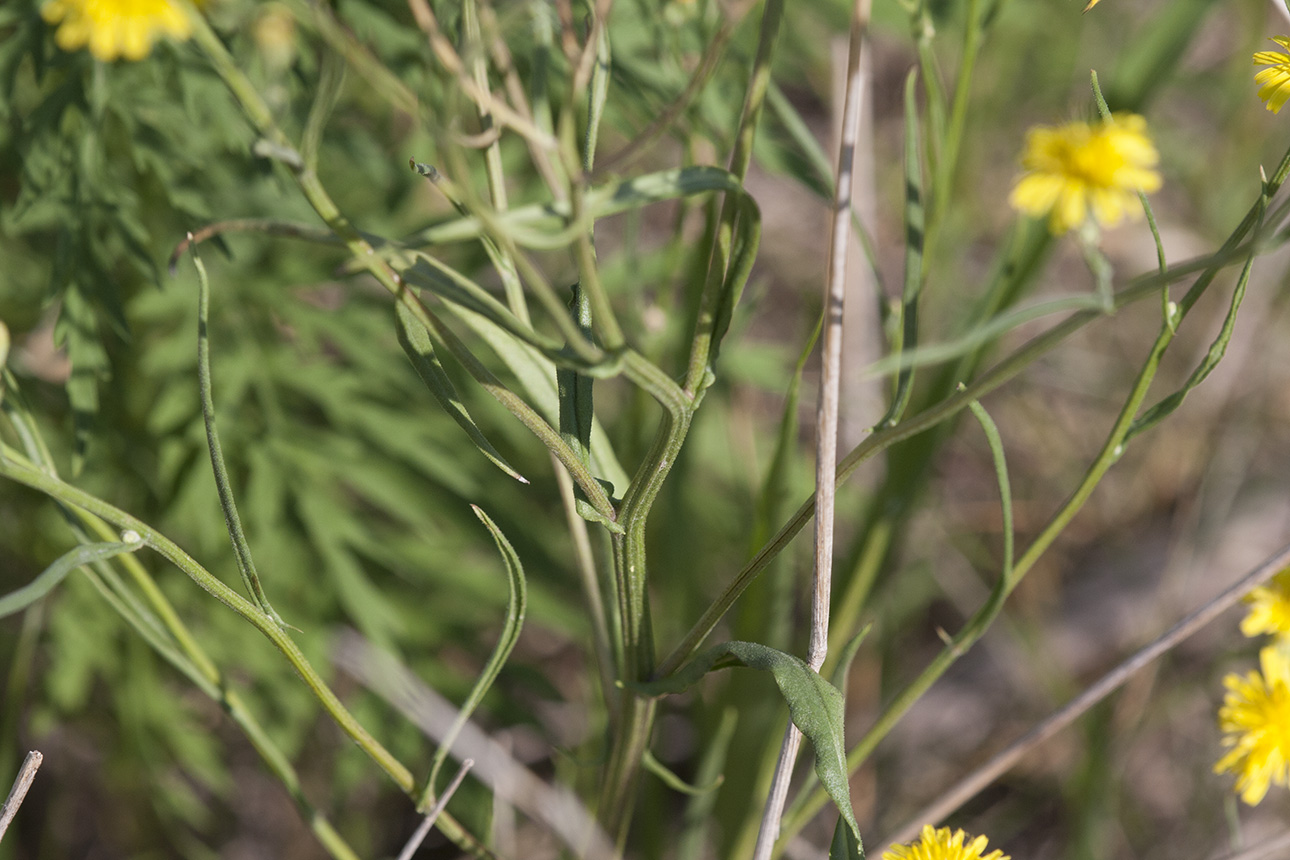 |
 |
||||
Fruiting Head |
|||||
 |
|||||

Slideshows |
||
Visitor Videos |
|||
Share your video of this plant. |
|||
| This button not working for you? Simply email us at info@MinnesotaSeasons.com. Attach a video, a YouTube link, or a cloud storage link. |
|||
Other Videos |
|||

Visitor Sightings |
|||||
Report a sighting of this plant. |
|||||
| This button not working for you? Simply email us at info@MinnesotaSeasons.com. Be sure to include a location. |
|||||
|
|||||
MinnesotaSeasons.com Sightings |
|||||
|
Created: Last Updated: © MinnesotaSeasons.com. All rights reserved. |