



silky dogwood
(Cornus obliqua)
Conservation • Wetland • Description • Habitat • Ecology • Use • Distribution • Taxonomy
Conservation Status |
|
|||||||
| IUCN Red List | not listed |
|||||||
| NatureServe | N5 - Secure SNR - Unranked |
|||||||
| Minnesota | not listed |
|||||||
Wetland Indicator Status |
||||||||
| Midwest | FACW - Facultative wetland |
|||||||
| Northcentral & Northeast | FACW - Facultative wetland |
|||||||
Description |
||
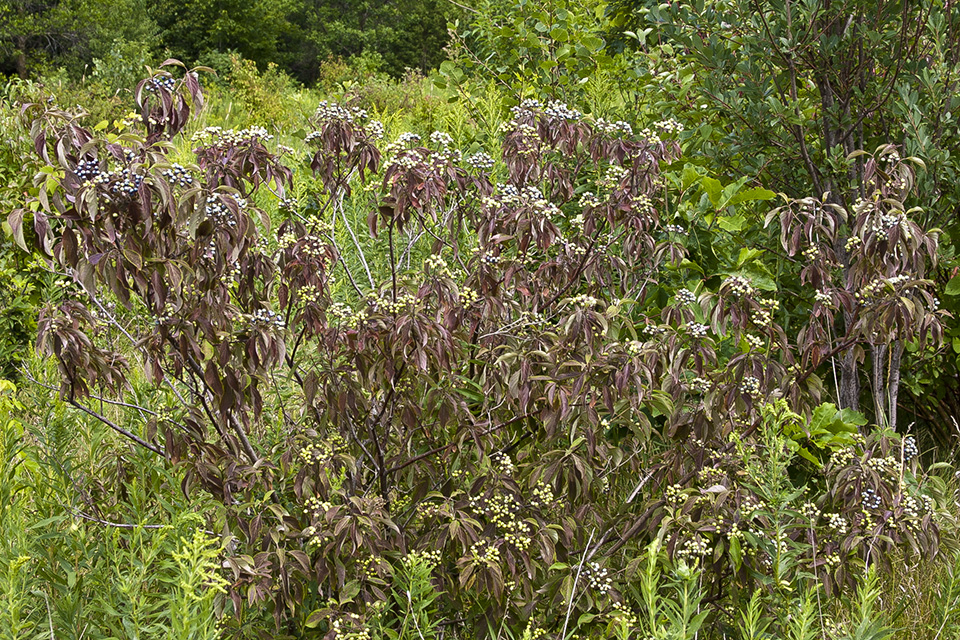
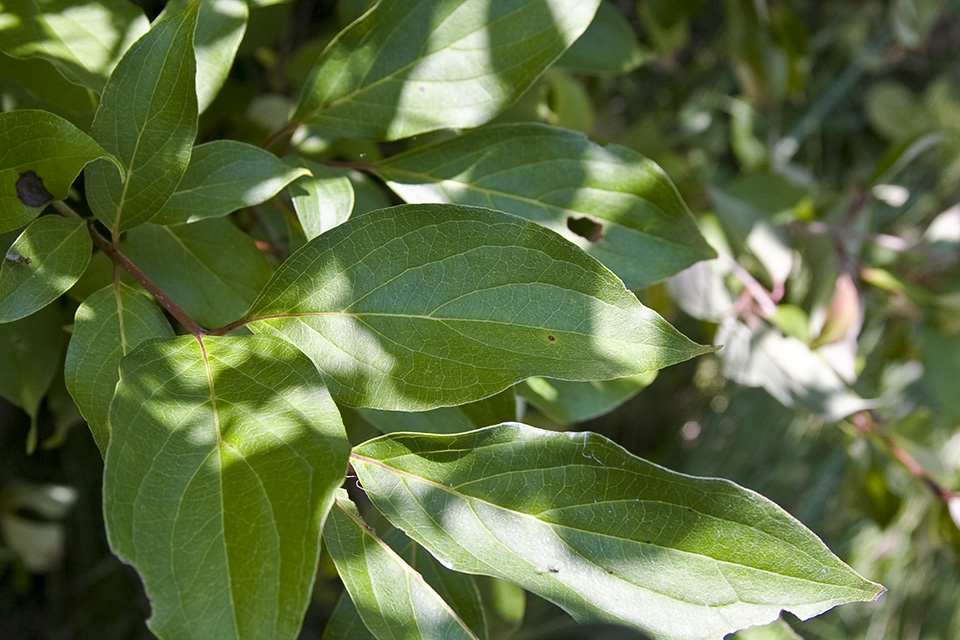
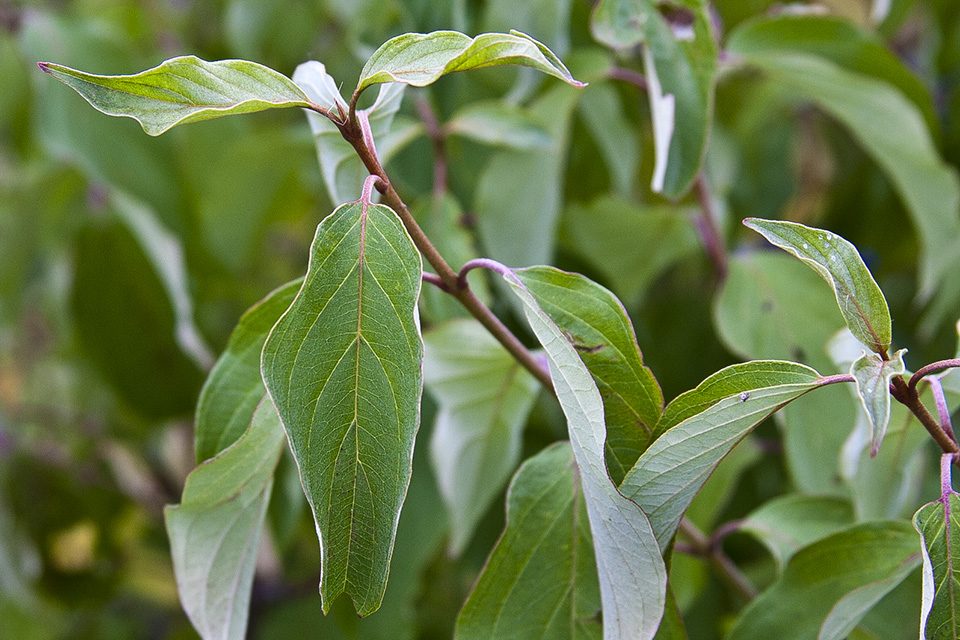
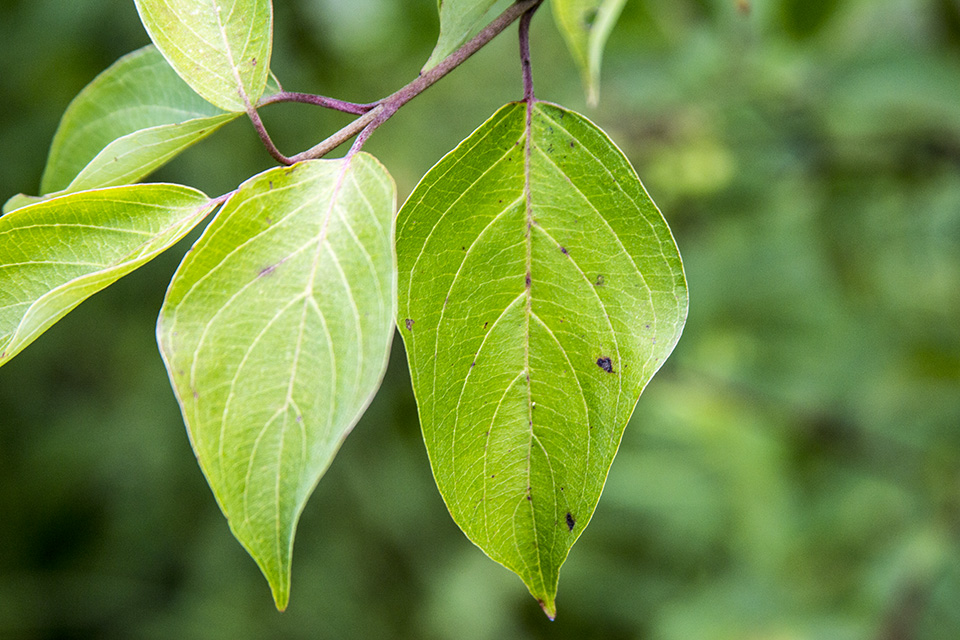
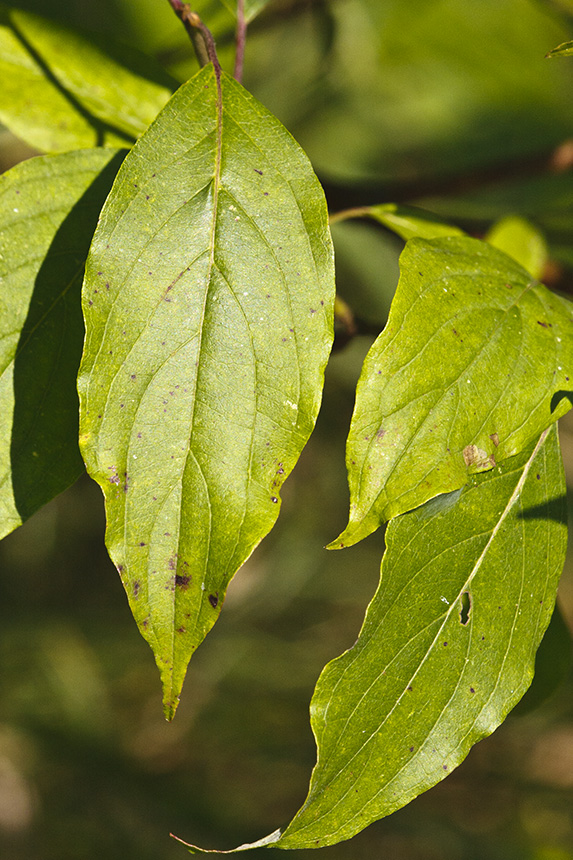
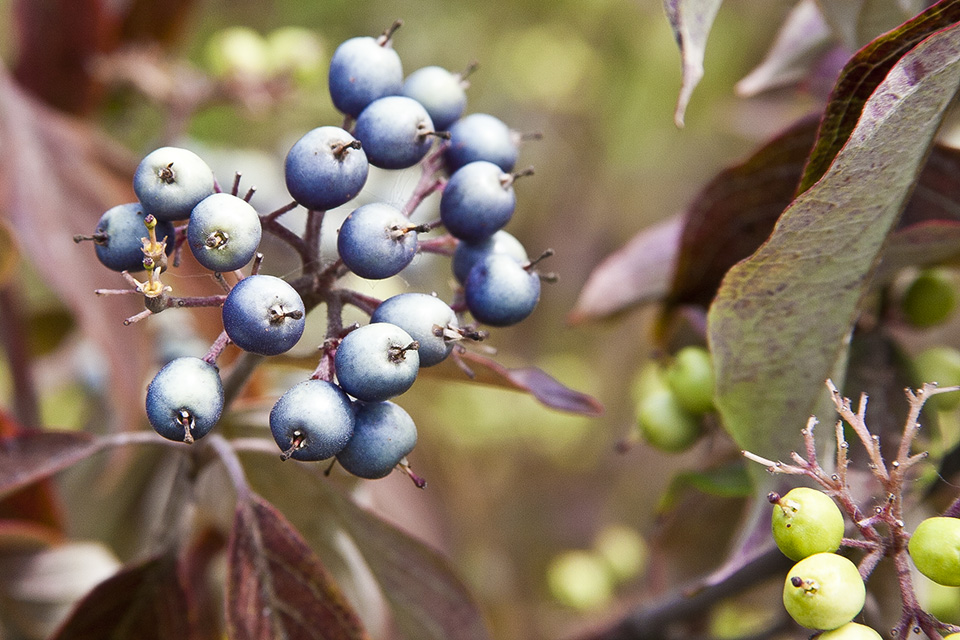
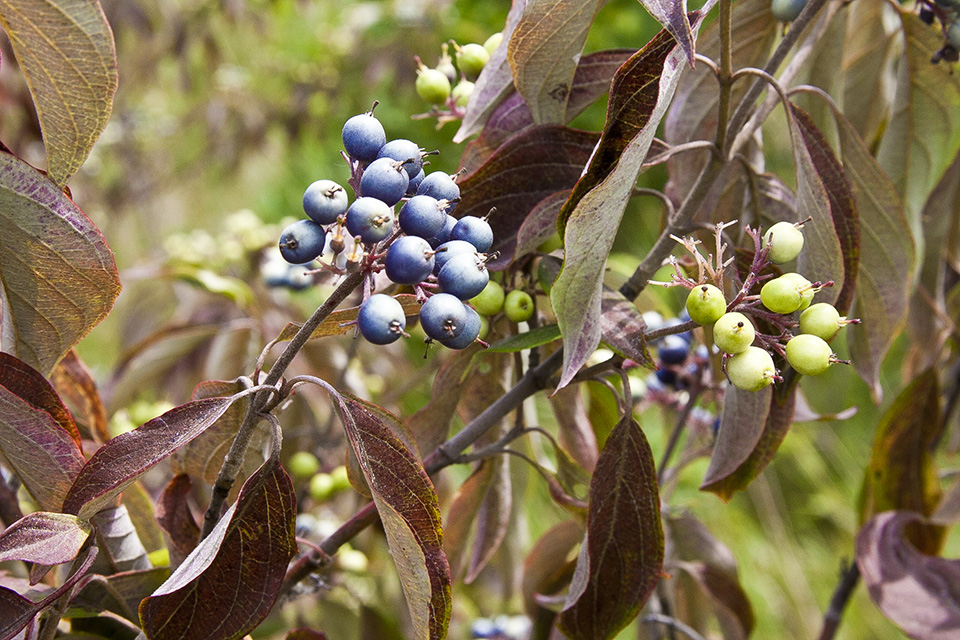
Silky dogwood is a 6′ to 13′ tall, erect, perennial shrub that rises from a shallow, spreading, woody root system on multiple stems. It usually occurs singly but sometimes forms colonies. The stems are erect to arching and are often forked near the ground. First-year twigs are purple or reddish purple, densely covered with silky gray hairs, and have white pith. As they age they become hairless. Second-year branches have brown pith. Third-year branches are gray. The bark on young stems is reddish-purple, on mature stems is gray and smooth, and on older stems is brown, rough, and shallowly fissured. The leaves are opposite, deciduous, elliptic to narrowly egg-shaped, 1 9 ⁄16″ to 3½″ long, and ¾″ to 1 9 ⁄16″ wide. They are on 3 ⁄16″ to ⅝″ long leaf stalks. They are relatively evenly spaced along the branches, not clustered near the tips. They are tapered at the base and tapered to a point at the tip with concave sides along the tip. On each side of the midrib there are usually 4 or 5, conspicuous veins that curve upward toward the tip of the leaf. The upper surface is dark green and sparsely to moderately covered with stiff, appressed hairs. The lower surface is paler green but otherwise similar. The margins are untoothed and may be slightly wavy. The inflorescence is a dense, flat-topped to shallowly convex, branched, 1″ to 2⅜″ in diameter cluster (cyme) of 35 to 175 or more flowers at the ends of branches. The flowers have 4 minute sepals, 4 narrowly lance-shaped, white to cream-colored petals, 4 stamens with long filaments, and a well-developed style. The fruits are berry-like, ¼″ to ⅜″ in diameter, and borne on a reddish-brown stalk. It is green initially, turning to blue with pale or white blotches, ultimately becoming dark blue to bluish black. It matures in late July to mid-September. |
||
Height |
||
6′ to 13′ |
||
Flower Color |
||
White |
||
Similar Species |
||
Common buckthorn (Rhamnus cathartica) leaves appear similar to those of the dogwoods, with 3 or 4 pairs of arching lateral veins, but the margins are toothed. Gray dogwood (Cornus racemosa) leaf blades have 3 or 4 pairs of lateral veins. The inflorescence is round-topped to pyramid-shaped. It has white fruit. Pagoda dogwood (Cornus alternifolia) is ultimately a tree and usually has a single stem It has alternate leaves clustered at the ends of branches. The leaf blades have 5 or 6 pairs of lateral veins. Red osier dogwood (Cornus sericea ssp. sericea) stems and twigs become red in the winter. The leaf blades have usually 7 or 8, sometimes 6 or 9, pairs of lateral veins. It has white fruit. Round-leaved dogwood (Cornus rugosa) first-year branches are yellow to green with dark purple flecks or streaks. The leaves are almost round. The fruit is pale blue. |
||
Habitat |
||
Moist. Woods, riverbanks, marshes, lake shores. Full or partial sun. |
||
Ecology |
||
Flowering |
||
Mid-June to late mid-July |
||
Pests and Diseases |
||
|
||
Use |
||
|
||
Distribution |
||||
|
Sources |
|||
| 2/24/2023 | ||||
Nativity |
||||
Native |
||||
Occurrence |
||||
|
||||
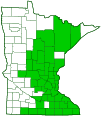
Taxonomy |
|||
| Kingdom | Plantae (Plants) | ||
| Subkingdom | Pteridobiotina | ||
| Phylum | Tracheophyta (Vascular Plants) | ||
| Class | Magnoliopsida (Dicots) | ||
Order |
Cornales (dogwoods, hydrangeas, and allies) | ||
Family |
Cornaceae (dogwood) | ||
| Subfamily | Cornoideae | ||
Genus |
Cornus (dogwoods) | ||
| Subgenus | Kraniopsis | ||
| Species | Cornus amomum (silky dogwood) | ||
There has long been disagreement about the correct classification of the silky dogwood that occurs in Minnesota. Gleason, in Manual of Vascular Plants (Gleason & Cronquist, 1992) shows two varieties, Cornus amomum var. schuetzeana and Cornus amomum var. amomum, both occurring in Minnesota. Cornus obliqua is treated as a synonym of the former. The updated Steyermark’s Flora of Missouri (Yatskievych, 2006) has two subspecies, Cornus amomum ssp. obliqua and Cornus amomum ssp. amomum, “…which many botanists have treated as separate species.” In this arrangement, only ssp. obliqua occurs in Minnesota. Today, the controversy continues. GRIN and ITIS use the name Cornus amomum ssp. obliqua. GBIF and iNaturalist use the name Cornus amomum. BONAP, USDA PLANTS, Flora of North America, NatureServe, NCBI, Plants of the World Online, and World Flora Online all use the name Cornus obliqua. |
|||
Subordinate Taxa |
|||
|
|||
Synonyms |
|||
Cornus obliqua Cornus amomum ssp. obliqua Cornus amomum var. schuetzeana Cornus purpusii |
|||
Common Names |
|||
blue-fruited dogwood kinnikinnik silky dogwood |
|||
Glossary
Cyme
A branched, flat-topped or convex flower cluster in which the terminal flower opens first and the outermost flowers open last.
Pith
The spongy cells in the center of the stem.
Sepal
An outer floral leaf, usually green but sometimes colored, at the base of a flower.
Visitor Photos |
|||||
Share your photo of this plant. |
|||||
| This button not working for you? Simply email us at info@MinnesotaSeasons.com. Attach one or more photos and, if you like, a caption. |
|||||
|
|||||
MinnesotaSeasons.com Photos |
|||||
Plant |
|||||
 |
|||||
Leaves |
|||||
 |
 |
||||
 |
 |
||||
Infructescence |
|||||
 |
 |
||||

Slideshows |
||
Visitor Videos |
|||
Share your video of this plant. |
|||
| This button not working for you? Simply email us at info@MinnesotaSeasons.com. Attach a video, a YouTube link, or a cloud storage link. |
|||
Other Videos |
|||
| Margined leatherwing soldier beetles frolic merrily on silky dogwood Robert Klips |
|||
About
Uploaded on Jun 7, 2011 Soldier beetles tentatively identified as margined leatherwing, Chauliognathus marginatus (family Cantharidae), feed and mate upon a flower cluster of silky dogwood, Cornus amomum (Cornaceae) in Miami County, Ohio, USA on June 5, 2011. |
|||

Visitor Sightings |
|||||
Report a sighting of this plant. |
|||||
| This button not working for you? Simply email us at info@MinnesotaSeasons.com. Be sure to include a location. |
|||||
|
|||||
MinnesotaSeasons.com Sightings |
|||||
|
Created: Last Updated: © MinnesotaSeasons.com. All rights reserved. |