Eastern Comma - Species Profile
Conservation • Description • Habitat • Ecology • Distribution • Taxonomy

Conservation Status
IUCN Red List
not listed
NatureServe
N5 - Secure
S5 - Secure
Minnesota
not listed
Description
Eastern comma is a medium-sized angle-wing butterfly. It has a wingspan of 1¾″ to 2½″. The first generation each year (winter form) is noticeably darker than the second generation (summer form).
The wings are noticeably angled rather than rounded. The outer margins are jagged and fringed in white. The tip (apex) of the forewing is curved backward (hooked). The hindwing is tailed. The tail of the winter form is long, that of the summer form is short. The trailing edge of the hindwing is noticeably ragged.
The upper side of the forewing is reddish-orange with a broad dark margin band. The marginal band of the winter form is orangish-brown, while that of the summer form may be orangish-brown or black. There is a large black spot on the cell-end bar and 5 smaller black spots in the subapical area. The largest of these 5 spots, the one closest to the trailing edge of the wing, often has a pale black spot immediately above it.
The upper side of the hindwing of the winter form is mostly orangish-brown, while that of the summer form is mostly black. There is a submarginal row of reddish-orange spots, and three medial and one postmedial black or orangish-brown spots. One of the medial spots is on the leading edge if the wing and is usually not visible on perched specimens. The postmedial spot is not visible in the black area of the summer form.
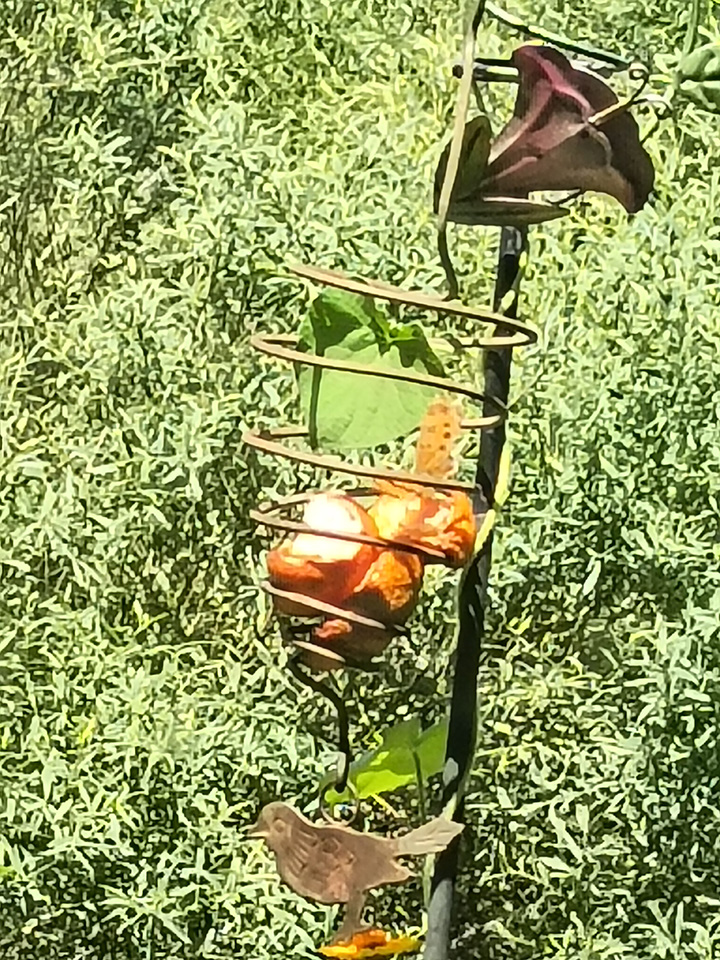
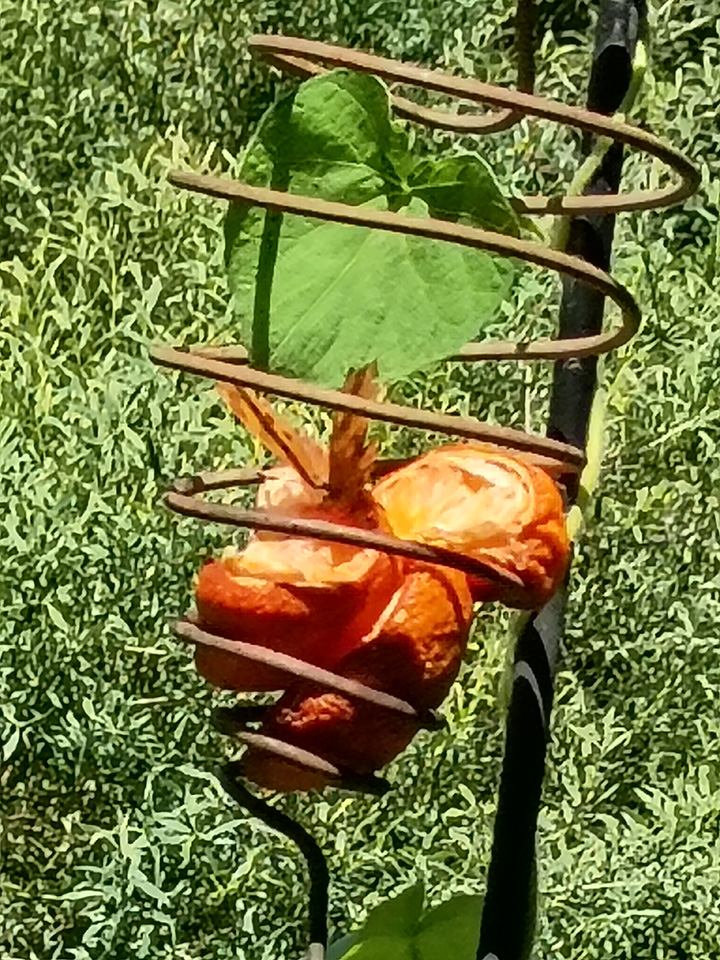
On the male, the underside of both wings is irregularly banded with highly contrasted areas of light and dark grayish-brown and yellowish-brown. On females the banding is less prominent and the wings are more evenly colored. In the center of the hindwing there is a curved, silvery, comma-shaped line that is barbed at both ends.
The eyes are brown.
The caterpillar is variable in color and up to 1½″ long. Though fierce looking, they are harmless to the touch. The head has 2 short, dark, spiny projections (scoli) and numerous shorter white spines. The head and thorax are often black, sometimes the same color as the abdomen. The abdomen may be greenish-white, greenish-brown, or black. On pale individuals there is a broad, black, subdorsal stripe and black horizontal and oblique stripes on each abdominal segment. There are often red or orange spots above the spiracles. On the thorax and each abdominal segment there is a long, thick, stiff, branched scolus in the middorsal, subdorsal, supraspiracular, spiracular, and subspiracular regions. The scoli are usually yellow or greenish-white with black tips. The base of the leg-like structure (proleg) on each side of the middle abdominal segments is black or green.
Mature caterpillars are found in June (summer form) and August to September (winter form).
Size
Wingspan: 1¾″ to 2½″
Similar Species
Gray comma (Polygonia progne) is heavily striated on the underside of the hindwing and the inner half of the forewing. The comma on the underside of the hindwing is thin and tapered, not barbed, at both ends.
Question mark (Polygonia interrogationis) is usually larger. The forewing apex is more strongly hooked. The trailing edge of the hindwing is more or less straight. The hindwing tail is shorter. The marginal fringe on the summer form is violet, especially on fresh individuals. There is an extra spot on the upper side of the forewing. The curved line on the underside of the hindwing is broken into a line and a dot, resembling a Question Mark.
Habitat
Open deciduous woodlands and woodland edges, swamps, marshes, streams; usually near water.
Ecology
Season
Two broods: early April to mid-May and late June to mid-October.
Behavior
The caterpillar feeds at night on the underside of a leaf of a host plant. It creates a protective daytime shelter by folding under the sides of the leaf with silk.
Life Cycle
The females lay green eggs singly or stacked in chains or 8 or more on the underside of leaves or the stem of host plants. Winter form females lay eggs in early spring to the end of May. The larvae molt four times in 21 to 23 days before pupating. Winter form adults do not migrate. They overwinter in cold areas by hibernating in a bark crevice, the siding of a house, or other sheltered place. On warm winter days they may be seen flying.
Larva Food/Hosts
American stinging nettle, small-spike false nettle, Canadian woodnettle, common hop, and Japanese hop; also elm.
Adult Food
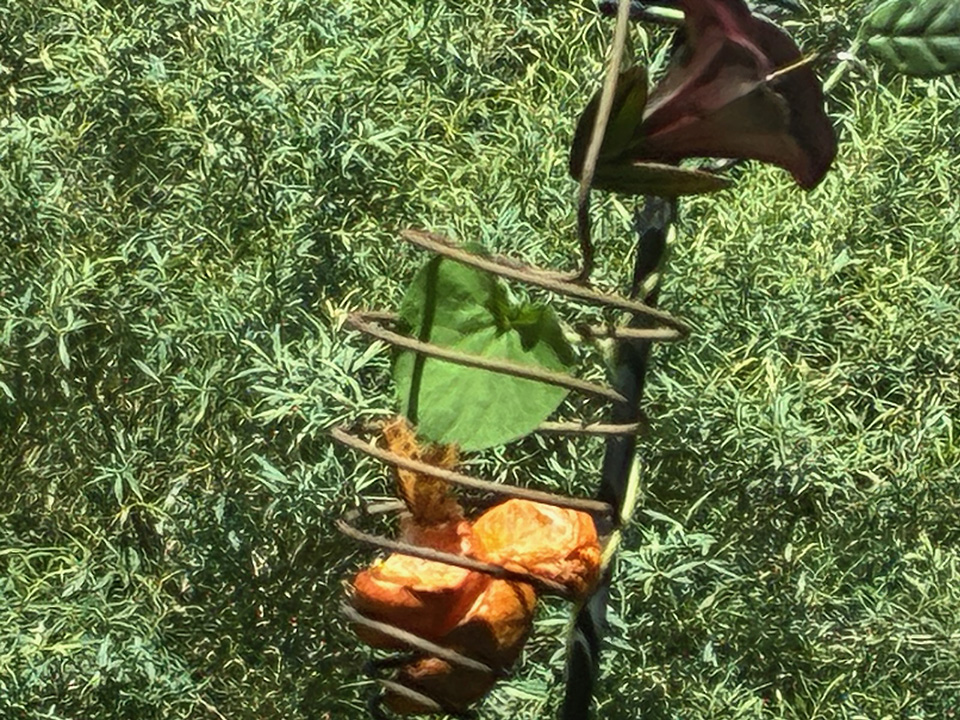
Tree sap and rotting fruit.
Distribution

Sources
7, 21, 24, 27, 30, 75, 82, 83.
Biodiversity occurrence data published by: Minnesota Biodiversity Atlas (accessed through the Minnesota Biodiversity Atlas Portal, bellatlas.umn.edu. Accessed 7/10/2026).
Polygonia comma (Harris, 1852) in Bánki, O., Roskov, Y., Döring, M., Ower, G., Hernández Robles, D. R., Plata Corredor, C. A., Stjernegaard Jeppesen, T., Örn, A., Pape, T., Hobern, D., Garnett, S., Little, H., DeWalt, R. E., Miller, J., Orrell, T., Aalbu, R., Abbott, J., Abreu, C., Acero P, A., et al. (2026). Catalogue of Life (2026-06-19 XR). Catalogue of Life Foundation, Amsterdam, Netherlands. https://doi.org/10.48580/dgy8b
Quinn, Edward. M., and Ron Danielson. April 27, 2009. A Survey of Lepidoptera in Three Priority Areas of the Minnesota State Parks System. https://files.dnr.state.mn.us/eco/nongame/projects/consgrant_reports/2009
/2009_quinn_danielson.pdf.
Occurrence
Common
Taxonomy
Order
Lepidoptera (Butterflies and Moths)
Superfamily
Papilionoidea (Butterflies)
Family
Nymphalidae (Brush-footed Butterflies)
Subfamily
Nymphalinae (Checkerspots, Anglewings, Peacocks, and Allies)
Tribe
Nymphalini (Ladies, Anglewings, and Allies)
Genus
Polygonia (Commas)
Subordinate Taxa
Synonyms
Grapta dryas
Polygonia dryas
Polygonia harrisoni
Vanessa comma
Common Names
Eastern Comma