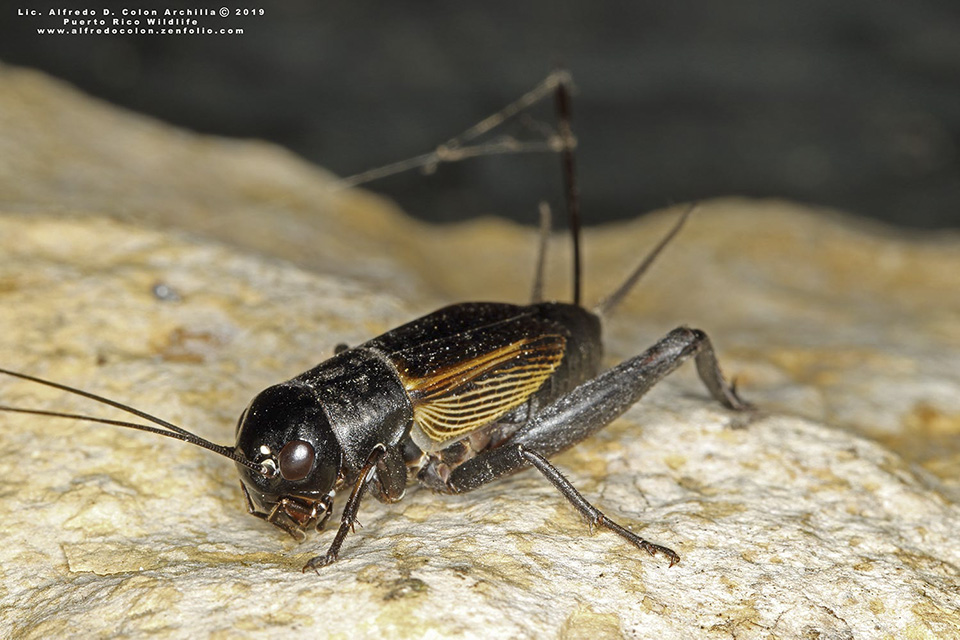
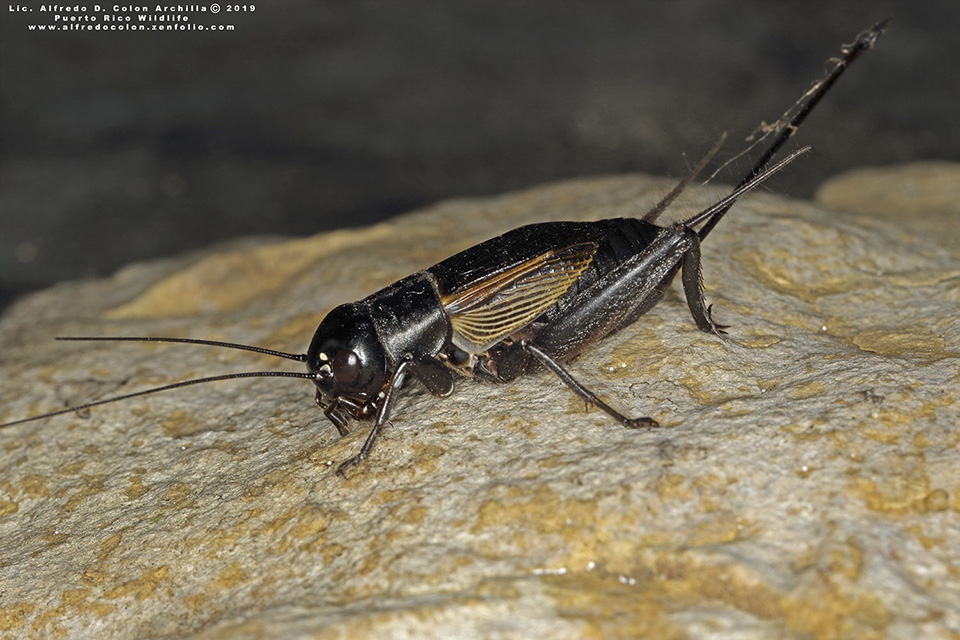
Fall field cricket
(Gryllus pennsylvanicus)
Information
Conservation • Description • Habitat • Ecology • Distribution • Taxonomy
Conservation Status
IUCN Red List
not listed
NatureServe
NNR - Unranked
Minnesota
not listed
Description
Size
Song
SINA. 2023. Singing Insects of North America [https://sina.orthsoc.org/index.htm].
Similar Species
Spring field cricket (Gryllus veletis) is identical in appearance and the male has the same calling song. The two species can be distinguished in the field only by the date of observation. Spring field cricket overwinters as mid-sized juveniles and matures in mid-May. The population peaks in mid-June. The chirping becomes less frequent in late July, and disappears altogether in early to mid-August. There is very little overlap between the two species.
Habitat
Undergrowth
Ecology
Season
August to November
Behavior
Individuals chirp mostly at night. When the nights are cold they chirp only during the daytime.
Life Cycle
Overwinters as eggs and matures in early to mid-August. The population peaks in mid-September. They are killed by heavy frosts in the fall and are finished off by the first hard freeze in November.
Food
Plant material including seeds and seedlings, small fruits, dead and dying insects.
Distribution
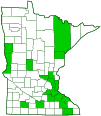
Occurrence
Common
Taxonomy
Order
Orthoptera (Grasshoppers, Crickets, and Katydids)
Suborder
Ensifera (katydids, crickets, and allies)
Infraorder
Gryllidea (Crickets)
Superfamily
Grylloidea (True Crickets and Allies)
Family
Gryllidae (True Crickets)
Subfamily
Gryllinae (Field Crickets)
Tribe
Gryllini
Subtribe
Gryllina
Genus
Gryllus
Subgenus
Gryllus
Subordinate Taxa
Synonyms
Acheta nigra
Acheta pennsylvanicus
Gryllus abbreviatus
Gryllus angustus
Gryllus arenaceus
Gryllus assimilis pennsylvanicus
Gryllus luctuosus
Common Names
fall field cricket
northern spring field cricket
Photos
Visitor Photos
Share your photo of this insect.
This button not working for you?
Simply email us at info@MinnesotaSeasons.com.
Attach one or more photos and, if you like, a caption.
Minnesota Seasons Photos
Slideshows
Slideshows
Field Cricket
Andree Reno Sanborn
Videos
Visitor Videos
Share your video of this insect.
This button not working for you?
Simply email us at info@MinnesotaSeasons.com.
Attach a video, a YouTube link, or a cloud storage link.
Other Videos
Sightings
Visitor Sightings
Report a sighting of this insect.
This button not working for you?
Simply email us at info@MinnesotaSeasons.com.
Be sure to include a location.
Libi Ackerman
9/29/2025

Location: Northfield, Minnesota
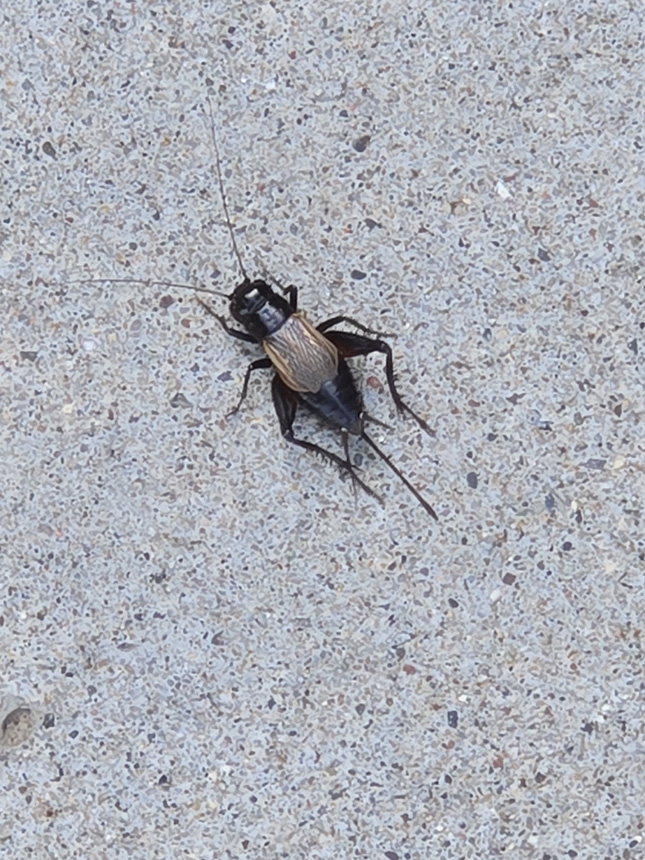
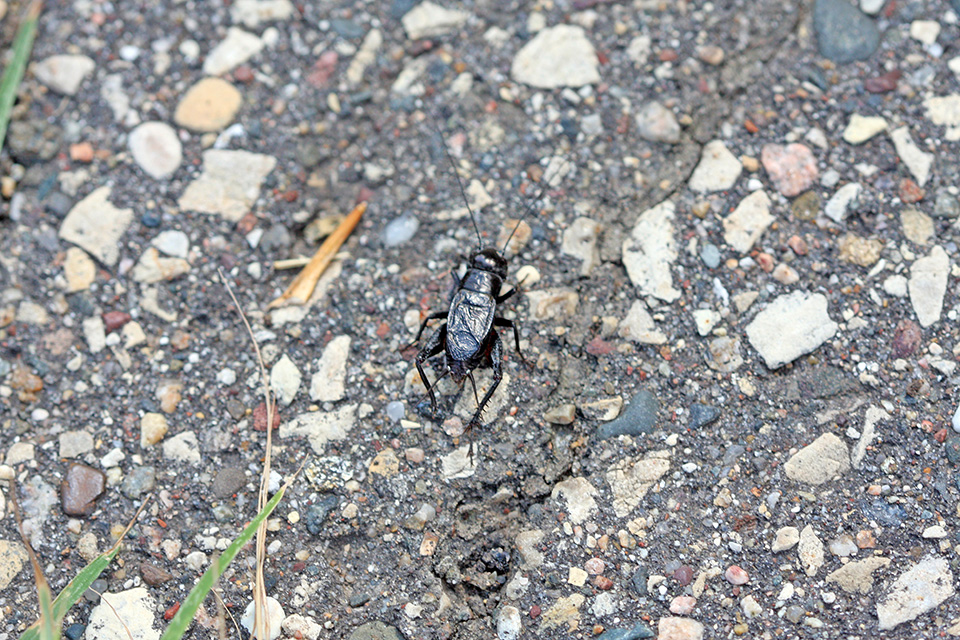
A picture of a cricket I found this fall at St. Olaf College!! :)
Alfredo Colon
September 2019
Location: Woodbury, Minnesota
Minnesota Seasons Sightings
Lakeville, MN