Sources
Biodiversity occurrence data published by: Minnesota Biodiversity Atlas (accessed through the Minnesota Biodiversity Atlas Portal, bellatlas.umn.edu. Accessed 12/26/2025).




(Anemone americana)
Conservation • Description • Habitat • Ecology • Use • Distribution • Taxonomy

not listed
NNR - Unranked
SNR - Unranked
not listed
Round-lobed hepatica is an erect, perennial forb that rises from ascending to horizontal rhizomes.
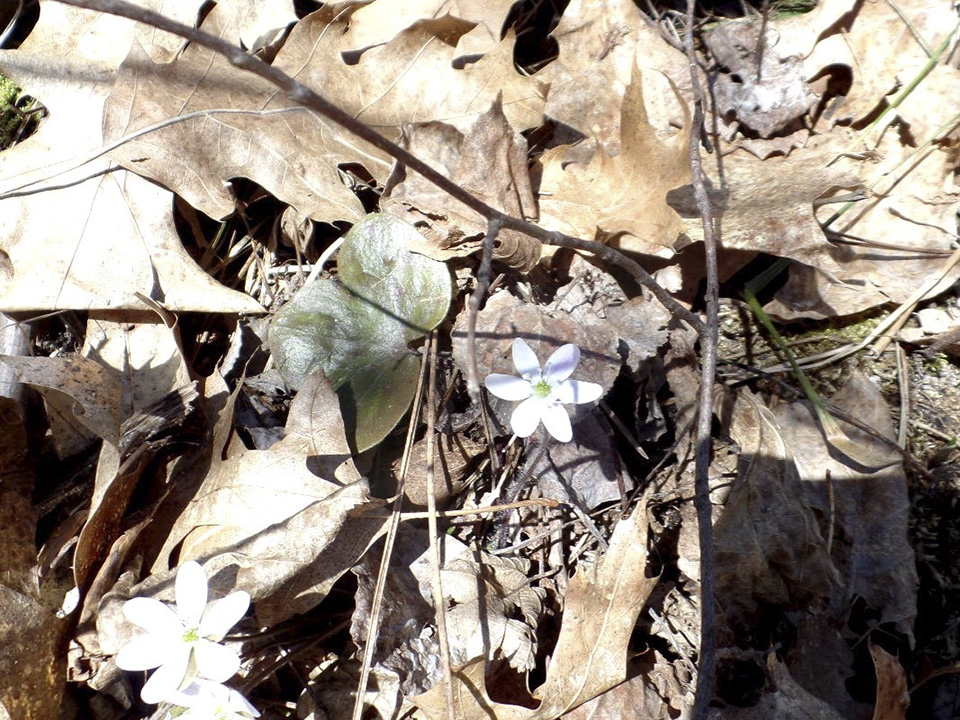
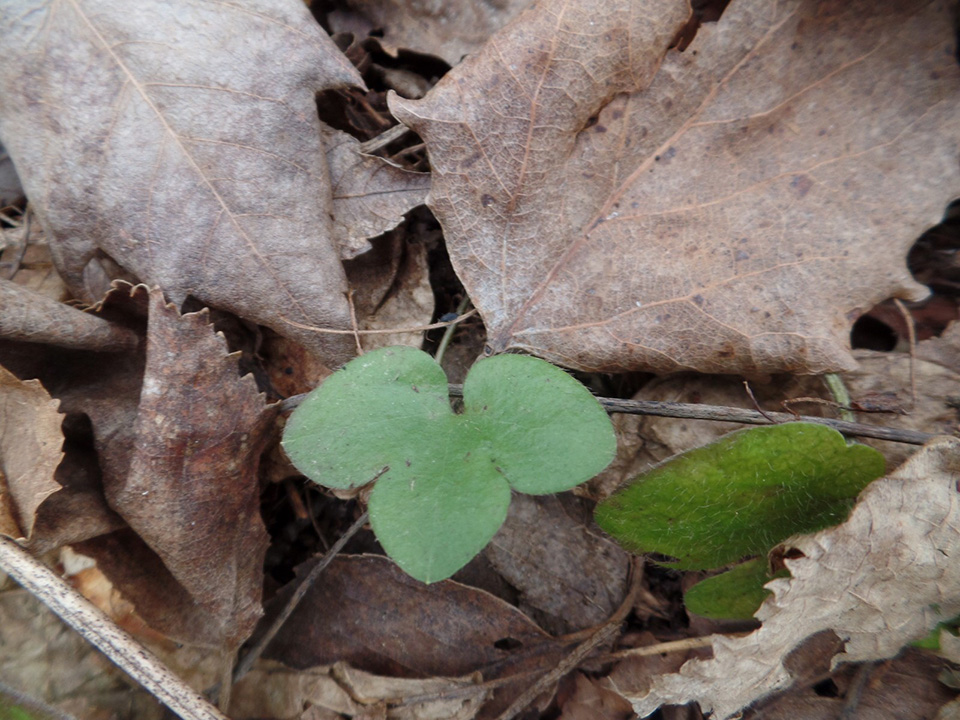
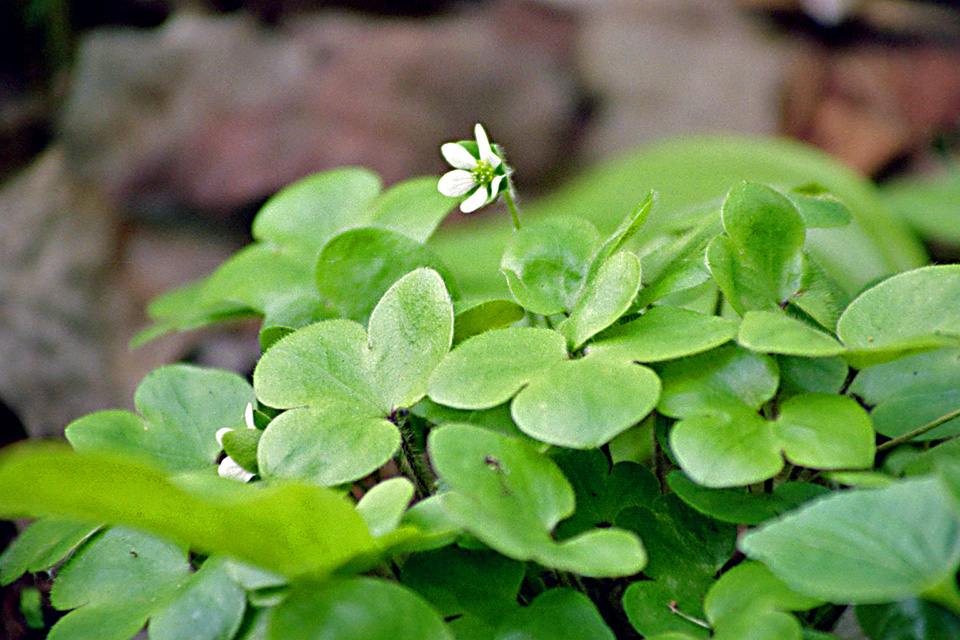
In early April it can be identified by the rounded, purple, three-lobed leaves laying flat on the ground. These are leaves that have overwintered from the previous year. The name hepatica is Latin for liver, and refers to the shape and color of the leaves, which resemble the human liver.
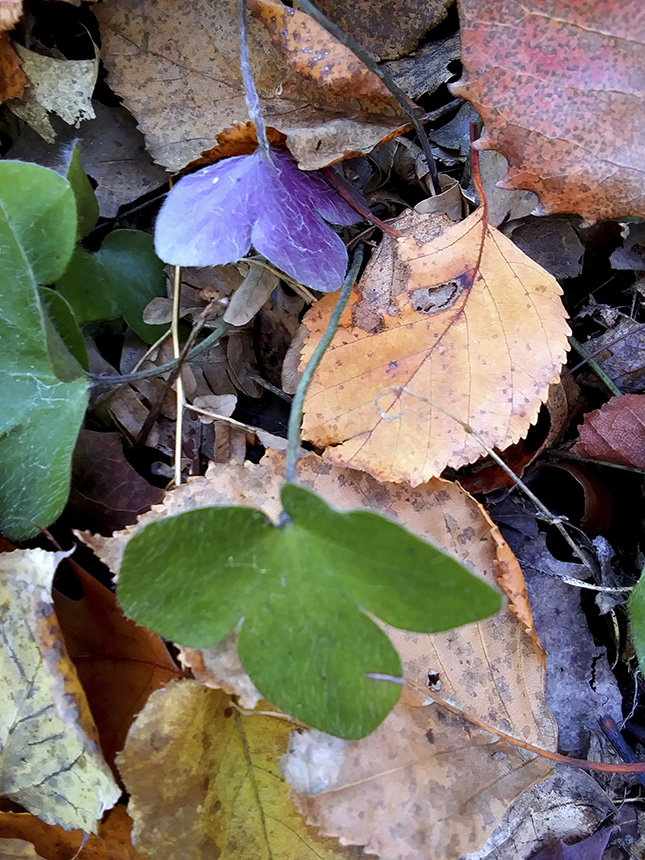
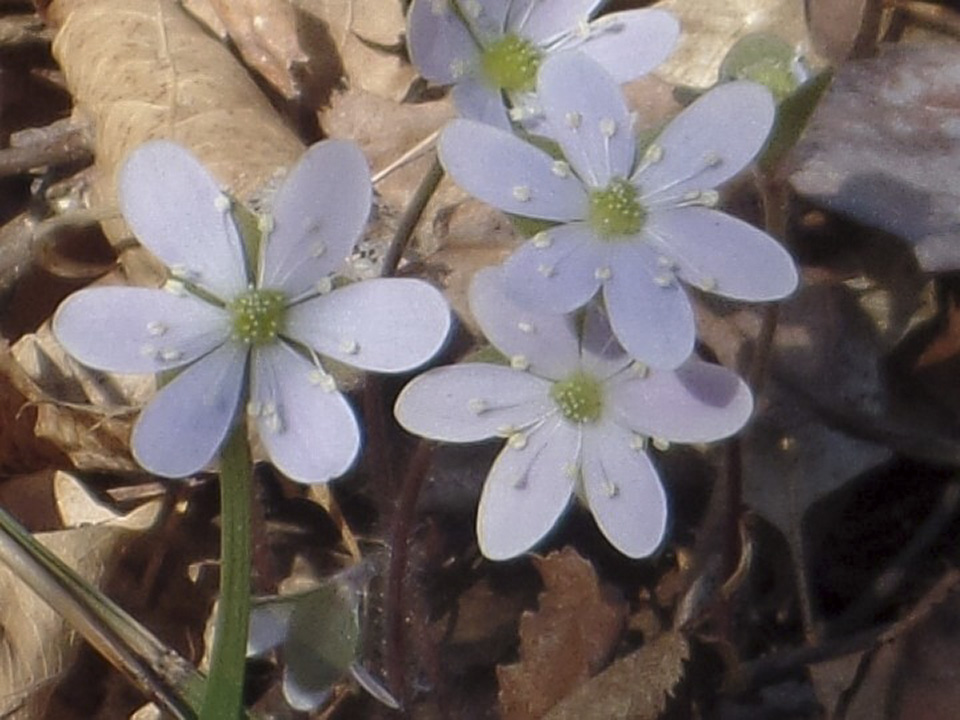
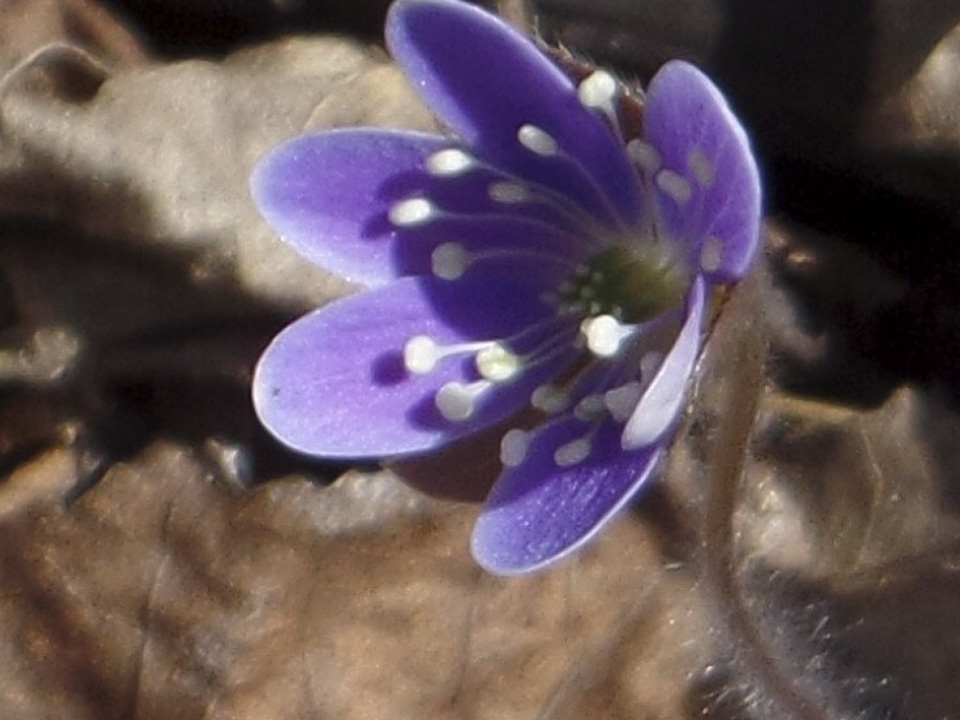
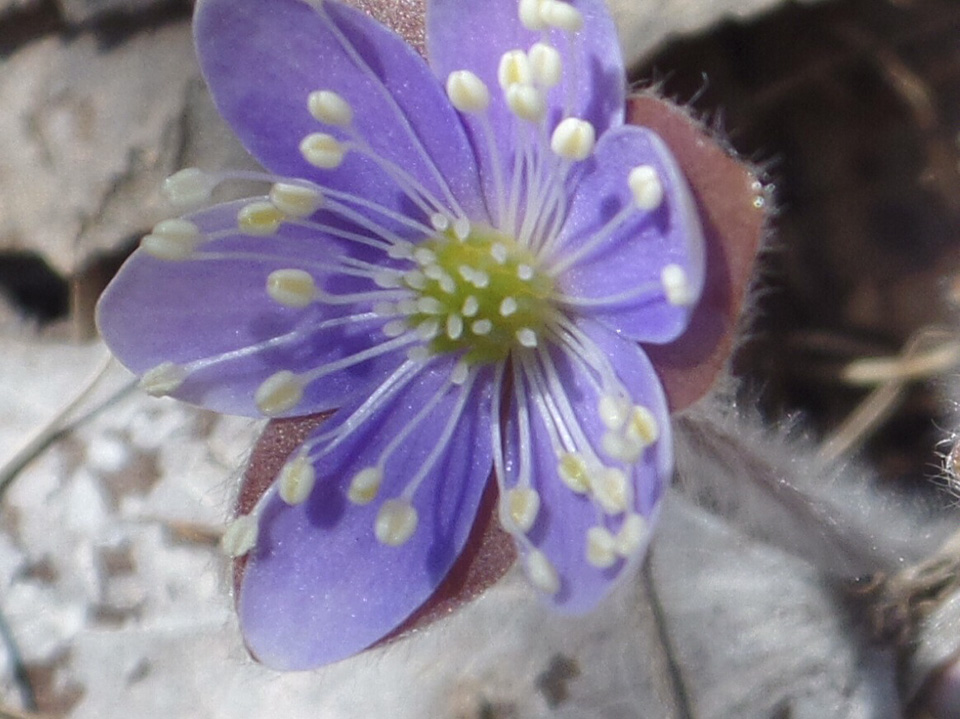
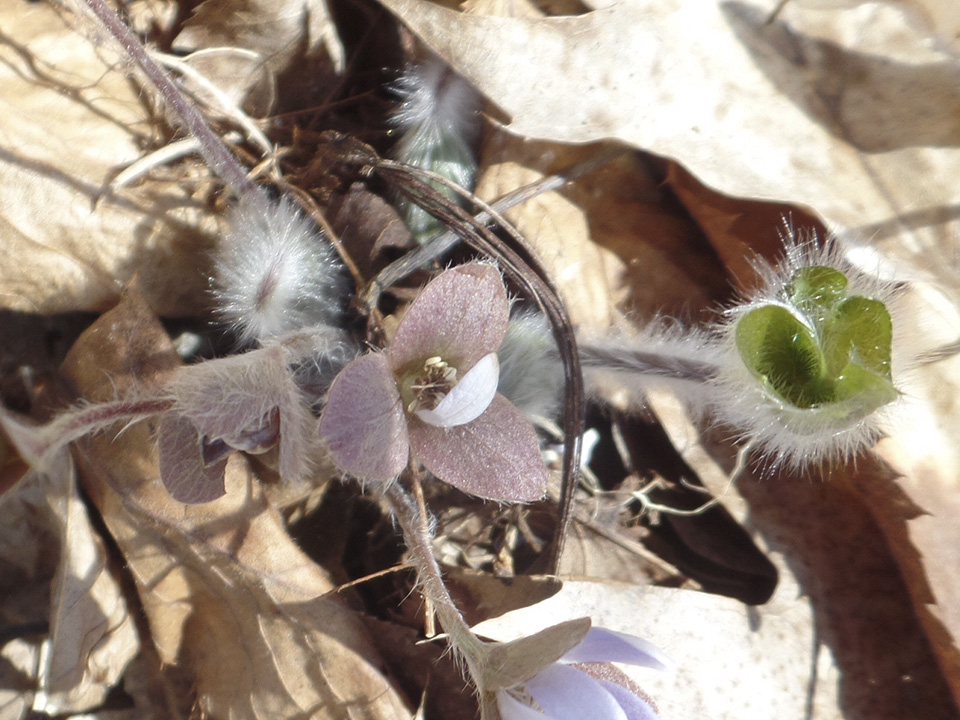
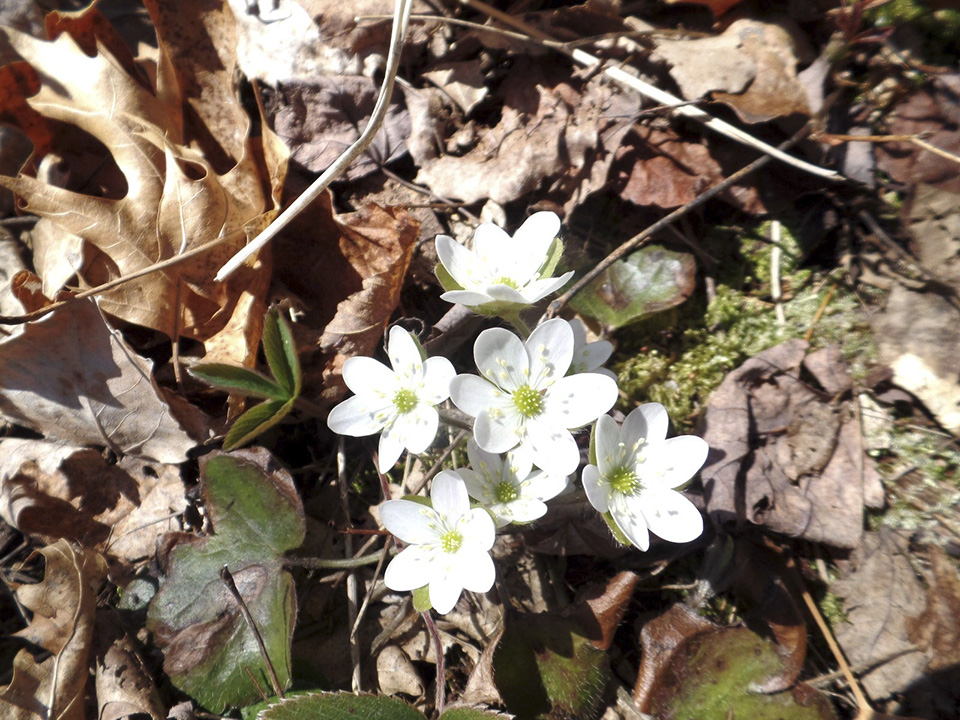
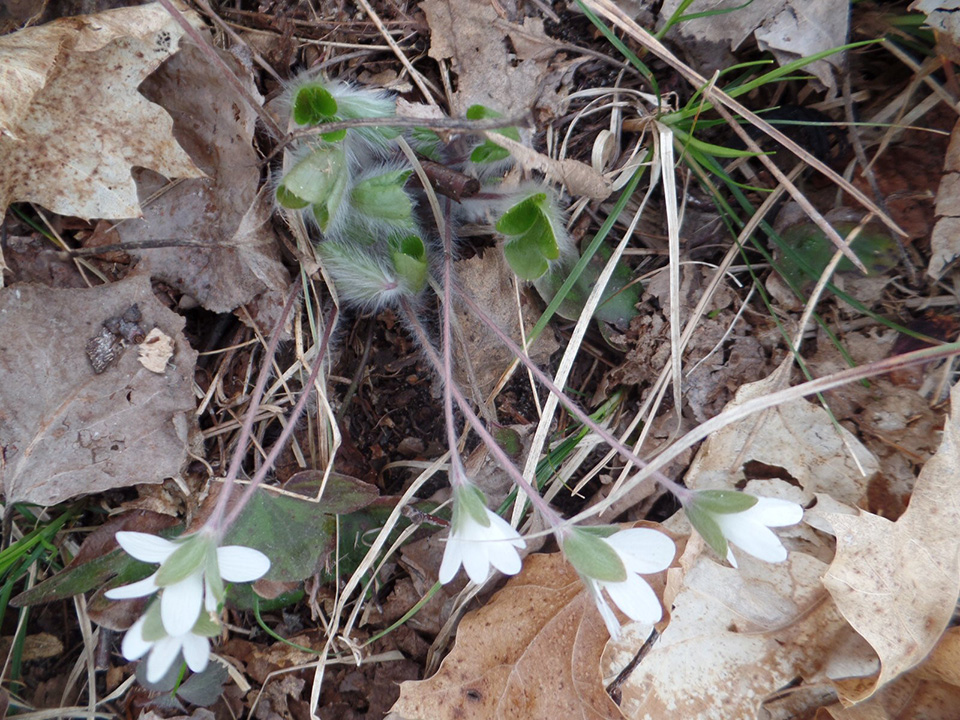
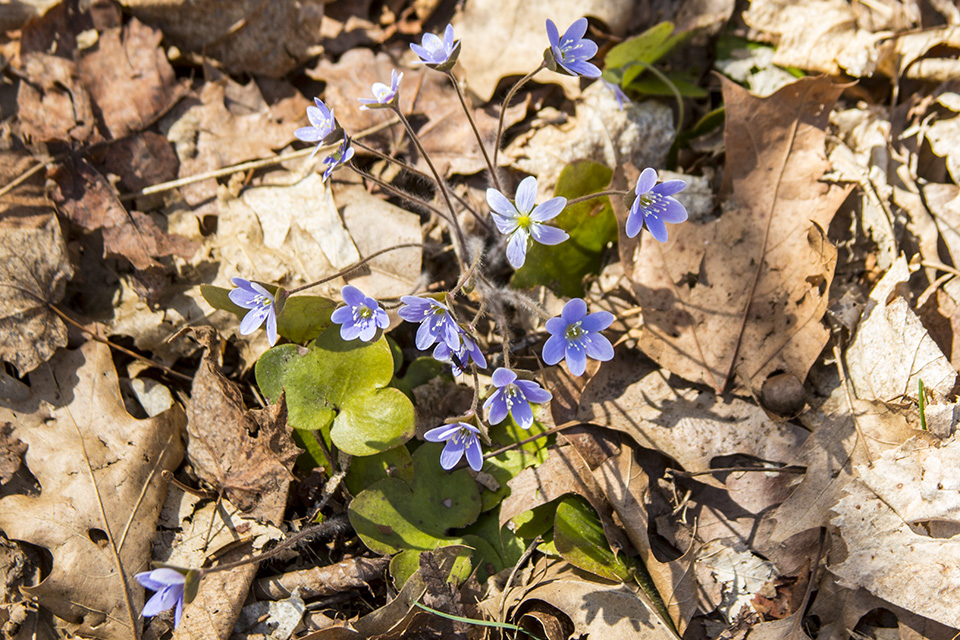
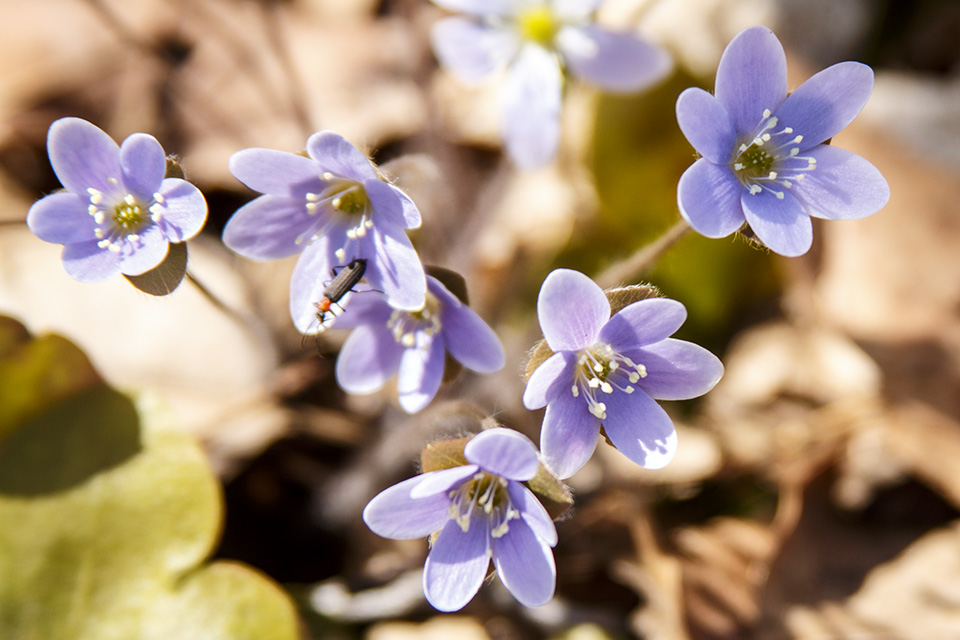
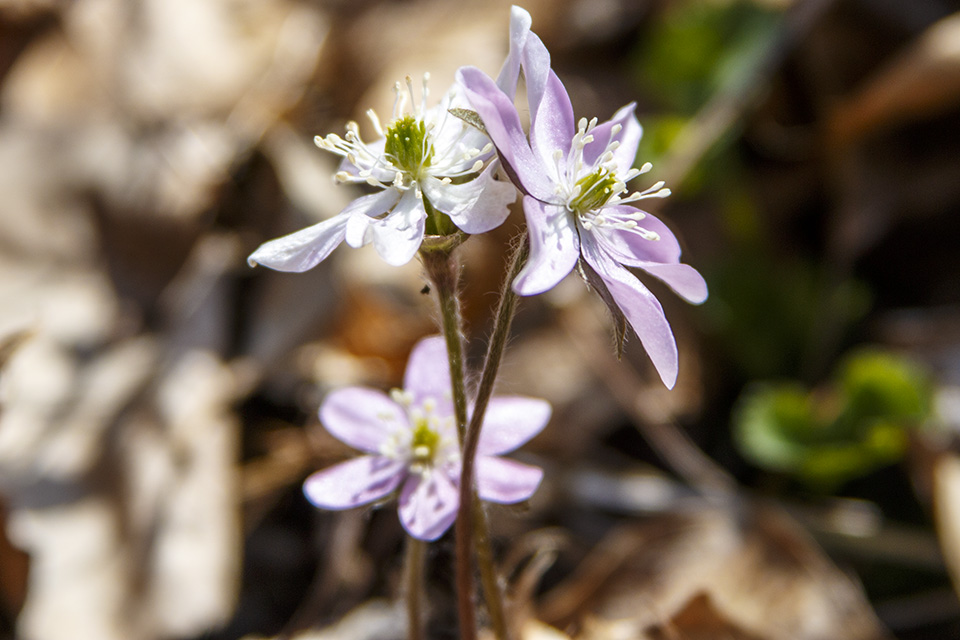
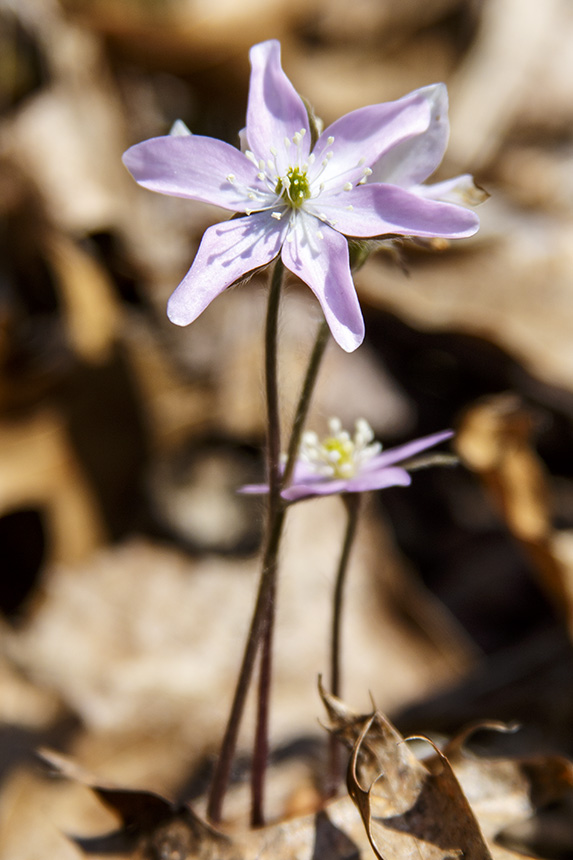
By the time the flowers appear the overwintered leaves are dying back. The flowers are ½″ to 1″ wide and are born singly on densely hairy, leafless stalks. They have from 5 to 12 petal-like sepals (usually 6), 10 to 30 white stamens, and a green cluster of carpels at the center. The sepals are white, pale pink, or pale blue, egg-shaped or inversely egg-shaped. There are 3 broadly egg-shaped or elliptic bracts with rounded tips subtending the flower.
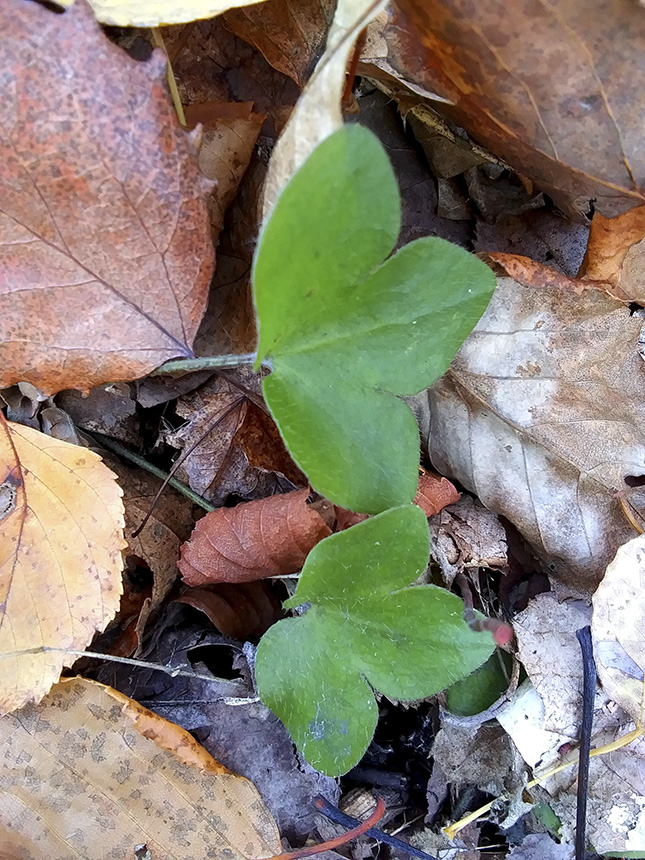
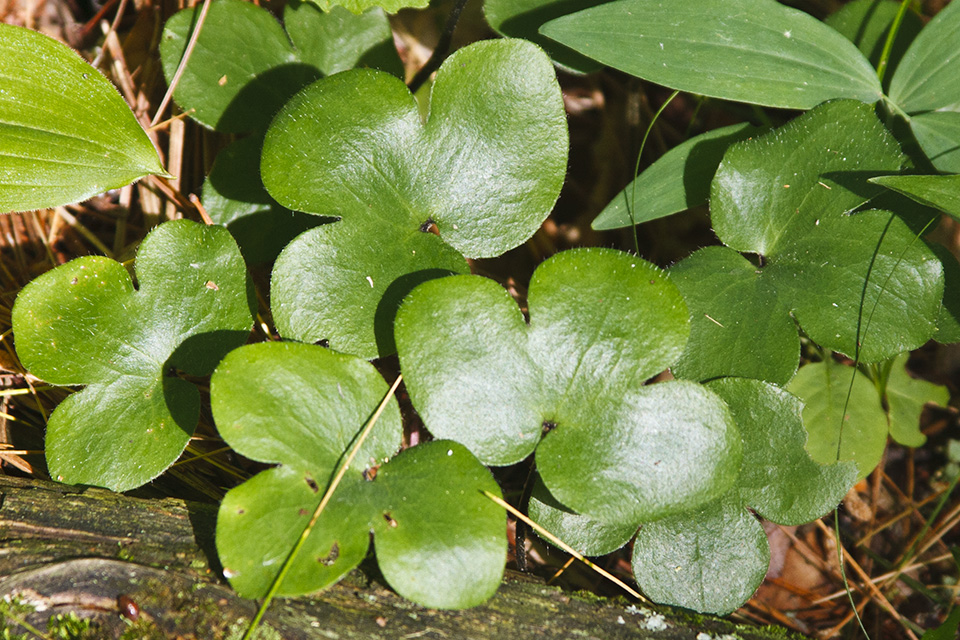
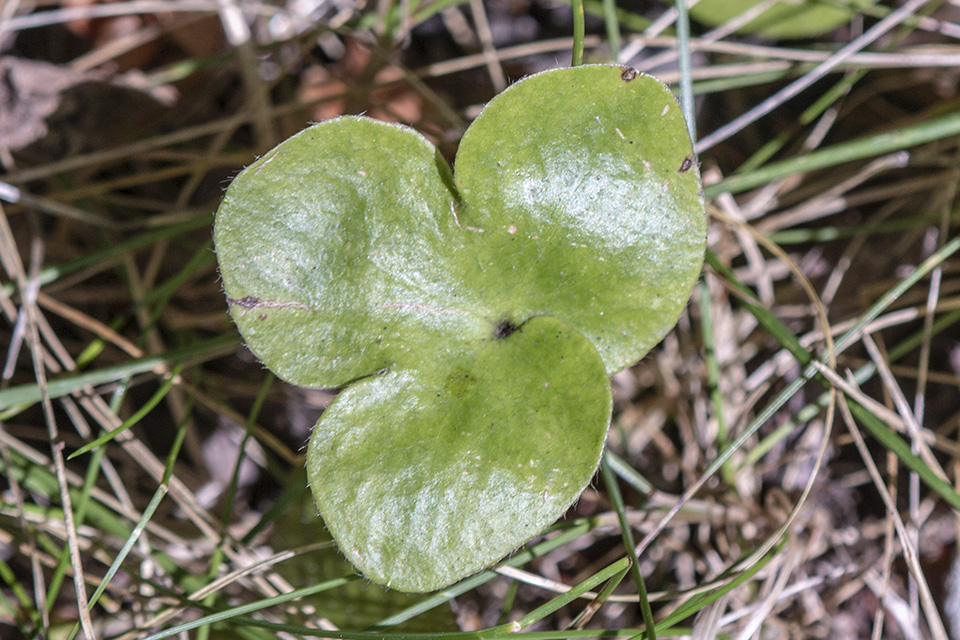
After the flowers have bloomed 3 to 15 new leaves emerge from the base on slender, densely hairy, 2″ to 8″ long leaf stalks. The leaves are ⅔″ to 2¾″ long, ¾″ to 4″ wide, and palmately divided into 3 lobes shallowly cut to near the middle of the blade. The base of the leaf is heart-shaped, broadly rounded and indented where the leaf attaches to the leaf stalk. The lobes are broadly oval to egg-shaped and rounded at the tip. The terminal lobe length is 50% to 70% of the total leaf length. The margins are untoothed. The upper surface is green, sometimes with purple mottles. The underside of the leaf is green or sometimes purple. When young both surfaces are densely hairy with long, soft, shaggy, unmatted hairs. As they age they become hairless or almost hairless.
2″ to 6″
White, pale pink, or pale blue
Sharp-lobed hepatica (Anemone acutiloba) leaves are more deeply divided into lobes with pointed tips. The terminal lobe length is 70% to 90% of the total leaf length. There are 3, sometimes 4, narrowly lance-shaped bracts with pointed tips subtending the flower.
Dry to moist. Upland woods.
April to May
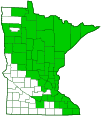
Native
Common
Kingdom
Subkingdom
Pteridobiotina
Phylum
Tracheophyta (Vascular Plants)
Class
Order
Ranunculales (Buttercups, Poppies, and Allies)
Family
Ranunculaceae (Buttercup)
Subfamily
Ranunculoideae (Anemones, Buttercups, Larkspurs, and Allies)
Tribe
Anemoneae (Anemones and Allies)
Genus
Anemone (Anemones and Thimbleweeds)
Anemone americana
Anemone hepatica
Anemone hepatica var. obtusa
Anemonoides americana
Hepatica americana
Hepatica americana var. maculata
Hepatica americana var. parviflora
Hepatica hepatica
Hepatica hepatica var. parviflora
Hepatica hepatica var. purpurea
Hepatica nobilis var. obtusa
Hepatica triloba var. americana
Hepatica triloba var. obtusa
American liverleaf
hepatica
liverleaf
round-lobed hepatica
roundlobe hepatica
round-lobed liverleaf
Glossary
Bract
Modified leaf at the base of a flower stalk, flower cluster, or inflorescence.
Palmately divided
Similar to a hand. Having more than three lobes that radiate from a single point at the base of the leaf.
What’s in a Name?
In 2011 there were a handful scientific names for round-lobed hepatica used by authoritative taxonomic sources. Fifteen years later the situation improved slightly, with most sources converging on one of two widely used names: Anemone americana or Hepatica americana. Here are several authoritative taxonomic sources and their scientific name for round-lobed hepatica:
Discover Life
Anemone americana
Flora of North America
Anemone americana
GRIN
Anemone americana
ITIS
Anemone americana
NatureServe
Anemone americana
Tropicos
Anemone americana
GBIF
Hepatica americana
iNaturalist
Hepatica americana
NCBI
Hepatica americana
Plants of the World Online
Hepatica americana
World Flora Online
Hepatica americana
World Plant List
Hepatica americana
USDA PLANTS
Hepatica nobilis var. obtusa
BONAP
Hepatica nobilis
(does not separate round-lobed and sharp-lobed hepaticas)
Wikipedia
Anemone hepatica
(not an “authoritative” source but often one of the most up to date)
IPNI
All of the above
(“...not formulated to make judgments pertaining to the most commonly accepted name.”)
This button not working for you?
Simply email us at info@MinnesotaSeasons.com.
Attach one or more photos and, if you like, a caption.




natpodnan

This button not working for you?
Simply email us at info@MinnesotaSeasons.com.
Attach a video, a YouTube or Instagram link, or a cloud storage link.
foxtrapper1972
QuipTV

This button not working for you?
Simply email us at info@MinnesotaSeasons.com.
Be sure to include a location.
11/4/2021

Location: Fairview Twp., Cass County
5/1/2020

Location: Fairview Twp., Cass County
4/29/2020

Location: Fairview Twp., Cass County
4/10/2011
FYI
Today, Sunday April 10, 2011, I saw a thriving and generous population of both the Snow Trillium and Round Lobed Hepatica along the Blue Earth County Red Jacket Bike Trail just north of the Le Sueur River. I noticed the habitat map on your website <http://minnesotaseasons.com/Plants/round-lobed_hepatica.html> did not show Blue Earth County as a location for the Hepatica.