



water horsetail
(Equisetum fluviatile)
Conservation • Wetland • Description • Habitat • Ecology • Use • Distribution • Taxonomy
Conservation Status |
|
|||||||
| IUCN Red List | LC - Least Concern |
|||||||
| NatureServe | NNR - Unranked SNR - Unranked |
|||||||
| Minnesota | not listed |
|||||||
Wetland Indicator Status |
||||||||
| Great Plains | OBL - Obligate wetland |
|||||||
| Midwest | OBL - Obligate wetland |
|||||||
| Northcentral & Northeast | OBL - Obligate wetland |
|||||||
Description |
||
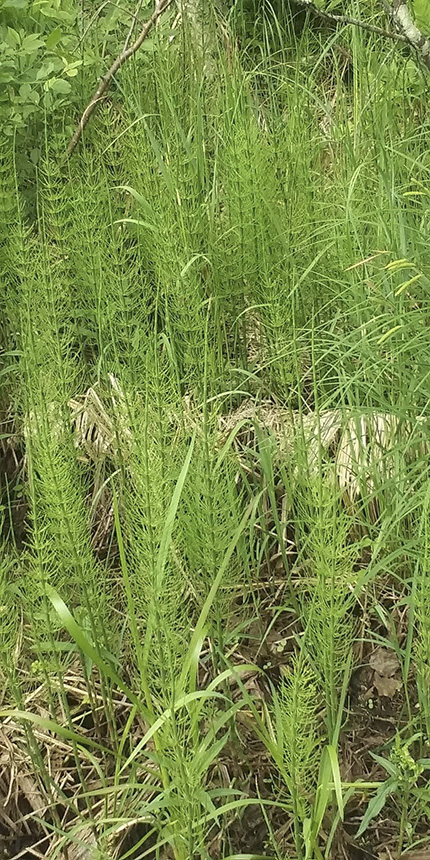
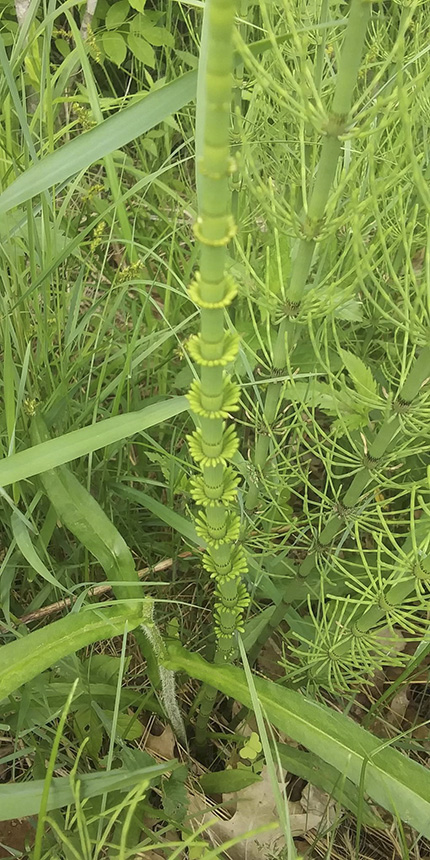
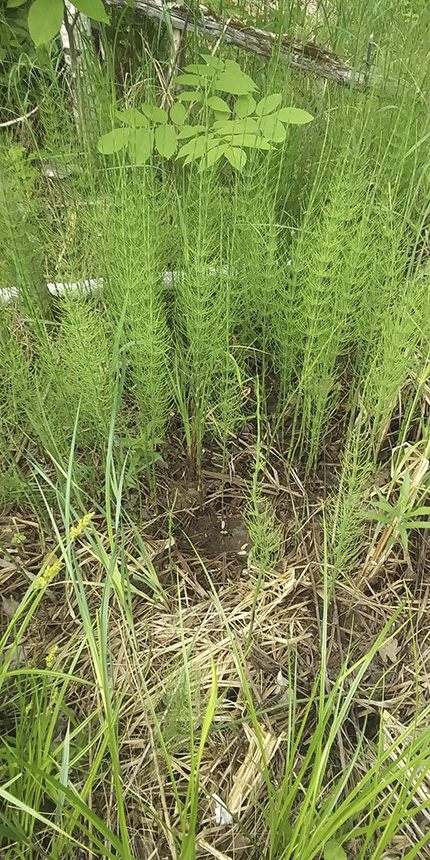
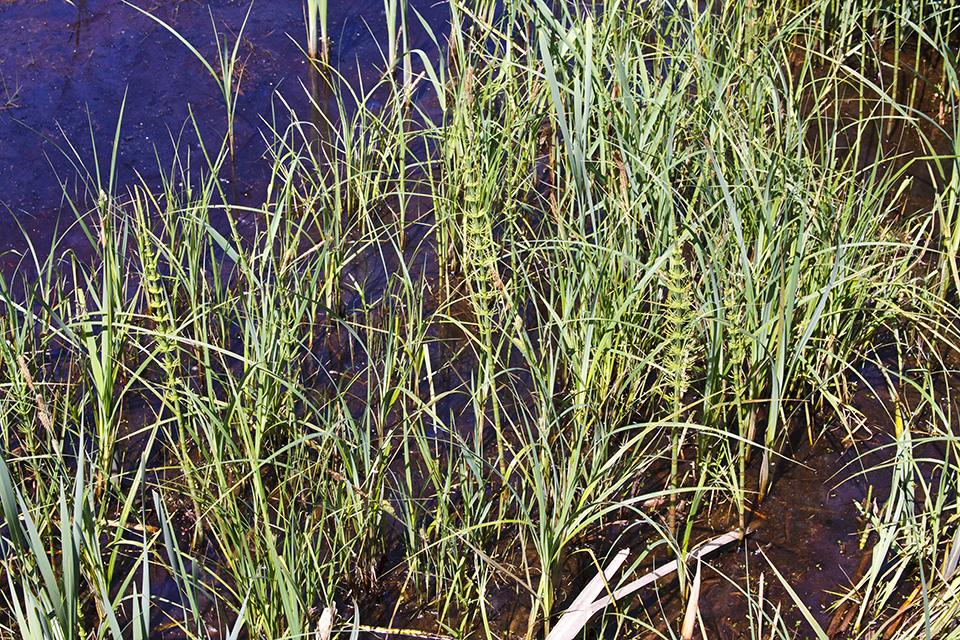
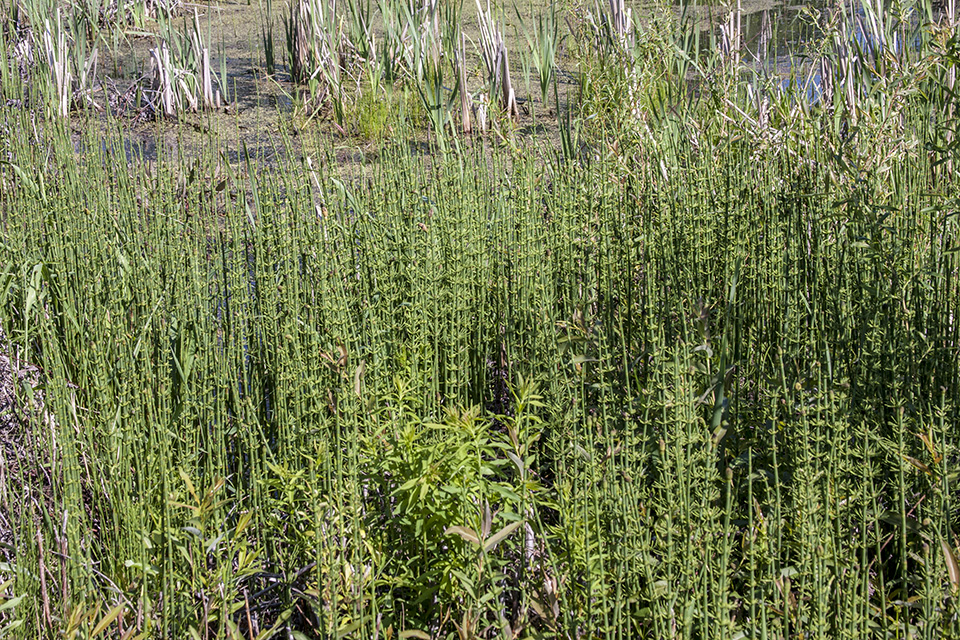
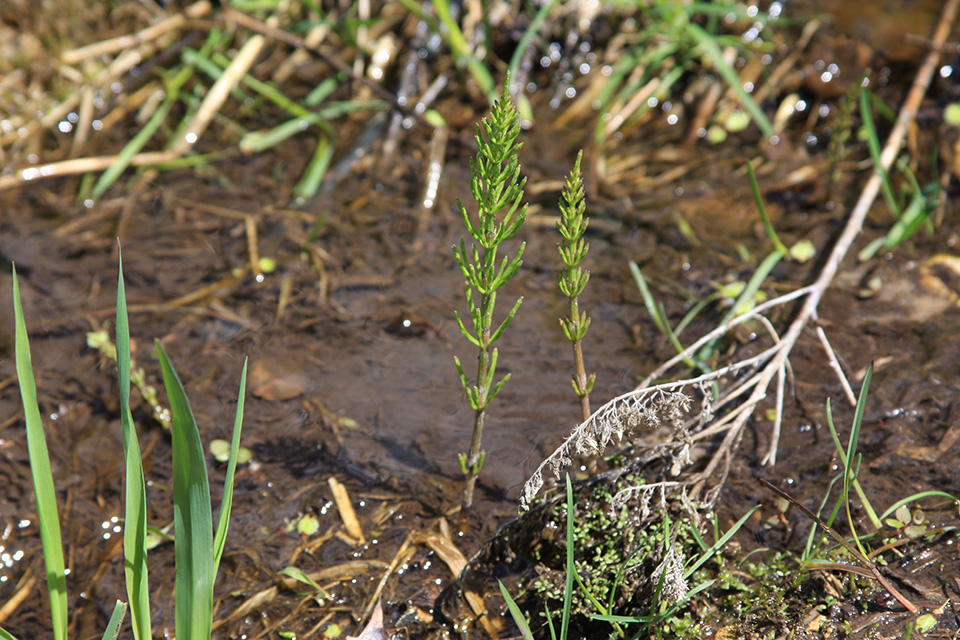
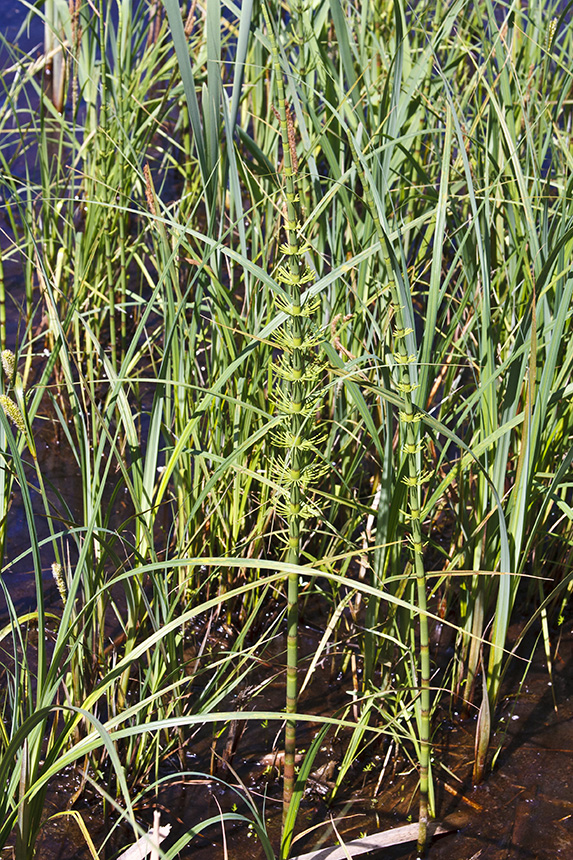
Water horsetail is an erect, semi-aquatic, emergent aquatic perennial that rises from widely creeping rhizomes. It often forms dense colonies. The stems are erect, 14″ to 40″ tall, 1 ⁄16″ to 5 ⁄16″ in diameter, hollow, stiff, and green to dark green. The central cavity is 8 ⁄10 to 9 ⁄10 the diameter of the stem. The stems have 15 to 25 fine, vertical ridges. The ridges are smooth to the touch but do not have silica deposits. They are annual, lasting just one year. The portion of the stem between the nodes is up to several inches near the bottom, becoming progressively shorter as they ascend the stem. The leaves are reduced in size, fused together for most of their length, and appressed against the stem, forming a collar-like sheath around the nodes. The sheaths are green to brownish-green, with a black band at the tip only. They are ⅛″ to ⅜″ long. At the tip of the sheath are 12 to 24 free lobes appearing as tiny, dark brown or black teeth. The teeth are narrow, 1 ⁄16″ to 3 ⁄32″ long, and occasionally have a white border. The teeth are not jointed and usually persist. As they age the sheath and teeth become ash gray, and the sheath often develops a narrow black band at the base. A whorl of slender branchlets is sometimes produced at the middle nodes. The branchlets are 4- or 6-angled, solid, ascending or sometimes horizontal, never drooping, and usually do not themselves branch. Like the stems, the branchlets have segments with sheaths. The first segment of each branchlet is shorter than the sheath (from the branch to the tip of the teeth) below the node from which it extends. The branchlet sheath has 4 to 6 narrow teeth along the top rim, the number of teeth equaling the number of branchlet ridges. Spore cones appear in June to August at the end of the main stem or occasionally on upper branches. They are attached to the stem on a long stalk. They are yellowish-green, blunt, and ⅜″ to ¾″ long. They wither away after shedding their pollen. |
||
Height |
||
14″ to 40″ |
||
Similar Species |
||
Marsh horsetail (Equisetum palustre) stems are rough to the touch and have 4 to 8 vertical ridges. The hollow in the stem center is less than ⅓ the diameter of the stem. The cone is longer, ¾″ to 1½″ long. |
||
Habitat |
||
Moist. Marshes, shallows, springs, water less than 40″ deep. |
||
Ecology |
||
Sporulation |
||
June to August |
||
Pests and Diseases |
||
|
||
Use |
||
|
||
Distribution |
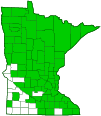
||||
|
Sources |
|||
| 6/22/2023 | ||||
Nativity |
||||
Native |
||||
Occurrence |
||||
Common |
||||
Taxonomy |
|||
| Kingdom | Plantae (Plants) | ||
| Subkingdom | Pteridobiotina | ||
| Phylum | Tracheophyta (Vascular Plants) | ||
| Subdivision | Polypodiophytina | ||
| Class | Polypodiopsida (ferns) | ||
| Subclass | Equisetidae (horsetails) | ||
Order |
Equisetales (horsetails) | ||
Family |
Equisetaceae (horsetail) | ||
Genus |
Equisetum (horsetails) | ||
| Subgenus | Equisetum | ||
Monotypic genus, family, and order Subgenus Living fossil |
|||
Subordinate Taxa |
|||
|
|||
Synonyms |
|||
Equisetum fluviatile var. limosum Equisetum limosum |
|||
Common Names |
|||
The stems tend to be regularly branched, the branches appearing in a whorl at each stem node. This gives the plant the appearance of a horse’s tail, giving rise to the common name “horsetail”. |
|||
pipes river horsetail swamp horsetail water horsetail |
|||
Glossary
Node
The small swelling of the stem from which one or more leaves, branches, or buds originate.
Rhizome
A horizontal, usually underground stem. It serves as a reproductive structure, producing roots below and shoots above at the nodes.
Visitor Photos |
|||||
Share your photo of this plant. |
|||||
| This button not working for you? Simply email us at info@MinnesotaSeasons.com. Attach one or more photos and, if you like, a caption. |
|||||
Luciearl |
|||||
 |
 |
||||
 |
|||||
MinnesotaSeasons.com Photos |
|||||
Habitat |
|||||
 |
 |
||||
Plant |
|||||
 |
 |
||||
Stem |
|||||
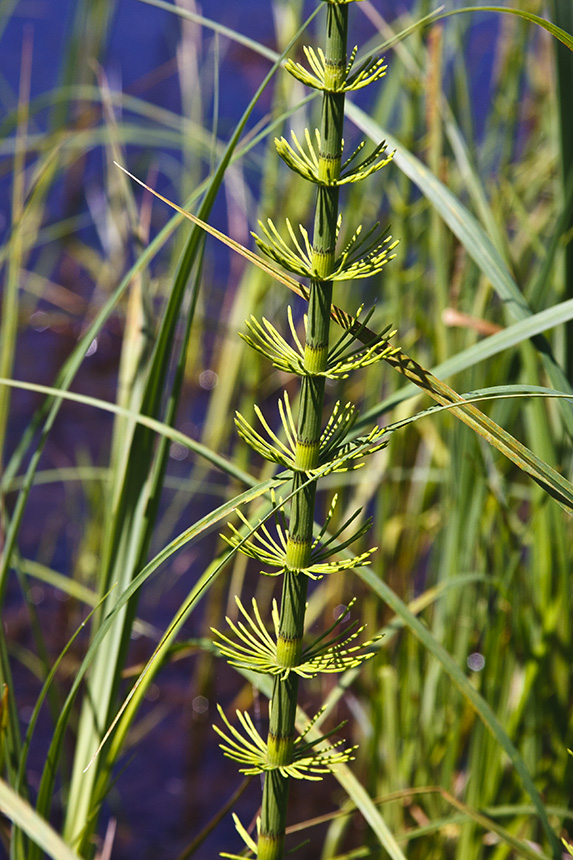 |
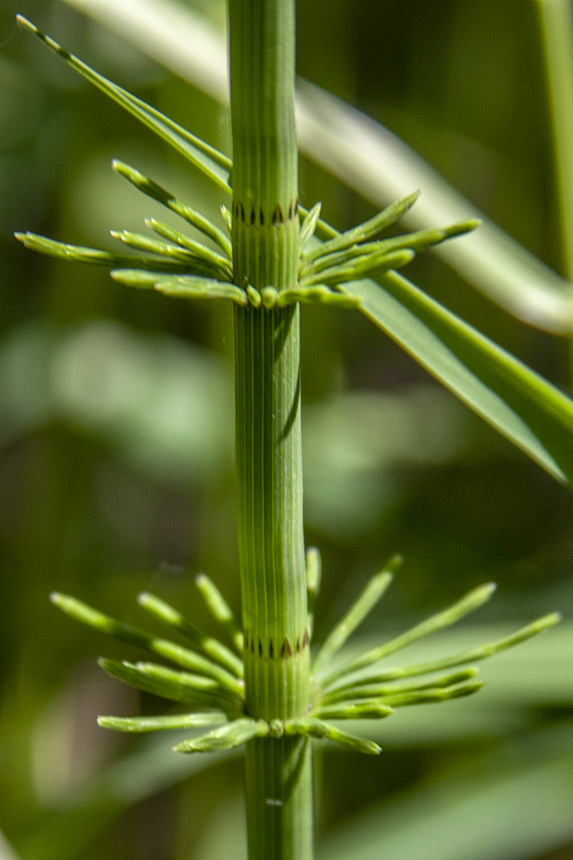 |
||||
Branches |
|||||
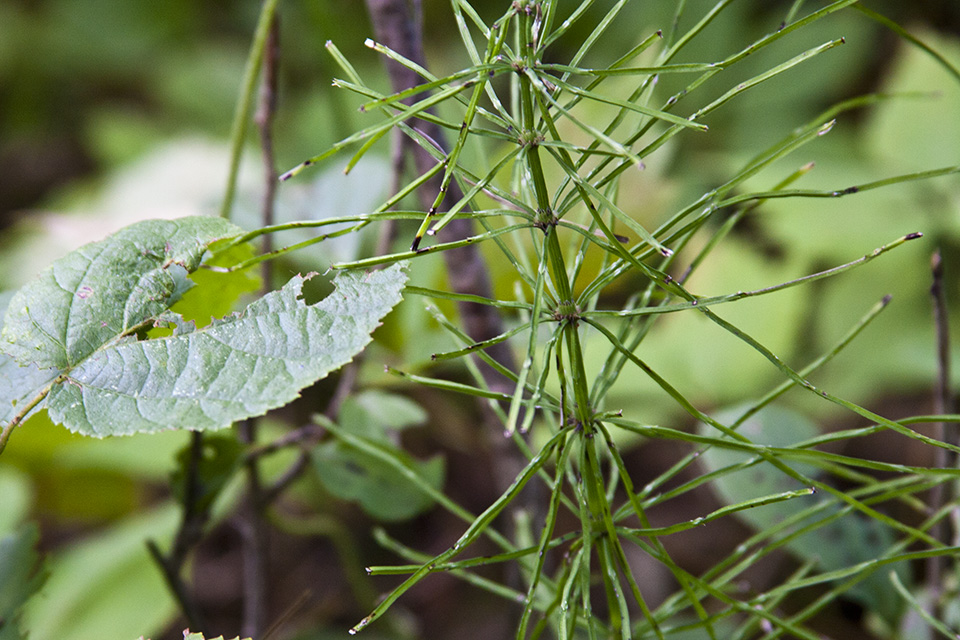 |
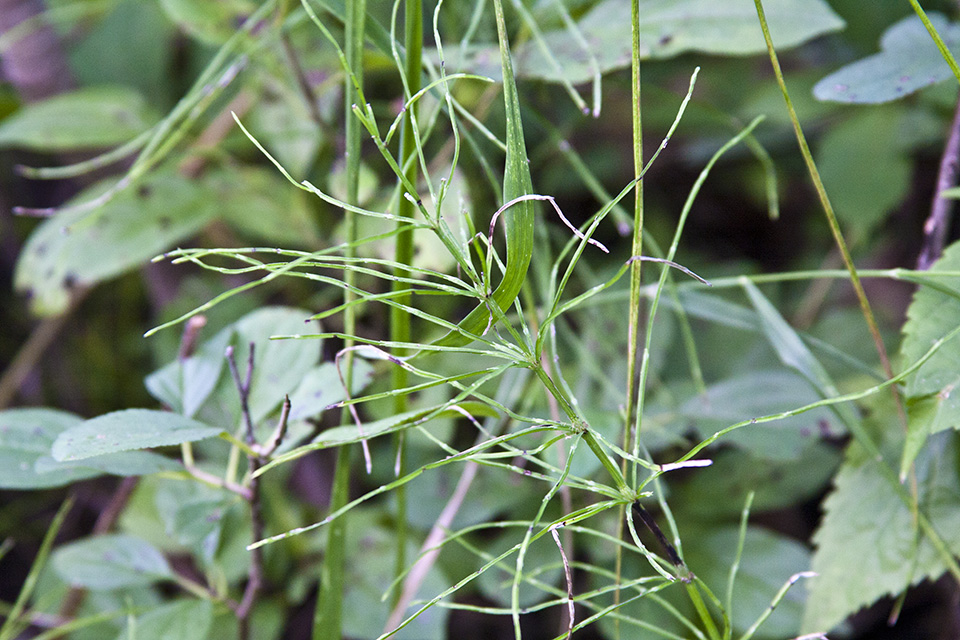 |
||||

Slideshows |
||
| Water Horsetail BotanyBill1111 |
||
About
Published on Feb 12, 2014 A guide to the diagnostic features of Equisetum fluviatile (Water Horsetail) to aid in the identification of the species. |
||
Visitor Videos |
|||
Share your video of this plant. |
|||
| This button not working for you? Simply email us at info@MinnesotaSeasons.com. Attach a video, a YouTube link, or a cloud storage link. |
|||
Other Videos |
|||
| Water Horsetail: Natures Steel Wool The Para-Cord Guy |
|||
About
Published on Jan 31, 2013 The water horsetail (Equisetum fluviatile), also known as the Swamp Horsetail, is a perennial horsetail that commonly grows in dense colonies along freshwater shorelines or in shallow water, growing in ponds, swamps, ditches, and other sluggish or still waters with mud bottoms. The Water Horsetail ranges throughout the temperate Northern Hemisphere, from Eurasia south to central Spain, northern Italy, the Caucasus, China, Korea and Japan, and in North America from the Aleutian Islands to Newfoundland, south to Oregon, Idaho, northwest Montana, northeast Wyoming, West Virginia and Virginia. The Water Horsetail has historically been used by both Europeans and Native Americans for scouring, sanding, and filing because of the high silica content in the stems. Early spring shoots were eaten. Medically it was used by the ancient Greeks and Romans to stop bleeding and treat kidney ailments, ulcers, and tuberculosis, and by the ancient Chinese to treat superficial visual obstructions. Rootstocks and stems are sometimes eaten by waterfowl. Horsetails absorb heavy metals from the soil, and are often used in bioassays for metals. Source: http://en.wikipedia.org/wiki/Equisetum_fluviatile |
|||
| Equisetum fluviatile wander van laar |
|||
About
Published on May 18, 2014 |
|||

Visitor Sightings |
|||||
Report a sighting of this plant. |
|||||
| This button not working for you? Simply email us at info@MinnesotaSeasons.com. Be sure to include a location. |
|||||
| Luciearl June 2023 |
Location: Lake Shore |
 |
|||
MinnesotaSeasons.com Sightings |
|||||
|
Created: Last Updated: © MinnesotaSeasons.com. All rights reserved. |