spongy oak apple gall wasp - Species Profile
Conservation • Description • Habitat • Ecology • Distribution • Taxonomy
Conservation Status
IUCN Red List
not listed
NatureServe
not listed
Minnesota
not listed
Description
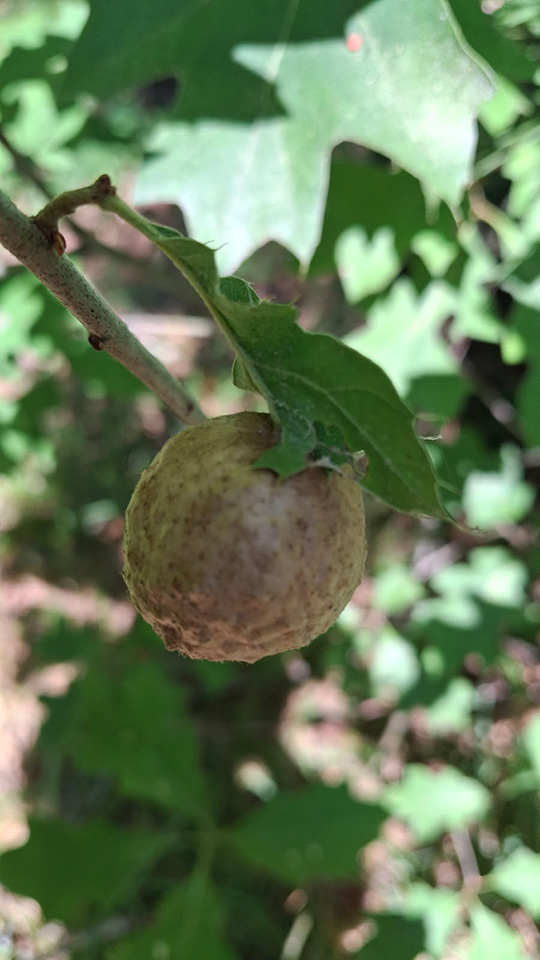
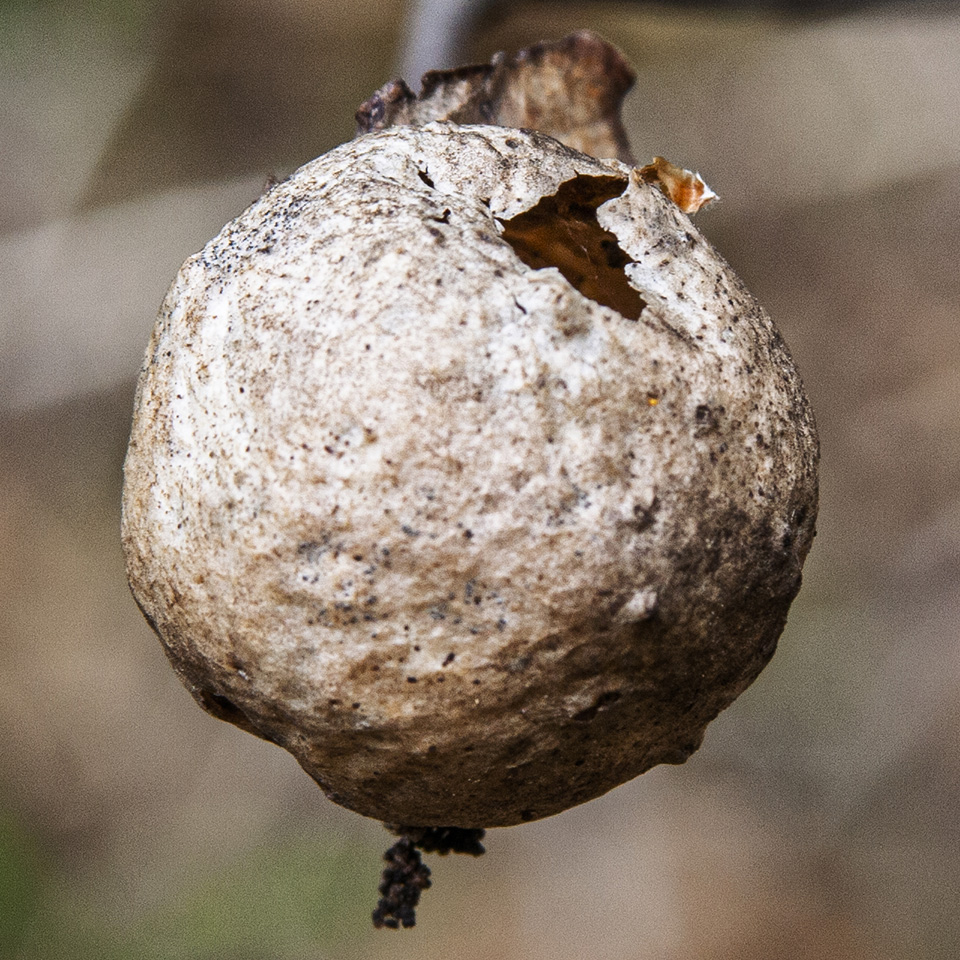
Spongy oak apple gall wasp is usually identified by the galls it produces. The galls appear on growing leaves in the spring or early summer. When they first appear the galls are green, round, and small. As the larva grows the gall grows to 1¼″ to 2″ in diameter and may take over most or all of the leaf. Late in the season it turns light brown and feels spongy when lightly squeezed.
Size
Gall: 1¼″ to 2″ in diameter
Similar Species
Acorn plum gall wasp (Amphibolips quercusjuglans) produces galls on the side of acorns.
Gouty oak gall wasp (Callirhytis quercus punctata) produces galls on twigs, not leaves.
Larger empty oak apple wasp (Amphibolips quercusinanis) galls are spotted. When the gall is dry the spots become slightly protruding bumps.
Oak gall wasp (Amphibolips cookii) galls are much smaller, no more than 1″ in diameter, and are spotted. They protrude from a leaf bud, not a developing leaf.
Translucent oak gall wasp (Amphibolips nubilipennis) produces a soft, ½″ to ¾″, almost translucent gall that resembles a white grape.
Habitat
Ecology
Season
Winged adults: Fall
Behavior
Life Cycle
The life cycle of this wasp involves alternation of generations, one generation with only asexual females and one generation with both sexual males and sexual females.
After mating in the fall the sexual female wasp drops to the ground. She burrows into the soil at the base of a host tree and injects her eggs into the tree’s roots. These eggs, the first generation embryo stage, overwinter. When they hatch in the early spring, the larvae begin feeding on the roots. Soon they enter the pupal stage, a period of inactivity and metamorphosis. Later, still in the spring, the wingless, asexual female adult hatches and emerges from the soil. She crawls up the tree trunk, finds a leaf, and injects a single egg into the midrib. She then finds another leaf and repeats the process with her remaining eggs. These eggs are the second generation embryo stage. The egg hatches and the larva begins feeding on the leaf. This causes a chemical reaction in the leaf that results in the formation of a ball-like gall. The galls appear in the late spring or early summer. As the season progresses the larva gets larger and so does the gall. Second-generation, winged, male and female sexual adults emerge in the fall and immediately search out a mate. The cycle continues.
Larva Food/Hosts
Some of the red oaks (Quercus section Lobatae), including northern red oak (Quercus rubra), northern pin oak (Quercus ellipsoidalis), and black oak (Quercus velutina).
Adult Food
Adult wasps do not feed.
Distribution

Occurrence
Common
Taxonomy
Order
Hymenoptera (Ants, Bees, Wasps, and Sawflies)
Suborder
Apocrita (Narrow-waisted Wasps, Ants, and Bees)
Infraorder
Proctotrupomorpha
Superfamily
Cynipoidea (Gall Wasps and Allies)
Family
Cynipidae (Gall Wasps)
Subfamily
Cynipinae
Tribe
Cynipini (Oak Gall Wasps)
Genus
Amphibolips
Subordinate Taxa
Synonyms
Amphibolips confluentus
Common Names
large oak apple gall wasp
oak apple gall wasp
oak-apple gall
spongy oak apple gall wasp