



meadow spittlebug
(Philaenus spumarius)
Conservation • Description • Habitat • Ecology • Distribution • Taxonomy
|
|
||||||||||||||
Description |
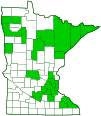
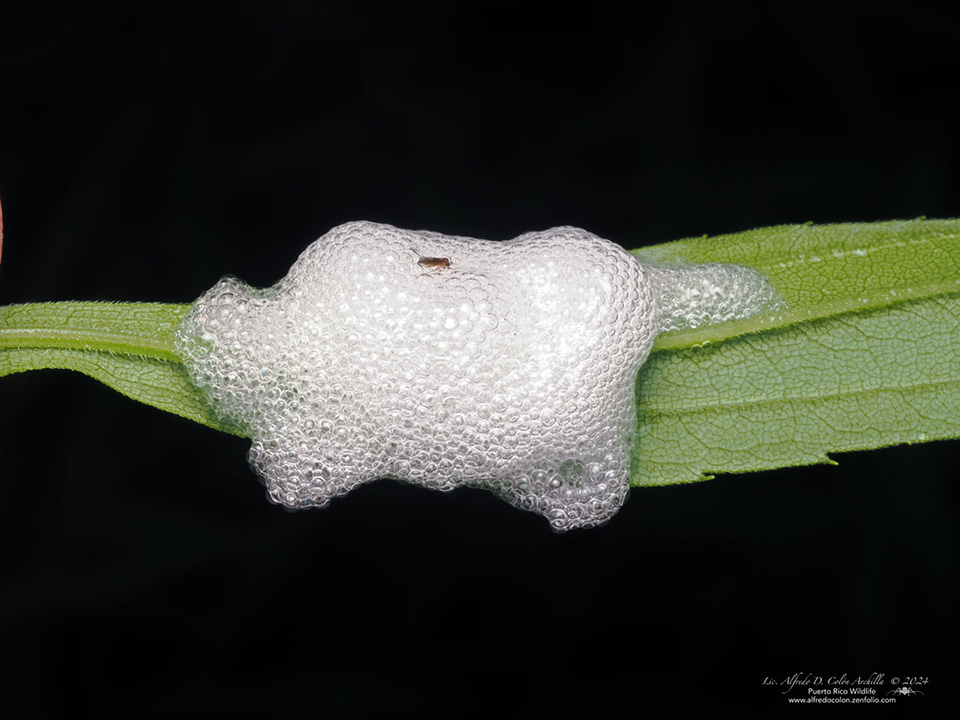
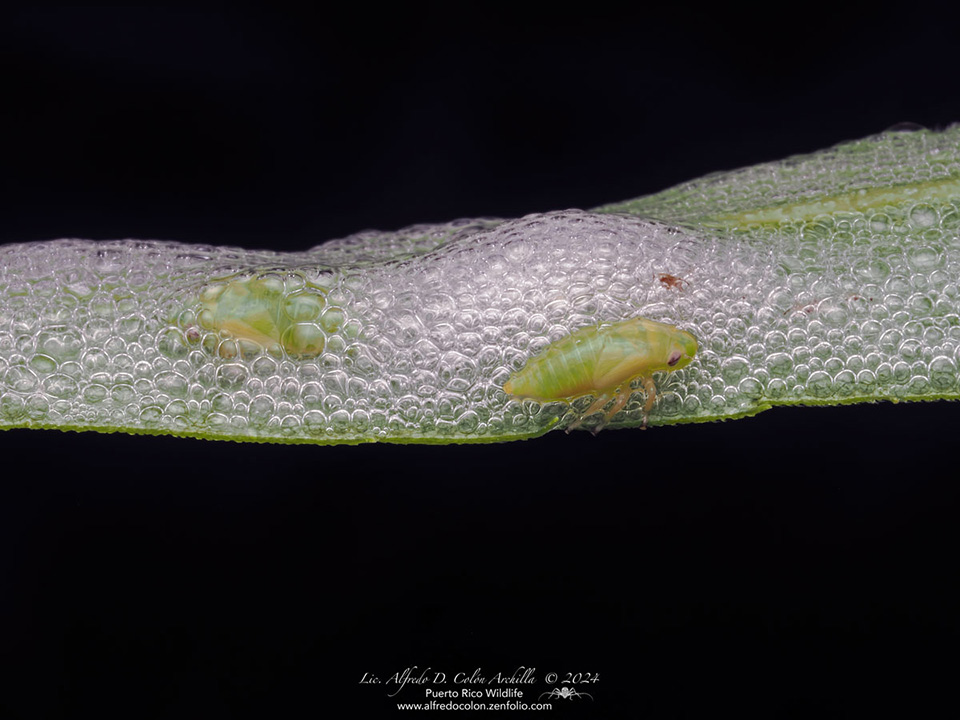
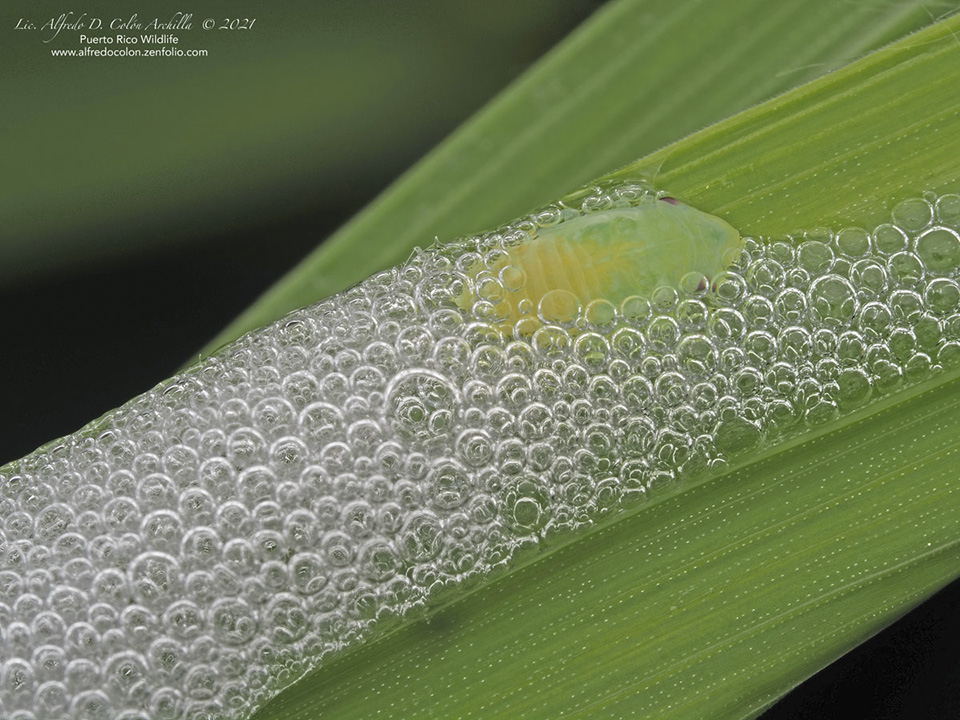
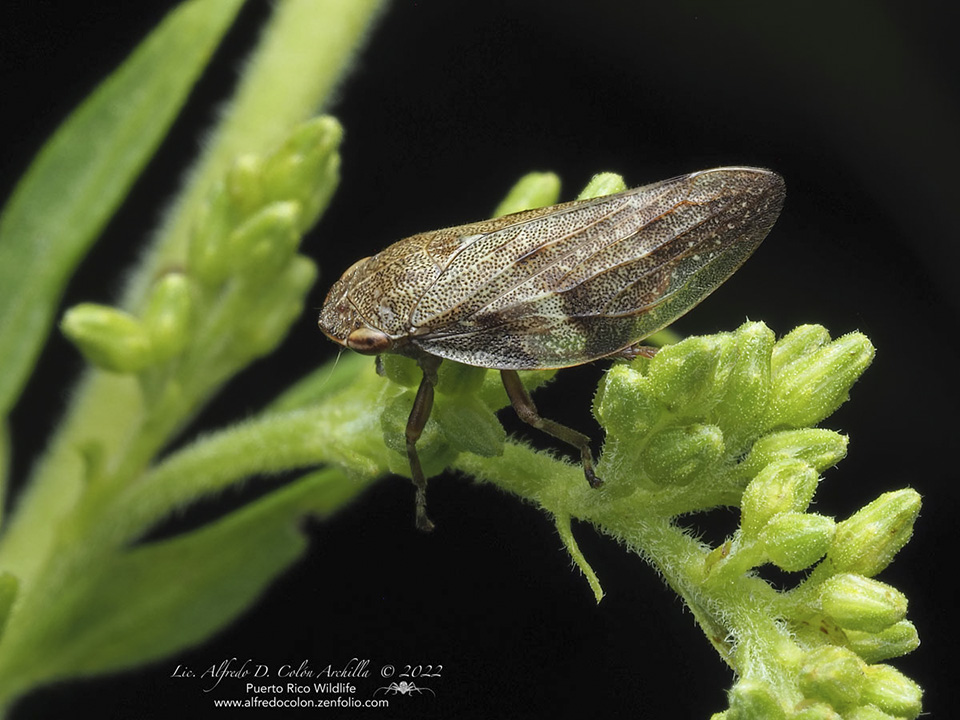
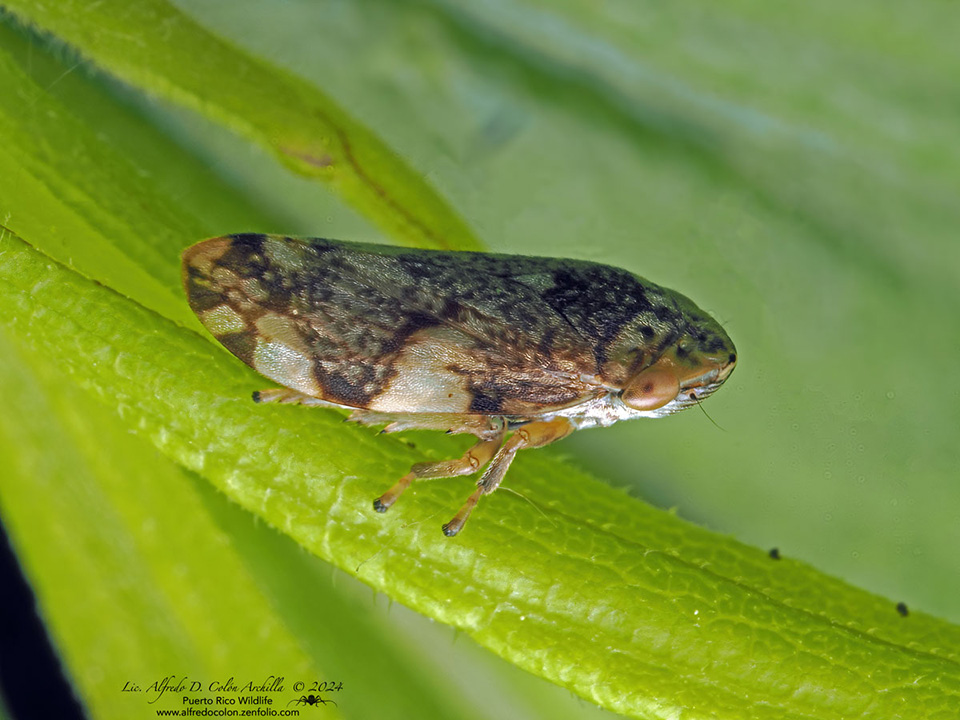
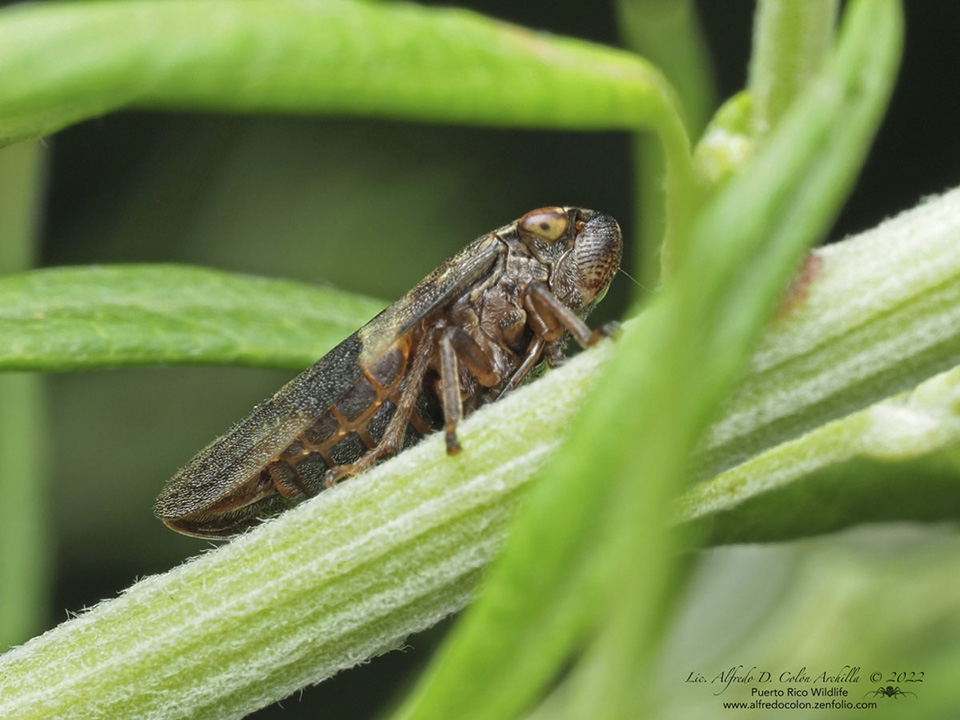
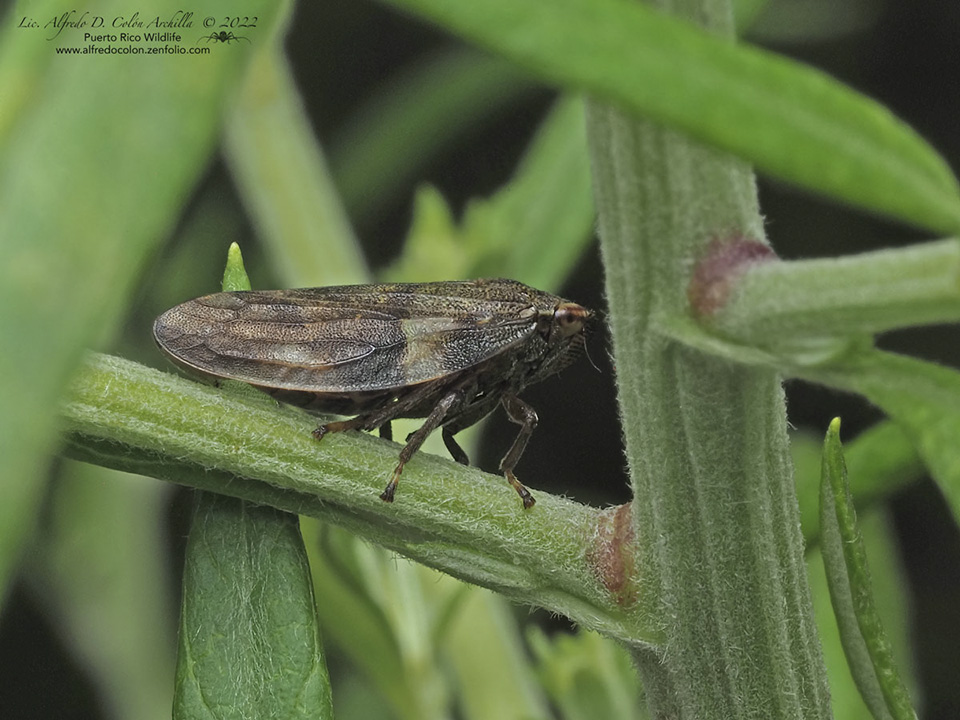
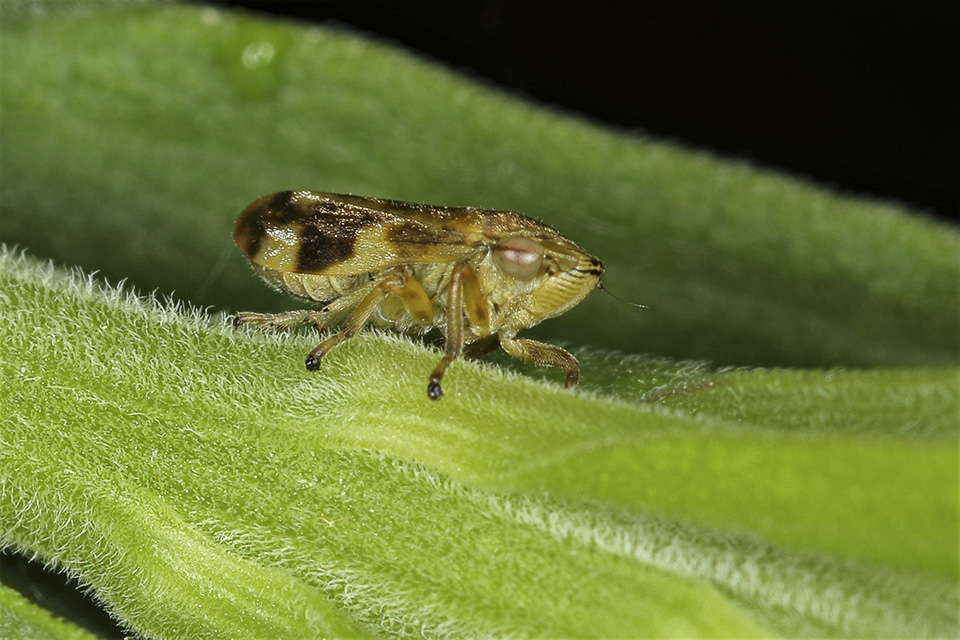
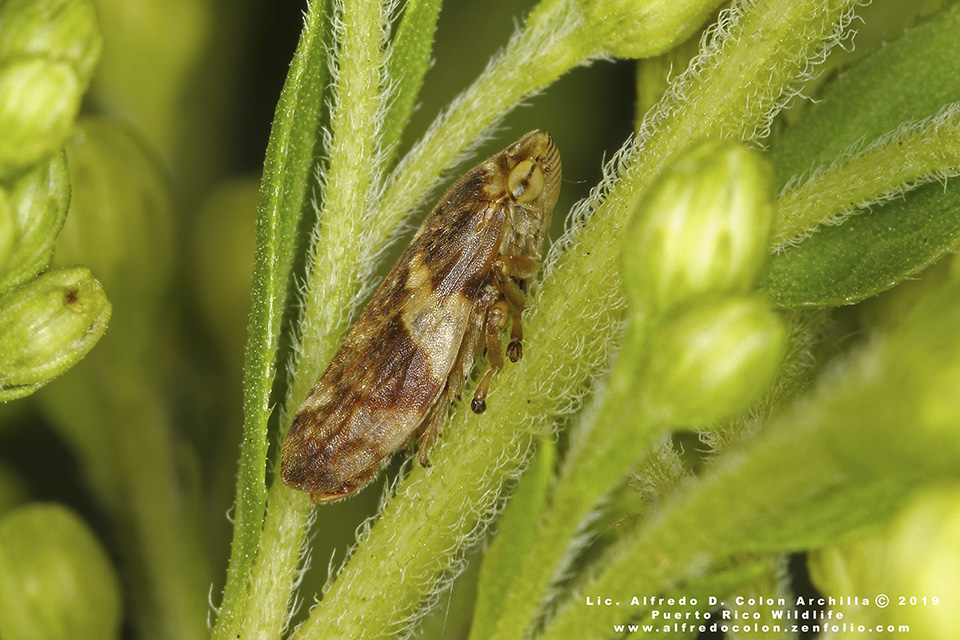
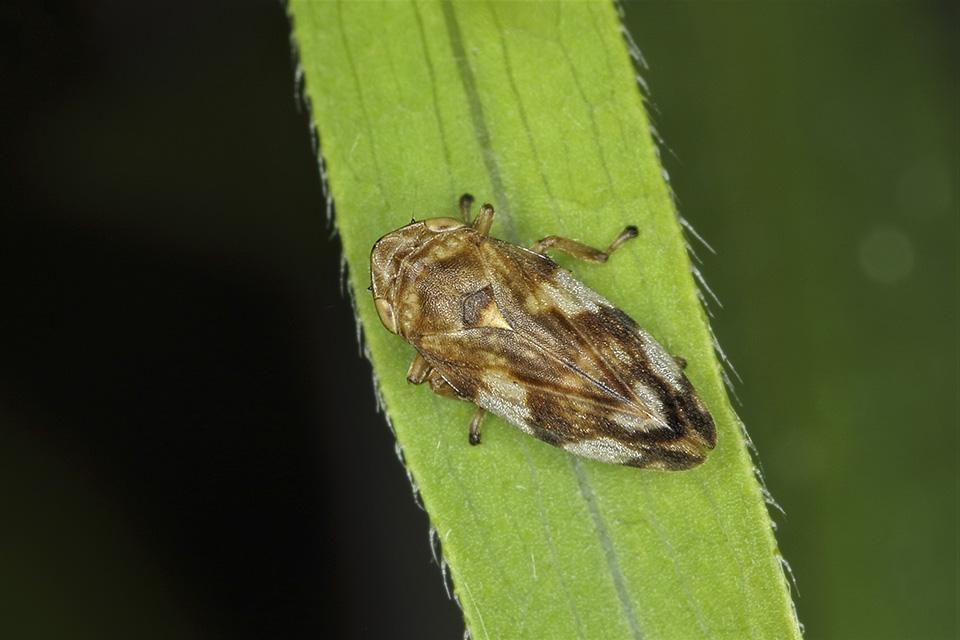
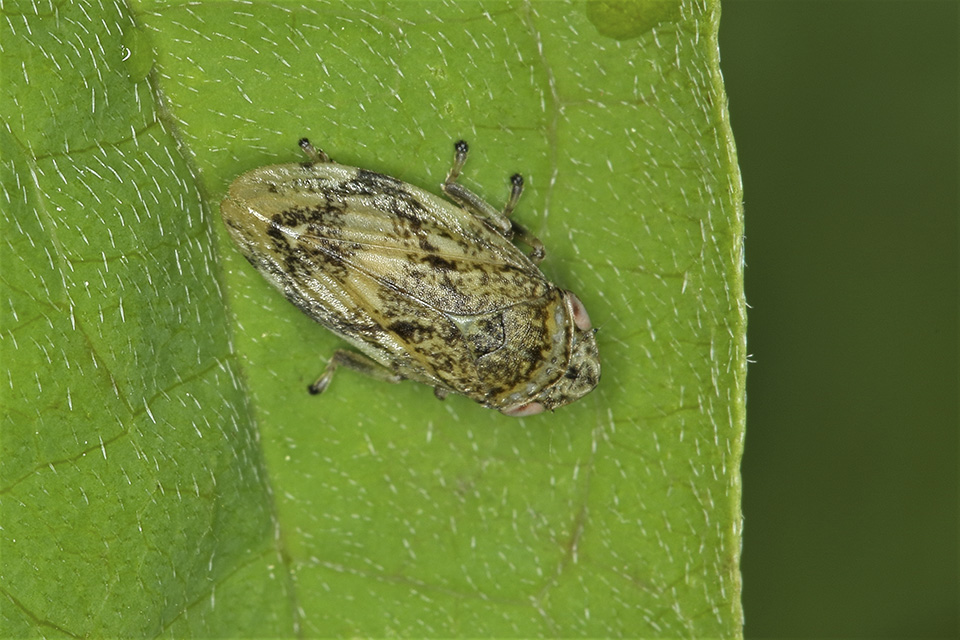
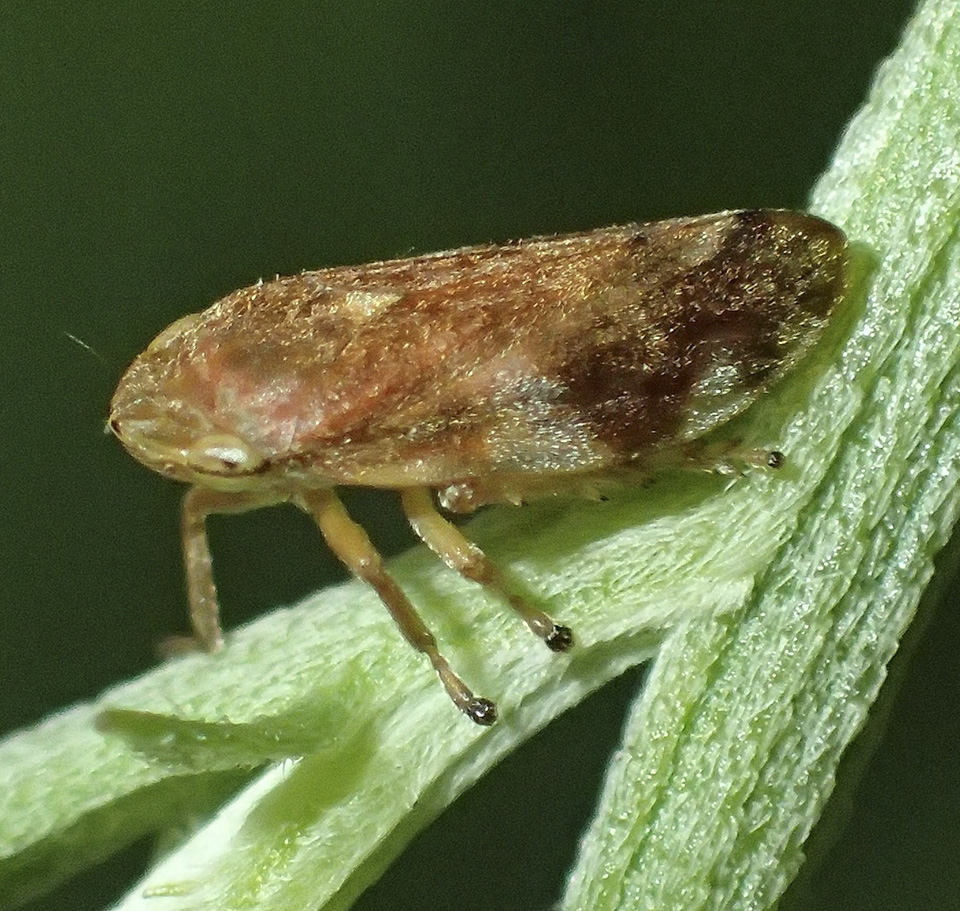
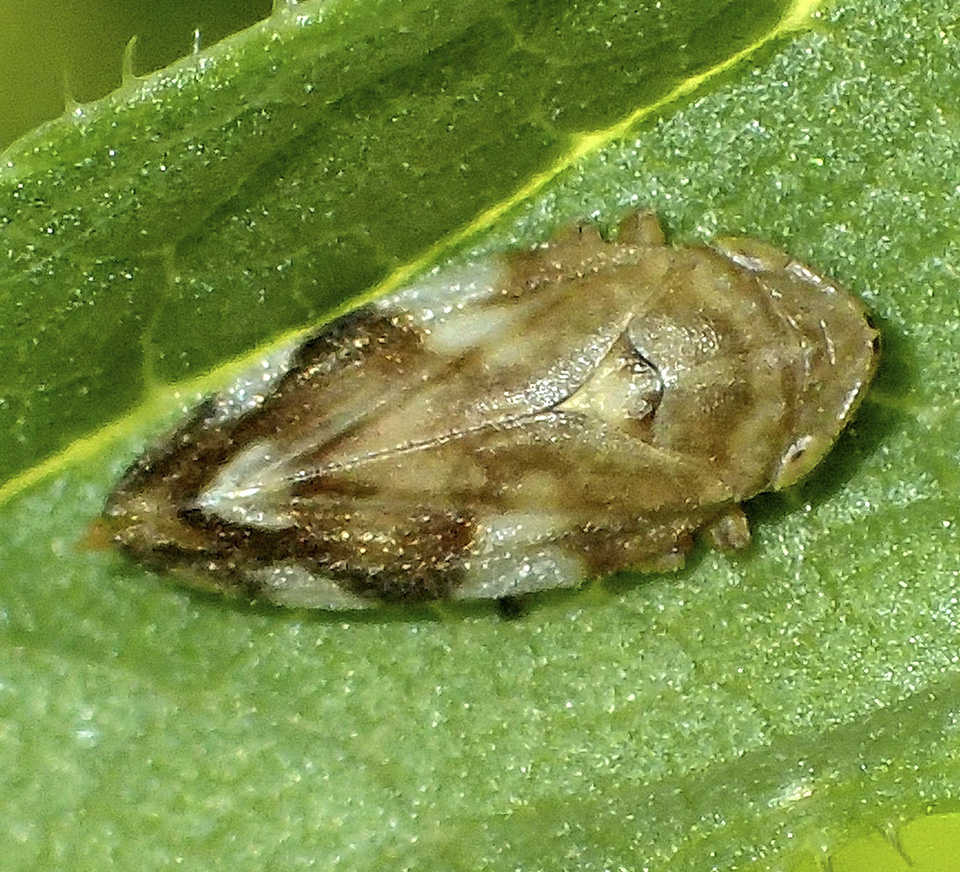
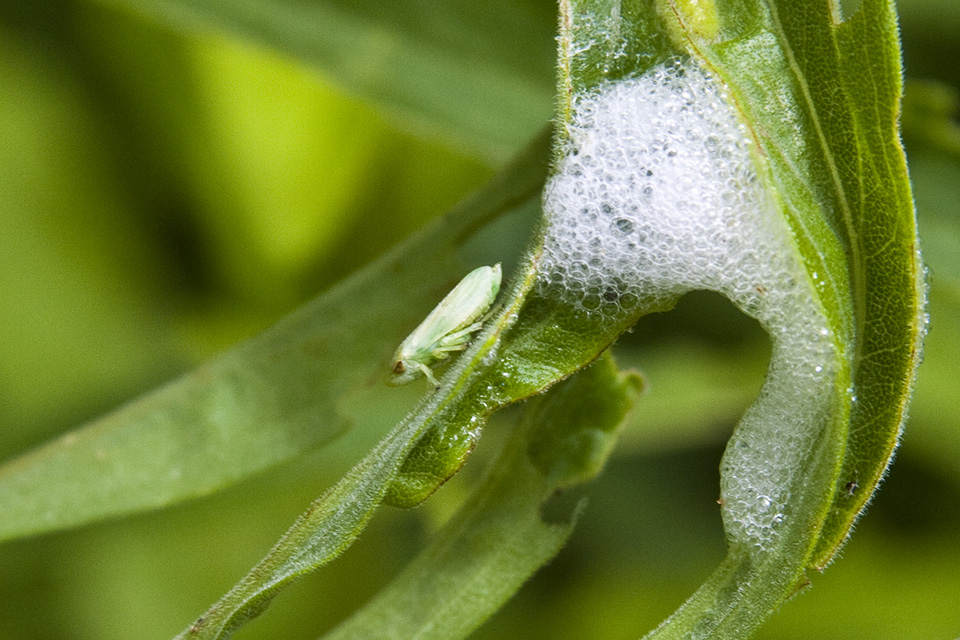
Meadow spittlebug is a small jumping insect. It is widespread across Europe, Asia, and North America. In the United States is most common east of the Great Plains and west of the Rocky Mountains. Minnesota marks the western extent of its eastern range in the U.S. In Minnesota, it is common to abundant in the east, mostly absent from the west. The adult is wedge-shaped, heavy-bodied, and about ⅜″ long. It has a blunt, rounded head, large eyes, and very short antennae. It has specialized, needle-like mouth parts enabling it to suck on plant parts. The body is usually tan to dull brown, sometimes gray or mottled. The markings are highly variable, but generally it is patterned with brown, black, and white. There are only 1 or 2 spines on the hind tibia. The wings have raised veins and are held like a tent over the body. The nymph is shaped similar to the adult but is smaller, about ¼″ long. In the first stage (instar) of growth the nymph is orange and wingless. In the second through fourth stages it is yellow and wingless. In the fifth (last) stage it is pale green and it develops wings. Nymphs produce frothy masses (spittle). The spittle may contain one or several nymphs, and is the primary indication of the presence of spittlebugs. |
Size |
Total length: ⅜″ |
Similar Species |
Habitat |
Parks, meadows, gardens, fields, marshes, and swamps. |
Ecology |
Season |
Early June through late September |
Behavior |
Adults do not produce spittle. They are relatively slow moving, but are the champion jumpers among insects, able to jump up to 27½″ vertically. The jump is powerful, generating up to 400 gravities, and produces an audible thump. |
Life Cycle |
Only one generation is produced each year. In late August and September, masses of up to 18 to 51 eggs are deposited 3″ to 6″ above the ground between a leaf sheath and stem of a host plant. The eggs overwinter and hatch in late April and May. Newly hatched nymphs immediately begin feeding where they hatch, near the base of the plant. They pierce the plant and suck on the sap. Later, they move up the plant, seeking sheltered, humid areas, such as leaf sheaths and folded leaves, or producing masses of spittle on tender foliage and blossom clusters. The spittle protects the nymphs from predators and from drying out. The nymph matures in June after 5 to 8 weeks. Most infected plants wilt and become stunted, resulting in reduced yield. |
Nymph Food |
A wide variety of plants, but especially red clover and alfalfa. |
Adult Food |
Over 400 species of plants, especially red clover, alfalfa, wheat, common oat, corn, and garden strawberry. |
Distribution |
||
|
Sources |
|
| 9/22/2024 | ||
Occurrence |
||
Widespread and common to abundant |
||
Taxonomy |
|
Order |
Hemiptera (True Bugs, Hoppers, Aphids, and Allies) |
Suborder |
Auchenorrhyncha (True Hoppers) |
Infraorder |
Cicadomorpha (Spittlebugs, Cicadas, Leafhoppers and Treehoppers) |
Superfamily |
Cercopoidea (Spittlebugs and Froghoppers) |
Family |
Aphrophoridae (true spittlebugs) |
Subfamily |
Aphrophorinae |
Tribe |
Philaenini |
Genus |
Philaenus |
Subordinate Taxa |
|
meadow spittlebug (Philaenus spumarius fasciatus) meadow spittlebug (Philaenus spumarius gibbus) meadow spittlebug (Philaenus spumarius lateralis) meadow spittlebug (Philaenus spumarius populellus) meadow spittlebug (Philaenus spumarius vittatus) |
|
Synonyms |
|
Cicada spumarius |
|
Common Names |
|
common froghopper cuckoo spit meadow froghopper meadow spittlebug spittlebug |
|
Glossary
Tibia
The fourth segment of an insect leg, after the femur and before the tarsus (foot). The fifth segment of a spider leg or palp. Plural: tibiae.
Visitor Photos |
||
Share your photo of this insect. |
||
This button not working for you? |
||
Alfredo Colon |
||
 |
 |
|
 |
 |
|
 |
 |
|
 |
 |
|
|
 |
|
 |
 |
|
 |
 |
|
 |
 |
|
 |
 |
|
Babette Kis |
||
 |
 |
|
Meadow spittlebug Philaenus spurmarius Philaenus spurmarius, meadow spittlebug, Barnes Prairie, Racine Co., WI. |
||
MinnesotaSeasons.com Photos |
||
 |
|

Slideshows |
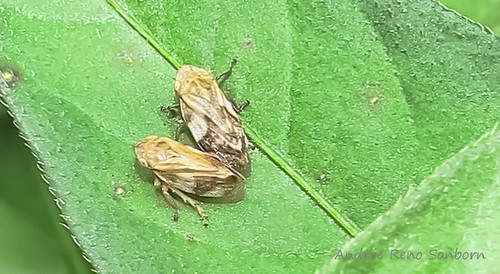
Meadow Spittlebug (Philaenus spumarius) |
|

Visitor Videos |
||
Share your video of this insect. |
||
This button not working for you? |
||
|
Other Videos |
||
Wiesenschaumzikade (Philaenus spumarius) |
About
Published on Dec 5, 2012 Wiesenschaumzikade (Philaenus spumarius) http://www.Tierportraet.ch |
Meadow Spittlebug (Aphrophoridae: Philaenus spumarius) Adult |
About
Uploaded on May 27, 2010 Photographed at the Rydell NWR, Minnesota (27 May 2010). Go here to learn more about this species: http://minnesotaseasons.com/Insects/m... |
Meadow Spittlebug Nymph (Cercopidae: Philaenus spumarius) on Clover |
About
Uploaded on Jun 15, 2011 This is an early instar nymph. Go here to see a larger image of this organism: http://bugguide.net/node/view/507202/bgimage / Photographed at the Turtle River State Park, North Dakota (14 June 2011). |
Meadow Spittlebug (Cercopidae: Philaenus spumarius) on Grass Stem |
About
Uploaded on Jun 30, 2010 Photographed at Turtle River State Park, North Dakota (30 June 2010). Go here to learn more about this species: http://minnesotaseasons.com/Insects/meadow_spittlebug.html |

Visitor Sightings |
||
Report a sighting of this insect. |
||
This button not working for you? |
||
Alfredo Colon |
Location: Albany, NY |
 |
| Alfredo Colon 8/7/2022 |
Location: Albany, NY |
|
| Alfredo Colon 8/2/2022 |
Location: Albany, NY |
|
| Alfredo Colon 8/2/2022 |
Location: Albany, NY |
|
| Babette Kis 6/26/2022 |
Location: Barnes Prairie, Racine Co., WI Philaenus spurmarius, meadow spittlebug, Barnes Prairie, Racine Co., WI. |
|
| Babette Kis 6/22/2021 |
Location: Barnes Prairie, Racine Co., WI Philaenus spurmarius, meadow spittlebug, Barnes Prairie, Racine Co., WI. |
|
| Alfredo Colon 6/2/2021 |
Location: Woodbury, MN |
|
| Alfredo Colon 8/2/2019 |
Location: Woodbury, Minnesota |
|
| Alfredo Colon Summer 2018 |
Location: Woodbury, Minnesota |
|
MinnesotaSeasons.com Sightings |
||
Created: 3/18/2019 Last Updated: © MinnesotaSeasons.com. All rights reserved. |