



Red-spotted Purple
(Limenitis arthemis astyanax)
Conservation • Description • Habitat • Ecology • Distribution • Taxonomy
|
|
|||||||||||||

Description |
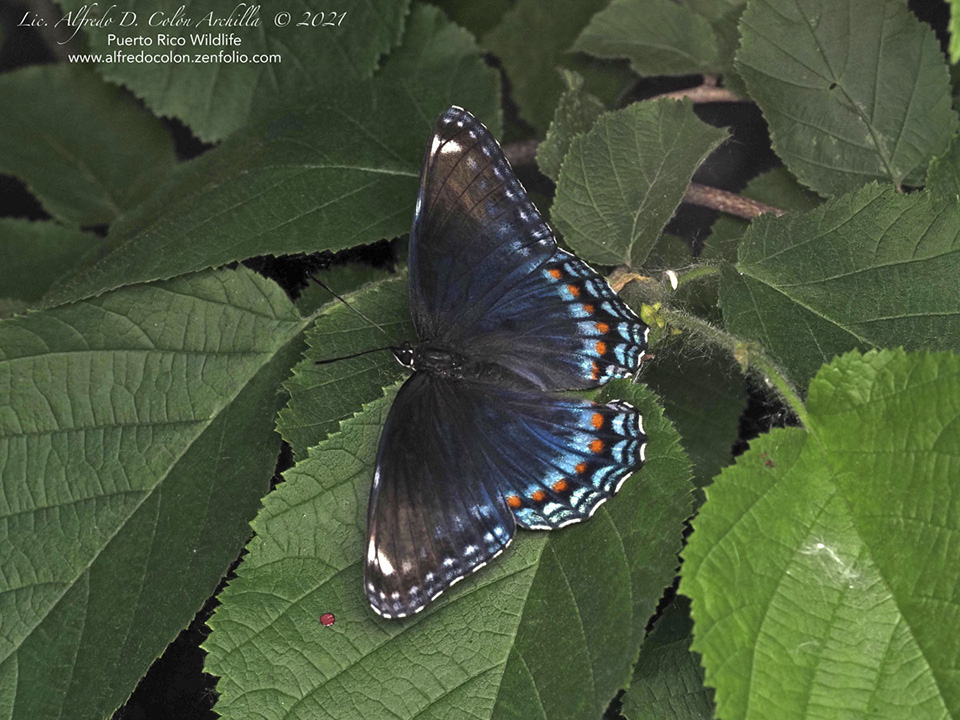
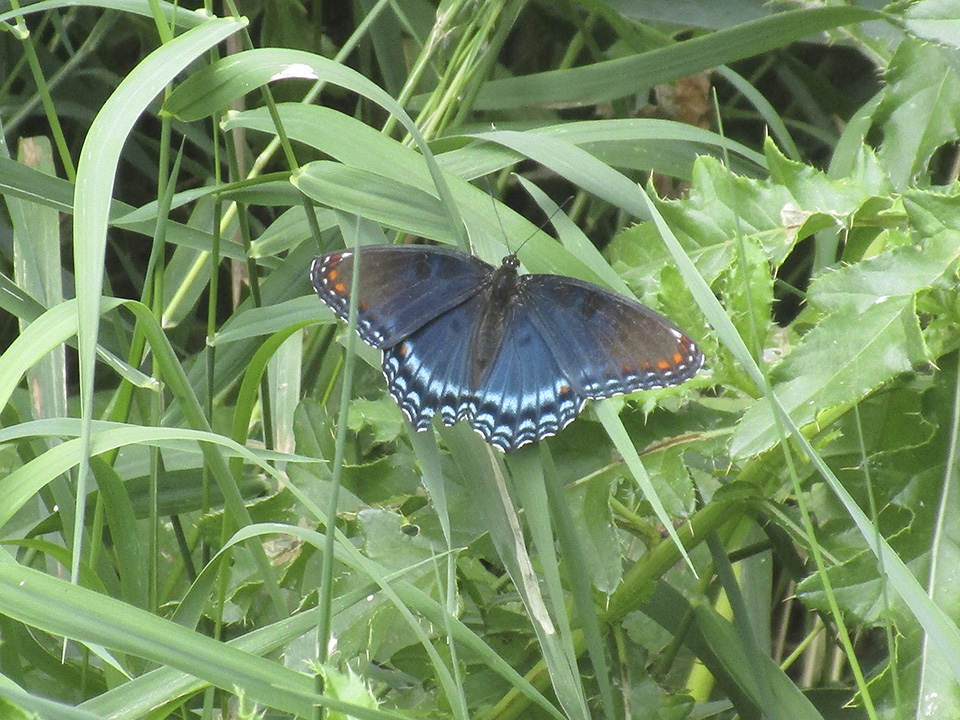
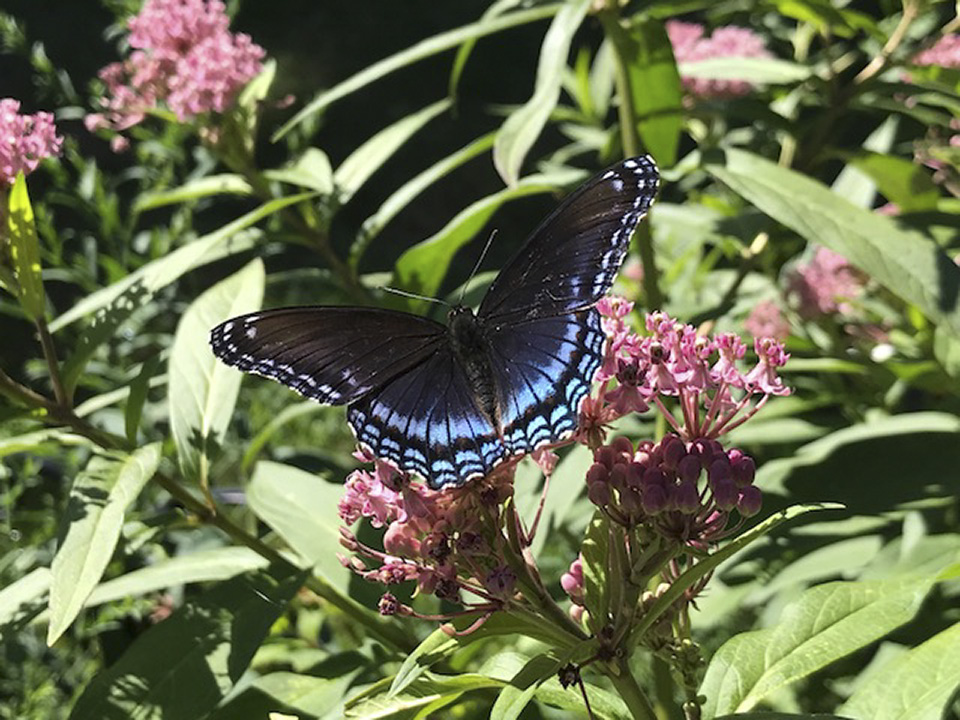
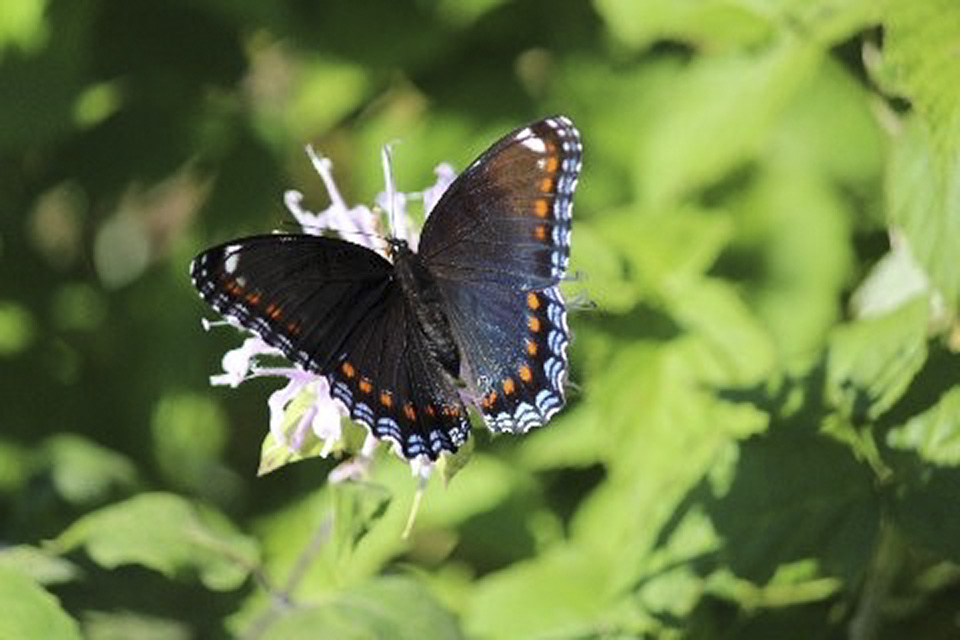
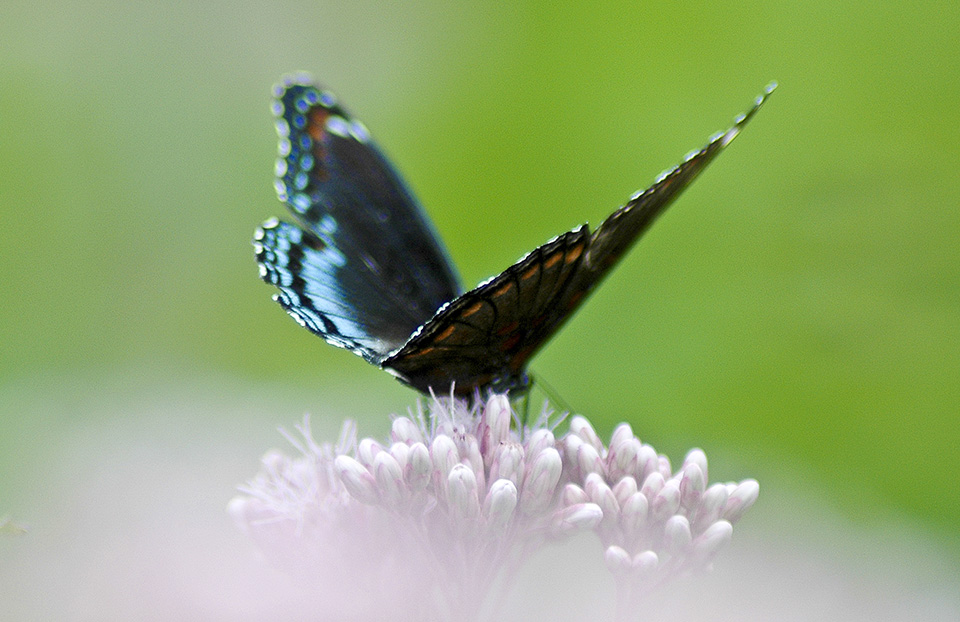
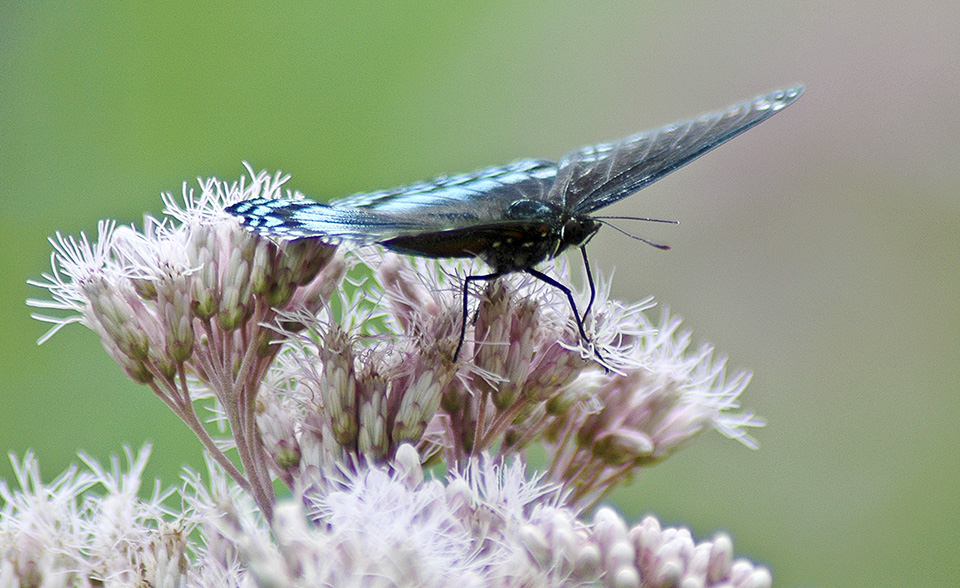
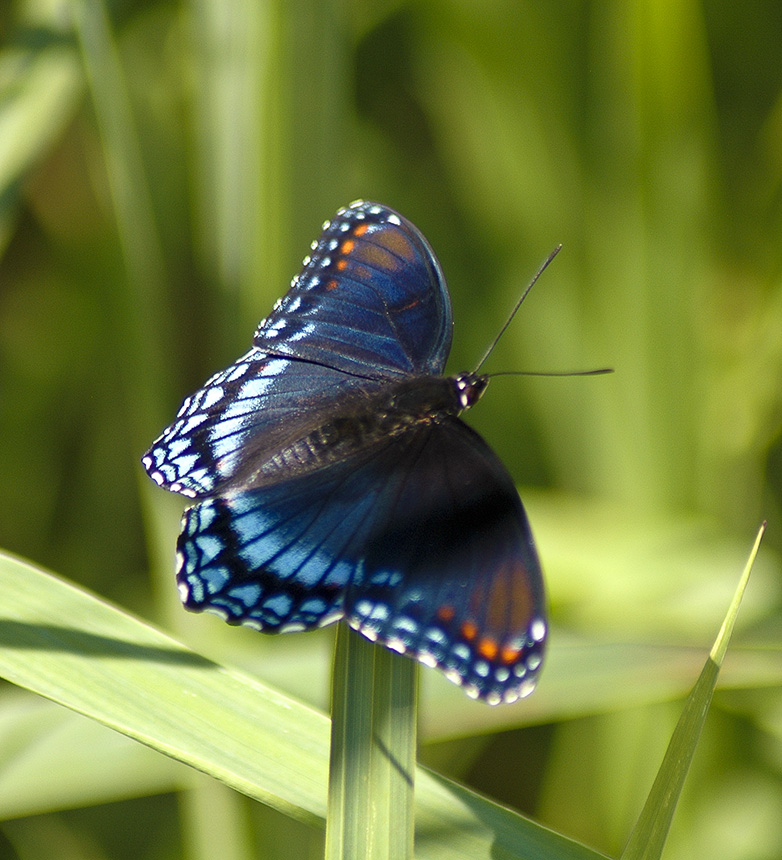
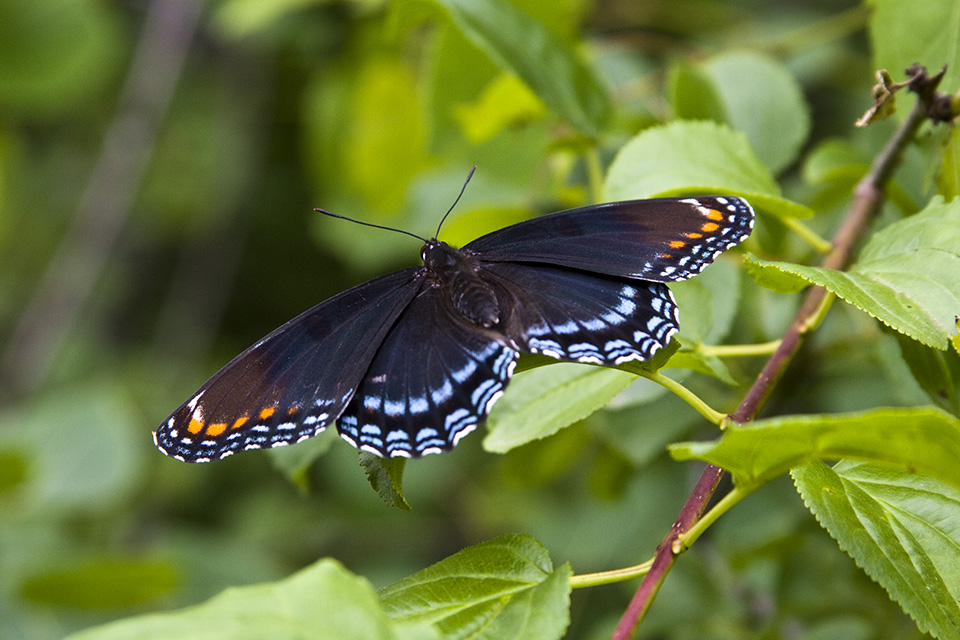
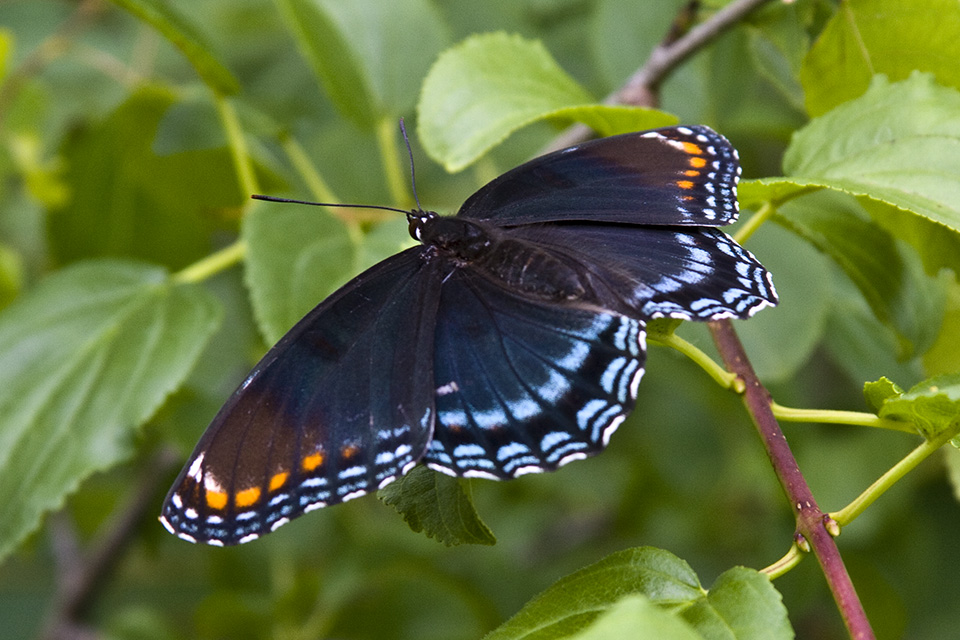
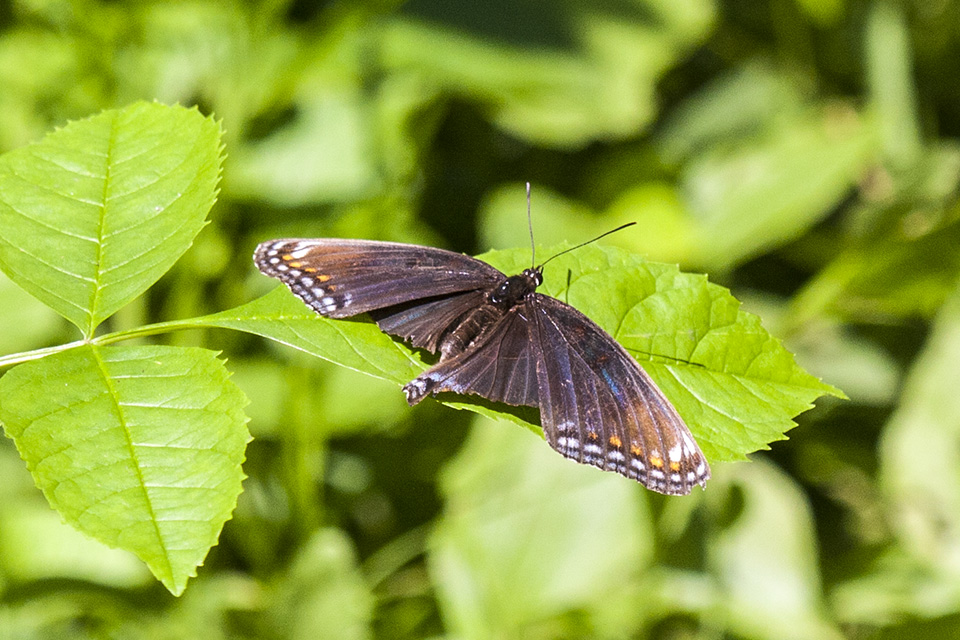
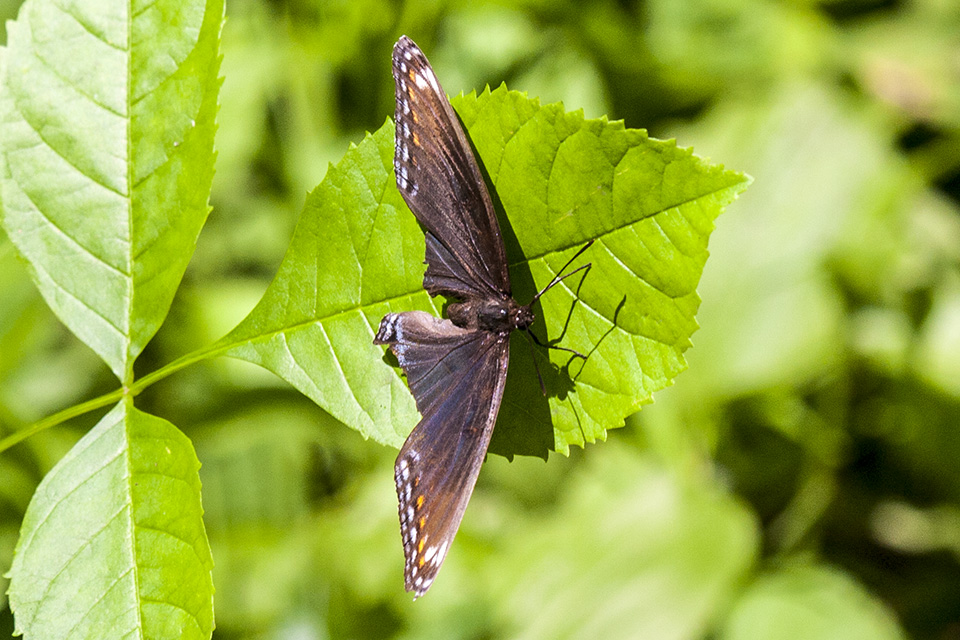
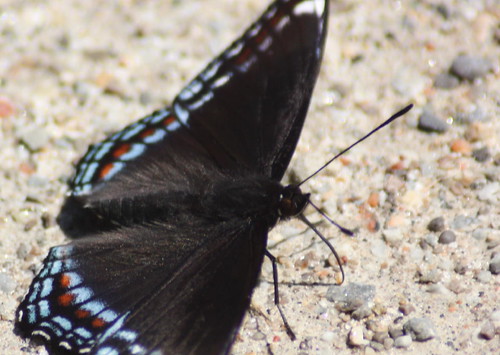
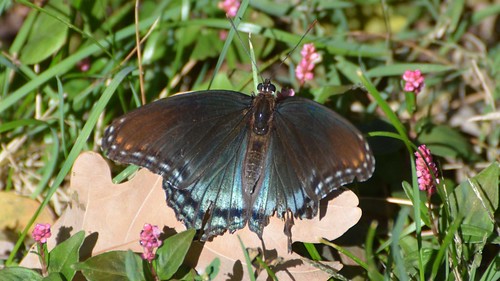
Red-spotted purple is a large brush-footed butterfly with a 3″ to 3½″ wingspan. The upper side is dark blue, the underside is dark brown. The upper side of the forewing is dark bluish-black near the body fading to dark brown or orangish-brown near the tip. There is a submarginal row of orange spots and three marginal rows white or pale blue spots. The upper side of the hindwing is dark blue fading to a submarginal row of iridescent light blue spots. There are also three marginal rows pale blue spots. The underside of both wings is brownish-black with a submarginal row of orange spots and three marginal rows white or pale blue spots. There are additional black-ringed orange spots near the base of each wing. The range of this species overlaps that of the White Admiral (Limenitis arthemis arthemis) in a broad band from Connecticut to southwestern Minnesota. Where the ranges overlap the subspecies interbreed and produce offspring with intergrading characteristics. |
Size |
Wingspan: 3″ to 3¼″ |
Similar Species |
Habitat |
Deciduous or mixed forests dominated by aspen or birch. |
Ecology |
Season |
Late May to early September |
Behavior |
|
Life Cycle |
The female lays eggs singly on leaf tips of host plants. Offspring of the first brood emerge in August. The offspring of the second brood overwinter as caterpillars in rolled leaves, pupate in the spring, and emerge as adults in June. |
Larva Hosts |
Leaves of American basswood, aspen, birch, black cherry, hawthorn, oak, serviceberry, willow, and other trees. |
Adult Food |
Sap flows, rotting fruit, aphid honeydew, carrion, dung, and occasionally nectar from small white flowers including meadowsweet and arrowwood. |
Distribution |
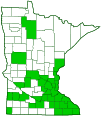
||
|
Sources Biodiversity occurrence data published by: Minnesota Biodiversity Atlas (accessed through the Minnesota Biodiversity Atlas Portal, bellatlas.umn.edu, XX/XX/XXXX). |
|
Occurrence |
||
|
||
Taxonomy |
|
Order |
|
Superfamily |
Papilionoidea (Butterflies) |
Family |
|
Subfamily |
Limenitidinae (admirals and allies) |
Tribe |
Limenitidini |
Subtribe |
Limenitidina (admirals) |
Genus |
Limenitis |
Species |
Limenitis arthemis (red-spotted admiral) |
Subordinate Taxa |
|
|
|
Synonyms |
|
Basilarchia arthemis astyanax Basilarchia astyanax Callianira ephestiaena Limenitis arthemis astyanax Limenitis astyanax Limenitis ephestion Limenitis ursula Najas turbida ephestion Nymphalis ephestion Nymphalis ursula |
|
Common Names |
|
Red-spotted Purple |
|
Visitor Photos |
||
Share your photo of this insect. |
||
This button not working for you? |
||
Shamiah S |
 |
Joan Miller |
||
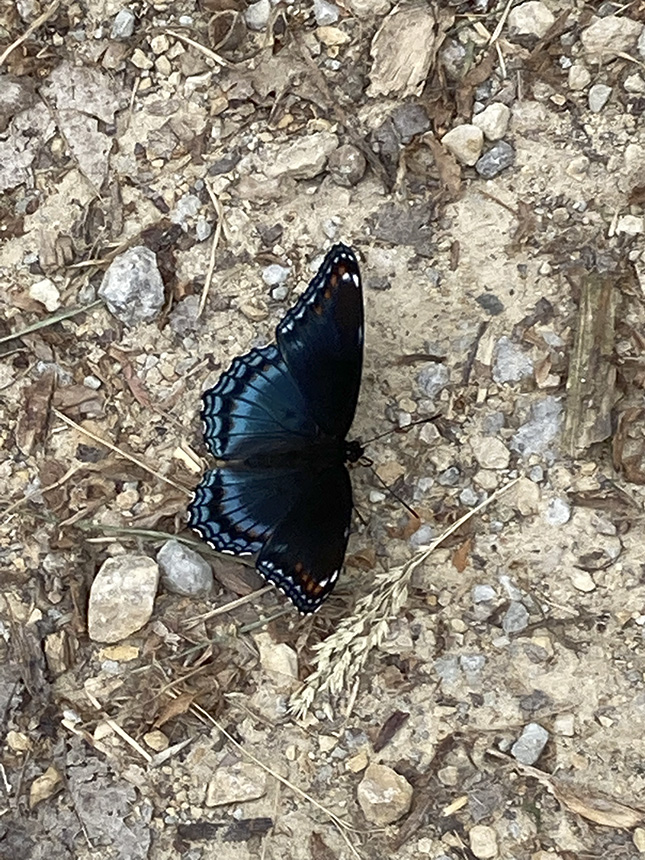
It landed on my common milkweed which is heavily covered with aphid honeydew. The milkweed grows in my backyard vegetable garden. It's a beautiful butterfly that I have never seen before today. |
||
 |
 |
|
Stephanie Burley |
 |
Alfredo Colon |
 |
Margot Avey |
||
 |
 |
|
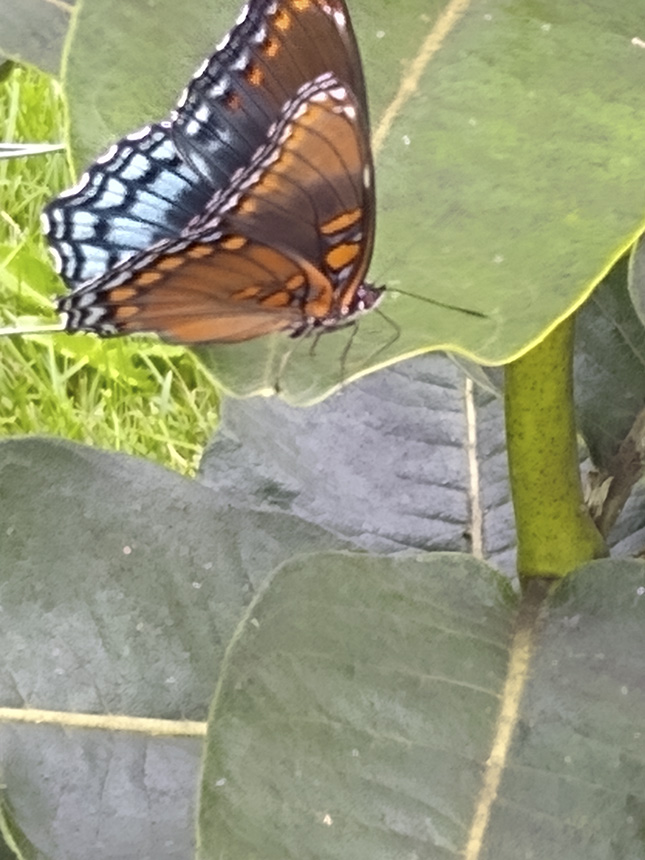
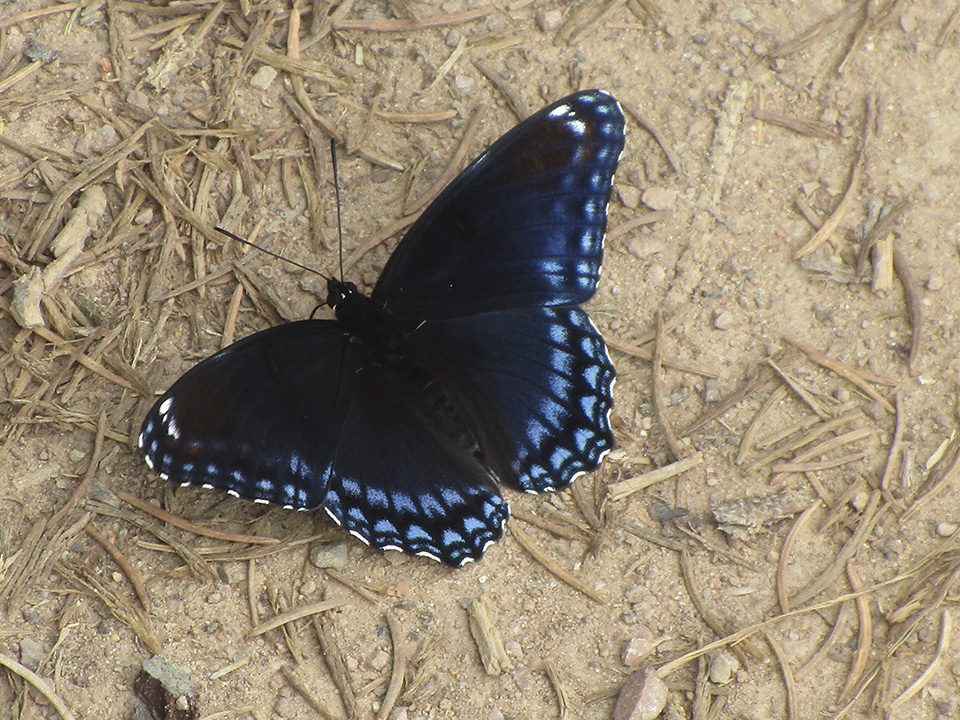
I took this photo on August 1st at Westwood Nature Center in St Louis Park, MN. I believe it is a Red-Spotted Purple Swallowtail. |
Here is one more photo I shot at the end of July at the gardens at Crystal Bay on Lake Minnetonka, MN. It is exquisite! | |
Nanc |
||
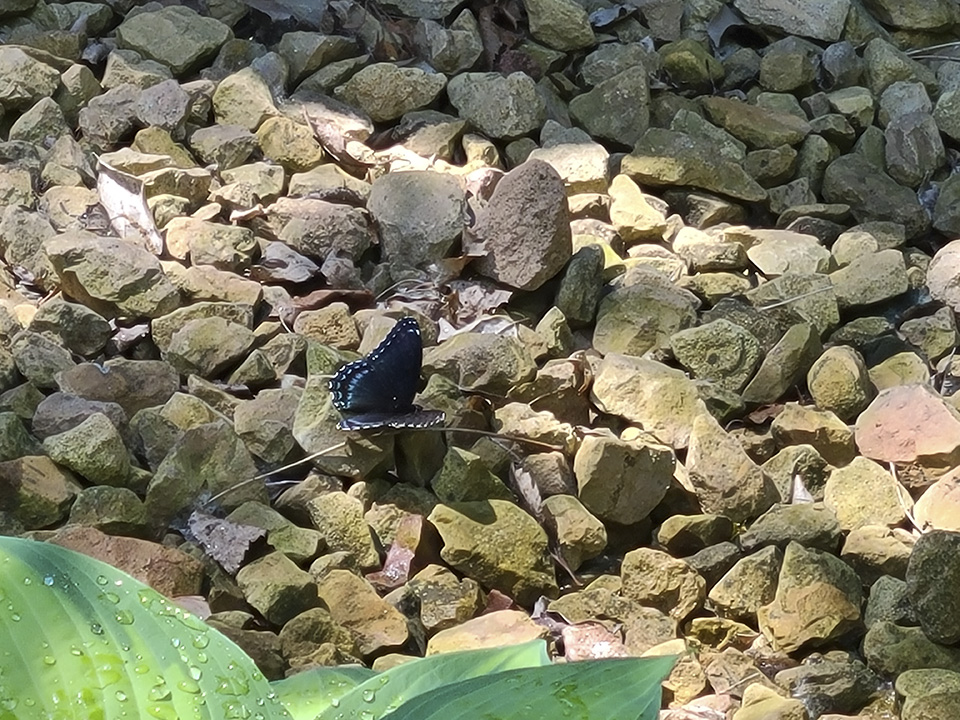
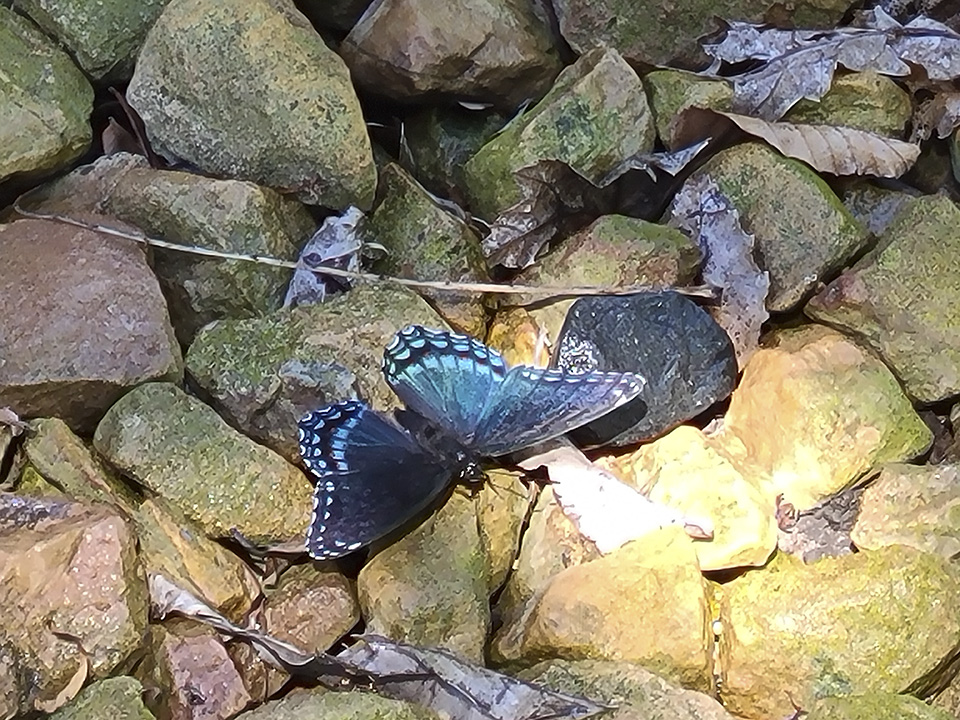
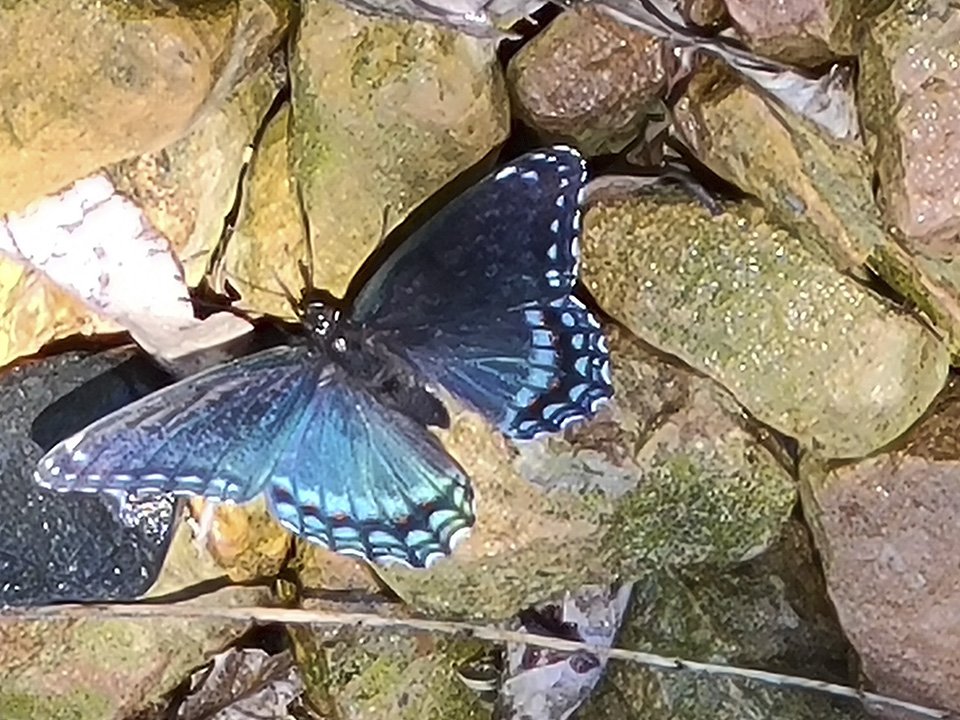
Spotted in front yard rocks. |
||
 |
 |
|
 |
||
Heidi Wahl |
 |
Jon Burgoyne |
||
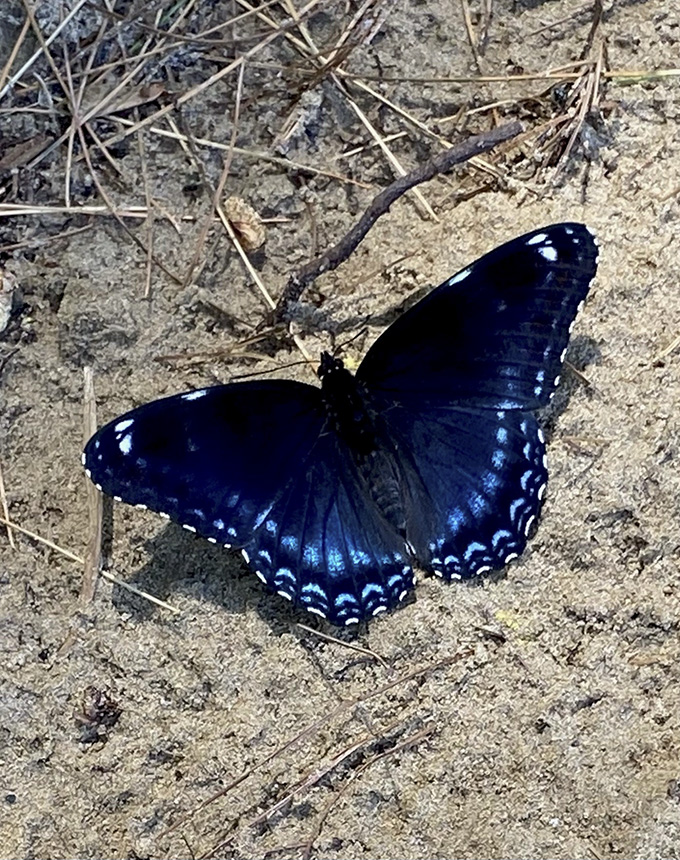
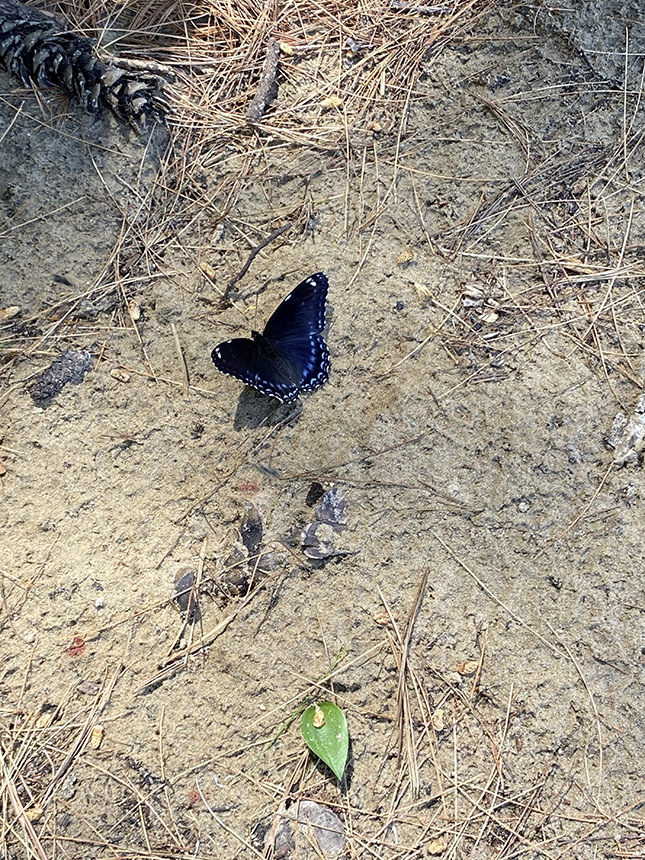
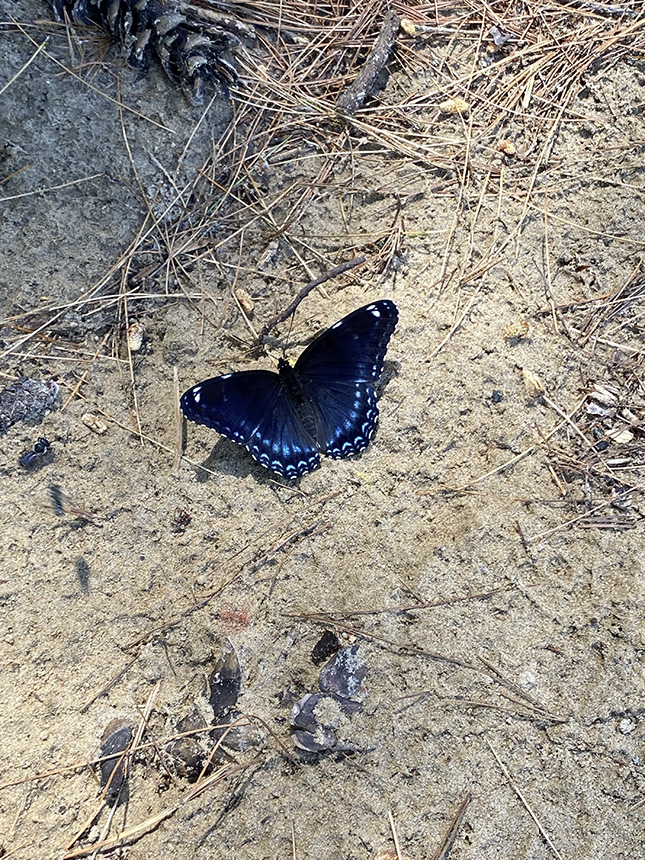
Sand Dunes State Forest surprise |
||
 |
 |
|
 |
||
Chris Larson |
||
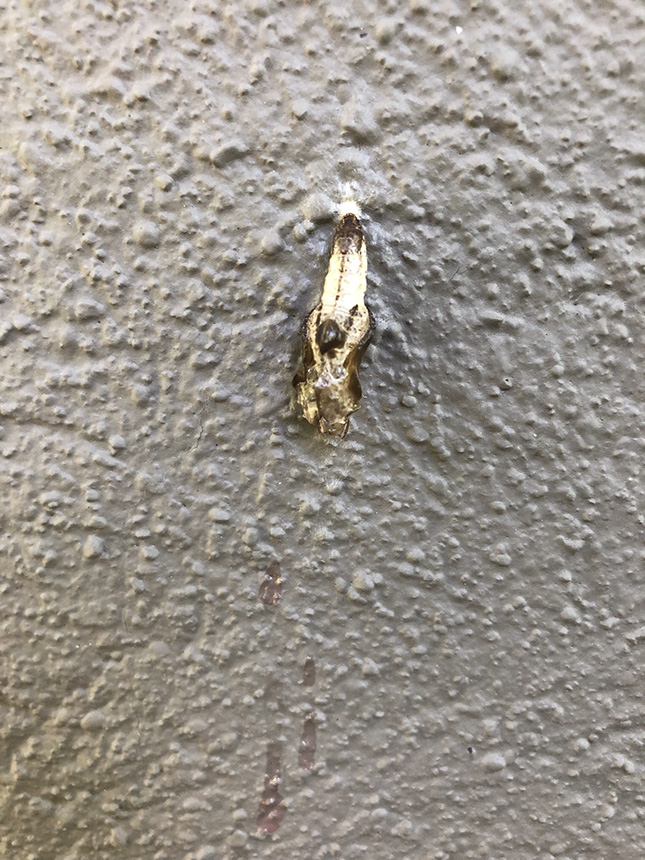
Freshly emerged from the cocoon. |
||
 |
 |
|
 |
||
Laurén D. |
||
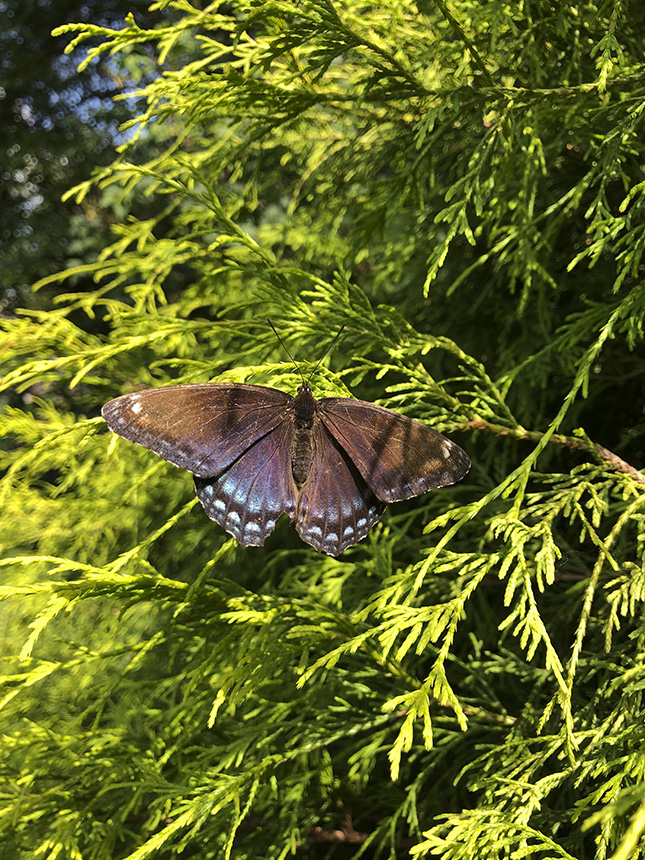
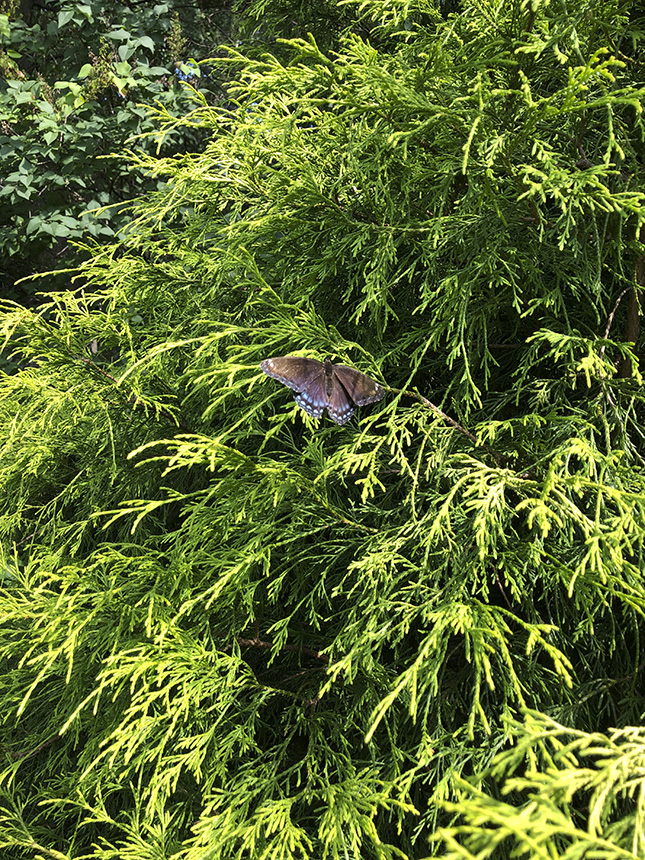
My first time seeing one in our garden. A true beauty! |
||
 |
 |
|
Lynda |
First time I’ve seen this beauty in my garden |
 |
Ida Marie |
||
Never seen one before.....beautiful!! |
||
 |
 |
|
Tom Baker |
||
 |
 |
|
 |
||
MinnesotaSeasons.com Photos |
||
 |
 |
|
Fresh |
Fresh |
|
 |
|
|
Fresh |
||
|
||
|
||
|
Fresh | |
 |
 |
|
Worn |
Worn |

Slideshows |
Red Spotted Purple |
|
About
Copyright DianesDigitals |
Limenitis arthemis (Red-spotted Purple) |

|
Red-spotted Purple Butterfly |
|

Visitor Videos |
||
Share your video of this insect. |
||
This button not working for you? |
||
|
Other Videos |
||
Garden Butterfly: Limenitis Arthemis Astyanax (Black and Blue Wings) |
About
Published on Aug 20, 2012 Part of gardening is the wildlife. This is a video the shows the beautiful colors of the Limenitis Arthemis Astyanax. Black velvet wings with sky blue light markings on the edge. The upper parts of the wing and undersides have rust orange spots. The butterfly sits on a Sedum. |
Red Spotted Purple Butterfly |
About
Uploaded on Jul 8, 2010 Red-spotted Purple butterfly (Limenitis arthemis astyanax) warming wings and nectaring from native meadowsweet (Spirea latifolia), filmed in our Gloucester garden in early July. |

Visitor Sightings |
||
Report a sighting of this insect. |
||
This button not working for you? |
||
| Shamiah S 6/7/2023 |
Location: Cannon Falls MN |
|
| Joan Miller 7/31/2022 |
Location: Rochester, MN It landed on my common milkweed which is heavily covered with aphid honeydew. The milkweed grows in my backyard vegetable garden. It's a beautiful butterfly that I have never seen before today. |
|
| Stephanie Burley 7/12/2022 |
Location: Edina, MN |
|
| Margot Avey 8/1/2021 |
Location: Westwood Nature Center, St. Louis Park, MN I took this photo on August 1st at Westwood Nature Center in St Louis Park, MN. I believe it is a Red-Spotted Purple Swallowtail. |
|
| Alfredo Colon 6/4/2021 |
Location: Woodbury, MN |
|
| Nanc 6/5/2021 |
Location: Brooklyn Park, Mn Spotted in front yard rocks. |
|
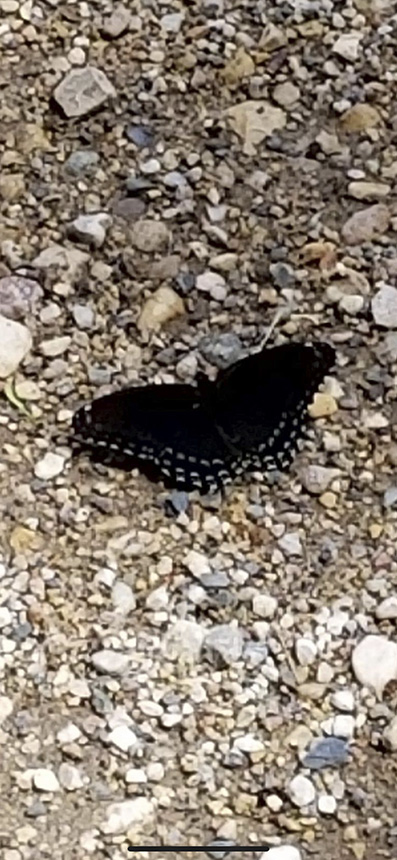
| Heidi Wahl 6/11/2021 |
Location: Richville MN |
|
| Jon Burgoyne 6/9/2021 |
Location: Sherburne Sand Dunes State Forest surprise |
|
| Margot Avey 6/4/2020 |
Location: Noerenberg Memorial Gardens - Three Rivers Park District, Crystal Bay, Lake Minnetonka MN Here is one more photo I shot at the end of July at the gardens at Crystal Bay on Lake Minnetonka, MN. It is exquisite! |
|
| Chris Larson 7/25/2019 |
Location: Edina, MN Freshly emerged from the cocoon. |
|
| Laurén D. 7/15/2019 |
Location: Lake Phalen, Saint Paul, Ramsey County MN My first time seeing one in our garden. A true beauty! |
|
| Roman 7/20/2018 |
Location: Edina Discovered this in my backyard floating between the cherry, aspen and basswood trees! |
|
| Lynda 7/19/2018 |
Location: Richfield, MN First time I’ve seen this beauty in my garden |
|
| Ida Marie 7/29/2016 |
Location: Ramsey, MN, near the Mississippi River Never seen one before.....beautiful!! |
|
MinnesotaSeasons.com Sightings |
||
Created: 6/16/2010 Last Updated: © MinnesotaSeasons.com. All rights reserved. |