


Eastern Cottontail - Species Profile
Conservation • Description • Habitat • Ecology • Distribution • Taxonomy
Conservation Status |
|
|||
| IUCN Red List | LC - Least Concern |
|||
| NatureServe | N5 - Secure SNR - Unranked |
|||
| Minnesota | not listed |
|||
Description
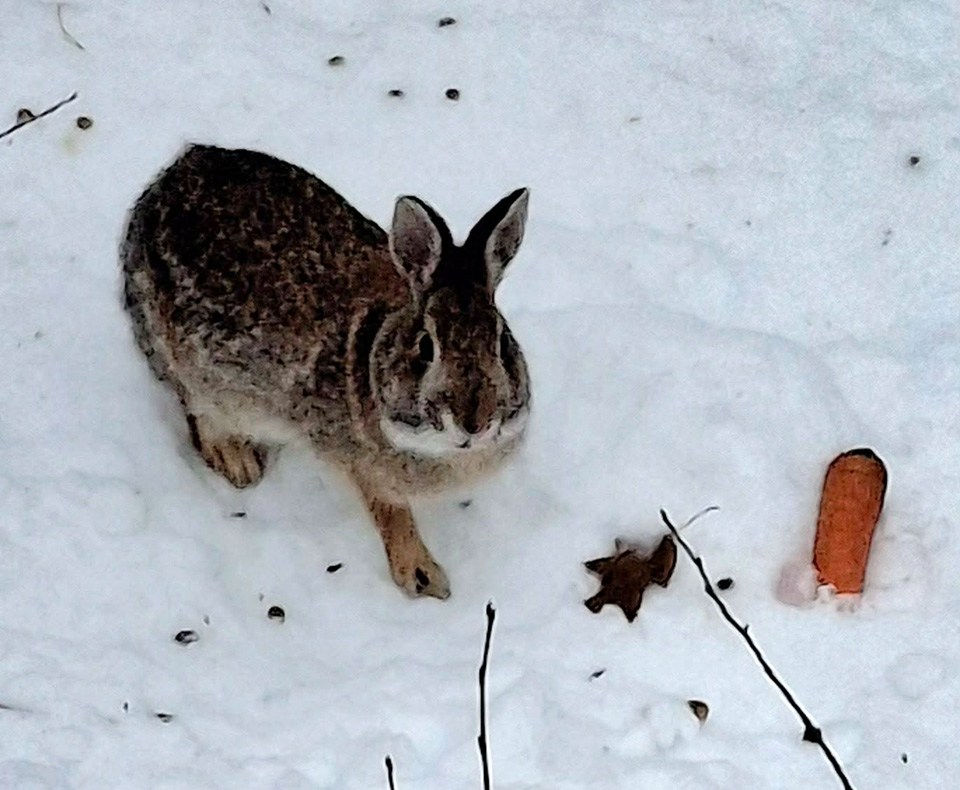
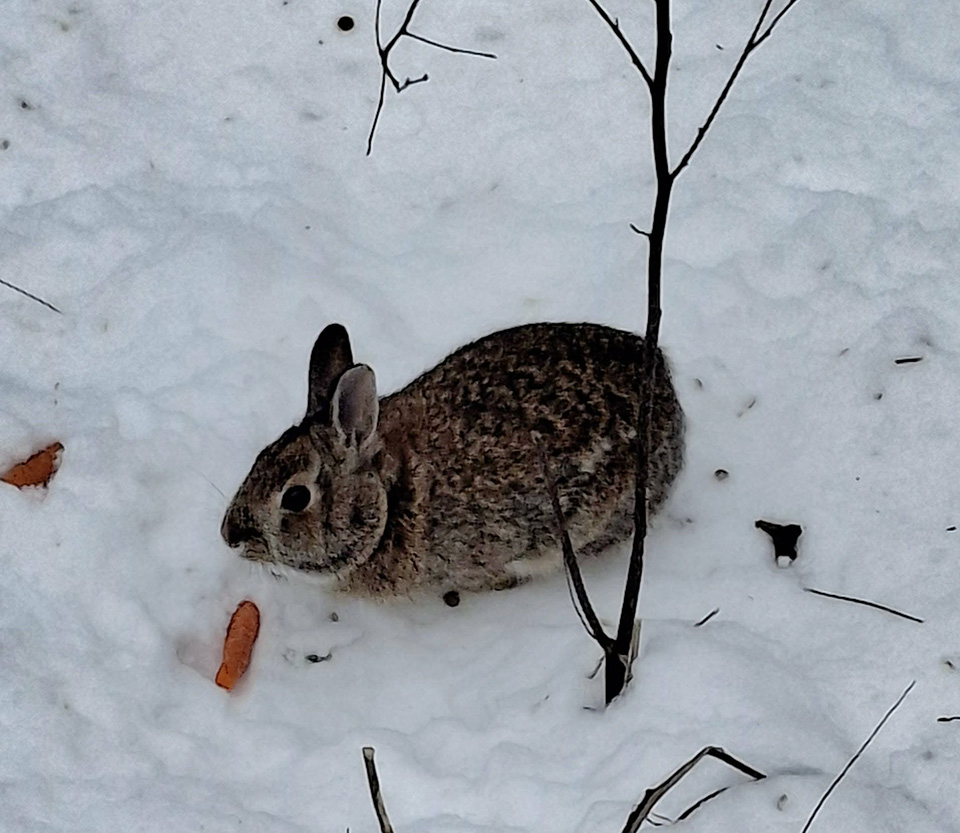
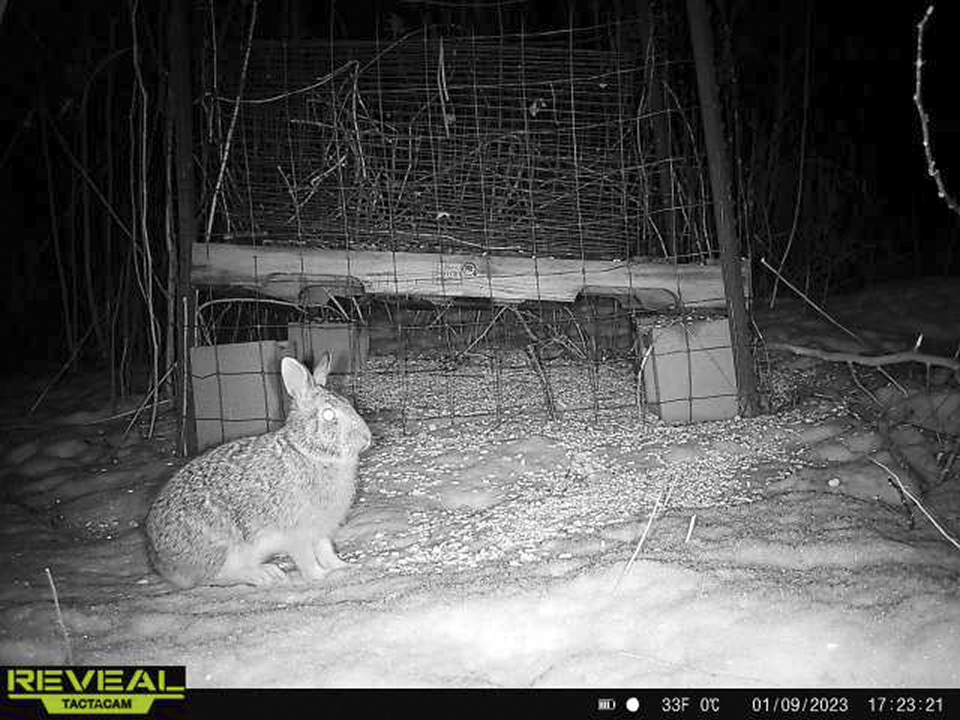
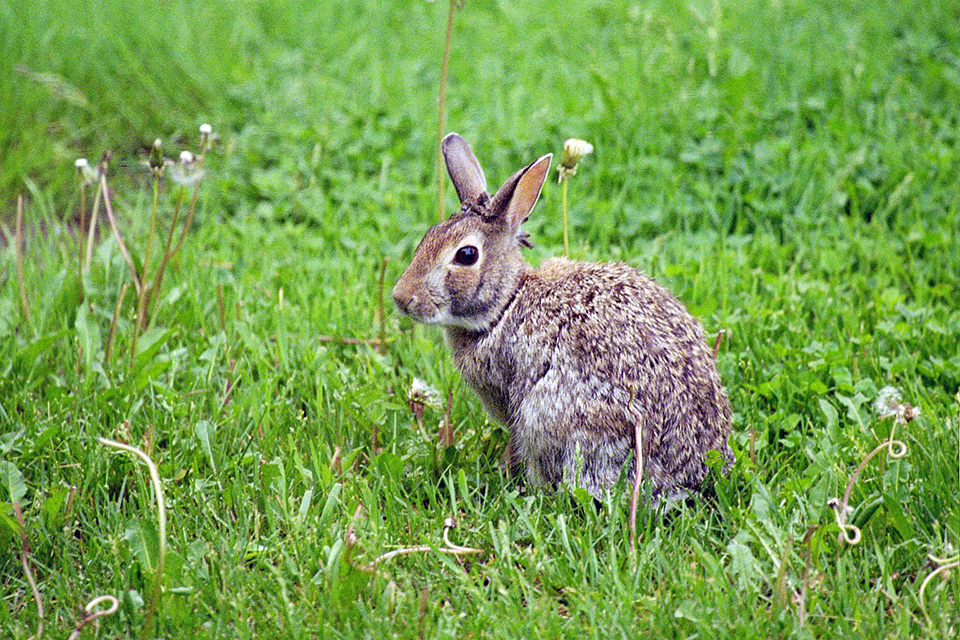
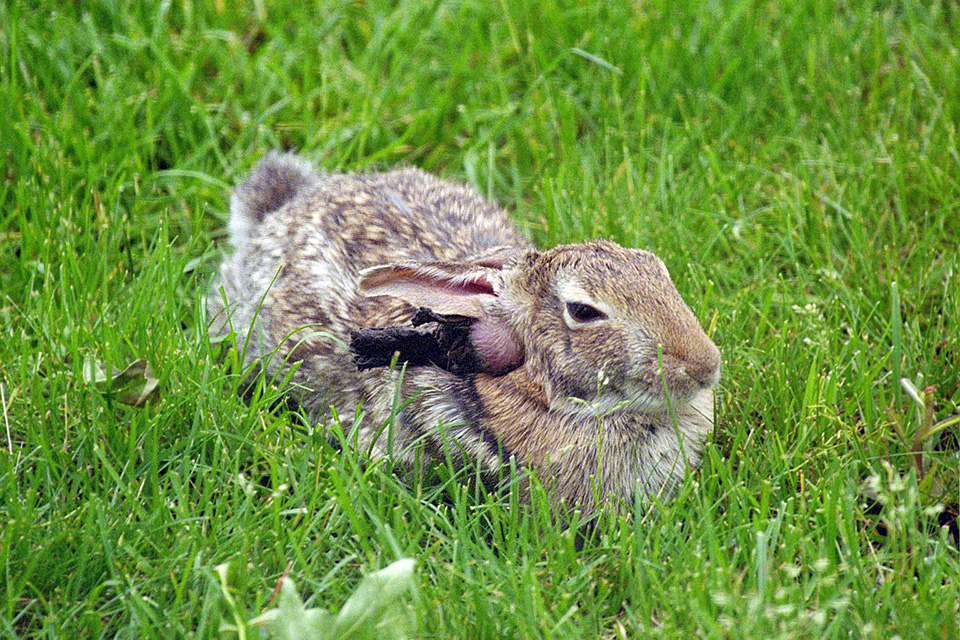
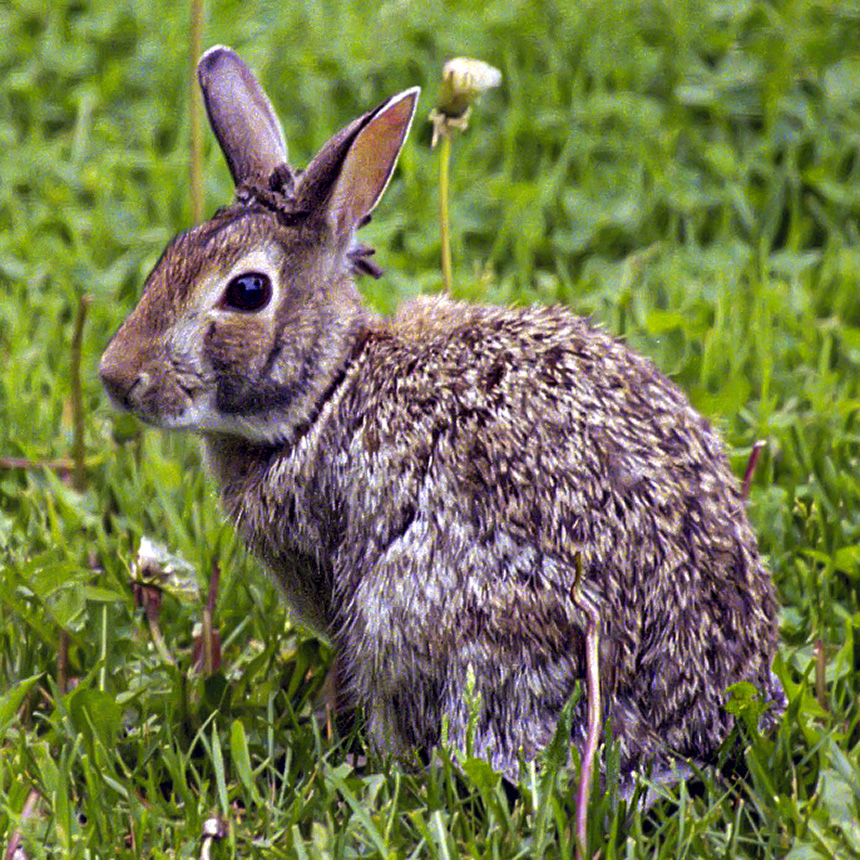
Eastern Cottontail is the smallest of Minnesota’s Leporidae, weighing 2 to 4 pounds at maturity.
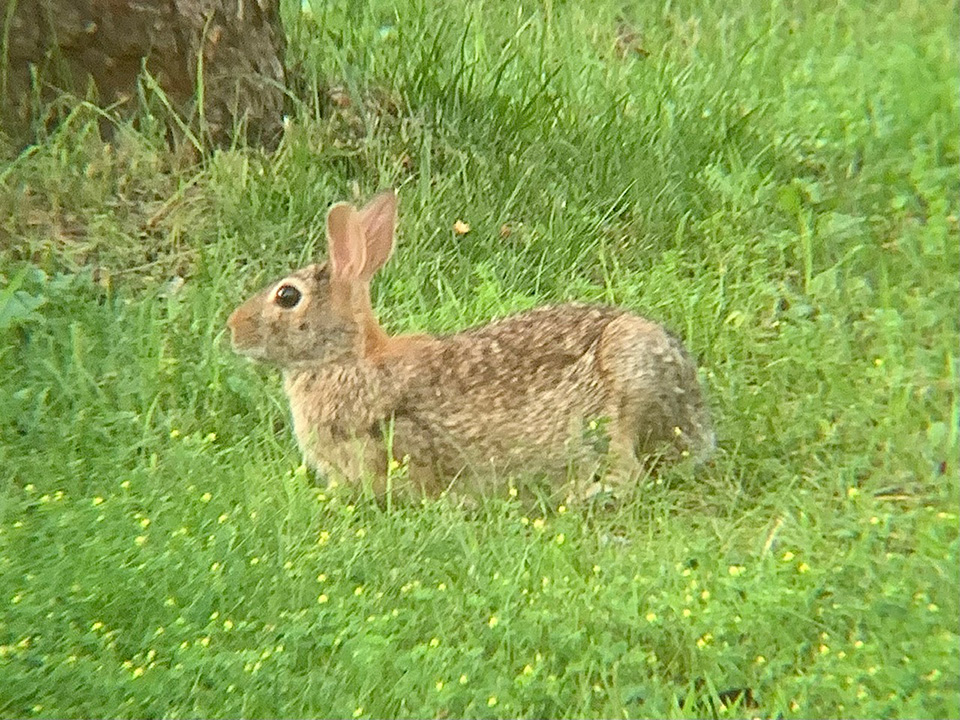
Mearns’s Eastern Cottontail (Sylvilagus floridanus) is rusty-brown in color.
Nebraska Cottontail (Sylvilagus floridanus similis) is gray.
Size
Total length: 16″ to 19″
Tail: 1¼″ to 2½″
Sign
Similar Species
Snowshoe Hare (Lepus americanus), found in northern Minnesota, is slightly larger than the Eastern Cottontail. It is uniformly dark brown in the summer and turns white in the winter.
White-tailed Jackrabbit (Lepus townsendii) is much larger, weighing 5¾ to 9½ pounds at maturity. It turns white in the winter.
Habitat
Eastern Cottontail is found in a wider variety of habitats than any other cottontail species. Any habitat that includes well-distributed, dense shrubs for escape cover interspersed with open, grassy areas is ideal for this species. These include farmlands, old fields, pastures, hedgerows, orchards, brushy clearings, open woods, wooded thickets, edges of woodlands, and suburban areas with adequate cover.
Ecology
Behavior
Lifespan
3 to 5 years
Life Cycle
Food
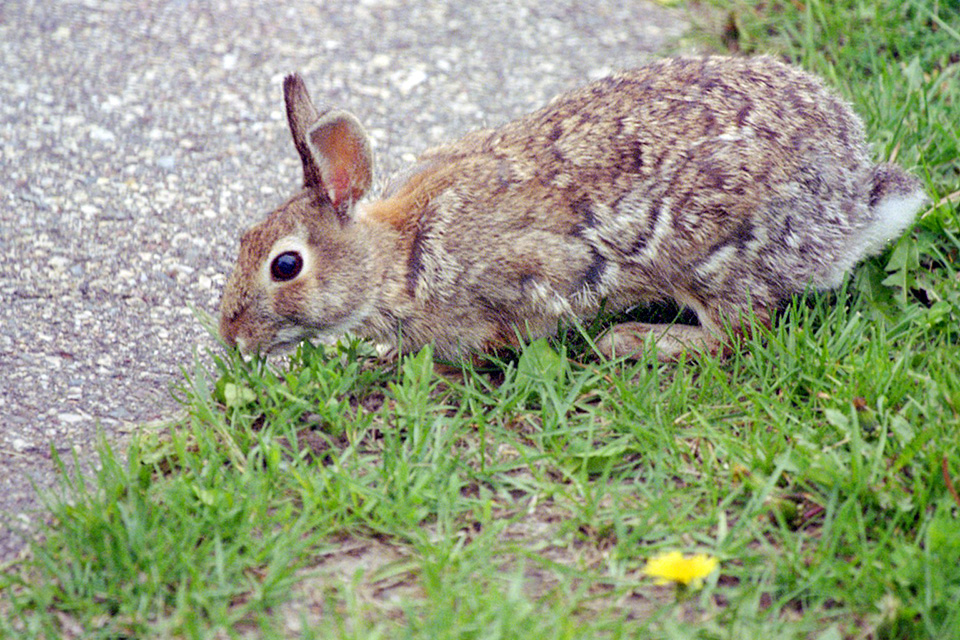
In the spring, summer, and fall, Eastern Cottontails feed on a wide variety of plant matter, including grasses (about half of it’s diet), clover, wild strawberry, cultivated and wild flowers, and many types of cultivated crops.
During the winter months they feed on twigs, bark and buds of oak, dogwood, sumac, maple and birch. They may girdle fruit trees and ornamental shrubs.
Distribution |
||
|
Sources Biodiversity occurrence data published by: Minnesota Biodiversity Atlas (accessed through the Minnesota Biodiversity Atlas Portal, bellatlas.umn.edu, 12/12/2025). Timm, R. M. 1975. Distribution, natural history, and parasites of mammals of Cook County, Minnesota. Occasional Papers, Bell Museum of Natural History, University of Minnesota 14:1–56. Hazard, Evan B. 1982. The Mammals of Minnesota. University of Minnesota Press, Minneapolis, Minnesota. 280 pp. |
|
| 12/12/2025 | ||
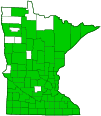
Mearns’s Eastern Cottontail (S. f. mearnsi) is found throughout the state except for the northeast corner and the western portion of the northwestern counties. Nebraska Cottontail (S. f. similis) range extends into Minnesota only in the western portion of the northwestern counties. |
||
Occurrence |
||
Common |
||
Taxonomy
Class
Subclass
Theria
Infraclass
Placentalia (Placental Mammals)
Magnorder
Boreoeutheria
Superorder
Euarchontoglires (Primates, Rodents, and Allies)
Order
Lagomorpha (Lagomorphs)
Family
Leporidae (Hares and Rabbits)
Genus
Sylvilagus (Cottontail Rabbits)
Subordinate Taxa
Some major global databases (GBIF, ITIS, Catalogue of Life, and Discover Life) currently list Sylvilagus floridanus with no subspecies, while others (Mammal Species of the World and iNaturalist) retain the traditional set of many subspecies. The move toward subspecies-free treatments in the former group is not the result of a formal abolition in the scientific literature, but rather reflects a preference for simplified “species-only” listings unless subspecies are strongly supported by modern genetic data.
Recent studies indicate that most eastern and midwestern U.S. populations are too intermixed—largely due to extensive translocations in the 19th and 20th centuries—to support clear subspecific boundaries. In contrast, some peripheral or isolated populations, especially in Mexico, Central America, and certain islands, have been elevated to full species in some treatments.
Alta Mira Cottontail (Sylvilagus floridanus connectens)
Black-naped Rabbit (Sylvilagus floridanus continentis)
Chiapas Cottontail (Sylvilagus floridanus chiapensis)
Curaçao Cottontail (Sylvilagus floridanus nigronuchalis)
Eastern Cottontail (Sylvilagus floridanus llanensis)
Eastern Cottontail (Sylvilagus floridanus macrocorpus)
Eastern Cottontail (Sylvilagus floridanus mallurus) 
Florida Cottontail (Sylvilagus floridanus floridanus)
Margarita Cottontail Rabbit (Sylvilagus floridanus margaritae)
Mearns’s Eastern Cottontail (Sylvilagus floridanus mearnsi) 
Micco Cottontail Rabbit (Sylvilagus floridanus ammophilus)
Nebraska Cottontail (Sylvilagus floridanus similis)
Oklahoma Cottontail (Sylvilagus floridanus alacer)
Orizaba Cottontail (Sylvilagus floridanus orizabae)
Russet Cottontail (Sylvilagus floridanus russatus)
Smiths Island Cottontail rabbit (Sylvilagus floridanus hitchensi)
Tehuantepec Cottontail (Sylvilagus floridanus aztecus)
Texas Cottontail (Sylvilagus floridanus chapmani)
Synonyms
Lepus floridanus
Lepus orizabae
Lepus russatus
Lepus sylvaticus
Common Names
Andean Rabbit
Eastern Cottontail