



tall goldenrod
(Solidago altissima var. altissima)
Conservation • Wetland • Description • Habitat • Ecology • Use • Distribution • Taxonomy
Conservation Status |
|
|||||||
| IUCN Red List | not listed |
|||||||
| NatureServe | N5 - Secure SNR - Unranked |
|||||||
| Minnesota | not listed |
|||||||
Wetland Indicator Status |
||||||||
| Great Plains | FACU - Facultative upland |
|||||||
| Midwest | FACU - Facultative upland |
|||||||
| Northcentral & Northeast | FACU - Facultative upland |
|||||||
Description |
||
Tall goldenrod is a 20″ to 78″ tall, erect, perennial forb that rises on 1 to 40 or more stems from branched, short or long, creeping rhizomes. It can be 20″ to 78″ tall, but is usually at least 40″ tall. It often forms large, dense patches. Fresh plants have a grayish-green appearance due to the short hairs on the leaf surfaces. The stem is erect or ascending, finely grooved, and leafy. It is not shiny and not covered with a whitish, waxy bloom (glaucous). It is moderately to densely covered with short, curved hairs both above and below the middle, though less densely hairy or almost hairless near the base. There are no basal leaves. Stem leaves are alternate, somewhat thickened, and stiff. Lowermost stem leaves are narrowly inversely lance-shaped, 3¾″ to 5⅞″ long, and ⅝″ to ¾″ wide, mostly 5 to 13 times as long as wide. The leaf blade is distinctly 3-veined, with a prominent midvein and 2 finer, lateral veins that originate well above the base. It tapers gradually to the base and is attached to the stem with a very short leaf stalk or with no leaf stalk at all. It tapers to a sharp point at the tip with straight or concave sides along the tip. The upper surface is moderatley rough due to the presence of minute, stiff hairs. The lower surface is moderately to densely covered with short, sharp, stiff, appressed hairs, especially along the midrib and main veins. The margins are either entirely untoothed or are untoothed near the base and with sharp, forward-pointing teeth above the middle, and are sometimes turned under. Lower stem leaves are usually absent by the time the plant is in flower. Middle and upper stem leaves are similar to lower stem leaves. Middle stem leaves are inversely lance-shaped, 1¼″ to 6¾″ long, usually no more than 4″ long, and ¼″ to 1″ wide, usually no more than ⅝″ wide. The margins are finely toothed with 0 to 14, usually no more than 6, teeth per side. Upper stem leaves are narrowly lance-shaped, 1″ to 2¼″ long, and ⅛″ to ⅝″ wide, usually no more than ⅜″ wide, becoming smaller as they ascend the stem. The margins are usually untoothed, sometimes minutely toothed above the middle. The inflorescence is a pyramidal, 2″ to 11¾″ long, ¾″ to 9⅞″ wide, usually dense, sometimes open, many-branched, broad cluster with 100 to 1200 or more flower heads. The longer flowering branches are arched or nodding. The flower heads are arranged on the upper side of the branches. The tiny flower heads are less than ¼″ wide. They have 5 to 17, usually 8 to 13, yellow ray florets. They have 2 to 9, usually 3 to 6, yellow disk florets. The whorl of bracts surrounding the base of the flower head (involucre) is ⅛″ to 3 ⁄16″ long and yellowish in color. The corolla is ⅛″ long. |
||
Height |
||
20″ to 78″ |
||
Flower Color |
||
Yellow ray florets, yellow disk florets |
||
Similar Species |
||
Canada goldenrod (Solidago canadensis var. canadensis) stems are hairless or sparsely hairy from the middle to the base. The leaves are thin, not stiff. The involucre is shorter, 1 ⁄16″ to ⅛″ long. Fresh plants do not have a grayish-green appearance. Early goldenrod (Solidago juncea) stems are hairless. Giant goldenrod (Solidago gigantea) stems are hairless and sometimes covered with a whitish, waxy bloom. Harger’s goldenrod (Solidago canadensis var. hargeri) leaves are thin, not stiff. The flower heads have fewer disk florets, 2 to 4. The involucre is shorter, 1 ⁄16″ to ⅛″ long. It has been recorded only in Grant County in western Minnesota. Missouri goldenrod (Solidago missouriensis) is a shorter plant, no more than 32″ tall. The stem is hairless below the inflorescence. Lower stem leaves are on winged leaf stalks up to 2″ long. The upper and lower leaf surfaces are hairless. A tight bundle of small, wing-like leaves often appear in the leaf axils. The flower heads have 8 to 20 disk florets. |
||
Habitat |
||
Moist to dry. Prairies, fields, ditches, roadsides, and forest openings. Full to partial sun. |
||
Ecology |
||
Flowering |
||
August to October |
||
Pests and Diseases |
||
Goldenrod bunch gall midge (Rhopalomyia solidaginis) causes the plant to produce a dense bunch of short leaves at the top of the stunted stem. Goldenrod gall fly (Eurosta solidaginis) produces and globular swelling on the stem of the plant. |
||
Defense Mechanisms |
||
Behavioral A study published in 2008 (Wise and Abramson) showed that candy-cane stems were about 50% less likely to have rosette galls produced by the goldenrod bunch gall midge (Rhopalomyia solidaginis). It is suggested that the candy-cane stem starts out straight, then bends just at the time when it is most susceptible to galling insects. When the danger has passed, the stem straightens out. Chemical The plant also produces chemicals to defend against herbivores. When consumed by a herbivore, these protease inhibitors negatively affect the digestive system and slow growth and reproduction. |
||
Use |
||
|
||
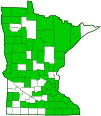
Distribution |
||||
|
Sources |
|||
| 5/6/2023 | ||||
Nativity |
||||
Native |
||||
Occurrence |
||||
|
||||
Taxonomy |
|||
| Kingdom | Plantae (Plants) | ||
| Subkingdom | Pteridobiotina | ||
| Phylum | Tracheophyta (Vascular Plants) | ||
| Class | Magnoliopsida (Dicots) | ||
Order |
Asterales (Sunflowers, Bellflowers, Fanflowers, and Allies) | ||
Family |
Asteraceae (Sunflowers, Daisies, Asters, and Allies) | ||
| Subfamily | Asteroideae | ||
| Supertribe | Asterodae | ||
| Tribe | Astereae (Asters and Allies) | ||
| Subtribe | Solidagininae | ||
| Genus | Solidago (Goldenrods) | ||
| Subgenus | Pleiactila | ||
| Section | Unilaterales | ||
| Subsection | Triplinerviae | ||
| Species | Solidago altissima (late goldenrod) | ||
Species Subspecies or Variety? |
|||
Subordinate Taxa |
|||
|
|||
Synonyms |
|||
Solidago altissima ssp. altissima Solidago altissima var. pluricephala Solidago altissima var. procera Solidago canadensis var. scabra Solidago hirsutissima Solidago lunellii |
|||
Common Names |
|||
Canada goldenrod Canadian goldenrod tall goldenrod |
|||
Glossary
Allelopathy
The release of a chemical toxin by one plant to inhibit the growth or germination of nearby competing plants.
Bracts
Modified leaves at the base of a flower stalk or flower cluster.
Corolla
A collective name for all of the petals of a flower.
Glaucous
Pale green or bluish gray due to a whitish, powdery or waxy film, as on a plum or a grape.
Involucre
A whorl of bracts beneath or surrounding a flower, flower head, or flower cluster.
Rhizome
A horizontal, usually underground stem. It serves as a reproductive structure, producing roots below and shoots above at the nodes.
Visitor Photos |
|||||
Share your photo of this plant. |
|||||
| This button not working for you? Simply email us at info@MinnesotaSeasons.com. Attach one or more photos and, if you like, a caption. |
|||||
|
|||||
MinnesotaSeasons.com Photos |
|||||
|
|||||

Slideshows |
||

Visitor Videos |
|||
Share your video of this plant. |
|||
| This button not working for you? Simply email us at info@MinnesotaSeasons.com. Attach a video, a YouTube link, or a cloud storage link. |
|||
Other Videos |
|||

Visitor Sightings |
|||||
Report a sighting of this plant. |
|||||
| This button not working for you? Simply email us at info@MinnesotaSeasons.com. Be sure to include a location. |
|||||
|
|||||
MinnesotaSeasons.com Sightings |
|||||
|
Created: Last Updated: © MinnesotaSeasons.com. All rights reserved. |