wood betony - Species Profile
Conservation • Wetland • Description • Habitat • Ecology • Use • Distribution • Taxonomy

Conservation Status
IUCN Red List
not listed
NatureServe
N5 - Secure
SNR - Unranked
Minnesota
not listed
Wetland Indicator Status
Great Plains
FACU - Facultative upland
Midwest
FACU - Facultative upland
Northcentral & Northeast
FACU - Facultative upland
Description
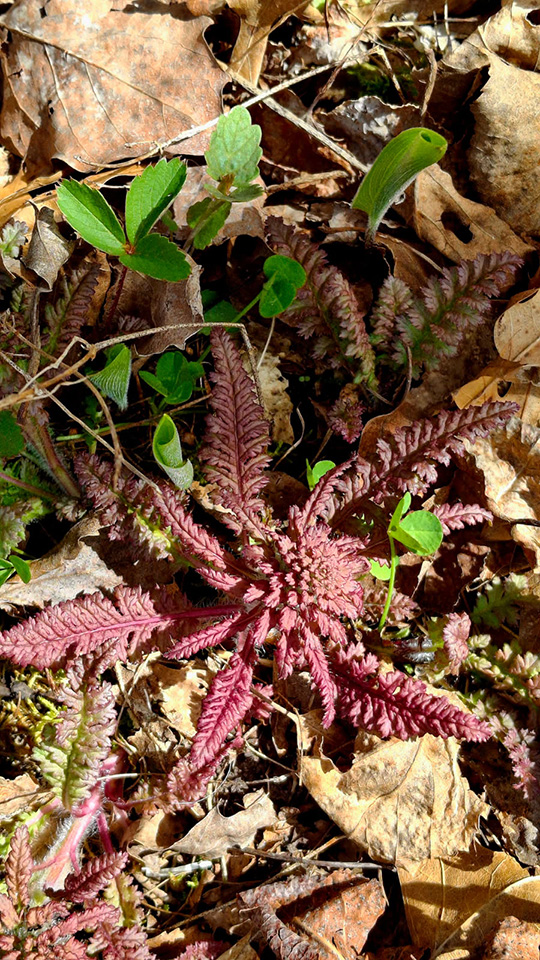
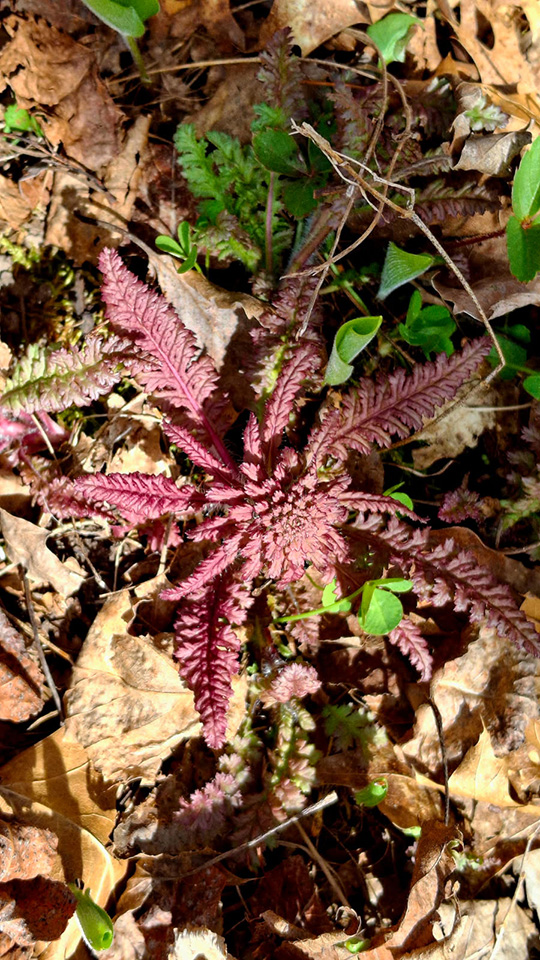
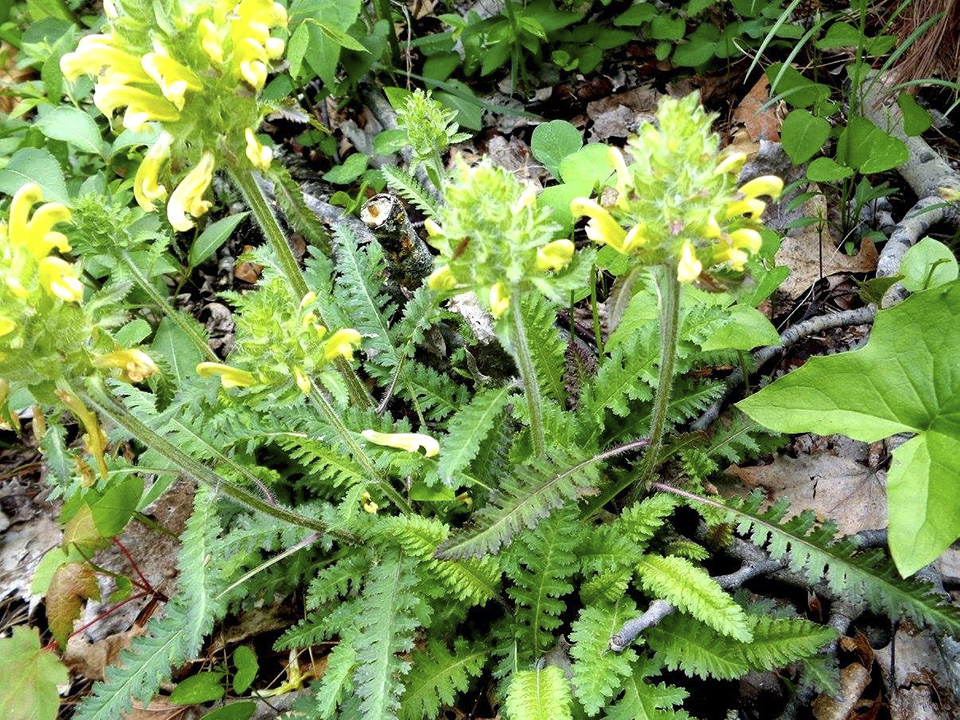
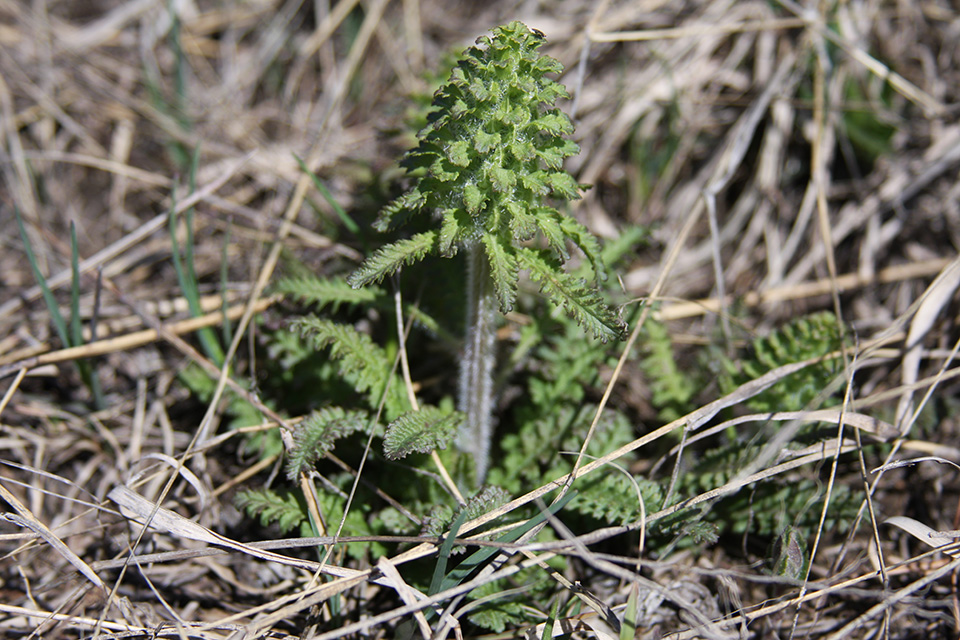
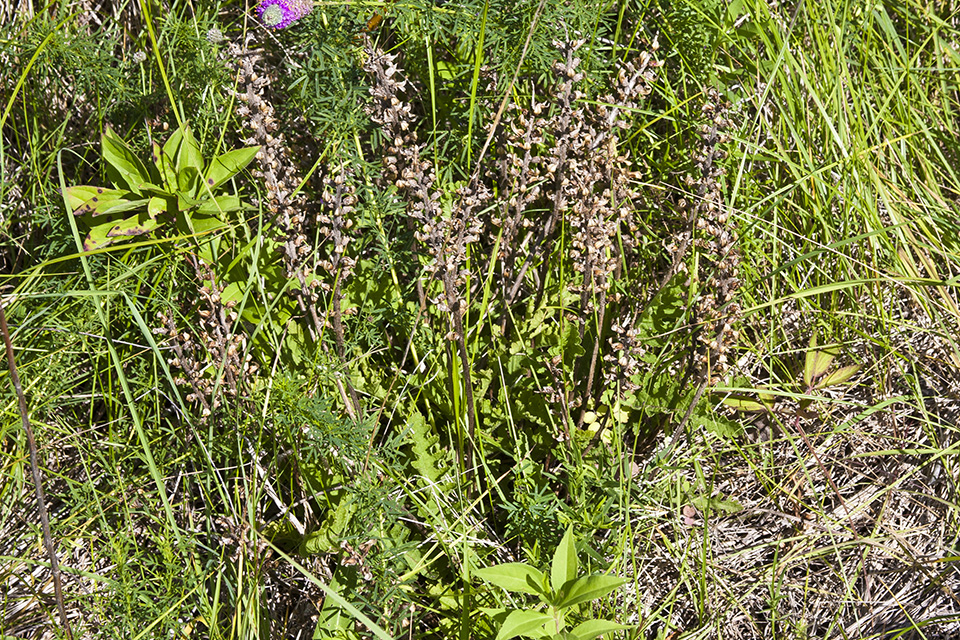
Wood betony, also called Canadian lousewort, is a 4″ to 16″ tall, erect, perennial forb that rises on 1 or more stems from short rhizomes. It forms large clumps.
The stems are erect, hollow, unbranched, green or reddish brown, and hairy with long soft hairs. The leaves are mostly basal.
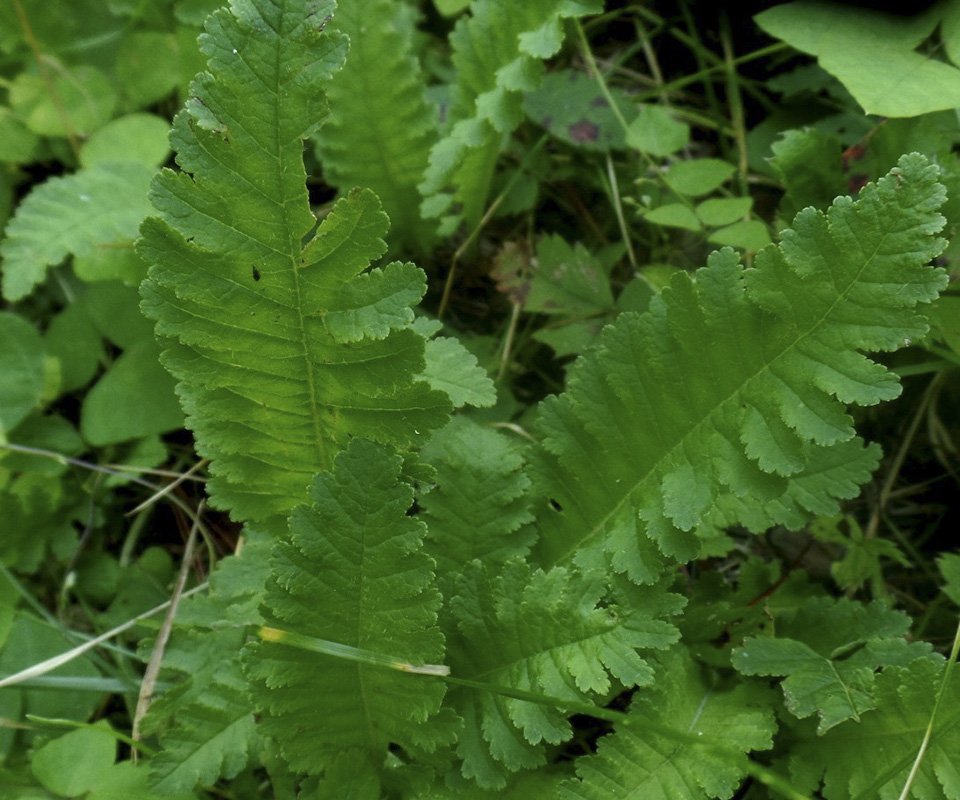
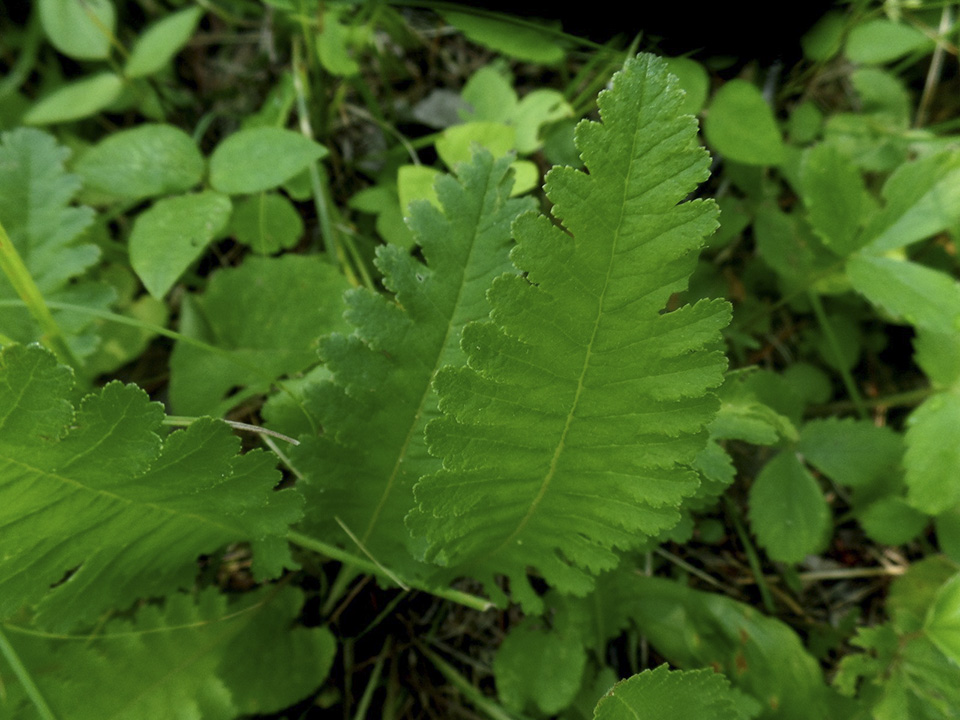
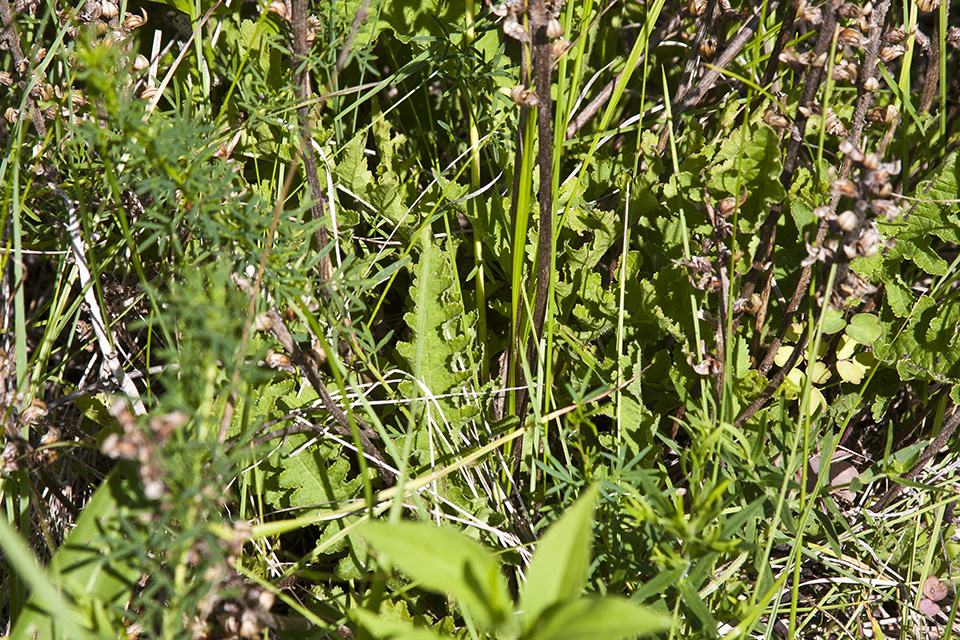
Basal leaves are crowded and form a rosette. They are on stalks that are often longer than the leaf blades. They are inversely lance-shaped with the attachment at the narrow end, up to 6″ long and 1″ wide. They are fern-like in appearance, cut with deep, rounded lobes cut more than half way to the midrib (pinnatifid). The upper surface is deep green, hairless except with appressed hairs along the sunken midrib, with indented (impressed) lateral veins. The lower surface is lighter green, hairless, with raised (prominent) lateral veins. The margins of the lobes have fine, rounded teeth.
Stem leaves are alternate and similar to the basal leaves but smaller and on shorter leaf stalks. They are 1⅛″ to 2⅓″ long, and ⅜″ to ¾″ wide. Lower leaves are on long leaf stalks. Leaves become smaller and leaf stalks shorter as they ascend the stem. Upper leaves are stalkless.
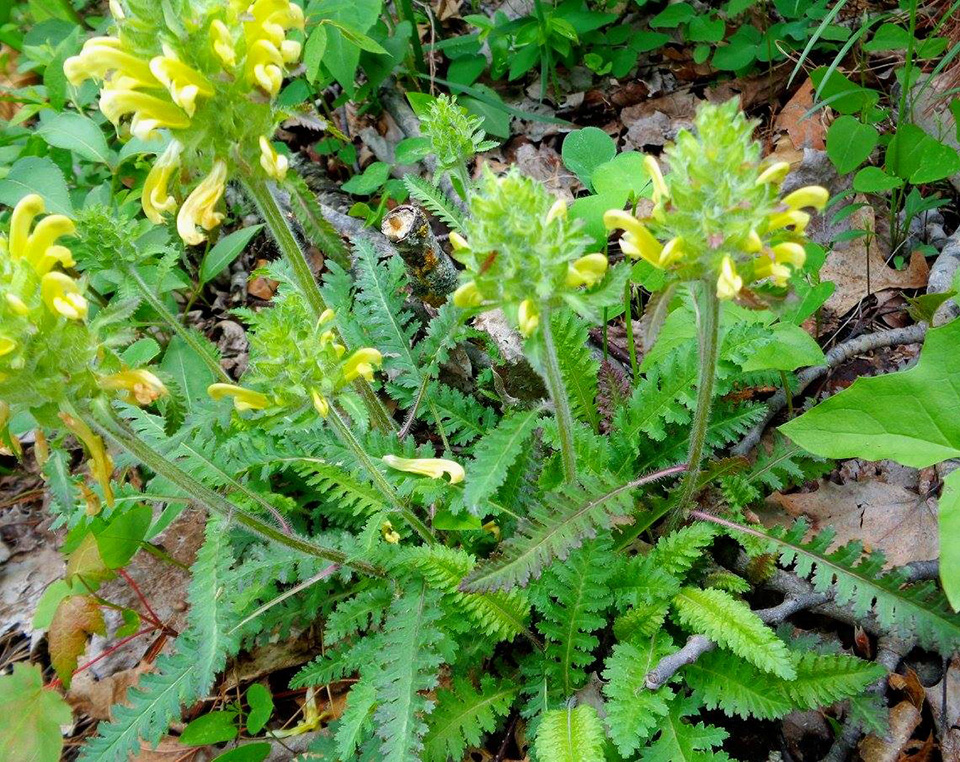
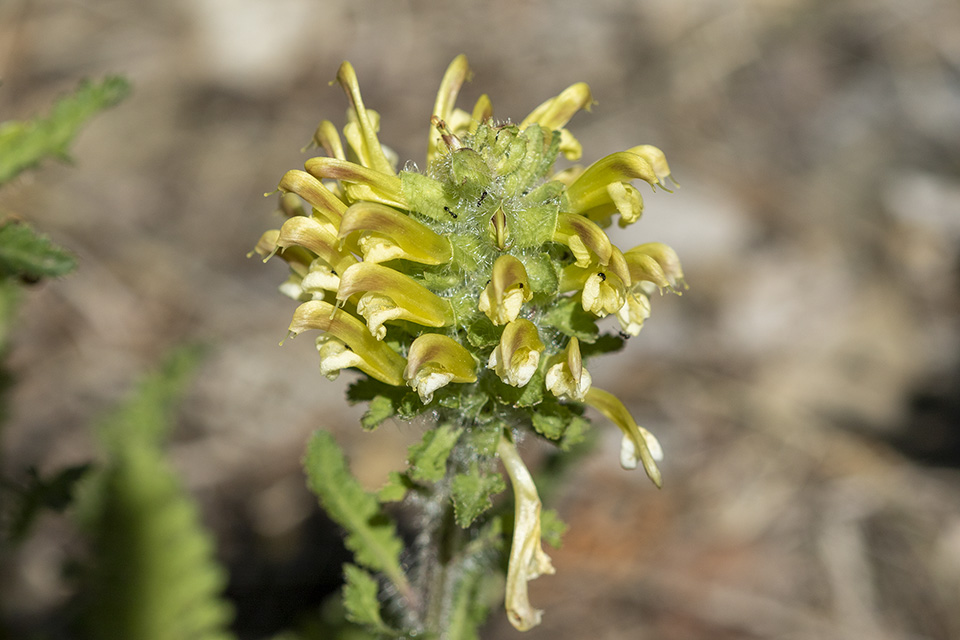
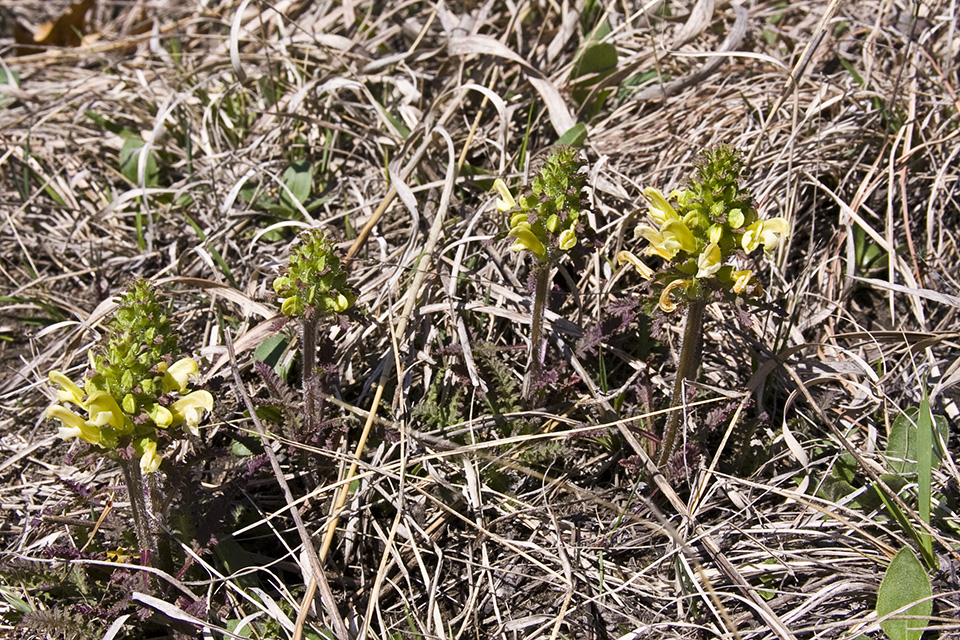
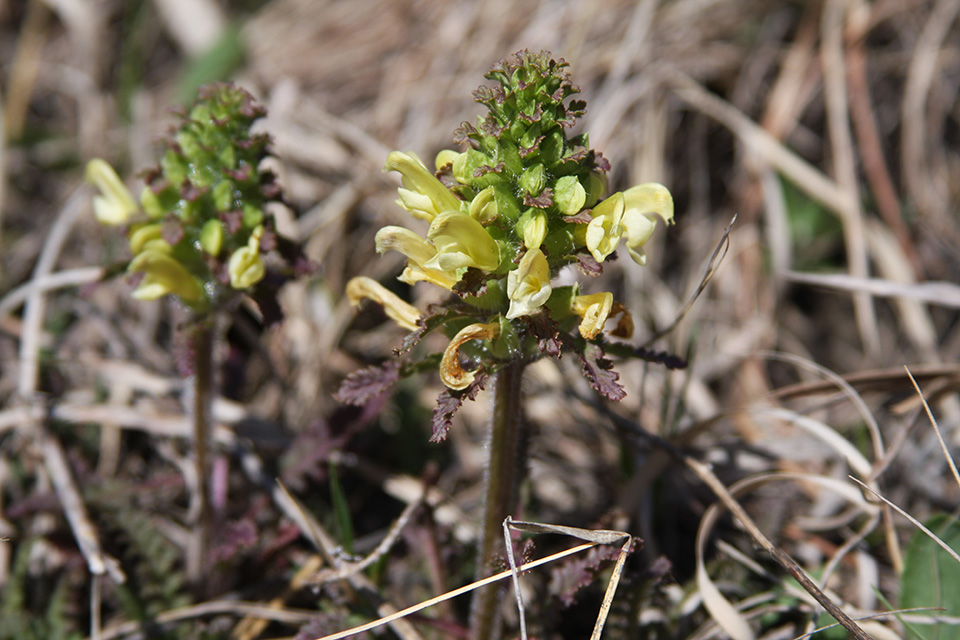
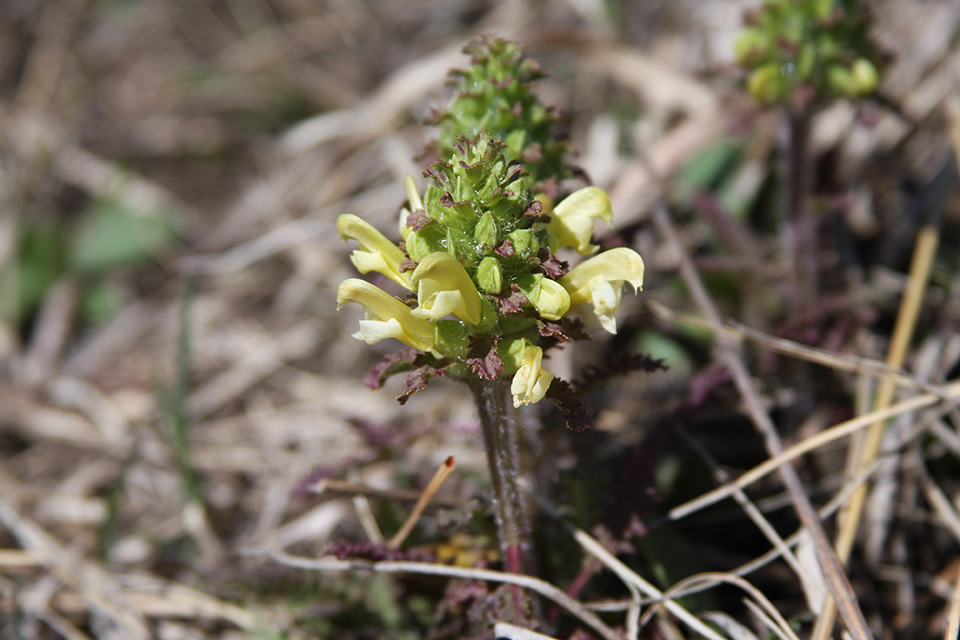
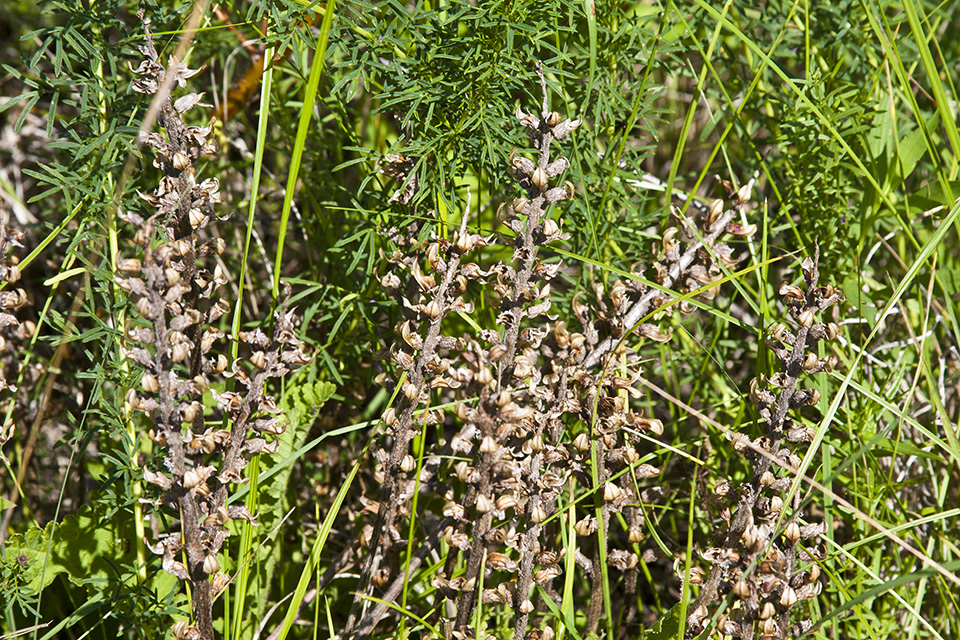
The inflorescence is a 1″ to 2″ long, cone-shaped spike at the end of the stem and sometimes also from upper leaf axils. They have a conspicuous pinwheel arrangement, with the flowers sticking out at right angles to the central axis.
The individual flowers are stalkless and subtended by a single leaf-like bract. The calyx is ⅓″ to ½″ long with 2 spreading, rounded lobes. There are 5 yellow petals forming a ⅔″ to 1″ long, tubular, 2-lipped corolla. The upper 2 petals are fused into convex, one-lobed, hood-like lip (galea) from which the pistil protrudes. The hood is sometimes reddish or purplish tinged. There are 2 small teeth just below the tip of the galea. The lower 3 petals are fused into a banner that is shorter than the galea and has 3 lobes, the 2 lateral lobes rounded, spreading, and longer than the middle lobe. The 4 stamens are contained within the galea.
The fruit is a dry, egg-shaped capsule, 2 ⁄5″ to 3 ⁄5″ long, with uneven sides. It is twice the length of the calyx. When in fruit the spike elongates to up to 8″.
Height
4″ to 16″
Flower Color
Yellow
Similar Species
Swamp betony (Pedicularis lanceolata) is a much taller plant, reaching 12″ to 36″ at maturity. It does not form clumps. Stem leaves are opposite, not alternate. The lower stem leaves are on short stalks no more than ⅜″ long. Leaves are more shallowly lobed, the lobes cut less than half way to the midrib. The inflorescence is up to 4″ long. The flowers are white or yellowish. The galea is not toothed. The lower lip is about as long as the galea. It blooms much later, August to September. It is found in wet, not dry to moist, locations.
Habitat
Dry to moderate moisture. Prairies, open, upland woods. Full sun.
Ecology
Flowering
April to June
Parasitism
Wood betony is a facultative parasite. It gets water and nutrients from the roots of grasses and possibly other plants, including at least 80 different species in 35 different genera. In the absence of suitable hosts it is capable of normal development. However, in the field it is rarely if ever found not parasitizing other plants.
Pests and Diseases
Use
Distribution
Sources
Biodiversity occurrence data published by: Minnesota Biodiversity Atlas (accessed through the Minnesota Biodiversity Atlas Portal, bellatlas.umn.edu. Accessed 5/15/2026).
Midwest Herbaria Portal. 2026. https://midwestherbaria.org/portal/index.php. Accessed 5/15/2026.
Pedicularis canadensis XXXXXX in GBIF Secretariat (2023). GBIF Backbone Taxonomy. Checklist dataset https://doi.org/10.15468/39omei accessed via GBIF.org. Accessed 5/15/2026.
Nativity
Native
Occurrence
Common
Taxonomy
Kingdom
Subkingdom
Pteridobiotina
Phylum
Tracheophyta (Vascular Plants)
Class
Order
Lamiales (Mints, Plantains, Olives, and Allies)
Family
Orobanchaceae (Broomrape)
Tribe
Pedicularideae
Genus
Pedicularis (Louseworts)
Family
The genus Pedicularis, formerly belonging the family Scrophulariaceae (Figwort), has recently been transferred to the family Orobanchaceae (Broomrape).
Subordinate Taxa
Synonyms
Enslenia bibracteata
Nelensia bibracteata
Pedicularis aequinoctialis
Pedicularis asplenifolia
Pedicularis canadensis ssp. canadensis
Pedicularis canadensis ssp. fluviatilis
Pedicularis canadensis var. canadensis
Pedicularis canadensis var. dobbsii
Pedicularis canadensis var. fluviatilis
Pedicularis canadensis var. gladiata
Pedicularis fluviatilis
Pedicularis gladiata
Common Names
betony
Canadian lousewort
common lousewort
early lousewort
forest lousewort
lousewort
wood betony
wood-betony