



white-lined sphinx
(Hyles lineata)
Conservation • Description • Habitat • Ecology • Distribution • Taxonomy
|
|
||||||||||||||||||
Description |
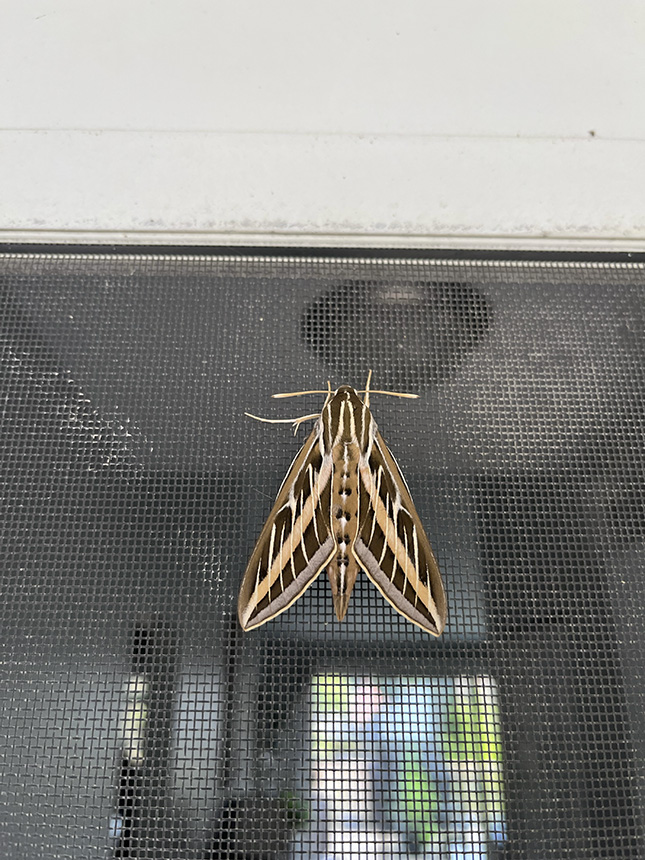
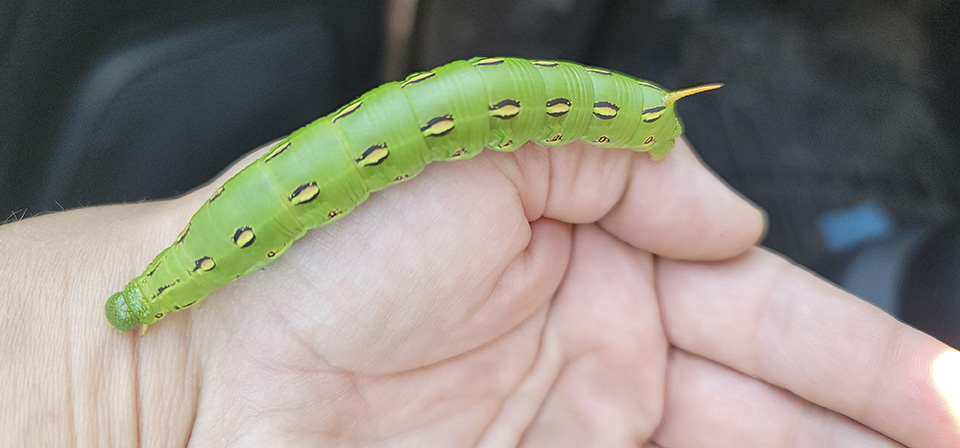
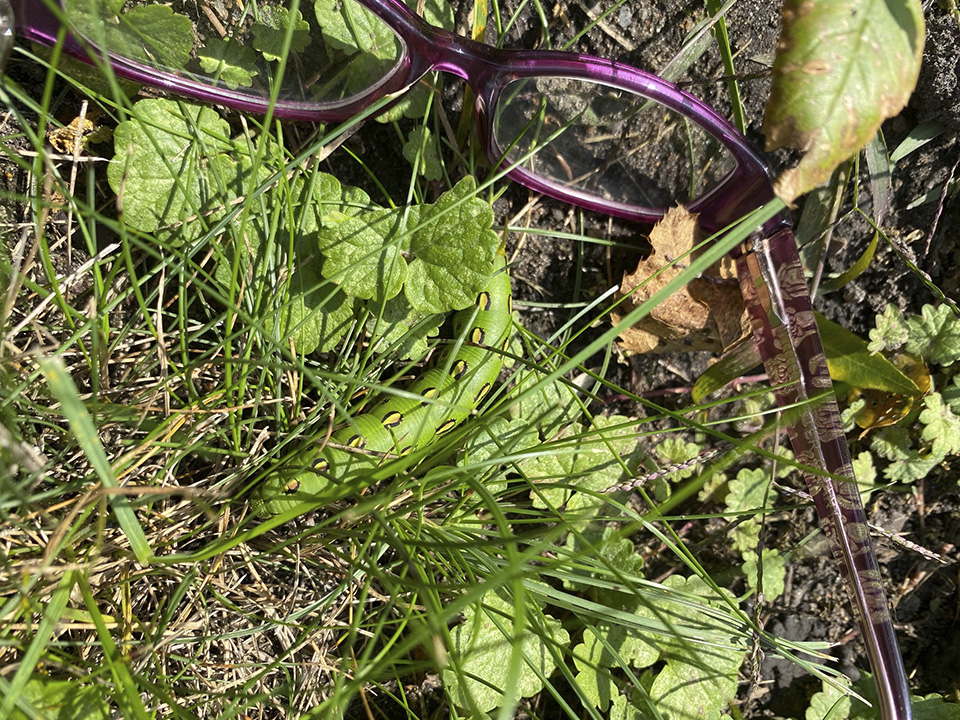
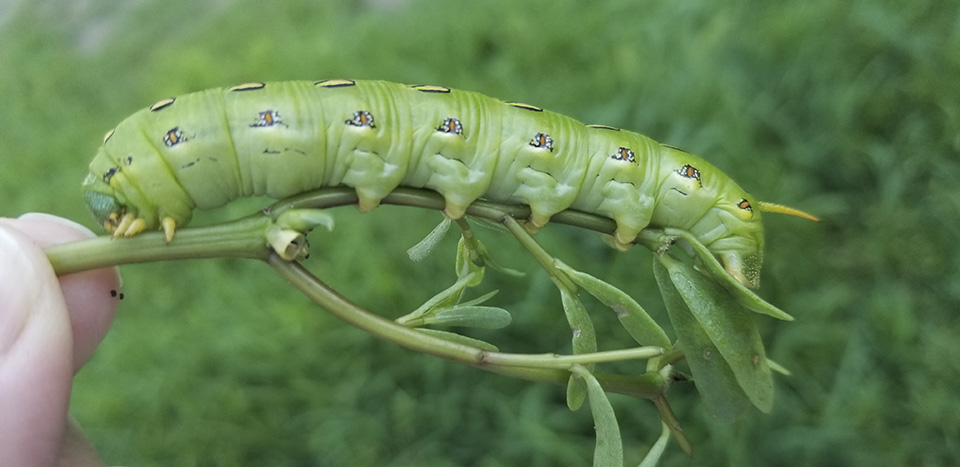
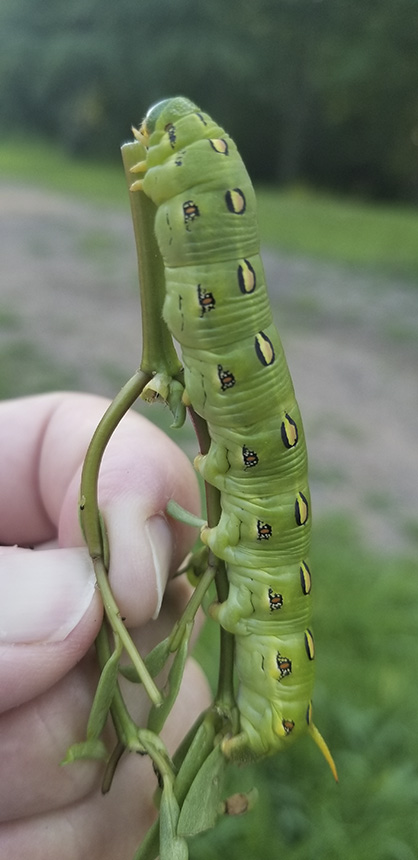
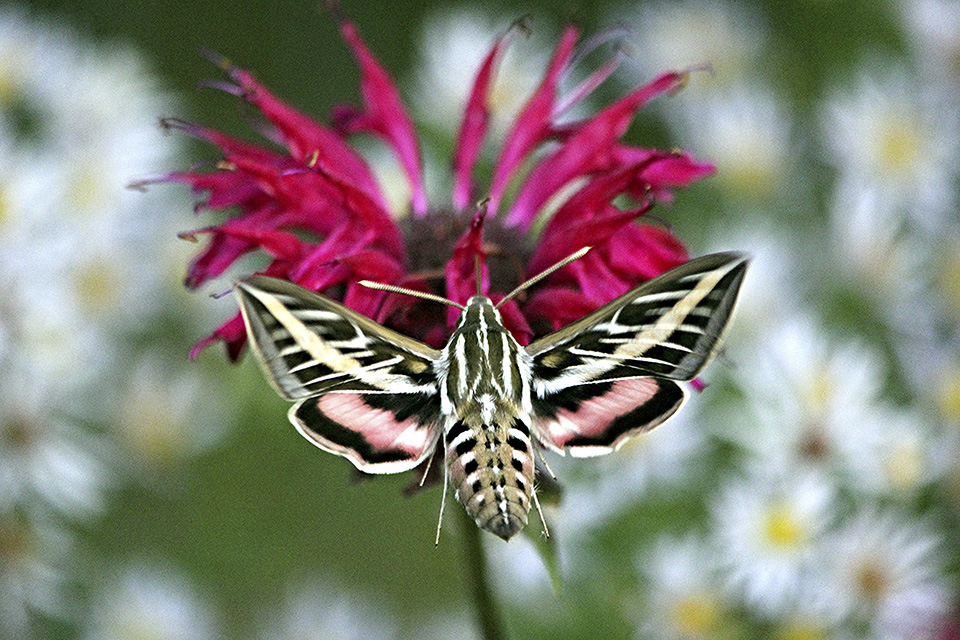
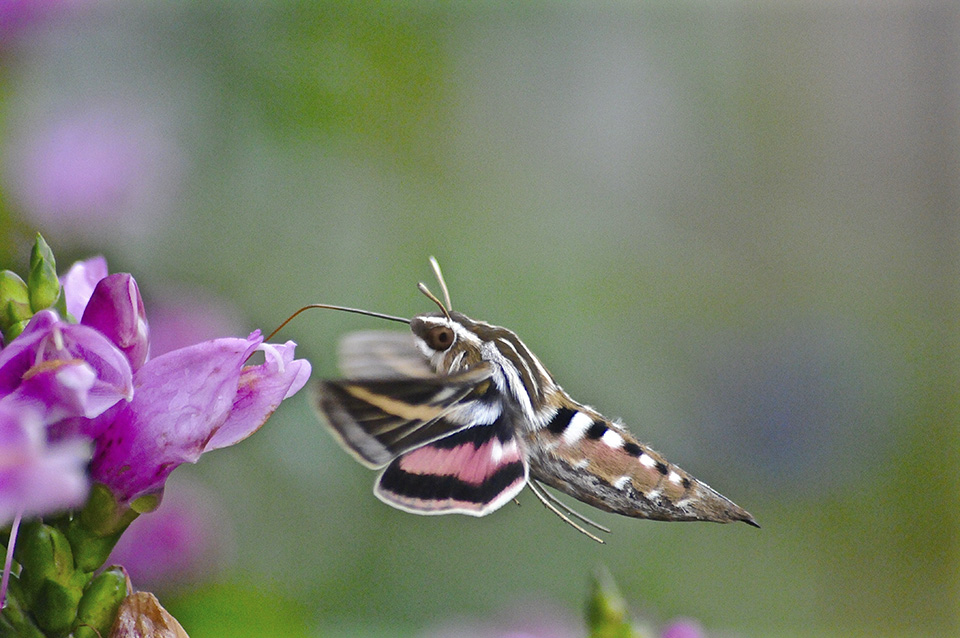
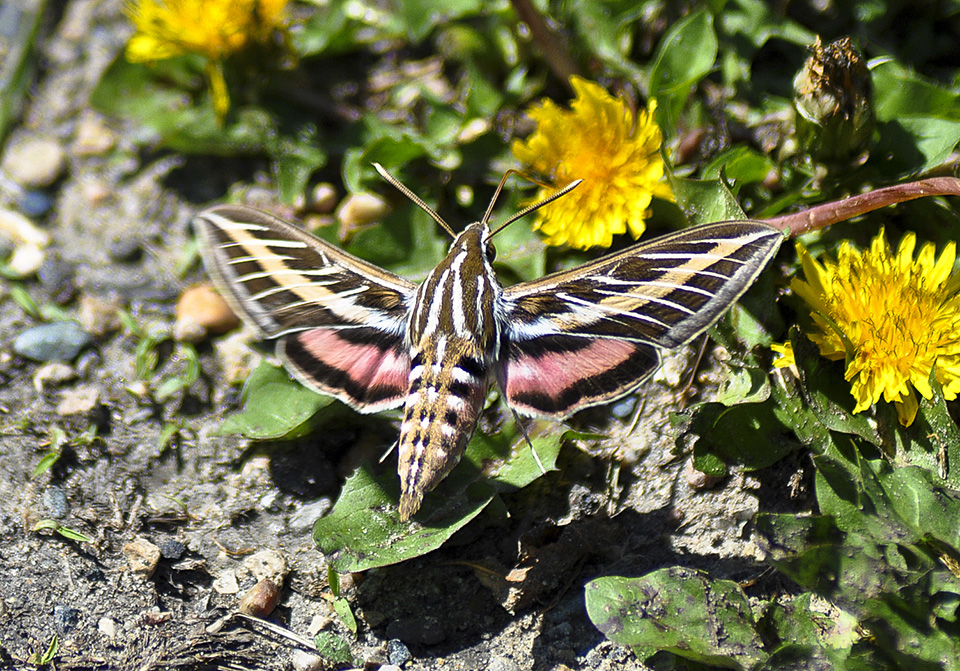
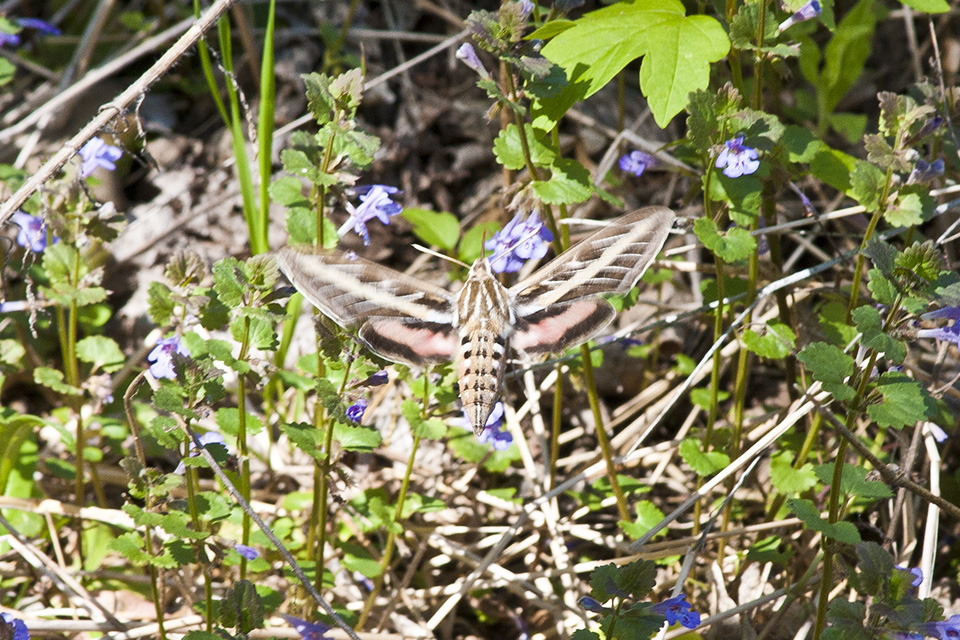
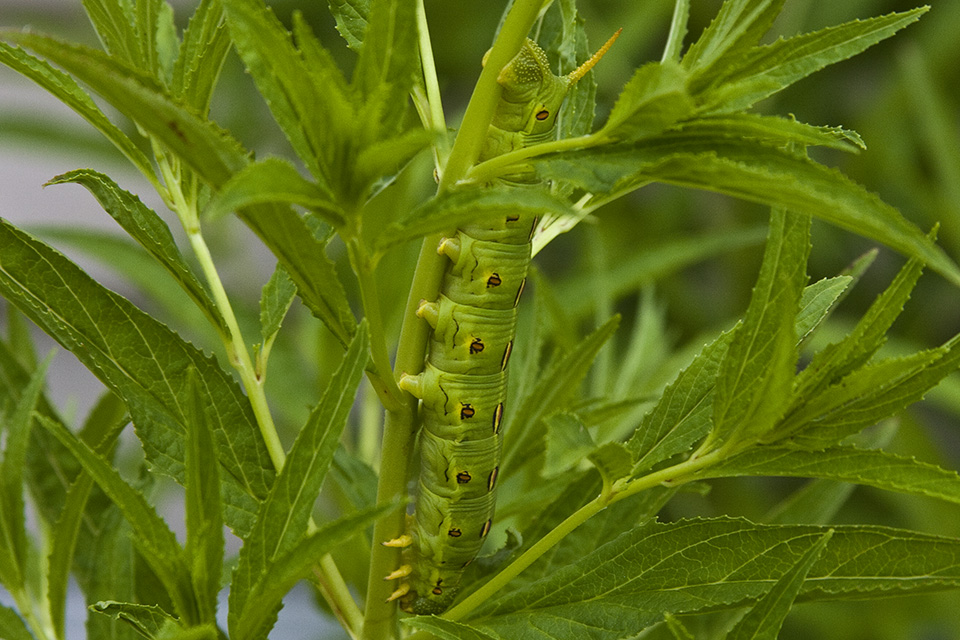
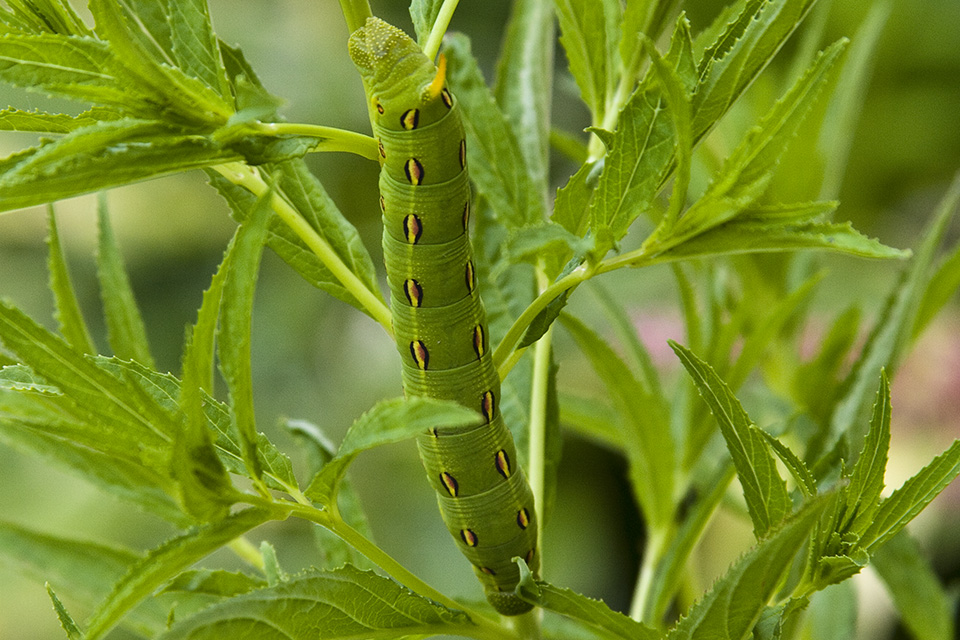
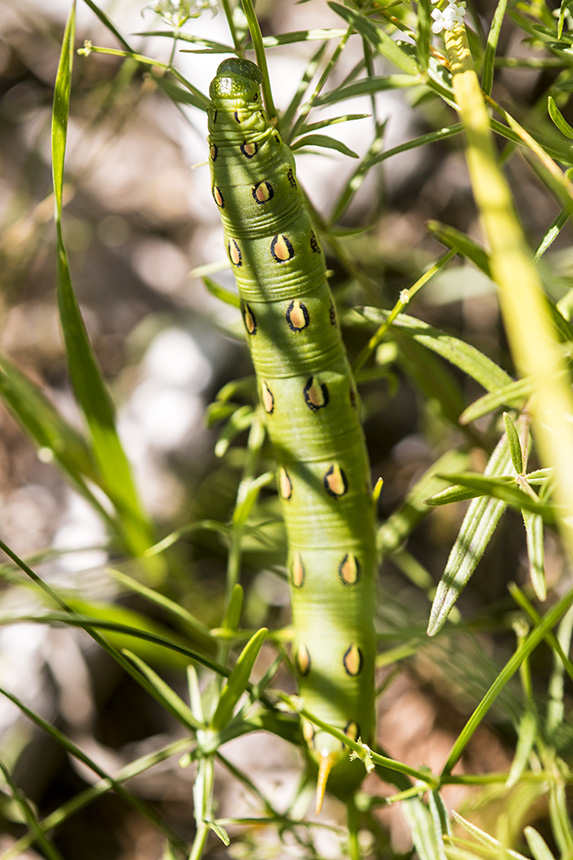
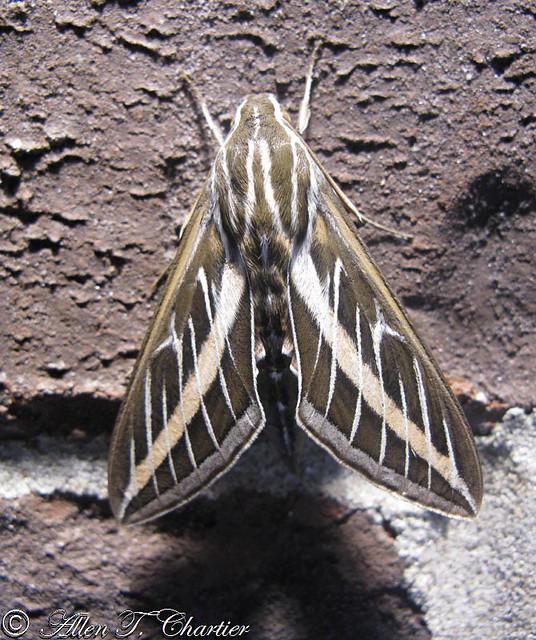
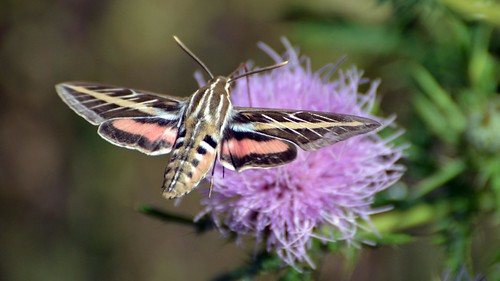
White-lined sphinx is a common, large to very large, sphinx moth. In poor light or at a distance it is easily mistaken for a hummingbird, due to similarities in both appearance and behavior. It has a wingspan of 2 7 ⁄16″ to 3 9 ⁄16″. The forewing is long and narrow with a smooth, slightly convex outer margin. The upperside is dark olive brown. A narrow tan band extends diagonally from the inner margin near the base to the wing tip. There are creamy white streaks along the veins; a pale spot in the basal area; and a small, irregular, white patch in the median area. The trailing edge (terminal area) has a broad, pale, gray or grayish-brown band, a narrow, dark, marginal border, and a short white fringe. The leading (costal) margin has a broad, pale brown border. The hindwing is black with a white fringe; a narrow, light brown, marginal border; and a central, broad, pink band extending diagonally from the inner margin near the body to the outer margin near the apex. The appendage (tegula) covering the forewing base is dark olive brown with a prominent white fringe, a thin black, marginal border, and a white stripe in the middle. The thorax is dark olive brown with three white stripes, one middorsal and two subdorsal, extending forward from the base of the tegula. The abdomen is black-and-white banded on the upper (dorsal) surface. A thin, white, middorsal stripe is bordered by two narrow black stripes and two broad pale brown stripes. The head is dark olive brown with two subdorsal stripes that extend over the eyes to the mouth. The antenna is thickened and club-like. The proboscis is long and is coiled under the head when not in use. The caterpillar is up to 2¾″ long. It may be either bright green or yellow and black. The head, prothoracic shield and anal plate are always the same color, either orange or green, and are dotted with minute pale spots. The markings on the thorax and abdomen are extremely variable. Many forms have a subdorsal stripe extending from the first thoracic segment to the eighth abdominal segment. On some forms this stripe is replaced by a row of black-rimmed, creamy yellow spots. Some forms have small to extensive black areas speckled with tiny, yellow or white, vertically aligned dots. A stout yellow to orange, often partially or completely blackened, horn extends from the middorsal surface of the eighth abdominal segment. The legs on the thorax and leg-like structures (prolegs) on the abdomen are usually orange. Mature caterpillars can be found from July onward. |
Size |
Wingspan: 2 7 ⁄16″ to 3 9 ⁄16″ |
Similar Species |
Habitat |
Meadows, gardens, woodland openings, and other open areas. |
Ecology |
Season |
Two broods: May to October |
Behavior |
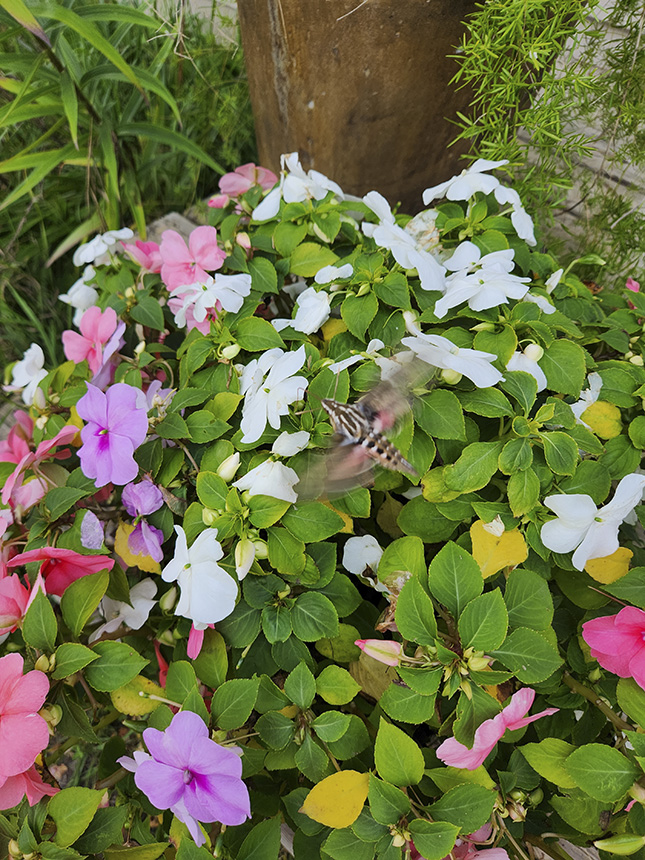
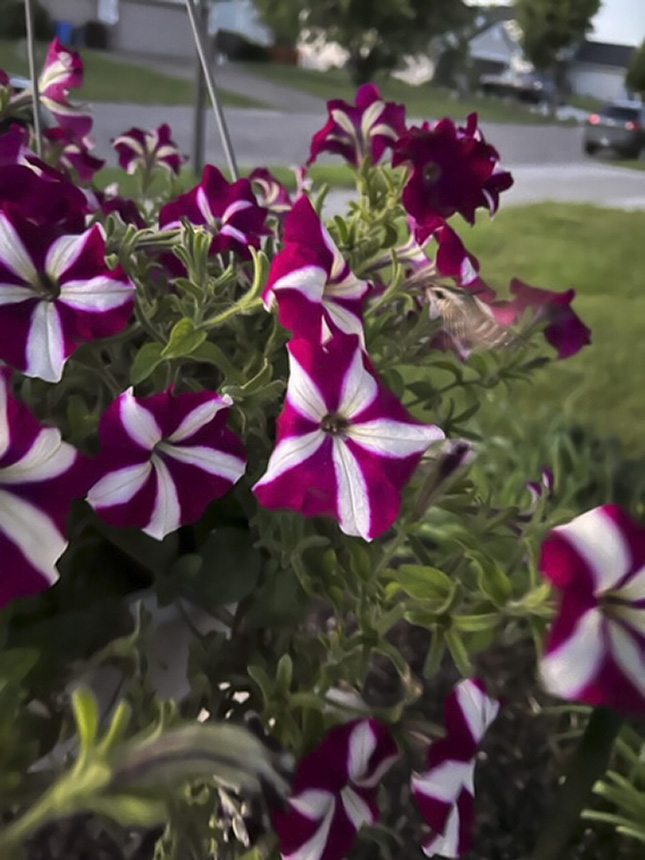
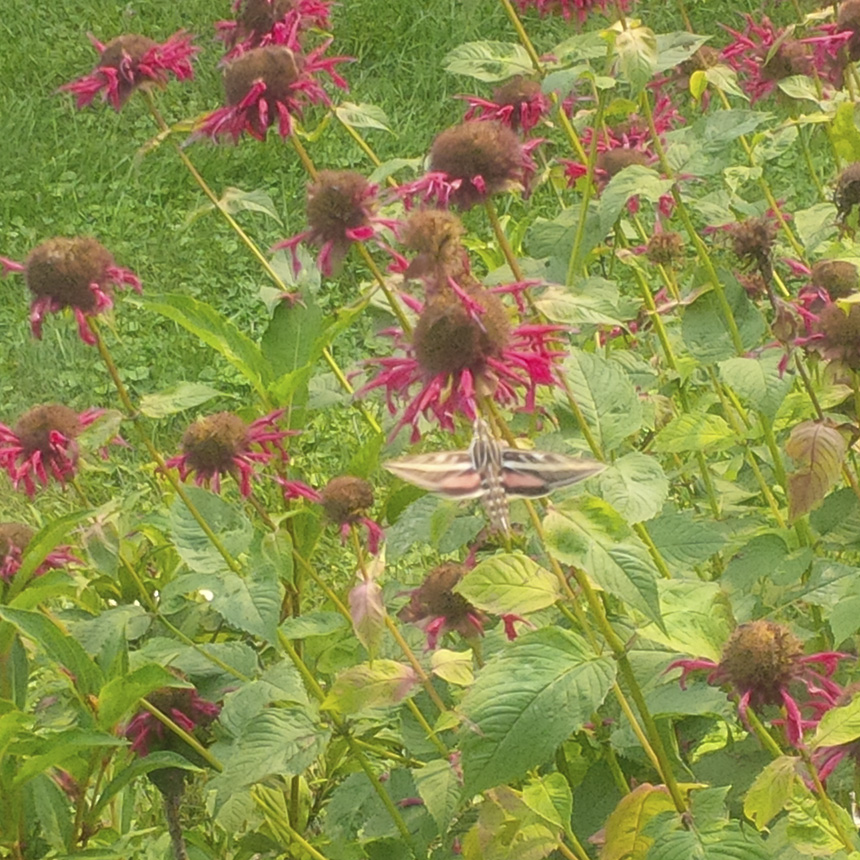
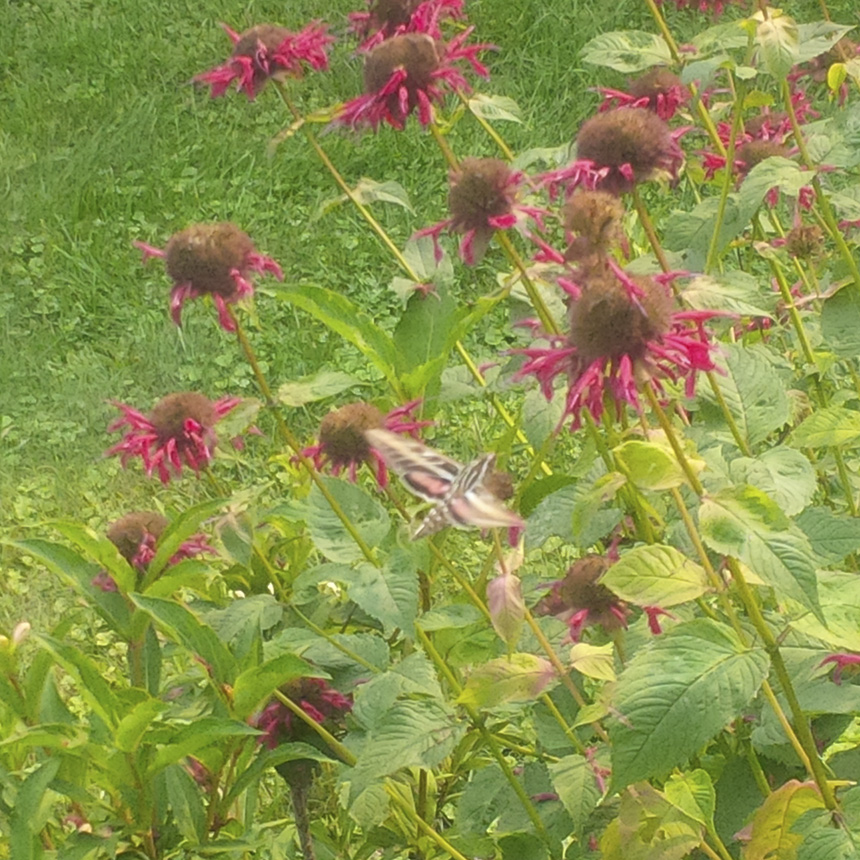
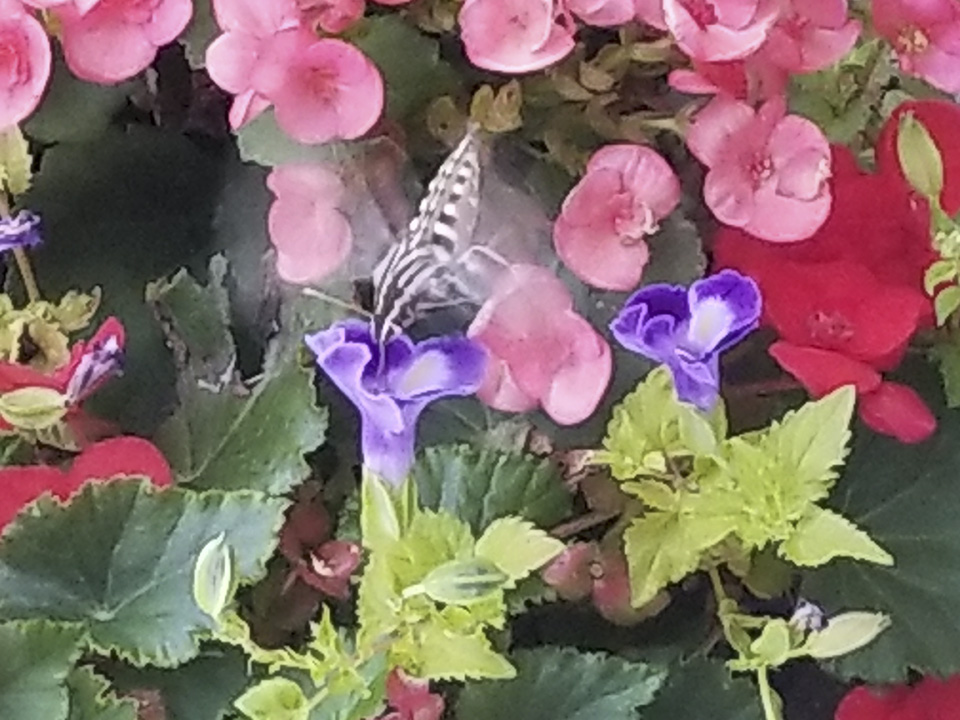
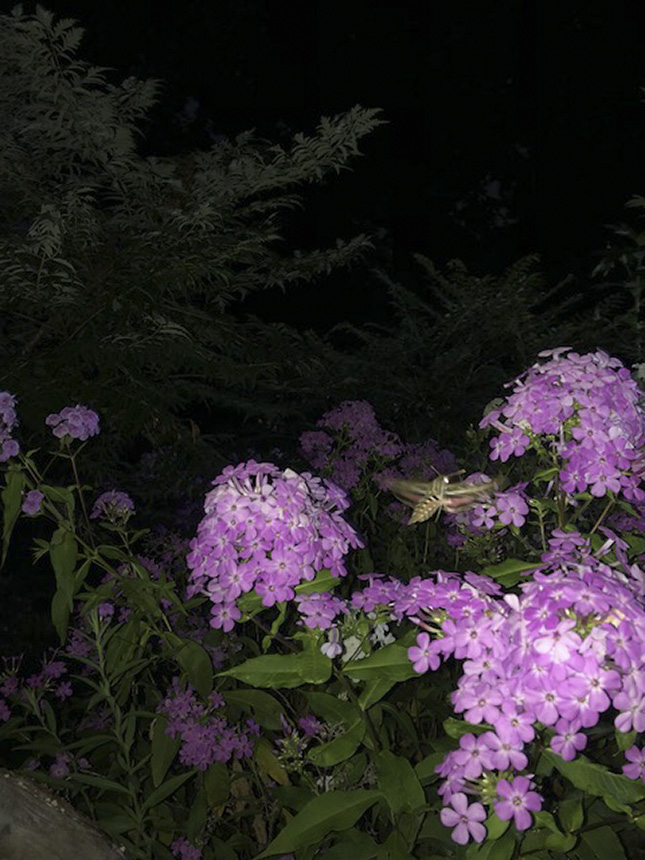
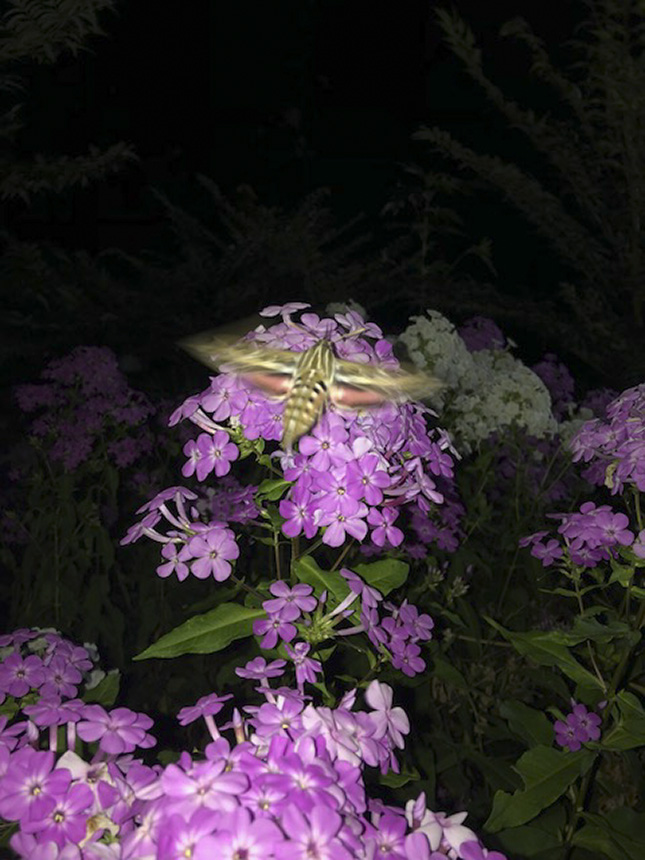
This moth is often spotted hovering with rapidly-beating wings near a flower. While they usually fly from dusk to dawn, they also sometimes fly during the day. |
Life Cycle |
Females attract males by releasing pheromones. Caterpillars moult five times before pupating. They pupate for 2 to 3 weeks in shallow burrows in the ground. The second brood overwinters as pupae. |
Larval Hosts |
Willow herb (Epilobium spp.), four o’clock (Mirabilis spp.), apple (Malus spp.), evening primrose (Oenothera spp.), elm (Ulmus spp.), grape (Vitis spp.), and common purslane (Portulaca oleracea). |
Adult Food |
Flower nectar of many species, especially those with tubular flowers, including ground ivy (Glechoma hederacea). |
Distribution |
||
|
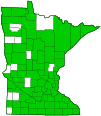
Sources 7, 21, 24, 27, 29, 30, 71, 75, 82, 83. Biodiversity occurrence data published by: Minnesota Biodiversity Atlas (accessed through the Minnesota Biodiversity Atlas Portal, bellatlas.umn.edu, 6/26/2025). |
|
| 6/26/2025 | ||
Occurrence |
||
Common |
||
Taxonomy |
|
Order |
|
Superfamily |
Bombycoidea (Hawk, Sphinx, Silk, Emperor, and Allied Moths) |
Family |
|
Subfamily |
Macroglossinae |
Tribe |
Macroglossini |
Subtribe |
Choerocampina |
Genus |
Hyles |
Subordinate Taxa |
|
|
|
Synonyms |
|
Celerio lineata Deilephila lineata Hyles daucus Hyles florilega Hyles linearis Hyles lineatoides Hyles vitis |
|
Common Names |
|
white lined sphinx white-lined hawk moth white-lined sphinx white-lined sphinx moth |
|
Glossary
Anal plate
In snakes: the large scale in front of and covering the anus. In turtles: one of the posterior plates of the lower shell (plastron). In Lepidoptera: the often hardened shield on the dorsal surface of the last (10th) segment of the abdomen.
Costal margin
The leading edge of the forewing of insects.
Proleg
A fleshy structure on the abdomen of some insect larvae that functions as a leg, but lacks the five segments of a true insect leg.
Prothoracic shield
The hardened plate on the dorsal surface of the first segment of the thorax.
Tegula
A small, hardened plate or flap-like structure that overlaps the base of the forewing of insects in the orders Lepidoptera, Hymenoptera, Diptera, and Homoptera.
Visitor Photos |
||
Share your photo of this insect. |
||
This button not working for you? |
||
Trish Montgomery |
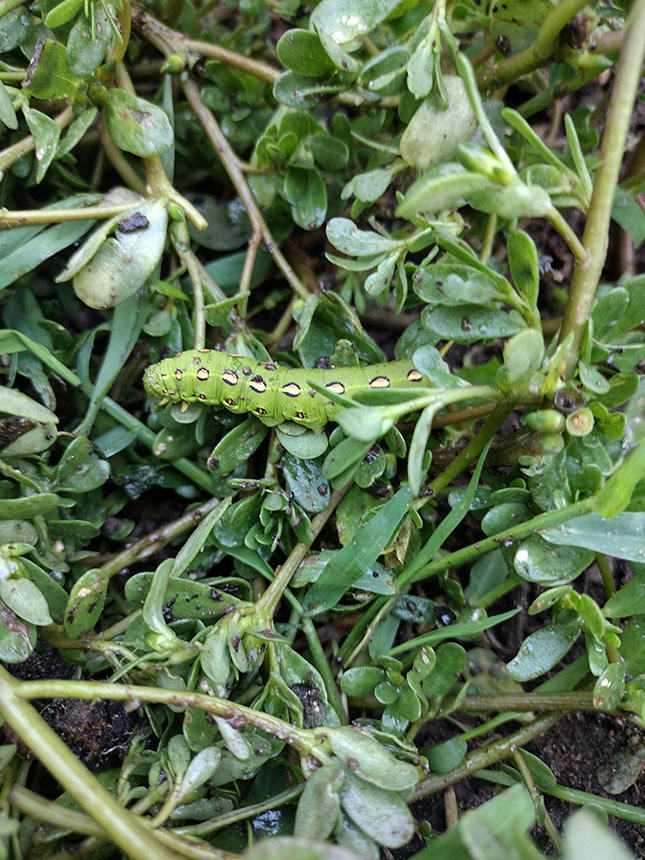 |
Always find these guys in my vegetable gardens. I have TONS of purslane growing and often end up hopping around looking like a crazy person so I don't squash them! 😂 |
SMG715 |
||
 |
 |
|
Christy Moe Marek |
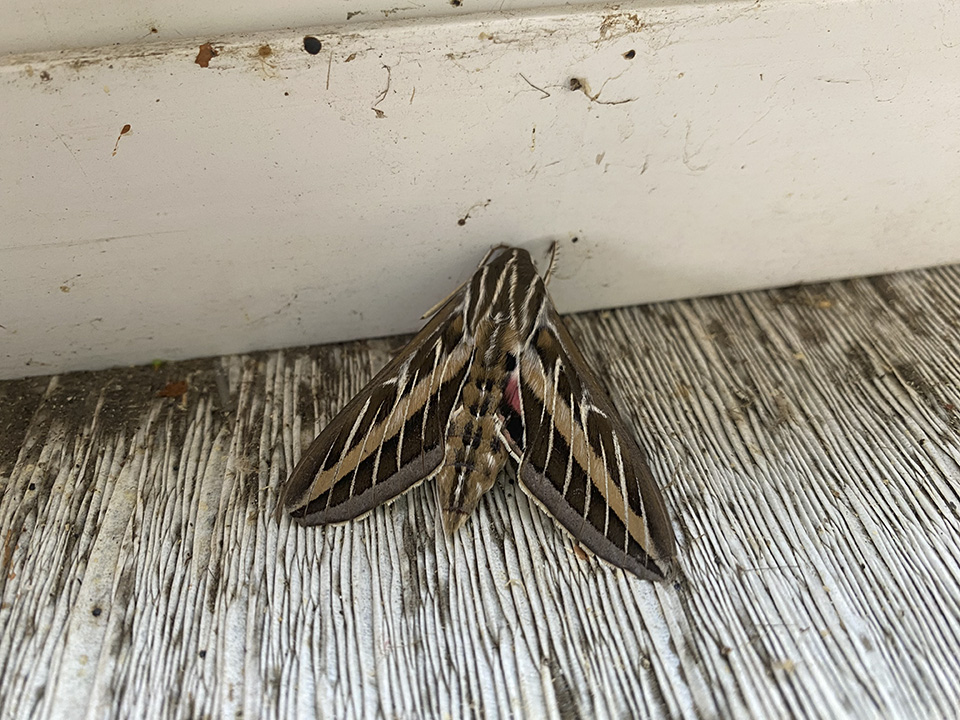 |
Found this friend in our garage Sunday, 4/30/23 (Lakeville, MN). White-lined Sphinx Moth. |
Mikayla |
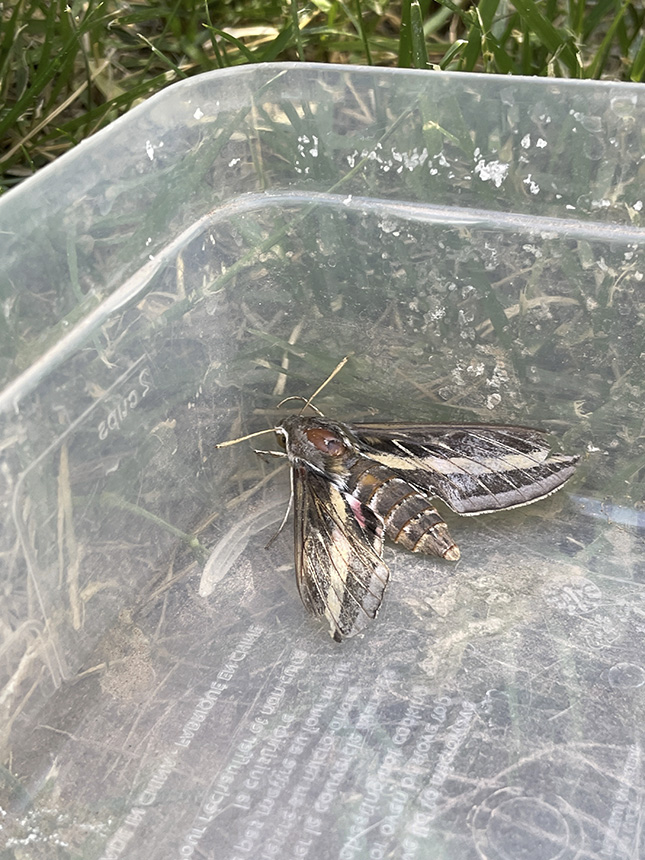 |
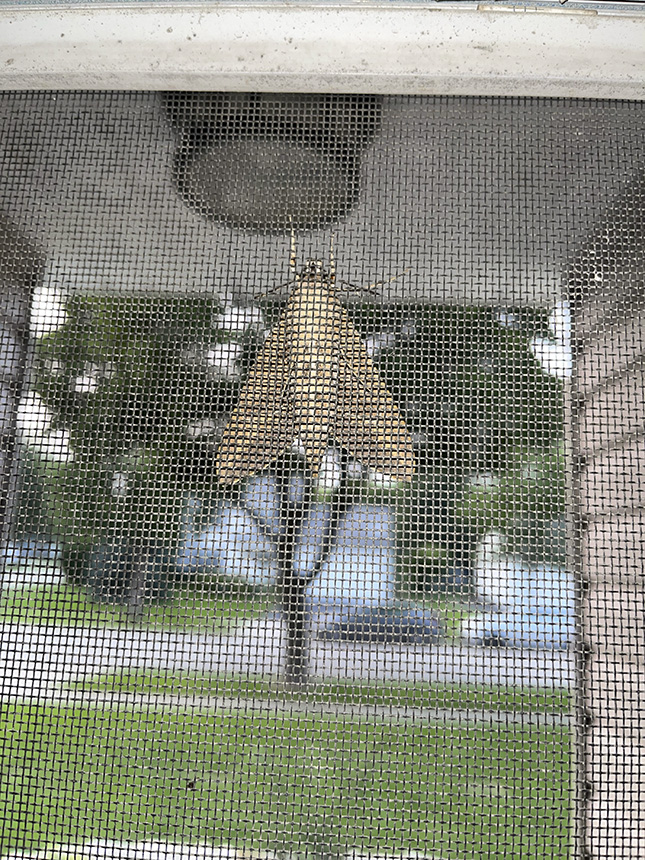
Poor guy flew inside of our house and got stuck in our window. |
Nate |
||
 |
 |
|
AHesse |
 |
Robert Ewert |
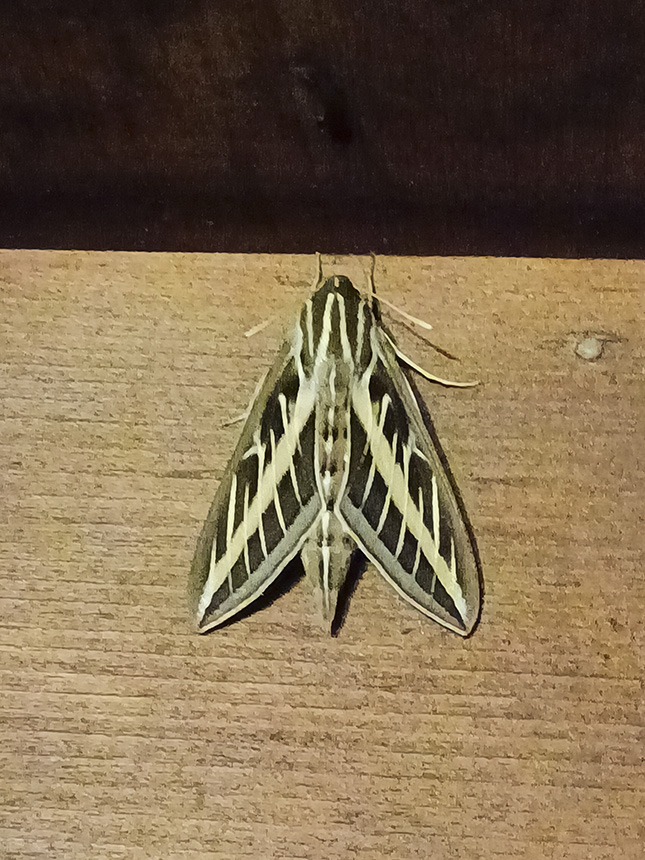 |
on our porch after a rainstorm 10:00pm |
Lindsay Hedberg |
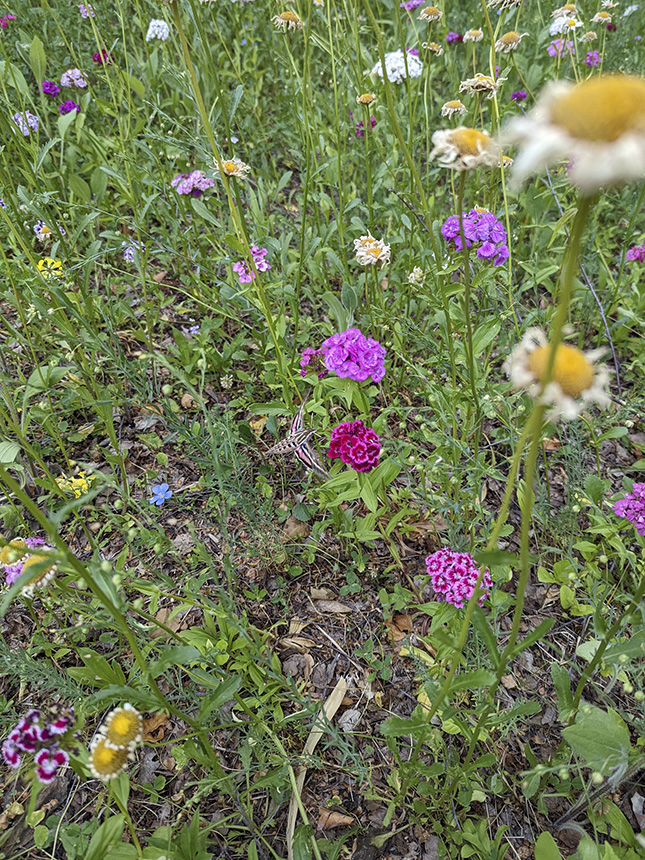 |
I love my wildflower garden visitors! |
Molly and Robert Power |
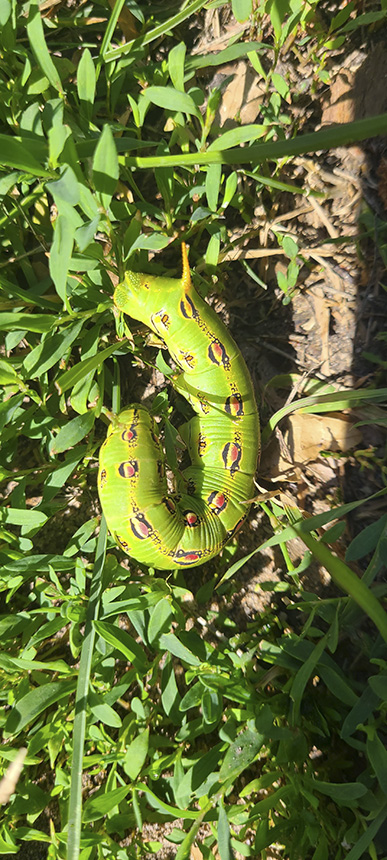 |
Our kids found this caterpillar outside our front door! |
Bill Augello |
||
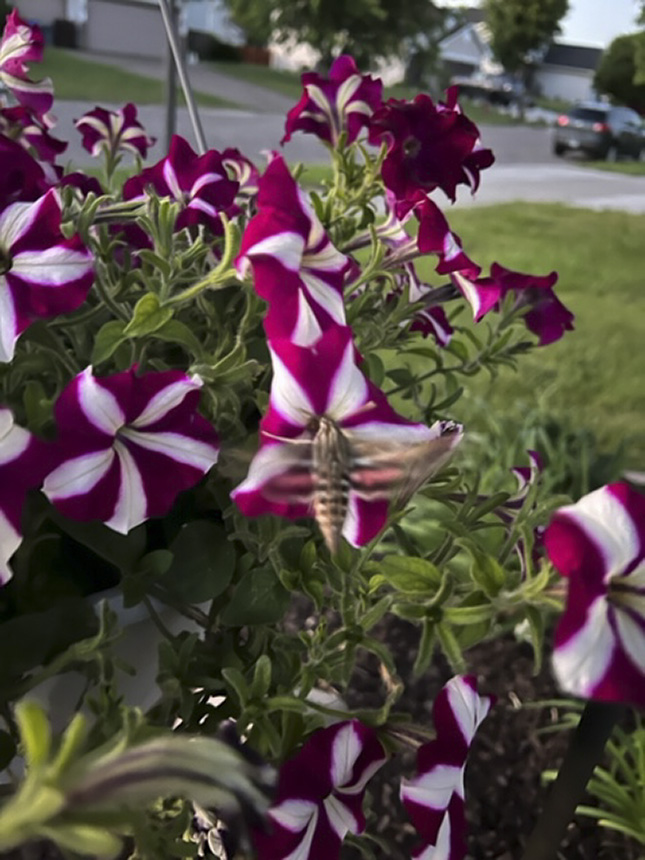 |
 |
|
 |
||
Chad & Autumn Brekke |
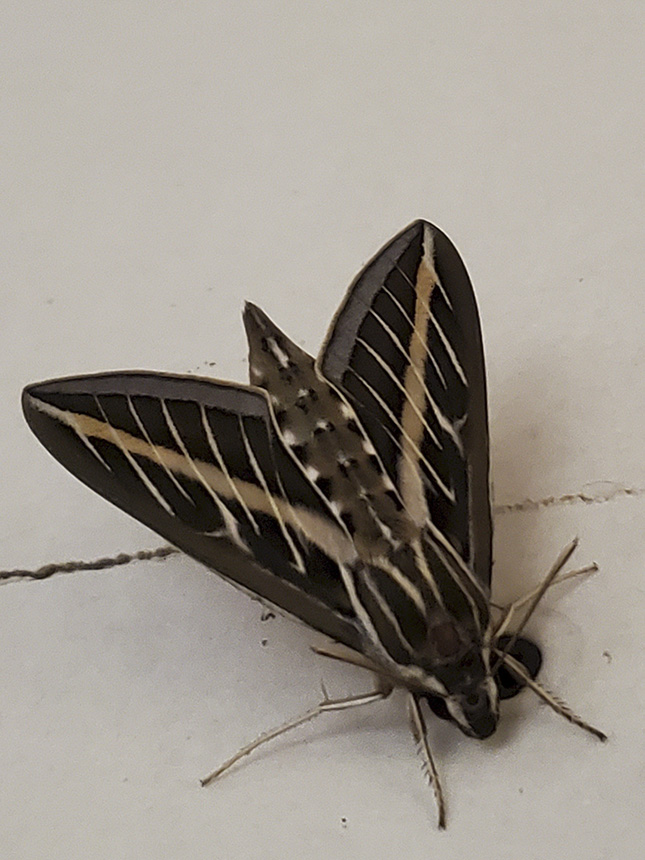 |
We took this photo last night… He was in our garage. What a beautiful guy he was! |
Valerie Salley |
||
 |
 |
|
Plannine |
||
 |
 |
|
Leigh49 |
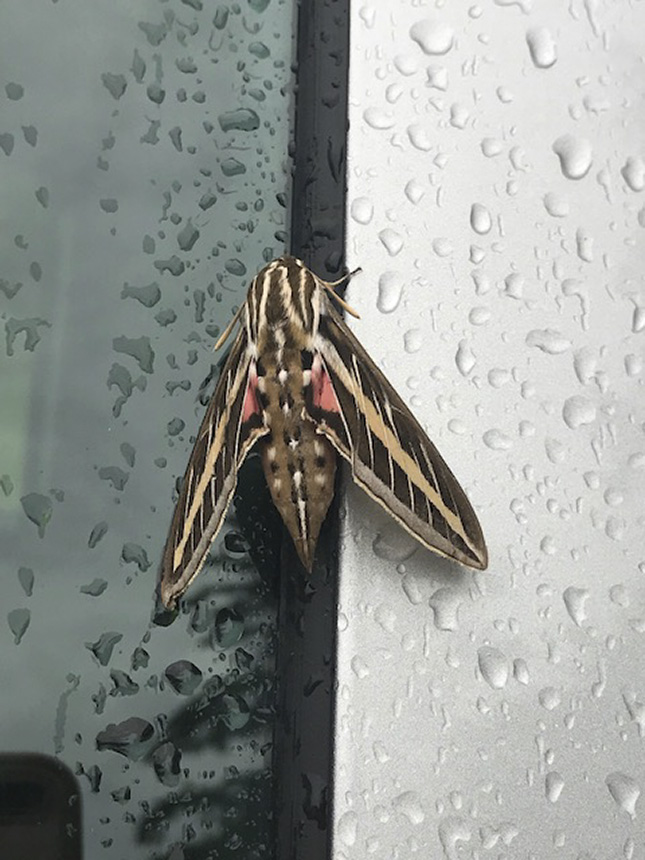 |
On my truck, after a rain! |
Scott Cole |
||
 |
 |
|
| ...a moth feeding on a Bee Balm in our yard |
|
|
Angie F |
||
 |
 |
|
LWel |
||
 |
 |
|
| Feasting between 9 & 10pm. |
|
|
Ken Greshowak |
 |
Nicole Vasquez |
 |
Tom Baker |
 |
MinnesotaSeasons.com Photos |
||
 |
 |
|
 |
 |
|
 |

Slideshows |
Hyles lineata (White-lined Sphinx) |
|
Hyles lineata |
|

Visitor Videos |
||
Share your video of this insect. |
||
This button not working for you? |
||
Ann Fink |
white-lined sphinx 04 |
About
white-lined sphinx (Hyles lineata) |
Lindsay Hedberg |
white-lined sphinx 03 |
About
white-lined sphinx (Hyles lineata) 6/25/2022 Jordan, MN Scott County I love my wildflower garden visitors! Video by Lindsay Hedberg http://www.minnesotaseasons.com/Insects/white-lined_sphinx.html |
Scott Cole |
white-lined sphinx 02 |
About
white-lined sphinx (Hyles lineata) Video by Scott Cole Mankato, MN This is the first year we have had these moths. They love the Bee Balm! |
Todd |
white-lined sphinx 01 |
About
most of this video is in slow Mo mode. |
Other Videos |
||
White-lined Sphinx Moth |
About
Uploaded on Sep 20, 2011 A White-lined Sphinx Moth (Hyles lineata) nectaring on Star Flower (Pentas lanceolata) in Monarch Waystation #1 (Monarch Watch HQ in Lawrence, KS). |
White Lined Sphinx Moth - Hyles Lineata in Wisconsin |
About
Published on Sep 14, 2012 I first thought this moth was a hummingbird when it was flying around me. It was very interested in my blooming hostas. It flew continuously and was silent. Music: The following is from wikipedia: aka: |
White-lined Sphinx Moth (Sphingidae: Hyles lineata) Lateral Close-up |
About
Published on Jun 3, 2012 Photographed at Grand Forks, North Dakota (03 June 2012). |
Ep. 359 White- lined Sphinx Moth Hummingbird Loving My Super Petunia's |
About
Published on Jan 8, 2014 White- lined Sphinx Moth Hummingbird-The White-lined sphinx (Hyles lineata) is a moth of the Sphingidae family. The White-lined sphinx may be encountered from April to October. This moth's rapid wing movement resembles a hummingbird in flight when it hovers over flowers while it feeds. The fore wing is dark brown with a tan stripe which extends from the base to the apex. There are also white lines that cover the veins. The black hind wing has a broad pink median band. It has a wingspan of 2 to 3 inches. The moth is sometimes referred to as a Hummingbird Moth because of its similarity to the Hummingbird in appearance and flight characteristics. The moth's range is throughout the United States and extends north into southern and mid western Canada and south into Mexico. It can also be found occasionally in the West Indies The larva is yellow and black or sometimes lime green and black. Many individuals have a subdorsal stripe. The head, prothoracic shield, and the anal plate are one color either green or orange with small black dots. The horn varies from either yellow or orange and sometimes has a black tip.Larvae burrow into soil to go into cocoons, where they remain for 2--3 weeks before they emerge as adults. |
White-lined Sphinx Moth (Sphingidae: Hyles lineata) Dorsal Close-up |
About
Published on Jun 3, 2012 Photographed at Grand Forks, North Dakota (03 June 2012). |

Visitor Sightings |
||
Report a sighting of this insect. |
||
This button not working for you? |
||
Trish Montgomery |
Location: Near Motley MN Always find these guys in my vegetable gardens. I have TONS of purslane growing and often end up hopping around looking like a crazy person so I don't squash them! 😂 |
 |
T Wiese |
Location: La Crescent Mn first ever sighting |
|
| SMG715 7/16/2023 |
Location: Algonquin, IL |
|
| Christy Moe Marek 5/1/2023 |
Location: Lakeville, MN Found this friend in our garage Sunday, 4/30/23 (Lakeville, MN). White-lined Sphinx Moth. |
|
| Mikayla 4/17/2023 |
Location: Las Vegas, NV Poor guy flew inside of our house and got stuck in our window. |
|
| Nate 9/20/2022 |
Location: Bigfork, MN |
|
Ann Fink |
Location: Duluth, MN |
|
| AHesse 8/4/2022 |
Location: near Princeton, MN |
|
| Robert Ewert 7/26/2022 |
Location: Parkers Prairie MN on our porch after a rainstorm 10:00pm |
|
| Lindsay Hedberg 6/25/2022 |
Location: Jordan, MN Scott County I love my wildflower garden visitors! |
|
| Molly and Robert Power 6/21/2022 |
Location: Albany, MN Our kids found this caterpillar outside our front door! |
|
| Bill Augello 6/16/2022 |
Location: St. Micheal, MN |
|
| Chad & Autumn Brekke 8/27/2021 |
Location: Kilkenny, Minnesota We took this photo last night… He was in our garage. What a beautiful guy he was! |
|
| Valerie Salley 9/16/2020 |
Location: Burnsville, Dakota Co. |
|
| Caitlin 9/11/2020 |
Location: Norwood Young America Found a caterpillar on the ground during this cold spell. Brought inside for the night. |
|
| Plannine 7/16/2020 |
Location: Sherburne County |
|
| Leigh49 7/1/2019 |
Location: Alexandria, MN On my truck, after a rain! |
|
| Candace 6/22/2019 |
Location: Milaca, MN Loved my purple annuals in my garden! |
| Scott Cole 8/11/2018 |
Location: Mankato, MN ...a moth feeding on a Bee Balm in our yard |
|
Todd |
Location: Cottage Grove MN |
| Angie F 8/6/2018 |
Location: Woodbury MN |
|
| LWel 8/1/2018 |
Location: St. Paul Feasting between 9 & 10pm. |
|
| Ken Greshowak 7/12/2018 |
Location: St. Louis County |
|
| Nicole Vasquez 9/20/2017 |
Location: Silver Bay, MN |
|
MinnesotaSeasons.com Sightings |
||
Created: 12/7/2010 Last Updated: © MinnesotaSeasons.com. All rights reserved. |