



silvery cinquefoil
(Potentilla argentea)
Conservation • Wetland • Description • Habitat • Ecology • Use • Distribution • Taxonomy
Conservation Status |
|
|||||||
| IUCN Red List | not listed |
|||||||
| NatureServe | NNA - Not applicable SNA - Not applicable |
|||||||
| Minnesota | not listed |
|||||||
Wetland Indicator Status |
||||||||
| Great Plains | FACU - Facultative upland |
|||||||
| Midwest | FACU - Facultative upland |
|||||||
| Northcentral & Northeast | FACU - Facultative upland |
|||||||
Description |
||
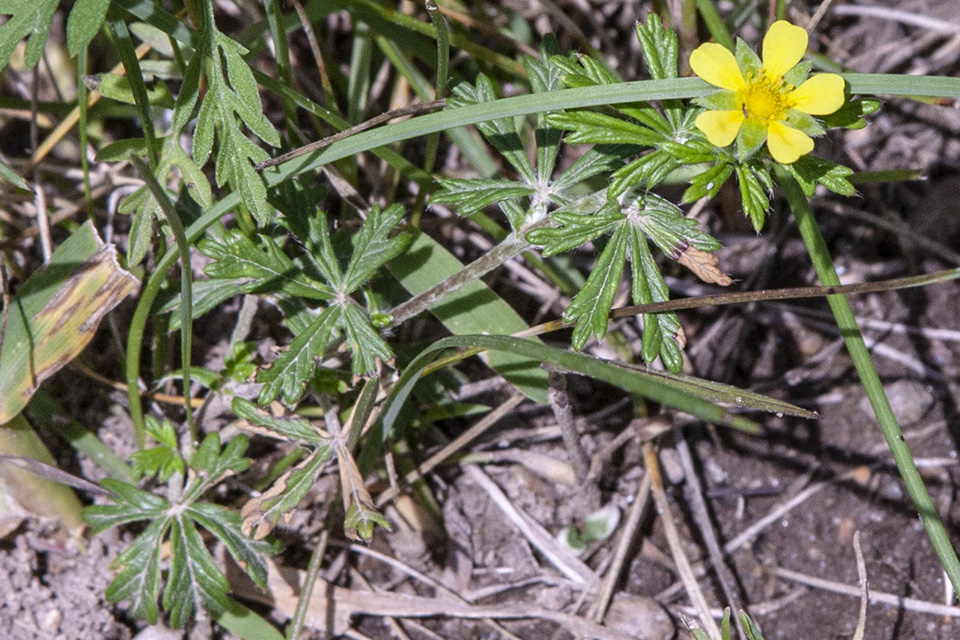
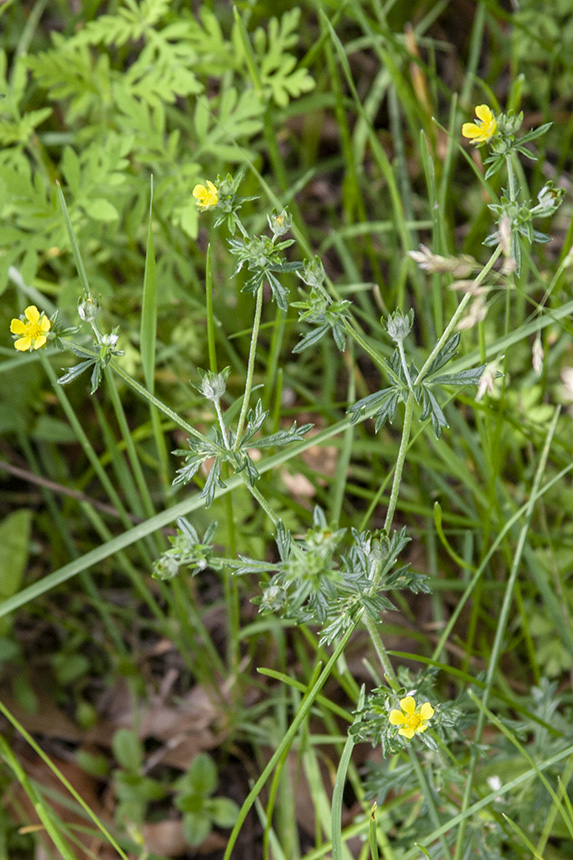
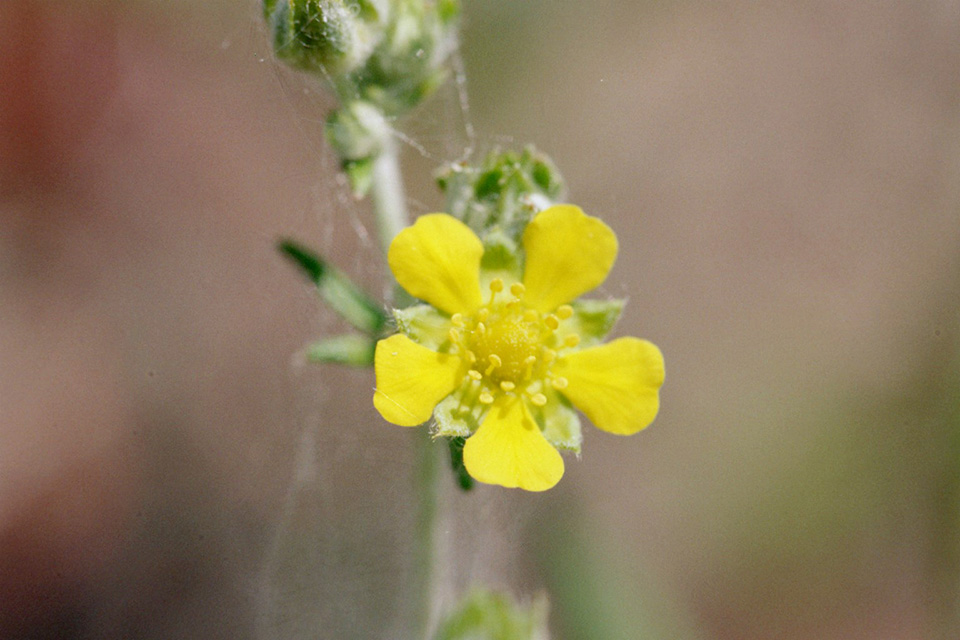
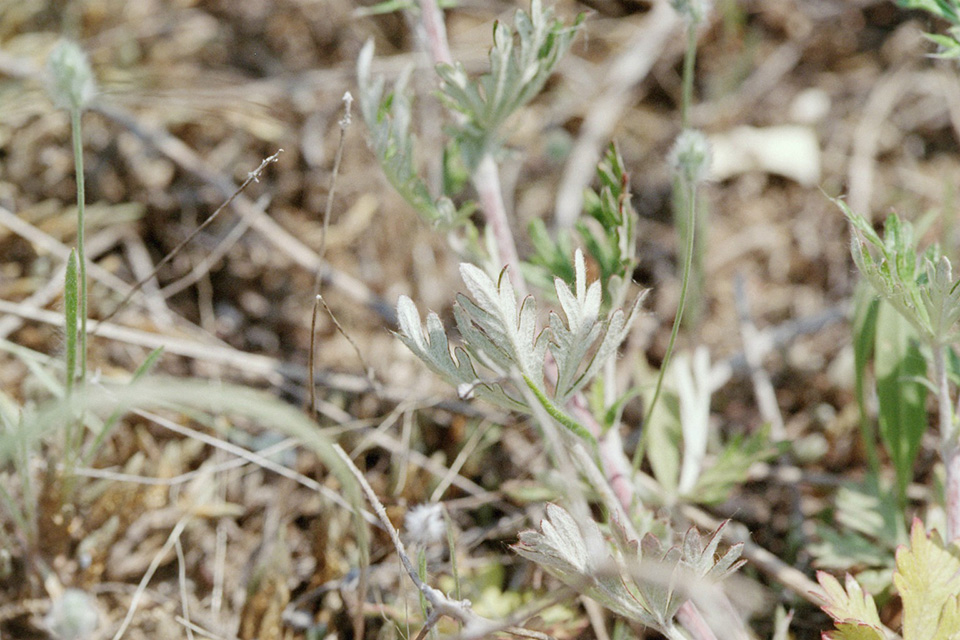
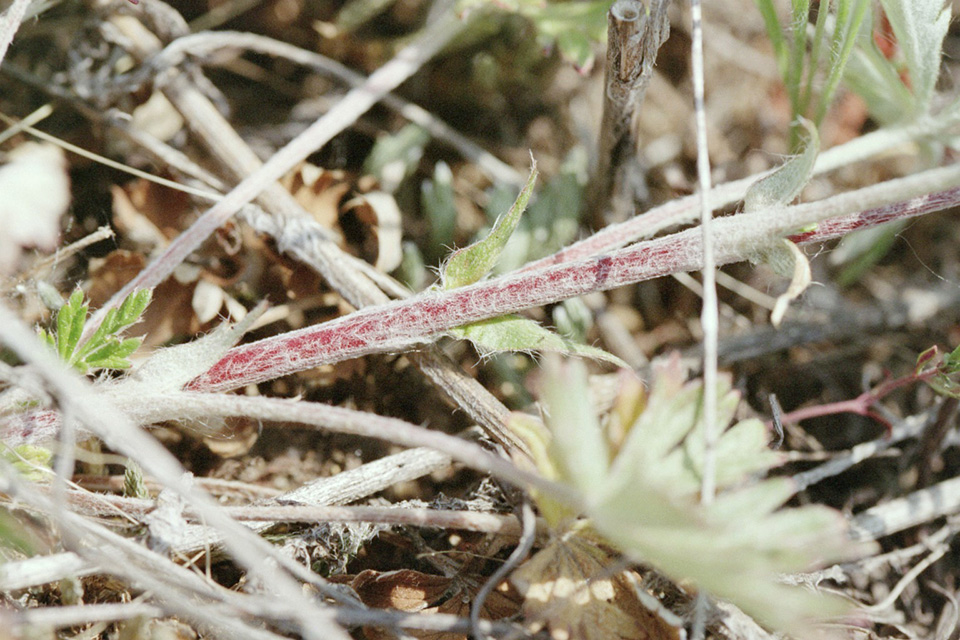
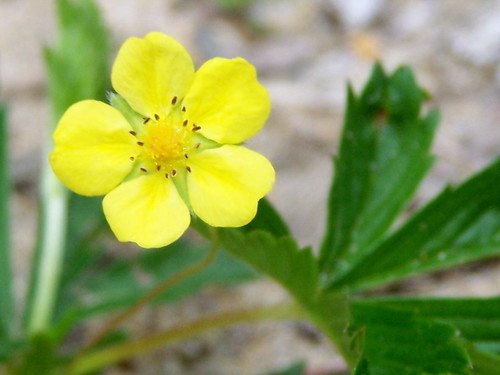
Silvery cinquefoil is a 4″ to 20″ tall, erect, perennial forb that rises on usually several stems from a robust root system. The stems are erect or ascending, stout, freely branched, reddish, and covered with two kinds of hairs. They are densely covered with short, white, soft, matted, woolly hairs (tomentose). They are also sparsely covered with long, white, soft, unmatted, shaggy hairs. Basal leaves are on long, tomentose stalks. The are ¾″ to 4″ long including the leaf stalk, and are palmately divided into 5 leaflets. The leaflets are ⅝″ to 2″ long, though usually no more than 1¼″ long, and 3 ⁄16″ to ⅜″ wide. They are narrowly inversely lance-shaped or narrowly inversely egg-shaped with the attachment at the narrow end. The base is wedge-shaped, triangular, and tapers to the leaf stalk. The upper surface is green and covered with long, soft, straight, appressed hairs. The lower surface is densely white tomentose. Neither surface has glandular hairs. The margins are untoothed below the middle and have 2 to 5 teeth above the middle. The teeth are linear or narrowly oblong and cut ⅔ of the way to the midrib—they could be considered secondary lobes. The margins of these teeth/lobes are rolled backward toward the underside. Stem leaves are many, alternate, and similar to the basal leaves, but with leaf stalks getting progressively shorter as they ascend the stem. Upper stem leaves are stalkless. At the base of the leaf stalks is a pair of small, leaf-like appendages (stipules). The upper side of the stipule is green, the lower side white tomentose. They are unlobed, pointed at the tip, and may have 2 or 3 deeply cut teeth on each side near the tip. The inflorescence is a loose, open, branched cluster of many flowers at the end of the stem. The flowers are ¼″ to ⅜″ wide. They are borne on ⅝″ to 1″ long, tomentose flower stalks. The 5 petals are yellow, inversely egg-shaped, notched at the tip, and tapering to a narrow, wedge-shaped base. The 5 sepals are green, shorter than the petals, and alternate with the petals. The 5 bractlets are shorter than the sepals when the flower is fully open. They alternate with the sepals and are hidden below the petals when the flower is viewed from above. There are 20 stamens with yellow anthers. The style is visibly thickened at the base. The fruit is an achene. |
||
Height |
||
4″ to 20″ |
||
Flower Color |
||
Yellow |
||
Similar Species |
||
Tall cinquefoil (Drymocallis arguta) stems are erect and unbranched below the inflorescence. The leaves are pinnately divided into 7, 9, or 11 leaflets. The petals are yellowish-white, cream colored, or nearly white. |
||
Habitat |
||
Dry. Disturbed sites. |
||
Ecology |
||
Flowering |
||
June to September |
||
Pests and Diseases |
||
|
||
Use |
||
|
||
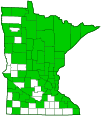
Distribution |
||||
|
Sources |
|||
| 6/4/2023 | ||||
Nativity |
||||
Native to Europe and Asia. Introduced and naturalized in North America. |
||||
Occurrence |
||||
Common |
||||
Taxonomy |
|||
| Kingdom | Plantae (Plants) | ||
| Subkingdom | Pteridobiotina | ||
| Phylum | Tracheophyta (Vascular Plants) | ||
| Class | Magnoliopsida (Dicots) | ||
Order |
Rosales (Roses, Elms, Figs, and Allies) | ||
Family |
Rosaceae (Rose) | ||
| Subfamily | Rosoideae (Brambles, Roses, Strawberries, and Allies) | ||
| Tribe | Potentilleae (strawberries, cinquefoils, and allies) | ||
| Subtribe | Potentillinae (cinquefoil) | ||
Genus |
Potentilla (cinquefoils) | ||
Subordinate Taxa |
|||
|
|||
Synonyms |
|||
|
|||
Common Names |
|||
hoary cinquefoil silverleaf cinquefoil silvery cinquefoil silvery five-fingers |
|||
Glossary
Achene
A dry, one-chambered, single-seeded seed capsule, formed from a single carpel, with the seed attached to the membranous outer layer (wall) only by the seed stalk; the wall, formed entirely from the wall of the superior ovary, does not split open at maturity, but relies on decay or predation to release the contents.
Bract
Modified leaf at the base of a flower stalk, flower cluster, or inflorescence.
Bractlet
A small, often secondary bract within an inflorescence; a bract that is borne on a petiole instead of subtending it.
Glandular hairs
Hairs spread over aerial vegetation that secrete essential oils. The oils act to protect against herbivores and pathogens or, when on a flower part, attract pollinators. The hairs have a sticky or oily feel.
Palmately divided
Similar to a hand. Having more than three lobes that radiate from a single point at the base of the leaf.
Sepal
An outer floral leaf, usually green but sometimes colored, at the base of a flower.
Stipule
A small, leaf-like, scale-like, glandular, or rarely spiny appendage found at the base of a leaf stalk, usually occurring in pairs and usually dropping soon.
Tomentose
Densely covered with short, soft, matted or tangled, woolly, usually white or silvery hairs.
Visitor Photos |
|||||
Share your photo of this plant. |
|||||
| This button not working for you? Simply email us at info@MinnesotaSeasons.com. Attach one or more photos and, if you like, a caption. |
|||||
|
|||||
MinnesotaSeasons.com Photos |
|||||
Plant |
|||||
 |
 |
||||
Inflorescence |
|||||
 |
|||||
Flower |
|||||
 |
|||||
Leaves |
|||||
 |
 |
||||
Stem |
|||||
 |
|||||

Slideshows |
||
| Silvery Cinquefoil (Potentilla argentea) Andree Reno Sanborn |
||
|
||
| Control Potentilla Argentea In Yards Helper How To |
||
About
Published on Sep 11, 2013
|
||
Visitor Videos |
|||
Share your video of this plant. |
|||
| This button not working for you? Simply email us at info@MinnesotaSeasons.com. Attach a video, a YouTube link, or a cloud storage link. |
|||
Other Videos |
|||
| Hoary Cinquefoil (Potentilla argentea) - 2014-06-15 W3stlander |
|||
About
Published on Jun 23, 2014 Hoary Cinquefoil (Potentilla argentea) or Silver-Leaf Cinquefoil, is a species of cinquefoil ------------ |
|||
| Floare galbena de primavara, potentilla argentea subsp. argentea, scrantitoare Adrian Manolache |
|||
About
Published on Jun 6, 2014
|
|||

Visitor Sightings |
|||||
Report a sighting of this plant. |
|||||
| This button not working for you? Simply email us at info@MinnesotaSeasons.com. Be sure to include a location. |
|||||
|
|||||
MinnesotaSeasons.com Sightings |
|||||
|
Created: Last Updated: © MinnesotaSeasons.com. All rights reserved. |