



tall cinquefoil
(Drymocallis arguta)
Conservation • Wetland • Description • Habitat • Ecology • Use • Distribution • Taxonomy
Conservation Status |
|
|||||||
| IUCN Red List | not listed |
|||||||
| NatureServe | NNR - Unranked SNR - Unranked |
|||||||
| Minnesota | not listed |
|||||||
Wetland Indicator Status |
||||||||
| Great Plains | FACU - Facultative upland |
|||||||
| Midwest | FACU - Facultative upland |
|||||||
| Northcentral & Northeast | FACU - Facultative upland |
|||||||
Description |
||
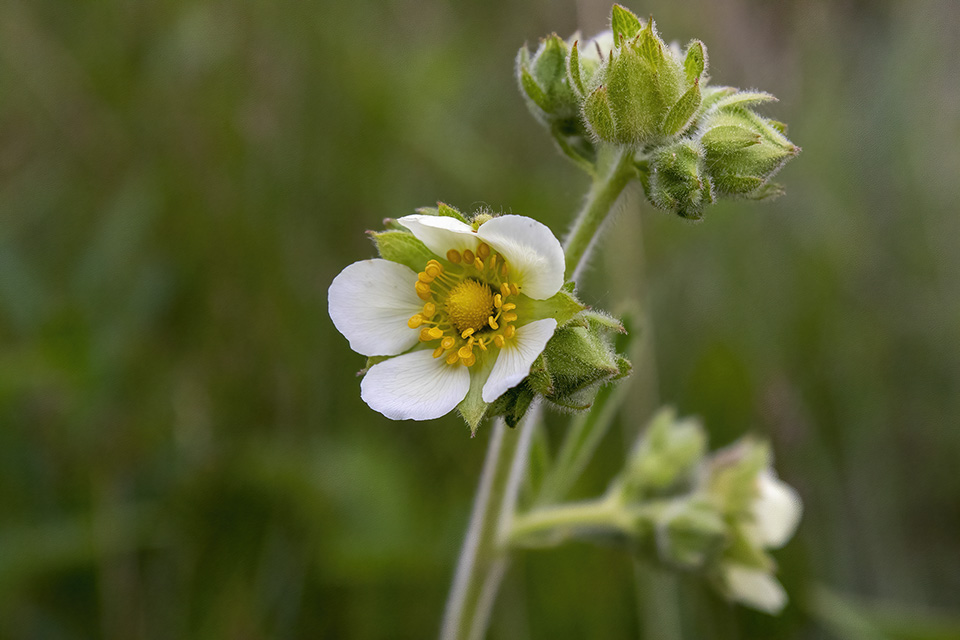
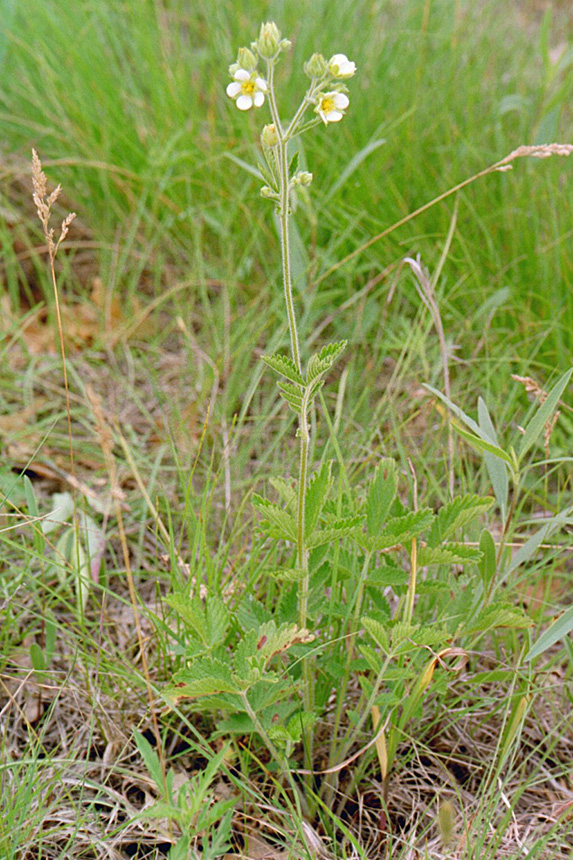
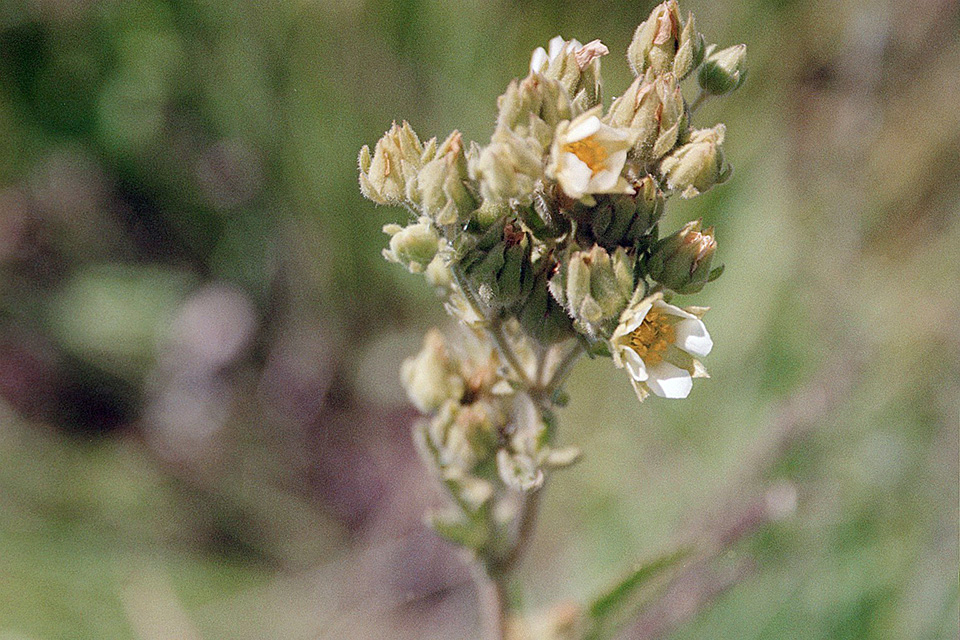
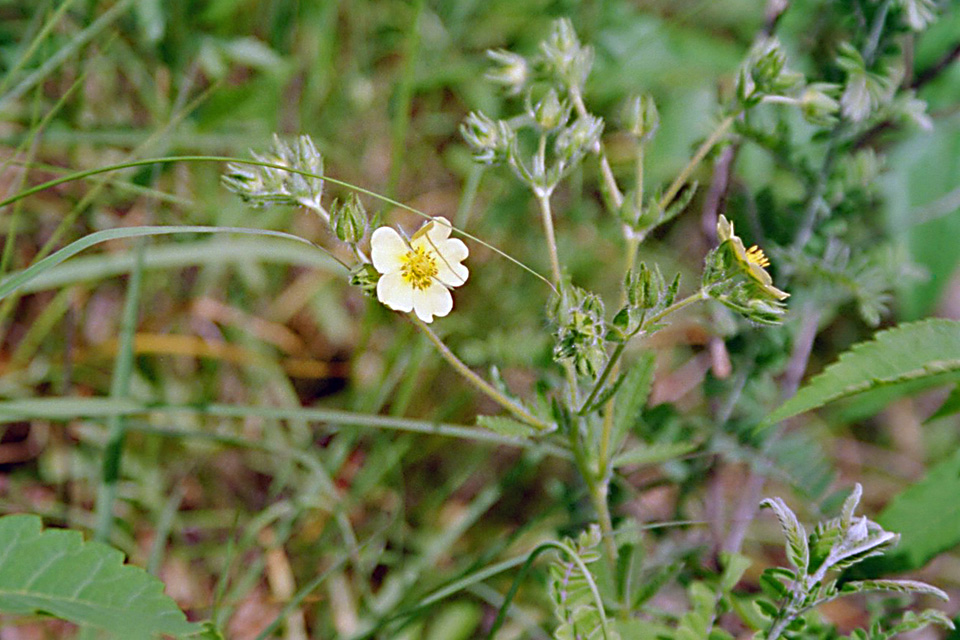
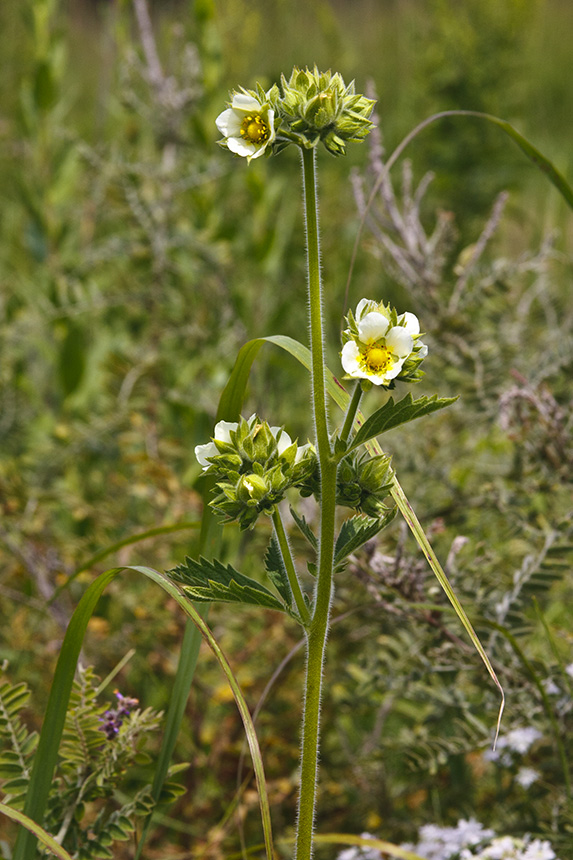
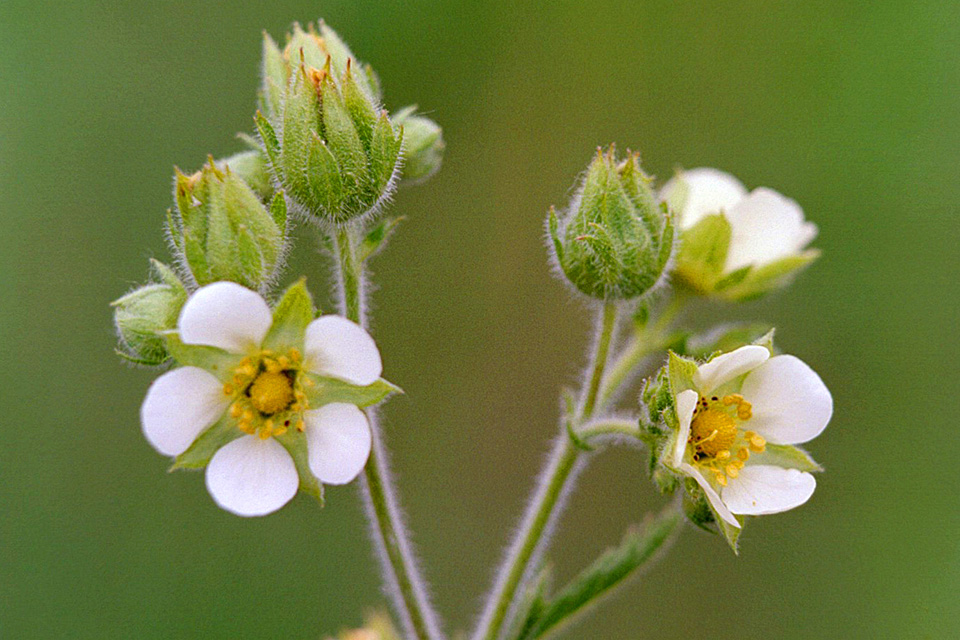
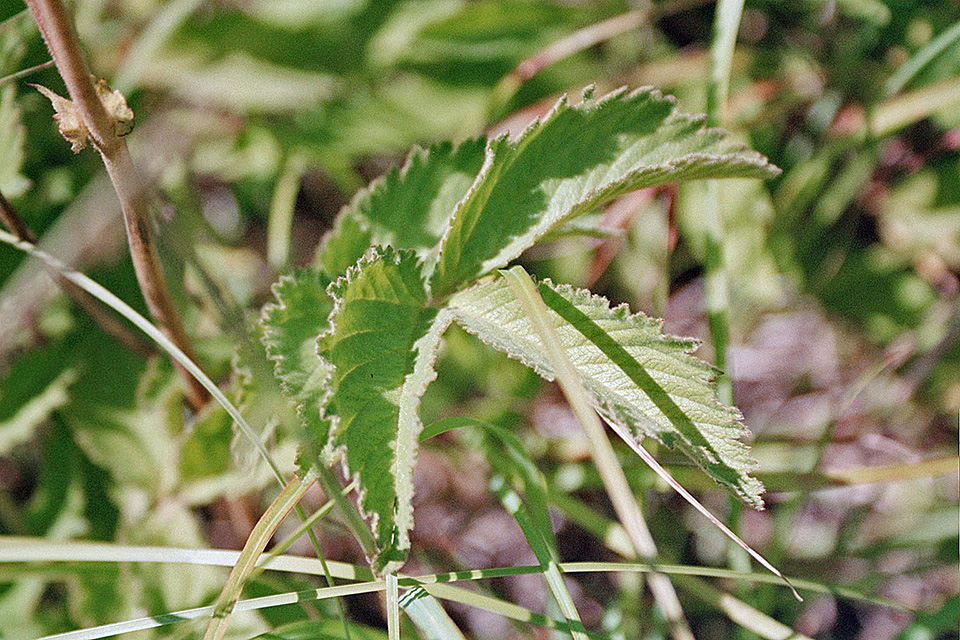
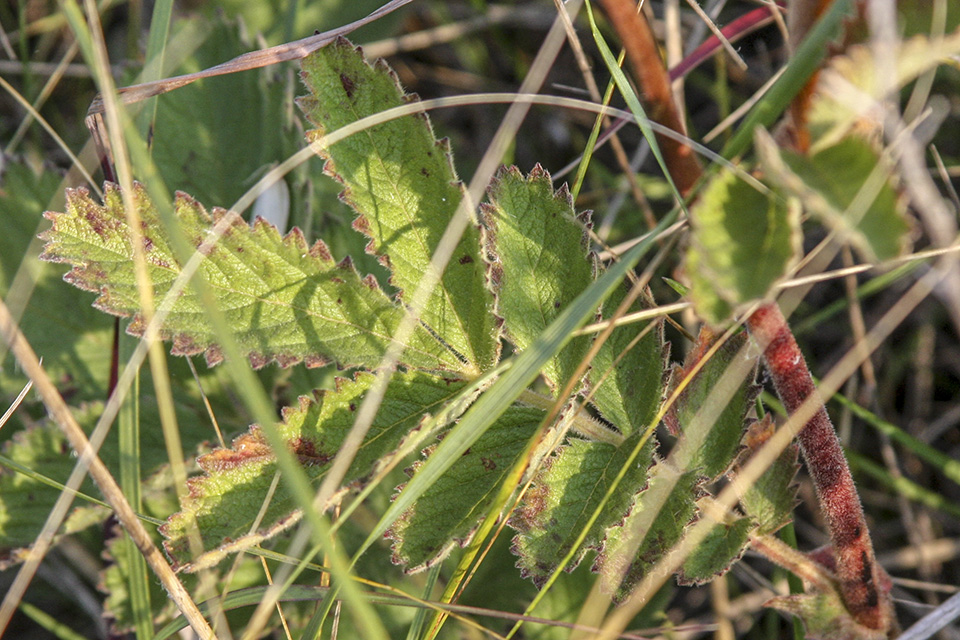
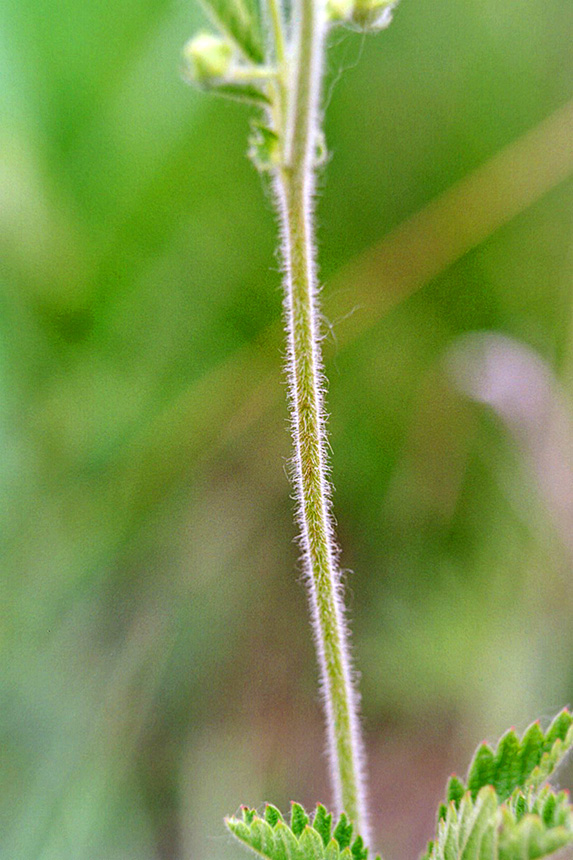
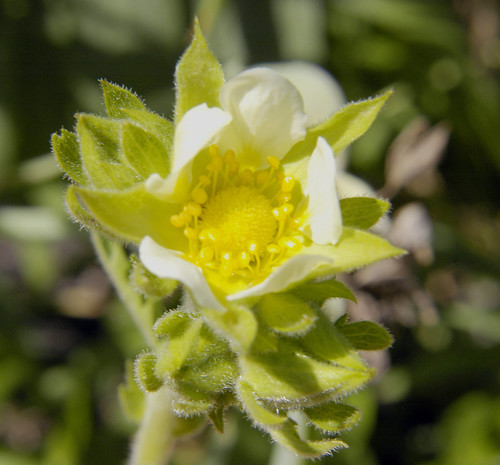
Tall cinquefoil is a 12″ to 40″ tall, though usually less than 24″ tall, erect, perennial forb that rises from a stout rhizome or branching caudex. The stems are erect, stout, unbranched below the inflorescence, and covered with brownish, sticky, glandular hairs. Most of the leaves are basal. Basal leaves are on long, hairy stalks. The are pinnately divided into 7, 9, or 11 leaflets. The leaflets are hairy, inversely egg-shaped with the attachment at the narrow end, and up to 2¾″ long. The margins are coarsely toothed around the entire margin, including near the base. The upper and lower surfaces are hairy. Stem leaves are few, often just 1 or 2 leaves on the stem. They are alternate and similar to the basal leaves but smaller and with only 3 or 5 leaflets. The inflorescence is a flattened, branched cluster of many flowers at the end of the stem. The flowers are ½″ to ¾″ wide. The 5 petals are yellowish-white, cream colored, or nearly white. The 5 green sepals are about equal to the petals in length and alternate with the petals. The 5 bractlets are dark green and about as long as the sepals when the flower is fully open. They alternate with the sepals and are hidden below the petals when the flower is viewed from above. There are 20 or more yellow stamens. There is no floral scent. |
||
Height |
||
12″ to 24″ |
||
Flower Color |
||
Yellowish-white, cream colored, or nearly white |
||
Similar Species |
||
Tall cinquefoil is one of only two cinquefoils in Minnesota that have white flowers. The other is Three-toothed Cinquefoil (Potentilla tridentata). The latter plant has leaves divided into three leaflets. Each leaflet has only three teeth. Sulphur cinquefoil (Potentilla recta) leaves are palmately divided into 5 or 7 leaflets. The flowers are always pale yellow, never white. |
||
Habitat |
||
Dry to moderate moisture. Prairies. |
||
Ecology |
||
Flowering |
||
June to July |
||
Pests and Diseases |
||
|
||
Use |
||
|
||
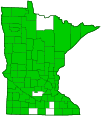
Distribution |
||||
|
Sources |
|||
| 10/22/2021 | ||||
Nativity |
||||
Native |
||||
Occurrence |
||||
Common |
||||
Taxonomy |
|||
| Kingdom | Plantae (Plants) | ||
| Subkingdom | Pteridobiotina | ||
| Phylum | Tracheophyta (Vascular Plants) | ||
| Class | Magnoliopsida (Dicots) | ||
Order |
Rosales (Roses, Elms, Figs, and Allies) | ||
Family |
Rosaceae (Rose) | ||
| Subfamily | Rosoideae (Brambles, Roses, Strawberries, and Allies) | ||
| Tribe | Potentilleae (strawberries, cinquefoils, and allies) | ||
| Subtribe | Fragariinae (strawberry) | ||
Genus |
Drymocallis | ||
Subordinate Taxa |
|||
|
|||
Synonyms |
|||
Drymocallis agrimonioides Geum agrimonioides Potentilla arguta ssp. arguta |
|||
Common Names |
|||
prairie cinquefoil tall cinquefoil tall potentilla white cinquefoil |
|||
Glossary
Bract
Modified leaf at the base of a flower stalk, flower cluster, or inflorescence.
Bractlet
A small, often secondary bract within an inflorescence; a bract that is borne on a petiole instead of subtending it.
Caudex
A short, thickened, woody, persistent enlargement of the stem, at or below ground level, used for water storage.
Glandular hairs
Hairs spread over aerial vegetation that secrete essential oils. The oils act to protect against herbivores and pathogens or, when on a flower part, attract pollinators. The hairs have a sticky or oily feel.
Pinnate
On a compound leaf, having the leaflets arranged on opposite sides of a common stalk. On a bryophyte, having branches evenly arranged on opposite sides of a stem.
Rhizome
A horizontal, usually underground stem. It serves as a reproductive structure, producing roots below and shoots above at the nodes.
Sepal
An outer floral leaf, usually green but sometimes colored, at the base of a flower.
Visitor Photos |
|||||
Share your photo of this plant. |
|||||
| This button not working for you? Simply email us at info@MinnesotaSeasons.com. Attach one or more photos and, if you like, a caption. |
|||||
Greg Watson |
|||||
 |
|||||
Nancy Falkum |
|||||
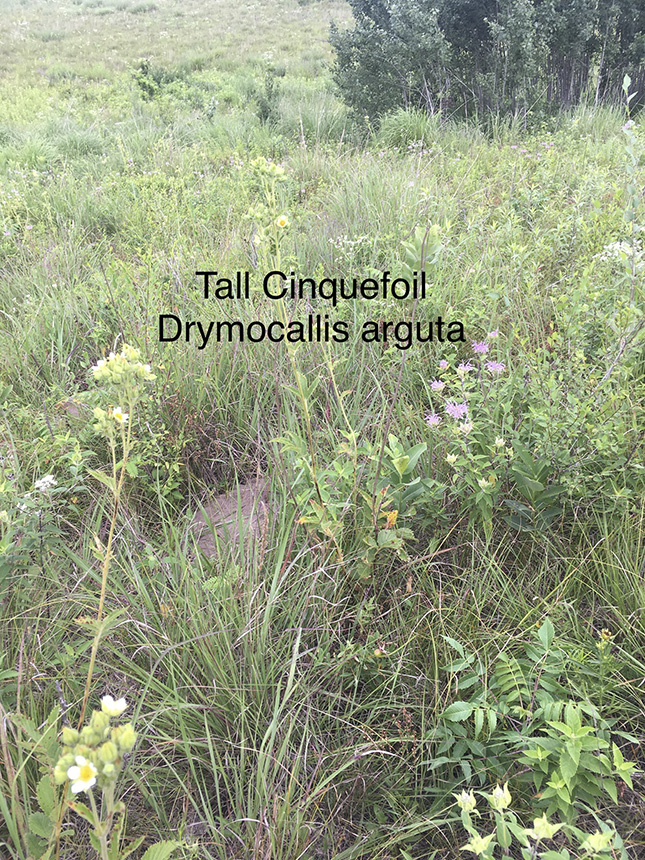
Tall Cinquefoil with Bergamot both blooming |
|||||
 |
|||||
MinnesotaSeasons.com Photos |
|||||
Plant |
|||||
 |
|||||
Inflorescence |
|||||
 |
 |
||||
 |
|||||
Flowers |
|||||
 |
|||||
Leaf |
|||||
 |
 |
||||
Stem |
|||||
 |
|||||
Infructescence |
|||||
 |
|||||

Slideshows |
||
| Potentilla arguta PRAIRIE CINQUEFOIL Frank Mayfield |
||
|
||
Visitor Videos |
|||
Share your video of this plant. |
|||
| This button not working for you? Simply email us at info@MinnesotaSeasons.com. Attach a video, a YouTube link, or a cloud storage link. |
|||
Other Videos |
|||

Visitor Sightings |
|||||
Report a sighting of this plant. |
|||||
| This button not working for you? Simply email us at info@MinnesotaSeasons.com. Be sure to include a location. |
|||||
| Greg Watson 6/28/2022 |
Location: King’s and Queen’s Bluff SNA |
 |
|||
| Nancy Falkum 7/22/2021 |
Location: Kellogg Weaver Dunes SNA, Weaver Dunes Unit Tall Cinquefoil with Bergamot both blooming |
 |
|||
MinnesotaSeasons.com Sightings |
|||||
Carver Highlands WMA, South Unit Felton Prairie SNA, Bicentennial Unit Northern Tallgrass Prairie NWR, Hoffman Unit Northern Tallgrass Prairie NWR, Rengstorf Unit Northern Tallgrass Prairie NWR, Touch the Sky Prairie Unit Pembina Trail Preserve SNA, Crookston Prairie Unit |
|||||
|
Created: Last Updated: © MinnesotaSeasons.com. All rights reserved. |