



wild parsnip
(Pastinaca sativa)
Conservation • Weed • Description • Habitat • Ecology • Use • Distribution • Taxonomy
|
|
||||||||||||||||||||
Description |
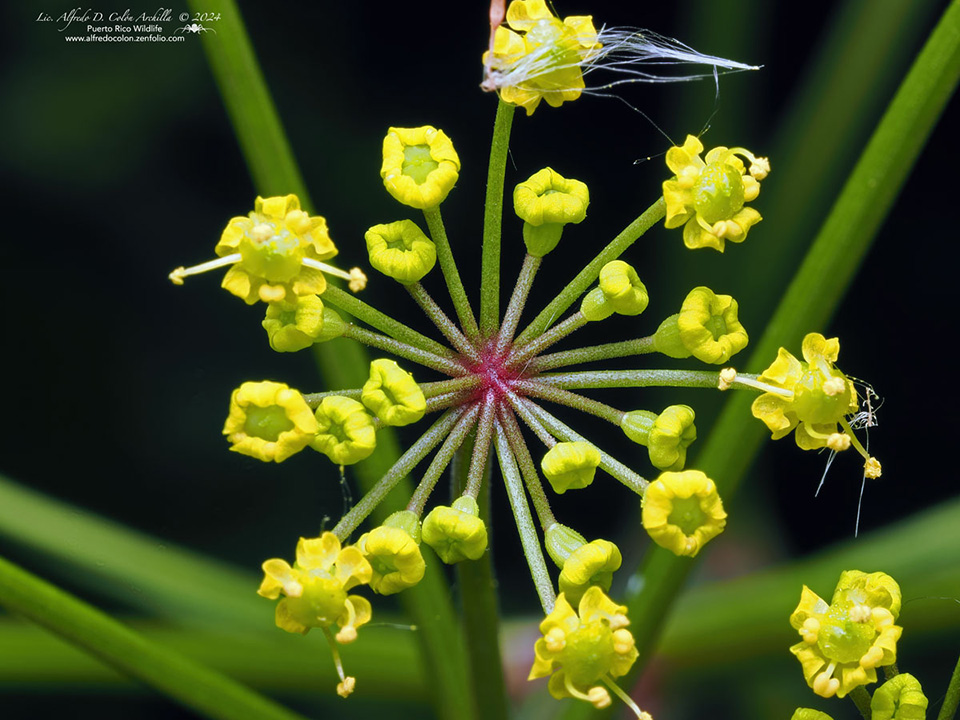
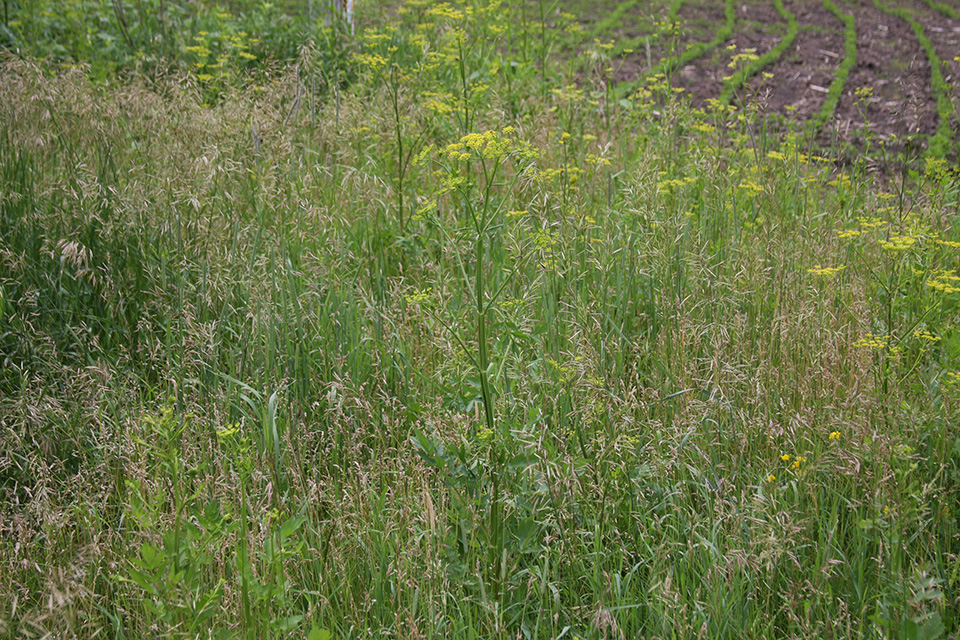
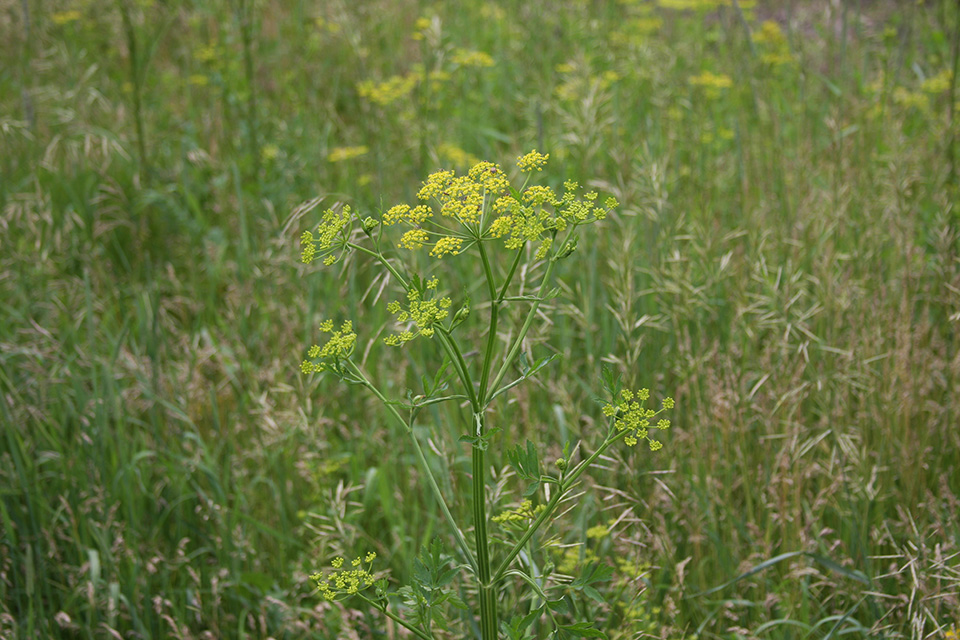
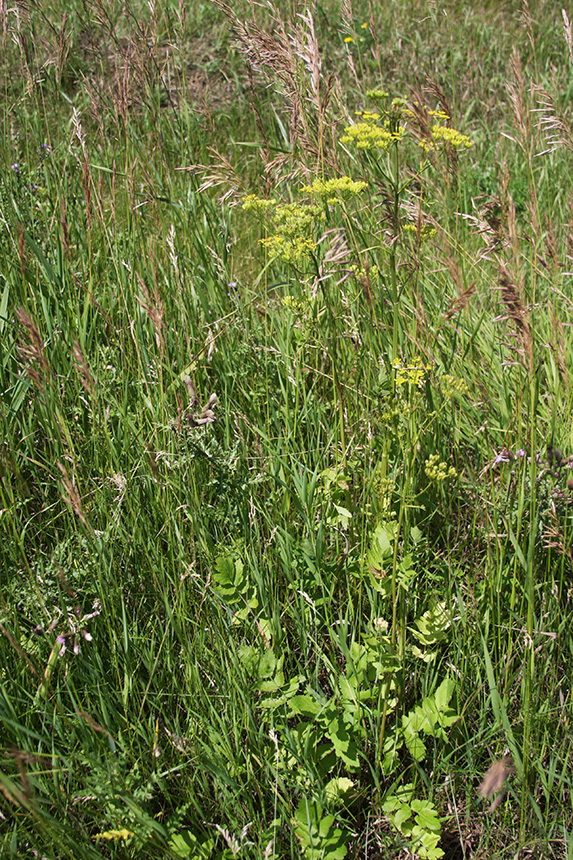
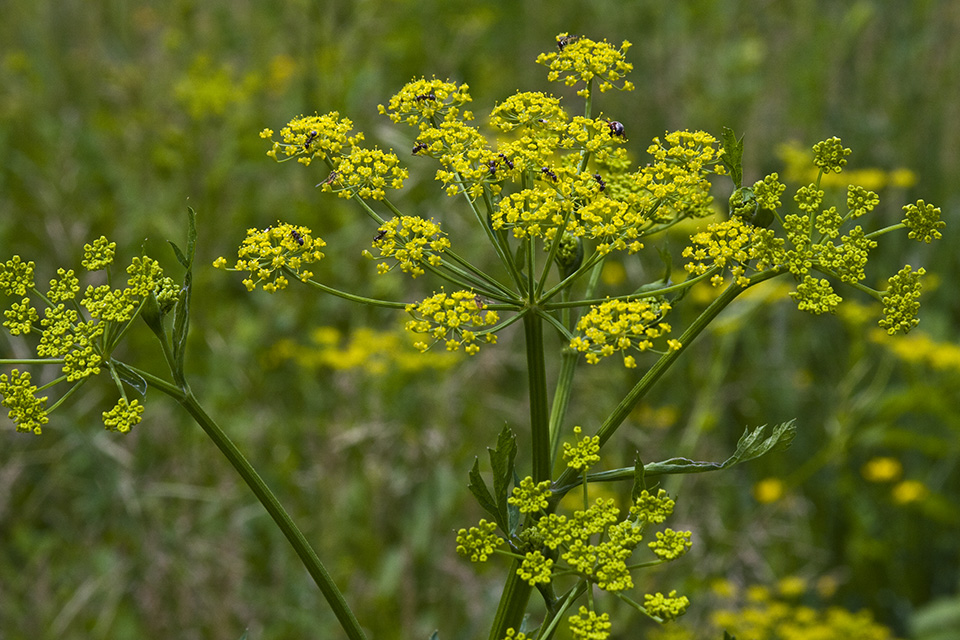
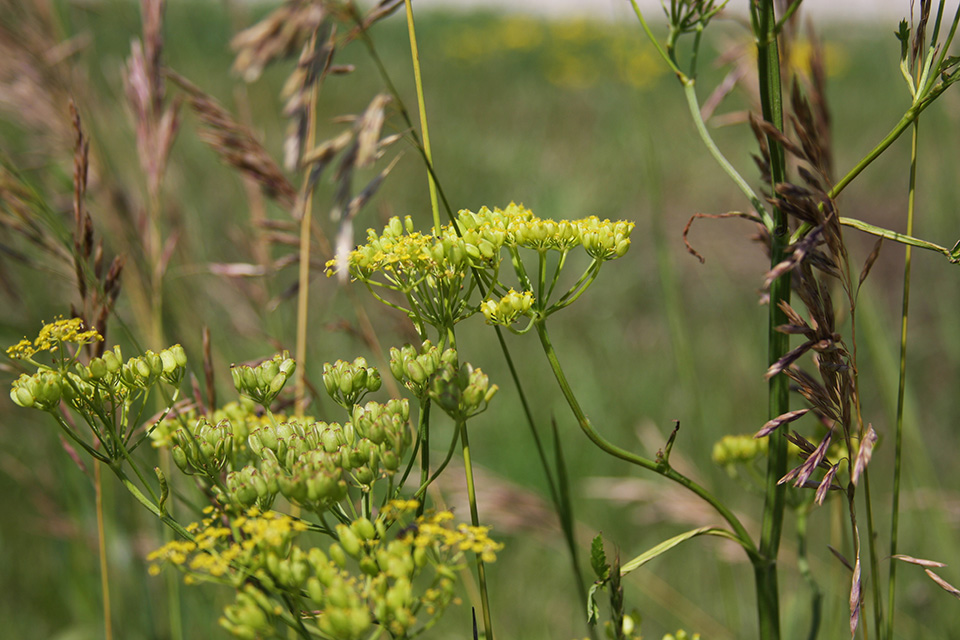
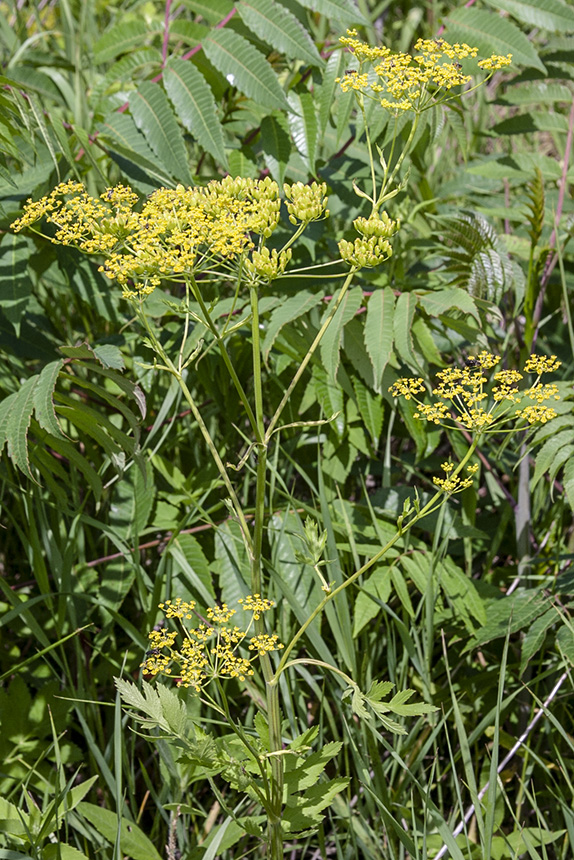
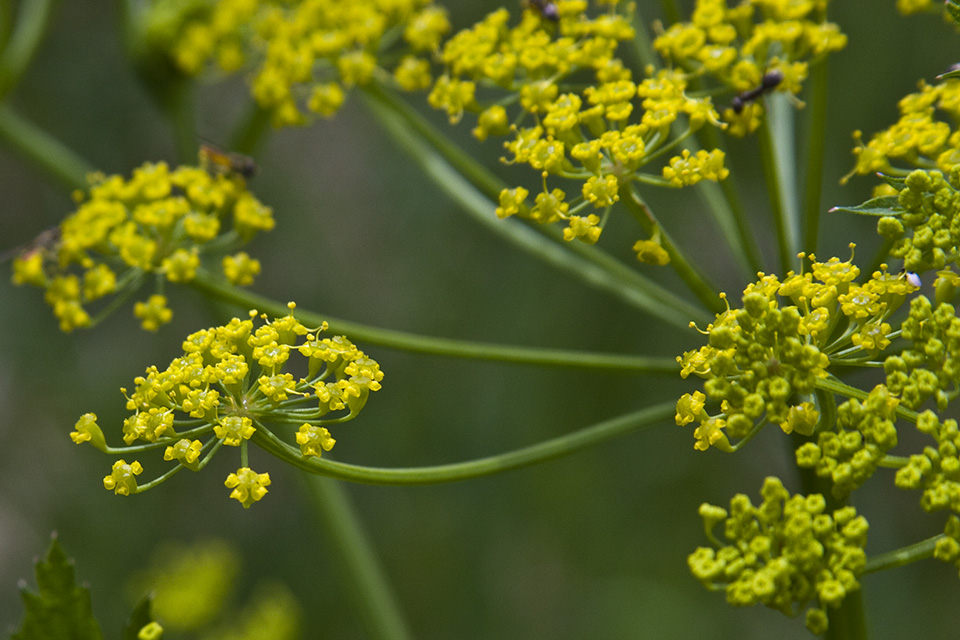
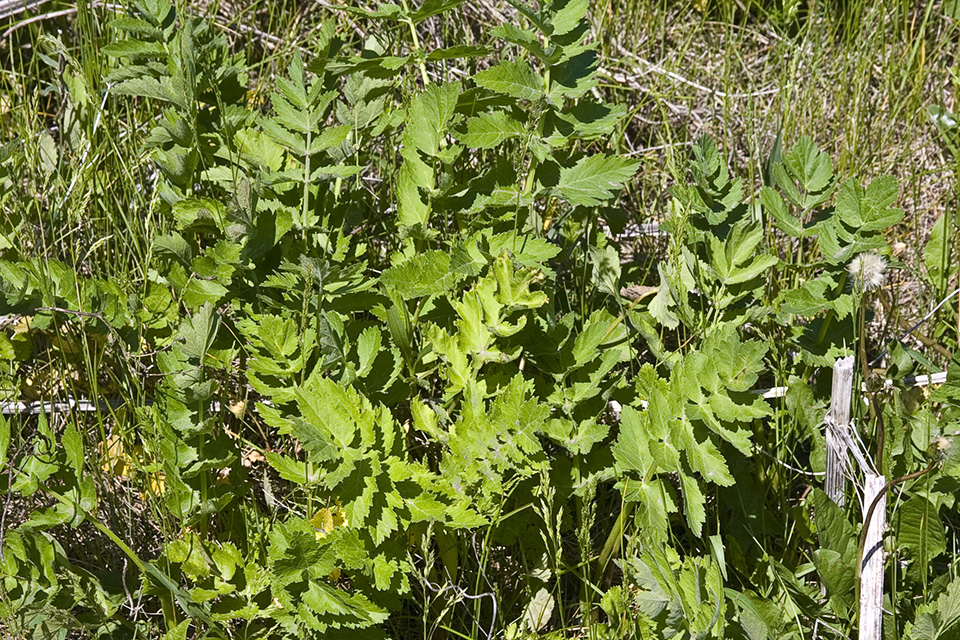
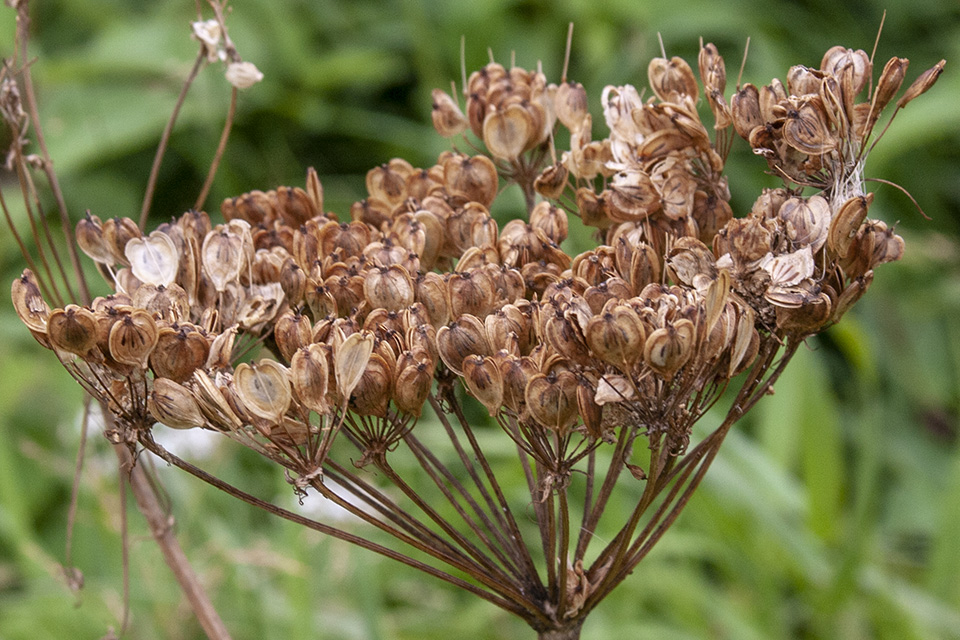
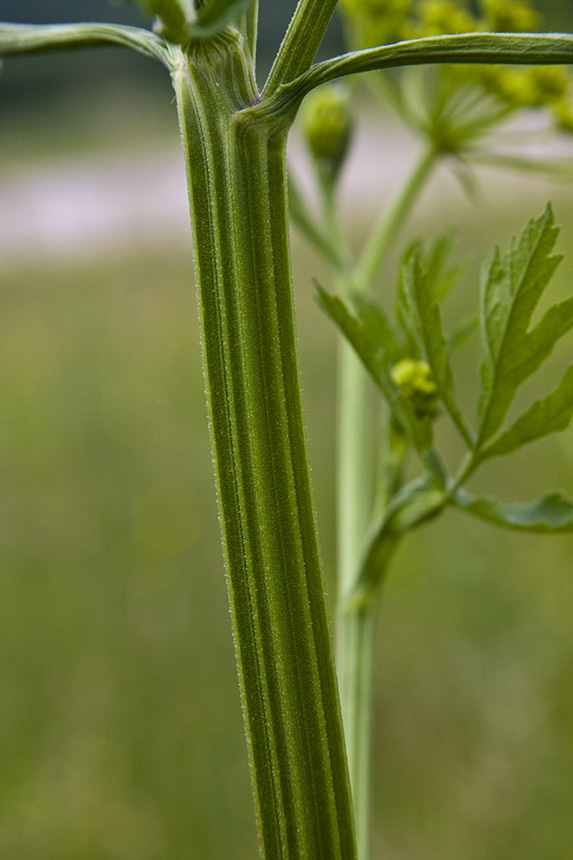
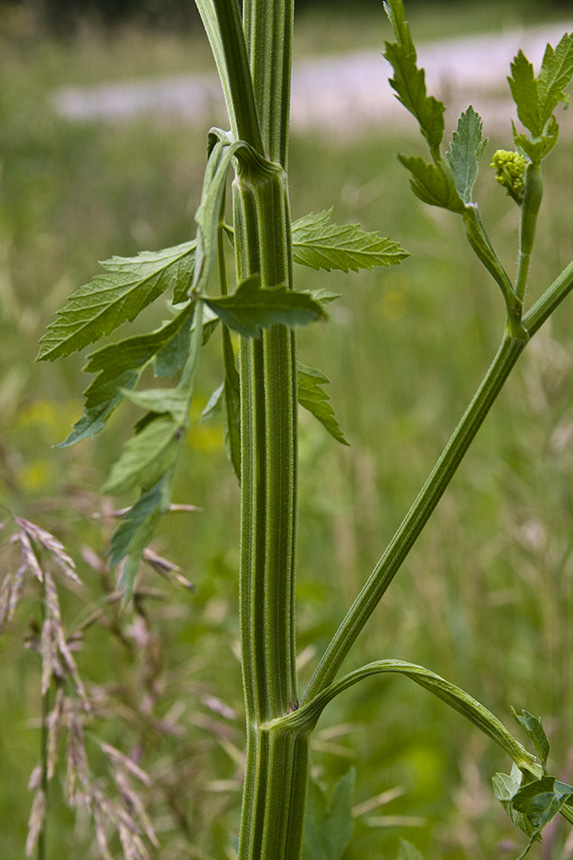
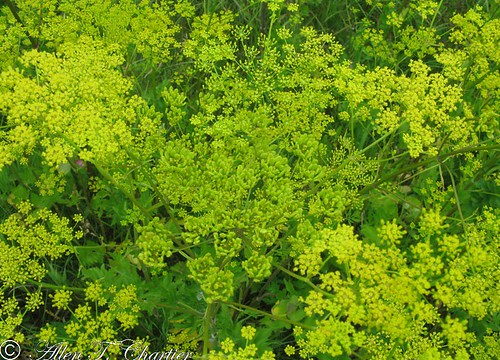
Wild parsnip is a 24″ to 60″ tall, erect, biennial forb that rises on a single stem from a long, thick, cone-shaped, fleshy taproot. In the first year there is a rosette of basal leaves and no central stem. Basal leaves are 2″ to 20″ long and up to 10″ wide. They are pinnately divided into 5 to 15 leaflets, 2 to 7 opposite pairs and a single terminal leaflet. The leaflets are oblong to egg-shaped, 2″ to 4″ long, and irregularly lobed. The upper surface is hairless. The lower surface may be hairless or hairy. The margins have 8 or more coarse, sharp, forward-pointing teeth on each side. In the second year there is a single stem and usually also a few basal leaves. The stem is erect, relatively stout, hollow, strongly ridged (deeply grooved), occasionally branched, light green, and hairless or sparsely hairy. Stem leaves are alternate and similar to basal leaves. Lower stem leaves are 2″ to 18″ long on leaf stalks up to 1½″ long, becoming much smaller on shorter leaf stalks as they ascend the stem. The uppermost leaves are stalkless. The inflorescences are flat-topped, 2″ to 6″ wide, umbrella-shaped clusters (umbels) at the ends of the stems and rising from the upper leaf axils. Each umbel has 15 to 25 smaller, umbrella-shaped flower clusters (umbellets) on ¾″ to 4″ long stalks. Each umbellet has 8 to 35 individual flowers on 1 ⁄16″ to ⅜″ long stalks. The individual flowers are about ⅛″ across. They have no sepals, 5 yellow petals, and a greenish-yellow nectar pad. |
Height |
24″ to 60″ |
Flower Color |
Yellow |
Similar Species |
Habitat |
Dry or moist. Disturbed areas, fields, roadsides, railroads. Full sun. |
Ecology |
Flowering |
June to July |
Pests and Diseases |
|
Toxicity |
Contact with any part of this plant can cause phytophotodermatitis, producing redness and blistering when exposed to sunlight. |
Use |
|
Distribution |
||
|
Sources |
|
| 10/26/2024 | ||
Nativity |
||
Native to Europe and western Asia; introduced and naturalized in North America. |
||
Occurrence |
||
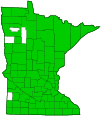
Common Wild parsnip is found throughout Minnesota. It is especially abundant in the southeastern portion of the state. That abundance is slowly creeping northward. |
||
Taxonomy |
|
Kingdom |
|
Subkingdom |
Pteridobiotina |
Phylum |
Tracheophyta (Vascular Plants) |
Class |
|
Order |
Apiales (Carrots, Ivies, and Allies) |
Suborder |
Apiineae |
Family |
Apiaceae (carrot) |
Subfamily |
Apioideae |
Tribe |
Tordylieae |
Subtribe |
Tordyliinae |
Genus |
Pastinaca (parsnips) |
Subordinate Taxa |
|
Several subspecies and varieties have been described but these are not widely recognized. |
|
Synonyms |
|
Anethum pastinaca Elaphoboscum sativum Peucedanum pastinaca Peucedanum sativum Selinum pastinaca |
|
Common Names |
|
bird’s-nest hart’s-eye madnip parsnip wild parsnip |
|
Glossary
Axil
The upper angle where the leaf stalk meets the stem.
Pinnate
On a compound leaf, having the leaflets arranged on opposite sides of a common stalk. On a bryophyte, having branches evenly arranged on opposite sides of a stem.
Umbel
A flat-topped or convex, umbrella-shaped cluster of flowers or buds arising from more or less a single point.
Umbellet
A secondary umbel in a compound umbel.
Visitor Photos |
||
Share your photo of this plant. |
||
This button not working for you? |
||
Alfredo Colon |
 |
MinnesotaSeasons.com Photos |
||
 |
 |
|
Plant |
Plant |
|
 |
 |
|
Plant |
Plant |
|
 |
 |
|
Inflorescence |
Inflorescence |
|
 |
||
Inflorescence |
|
|
 |
 |
|
Umbellet |
Umbellet |
|
 |
 |
|
Leaves |
Leaves |
|
 |
 |
|
Leaves |
Infructescence |
|
 |
 |
|
Stem |
Stem |

Slideshows |
Pastinaca sativa (Wild Parsnip) |
|
Visitor Videos |
||
Share your video of this plant. |
||
This button not working for you? |
||
|
Other Videos |
||
Wild Parsnip, identification of the Wisconsin Invasive Species Pastinaca sativa |
About
Uploaded on Jul 26, 2011 This is part of a series of videos providing key characteristics for the identification of invasive plants listed in Wisconsin's invasive species administrative rule NR 40. These videos are produced by Dr. Mark Renz of the University of Wisconsin-Madison. For more information on invasive plants and invasive plant management in Wisconsin visit http://fyi.uwex.edu/weedsci |
Wild Parsnip and Wild Carrot VS Poison Hemlock |
About
Published on Jul 28, 2013 Part 3 in an ongoing series of documentaries on wild edible, medicinal, and toxic plants. I'm covering "Wild Parsnip" and "Wild Carrot" with a focus on how to tell it apart from it's deadly poisonous relative "Poison Hemlock". All video footage is recorded by me on the GoPRO Hero 2. Some of the pictures taken from reputable sources on the internet. Click 4:21 to skip to Wild Carrot. |
Wild parsnip (Pastinaca sativa) - 2012-08-04 |
About
Published on Aug 7, 2012 Wild parsnip (Pastinaca sativa) is a root vegetable related to the carrot in the family Apiaceae. ------------- Pastinaak (Pastinaca sativa subsp. sativa), pinksternakel of witte wortel is een plant uit de schermbloemenfamilie (Apiaceae). Edit 2013-01-07: This is NOT: Fennel (Foeniculum vulgare) |
Dangers of Wild Parsnip |
About
Uploaded on Jul 16, 2010 If you drive along county roads and open pastures in the Coulee Region, you may have noticed a yellow wildflower. |
Wild parsnip |
About
Published on Jun 23, 2014 I was in the middle of showing some students wild parsnip I thought it was a good opportunity to give you all some good info on this plant so we turned on the camera on and shot a quick vid to help dispel some of the misconceptions about this plant WILD PARSNIP www.mantisoutdoorsllc.com mantisoutdoors@gmail.com |

Visitor Sightings |
||
Report a sighting of this plant. |
||
This button not working for you? |
||
Alfredo Colon |
Location: Albany, NY |
 |
Sue Rainbow |
Location: Rice Creek Parkway neighborhood walking paths seen in several places along the path by the ponds and bridges |
|
MinnesotaSeasons.com Sightings |
||
|
Created: 5/24/2009 Last Updated: © MinnesotaSeasons.com. All rights reserved. |