



American elderberry
(Sambucus canadensis)
Conservation • Wetland • Description • Habitat • Ecology • Use • Distribution • Taxonomy
Conservation Status |
|
|||||||
| IUCN Red List | not listed |
|||||||
| NatureServe | N5 - Secure SNR - Unranked |
|||||||
| Minnesota | not listed |
|||||||
Wetland Indicator Status |
||||||||
| Great Plains | FAC - Facultative |
|||||||
| Midwest | FACW - Facultative wetland |
|||||||
| Northcentral & Northeast | FACW - Facultative wetland |
|||||||
Description |
||
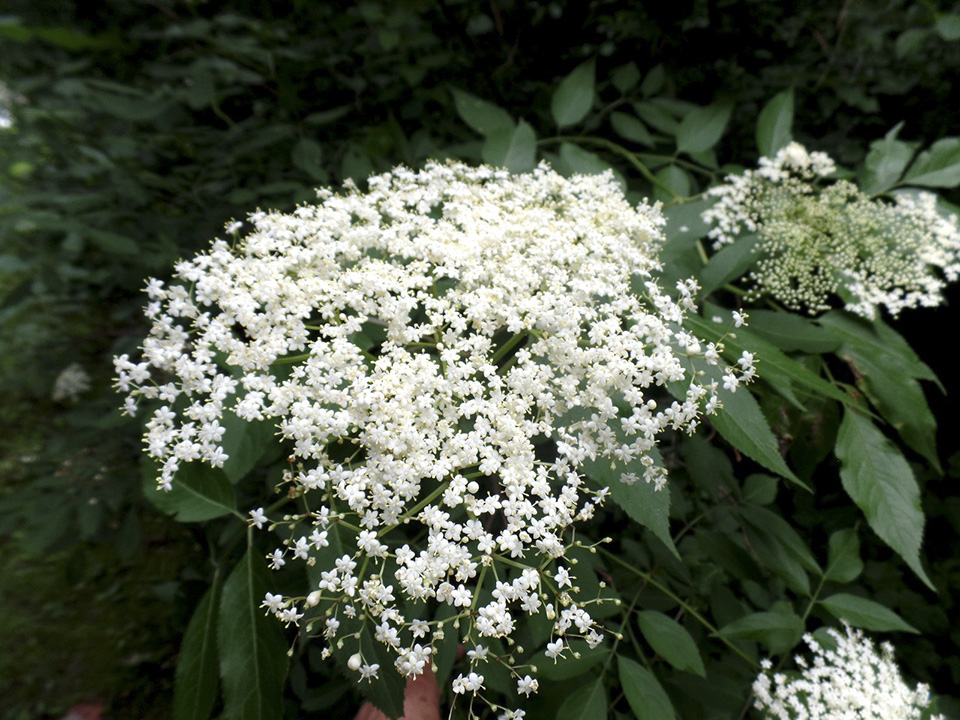
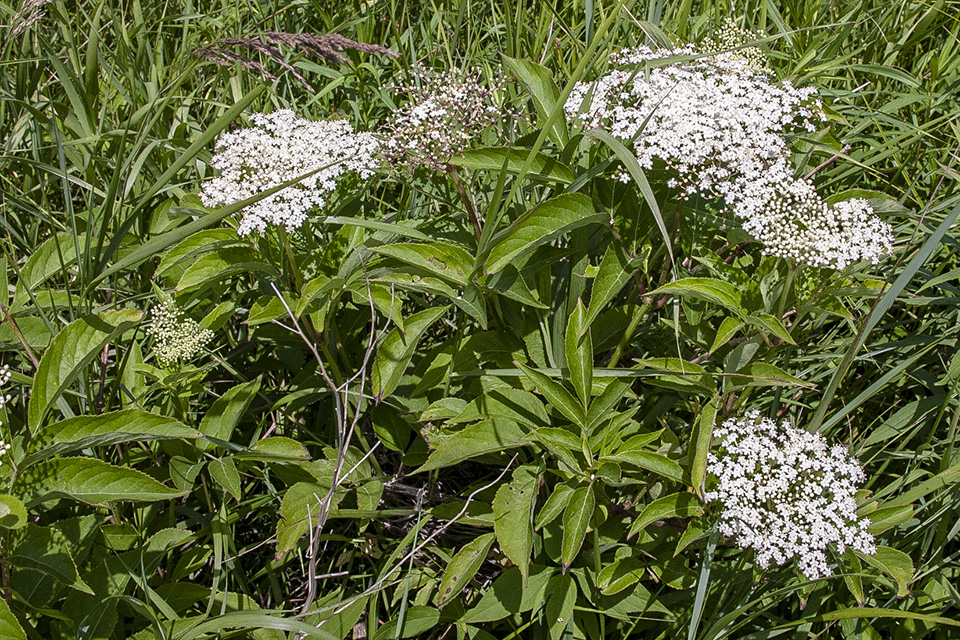
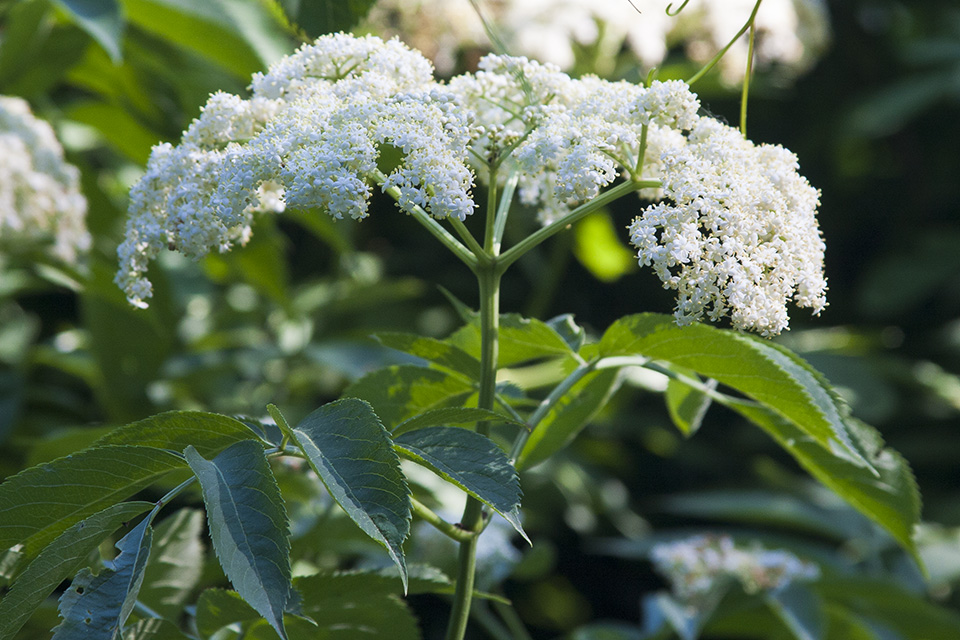
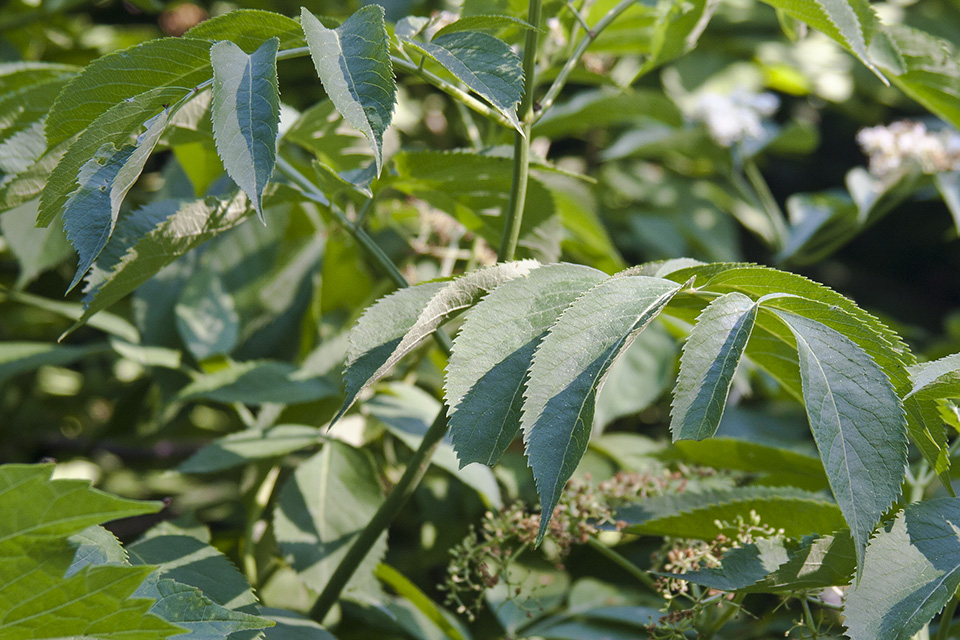
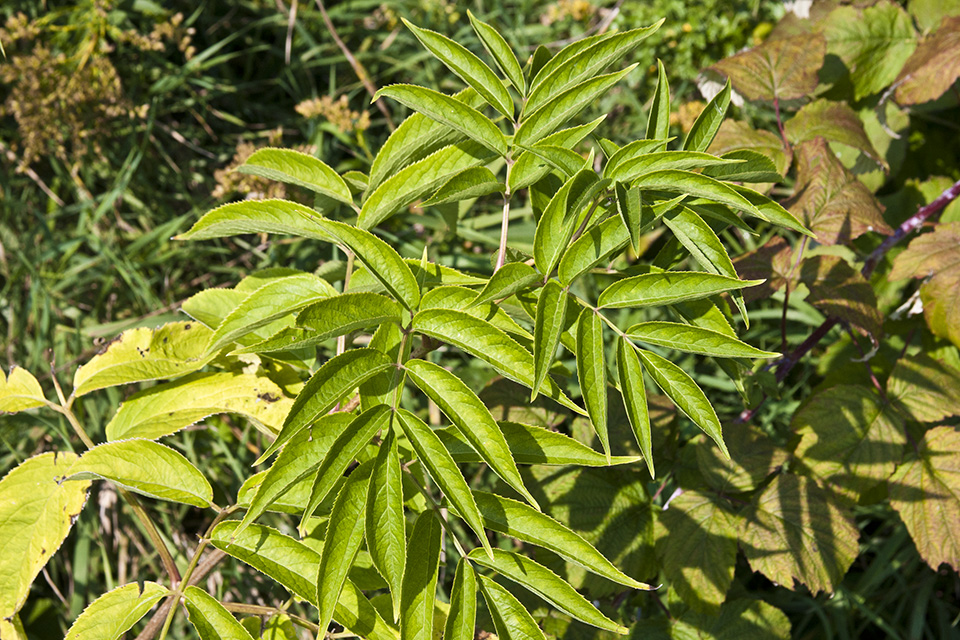
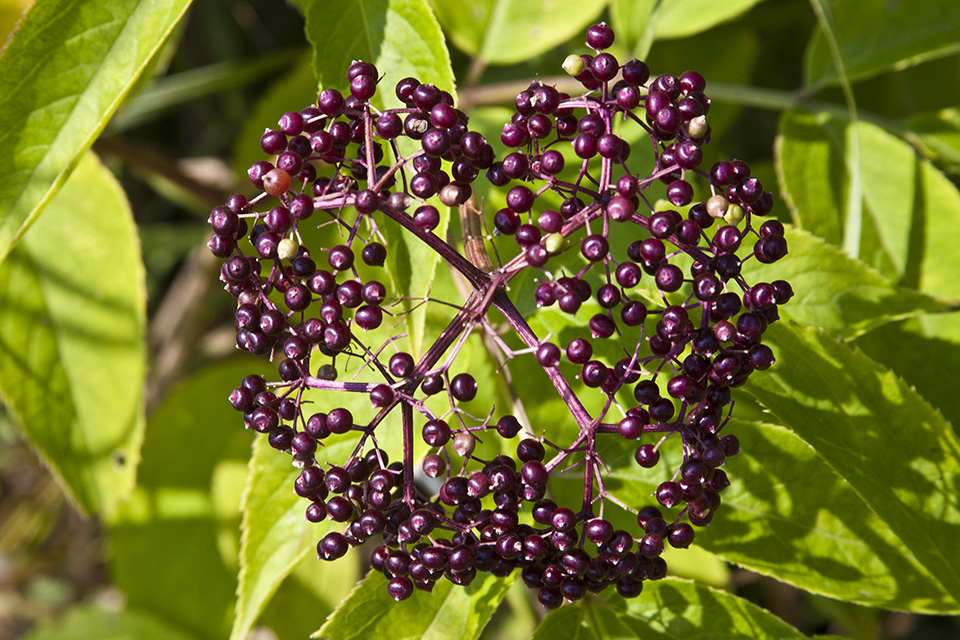
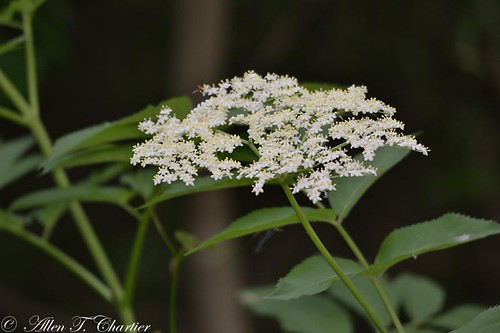
American elderberry is a fast growing, short lived, shrub rising on multiple stems from shallow roots and stolons. Individual plants usually live 3 to 5 years and are replaced by new plants rising from the same rootstock. The stems are erect or arching, branching, hairless, up to 12′ tall, and up to 3½″ in diameter at breast height. They are brittle, weak, and dotted with conspicuous, large, raised, warty bumps (lenticels). First year stems and twigs are green, smooth, and sometimes covered with whitish, waxy bloom (glaucous). Second year stems and twigs are grayish or yellowish-brown, woody, and rough. The twigs are stout. The area of cells in the center of the stem (pith) is large, encompassing more than half of the diameter of the twig. The pith is pure white in both first-year and second-year twigs. Lateral buds are reddish-brown, small, cone-shaped, and somewhat depressed. There are no terminal buds. The leaves are opposite, deciduous, and pinnately divided into usually 7, occasionally 5 or 9, sometimes 11, leaflets. They are attached to the twig on a 1¼″ to 2¾″ long leaf stalk. The upper surface of the leaf stalk is channeled. The channel is hairy but the leaf stalk is otherwise hairless. The leaflets are lance-shaped to egg-shaped or elliptic, 2″ to 4¾″ long, and 1″ to 2¼″ wide. They are either stalkless or are attached to the central leaf stalk (rachis) on a leaflet stalk no more than ¼″ long. They are rounded or tapered and symmetrical at the base and taper to a point at the tip with concave sides along the tip. The terminal leaflet is often somewhat larger than the lateral leaflets. The upper surface of the leaflet is dark green, and sparsely hairy, at least along the midvein. The lower surface is pale green and hairy along the veins. The margins have fine, sharp, forward-pointing teeth. The inflorescence is a branched, 3½″ to 7″ wide cluster (cyme) at the ends of the stems and branches. The cymes are flat-topped and much wider than long. They rise on erect, 2⅜″ to 5½″ long stalks that branch at the tip into 5 rays. Each cyme has 200 to 400 small flowers. The flowers are about ¼″ wide. There are 5 white petals and 5 stamens with white filaments and yellow anthers. The flowers have a musty fragrance. They appear in early July to mid-August. The fruit is a juicy, globular berry, about ¼″ in diameter, containing 3 to 5 seeds. It ripens in early August to mid-September turning dark, blackish-purple. |
||
Height |
||
5′ to 12′ |
||
Flower Color |
||
White |
||
Similar Species |
||
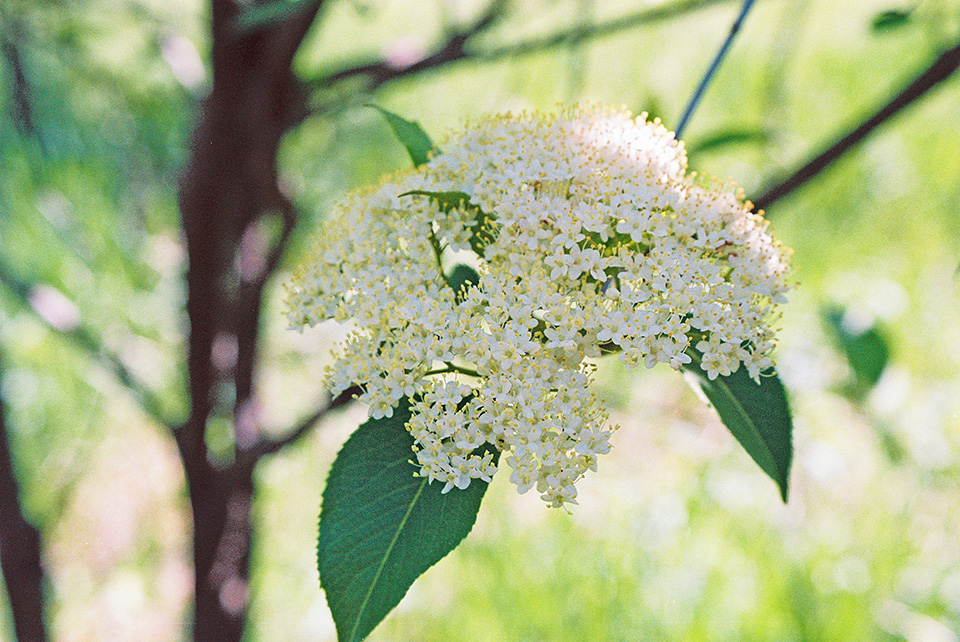
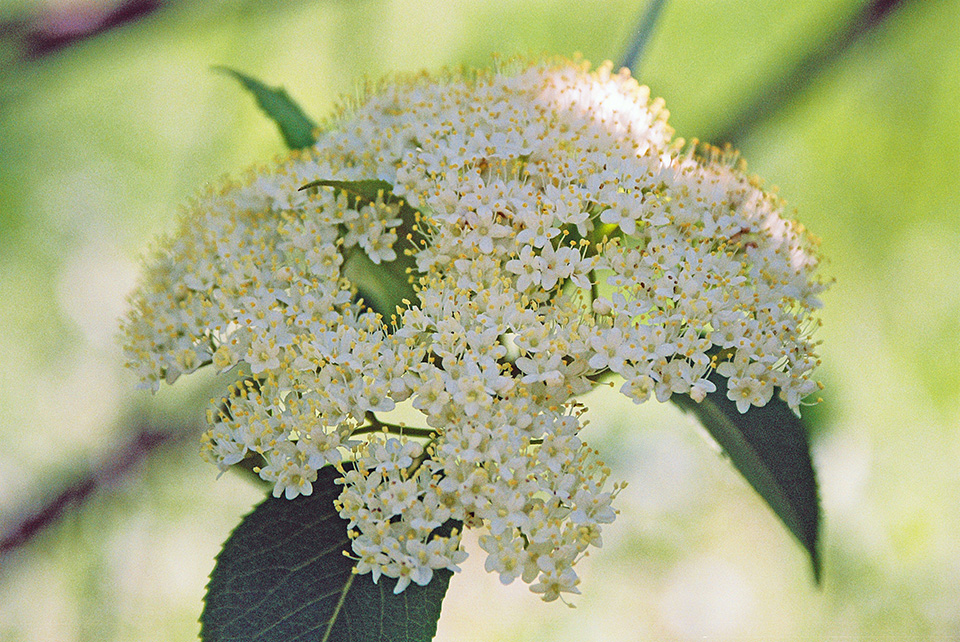
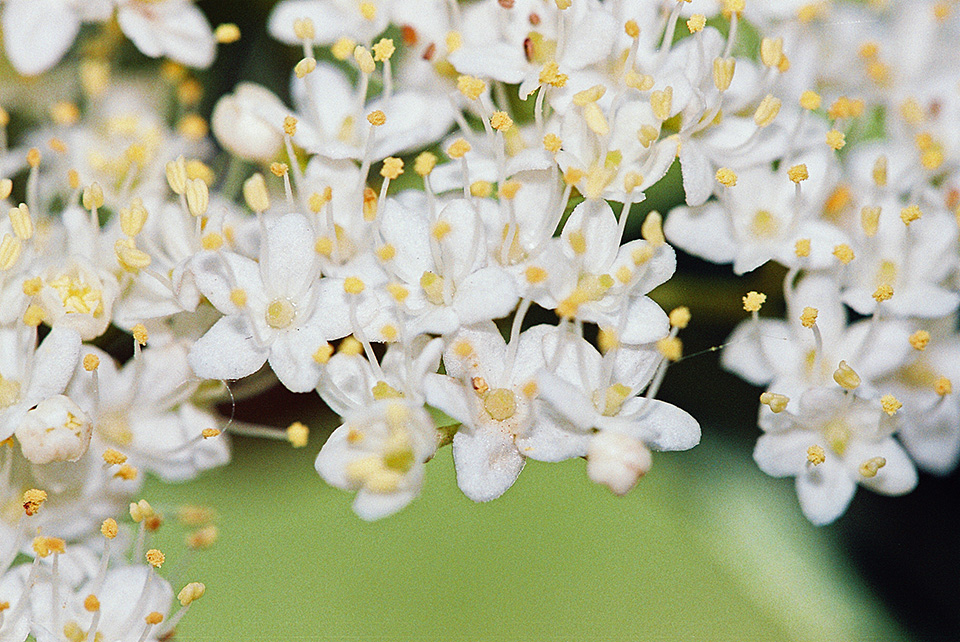
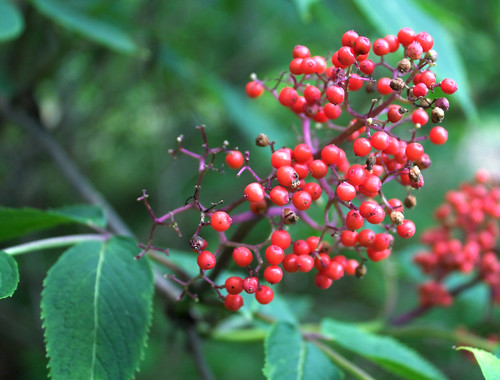
Nannyberry (Viburnum lentago) has undivided (simple), hairless leaves. The inflorescence is smaller, 2″ to 4″ wide, and round-topped. Red elderberry (Sambucus racemosa var. racemosa) second year twigs have brown pith. The leaves usually have 5 leaflets, occasionally 7. The leaf stalk is hairy on all surfaces. The leaflets are asymmetrical at the base and are more coarsely toothed. The inflorescence is smaller, pyramid-shaped or egg-shaped, not flat-topped. It blooms from June to July. Mature berries are bright red. |
||
Habitat |
||
Moist to wet. Meadows, floodplains, marsh edges, streams. Full sun to light shade. |
||
Ecology |
||
Flowering |
||
Early July to mid-August |
||
Pests and Diseases |
||
Toxicity |
||
The fruit is safe to eat when cooked. The raw fruit, the seeds, and all other parts of the plant are poisonous, and can be lethal at high doses. |
||
Use |
||
|
||
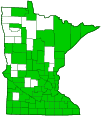
Distribution |
||||
|
Sources |
|||
| 2/9/2023 | ||||
Nativity |
||||
Native |
||||
Occurrence |
||||
|
||||
Taxonomy |
|||
| Kingdom | Plantae (Plants) | ||
| Subkingdom | Pteridobiotina | ||
| Phylum | Tracheophyta (Vascular Plants) | ||
| Class | Magnoliopsida (Dicots) | ||
Order |
Dipsacales (honeysuckles, moschatels, and allies) | ||
Family |
Viburnaceae (elder) | ||
Genus |
Sambucus (elders) | ||
Species Family Currently (2023), some sources, including USDA PLANTS and NatureServe, place the genera Sambucus and Viburnum in the Caprifoliaceae family. Some sources, including ITIS and NCBI, place them in the Adoxacea family. Almost all other sources, including APG IV, World Flora Online, Plants of the World Online, GRIN, GBIF, and iNaturalist, place the two genera in the Viburnaceae family. |
|||
Subordinate Taxa |
|||
|
|||
Synonyms |
|||
Sambucus canadensis ssp. canadensis Sambucus canadensis var. laciniata Sambucus canadensis var. submollis Sambucus cerulea var. mexicana Sambucus mexicana Sambucus nigra ssp. canadensis Sambucus orbiculata Sambucus simpsonii |
|||
Common Names |
|||
American black elderberry American elder American elderberry blue elder common elder common elderberry elder elderberry Mexican elderberry |
|||
Glossary
Cyme
A branched, flat-topped or convex flower cluster in which the terminal flower opens first and the outermost flowers open last.
Glaucous
Pale green or bluish gray due to a whitish, powdery or waxy film, as on a plum or a grape.
Lenticel
A corky, round or stripe-like, usually raised, pore-like opening in bark that allows for gas exchange.
Pinnate
On a compound leaf, having the leaflets arranged on opposite sides of a common stalk. On a bryophyte, having branches evenly arranged on opposite sides of a stem.
Pith
The spongy cells in the center of the stem.
Rachis
The main axis of a compound leaf, appearing as an extension of the leaf stalk; the main axis of an inflorescence.
Stolon
An above-ground, creeping stem that grows along the ground and produces roots and sometimes new plants at its nodes. A runner.
Visitor Photos |
|||||
Share your photo of this plant. |
|||||
| This button not working for you? Simply email us at info@MinnesotaSeasons.com. Attach one or more photos and, if you like, a caption. |
|||||
Luciearl |
|||||
 |
 |
||||
 |
|||||
MinnesotaSeasons.com Photos |
|||||
Plant |
|||||
 |
|||||
Inflorescence |
|||||
 |
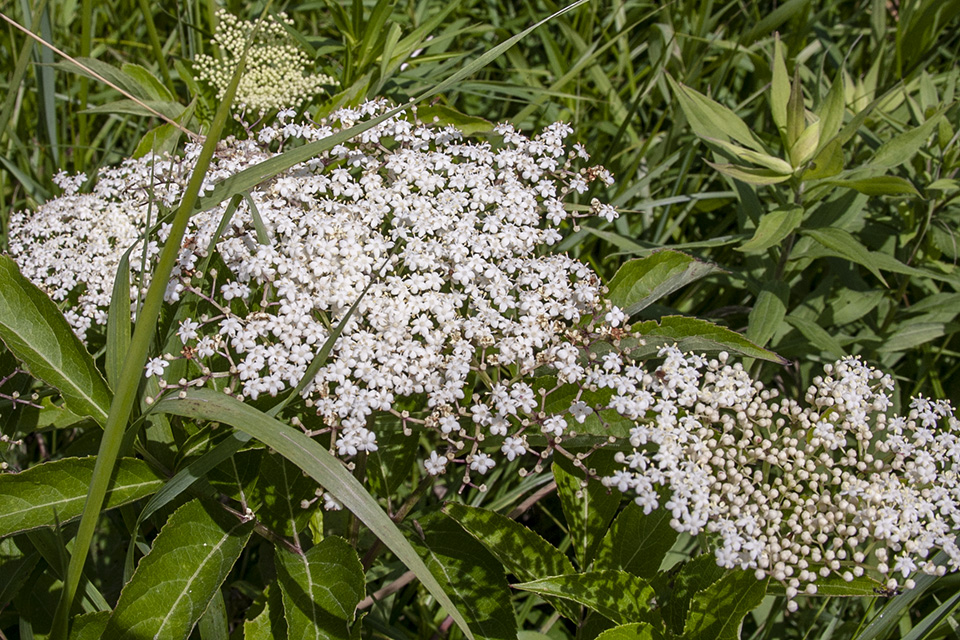 |
||||
 |
 |
||||
Flowers |
|||||
 |
|||||
Leaves |
|||||
 |
 |
||||
Infructescence |
|||||
 |
 |
||||

Slideshows |
||
| American Elderberry (Sambucus canadensis) Andree Reno Sanborn |
||
|
||
About
The fruit is safe but all other parts of the plant are poisonous. For jam, pies, wine. |
||
| Sambucus canadensis (Common Elder) Allen Chartier |
||
|
||
Visitor Videos |
|||
Share your video of this plant. |
|||
| This button not working for you? Simply email us at info@MinnesotaSeasons.com. Attach a video, a YouTube link, or a cloud storage link. |
|||
Other Videos |
|||
| Wild Edibles 25: Elderberry Juice (Sambucus canadensis) Journey Outdoors |
|||
About
Uploaded on Aug 28, 2011 How to identify common elderberry and how to make elderberry juice. The elderberry is very nutritious and is also used as an antiviral to fight the flu but you must boil the berries first. |
|||
| elderberry (Sambucus nigra (syn. S. canadensis) UFInvasivePlantsEDU |
|||
About
Uploaded on May 19, 2010 Aquatic and Invasive Plant Identification Series by the UF/IFAS Center for Aquatic and Invasive Plants ( http://plants.ifas.ufl.edu ) and the Florida Fish and Wildlife Commission, Invasive Plant Management Section. For more information about elderberry, go to http://plants.ifas.ufl.edu/node/397 Video editor/videographer - Phil Chiocchio |
|||
| Sambucus canadensis Elderberry QuipTV |
|||
About
Published on Oct 10, 2012 Sambucus canadensis Common Name: American elder . elderberry Type: Deciduous shrub Zone: 3 to 9 Native Range: Eastern North America 5'-12' H & W Bloom Time: June to July Bloom Color: White Sun: 4+ hours Water: Medium to wet Maintenance: High Flowers: Showy Flowers, Fragrant Flowers Fruit: Showy Fruit, Edible Fruit Wildlife: Attracts Birds, Attracts Butterflies Tolerates: Clay Soil, Wet Soil Uses: Erosion Control, Rain Garden |
|||
| Elderberries at Cricket Hill Garden Cricket Hill Garden |
|||
About
Published on Jun 24, 2013 American Elderberry (Sambucus canadensis) is an attractive edible landscape plant for temperate climates. A native plant, its produces beautiful flowers much loved by native pollinators and delicious purple berries that can be made into tinctures, teas, pies, and wines. In this video, Dan Furman of Cricket Hill Garden introduces the growth habit, history, and some of the virtues of this worthy shrub. |
|||

Visitor Sightings |
|||||
Report a sighting of this plant. |
|||||
| This button not working for you? Simply email us at info@MinnesotaSeasons.com. Be sure to include a location. |
|||||
| Senchu 4/25/2020 |
Location: Spring Lake Township, MN. In our property edge close to the wetland. We have two bushes 5' away from each other |
||||
| Luciearl 6/27/2018 |
Location: Owatonna, MN |
 |
|||
| Beth Thomas 2012 to present day |
Location: Verndale Minnesota These plants are located on my personal property. |
||||
MinnesotaSeasons.com Sightings |
|||||
|
Created: Last Updated: © MinnesotaSeasons.com. All rights reserved. |