



common boneset
(Eupatorium perfoliatum var. perfoliatum)
Conservation • Wetland • Description • Habitat • Ecology • Use • Distribution • Taxonomy
|
|
||||||||||||||||||||||||
Description |
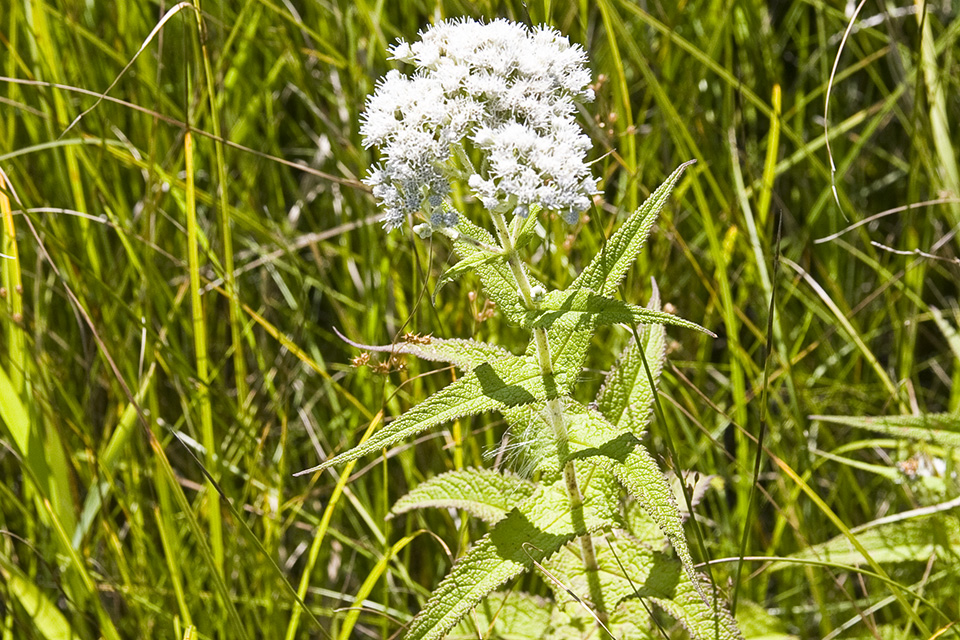
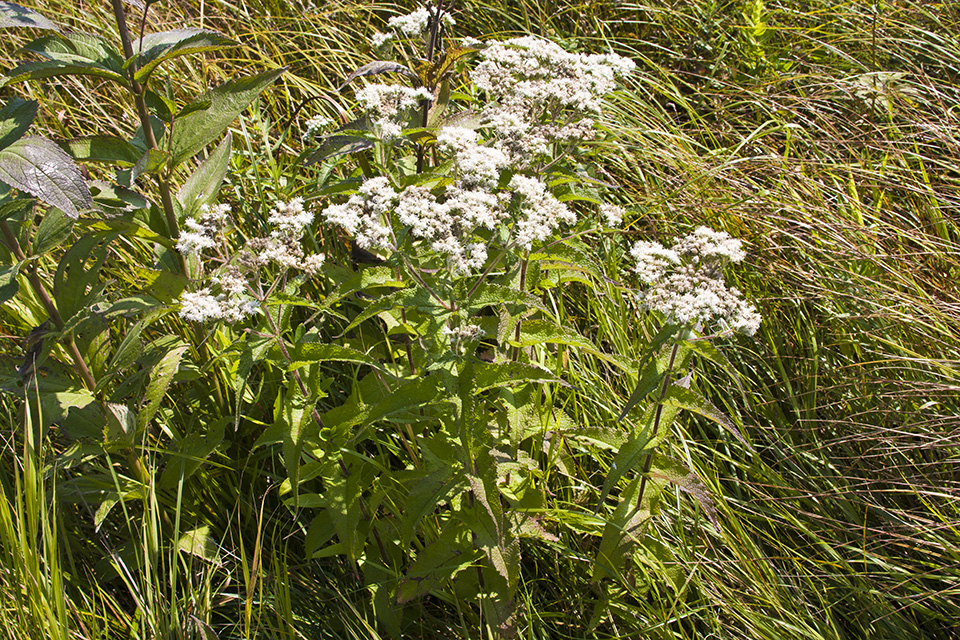
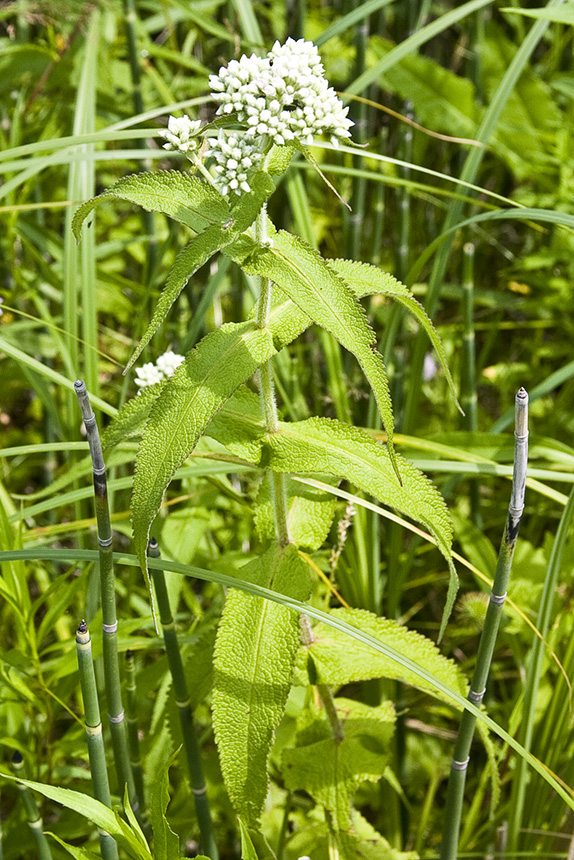
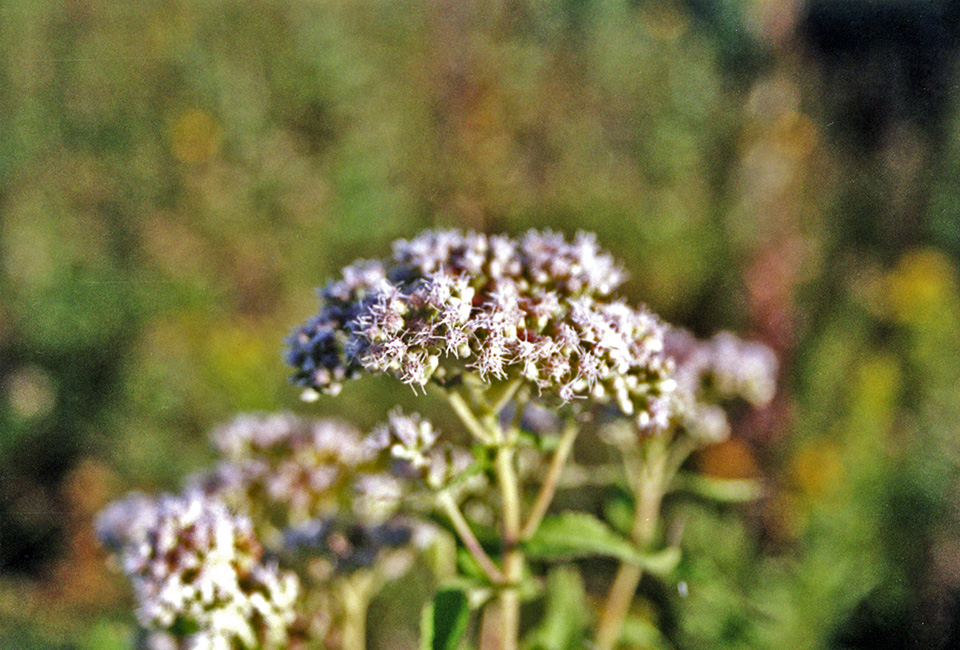
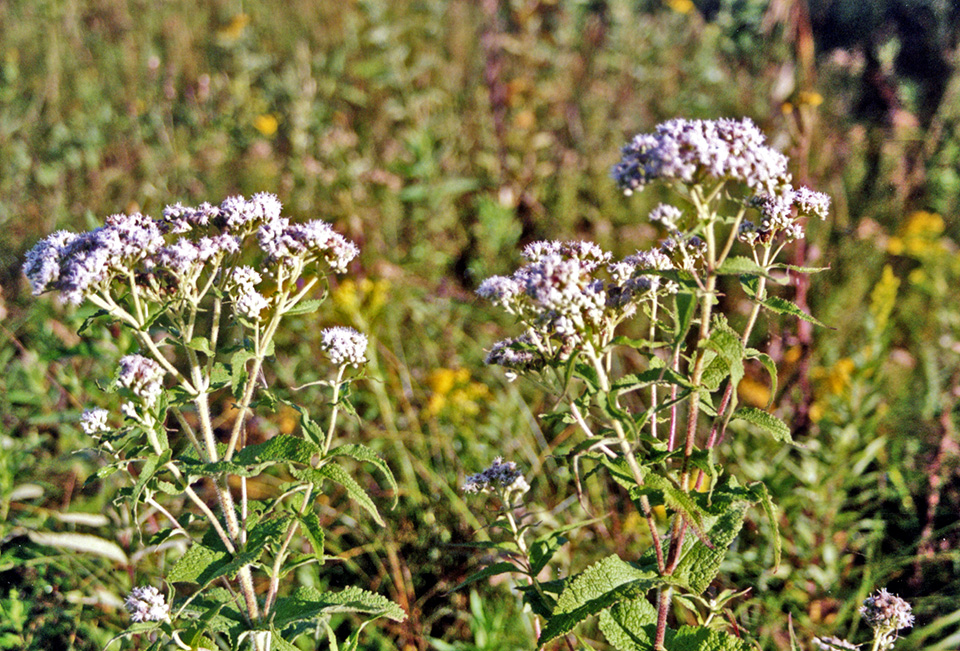
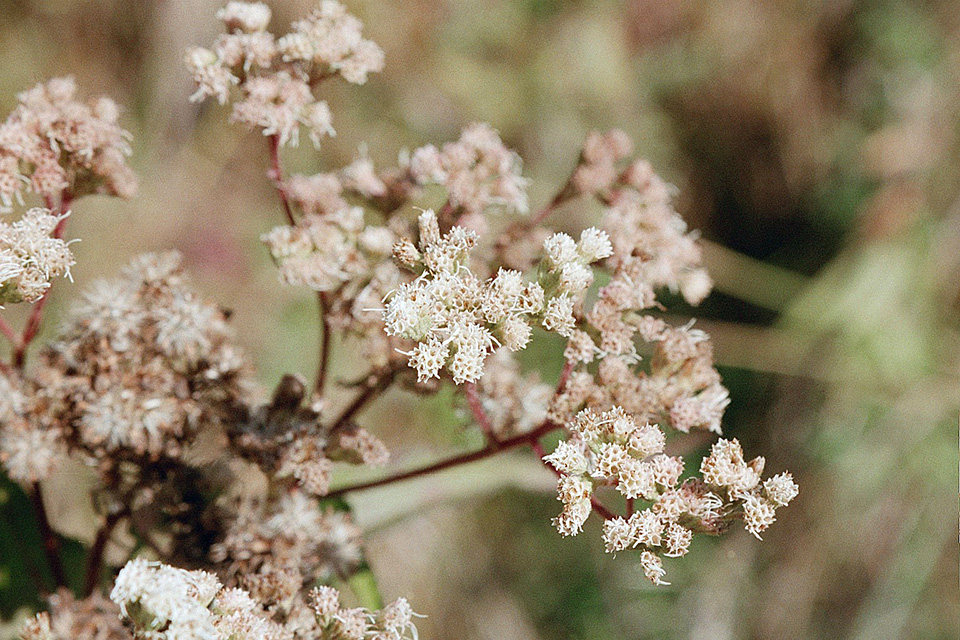
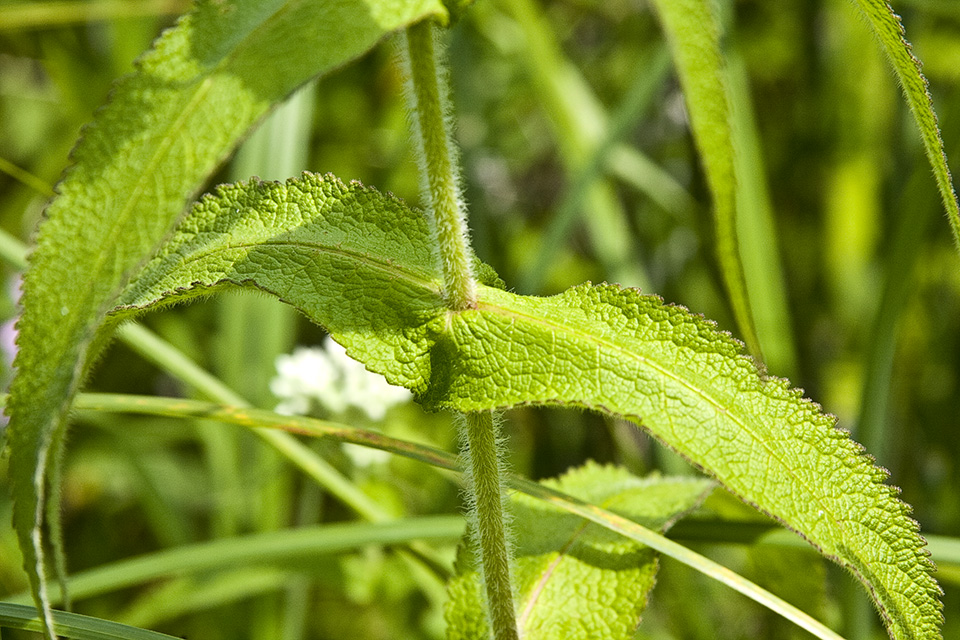
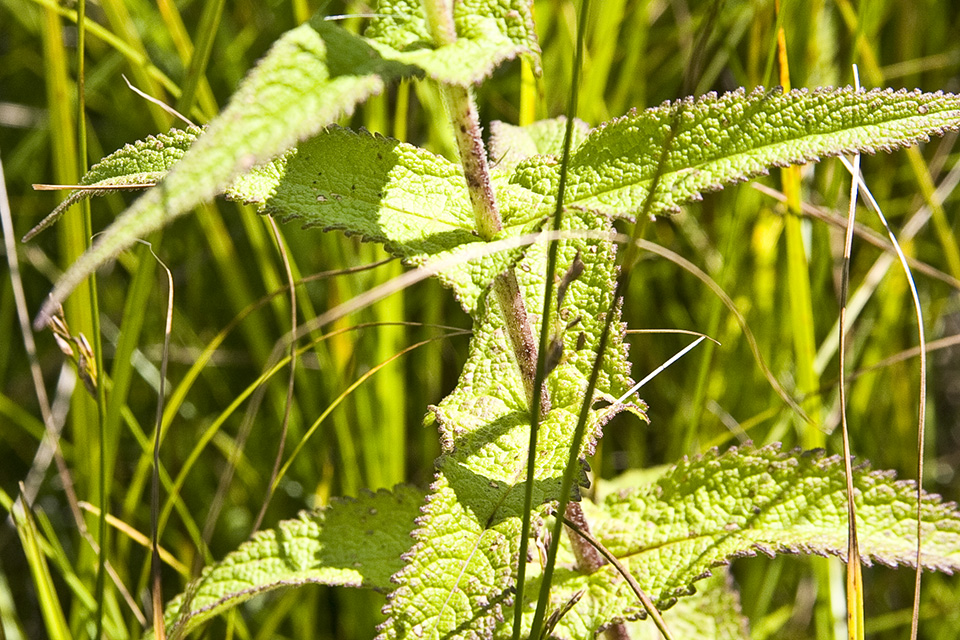
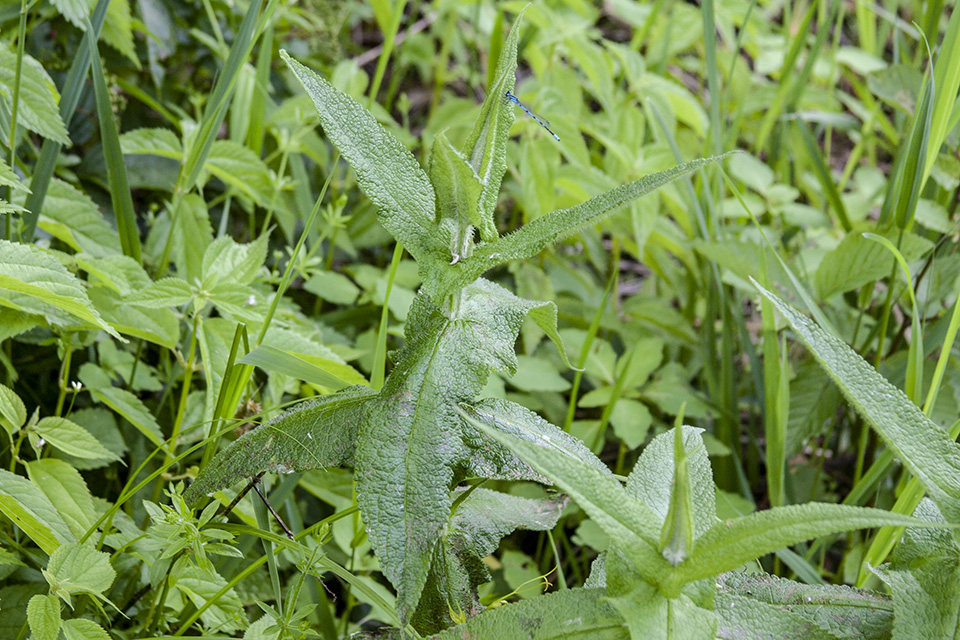
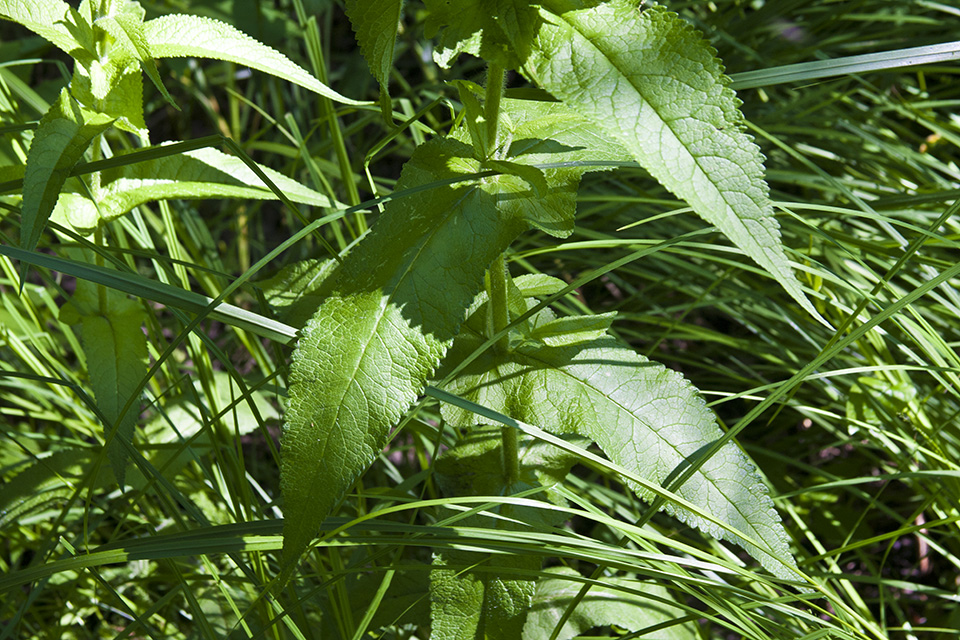
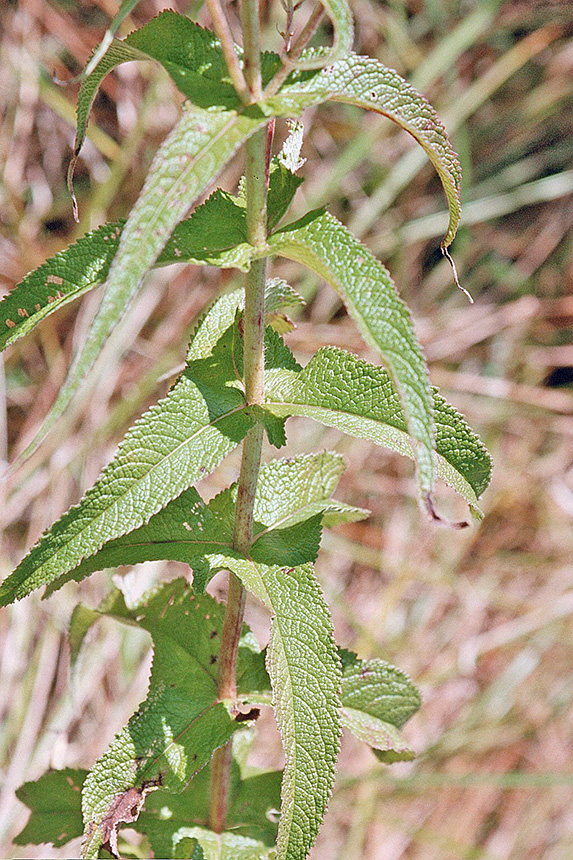
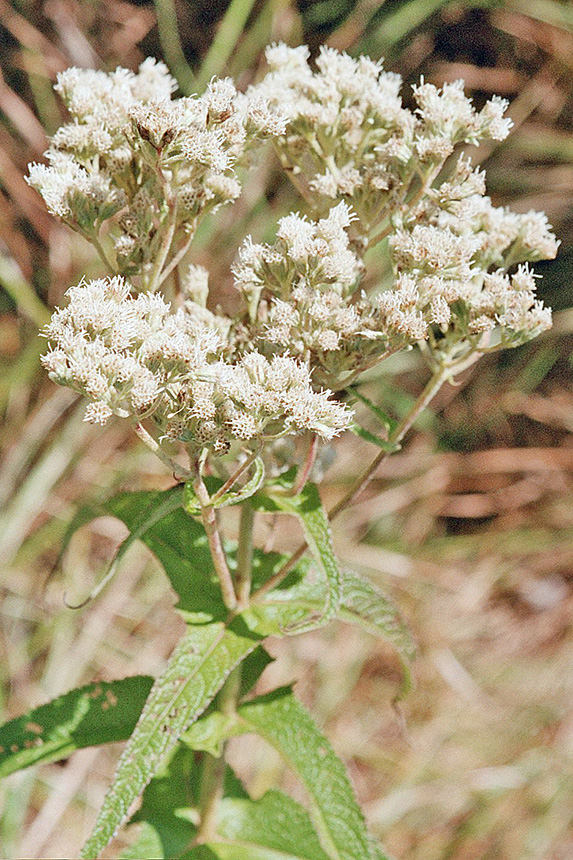
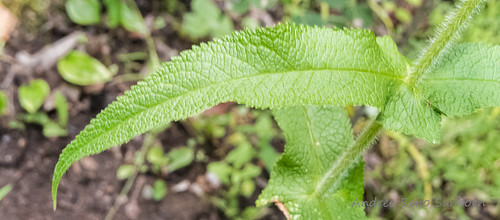
Common boneset is a 3′ to 4′ tall, perennial forb that rises on a single stem from a short caudex. It grows only in shade. It is a late bloomer, one of the last flowers to be seen in the woods in the fall. The stems are erect, branched near the top, leafy, and covered with long, soft, shaggy but unmatted hairs. The leaves are usually in opposite pairs, though they are rarely found in whorls of 3. They are thin and lance-shaped, tapering gradually to a pointed tip and broad at the base. The lower leaves are 2″ to 6″ long and ⅔″ to 1½″ wide, becoming smaller as they ascend the stem. The bases of lower and middle paired leaves are fused together around the stem. The margins have rounded teeth all the way to the base. There is a conspicuous network of veins, depressed on the upper surface of the blade, giving the blade a wrinkled appearance. The lower surface is covered with short soft hairs. The inflorescence is a flat-topped branched cluster of many flower heads at the end of the stem and each side stem. Combined, the clusters are up to 6″. Each flower contains 9 to 23 disk florets and no ray florets. Each disk floret consists of a dull white flower tube with 5 short spreading lobes. A white, forked style protrudes from the floral tube well beyond the lobes. The flowers are fragrant. The fruit is a tiny dark achene with a small tuft of 20 to 30 white hairs about ⅛″ long. |
Height |
3′ to 4′ |
Flower Color |
White |
Similar Species |
Tall boneset (Eupatorium altissimum) leaves are not fused around the stem at their bases. They have 3 prominent parallel veins, not a conspicuous network of veins. The leaf margins are untoothed near the base, with sharp, forward-pointing teeth above the middle. Each flower contains just 5 disk florets. The flowers have little or no fragrance. The fruit has a tuft of 30 to 40 light brown hairs. Upland boneset (Eupatorium sessilifolium var. brittonianum) leaves are not fused around the stem at their bases. The veins are arranged like the vanes of a feather, with a single prominent midvein extending from the base to the tip and lateral veins originating from several points on each side (pinnately veined). The leaf margins are untoothed near the base, with sharp, forward-pointing teeth above the middle. Each flower contains just 5 disk florets. The flowers have little or no fragrance. The fruit has a tuft of 30 to 40 light brown hairs. White snakeroot (Ageratina altissima var. altissima) leaves are shorter, wider, and on long leaf stalks. The flower heads are much larger. It is found in woods, always in shade. |
Habitat |
Wet to moderate moisture. Prairies, meadows. |
Ecology |
Flowering |
July to October |
Pests and Diseases |
white snakeroot leaf miner (Liriomyza eupatoriella) |
Use |
|
Distribution |
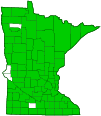
||
|
Sources |
|
| 12/20/2024 | ||
Nativity |
||
Native |
||
Occurrence |
||
Common |
||
Taxonomy |
|
Kingdom |
|
Subkingdom |
Pteridobiotina |
Phylum |
Tracheophyta (Vascular Plants) |
Class |
|
Order |
Asterales (Sunflowers, Bellflowers, Fanflowers, and Allies) |
Family |
Asteraceae (Sunflowers, Daisies, Asters, and Allies) |
Subfamily |
Asteroideae |
Tribe |
Eupatorieae (bonesets, blazingstars, and allies) |
Subtribe |
Eupatoriinae |
Genus |
Eupatorium (bonesets) |
Species |
Eupatorium perfoliatum (common boneset) |
There are two varieties of Eupatorium perfoliatum. The second variety, var. colpophilum, has narrower leaves and shorter hairs. It occurs only in the far northeastern United States and adjacent Canada, in saline and coastal habitats. |
|
Subordinate Taxa |
|
Plants in the extreme northeast with more leathery leaves have been described as Eupatorium perfoliatum var. colpophilum. USDA PLANTS, NatureServe, and iNaturalist recognize the variety, but few other sources do. |
|
Synonyms |
|
Eupatorium chapmanii Eupatorium perfoliatum var. cuneatum |
|
Common Names |
|
ague-weed boneset common boneset feverweed purple boneset sweating-plant thoroughwax thoroughwort |
|
Glossary
Achene
A dry, one-chambered, single-seeded seed capsule, formed from a single carpel, with the seed attached to the membranous outer layer (wall) only by the seed stalk; the wall, formed entirely from the wall of the superior ovary, does not split open at maturity, but relies on decay or predation to release the contents.
Caudex
A short, thickened, woody, persistent enlargement of the stem, at or below ground level, used for water storage.
Pinnately veined
With the veins arranged like the vanes of a feather; a single prominent midvein extending from the base to the tip and lateral veins originating from several points on each side.
Visitor Photos |
||
Share your photo of this plant. |
||
This button not working for you? |
||
Luciearl |
 |
MinnesotaSeasons.com Photos |
||
 |
 |
|
Plant |
Plant |
|
 |
 |
|
Plant |
Inflorescence |
|
 |
 |
|
Inflorescence |
Inflorescence |
|
 |
||
Inflorescence |
|
|
 |
 |
|
Leaves |
Leaves |
|
 |
 |
|
Leaves |
Leaves |
|
Rare form: A plant with whorls of three fused leaves. |
||
 |
 |
|

Slideshows |
Common boneset (Eupatorium perfoliatum) |
|

Visitor Videos |
||
Share your video of this plant. |
||
This button not working for you? |
||
|
Other Videos |
||
Boneset (Eupatorium perfoliatum ) |
About
Published on Aug 2, 2012 Boneset (Eupatorium perfoliatum ) |

Visitor Sightings |
||
Report a sighting of this plant. |
||
This button not working for you? |
||
Luciearl |
Location: Lake Shore, MN |
 |
MinnesotaSeasons.com Sightings |
||
|
Created: Last Updated: © MinnesotaSeasons.com. All rights reserved. |