



downy phlox
(Phlox pilosa ssp. fulgida)
Conservation • Wetland • Description • Habitat • Ecology • Use • Distribution • Taxonomy
|
|
||||||||||||||||||||||||
Description |
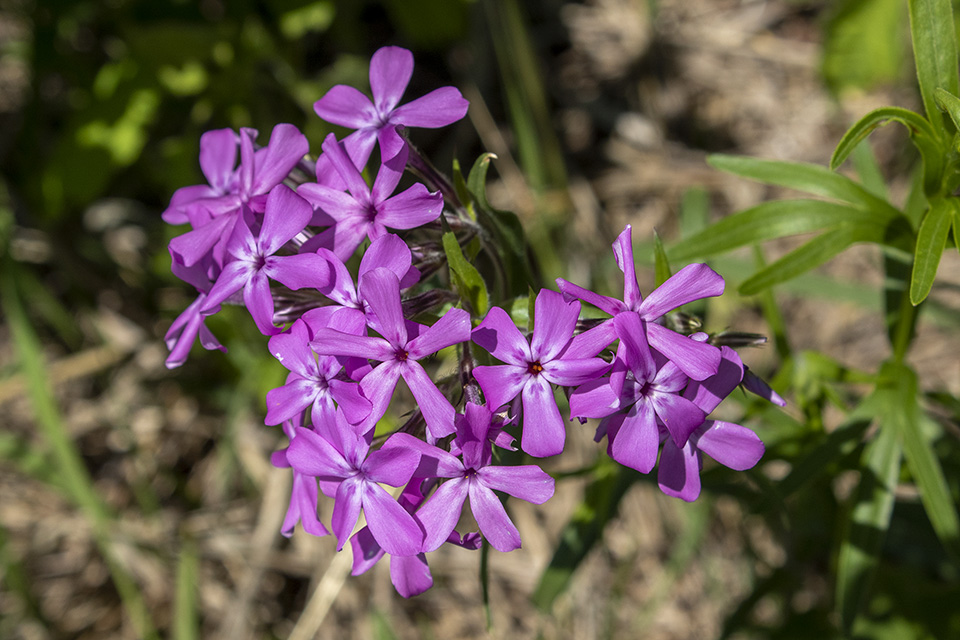
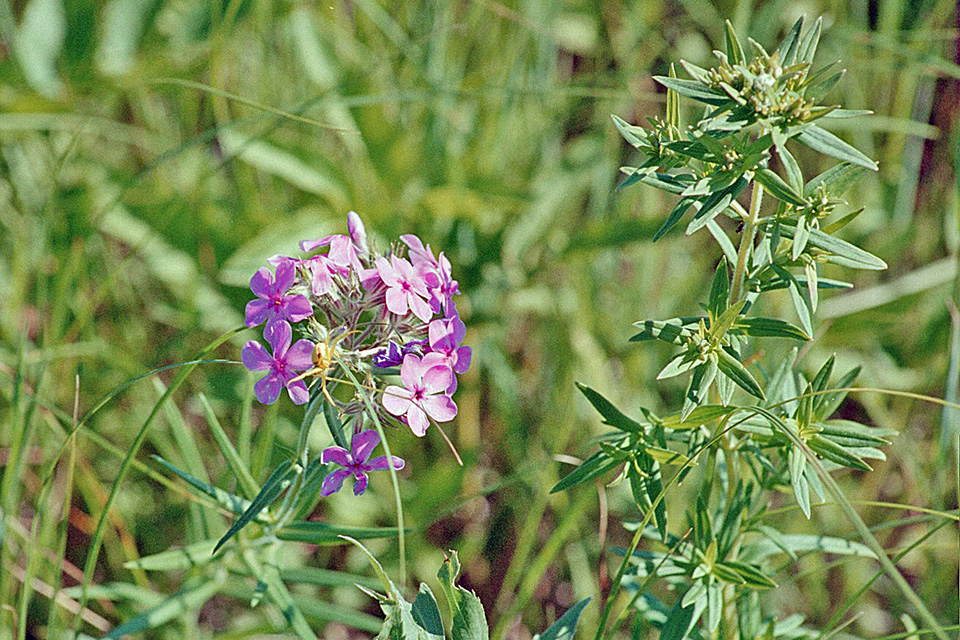
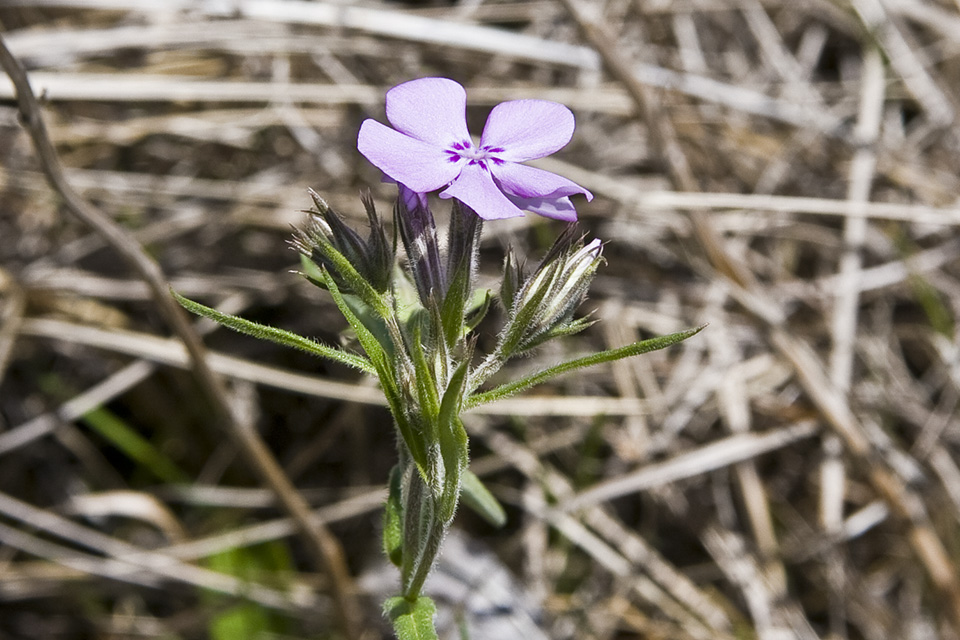
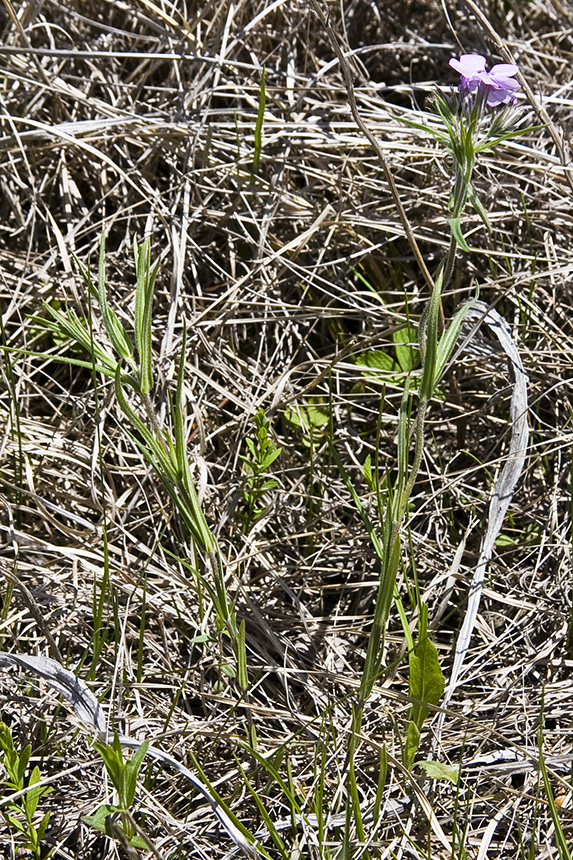
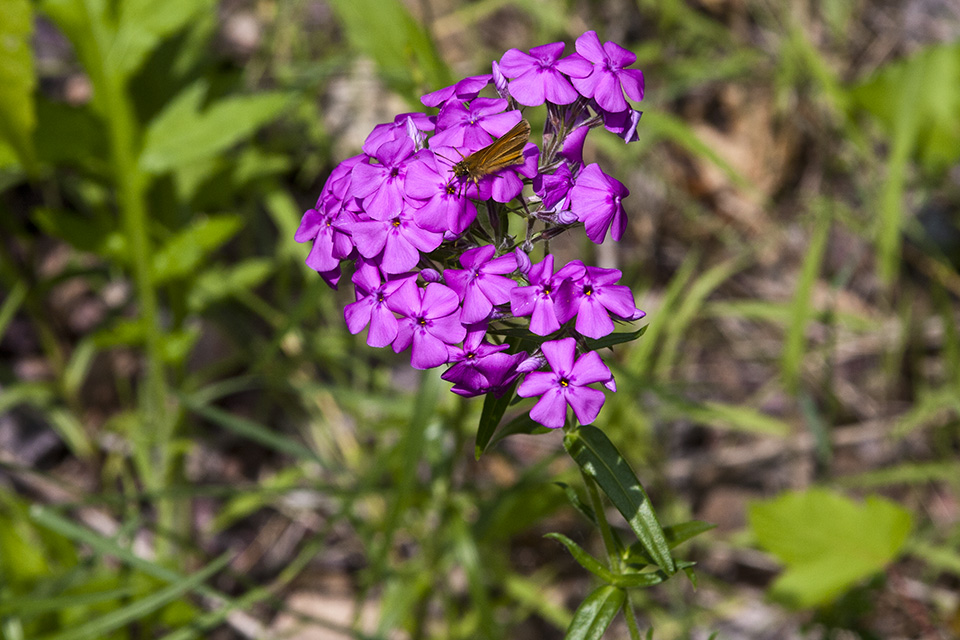
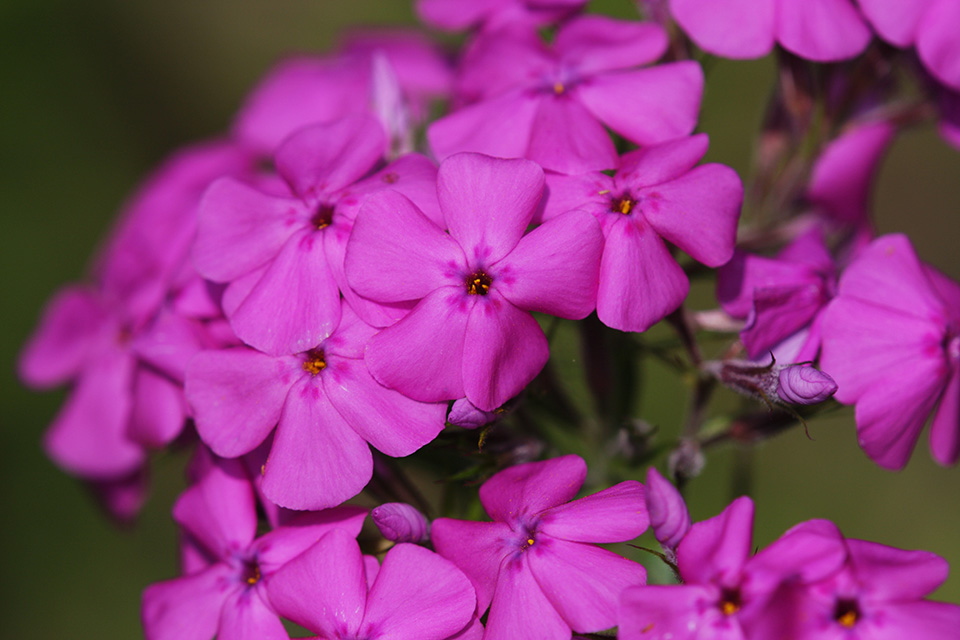
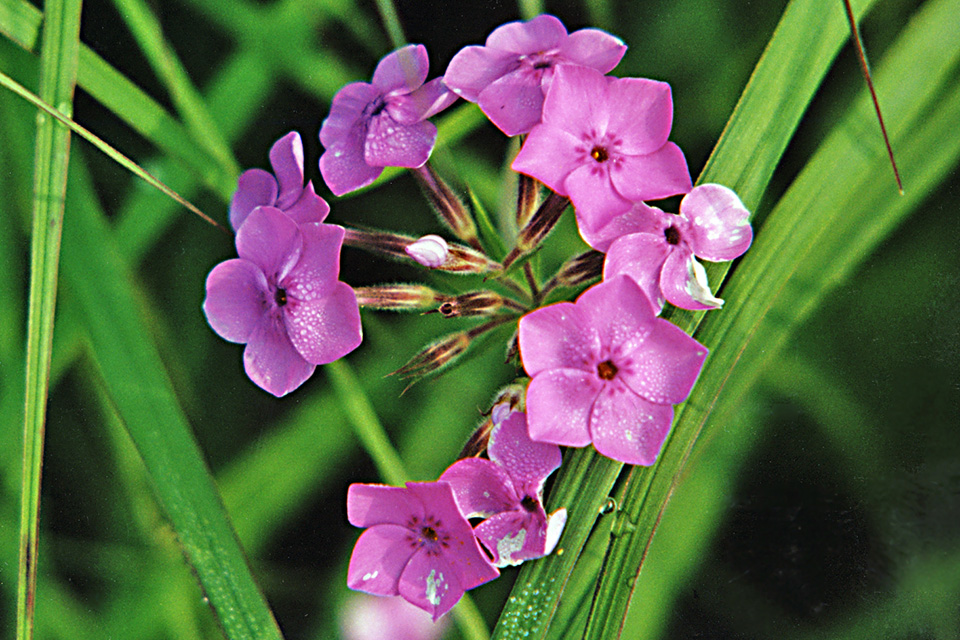
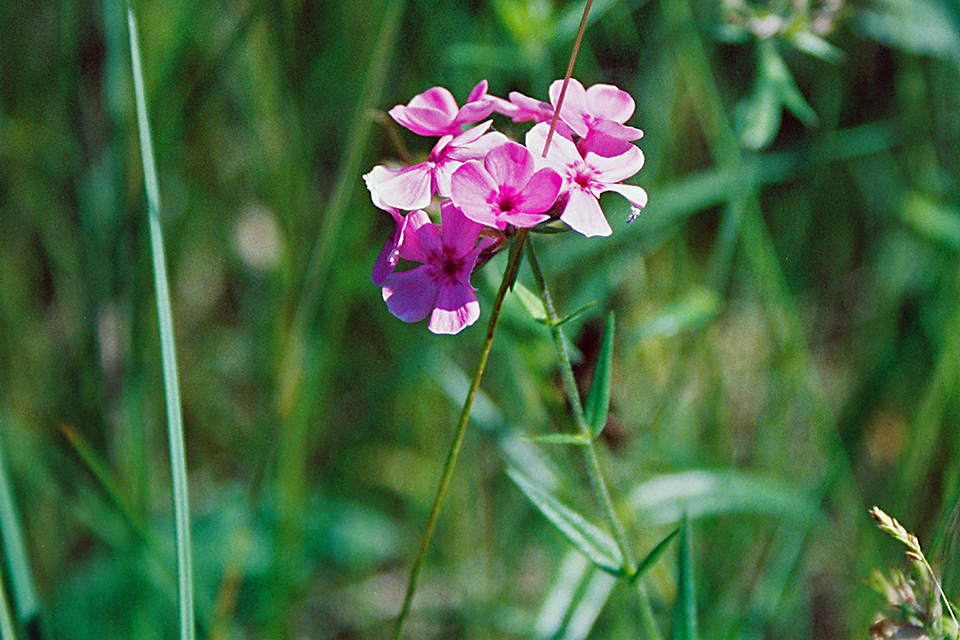
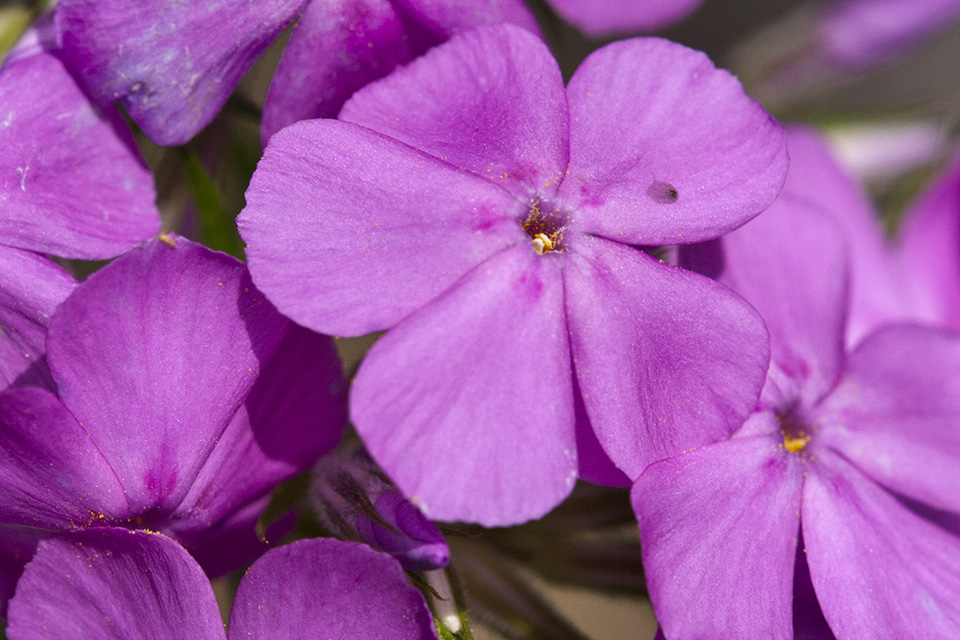
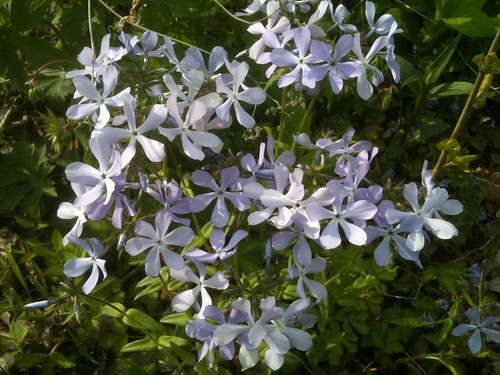
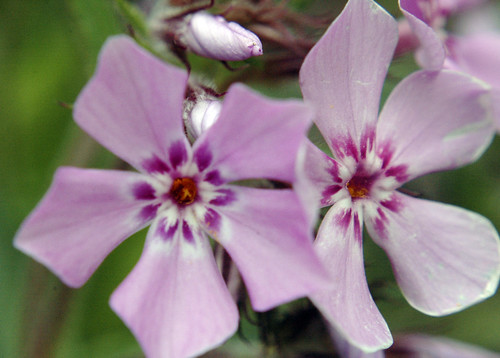
Downy phlox is a 6″ to 24″ tall, erect, perennial forb that rises on a single flowering stem and usually one or more non-flowering stems from a taproot. It often forms clumps. Flowering stems are unbranched below the inflorescence, and are covered with fine white hairs that are not sticky. Non-flowering stems are similar but smaller, and are erect or ascending. The leaves are opposite, stalkless, linear to lance-shaped, 1″ to 3″ long, untoothed, and very narrow. They are rounded at the base and taper to a sharp, hardened tip. The inflorescence is a flat-topped or round-topped, loosely branched cluster of 20 to 50 or more flowers at the end of the stem. The calyx is covered with fine, shiny or glossy hairs. The flowers are ½″ to ¾″ wide. They have 5 white, pink to pale purple, or occasionally lavender, petals. The petals unite at the base forming a long, thin corolla tube, then separate into 5 long, widely spreading lobes. The lobes are inversely egg-shaped, tapering gradually to the throat. They are not notched at the tip. The stamens are visible at the opening of the corolla tube but do not extend beyond the tube. The fruit is a 3-chambered, egg-shaped capsule with usually 1, rarely 2, seeds per chamber. |
Height |
6″ to 24″ |
Flower Color |
White, pink to pale purple, or lavender |
Similar Species |
Wild blue phlox (Phlox divaricata ssp. laphamii) has wider leaves that do not narrow to a sharp, hardened tip. The petal lobes abruptly narrow before the throat. The stamens are not visible at the opening of the corolla tube. Wild sweet William (Phlox maculata) has an unbranched, cylinder-shaped inflorescence. Garden Phlox (Phlox paniculata) is a tall, cultivated plant that can get to six feet tall. Moss phlox (Phlox subulata ssp. subulata) is a prostrate ground cover with whorled, linear to awl-shaped leaves. The flower petals are notched at the tip. It is found in rocky areas and sandy or gravelly soil. Dame’s rocket (Hesperis matronalis) is much taller, has alternate, toothed leaves, and has flowers with four petals. |
Habitat |
Dry. Upland woods, pine barrens, and prairies. |
Ecology |
Flowering |
April to June |
Pests and Diseases |
|
Use |
|
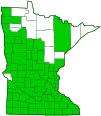
Distribution |
||
|
Sources |
|
| 4/19/2024 | ||
Nativity |
||
Native |
||
Occurrence |
||
Common |
||
Taxonomy |
|
Kingdom |
|
Subkingdom |
Pteridobiotina |
Phylum |
Tracheophyta (Vascular Plants) |
Class |
|
Order |
Ericales (heathers, balsams, primroses, and allies) |
Family |
Polemoniaceae (phlox) |
Subfamily |
Polemonioideae |
Genus |
Phlox (phloxes) |
Section |
Divaricatae |
Species |
Phlox pilosa (prairie phlox) |
Subordinate Taxa |
|
Synonyms |
|
| Phlox pilosa var. fulgida | |
Common Names |
|
downy phlox hairy phlox shining prairie phlox |
|
Glossary
Calyx
The group of outer floral leaves (sepals) below the petals, occasionally forming a tube.
Corolla
A collective name for all of the petals of a flower.
Linear
Long, straight, and narrow, with more or less parallel sides, like a blade of grass.
Visitor Photos |
||
Share your photo of this plant. |
||
This button not working for you? |
||
Greg Watson |
||
 |
||
MinnesotaSeasons.com Photos |
||
 |
 |
|
Plant |
||
 |
||
Plant |
||
 |
 |
|
Inflorescence |
||
 |
 |
|
Inflorescence |
||
 |
 |
|
Flower |
||
 |
 |
|
Flower |
||
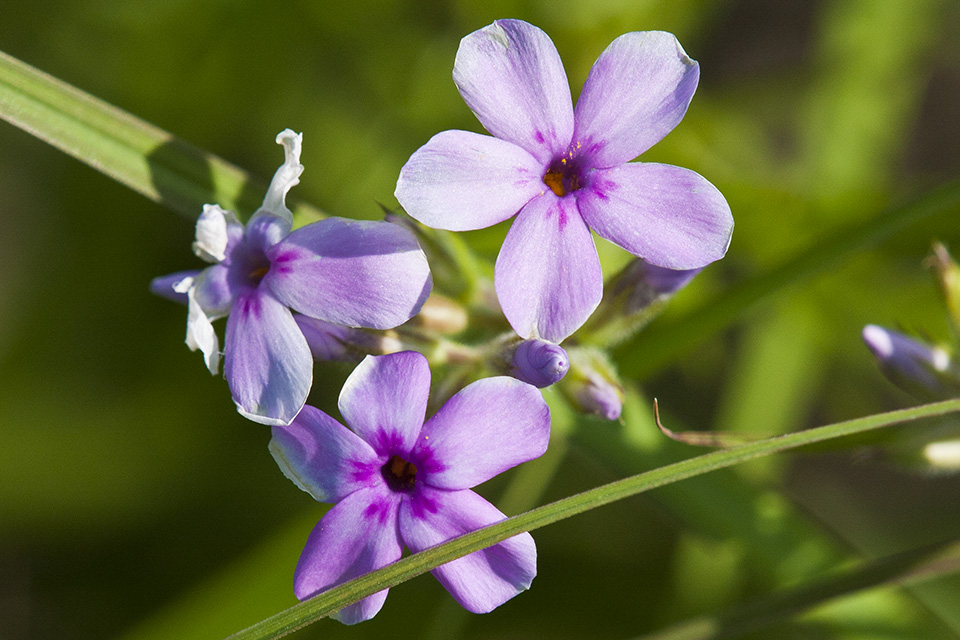 |
||
Flower |
||
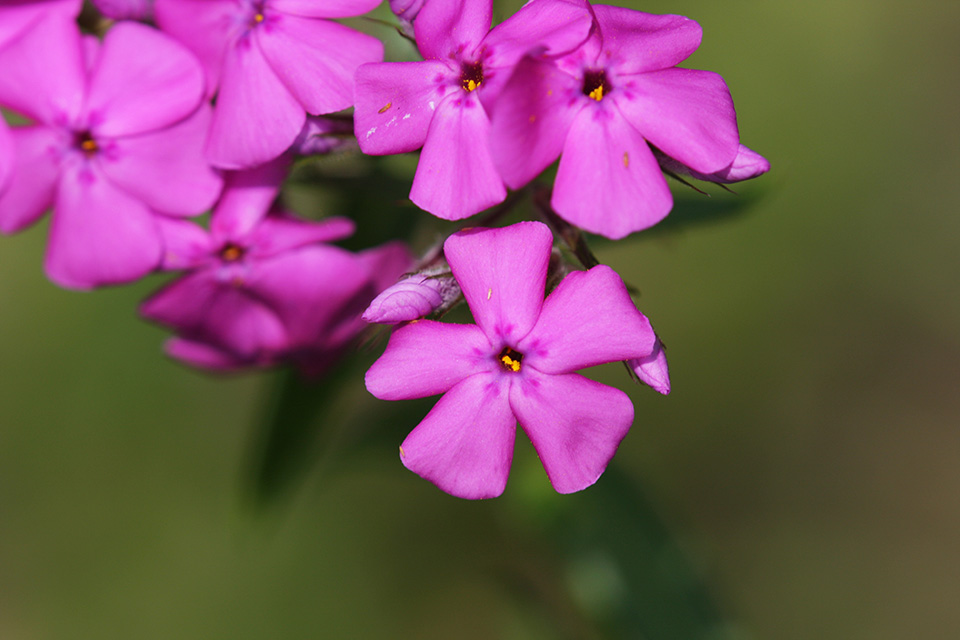
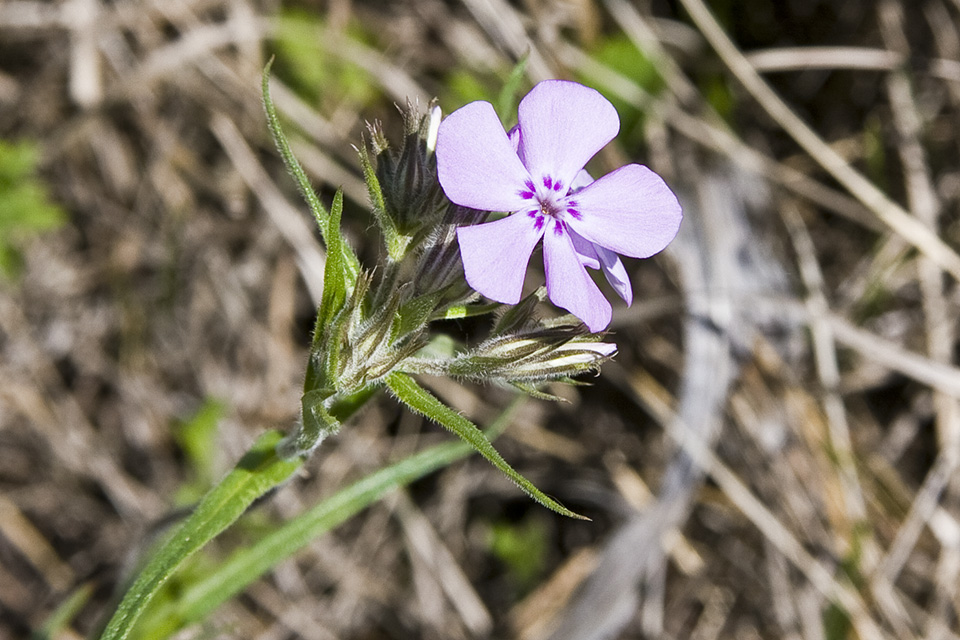
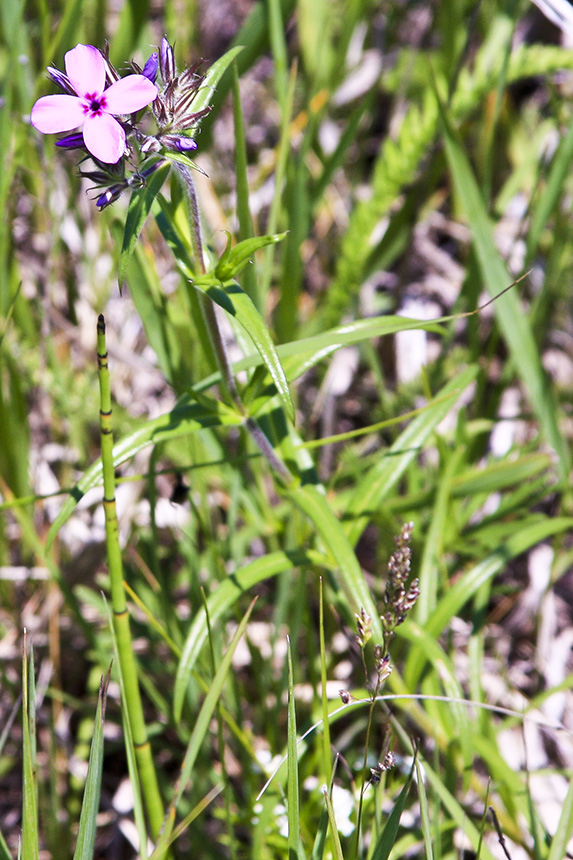
Four-lobed Corolla: Downy Phlox or Dame's Rocket? Most sources note the similarity of downy phlox to dame’s rocket. The two can be distinguished, the sources say, by the number of corolla lobes: five for downy phlox and four for dame’s rocket. All sources, including Gleason & Cronquist (1991)41, state that the number of corolla lobes on downy phlox is five. |
 |
|
| Glynn Prairie SNA, 6/13/2009 | ||
| These three photos show two downy phlox plants with only four corolla lobes. A third plant was seen at Cedar Rock SNA, July, 2013. In all cases, the four-lobed flower was the first flower on the plant to bloom, and no other flowers on the plant were in bloom. | 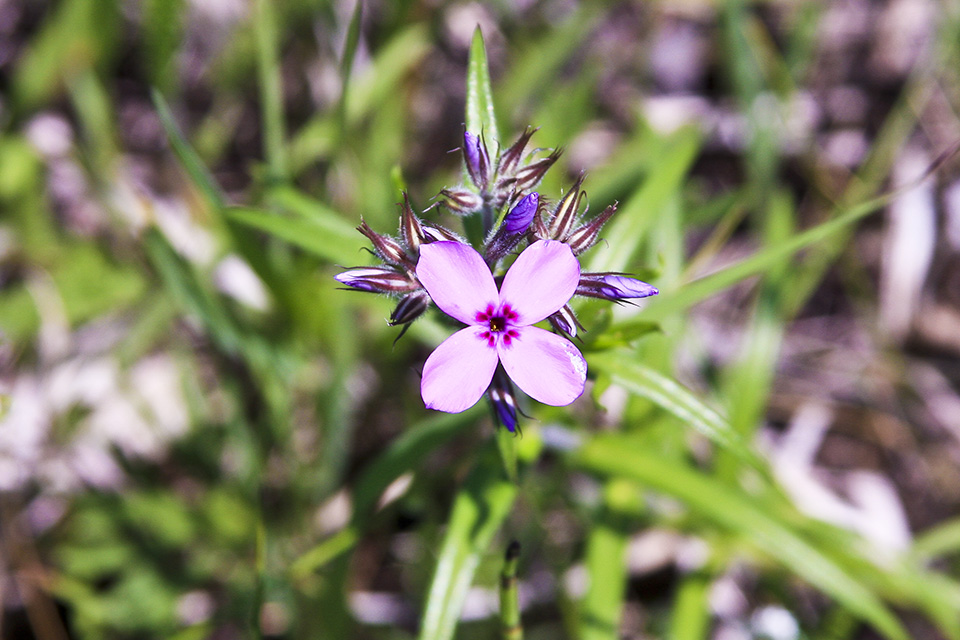 |
|
| Glynn Prairie SNA, 6/13/2009 | ||
| The cross-shaped arrangement of the lobes indicates that a fifth lobe was never present. The shape of the leaves, the shape of the flower cluster, and the dark spots (nectar guides) near the throat of the corolla, all show this to be downy phlox, not dame's rocket. | 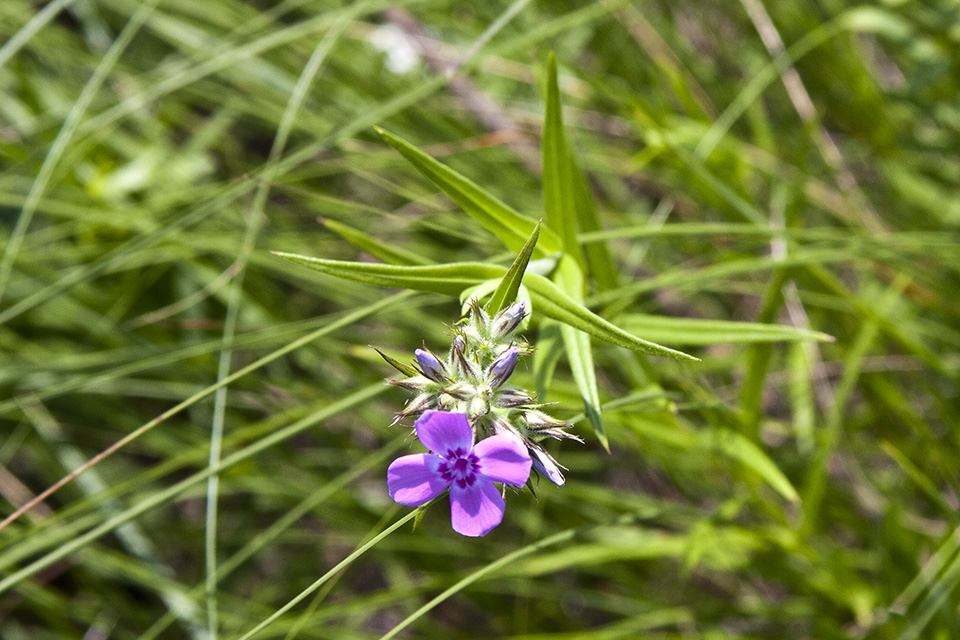 |
|
| Roscoe Prairie SNA in 7/4/2013 | ||

Slideshows |
Prairie Phlox |
|
Phlox pilosa fulgida PRAIRIE PHLOX |
|

Visitor Videos |
||
Share your video of this plant. |
||
This button not working for you? |
||
|
Other Videos |
||
Snowberry Clearwing |
About
Published on Mar 31, 2012 This sphinx moth is feeding on Phlox pilosa. |
DSCN4936.MOV |
About
Uploaded on Nov 26, 2011 Phlox pilosa site in western Wisconsin. |

Visitor Sightings |
||
Report a sighting of this plant. |
||
This button not working for you? |
||
| Greg Watson 5/27/2022 |
Location: Eagles Bluff Park in La Crescent, MN |
 |
MinnesotaSeasons.com Sightings |
||
Created: Last Updated: © MinnesotaSeasons.com. All rights reserved. |