



silver maple
(Acer saccharinum)
Conservation • Wetland • Description • Habitat • Ecology • Use • Distribution • Taxonomy
Conservation Status |
|
|||||||
| IUCN Red List | not listed |
|||||||
| NatureServe | N5? - Secure SNR - Unranked |
|||||||
| Minnesota | not listed |
|||||||
Wetland Indicator Status |
||||||||
| Great Plains | FAC - Facultative |
|||||||
| Midwest | FACW - Facultative wetland |
|||||||
| Northcentral & Northeast | FACW - Facultative wetland |
|||||||
Description |
||
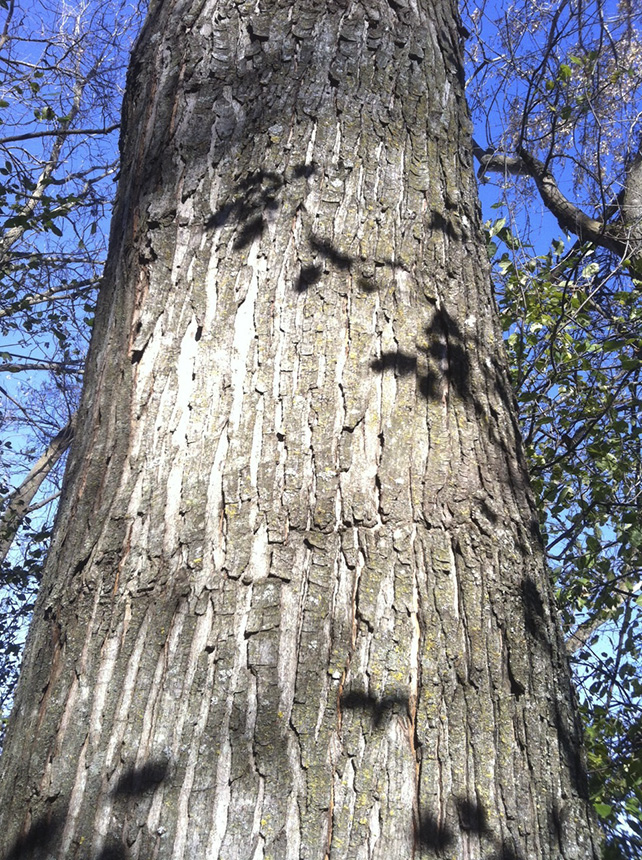
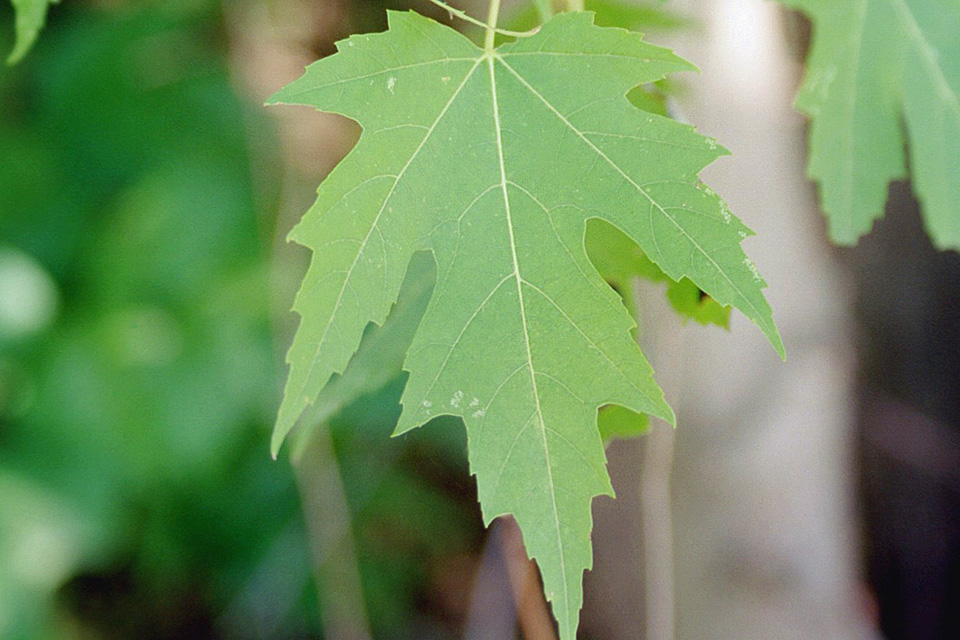
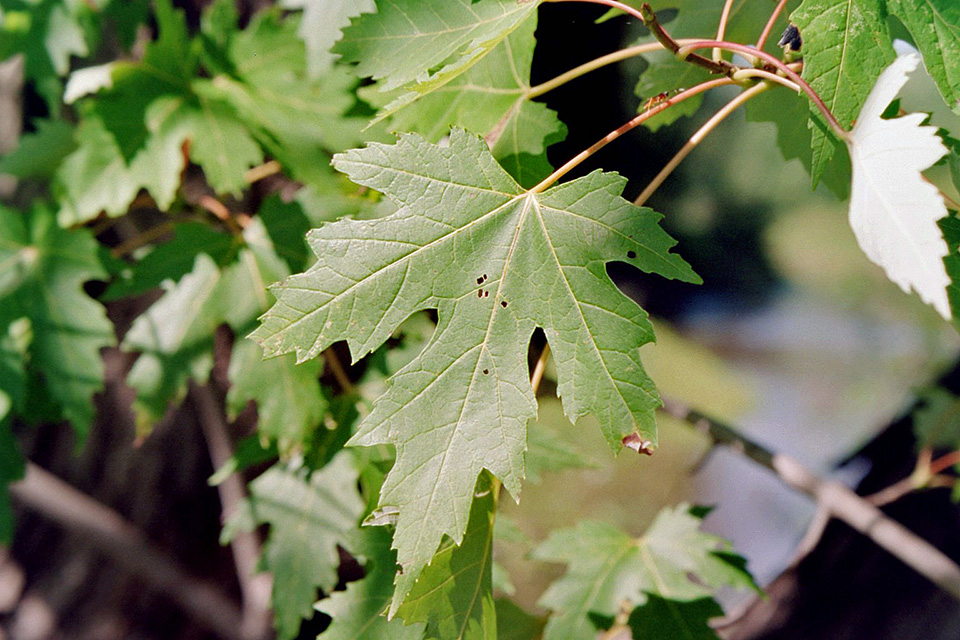
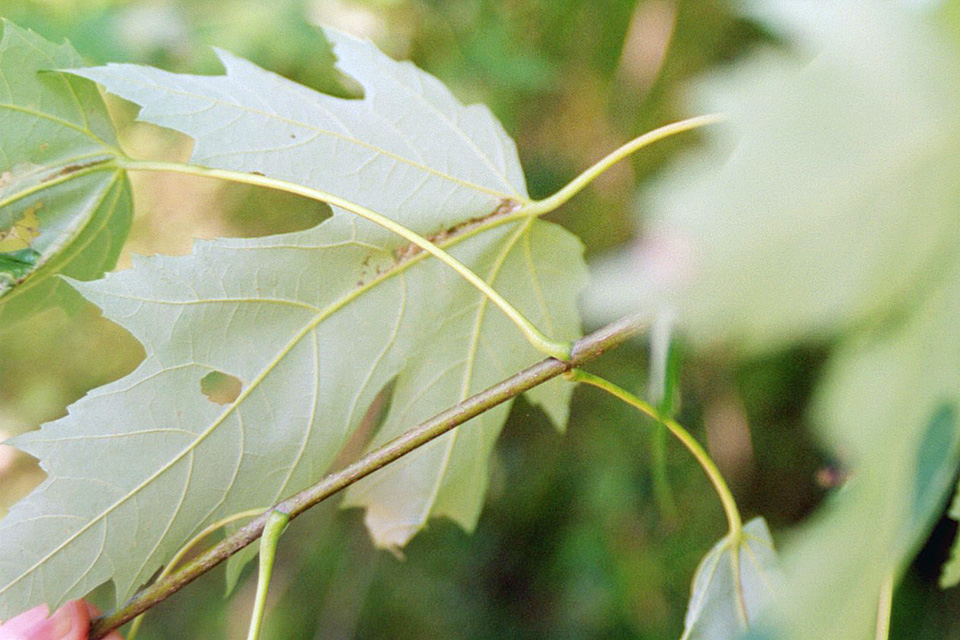
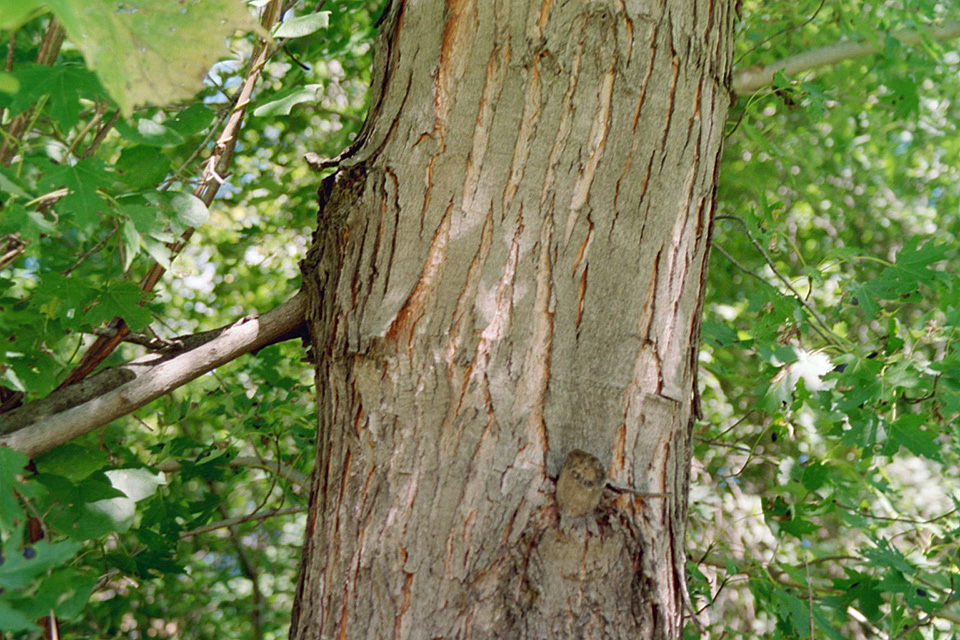
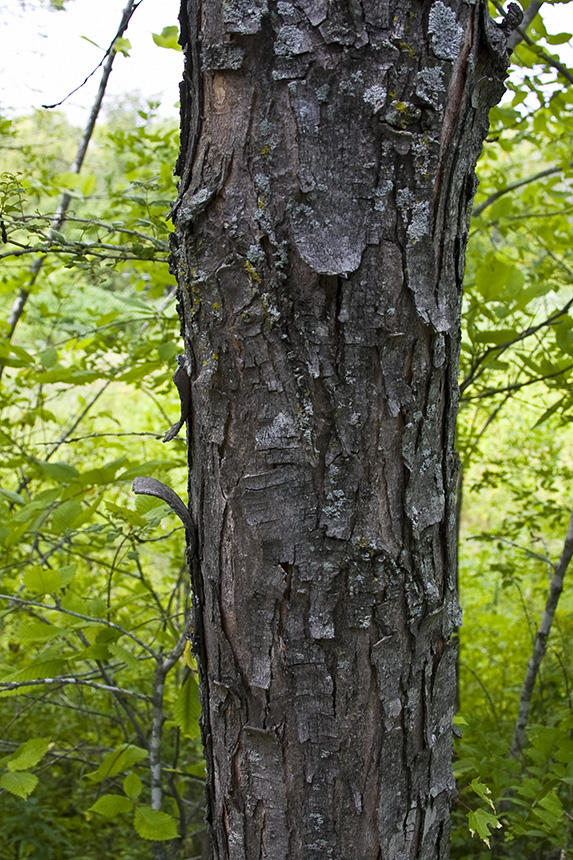
Silver maple is a fast-growing, moderately short-lived, deciduous, medium to large tree rising on a single trunk from shallow, fibrous roots. In Minnesota mature trees are usually 40′ to 70′ tall and up to 36″ in diameter, though large individuals can reach over 90′ in height. They typically live 100 to 130 years. The crown is rounded. The trunk is straight and much branched. In the forest the trunk is straight and tall. In the open it is split near the ground into a few branches that ascend sharply. The branches are opposite, short, sturdy, and ascending to spreading. Larger branches arch outward and droop downward, but ascend at the tip. The bark on young trees is light gray and smooth. On mature trees the bark is dark reddish-brown and is separated into long vertical plates that are attached in the middle but loose at the top and bottom. The twigs are thin, yellowish-gray to reddish-brown, smooth, hairless and shiny. They emit an disagreeable odor when bark is bruised or scraped. They appear in a V-shape on the branches. The younger twigs have obvious, small, lighter, pore-like openings (lenticels) that are not raised much above the bark surface. At the end of the twig is a brown, ¼″ to ⅜″ long, sharply pointed terminal bud with tight scales. The leaf scars have three bundle scars. The sap is clear, not milky. The buds are dark brown, egg-shaped to elliptic, ¼″ long, and blunt at the tip. They are composed of 6 to 10 dark red overlapping scales. The terminal bud is red and relatively short. The leaves are opposite, stalked, 4″ to 6″ long, and nearly as wide. There are no prominent stipules at the base of the leaf stalk. The blades are palmately lobed with 5 deep main lobes. The lobes taper to sharply-pointed tips and sometimes have smaller, secondary lobes. The leaves of silver maple are more deeply lobed than those of any other maple in Minnesota. The lateral lobes are cut ½ to ⅔ of the way to the base. The space between the lobes (sinus) is angled or V-shaped. The two bottom lobes are much smaller than the two lateral lobes. The central lobe noticeably narrows, with concave sides, toward the base. The sinus at the base of the leaves is open and the two bottom lobes do not overlap. The upper surface is light green and hairless. The lower surface of mature leaves is silvery white and hairless, but green and sometimes hairy when young. The margins have a few coarse, sharp, irregular teeth. The sides and tip of the leaf do not droop. In the fall the leaves turn yellow. Fallen leaves break down quickly. The inflorescence is a tassel-like cluster of 8 to 14 flowers at or near the tip of the branches. Male and female flowers are borne on the same tree and but in separate clusters. They appear identical, having both stamens and pistils, but usually only one of the organs is functional. They are greenish-yellow and are on short stalks. They are produced in late February to early May, long before the leaves appear. This is the earliest maple to flower. The flowers are pollinated by wind and bees. The fruit is a pair of dry seed cases with papery wings attached (double samara). The samaras (or keys) occur in clusters that droop downward from 1″ to 3″ long stalks. The stalks are longer than the wings. The seed cases are plump, attached the the stalk, and slightly connected to each other. The wings are typically 1¼″ to 2½″ long, ¼″ to 7 ⁄16″ wide, diverge at a 90° to 120° angle, and are somewhat curved inward. Usually only one seed case contains a single, viable seed, although sometimes both contain seeds, sometimes both are empty. The keys are hairless or sparsely hairy, green initially, turning yellowish green when the seeds are mature, then brown. They fall in the late spring before the leaves are fully mature. Paired keys mature and are shed individually. |
||
Height |
||
40′ to 70′ |
||
Record |
||
The champion silver maple in Minnesota is on public property near Reno, in Houston County. In 2021 it was measured at 96′ tall and 381.6″ in circumference (121.5″ in diameter), with a crown spread of 95′. |
||
Flower Color |
||
Greenish-yellow |
||
Similar Species |
||
Habitat |
||
Bottomland forests, river banks, stream banks, flood plains, and lake edges. |
||
Ecology |
||
Flowering |
||
Late February to early May |
||
Pests and Diseases |
||
Maple twig borer moth (Proteoteras aesculana) larva often kill the twigs that they bore into. Their presence can be recognized by noting dead and drooping leaves at the end of a twig. Maple velvet erineum gall mite (Aceria aceris) causes greenish or reddish patches (erinea) on the lower surface of silver maple leaves. Speckled Tar Spot (Rhytisma punctatum) forms many medium-sized spots on maple leaves which, on close examination, are clusters of numerous very small spots. Tar Spot (Rhytisma americanum) forms few large black spots on maple leaves. |
||
Use |
||
|
||
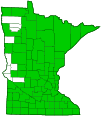
Distribution |
||||
|
Sources |
|||
| 6/14/2023 | ||||
Nativity |
||||
Native |
||||
Occurrence |
||||
Common |
||||
Taxonomy |
|||
| Kingdom | Plantae (Plants) | ||
| Subkingdom | Pteridobiotina | ||
| Phylum | Tracheophyta (Vascular Plants) | ||
| Class | Magnoliopsida (Dicots) | ||
Order |
Sapindales (Soapberries, Cashews, Mahoganies, and Allies) | ||
Family |
Sapindaceae (Soapberry) | ||
| Subfamily | Hippocastanoideae | ||
| Tribe | Acereae | ||
Genus |
Acer (Maples) | ||
| Section | Rubra | ||
Synonyms |
|||
Acer dasycarpum Acer saccharinum var. laciniatum Acer saccharinum var. wieri Argentacer saccharinum |
|||
Common Names |
|||
river maple silver maple soft maple white maple |
|||
Glossary
Lenticel
A corky, round or stripe-like, usually raised, pore-like opening in bark that allows for gas exchange.
Palmate
Similar to a hand. Having more than three lobes or leaflets that radiate from a single point at the base of the leaf.
Samara
A dry fruit consisting of a seed attached to a papery wing; one seeded in Elms and Ashes, two-seeded in Maples.
Sinus
A space, indentation, or cleft, usually on a leaf, between two lobes or teeth.
Stipule
A small, leaf-like, scale-like, glandular, or rarely spiny appendage found at the base of a leaf stalk, usually occurring in pairs and usually dropping soon.
Visitor Photos |
|||||
Share your photo of this plant. |
|||||
| This button not working for you? Simply email us at info@MinnesotaSeasons.com. Attach one or more photos and, if you like, a caption. |
|||||
Randy |
|||||
Bark on a towering silver maple in an old woods. |
|||||
 |
|||||
Kirk Nelson |
|||||
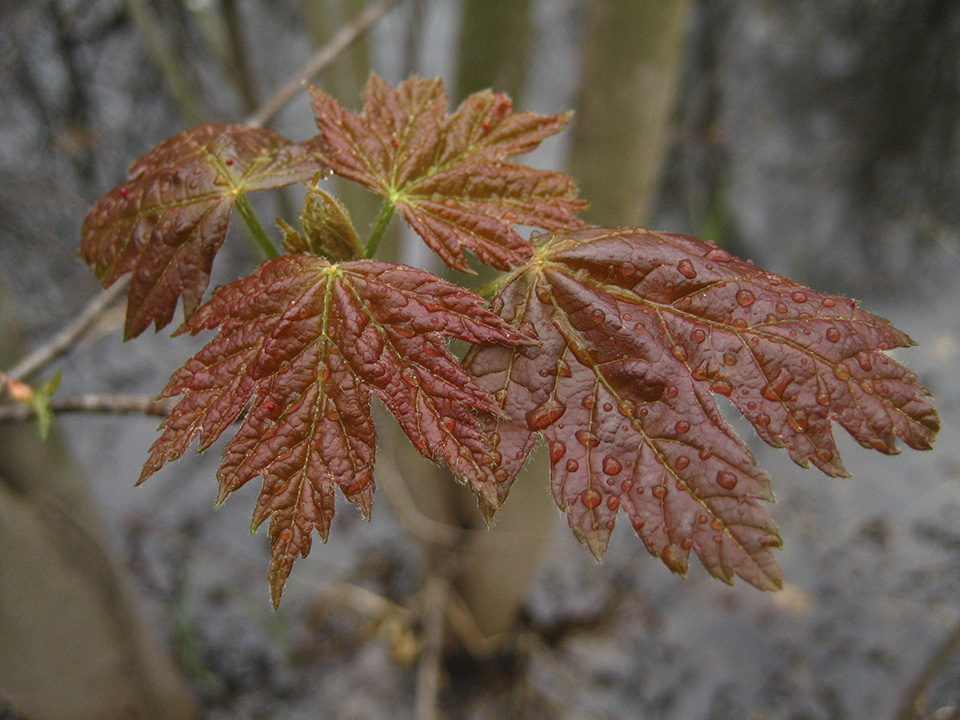
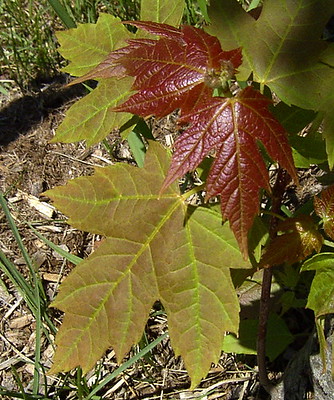
Silver Maple leaves in the Spring |
|||||
 |
 |
||||
MinnesotaSeasons.com Photos |
|||||
Leaves |
|||||
 |
 |
||||
 |
|||||
Bark |
|||||
 |
 |
||||

Slideshows |
||
| Acer saccharinum Blake C. Willson |
||

|
||
About
Silver Maple |
||
| Silver Maple DianesDigitals |
||
 >
> |
||
About
Copyright DianesDigitals |
||
| Acer saccharinum - Silver Maple Virens (Latin for greening) |
||

|
||
About
Aceraceae - Maple Family A New York City street tree native to North America. |
||
Visitor Videos |
|||
Share your video of this plant. |
|||
| This button not working for you? Simply email us at info@MinnesotaSeasons.com. Attach a video, a YouTube link, or a cloud storage link. |
|||
Other Videos |
|||
| How to ID Acer saccharinum Laura Deeter |
|||
About
Uploaded on Oct 23, 2008 Key identifying characteristics for Acer saccharinum |
|||
| Silver Maple identification video (Acer saccharinum) wvoutdoorman |
|||
About
Published on Sep 10, 2013 Silver Maple identification video (Acer saccharinum) |
|||
| ApisCity 16/03/2012 Klon srebrzysty (Acer saccharinum L.) Marcin Szymański |
|||
About
Published on Mar 17, 2012 Klon na mojej ulicy. Kilkadziesiat metrow od pasieki. |
|||
| Acer saccharinum Wieri De Groene Heren wander van laar |
|||
About
Published on Jun 2, 2013 No description available. |
|||

Visitor Sightings |
|||||
Report a sighting of this plant. |
|||||
| This button not working for you? Simply email us at info@MinnesotaSeasons.com. Be sure to include a location. |
|||||
| Kirk Nelson 2/12/2014 |
Location: Lebanon Hills Regional Park Silver Maple leaves in the Spring |
|
|||
MinnesotaSeasons.com Sightings |
|||||
Bertram Chain of Lakes Regional Park Cannon River Turtle Preserve SNA Carpenter St. Croix Valley Nature Center Charles A. Lindbergh State Park Clifton E. French Regional Park Mary Schmidt Crawford Woods SNA Minnesota Valley NWR, Chaska Unit Minnesota Valley NWR, Louisville Swamp Unit Minnesota Valley NWR, Rapids Lake Unit Minnesota Valley NWR, Wilkie Unit Minnesota Valley State Recreation Area, Lawrence Unit Nerstrand Big Woods State Park Robert Ney Memorial Park Reserve |
|||||
|
Created: Last Updated: © MinnesotaSeasons.com. All rights reserved. |