



Morrow’s honeysuckle
(Lonicera morrowii)
Conservation • Weed • Wetland • Description • Habitat • Ecology • Use • Distribution • Taxonomy
Conservation Status |
|
|||||||
| IUCN Red List | not listed |
|||||||
| NatureServe | NNA - Not applicable SNA - Not applicable |
|||||||
| Minnesota | not listed |
|||||||
Weed Status |
||||||||
Restricted Noxious Weed Morrow’s honeysuckle is listed as an invasive terrestrial plant by the Minnesota Department of Natural Resources. |
||||||||
Wetland Indicator Status |
||||||||
| Great Plains | UPL - Obligate upland |
|||||||
| Midwest | FACU - Facultative upland |
|||||||
| Northcentral & Northeast | FACU - Facultative upland |
|||||||
Description |
||
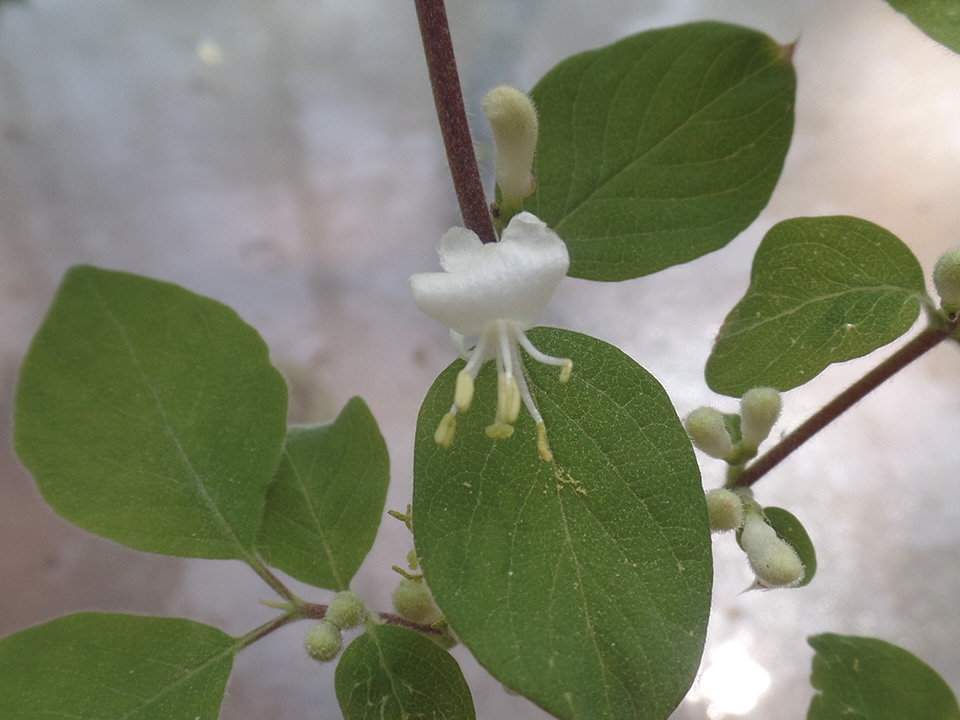
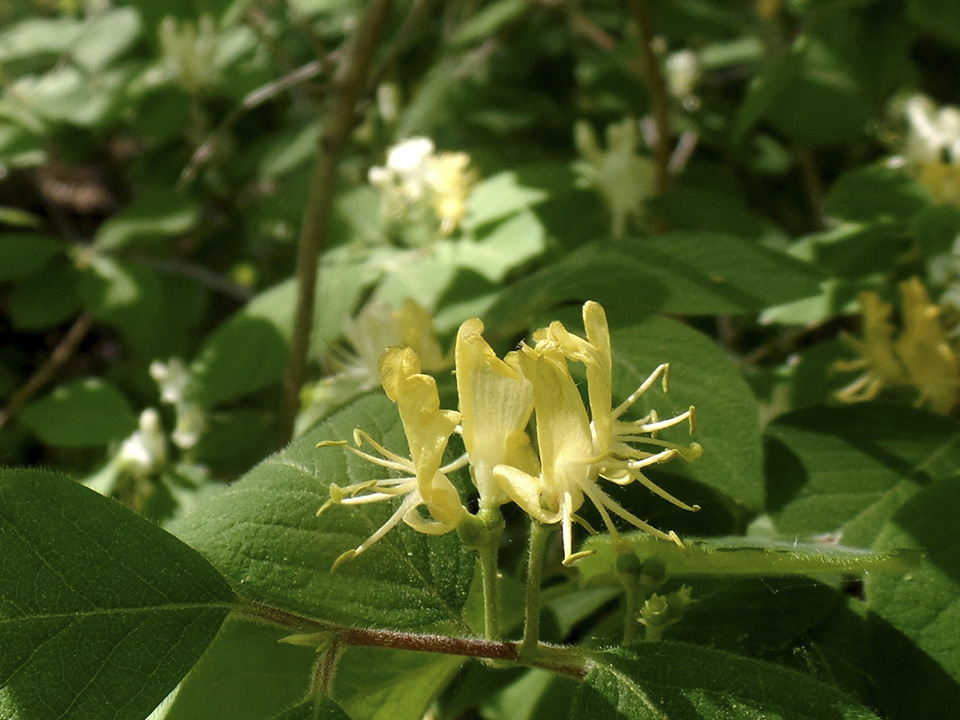
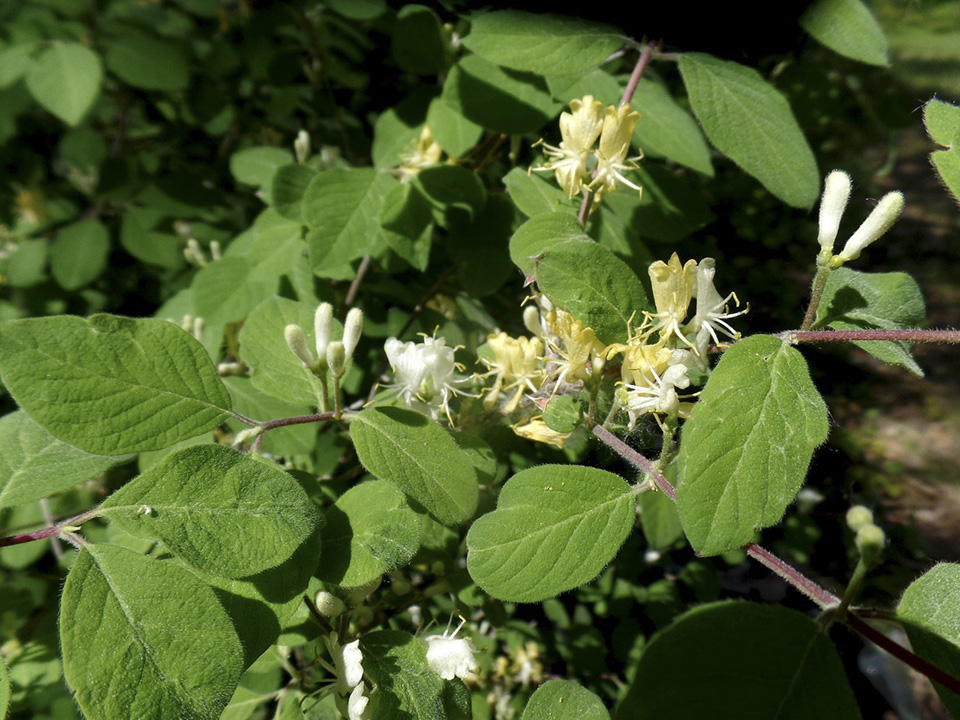
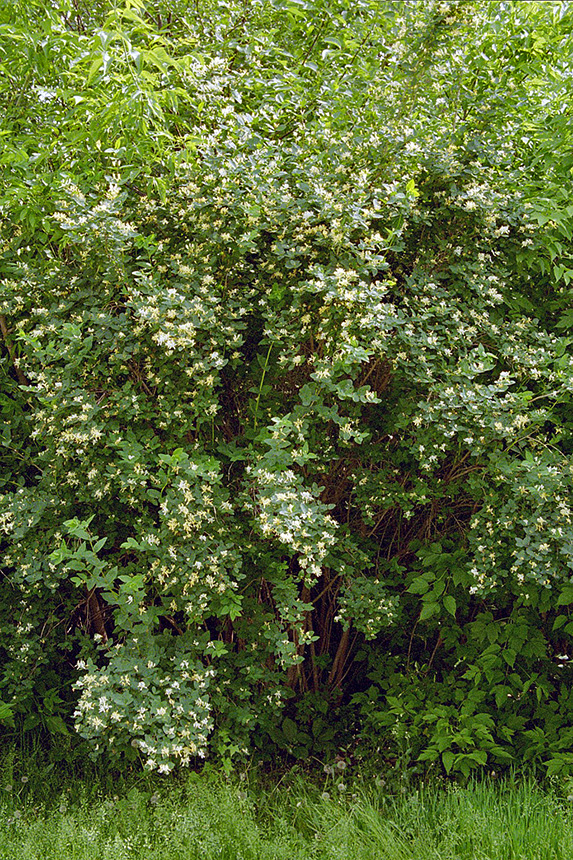
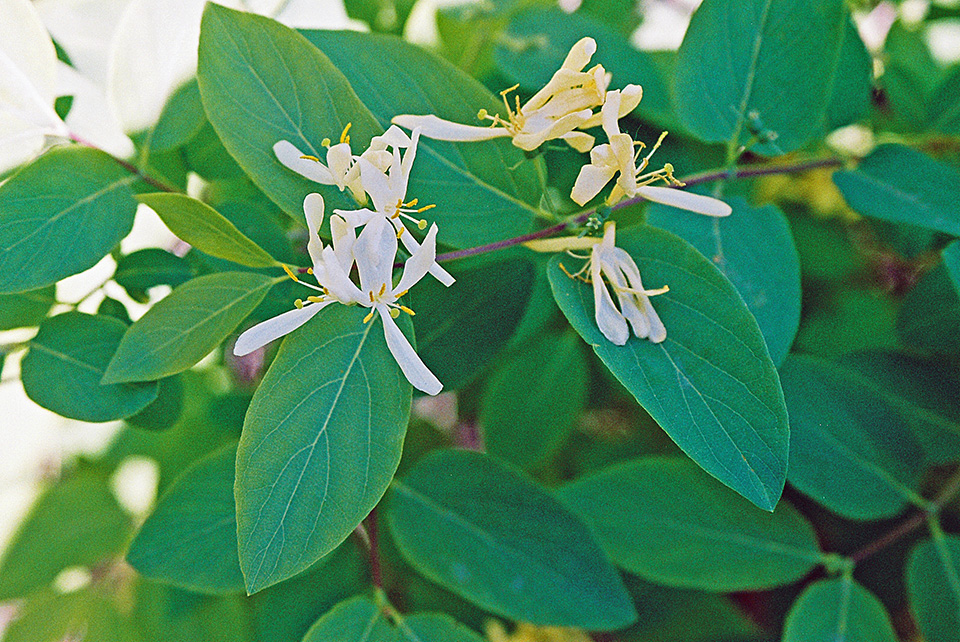
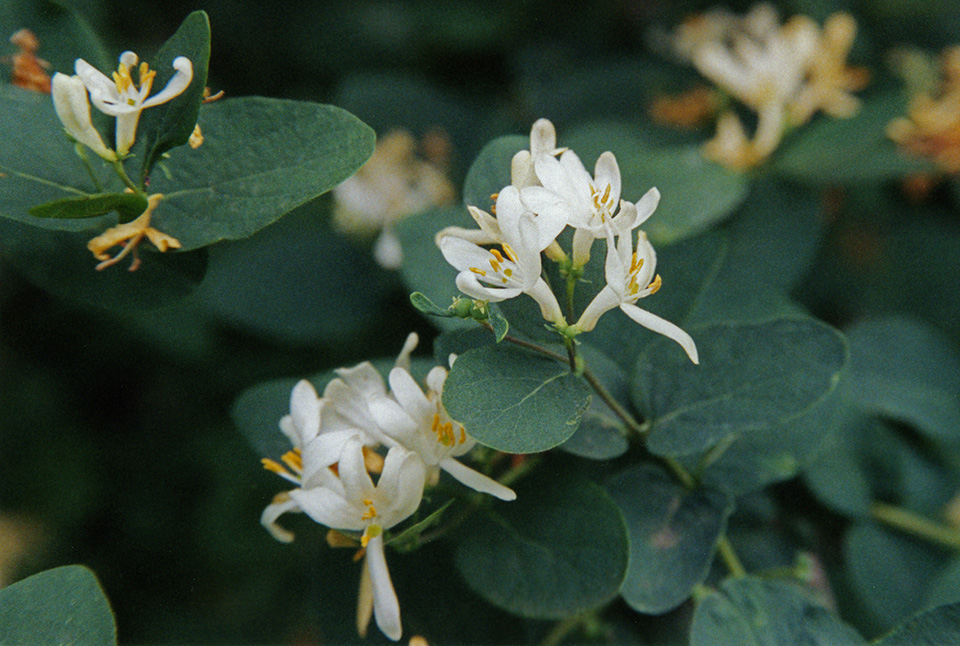
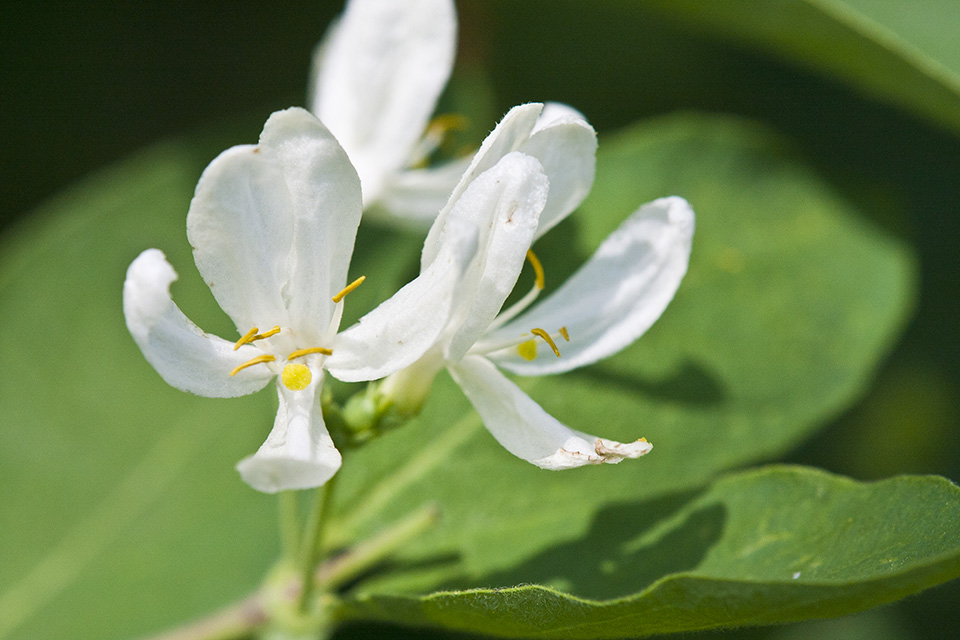
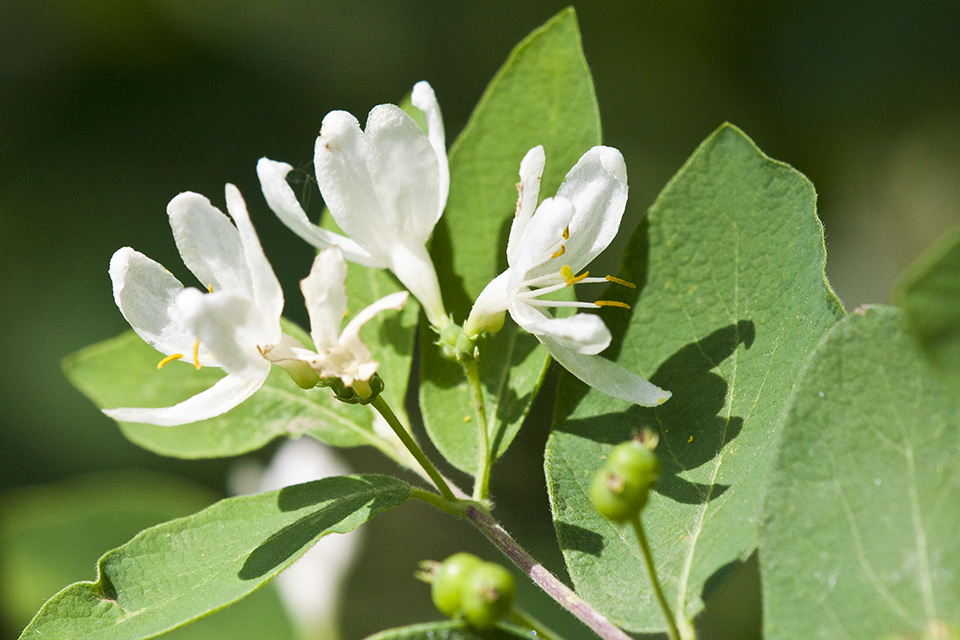
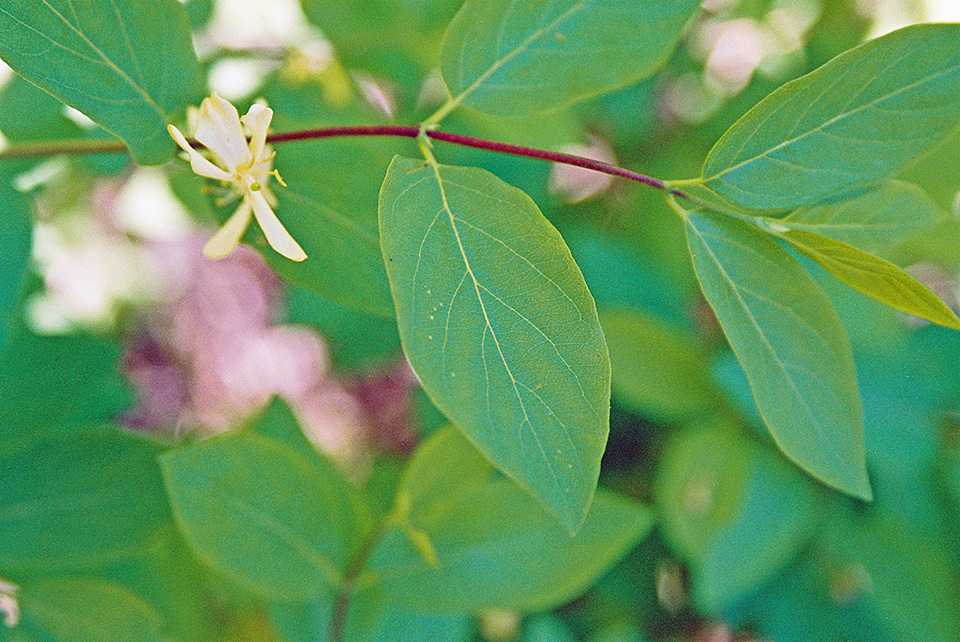
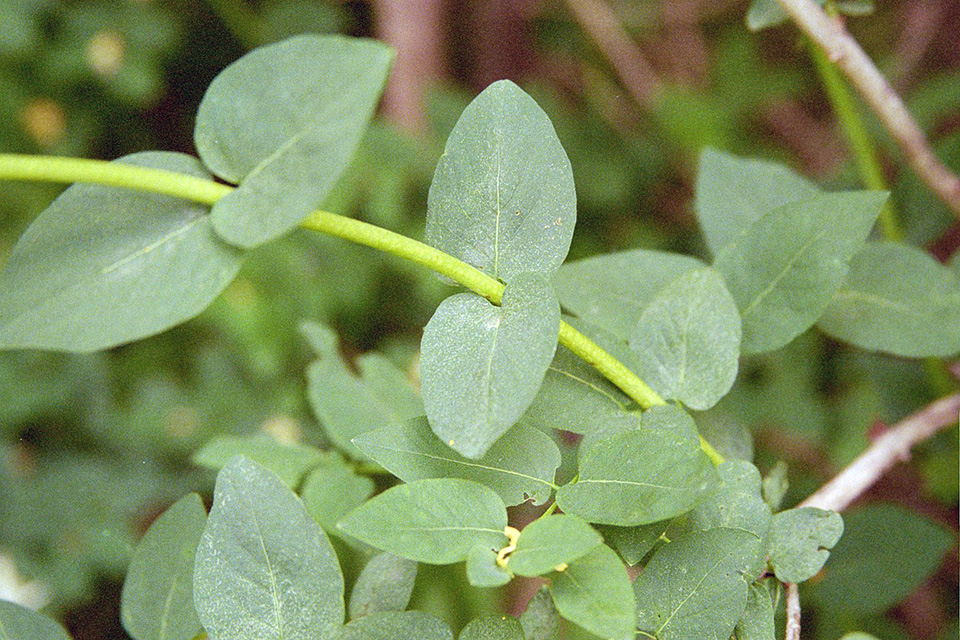
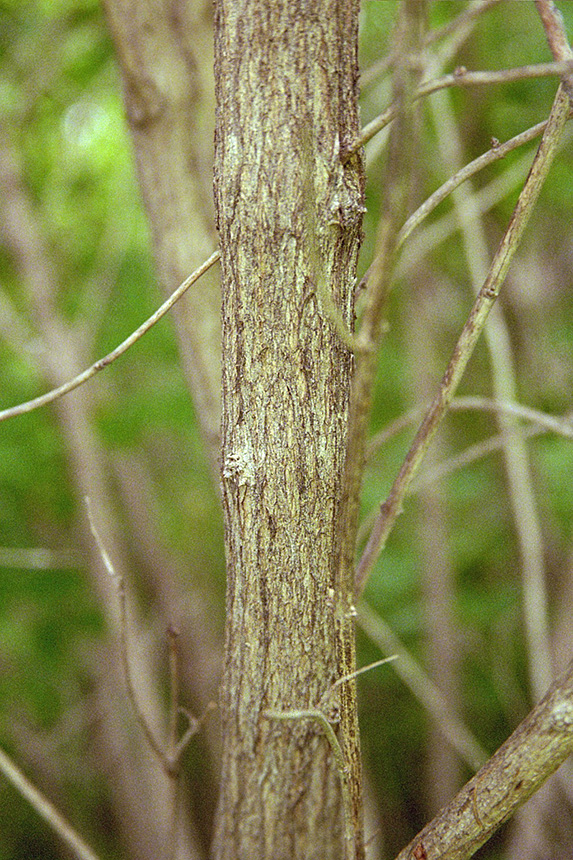
Morrow’s honeysuckle is an erect, 3′ to 10′ tall, perennial shrub that rises from shallow roots. It sometimes forms dense thickets. The branches are straight and hollow. They are light green and covered with soft, fine, short hairs when young. Older branches have shaggy, grayish-brown bark. The leaves are opposite, untoothed, oval or oblong, and 1⅛″ to 2⅓″ long. They are bluish-green on the upper surface and downy on the underside. The flowers occur in pairs arising from leaf axils. They are white but turn yellow with age. The fruit is a red berry. |
||
Height |
||
3′ to 10′ |
||
Flower Color |
||
White, turning yellow |
||
Similar Species |
||
Aside from northern bush honeysuckle, all honeysuckles native to Minnesota are vine-like, not shrubs, and have twining branches. Tatarian honeysuckle (Lonicera tatarica) is also a non-native species. It has white or pink flowers that do not turn yellow with age. Its leaves are entirely hairless. |
||
Habitat |
||
Deciduous woodland borders, savannas, thickets, fence rows, urban vacant lots, railroads, roadsides. Full sun to partial shade. |
||
Ecology |
||
Flowering |
||
May to June |
||
Pests and Diseases |
||
Honeysuckle aphid (Hyadaphis tataricae) causes a witches’ broom of stunted leaf and stem growth at the end of shoots. |
||
Defense Mechanisms |
||
Morrow’s honeysuckle plant is thought to be allelopathic, releasing a toxin in the soil that inhibits the growth of other species. |
||
Use |
||
The red dye rhodoxanthin, in the fruit of Morrow’s honeysuckle, is responsible for an unusual orange hue in the wax spots of cedar waxwings in the last 35 years. |
||
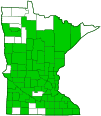
Distribution |
||||
|
Sources |
|||
| 2/19/2023 | ||||
Nativity |
||||
Native to Japan and South Korea. Introduced and naturalized in North America. |
||||
Occurrence |
||||
Common |
||||
Taxonomy |
|||
| Kingdom | Plantae (Plants) | ||
| Subkingdom | Pteridobiotina | ||
| Phylum | Tracheophyta (Vascular Plants) | ||
| Class | Magnoliopsida (Dicots) | ||
| Subclass | Caryophyllidae | ||
Order |
Dipsacales (honeysuckles, moschatels, and allies) | ||
Family |
Caprifoliaceae (honeysuckle) | ||
| Subfamily | Caprifolioideae | ||
Genus |
Lonicera (honeysuckles) | ||
| Subgenus | Lonicera | ||
| Section | Lonicera | ||
Subordinate Taxa |
|||
|
|||
Synonyms |
|||
Lonicera insularis |
|||
Common Names |
|||
Asian fly honeysuckle Morrow’s honeysuckle |
|||
Glossary
Allelopathy
The release of a chemical toxin by one plant to inhibit the growth or germination of nearby competing plants.
Axil
The upper angle where the leaf stalk meets the stem.
Visitor Photos |
|||||
Share your photo of this plant. |
|||||
| This button not working for you? Simply email us at info@MinnesotaSeasons.com. Attach one or more photos and, if you like, a caption. |
|||||
Luciearl |
|||||
 |
 |
||||
 |
|||||
MinnesotaSeasons.com Photos |
|||||
Plant |
|||||
 |
|||||
Inflorescence |
|||||
 |
 |
||||
Flowers |
|||||
 |
 |
||||
 |
|||||
Leaves |
|||||
 |
 |
||||
Stem |
|||||
 |
|||||

Slideshows |
||
Visitor Videos |
|||
Share your video of this plant. |
|||
| This button not working for you? Simply email us at info@MinnesotaSeasons.com. Attach a video, a YouTube link, or a cloud storage link. |
|||
Other Videos |
|||

Visitor Sightings |
|||||
Report a sighting of this plant. |
|||||
| This button not working for you? Simply email us at info@MinnesotaSeasons.com. Be sure to include a location. |
|||||
| Luciearl 6/4/2019 |
Location: Cass County |
 |
|||
MinnesotaSeasons.com Sightings |
|||||
Bertram Chain of Lakes Regional Park Charles A. Lindbergh State Park Hardscrabble Woods / MG Tusler Sanctuary John Peter Hoffman Spring Brook Valley WMA Minnesota Valley NWR, Wilkie Unit Minnesota Valley State Recreation Area, Lawrence Unit Nerstrand Big Woods State Park Northern Tallgrass Prairie NWR, Hoffman Unit P.N. and G.M. Nelson Wildlife Sanctuary Prairie Creek WMA, Koester Prairie Unit Robert Ney Memorial Park Reserve Sand Prairie Wildlife Management and Environmental Education Area |
|||||
|
Created: Last Updated: © MinnesotaSeasons.com. All rights reserved. |