



Eastern Tiger Swallowtail
(Papilio glaucus)
Conservation • Description • Habitat • Ecology • Distribution • Taxonomy
|
|
||||||||||||||
Description |
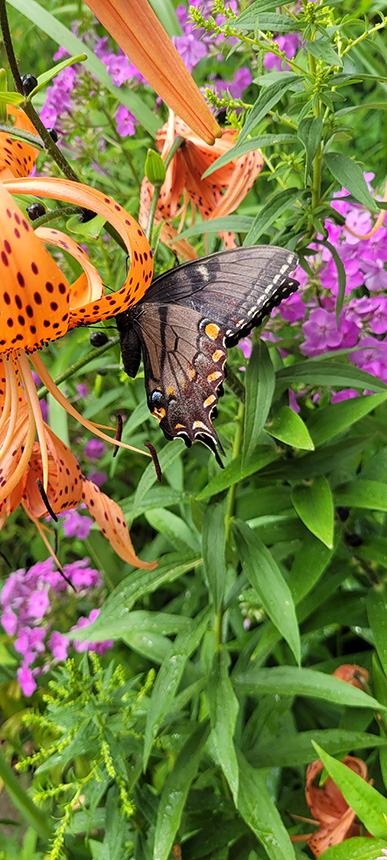
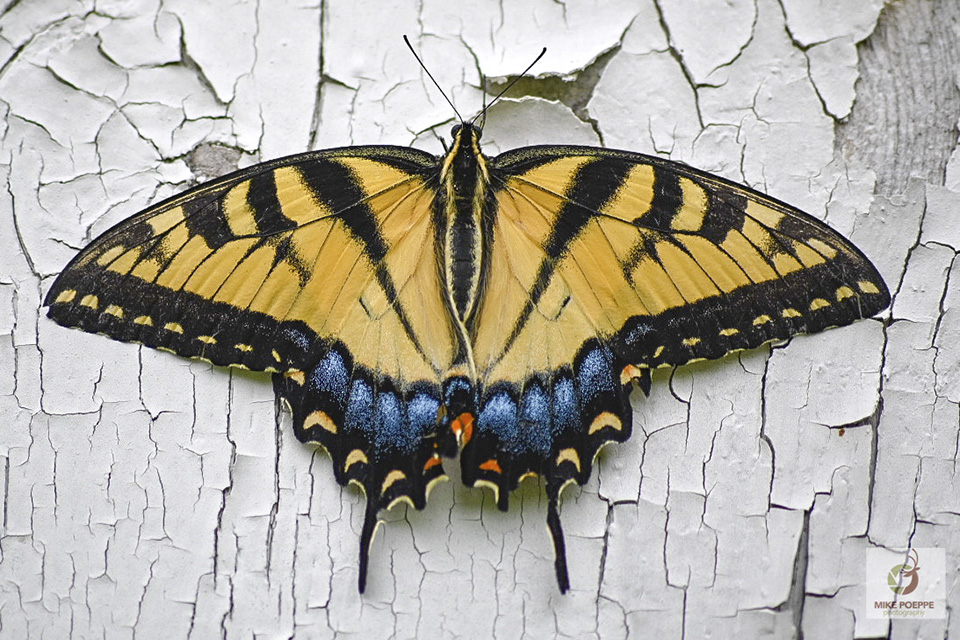
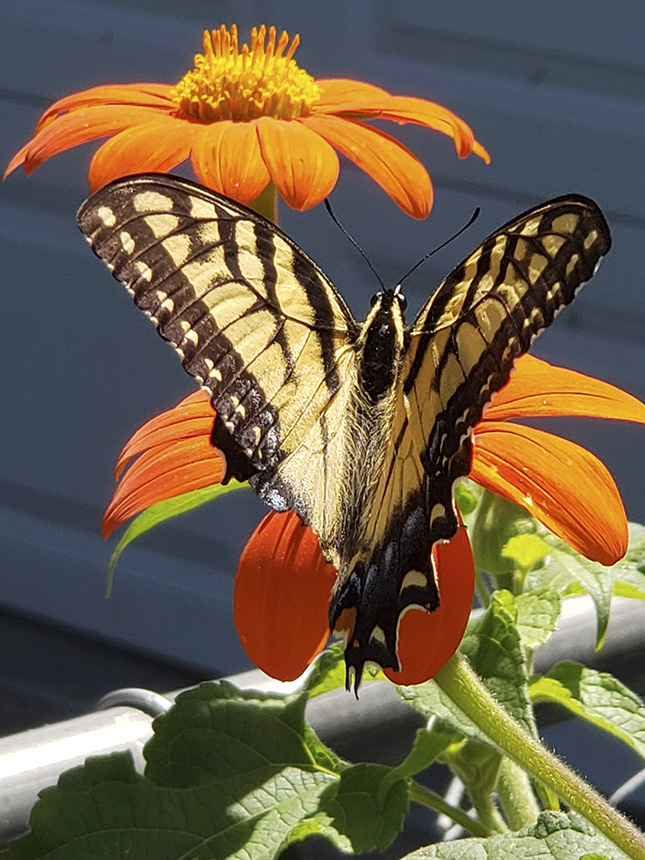
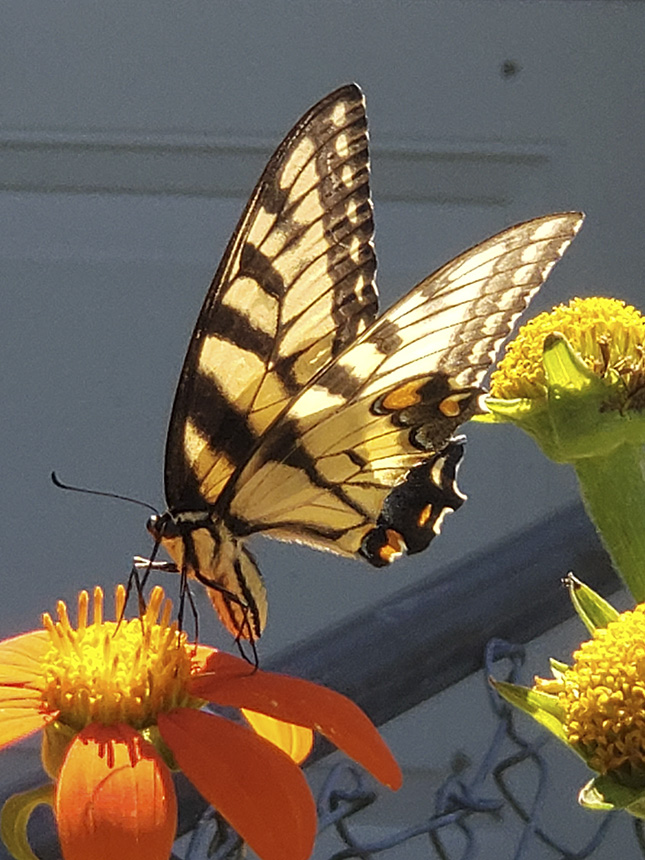
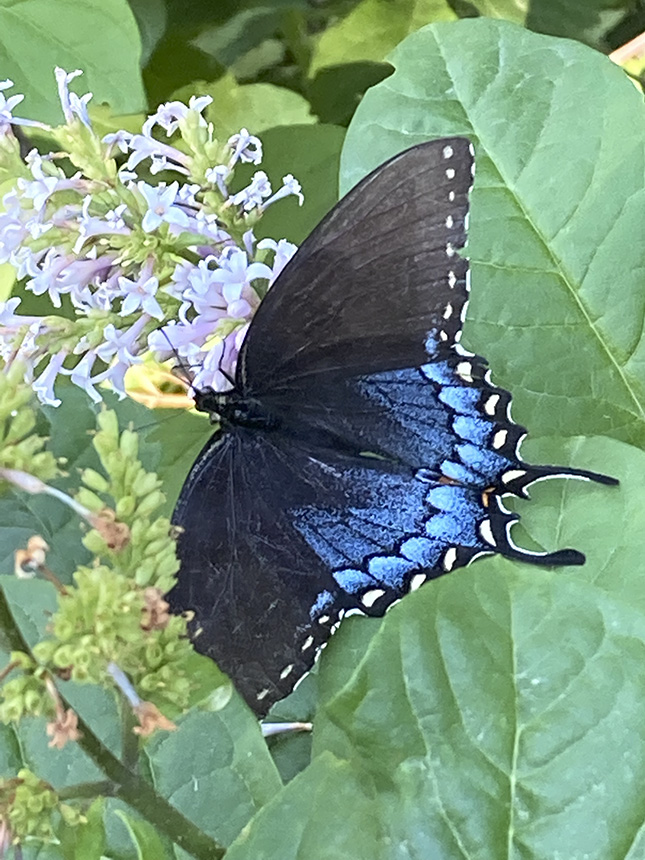
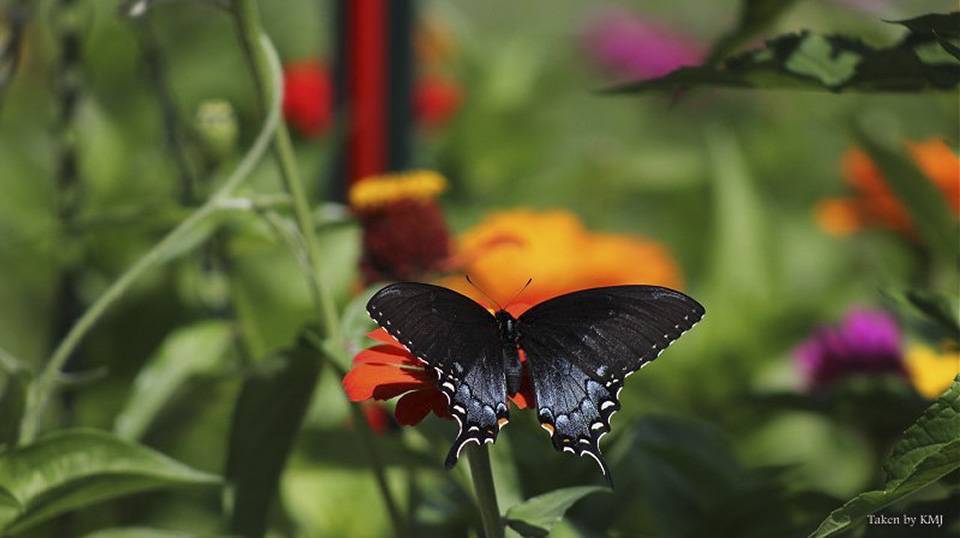
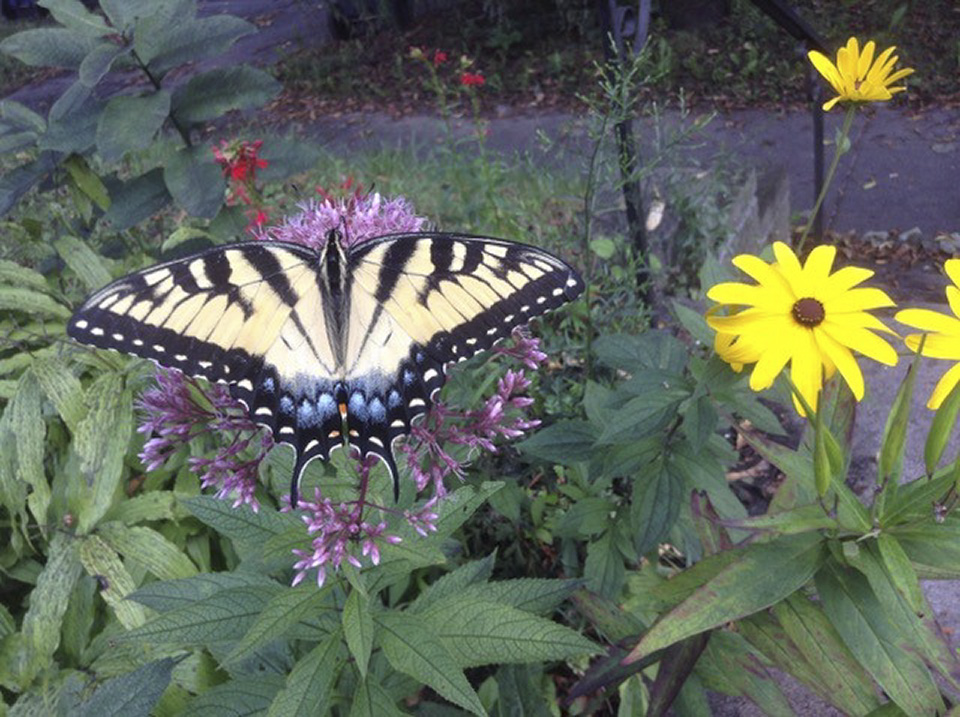
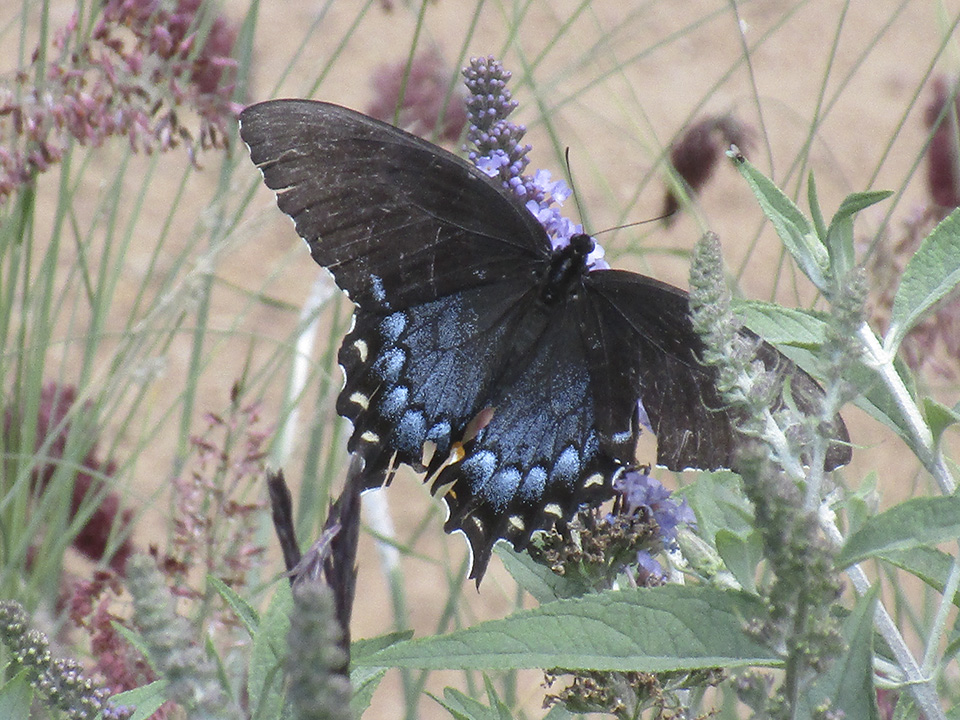
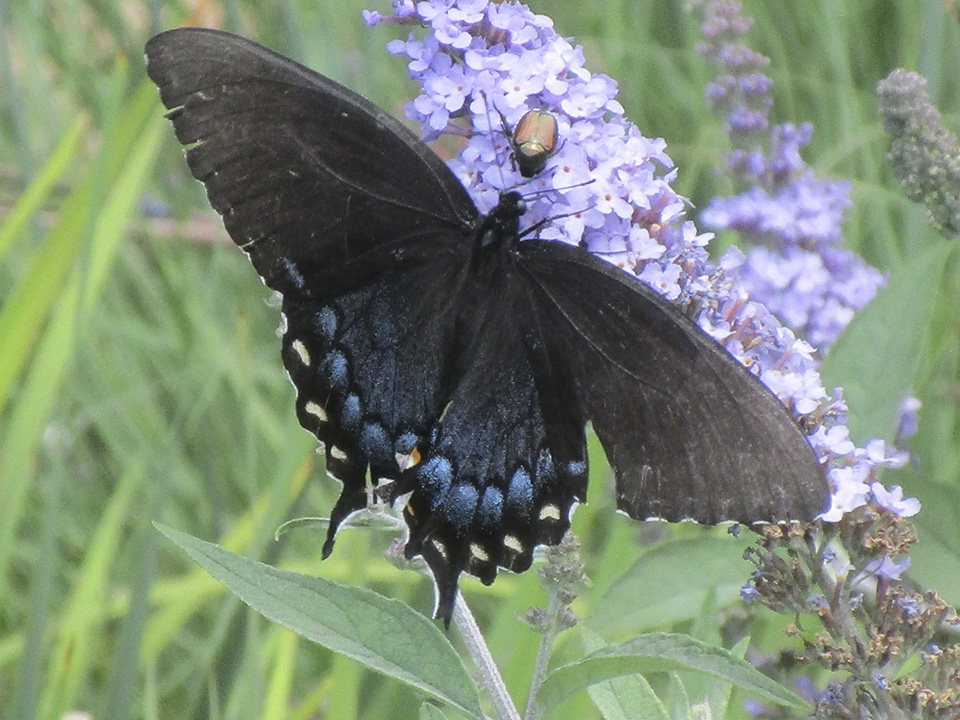
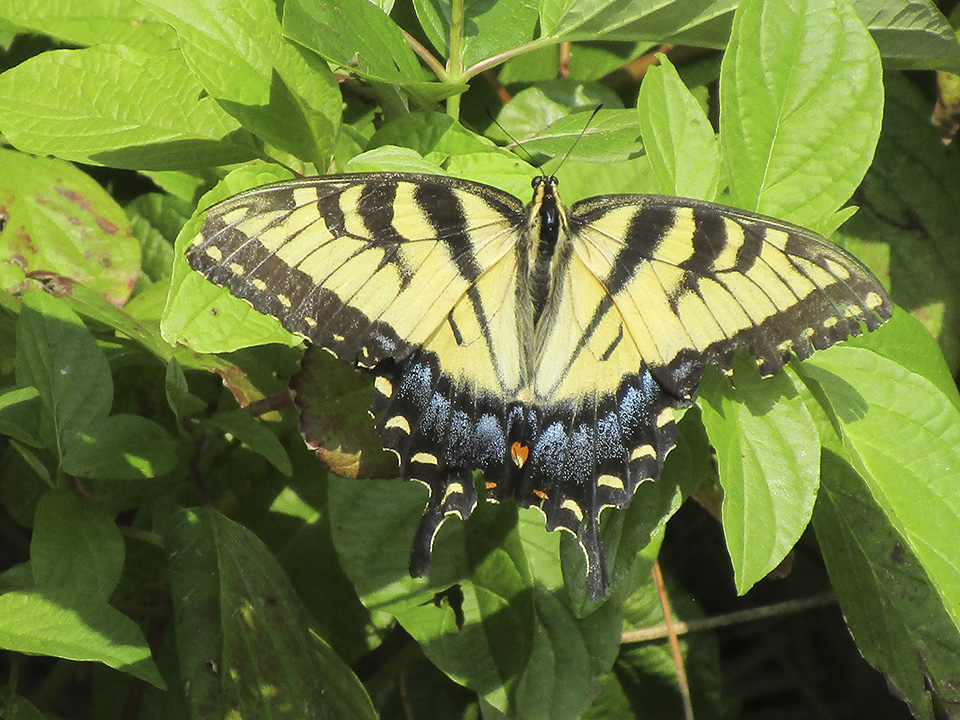
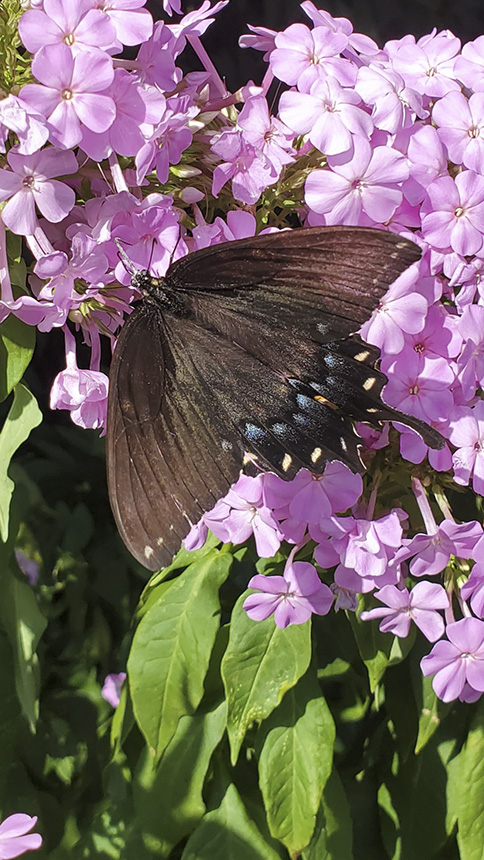
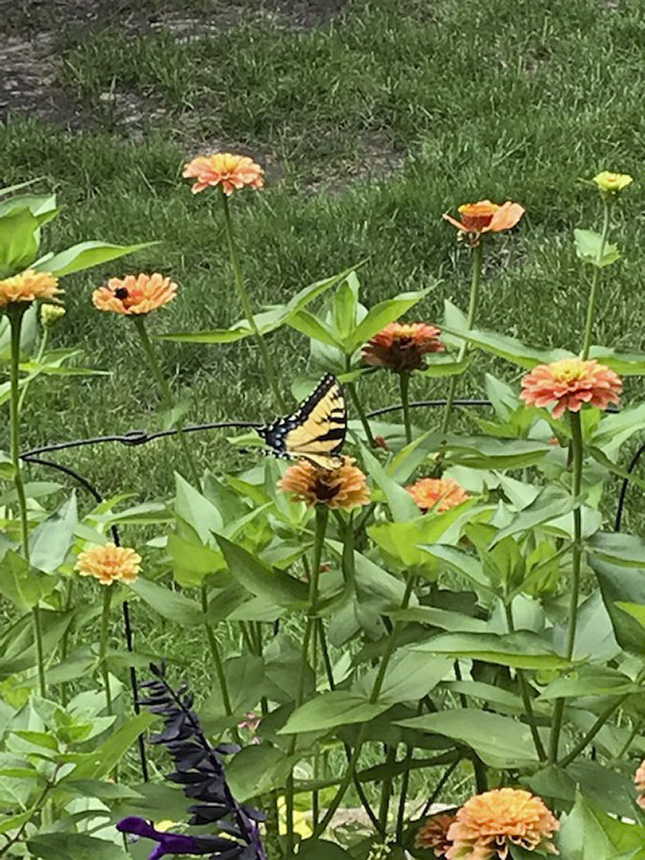
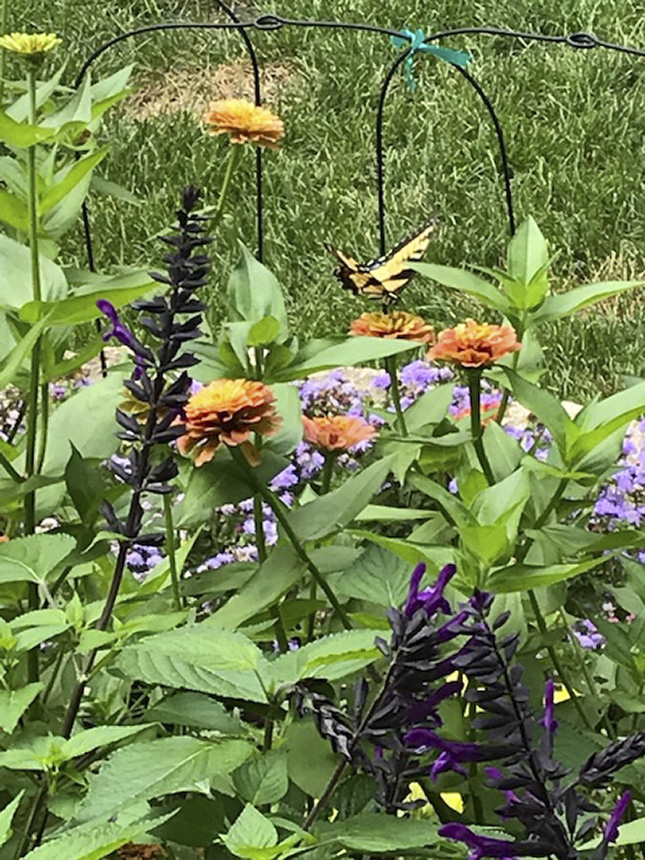
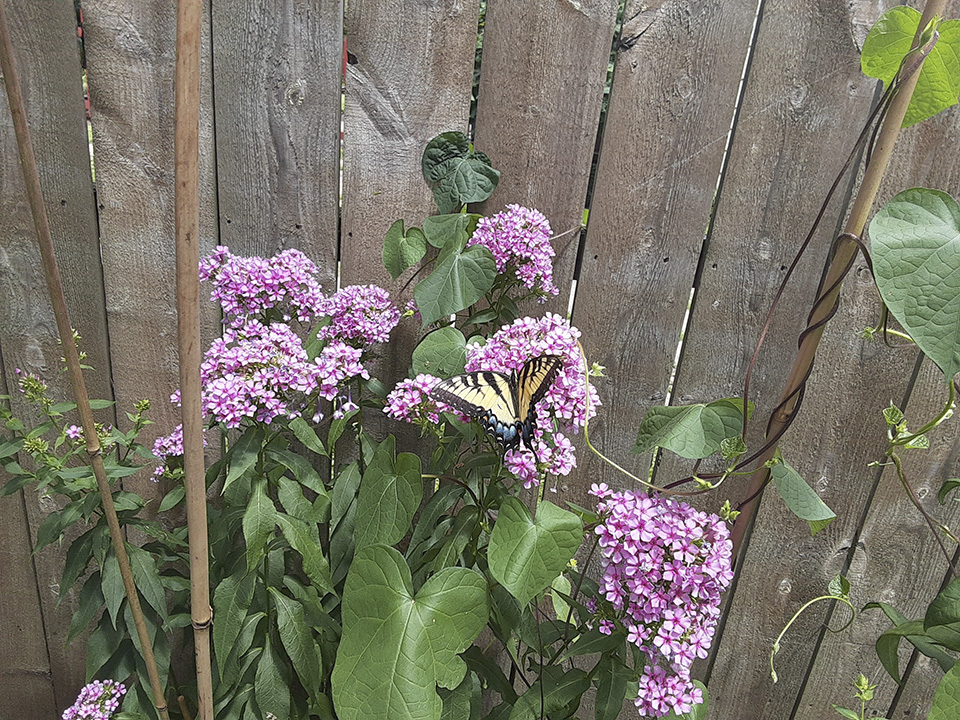
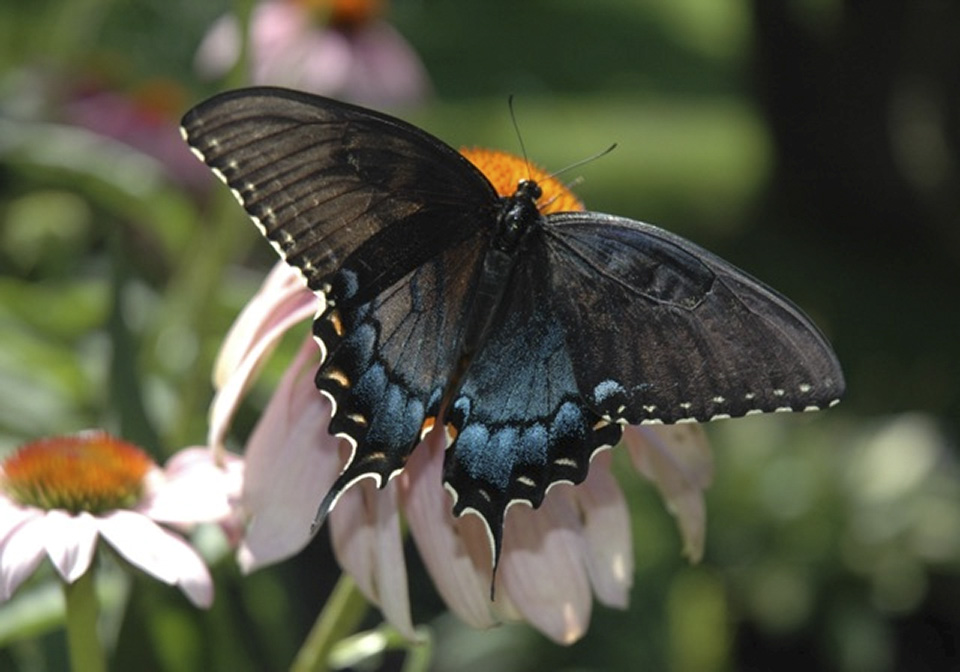
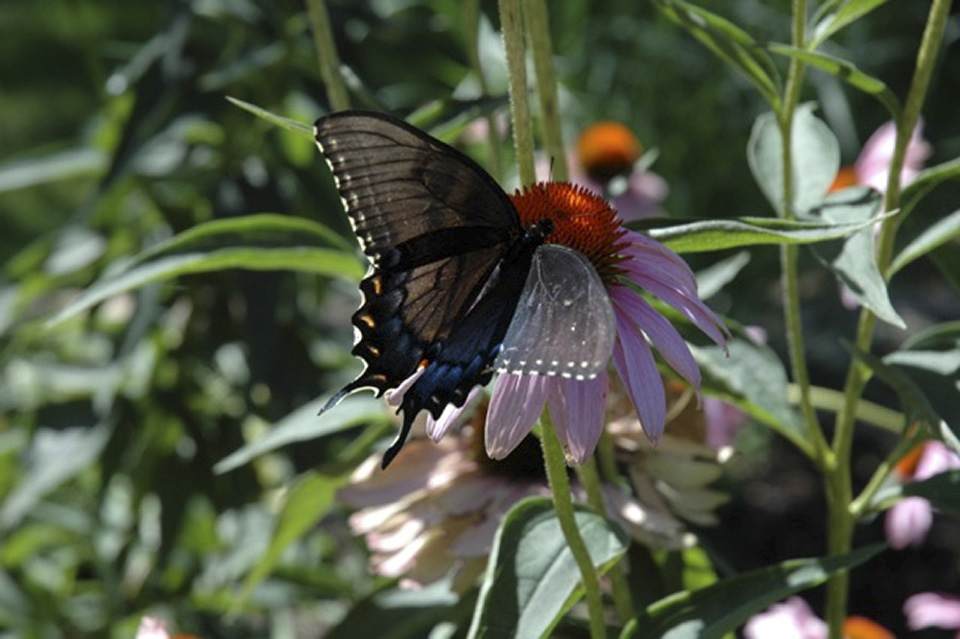
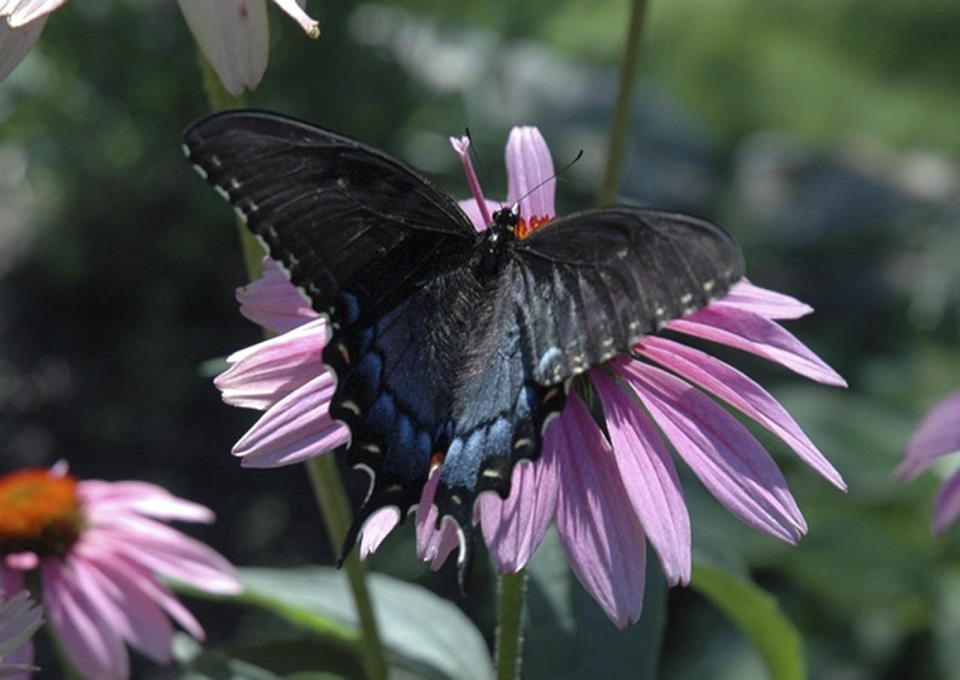
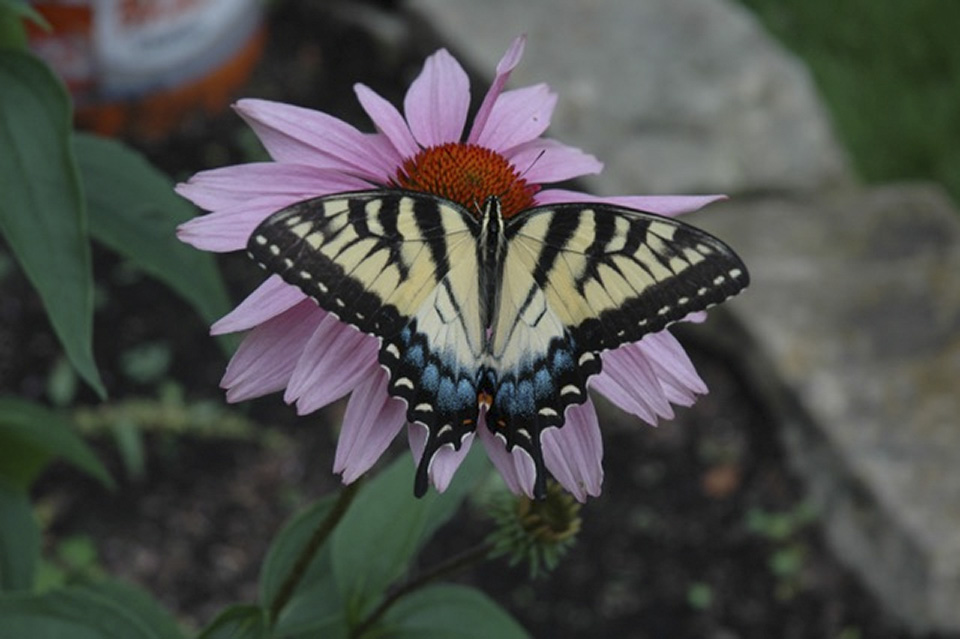
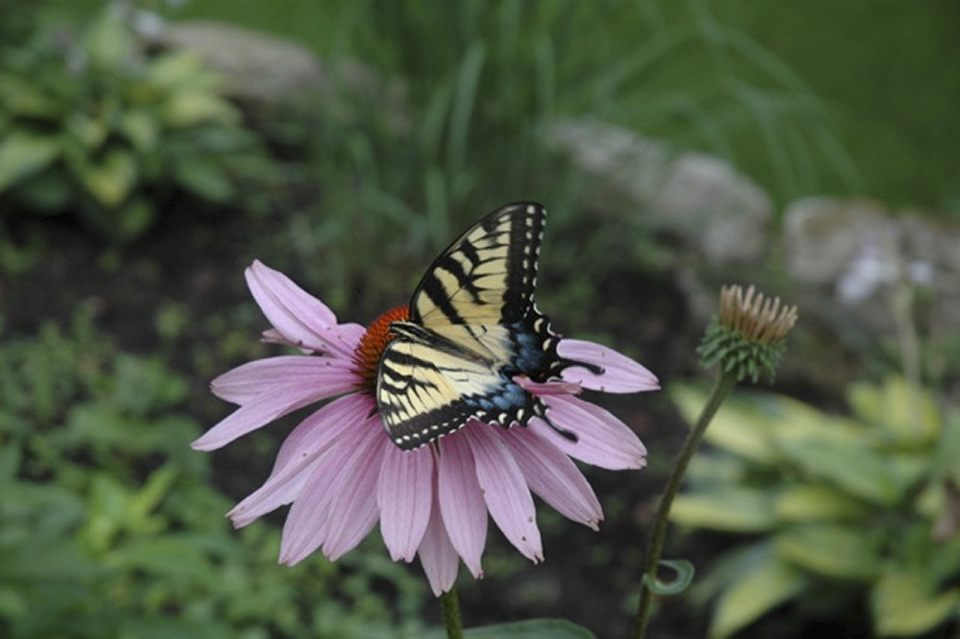
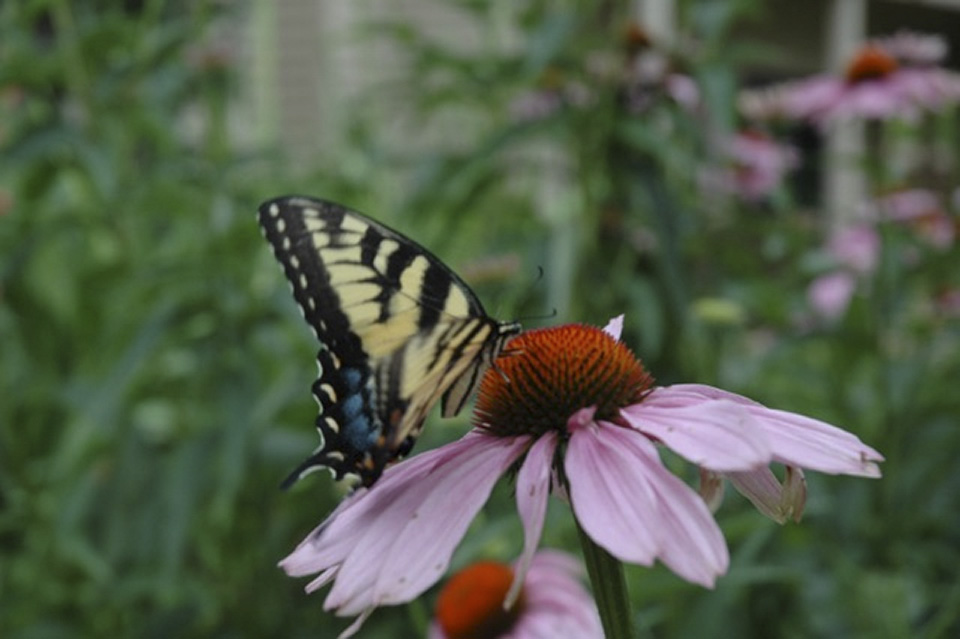
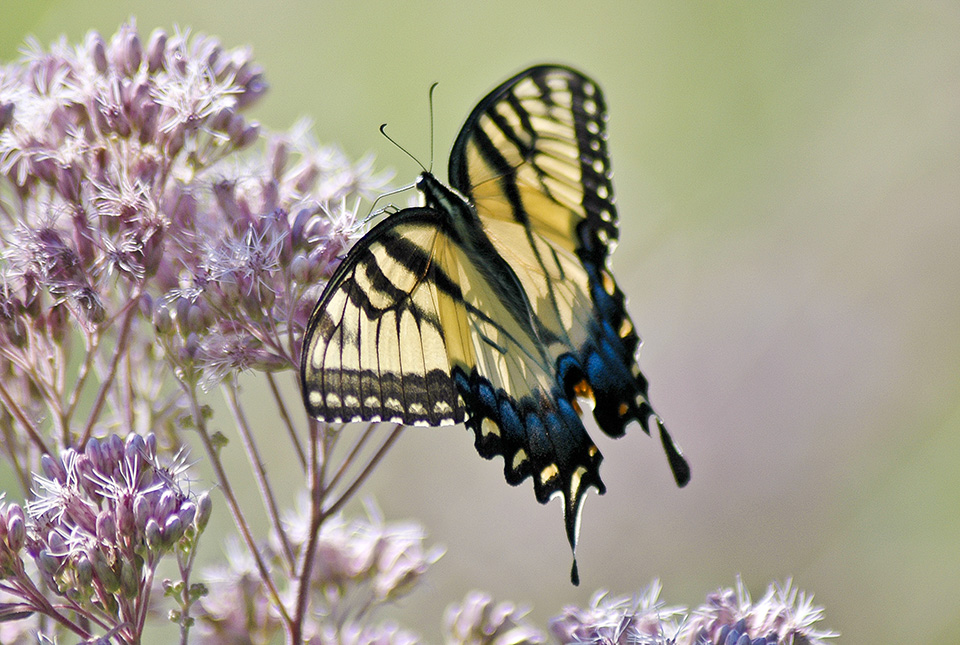
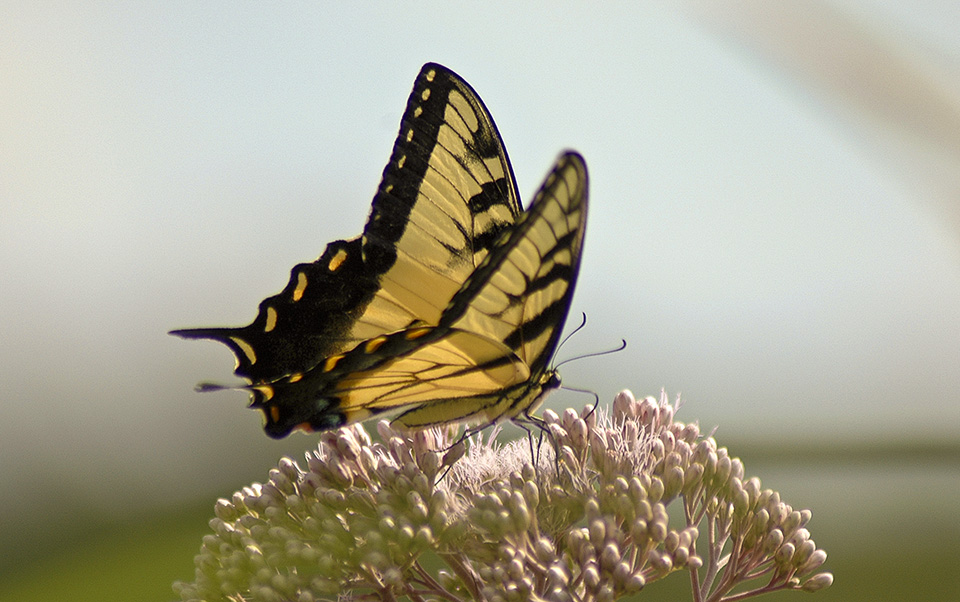
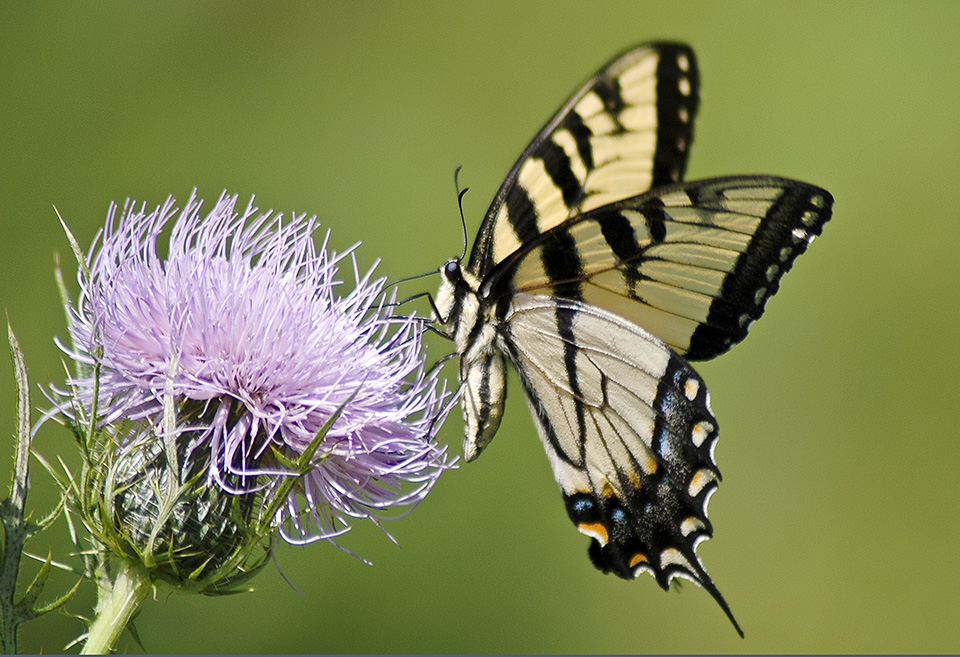
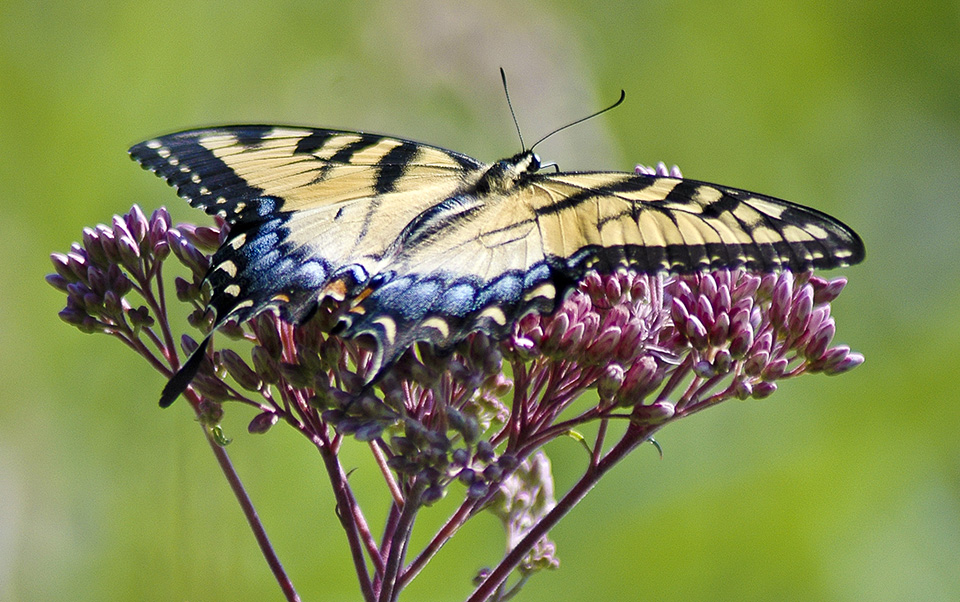
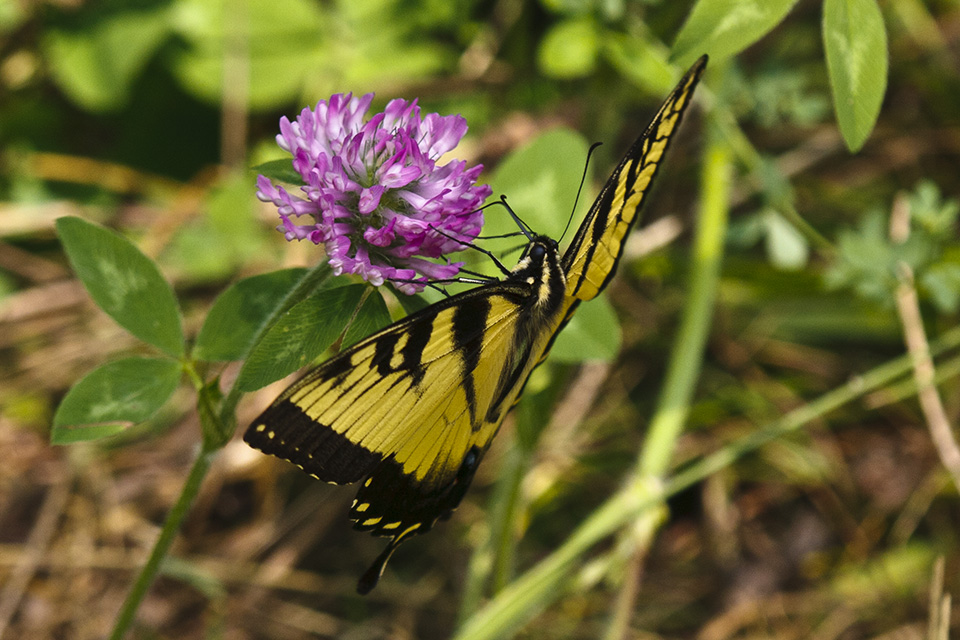
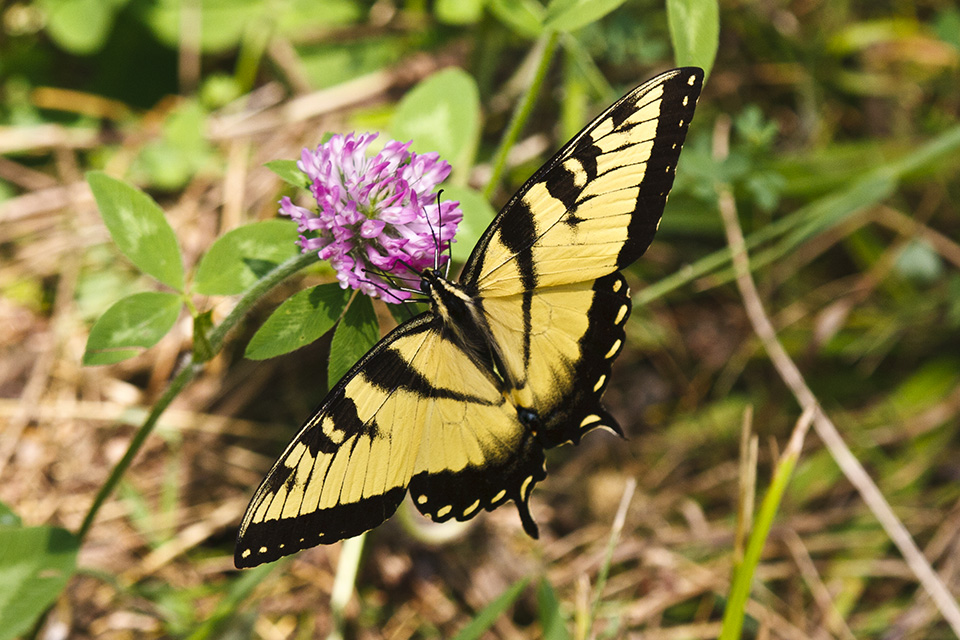
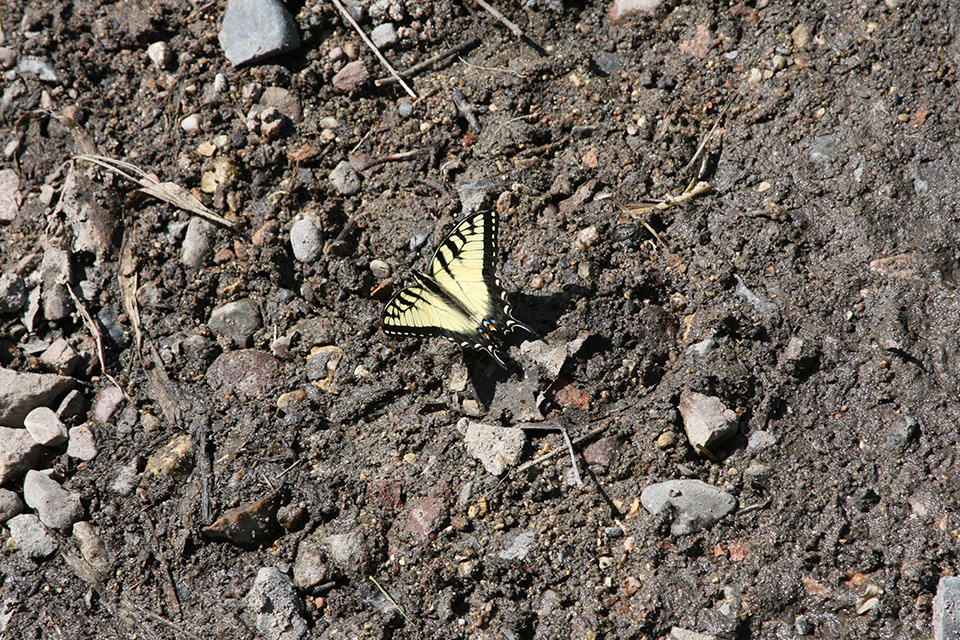
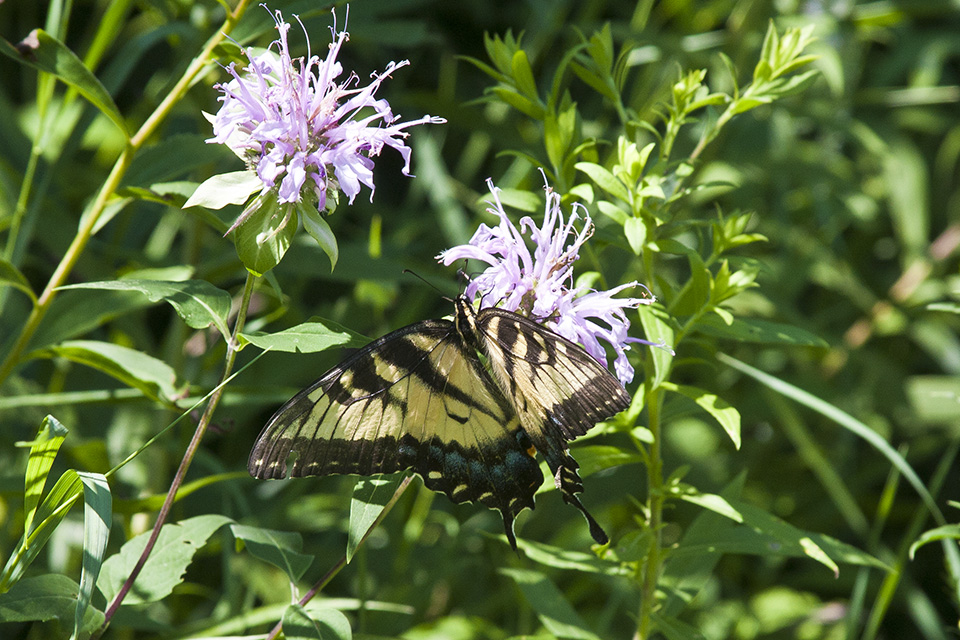
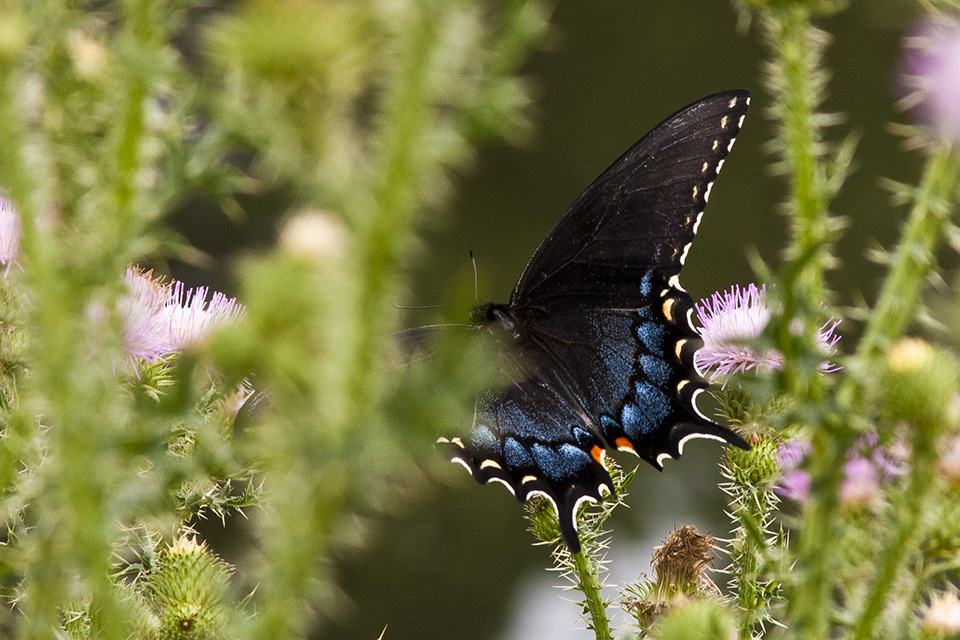
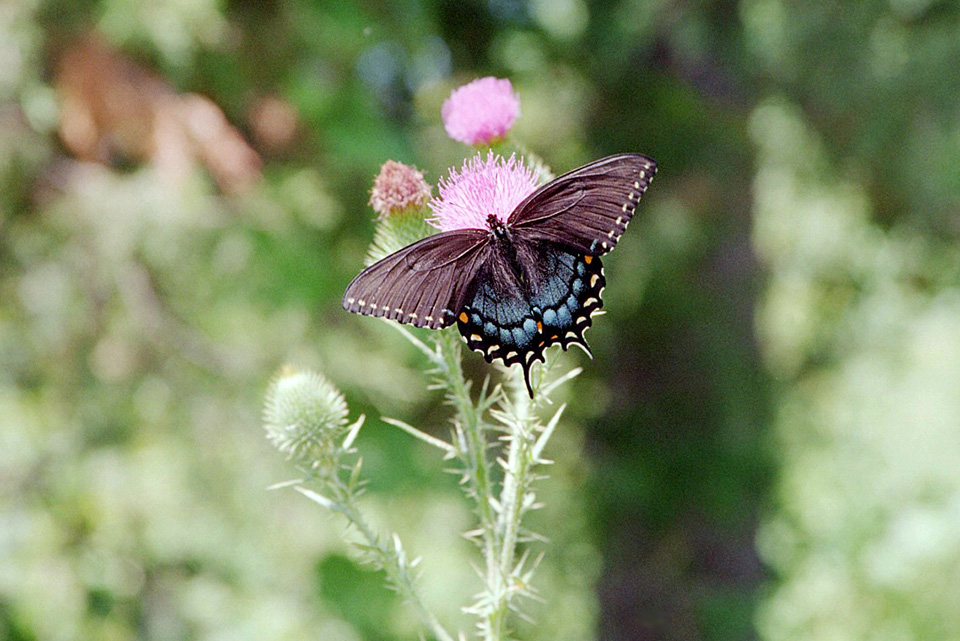
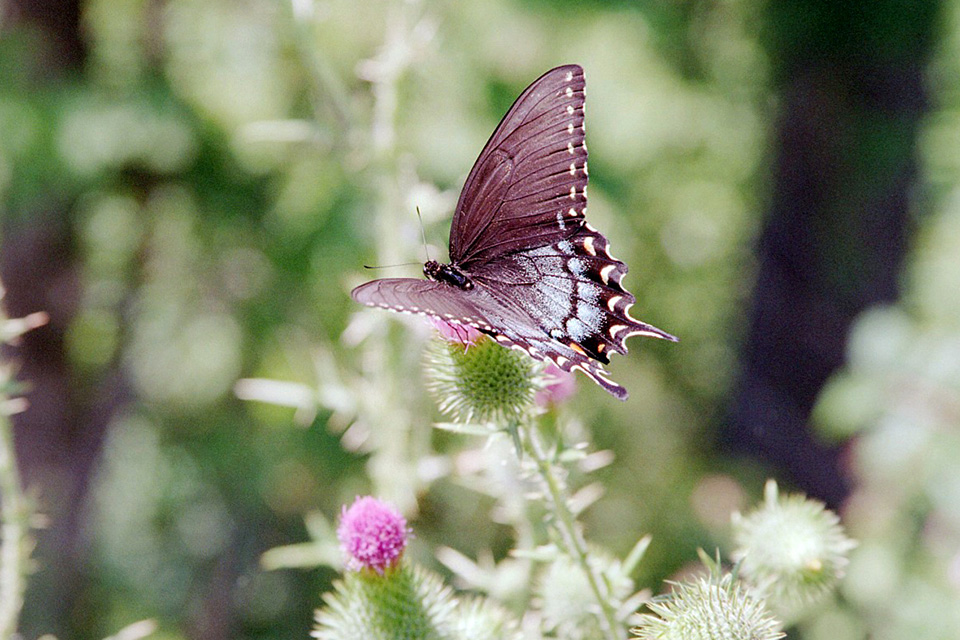
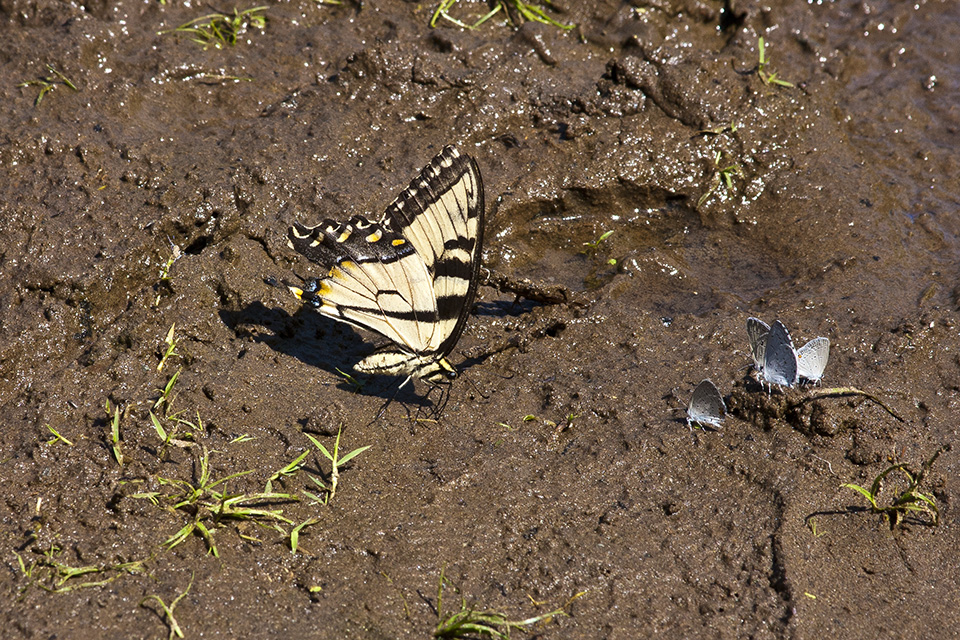
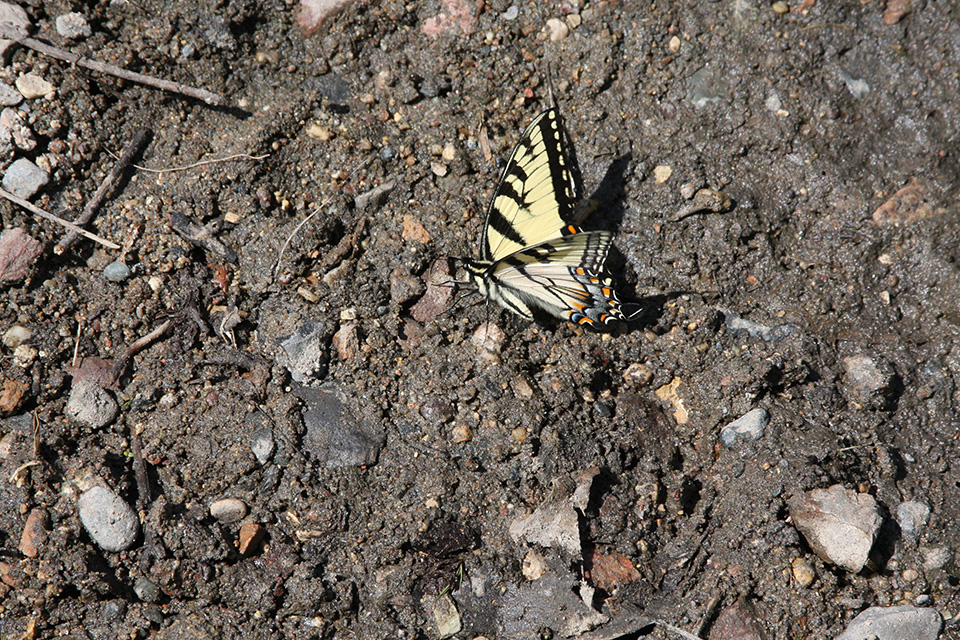
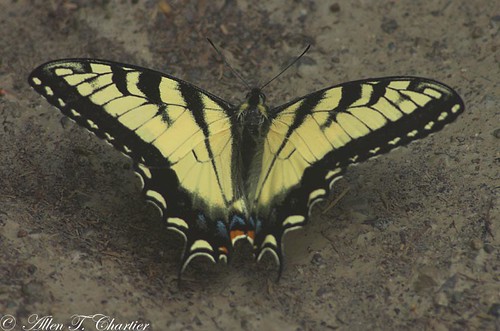
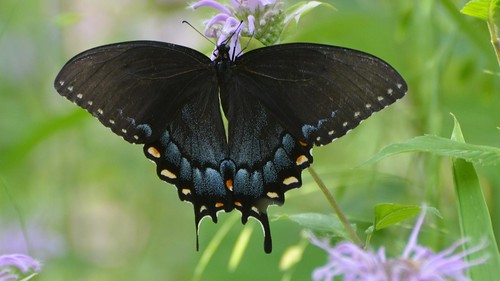
Eastern tiger swallowtail is a large, familiar, swallowtail butterfly. It has a wingspan of 3½″ to 5½″. The upperside of the forewing is yellow with four black “tiger” stripes and a wide black border with small yellow spots. The upperside hindwing is yellow with one black stripe that appears as a continuation of the innermost forewing stripe and a thin black border along the inner margin, next to the body. A wide black border on the outer margin is broken by a marginal band of 5 yellow, crescent-shaped spots and a submarginal band of 2 to 5 iridescent blue, crescent-shaped spots. The amount of blue in the submarginal band is variable. There is a bright orange spot on the inner margin at the rear of the hindwing, and a smaller bright orange spot at the beginning and end of the marginal band of yellow spots. The yellow band, just inside the wide black border of both wings, is continuous, not broken up by conspicuous black veins. The hindwings have “tails”. The underside of the forewing is paler yellow with black stripes. There is a wide black border with a marginal band of disconnected yellow spots. The underside of the hindwing is yellow with a central black stripe. There is a wide black border with an marginal row of yellow-and-orange spots and an submarginal row of blue spots. Females have two forms. The yellow form female is similar to the male but with much more blue scaling in the black border. The hindwings have more blue scaling. The black form female Eastern Tiger Swallowtail is often misidentified as a Spicebush Swallowtail. It has black forewings and blue-tinged black hindwings. The tiger striping is sometimes faintly visible at some angles. There is a marginal row of small yellowish spots on the forewing and a marginal row of large yellowish spots on the hindwing. On some individuals the spots are white. On the hindwing there is a submarginal row of up to five very large blue spots, and a blue cloud in the postmedial area. The blue spots are separated from the cloud by a distinct scalloped black line. The black form females are common in the south, less common in Minnesota. The caterpillar is green and smooth, with no spines or hairs. There are small eye-like spots on the third thoracic segment with a black and white pupil. |
Size |
3½″ to 5½″ wingspan |
Similar Species |
Black swallowtail (Papilio polyxenes) has 2 rows of yellow spots across both wings and a yellow subapical spot on the forewing. Canadian Tiger Swallowtail (Papilio canadensis) is smaller and less yellow above. The black border along the inner margin of the wing is much wider. The marginal band of yellow spots on the underside of the forewing is continuous, not broken into spots. It is found in the northern half of the state. |
Habitat |
Deciduous woods, woodland edges, river valleys, swamps, parks, suburbs. |
Ecology |
Season |
Two broods: late April to early July, and July through September. |
Behavior |
|
Life Cycle |
Males emerge in the spring shortly before the females. The congregate, often in large groups, at mud puddles where they replenish moisture and minerals lost during metamorphosis. Individuals overwinter as a chrysalis. |
Larva Hosts |
Black cherry, chokecherry, American basswood), birch, ash, poplar, plains cottonwood, mountain ash, and willow. |
Adult Food |
Flower nectar of black cherry, blazing star, ironweed, joe-pye weed, lilac, milkweed, orange hawkweed, phlox, red clover, thistle, and wild bergamot. |
Distribution |
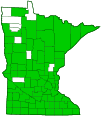
||
|
Sources 7, 21, 24, 27, 29, 30, 71, 75, 82, 83. Biodiversity occurrence data published by: Minnesota Biodiversity Atlas (accessed through the Minnesota Biodiversity Atlas Portal, bellatlas.umn.edu, 6/22/2025). |
|
| 7/15/2025 | ||
Occurrence |
||
Common |
||
Taxonomy |
|
Order |
|
Superfamily |
Papilionoidea (Butterflies) |
Family |
Papilionidae (swallowtails and parnassians) |
Subfamily |
Papilioninae (swallowtails) |
Tribe |
Papilionini (fluted swallowtails) |
Genus |
Papilio (common swallowtails) |
Subgenus |
Pterourus (tiger swallowtails and allies) |
Some sources have raised the subgenus Pterourus to full species rank. For those sources, which includes Moth Photographers Group, this and other tiger swallowtails and allies are in the genus Pterourus. |
|
Subordinate Taxa |
|
Eastern Tiger Swallowtail (Papilio glaucus glaucus) Florida tiger swallowtail (Papilio glaucus maynardi) |
|
Synonyms |
|
Papilio alcidamus Papilio alexiares Papilio antilochus Papilio australis Papilio delunaris Papilio dietzi Papilio ehrmanni Papilio gerhardi Papilio imperfecta Papilio lauri Papilio maynardi Papilio niger Papilio nigra Papilio paupercula Papilio perfulva Papilio perfulva Papilio turnus Papilio wheeleri Pterourus glaucus |
|
Common Names |
|
Eastern Tiger Swallowtail |
|
Glossary
Chrysalis
The pupa (third) stage of a butterfly or moth during which the caterpillar metamorphoses into an adult. In moths, the pupa is enclosed in a silk cocoon. In butterflies, the pupa is naked but protected by a hardened outer shell.
Visitor Photos |
||
Share your photo of this insect. |
||
This button not working for you? |
||
Gregory Gilman |
 |
The Brown Swallowtail |
Annette Huot |
 |
Mark Teske |
 |
Not sure if anyone is interested but this beautiful creature was at my door lol. |
Dan W. Andree |
||
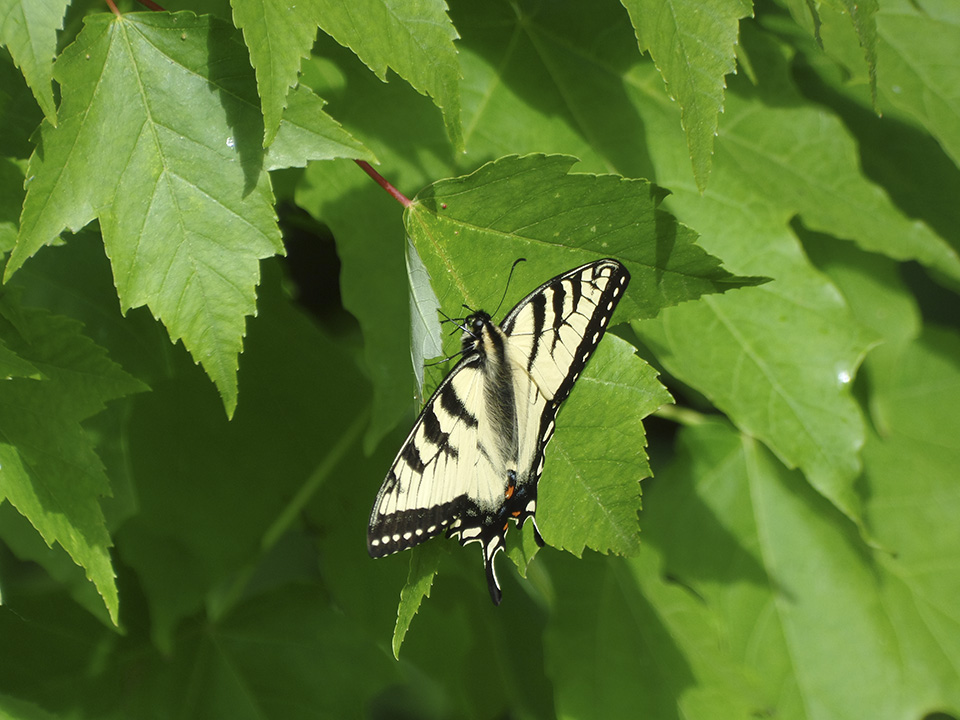
Tiger Swallowtail resting on my Birch tree... I noticed this butterfly flying around yesterday and when I went outside noticed it landed on my a leaf of my birch tree. I filmed and photographed it and going to the images noticed a small bee or wasp like insect flew in and out of the scene. The swallowtail didn't cooperate far as spreading its wings open but did look really nice just resting. It flew off but was a memorable experience. |
|
|

Nancy Lundquist |
|
Mike Poeppe |
 |
Trudy |
||
 |
 |
|
Paul Diedrich |
 |
Bob G |
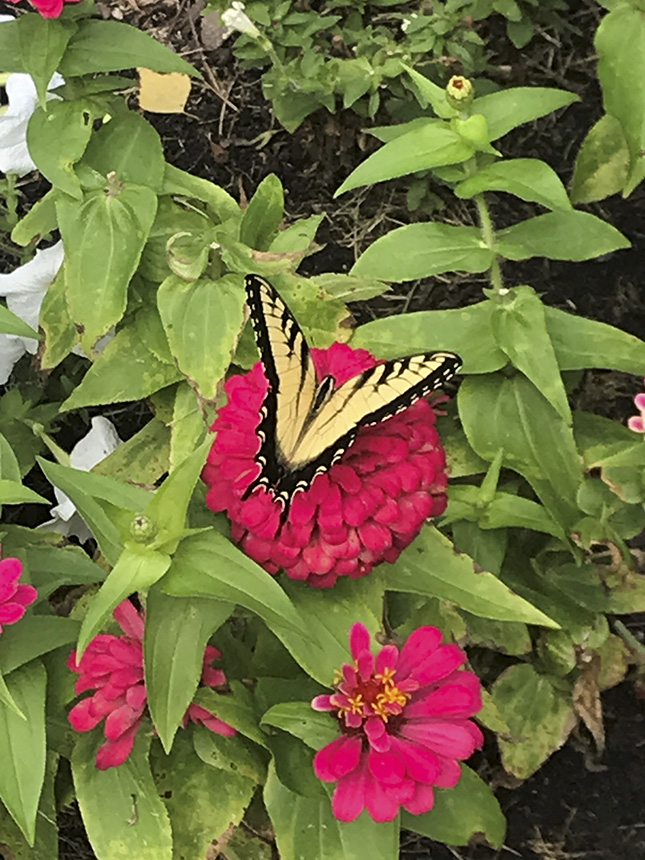 |
Eastern Tiger Swallowtail on Magenta Zinnia in White Bear Lake, MN (8-10-2021) |
Bobbi Johnson |
||
 |
 |
|
Joe Warhol |
 |
Amy VanLoon |
 |
Luciearl |
||
 |
 |
|
Theresa Kohn |
||
 |
 |
|
 |
 |
|
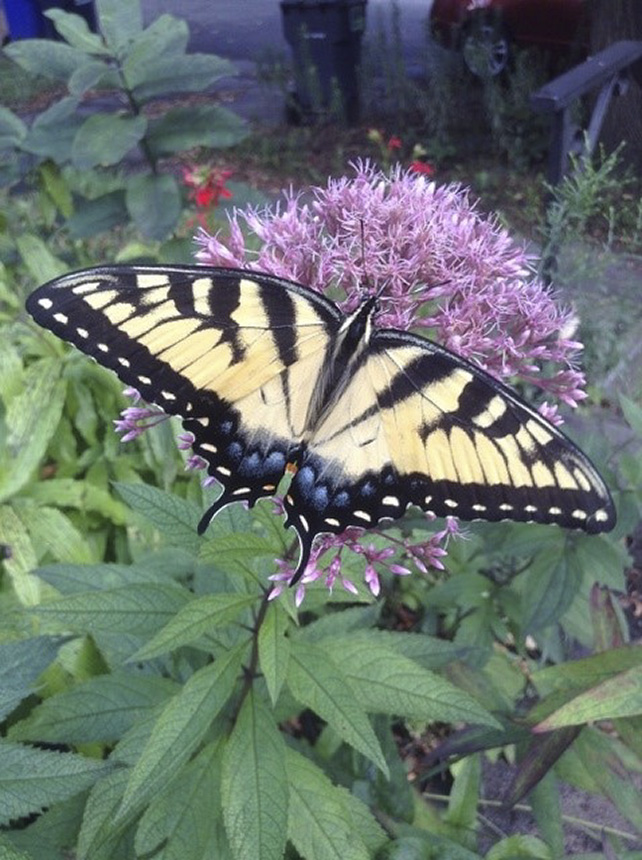
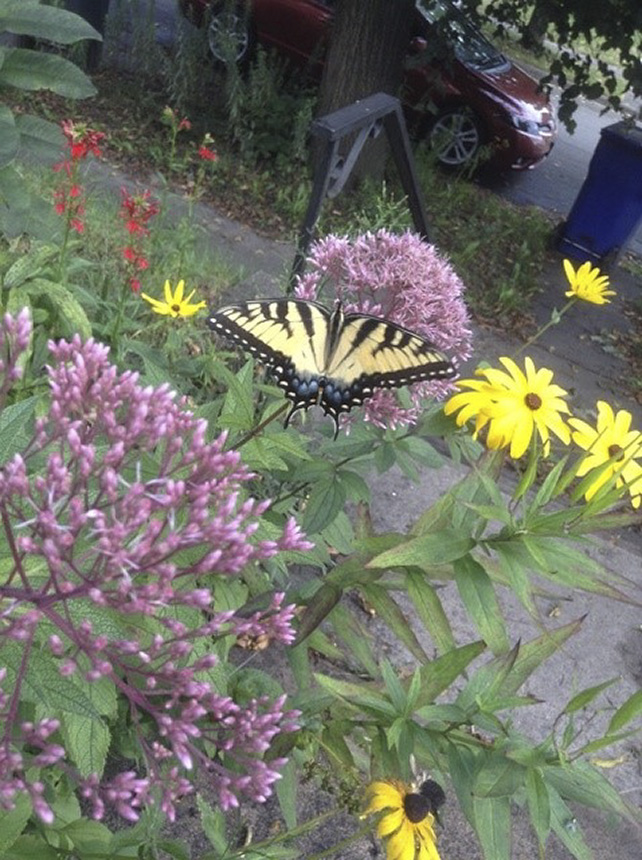
| My front yard garden guest |
|
|
Margot Avey |
||
 |
 |
|
 |
||
Megan Bah |
 |
Spotted this butterfly enjoying my wave petunias on the balcony! |
E. A. Junger |
||
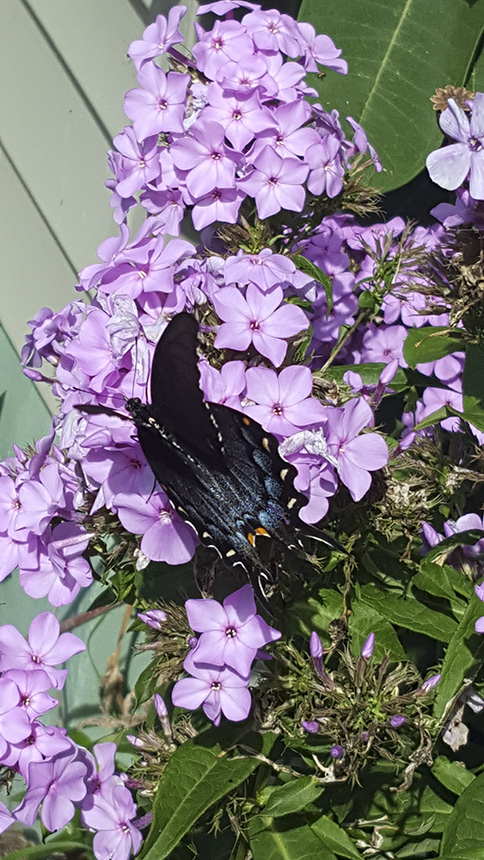 |
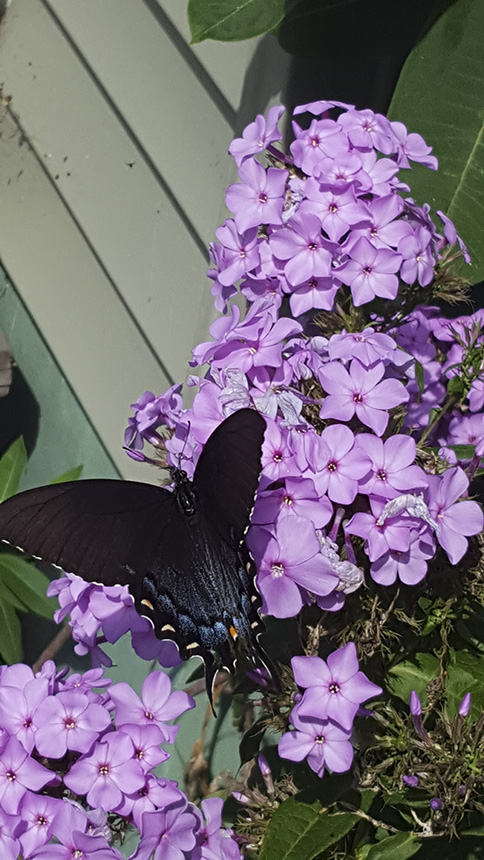 |
|
| I found this butterfly in my garden this morning. |
|
|
Melissa Dunbar |
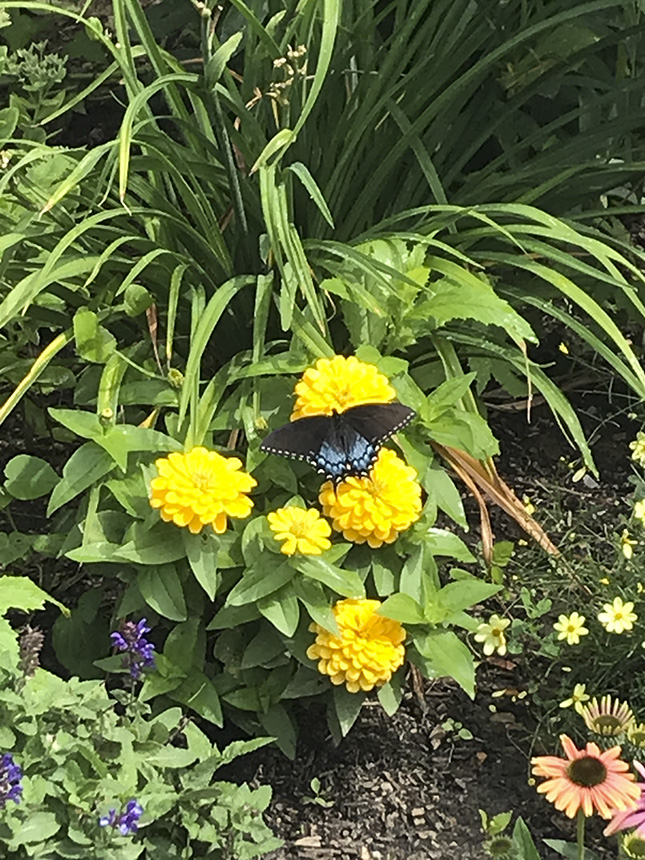 |
… landed on my yellow zinnia yesterday August 15 |
Julie and Chad Theisen |
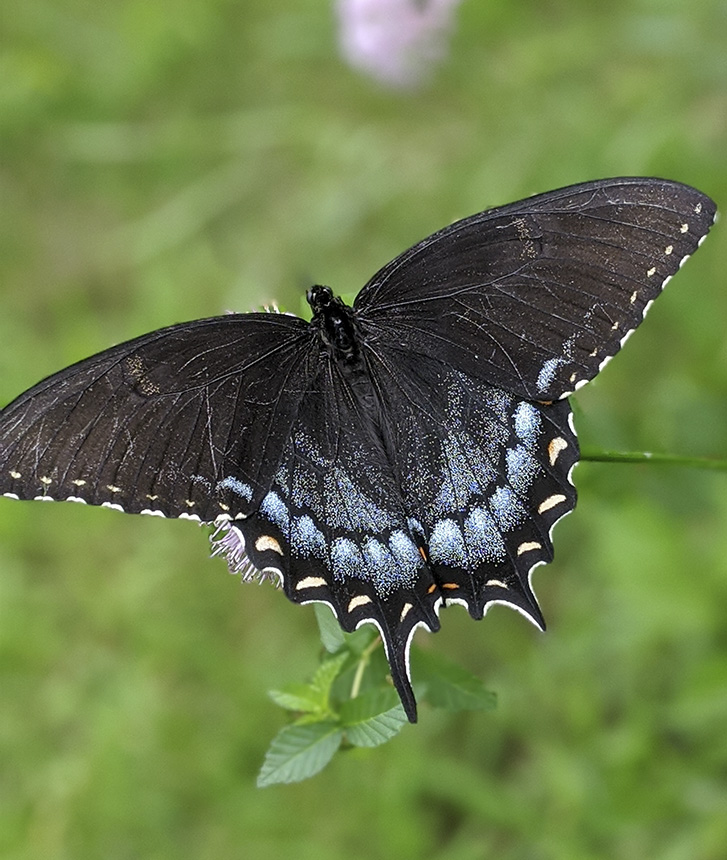 |
In our overgrown flower garden, hanging around green onion blooms |
John Moore |
 |
JAL |
||
 |
 |
|
| feeding on a canadian thistle |
|
|
Wendy Maslowski |
 |
Bradley |
||
 |
|
|
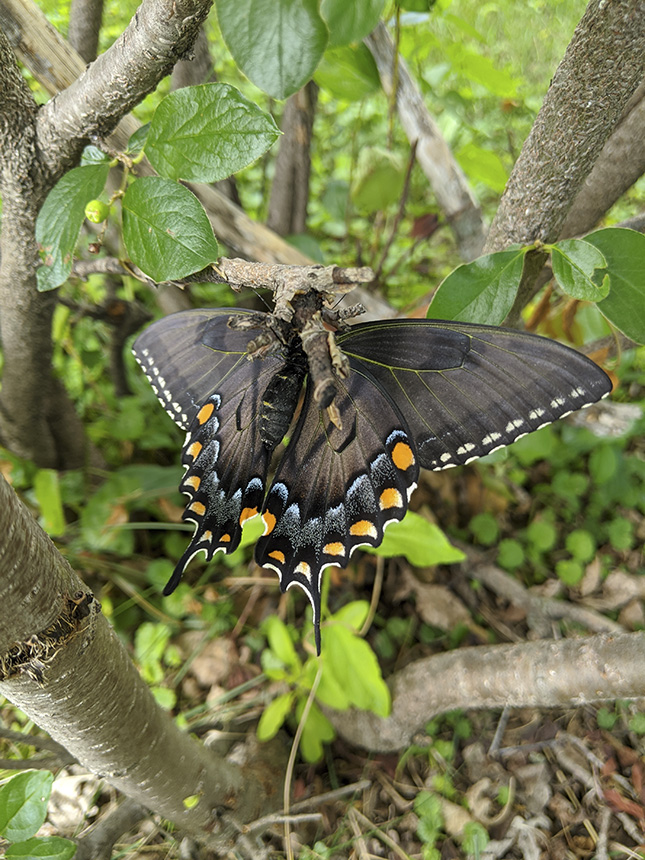
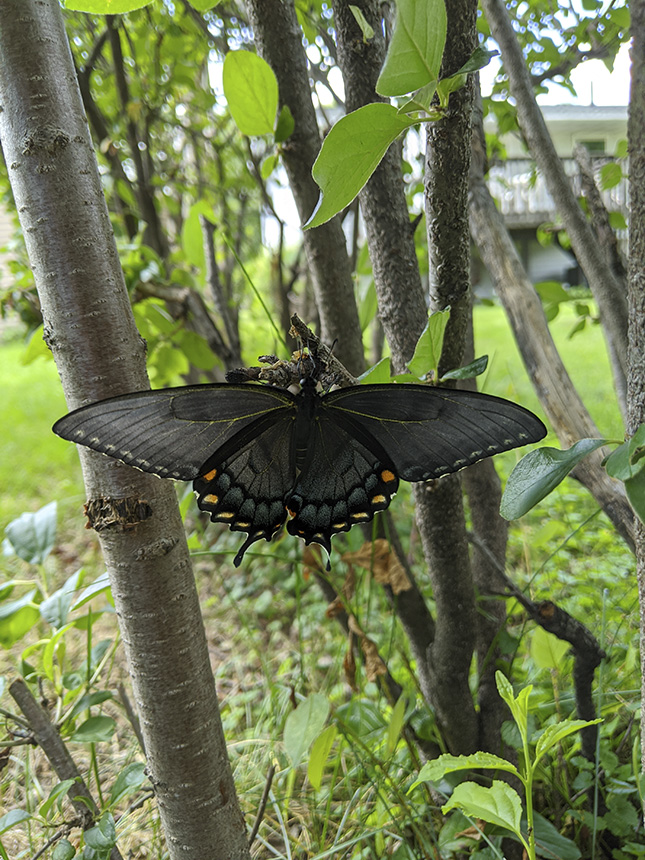
Found it hanging out on a low branch of a hedge bush in my back yard, right in the middle of town. |
||
Leigh49 |
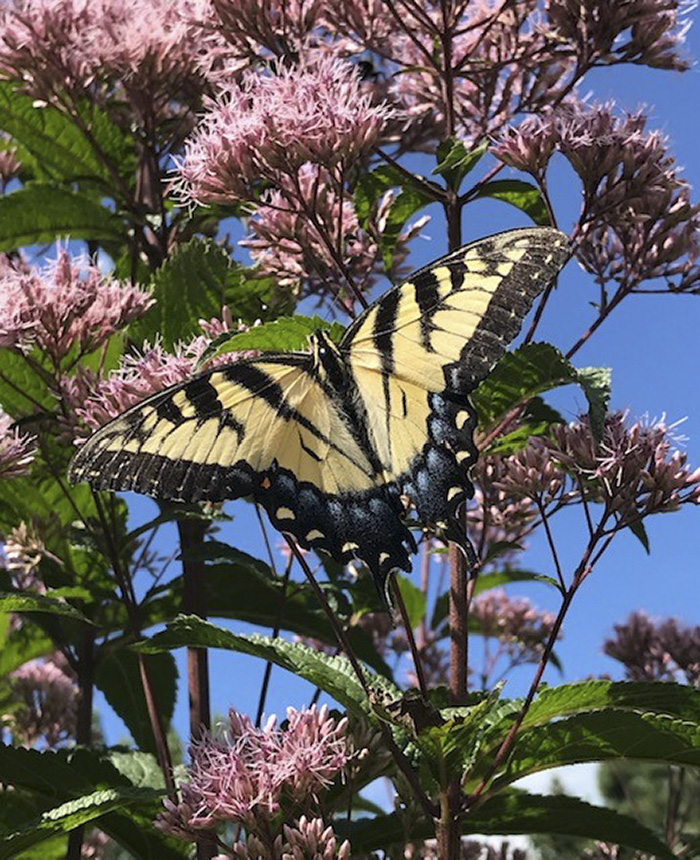 |
Here’s a gorgeous swallowtail butterfly! |
Bryan Hauschild |
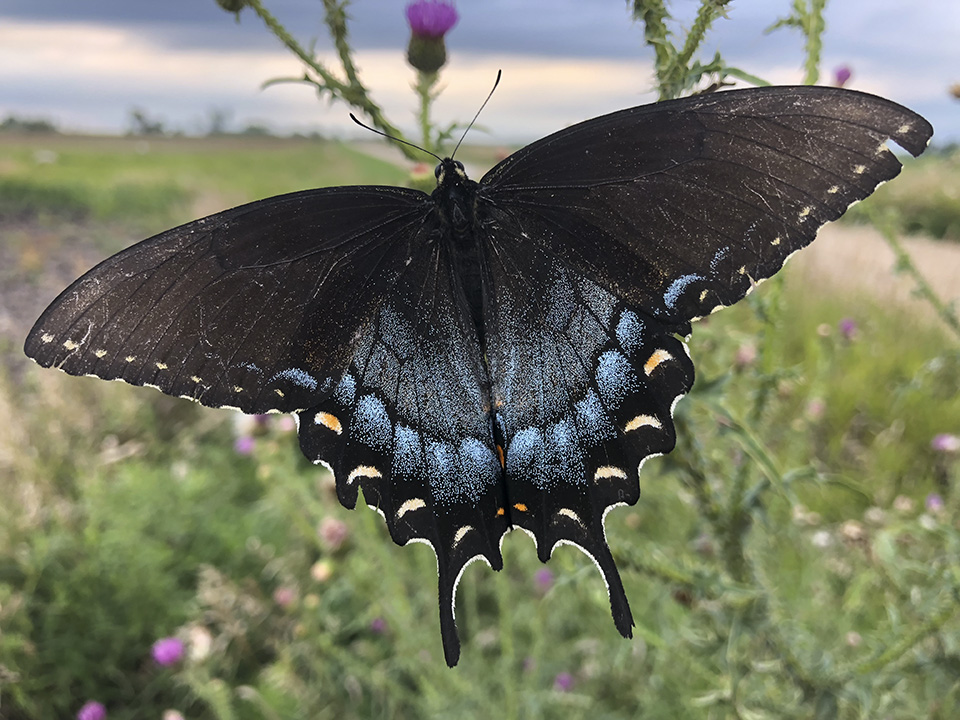 |
feeding on a canadian thistle |
Gardenworld Inc |
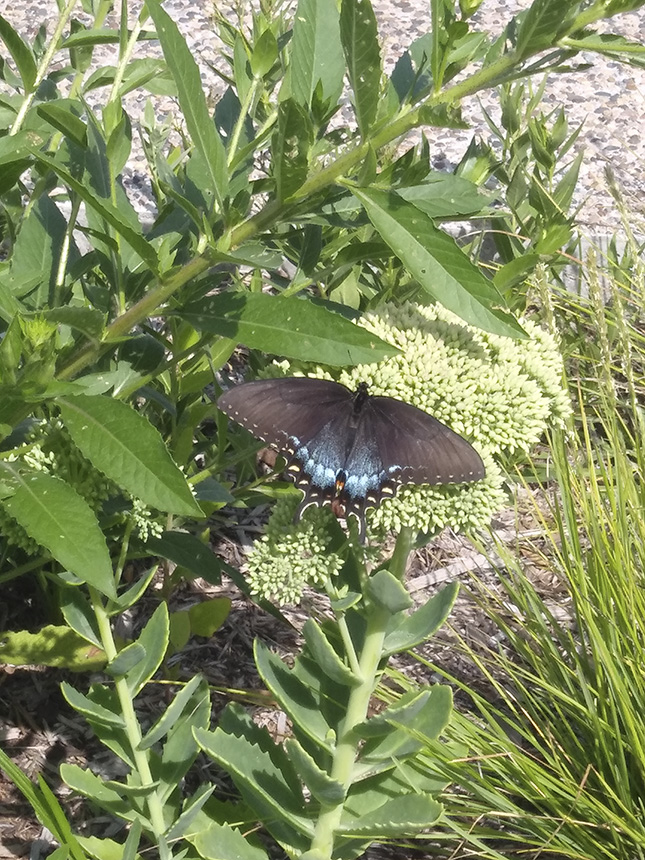 |
it was most interested in our Iiatris and allium but I photographed it on the sedum that wasn’t open yet. Its going on our Facebook page next week! Pretty cool to see! |
Norm & Peg Dibble |
||
 |
|
|
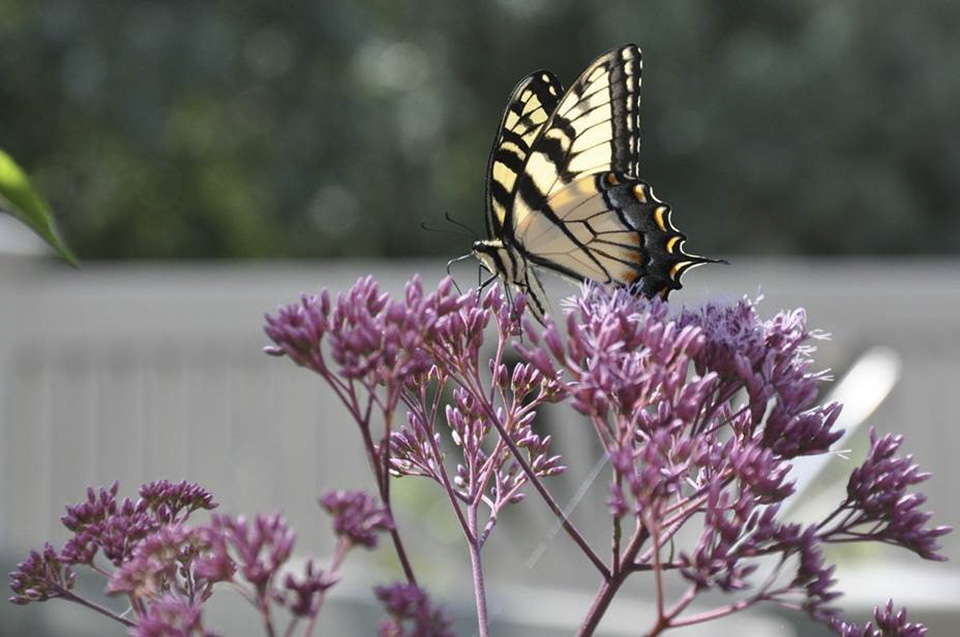
...a really nice shot of the Tiger Swallowtail enjoying our Joe Pye Weed that we have a lot of. The sun made his wings glow so nicely. |
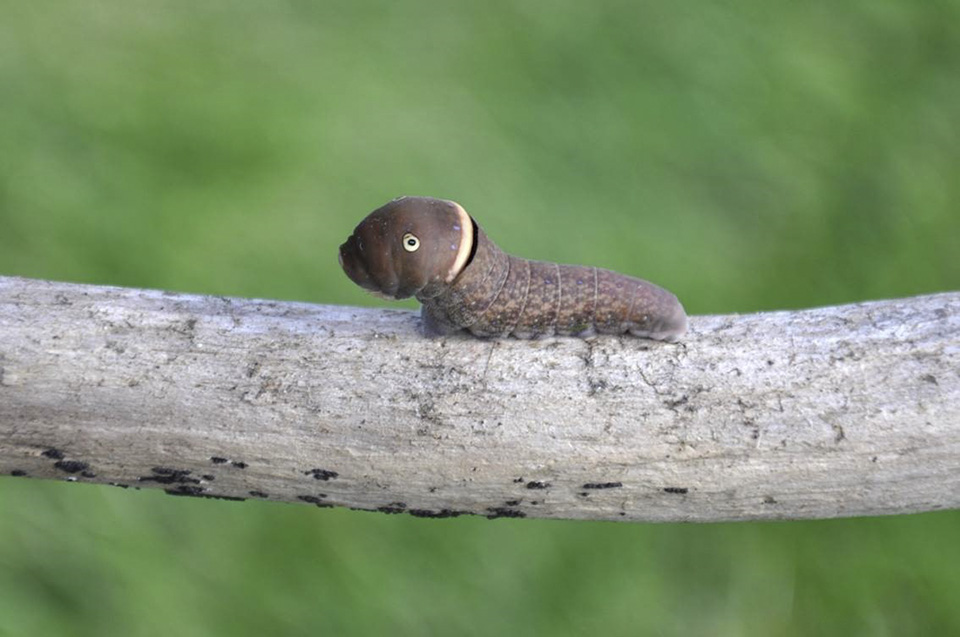
Spooky Eastern Tiger Swallowtail Caterpillar, September 2014. After throwing away garden trimmings in our recycling trailer, found it crawling on the tar driveway, picked him up on a stick and put it back in our garden. Never seen one before or since. So glad I found it. |
|
Gerald Raley |
||
 |
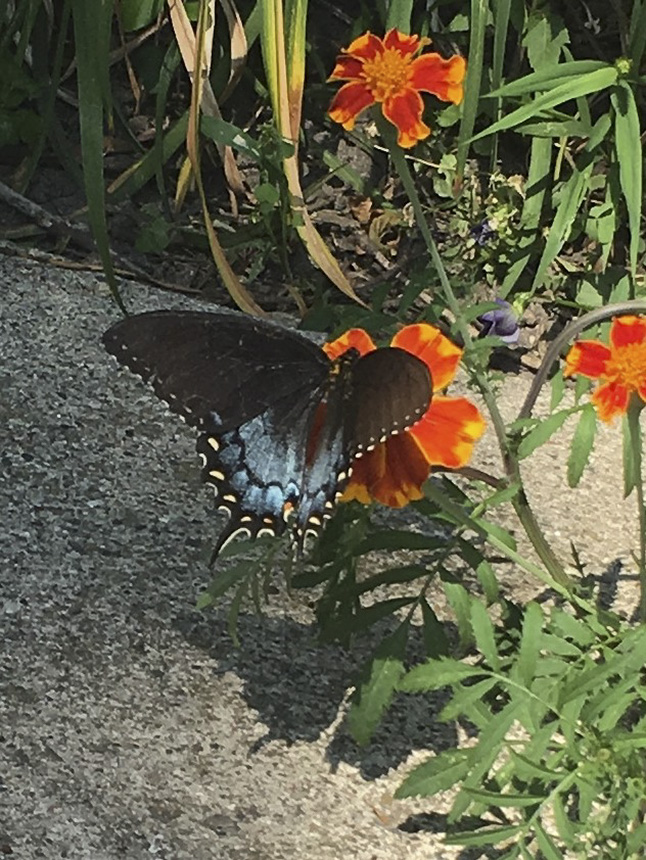 |
|
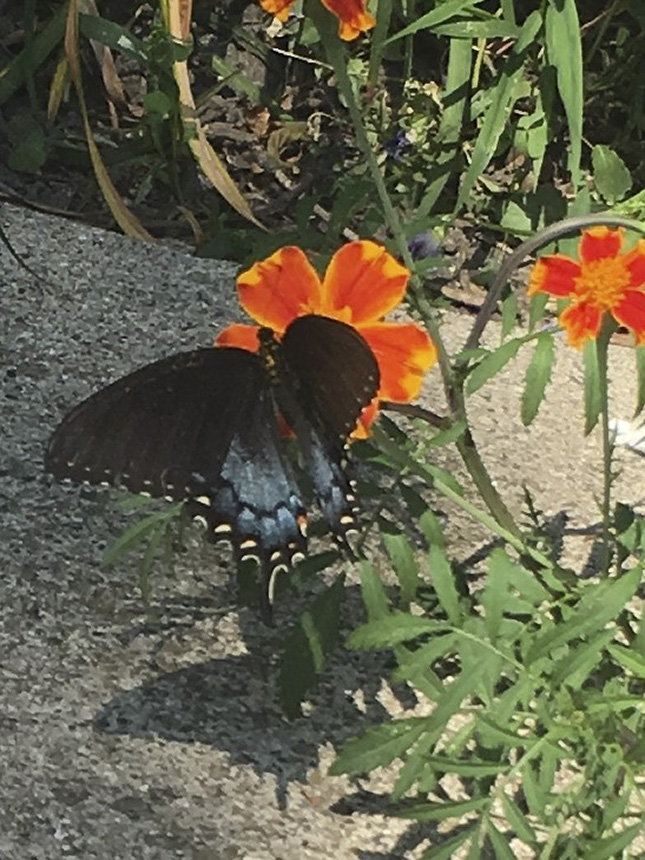
I have seen this type for the last week or so in Bloomington, MN. |
||
 |
|
|
Linda |
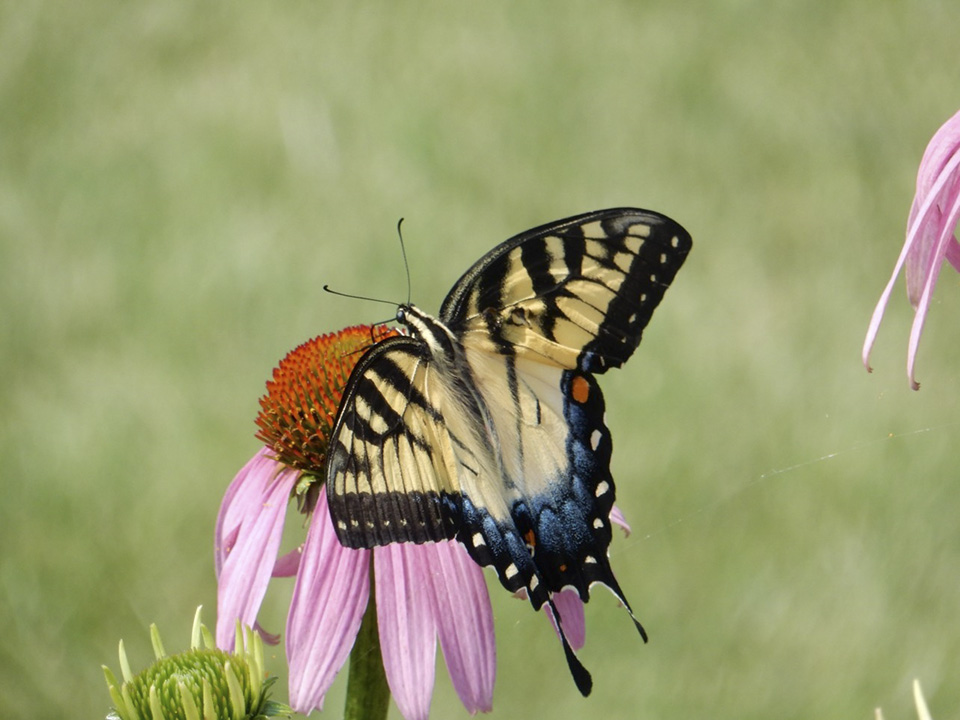 |
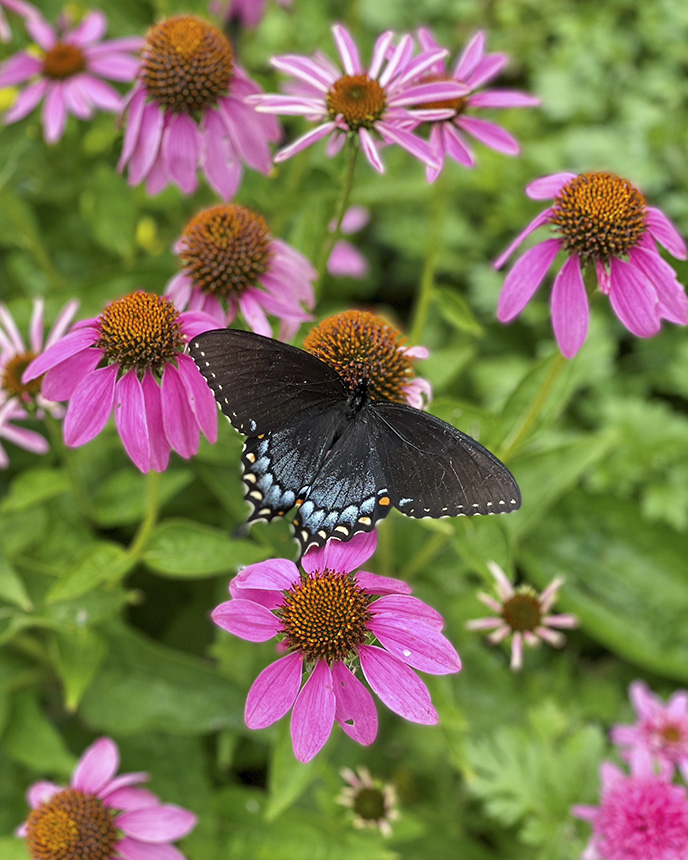
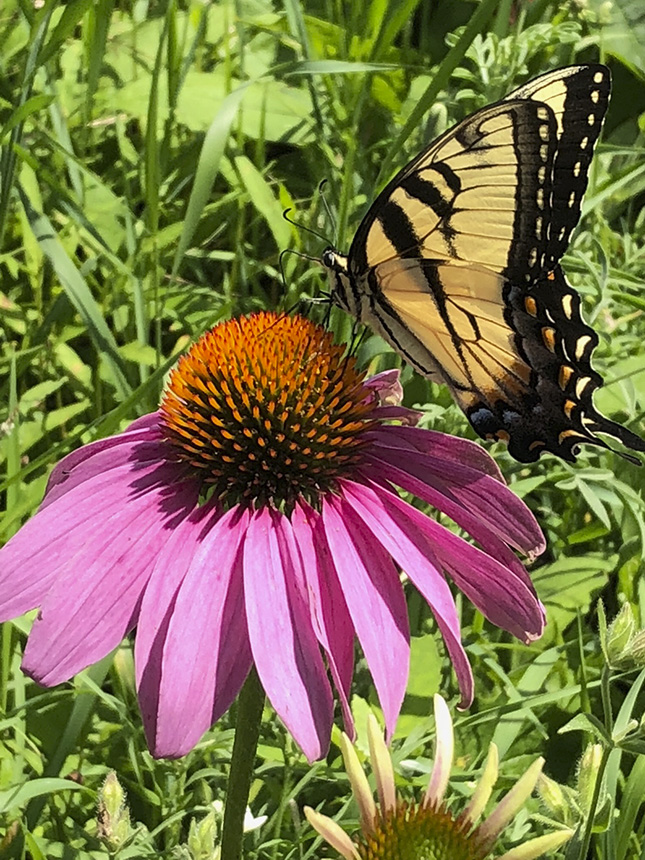
First siting, loves the cone flowers |
Tim Lindley |
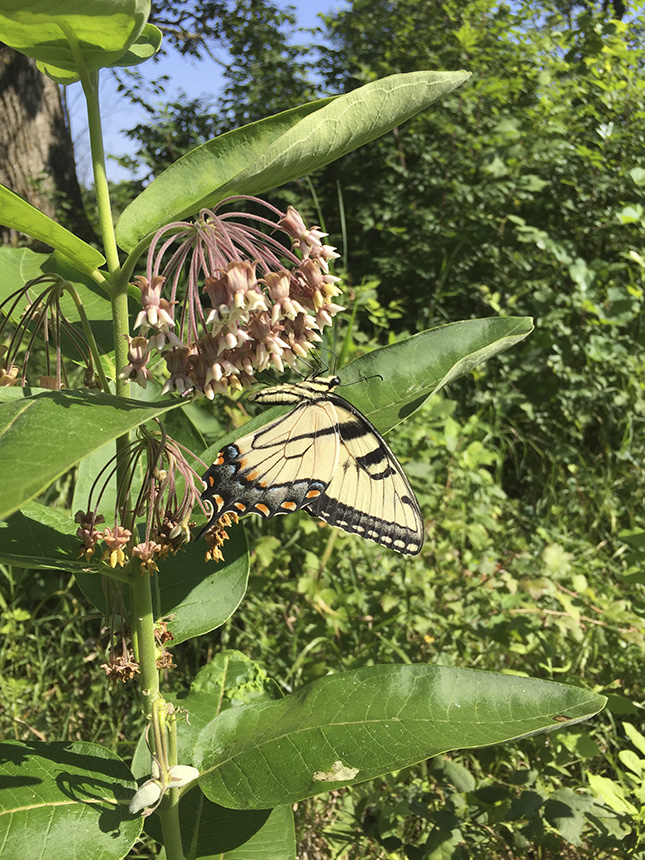 |
Matt Anderson |
||
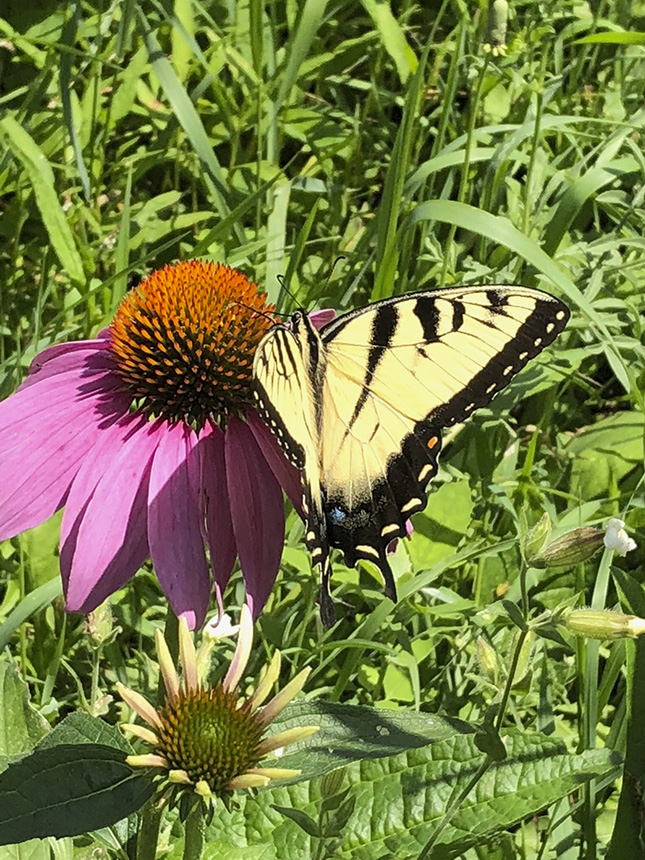 |
 |
|
 |
||
natureLee |
 |
Lisa |
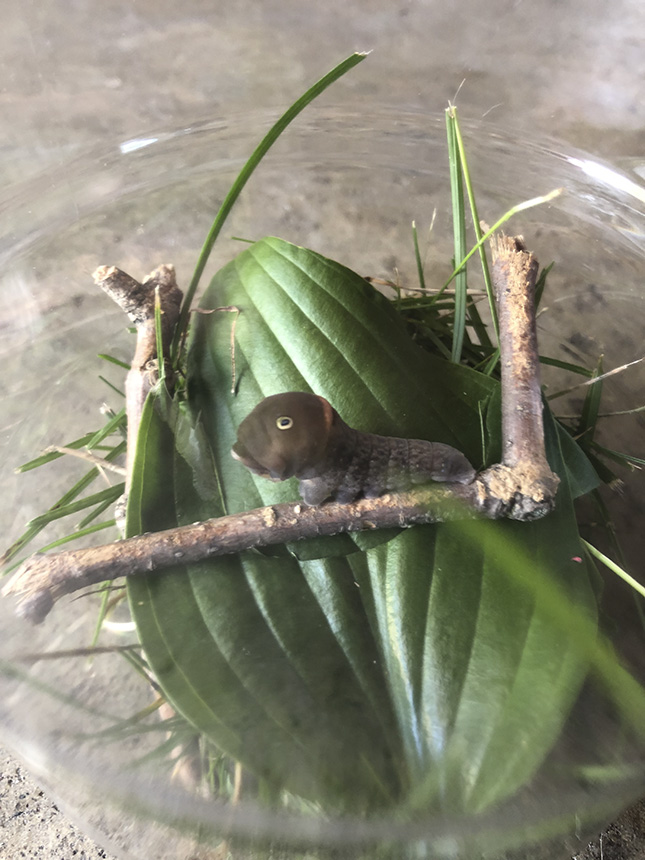 |
Found on driveway |
Wayne Rasmussen |
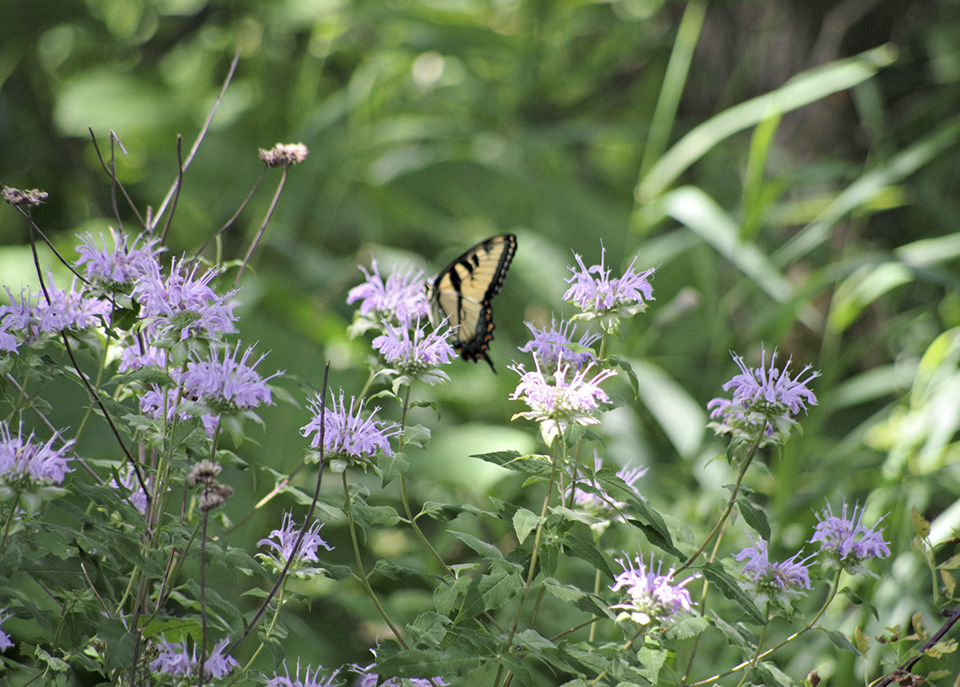 |
Eastern tiger swallowtail on wild bergamot |
Lucy Senstad |
||
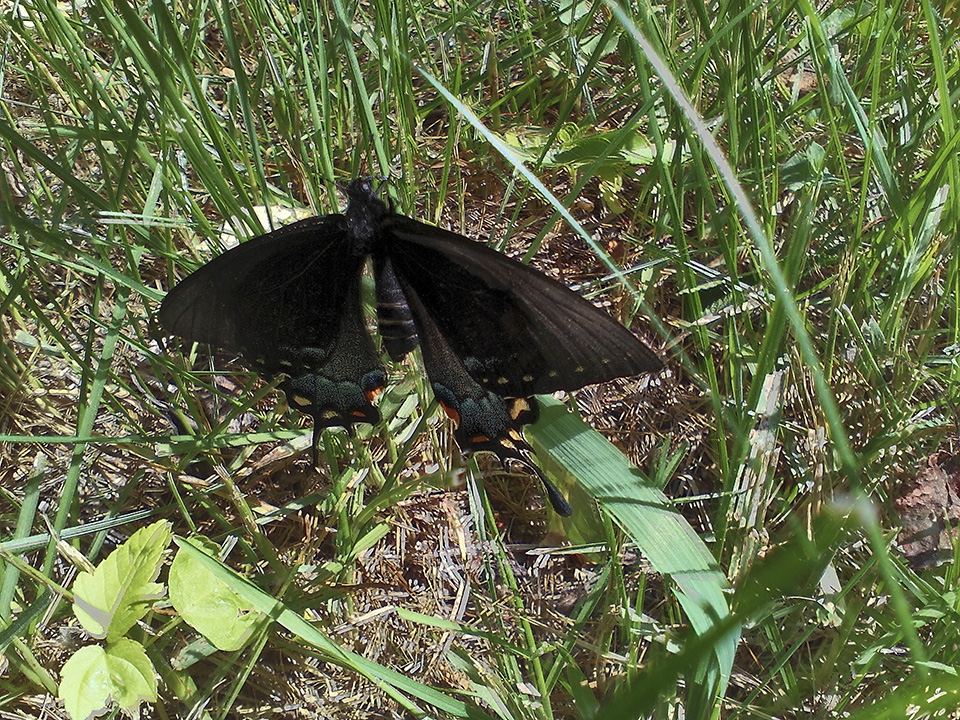
| Taken this morning near St. Wendel, MN. |
|
|
 |
 |
|
Andrea Oxton |
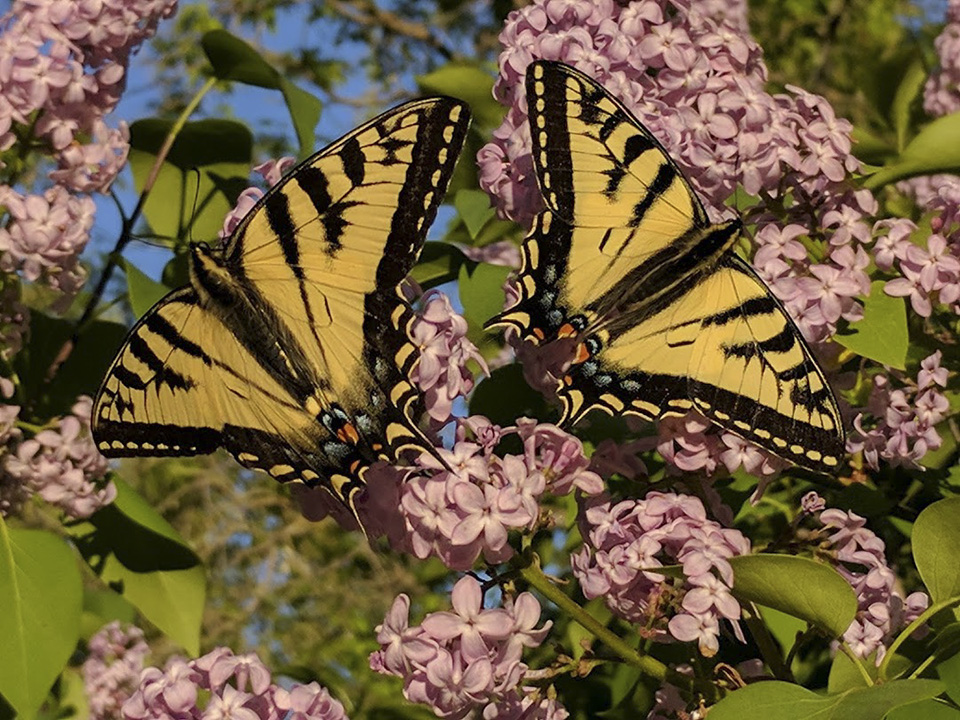 |
Loving the lilacs on a gorgeous June evening! |
Scott Boyle |
||
 |
 |
|
Black Form Female |
Black Form Female | |
 |
 |
|
Yellow Form Female |
||
Black Form Female |
||
 |
 |
|
Yellow Form Female |
Yellow Form Female | |
Tom Baker |
||
 |
 |
|
 |
 |
|
MinnesotaSeasons.com Photos |
||
 |
 |
|
Male |
Male | |
 |
 |
|
Male |
||
|
||
|
||
|
Frontal view | |
 |
 |
|
Yellow form female |
Black form female | |
 |
 |
|
Black form female |
Black form female | |
 |
 |
|
Underside |
Underside | |
 |
||
Underside |
||

Slideshows |
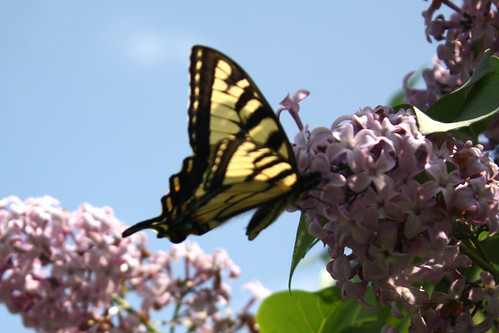
Eastern Tiger Swallowtail (Papilio glaucus) |
|
About
larva: |
Papilio glaucus (Eastern Tiger Swallowtail) |
|
Eastern Tiger Swallowtail Butterfly |
|
Tiger Swallowtail |
|
About
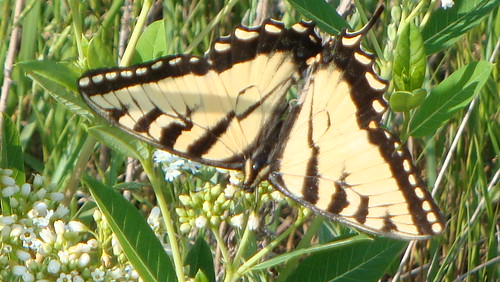
Male Eastern Tiger Swallowtail. This guy flitted by while I was at my favorite spot today. I got about 50 shots, thanks to the nice multi-shot capabilities of my camera. Here is more information: en.wikipedia.org/wiki/Eastern_tiger_swallowtail |

Visitor Videos |
||
Share your video of this insect. |
||
This button not working for you? |
||
|
Other Videos |
||
Eastern Tiger Swallowtail Butterfly [Papilio glaucus] |
About
Published on Jun 17, 2013 While out on a day scout Krik wandered upon a bunch of Eastern Tiger Swallowtail butterflies frolicking next to a spring fed creek in south central Pennsylvania. |
Butterfly: Eastern Tiger Swallowtail, Papilio Glaucus Linnaeus |
About
Uploaded on Oct 9, 2009 June 24, 2009. I was out walking in the countryside and spotted this butterfly on the side of the road, managed to capture a minute with my camcorder. It was spotted in southeastern Quebec, Canada about 20 miles from the border with New Hampshire. |
Eastern Tiger Swallowtail Butterflies (Papilio glaucus) |
About
Published on Aug 19, 2013 Eastern Tiger Swallowtail (Papilio glaucus) or maybe Appalachian Tiger Swallowtail (Papilio appalachiensis) butterflies nectaring on Butterfly bush (Buddleia). Males are always yellow. Females may be black or yellow. The yellow females have more blue coloring on their hind wings than the males. Shot 8/18/13 |
Eastern Tiger Swallowtail - Papilio glaucus |
About
Uploaded on Nov 15, 2008 I think is a female Eastern Tiger Swallowtail (Papilio glaucus) hanging around a butterfly bush in Iowa |

Visitor Sightings |
||
Report a sighting of this insect. |
||
This button not working for you? |
||
| Gregory Gilman 8/7/2025 |
Location: Rochester, MN
|
 |
Annette Huot |
Location: Lake Phalen, St. Paul |
 |
Mark Teske |
Location: North Branch, MN Not sure if anyone is interested but this beautiful creature was at my door lol. |
 |
Dan W. Andree |
Location: Norman Co. Mn. I noticed this butterfly flying around yesterday and when I went outside noticed it landed on my a leaf of my birch tree. I filmed and photographed it and going to the images noticed a small bee or wasp like insect flew in and out of the scene. The swallowtail didn't cooperate far as spreading its wings open but did look really nice just resting. It flew off but was a memorable experience. |
 |
| Mike Poeppe 8/14/2022 |
Location: near Houston, MN |
|
| Trudy 8/10/2022 |
Location: Wright County |
|
| Paul Diedrich 6/17/2022 |
Location: Wright County |
|
| Bob G 8/10/2021 |
Location: White Bear Lake, MN Eastern Tiger Swallowtail on Magenta Zinnia in White Bear Lake, MN (8-10-2021) |
|
| Joe Warhol 7/29/2021 |
Location: Buffalo MN I have attached a picture of what I believe is a Spicebusch Swallowtail. |
|
| John Valo 7/29/2021 |
Spicebush Swallowtail has marginal row of light blue spots on the hindwing, large ivory spots on the forewing, and an unbroken iridescent blue (female) or bluish-green (male) cloud on the hindwing. The black form of the female Eastern Tiger Swallowtail has a marginal row of yellowish spots on the hindwing and small yellowish spots on the forewing, and up to five blue submarginal spots separated from the cloud by a distinct scalloped black line. The butterfly in your photo is a black form female Eastern Tiger Swallowtail. |
| Amy VanLoon 7/22/2021 |
Location: Red Wing, MN |
|
| Jack McNiff 7/28/2021 |
Location: So Mpls, MN Repeatedly fluttering in loose 4 to 5 ft circles around 7 to 8 ft off ground near tree |
|
| Pam Hartmann 6/3/2021 |
Location: Fairmont, Minnesota
|
|
| Luciearl 5/28/2021 |
Location: Lake Shore, MN |
|
| Margot Avey 8/20/2020 |
Location: Noerenberg Memorial Gardens - Three Rivers Park District, Crystal Bay, Lake Minnetonka MN |
|
| Megan Bah 8/16/2020 |
Location: Hutchinson, MN Spotted this butterfly enjoying my wave petunias on the balcony! |
|
| E. A. Junger 8/16/2020 |
Location: Anoka County - St. Cloud, MN I found this butterfly in my garden this morning. I am wondering if it is a spicebrush swallowtail. What I have read about them is they are rare in Mn and if seen in Mn it is in the southern part. I live in St Cloud so the middle of the state. |
|
| John Valo 8/17/2020 |
Spicebush Swallowtail has an uninterrupted "cloud" of blue or greenish-blue scales from the median area to the marginal area of the hindwing. Black form female eastern tiger swallowtail has a clearly defined row of blue spots in the marginal area and a blue "cloud" in the median area, with a jagged black line separating the two areas. This is a black form female Eastern Tiger Swallowtail. |
|
| Melissa Dunbar 8/15/2020 |
Location: Dakota County …landed on my yellow zinnia yesterday August 15 |
|
| Julie and Chad Theisen 7/25/2020 |
Location: Anoka County - Ramsey, MN In our overgrown flower garden, hanging around green onion blooms |
|
| David and Carol Jones 8/14/2020 |
Location: Golden Valley, MN feeding on back yard impatiens. |
|
| John Moore 8/9/2020 |
Location: Farmington, MN |
|
| Wendy Maslowski 7/30/2020 |
Location: St. Paul, MN |
|
| Bradley 7/30/2020 |
Location: Stearns County – St. Cloud, MN Found it hanging out on a low branch of a hedge bush in my back yard, right in the middle of town. |
|
| Leigh49 8/28/2019 |
Location: Alexandria, MN Here’s a gorgeous swallowtail butterfly! |
|
| Bryan Hauschild 8/12/2019 |
Location: Traverse County feeding on a canadian thistle |
|
| Gardenworld Inc 8/9/2019 |
Location: Cottage Grove MN, Washington County it was most interested in our Iiatris and allium but I photographed it on the sedum that wasn’t open yet. Its going on our Facebook page next week! Pretty cool to see! |
|
| Norm & Peg Dibble 7/15/2019 |
Location: Maple Grove, MN ...a really nice shot of the Tiger Swallowtail enjoying our Joe Pye Weed that we have a lot of. The sun made his wings glow so nicely. |
|
| Beth 10/7/2018 |
I found, 2 weeks ago, 11 Eastern Tiger Swallowtail caterpillars in my garden on the parsley. I bought a large net enclosure for them thinking with the cold weather they would die due to their size. They are now all in the chrysalis stage and I was wondered if I did the right thing by bringing them inside. I read on your website they overwinter in the chrysalis stage. Should I put them in the garage where it is cooler so they overwinter as opposed to the warmth of inside where they might open earlier with no warm weather outside to release them when ready? Thanks, Beth |
|
| Gerald Raley 8/15/2018 |
Location: Bloomington, MN. I have seen this type for the last week or so in Bloomington, MN. |
|
| Linda 8/6/2018 |
Location: Grant County, MN First siting, loves the cone flowers |
|
| Tim Lindley 7/31/2018 |
Location: Alexandria |
|
| Matt Anderson 7/22/2018 |
Location: Harmony MN |
|
| natureLee 7/16/2018 |
Location: Minneapolis |
|
| Lisa 7/14/2018 |
Location: South St, Paul, MN Found on driveway |
|
| Randy L. 6/212018 |
Location:Beltrami, Mn 1st one i've seen in this area. |
|
| Marcia Podratz 5/27/2018 |
Location: near shore of Wynne Lake, Biwabik, north St. Louis County While kayaking, I came across about 30 of these together on a small sandy area near the lake shore. They were mostly sitting on the ground and flying short distances. I wonder if they had just hatched. |
|
| Margot Avey 8/31/2017 |
Location: Lake Harriet Gardens, Minneapolis |
|
| Theresa Kohn 8/13/2017 |
Location: St. Paul, Minnesota My front yard garden guest |
|
| Kathryn 7/16/2017 |
Location: In my garden on an evergreen tree in Roseville, MN. |
|
| Bryan m 7/10/2017 |
Location: lake phalen park during dragon festival |
|
| Lisa F 6/10/2017 |
Location: Minneopa State Park |
|
| Lucy Senstad 6/10/2017 |
Location: near St. Wendel, MN I found this one in the grass this morning, running up and down blades of grass. A first sighting for me. |
|
| Andrea Oxton 6/3/2017 |
Location: Beltrami County Loving the lilacs on a gorgeous June evening! |
|
| Wayne Rasmussen 7/19/2016 |
Location: Joy Park |
|
| Norm & Peg Dibble September 2014 |
Location: Maple Grove, MN Spooky Eastern Tiger Swallowtail Caterpillar, September 2014. After throwing away garden trimmings in our recycling trailer, found it crawling on the tar driveway, picked him up on a stick and put it back in our garden. Never seen one before or since. So glad I found it. |
|
| Les Phillips 8/6/2014 |
Location: Minneapolis, MN about 9:00 a.m. I saw a pair feeding on Cone Flowers in my alley. |
|
MinnesotaSeasons.com Sightings |
||
Created: 8/17/2008 Last Updated: © MinnesotaSeasons.com. All rights reserved. |