



Canadian horseweed
(Erigeron canadensis)
Conservation • Weed • Wetland • Description • Habitat • Ecology • Use • Distribution • Taxonomy
Conservation Status |
|
|||||||
| IUCN Red List | not listed |
|||||||
| NatureServe | N5 - Secure SNR - Unranked |
|||||||
| Minnesota | not listed |
|||||||
Weed Status |
||||||||
Canadian horseweed is commonly considered a weed. It is a considerable agricultural pest in soybean fields. In 2001, it was reported that it developed resistance to the broad-spectrum herbicide glyphosate, sold by Monsanto under the name Roundup. Ohio is the only state to put it, under the name “marestail”, on their Prohibited Noxious Weeds list. |
||||||||
Wetland Indicator Status |
||||||||
| Great Plains | FACU - Facultative upland |
|||||||
| Midwest | FACU - Facultative upland |
|||||||
| Northcentral & Northeast | FACU - Facultative upland |
|||||||
Description |
||
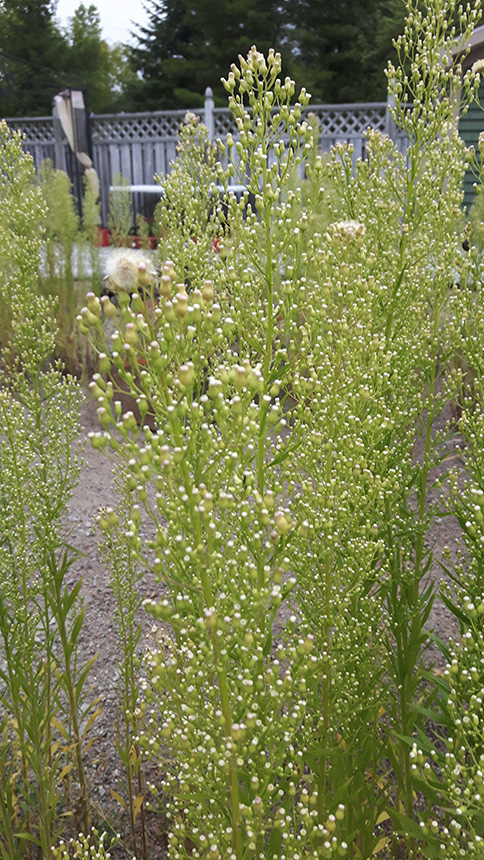
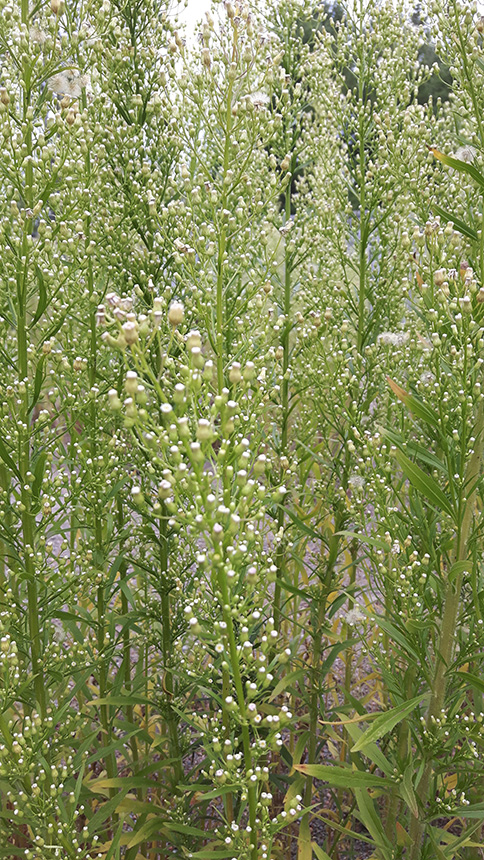
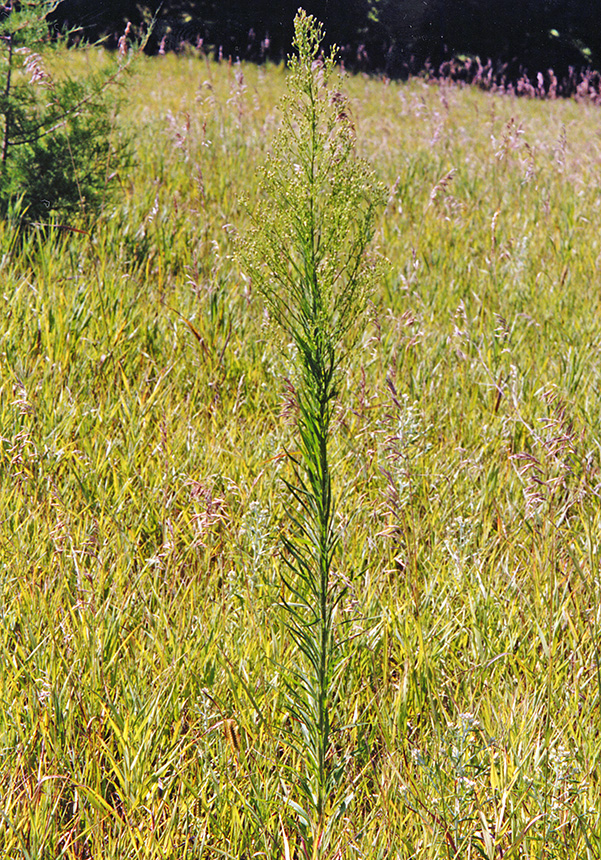
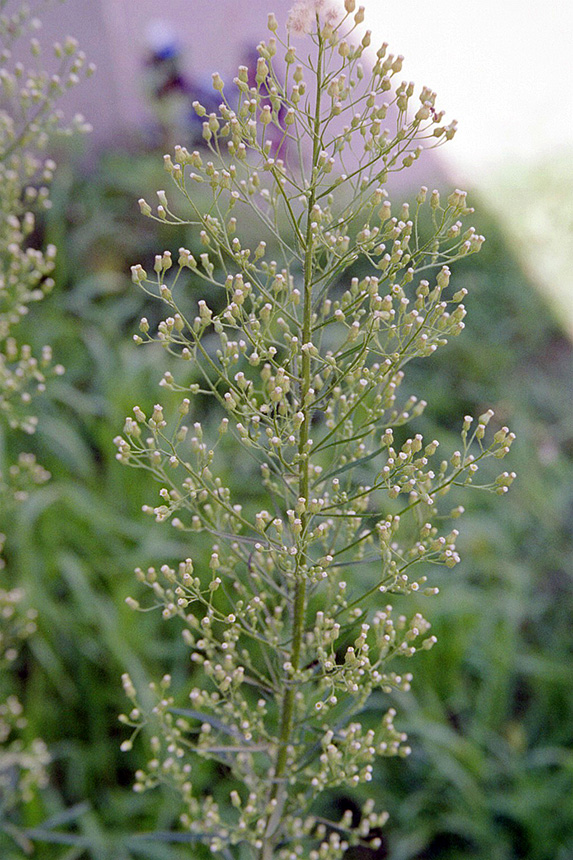
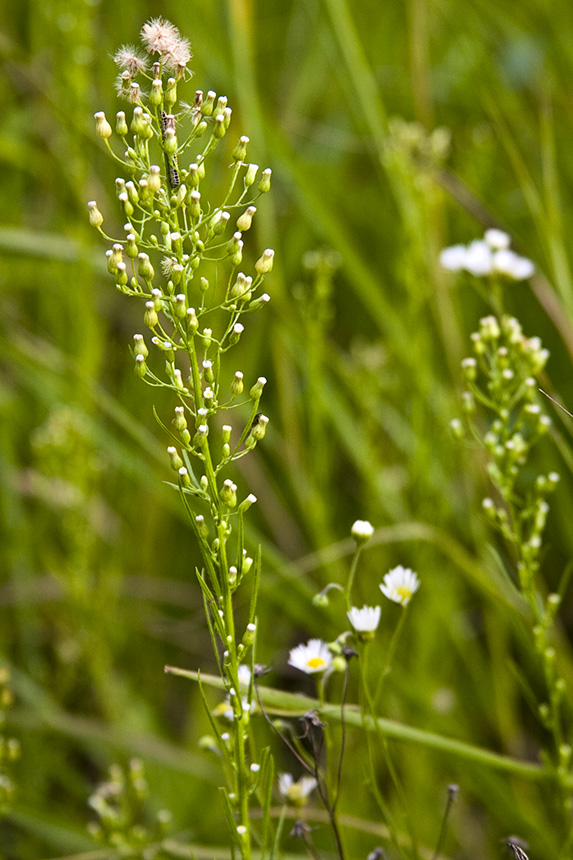
The stem is unbranched below the inflorescence. The leaves are linear and crowded on the stem. |
||
Height |
||
12″ to 60″ |
||
Flower Color |
||
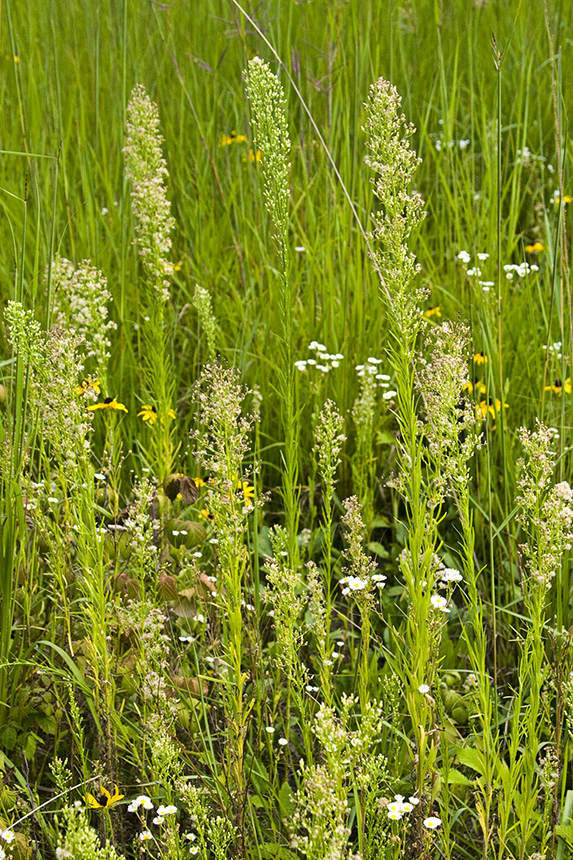
White ray flowers, yellow disk flowers |
||
Similar Species |
||
When not in flower, the linear leaves are enough to identify this as Canadian horseweed and not a goldenrod. |
||
Habitat |
||
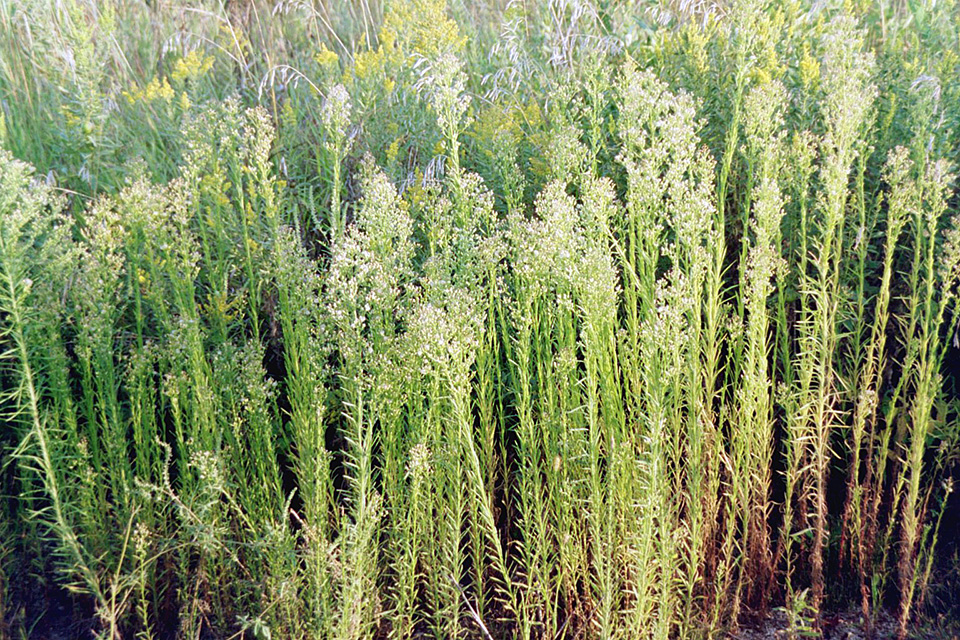
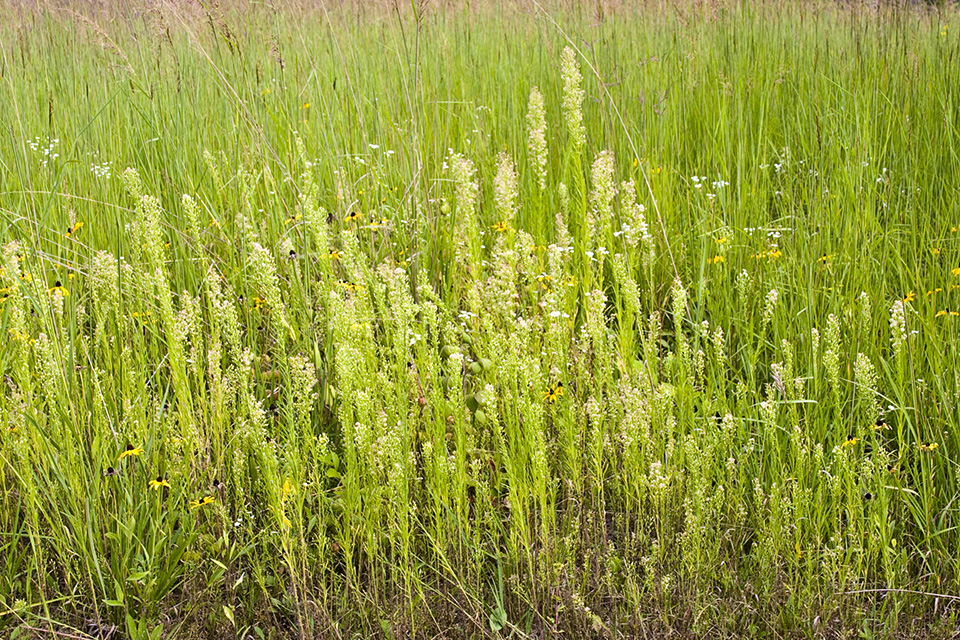
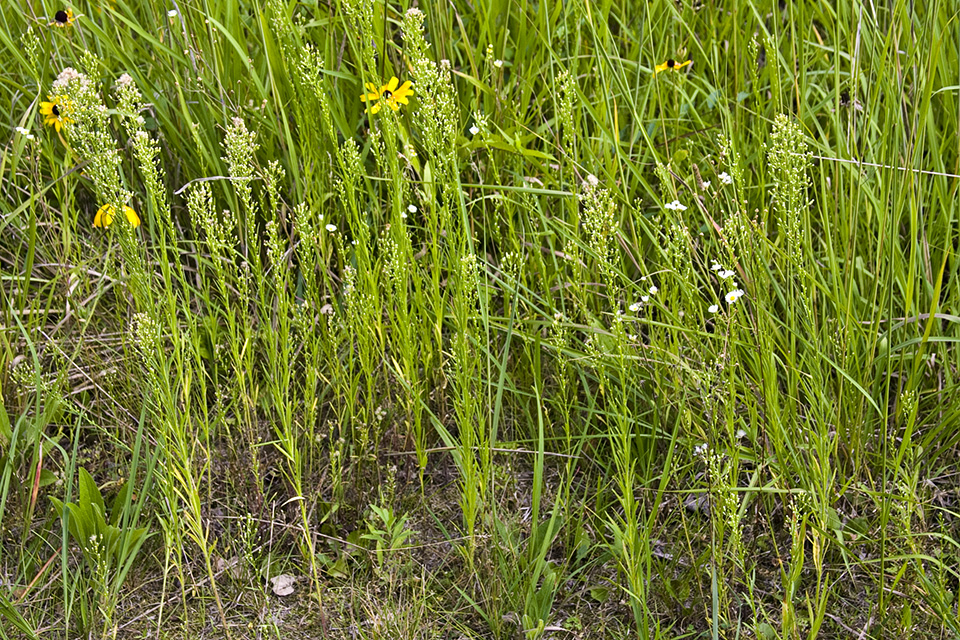
Disturbed sites. Fields, roadsides, empty lots. |
||
Ecology |
||
Flowering |
||
July to October |
||
Pests and Diseases |
||
|
||
Use |
||
|
||
Distribution |
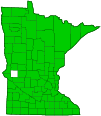
||||
|
Sources |
|||
| 3/21/2023 | ||||
Nativity |
||||
Native |
||||
Occurrence |
||||
Common |
||||
Taxonomy |
|||
| Kingdom | Plantae (Plants) | ||
| Subkingdom | Pteridobiotina | ||
| Phylum | Tracheophyta (Vascular Plants) | ||
| Class | Magnoliopsida (Dicots) | ||
Order |
Asterales (Sunflowers, Bellflowers, Fanflowers, and Allies) | ||
Family |
Asteraceae (Sunflowers, Daisies, Asters, and Allies) | ||
| Subfamily | Asteroideae | ||
| Supertribe | Asterodae | ||
| Tribe | Astereae (Asters and Allies) | ||
| Subtribe | Conyzinae | ||
| Genus | Erigeron (fleabanes and horseweeds) | ||
This species was originally named Erigeron canadensis in 1753. It was transferred to the genus Conyza by Cronquist in 1943. It was later determined that Conyza as traditionally circumscribed is nested within Erigeron and is polyphyletic or paraphyletic. The species was subsequently transferred back to the genus Erigeron. Both names, Erigeron canadensis and Conyza canadensis, are in widespread use today. |
|||
Subordinate Taxa |
|||
|
|||
Synonyms |
|||
Conyza canadensis Leptilon canadense |
|||
Common Names |
|||
butterweed Canada horseweed Canadian fleabane Canadian hogweed Canadian horseweed fleabane horseweed horseweed fleabane mares tail marestail |
|||
Glossary
Linear
Long and narrow with parallel sides, as in a blade of grass.
Visitor Photos |
|||||
Share your photo of this plant. |
|||||
| This button not working for you? Simply email us at info@MinnesotaSeasons.com. Attach one or more photos and, if you like, a caption. |
|||||
Michabud |
|||||
 |
 |
||||
MinnesotaSeasons.com Photos |
|||||
Habitat |
|||||
 |
 |
||||
 |
|||||
Plant |
|||||
 |
 |
||||
 |
|||||
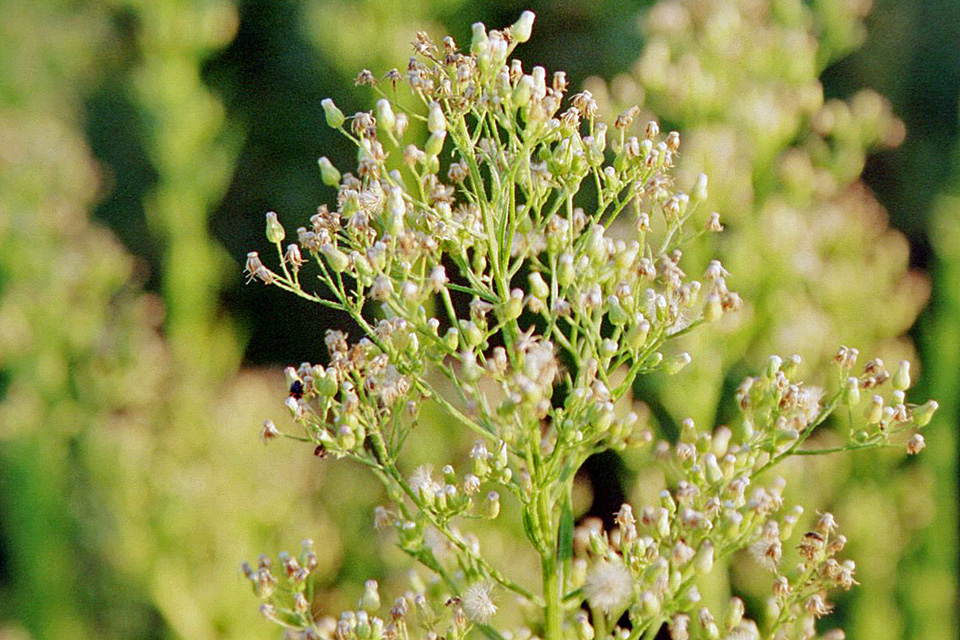
Inflorescence |
|||||
 |
 |
||||
 |
|||||

Slideshows |
||
Visitor Videos |
|||
Share your video of this plant. |
|||
| This button not working for you? Simply email us at info@MinnesotaSeasons.com. Attach a video, a YouTube link, or a cloud storage link. |
|||
Other Videos |
|||
| How To Identify Horseweed Erigeron canadensis identification MiWilderness |
|||
About
Published on Sep 25, 2013 How to identify horseweed, Erigeron canadensis identification. Horseweed belongs in the aster family, has medicinal properties and is reportedly a real good choice for a spindle used in friction fire with the hand drill. To see mushroom, plant, garden and outdoor photos, field guides I use, identification books, and other interesting stuff visit me on Facebook https://www.facebook.com/michigan.wilderness Thanks for watching, commenting, subscribing to, and supporting this channel. If you like this video please give a thumbs up and share it with others. If you have any questions or tips please leave a comment. |
|||
| Canadian Horseweed (Erigeron canadensis) - 2012-08-21 W3stlander |
|||
About
Published on Aug 30, 2012 Erigeron canadensis (formerly Erigeron canadensis L.) is an annual plant native throughout most of North America and Central America. Common names include Horseweed, Canadian Horseweed, Canadian Fleabane, Coltstail, Marestail and Butterweed. ------------- |
|||
| Eat The Weeds: Episode 130: Horseweed EatTheWeeds |
|||
About
Uploaded on Aug 24, 2011 http://www.eattheweeds.com/conyza-canadensis-herb-fire-food-2/ Spice, food and source of a drill for making fire by hand, Horseweed is found around the world. |
|||

|
Created: Last Updated: © MinnesotaSeasons.com. All rights reserved. |