Common green darner
Conservation • Description • Habitat • Ecology • Distribution • Taxonomy
Conservation Status |
|
||||
| IUCN Red List | LC - Least Concern |
||||
| NatureServe | N5 - Secure SNR - Unranked |
||||
| Minnesota | not listed |
||||
Description
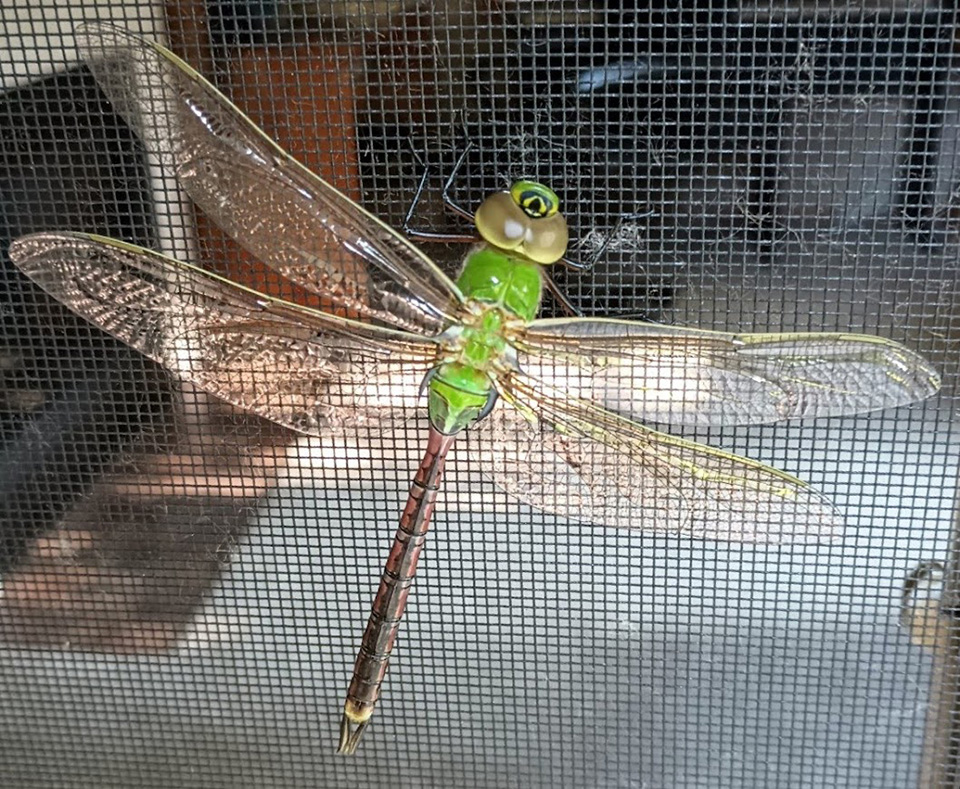
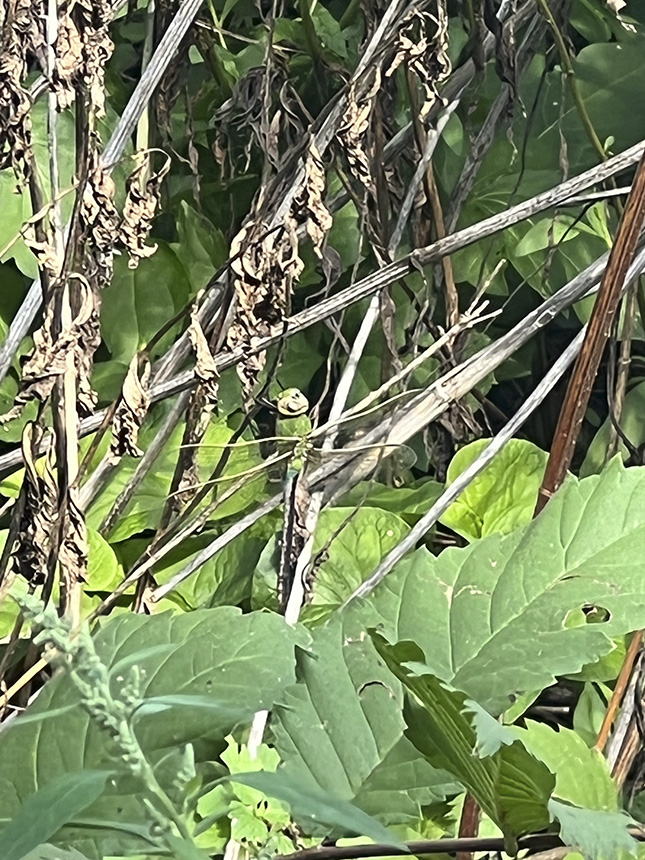
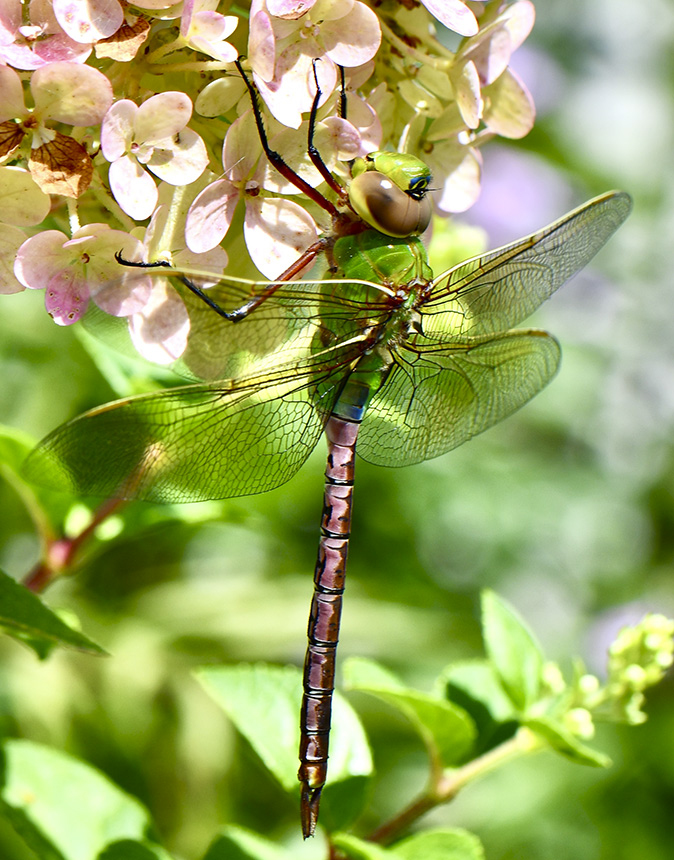
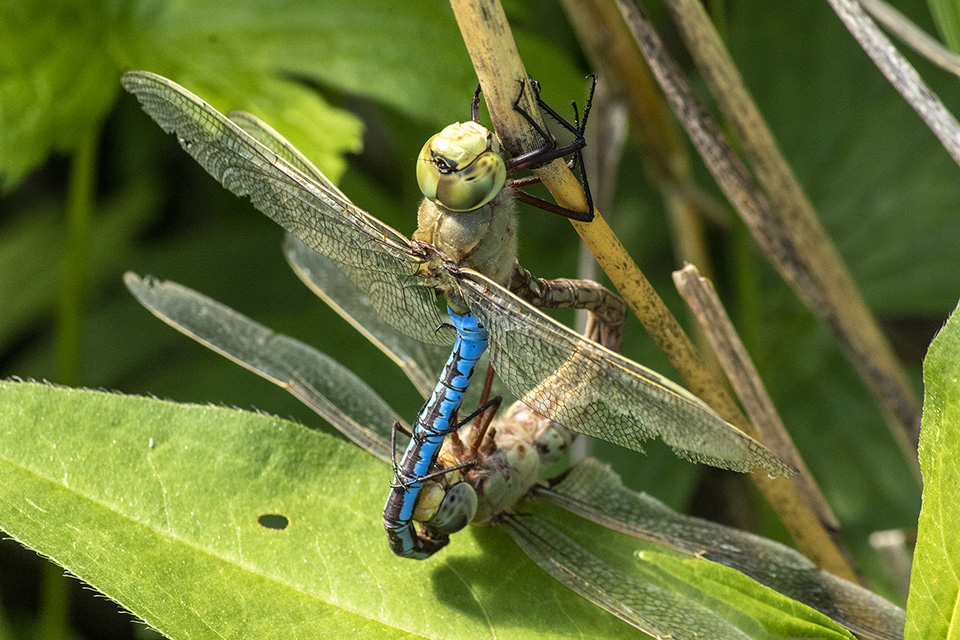
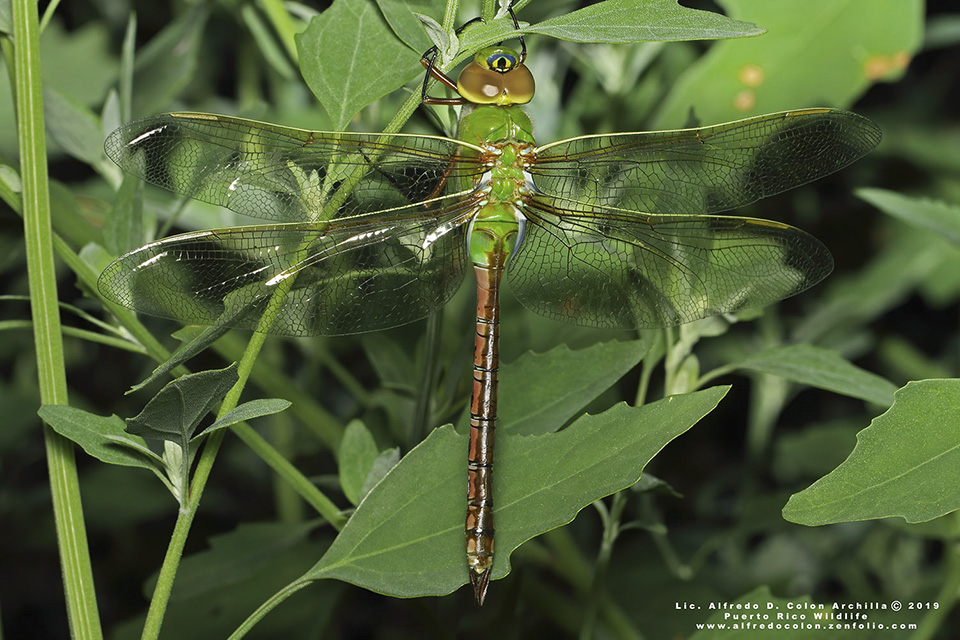
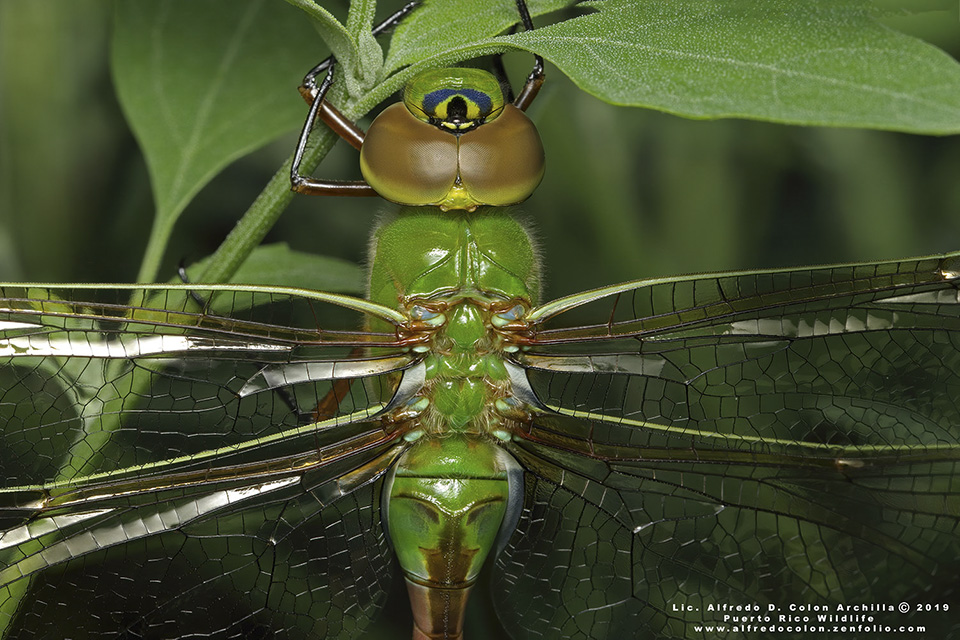
Common green darner is a large, common dragonfly. It is 2⅔″ to 3⅛″ long, averaging 3″ long. It is the most common darner in North America.
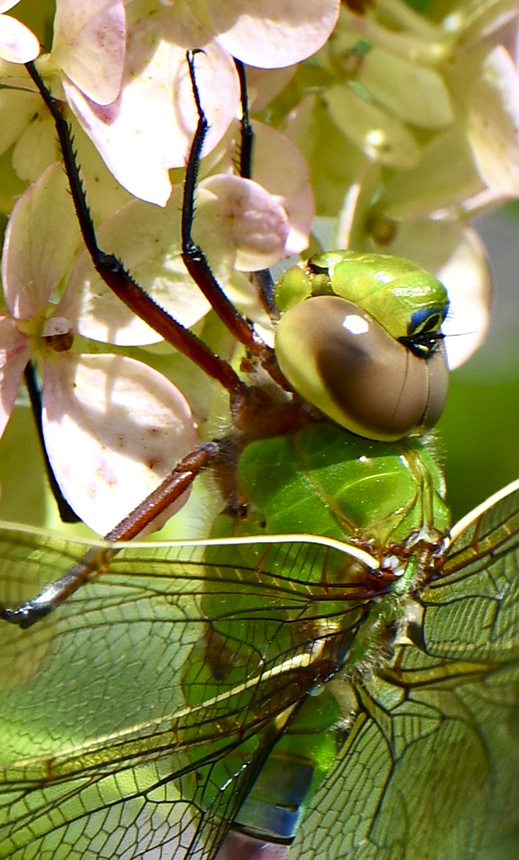
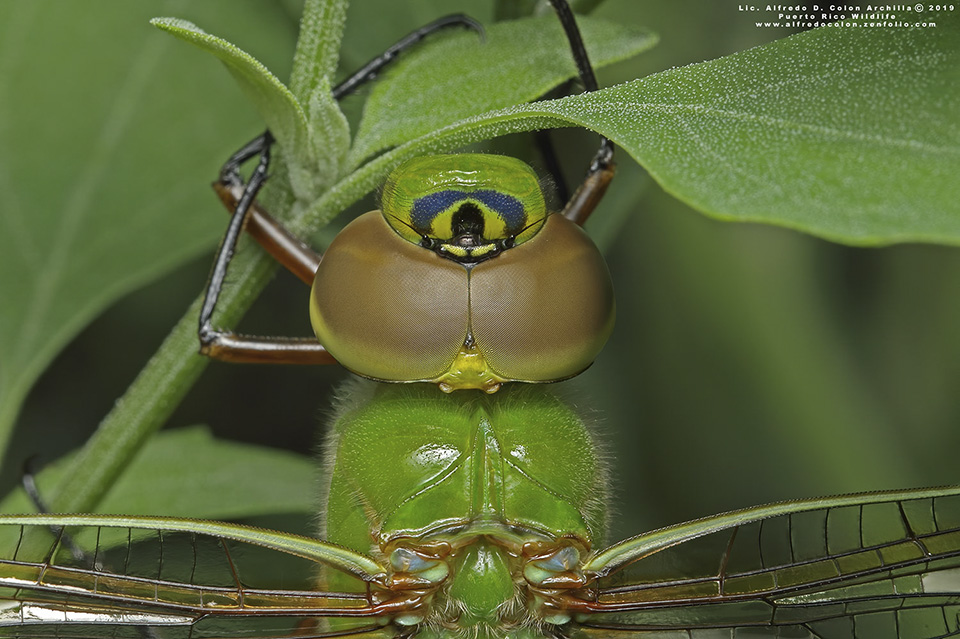
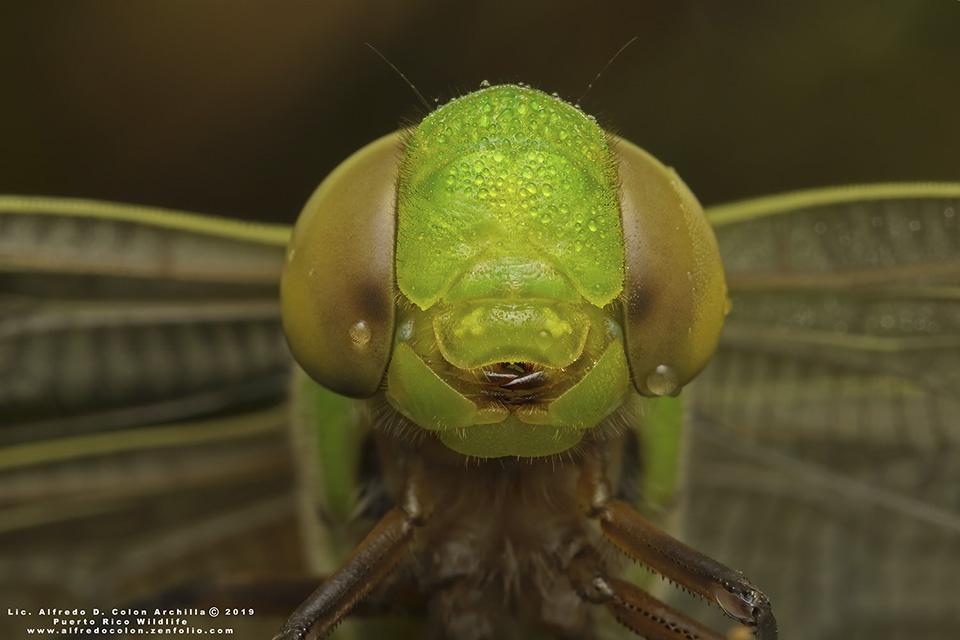
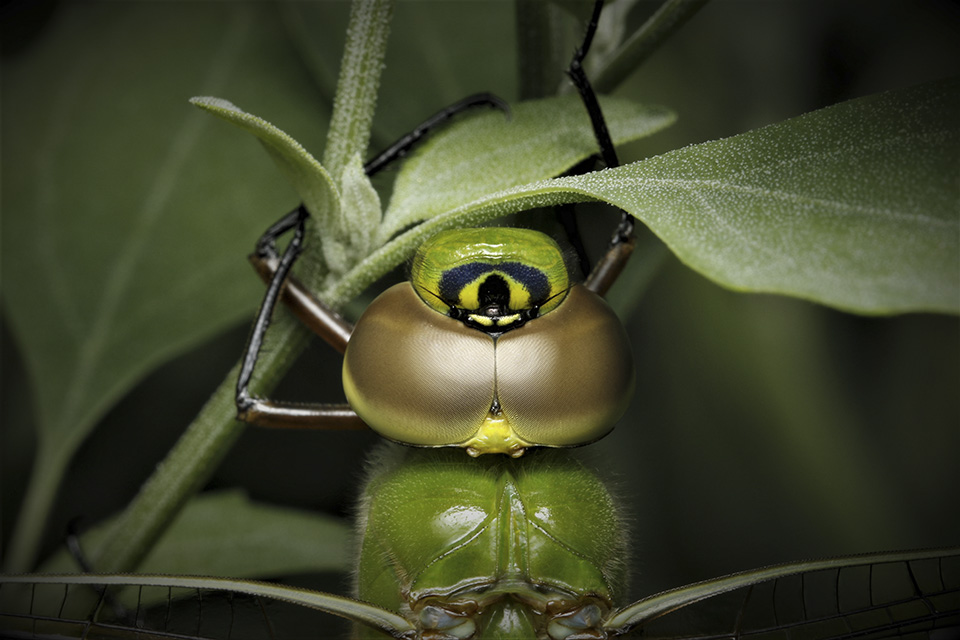
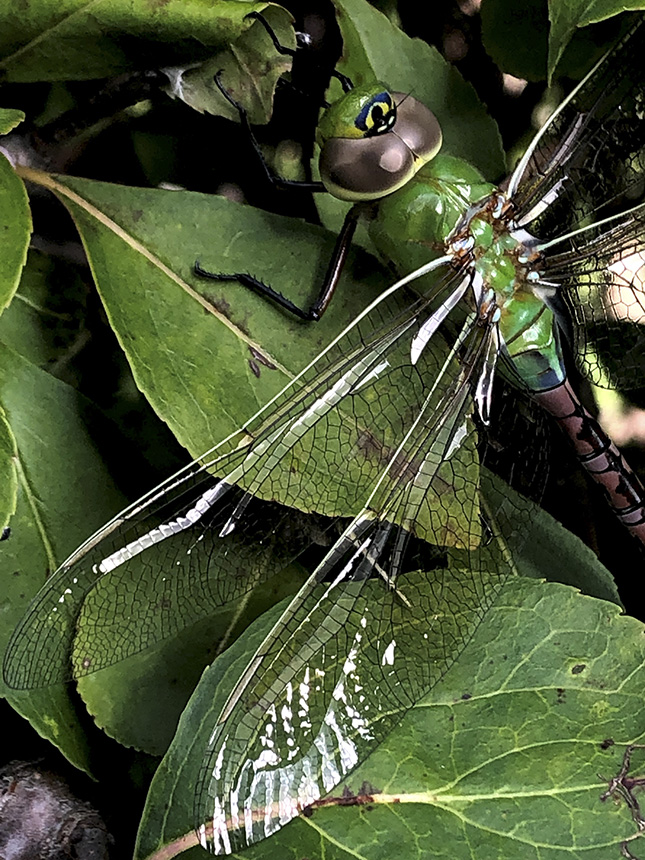
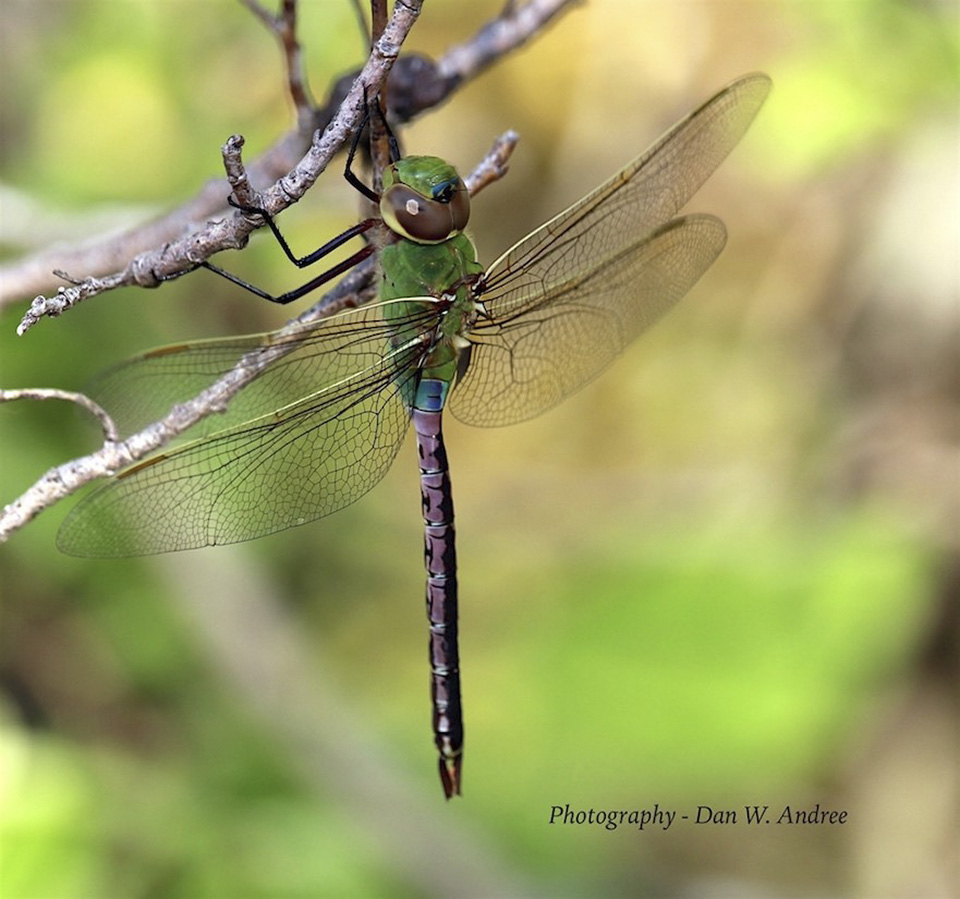
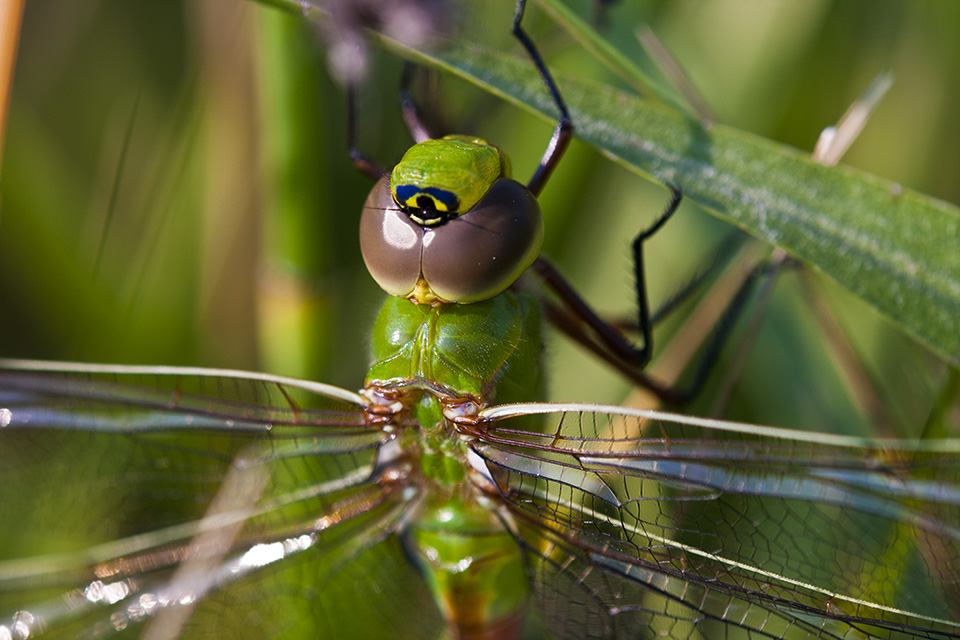
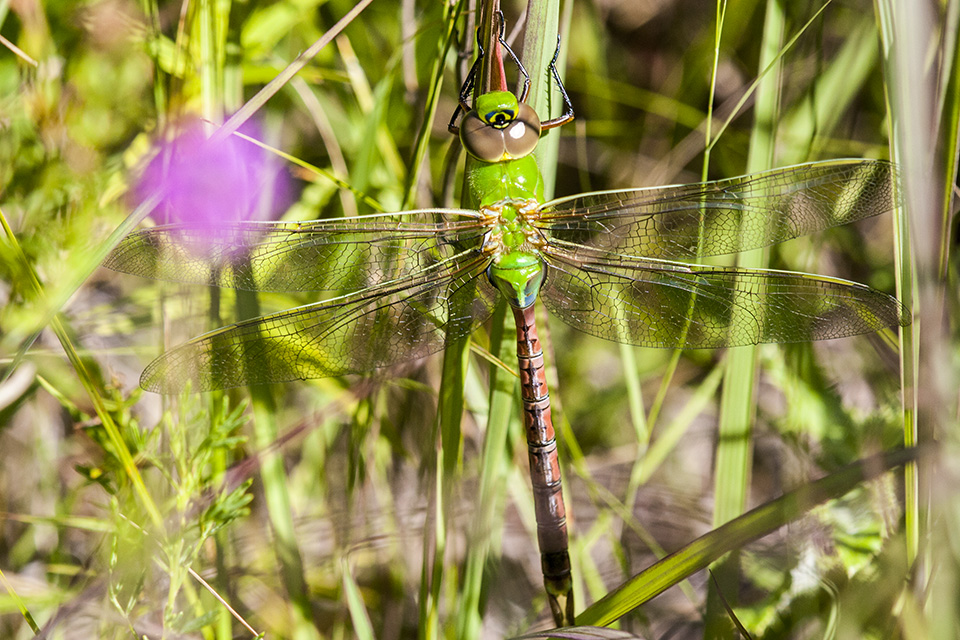
There is a black spot enclosed by a medium to dark blue semi-circle that forms a “bull’s eye” spot in front of the eyes.
The eyes are medium brown, the color of milk chocolate, with a yellow rear (posterior) rim.
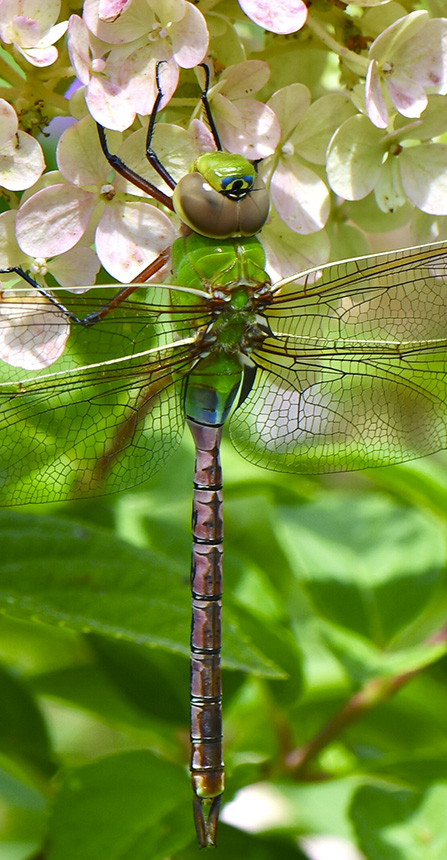
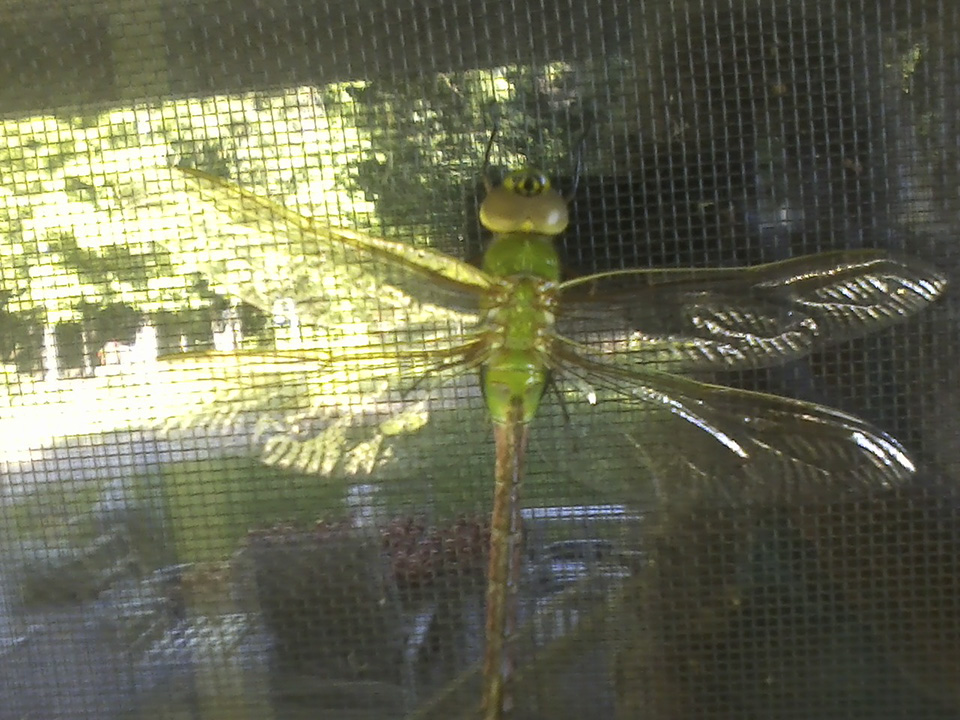
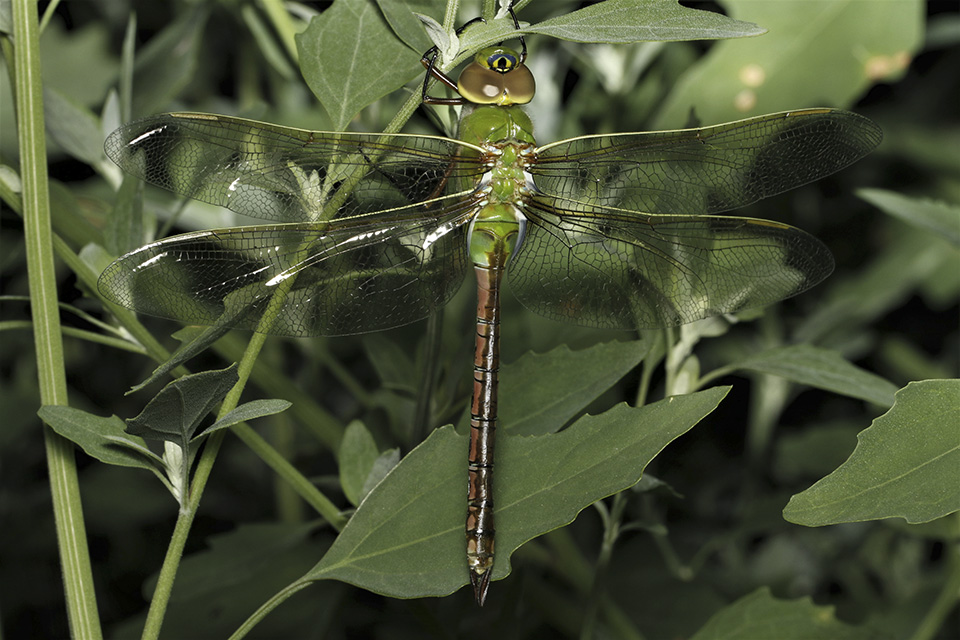
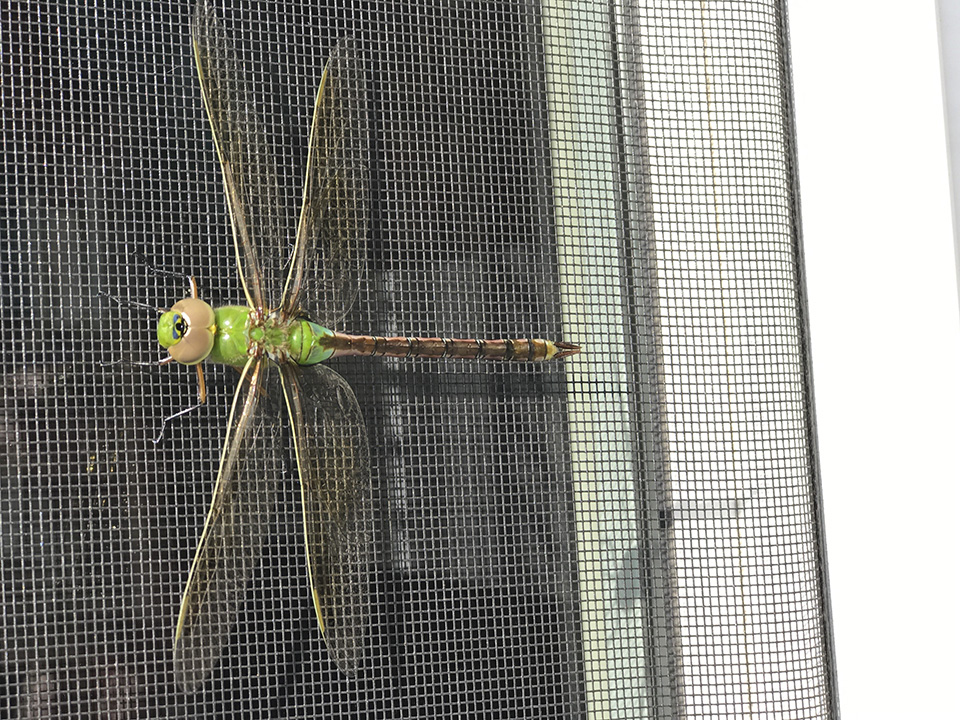
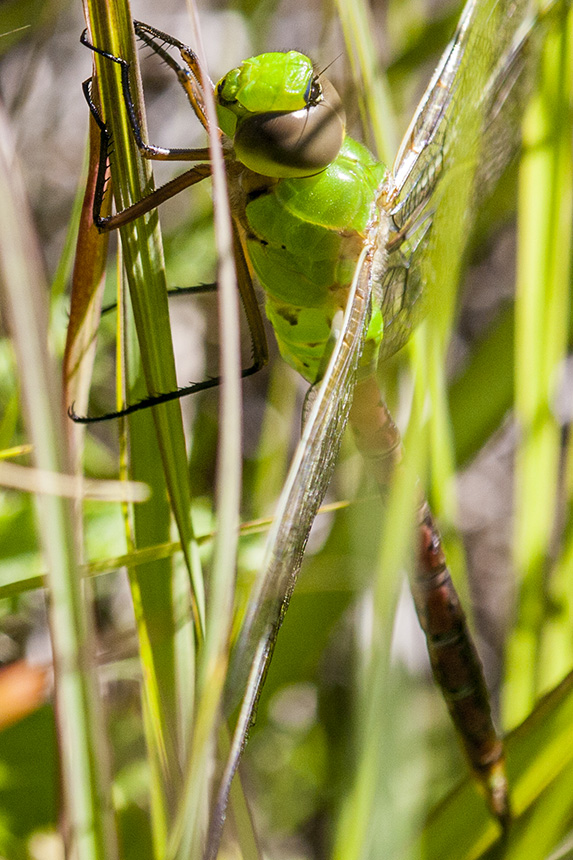
The thorax is bright green and is not striped.
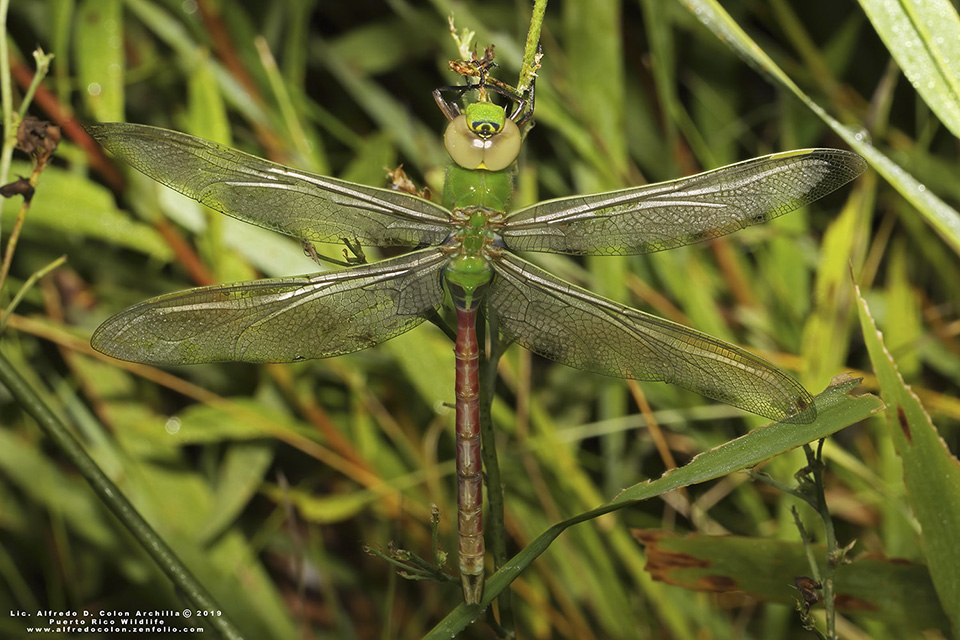
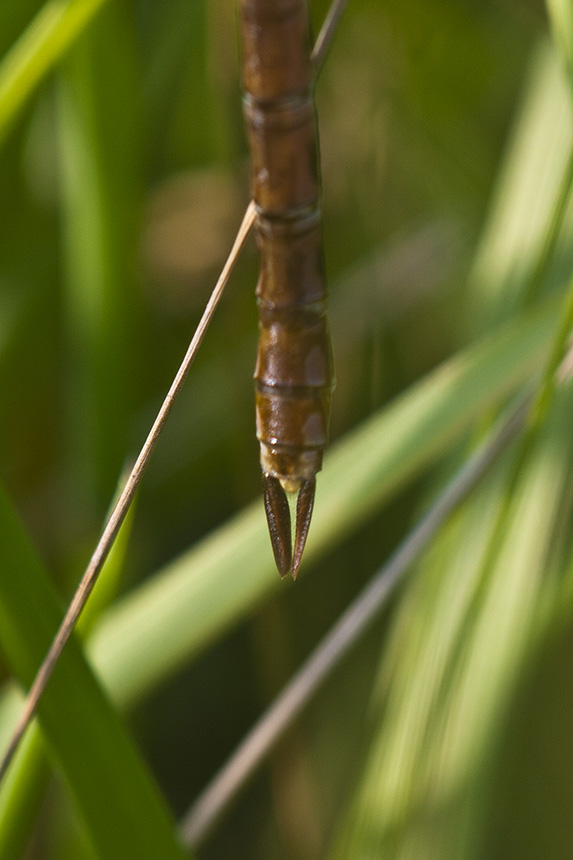
The abdomen is thick compared to other darners. The male abdomen has a dark purple top (dorsal) stripe and wide, bright blue side (lateral) stripes. The lateral stripes change to green toward the rear. The base of segment 3 (S3), the long and narrow segment close to the thorax, is white. When in flight, the abdomen is carried straight. The female abdomen is similar but with grayish-green lateral stripes. In cool weather the lateral stripes of both sexes fade to the same color as the dorsal stripe. S2 is the last segment to fade. Immature individuals of both sexes have a brownish-red abdomen.
On the male the pair of appendages at the end of the abdomen (cerci) have a pointed spine at the outer corner.
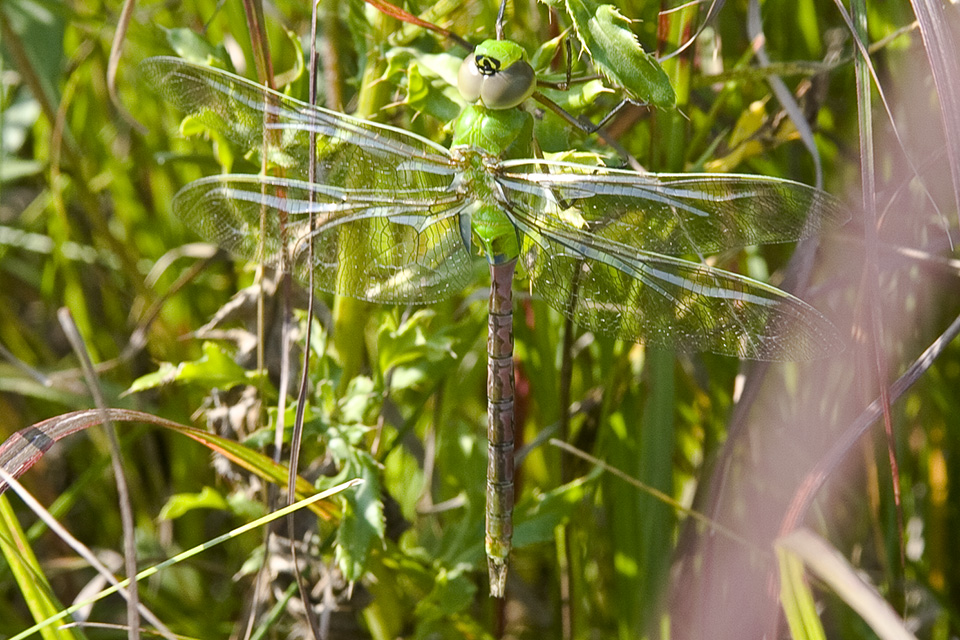
The wingspan is up to 4⅜″. The wings are clear and have a small yellow area near the tip. The hindwing triangle and the forewing triangle are the same size.
Size
Total length: 2⅔″ to 3⅛″
Similar Species
No similar species
Habitat
Ponds, lakes, and slow streams with vegetation.
Ecology
Season
Mid-April to mid-October
Behavior
Adults have an irregular territory which they patrol about three feet above the ground.
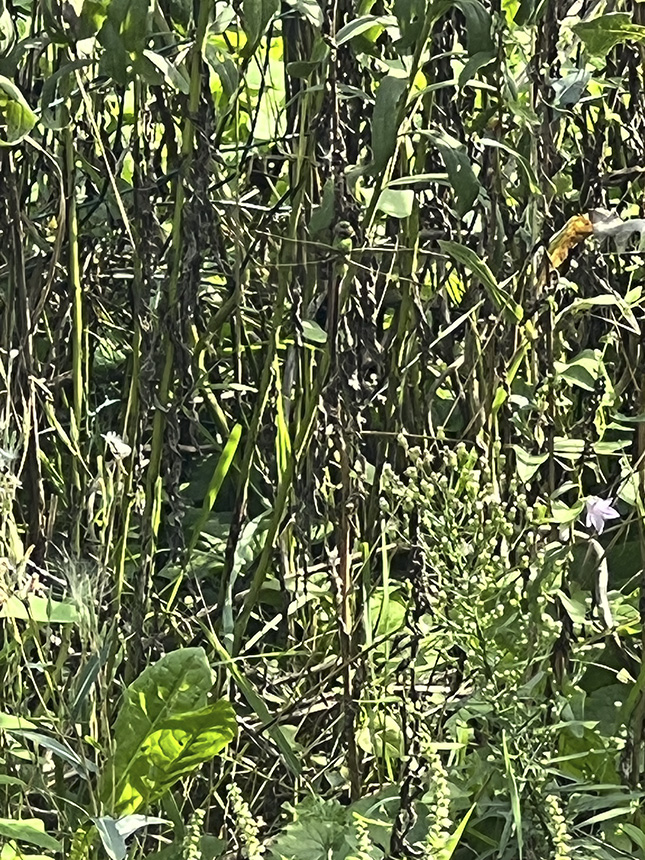
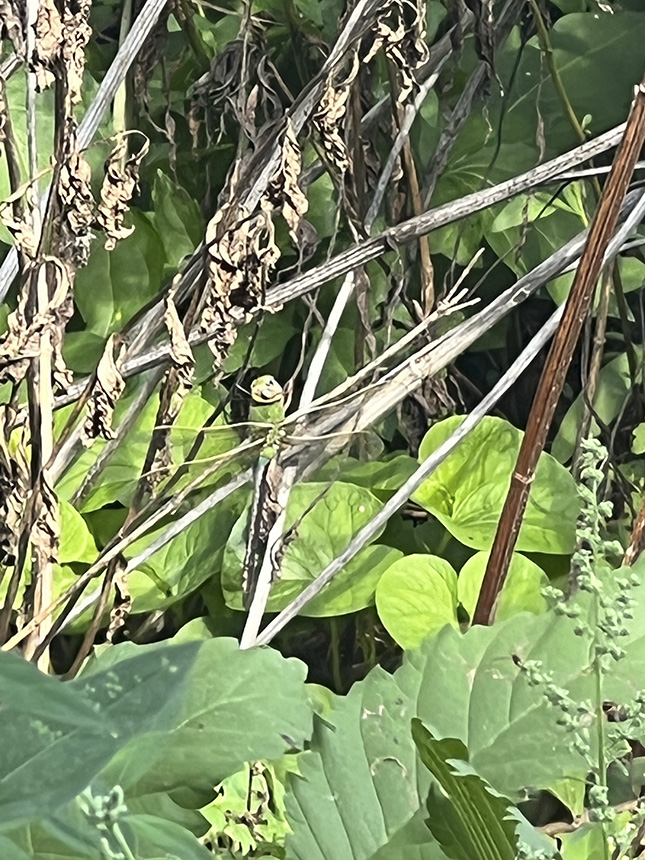
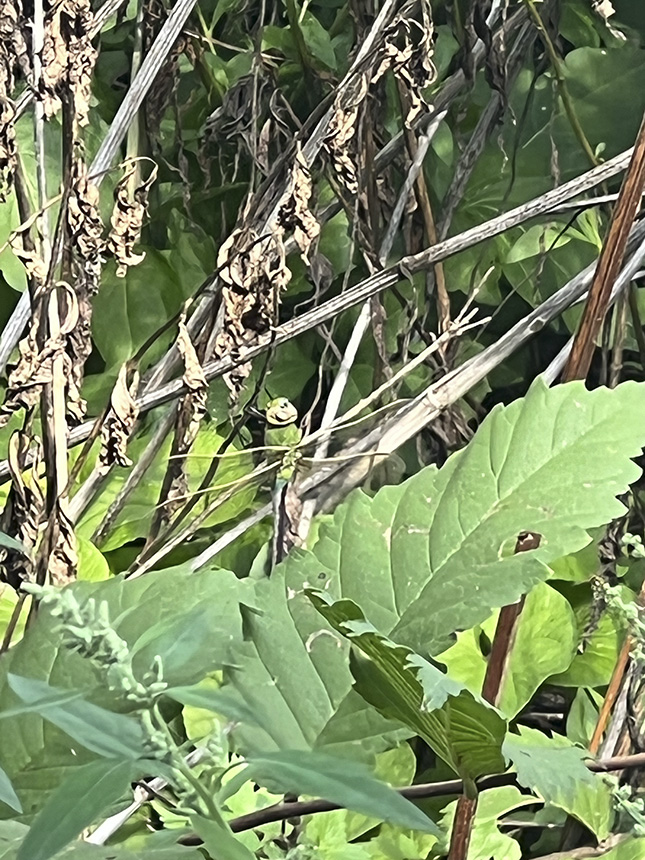
They perch vertically.
Life Cycle
Juveniles in Canada and the northern Unites States flock together in the fall and migrate south, following the north shore of Lake Superior for part of their route. Radio tagging has shown that they fly as much as 87 miles in a day. American Kestrels (Falco sparverius) migrate at the same time using the same route, and may use the darner migration as a food source during their migration. There is also a resident population that overwinters as larvae. The migrant population reproduces in the southern United States and their offspring migrate north in the spring.
Eggs are deposited inside the stem of emergent vegetation below the waterline. This is the only darner that lays eggs while the male and female are still in tandem. The naiads take several years to mature. When they mature they crawl up an emergent plant and an adult emerges at night.
Naiad Food
Tadpoles, small fish, mosquito larvae, fly larvae, mayfly larvae, and freshwater shrimp.
Adult Food
Midges, mosquitoes, caddis flies, flies, butterflies, moths, stoneflies, and mayflies.
Distribution |
||
|
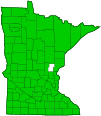
Sources 7, 18, 24, 27, 29, 30, 82, 83. Biodiversity occurrence data published by: Minnesota Biodiversity Atlas (accessed through the Minnesota Biodiversity Atlas Portal, bellatlas.umn.edu, 12/8/2025). |
|
| 12/8/2025 | ||
Occurrence |
||
Common |
||
Taxonomy
Order
Odonata (Dragonflies and Damselflies)
Suborder
Superfamily
Aeshnoidea
Family
Aeshnidae (Darners)
Genus
Anax (Green Farners)
Subordinate Taxa
Synonyms
Anax ocellatus
Anax severus
Anax spiniferus
Anex junius
Gomphus junius
Libellula junius
Common Names
common green darner