



Jack-in-the-pulpit
(Arisaema triphyllum)
Conservation • Wetland • Description • Habitat • Ecology • Use • Distribution • Taxonomy
|
|
||||||||||||||||||||||||
Description |
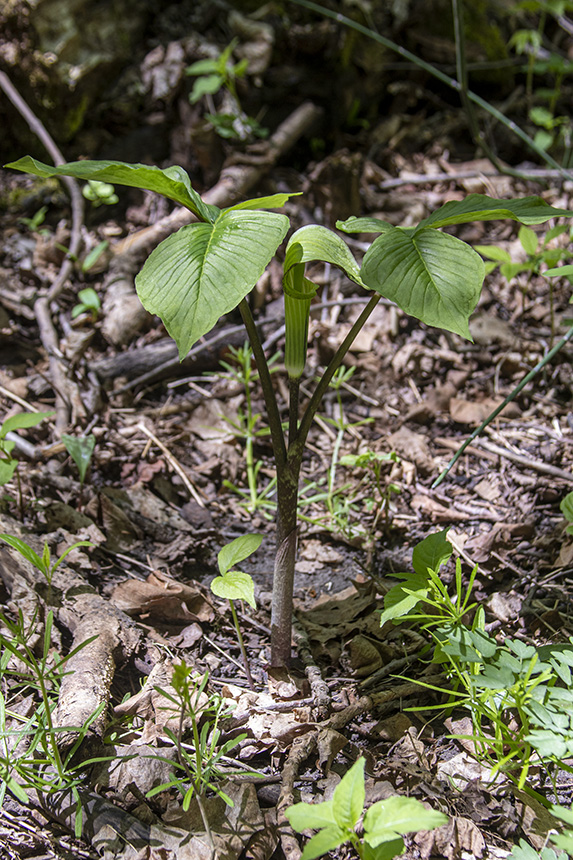
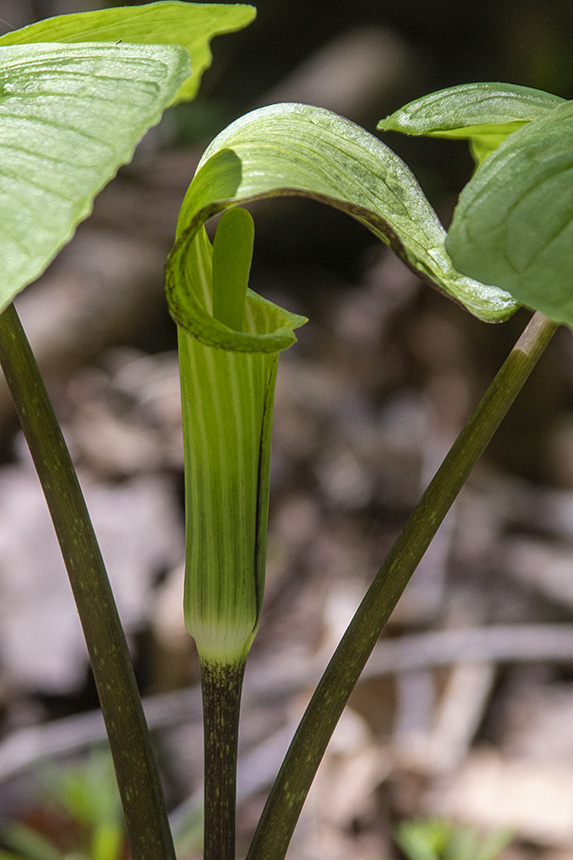
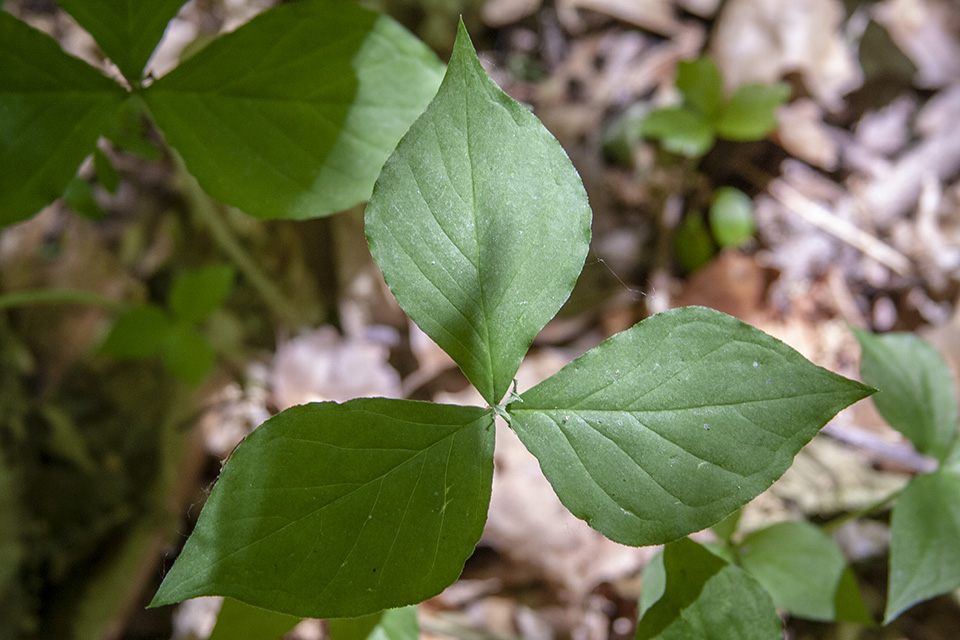
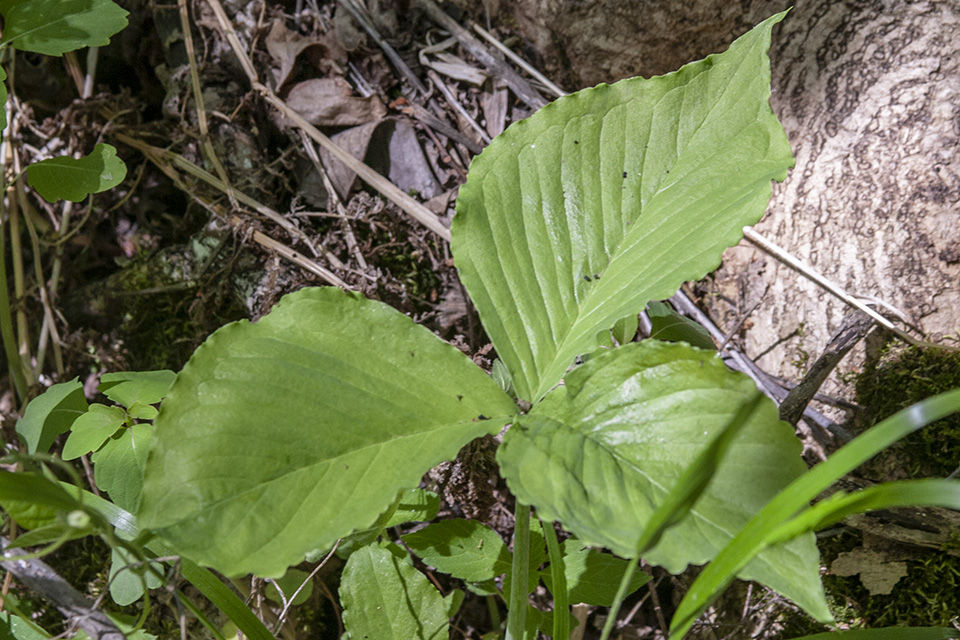
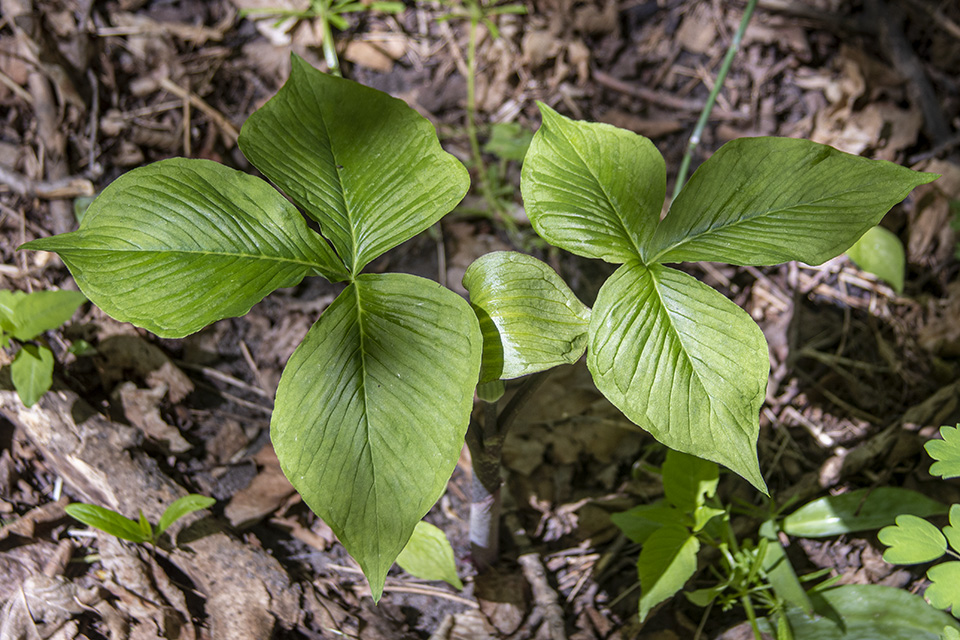
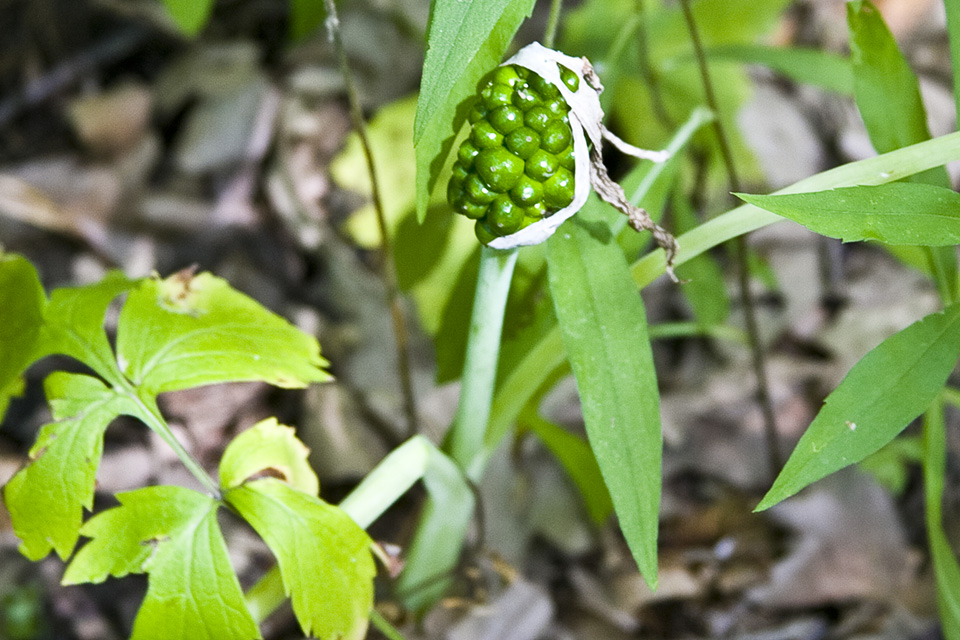
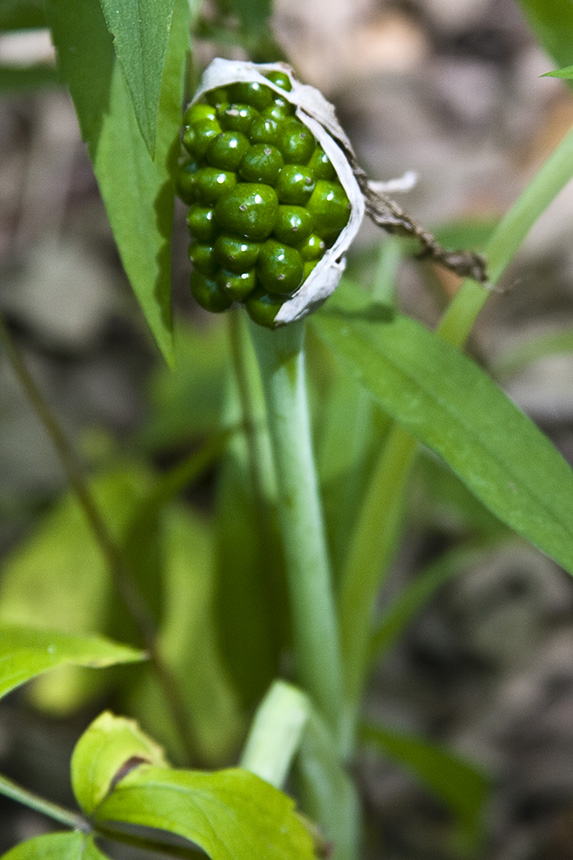
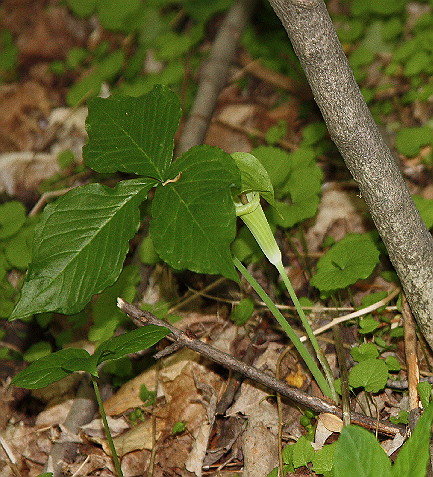
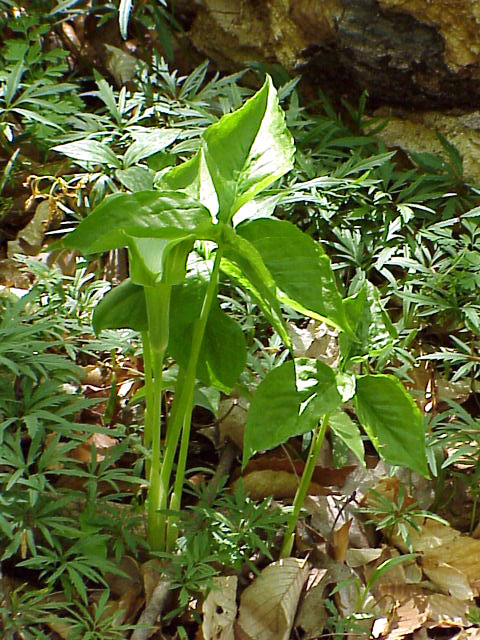
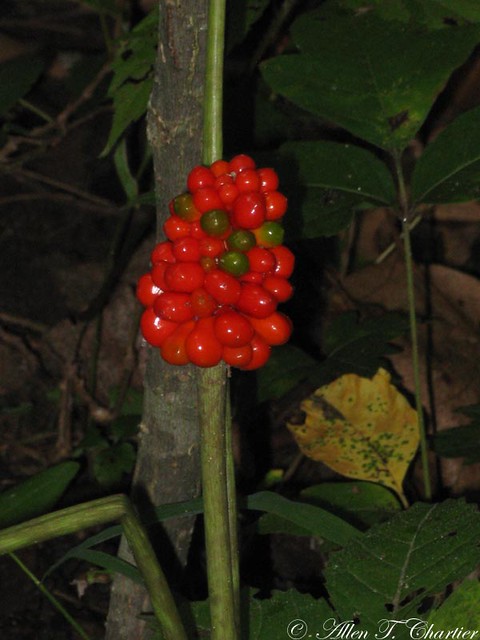
Jack-in-the-pulpit is a 12″ to 36″ tall, erect, perennial forb that rises from a corm with secondary roots. There is no central stem. Usually 2 leaves, sometimes just 1, rarely 3 rise from the corm on long, erect stalks that reach 24″ by the time the plant is in full flower. The leaves are divided into 3, rarely 5, more or less stalkless leaflets. The leaflets are 2½″ to 8″ long, 1¼″ to 5½″ wide, and taper gradually to a point at the tip with concave sides along the tip. There is a prominent midvein originating from the base of the leaf and extending to the tip, and up to 10 or more prominent, parallel, lateral veins branching pinnately off the midvein. The lateral veins curve abruptly toward the leaf tip before reaching the margin, and join together in a marginal vein. The angle formed between the midvein of the terminal leaflet and either lateral leaflet is 90° or less. The upper surface is medium to dark green and hairless. The lower surface is paler green, hairless, and covered with a whitish, waxy coating (glaucous). The margins are untoothed. The terminal leaflet is egg-shaped or broadly diamond-shaped. The lateral leaflets are distinctly asymmetrical and smaller than the terminal leaflet. A single flower stalk (peduncle) rises from the corm with the leaves. The peduncle is shorter than the leaf stalks. The inflorescence is a spike with tiny flowers crowded on a thickened axis (spadix). The spadix is yellow, 1″ to 3½″ tall, blunt-tipped, and club-shaped, tapering slightly from a narrower base to a broader tip. A leaf-like bract (spathe) forms a tube surrounding the spadix. It is expanded near the tip forming a long, tapering hood that covers the spadix and tube. The hood opens at maturity, exposing half of the spadix. The spathe is green, often with purple stripes. The male flowers are located above the female flowers on the lower half of the spadix. The upper part of the spadix has no flowers. The fruit is a nearly spherical, 1 ⁄5″ to ¼″ long, red berry with 1 to 3 seeds, borne in a tight cluster up to 2″ long. |
Height |
12″ to 36″ |
Flower Color |
Yellow |
Similar Species |
Trilliums (Trillium spp.) look similar when no flower or fruit is present. They can be distinguished from Jack-in-the-pulpit by the veins on the leaves. Trillium leaves have 5 prominent veins originating from the base of the leaf and extending to the tip. The lateral veins form a network. The angle formed between the midvein of the terminal leaflet and either lateral leaflet is greater than 90° (obtuse). |
Habitat |
Moist to moderate moisture. Woods. Partial sun to shade. |
Ecology |
Flowering |
April to June |
Pests and Diseases |
Jack-in-the-Pulpit Rust forms many yellowish orange pustules on the leaves and spathe, and it also attacs the corm. It causes reduced plant growth and it inhibits polination and vegetative propagation. Most infected female plants are unable to produce seeds. |
Use |
|
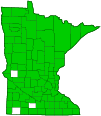
Distribution |
||
|
Sources |
|
| 5/20/2025 | ||
Nativity |
||
Native |
||
Occurrence |
||
Common |
||
Taxonomy |
|
Kingdom |
|
Subkingdom |
Pteridobiotina |
Phylum |
Tracheophyta (Vascular Plants) |
Class |
Liliopsida (Monocots) |
Subclass |
Alismatidae |
Order |
Alismatales (water-plantains, seagrass, and allies) |
Family |
Araceae (arum) |
Subfamily |
Aroideae |
Tribe |
Arisaemateae |
Genus |
Arisaema (Jack-in-the-pulpits and cobra lilies) |
Subordinate Taxa |
|
Some taxonomic authorities recognize three, four, or five of the subspecies of Jack-in-the-pulpit listed below. GRIN and NatureServe each recognize 3 subspecies, USDA PLANTS recognizes 4 subspecies. Some sources treat them as varieties. Several sources, including Plants of the World Online, World Flora Online, Catalog of Life, and iNaturalist, treat them as separate species. iNaturalist treats the five species as the Arisaema triphyllum Species Complex. A few sources, including ITIS, GBIF, and Flora of North America (FNA), treat Arisaema triphyllum as one highly variable species with no subspecies. Whether species, subspecies, varieties, or morphological forms, they are reproductively isolated in the wild. They can be recognized in the field but herbarium specimens are difficult to separate. There is much overlap in the defining characteristics, with many intermediate forms and hybrids. FNA does not recognize any subspecies but does include a key for distingushing between three of them. |
|
bog Jack-in-the-pulpit (Arisaema triphyllum ssp. stewardsonii) five-leaved Jack-in-the-pulpit (Arisaema triphyllum ssp. quinatum) Florida Jack-in-the-pulpit (Arisaema triphyllum ssp. acuminatum) Jack-in-the-pulpit (Arisaema triphyllum ssp. triphyllum) small Jack-in-the-pulpit (Arisaema triphyllum ssp. pusillum) |
|
Synonyms |
|
Arisaema acuminatum Arisaema atrorubens Arisaema pusillum Arisaema quinatum Arisaema stewardsonii Arisaema triphyllum ssp. pusillum Arisaema triphyllum ssp. quinatum Arisaema triphyllum var. stewardsonii Arisaema triphyllum ssp. stewardsonii Arisaema triphyllum ssp. triphyllum |
|
Common Names |
|
Indian Jack in the pulpit Indian turnip Jack in the pulpit Jack-in-the-pulpit |
|
 (?)
(?)
Glossary
Corm
A short, solid, vertical, thickened, underground stem that serves as a storage organ.
Glaucous
Pale green or bluish gray due to a whitish, powdery or waxy film, as on a plum or a grape.
Peduncle
The stalk of a single flower or flower cluster.
Pinnately veined
With the veins arranged like the vanes of a feather; a single prominent midvein extending from the base to the tip and lateral veins originating from several points on each side.
Spadix
A spike with small flowers crowded on a thickened, fleshy axis, usually enclosed in a spathe.
Spathe
One or two large bracts that subtend, hood, or sometimes envelope a flower or flower cluster, as with a Jack-in-the-pulpit.
Visitor Photos |
||
Share your photo of this plant. |
||
This button not working for you? |
||
Kberns |
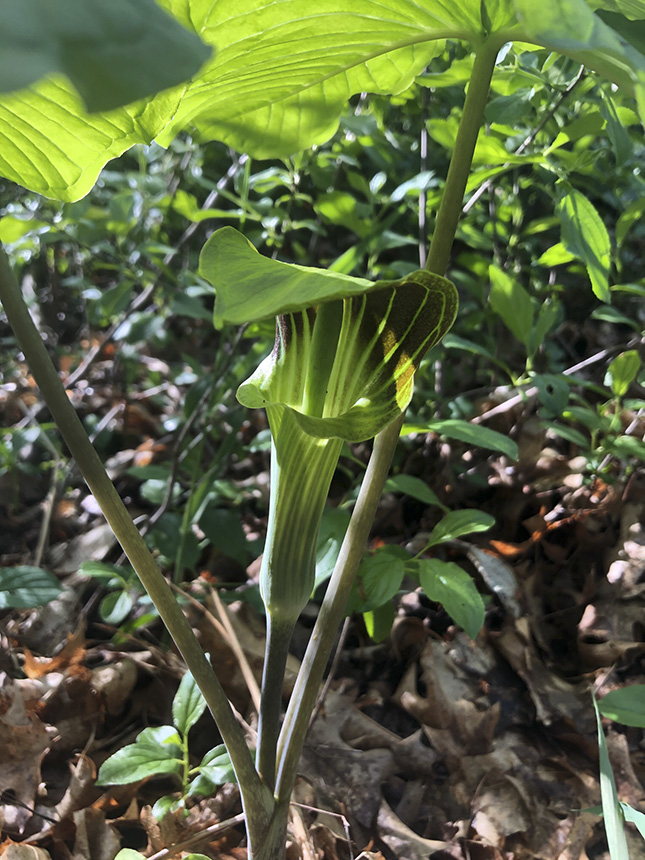 |
This one was big ! |
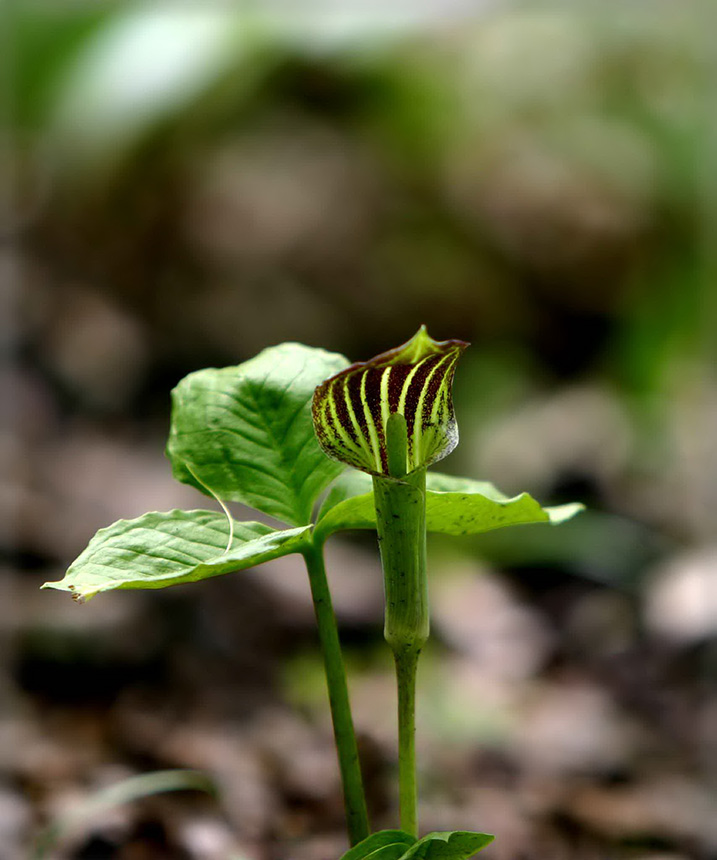
Wayne Rasmussen |
 |
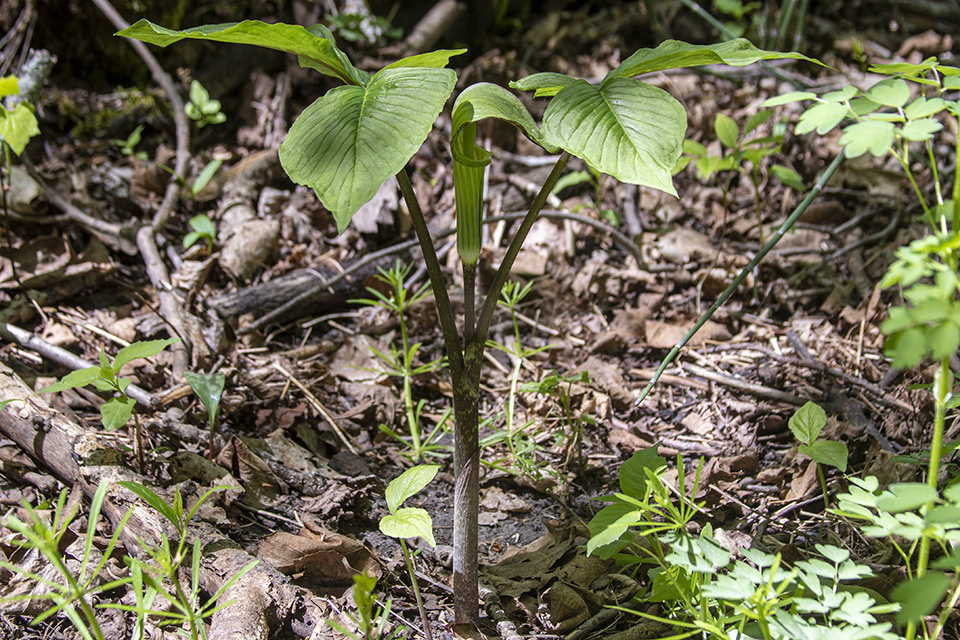
MinnesotaSeasons.com Photos |
||
 |
 |
|
Plant |
||
|
||
|
||
|
Plant |
|
 |
 |
|
Flower |
Flower |
|
 |
 |
|
Leaf |
Leaf |
|
 |
 |
|
Leaves |
Infructescence |
|
 |
||
Infructescence |
|

Slideshows |
Jack In The Pulpit |
|
About
Copyright DianesDigitals |
Arisaema triphyllum |
|
Jack-in-the-pulpit (Arisaema triphyllum var.) |

|
Arisaema atrorubens (Jack-in-the-Pulpit) |
|
Visitor Videos |
||
Share your video of this plant. |
||
This button not working for you? |
||
|
Other Videos |
||
Jack in the Pulpit (Arisaema triphyllum) |
About
Published Sep 25, 2013 Development of Jack in the Pulpit (Arisaema triphyllum) from flowers to berries. Transylvania County, NC. Flowers shot late May, early June 2013; Berries shot late August through september 2013. |
MyNature Apps; Identifying Jack-in-the-Pulpit, Arisaema triphyllum |
About
Uploaded May 29, 2011 How to identify Jack-in-the-Pulpit, Arisaema triphyllum also known as Bog onion, Brown dragon, Indian turnip, Wake robin or Wild turnip. www.mynatureapps.com |
Jack in the Pulpit (Arisaema triphyllum) |
About
Published on Apr 9, 2012 Jack in the Pulpit (Arisaema triphyllum) |

Visitor Sightings |
||
Report a sighting of this plant. |
||
This button not working for you? |
||
| Kberns 5/23/2020 |
Location: Hugo, MN This one was big ! |
|
| Wayne Rasmussen 5/31/2016 |
Location: Nerstrand Big Woods State Park |
|
Crystal Boyd |
Location: Pine Bend Bluffs SNA |
|
MinnesotaSeasons.com Sightings |
||
|
Created: 5/12/2006 Last Updated: © MinnesotaSeasons.com. All rights reserved. |