


Northern pin oak
(Quercus ellipsoidalis)
Conservation • Description • Habitat • Ecology • Use • Distribution • Taxonomy
Conservation Status |
|
|||
| IUCN Red List | LC - Least Concern |
|||
| NatureServe | N4 - Apparently Secure SNR - Unranked |
|||
| Minnesota | not listed |
|||
Description
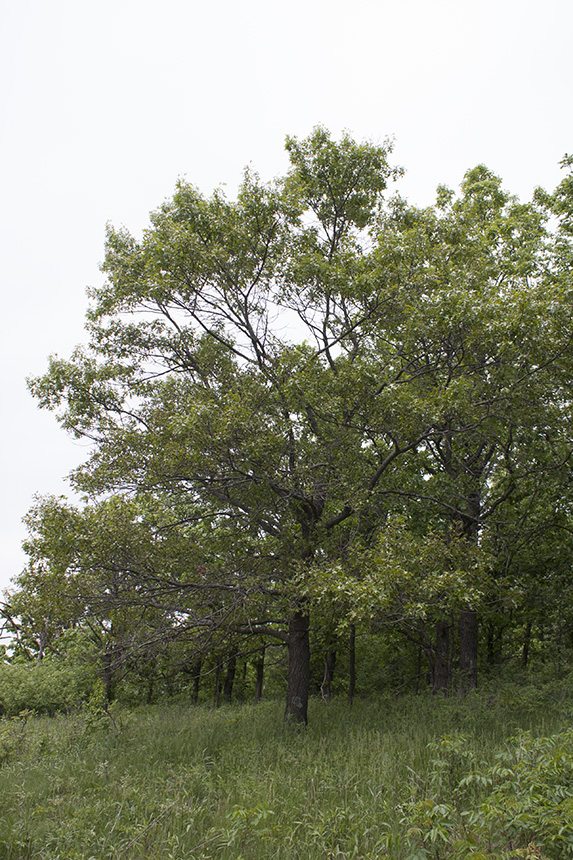
Northern pin oak is a moderately fast growing, moderately long-lived, deciduous tree rising on a single trunk from a deep taproot and deep, widely spreading, lateral roots. In Minnesota mature trees are usually 40′ to 60′ tall and 18″ to 24″ in diameter at breast height, though individuals can reach over 70′ in height and 43″ in diameter.
The crown is open, rounded, and irregular. The branches are small. Lower branches are drooping. Stubs of dead branches on the lower trunk often persist for a long period of time, giving the trunk a ragged appearance.
The bark on young trees is dark grayish-brown to grayish-black, and smooth. On mature trees the bark is thicker and gray or grayish-brown. It is broken into short, rough, slightly blocky ridges separated by shallow furrows. On older trees it is rougher and breaks into irregular segments. Inner bark is light yellow.
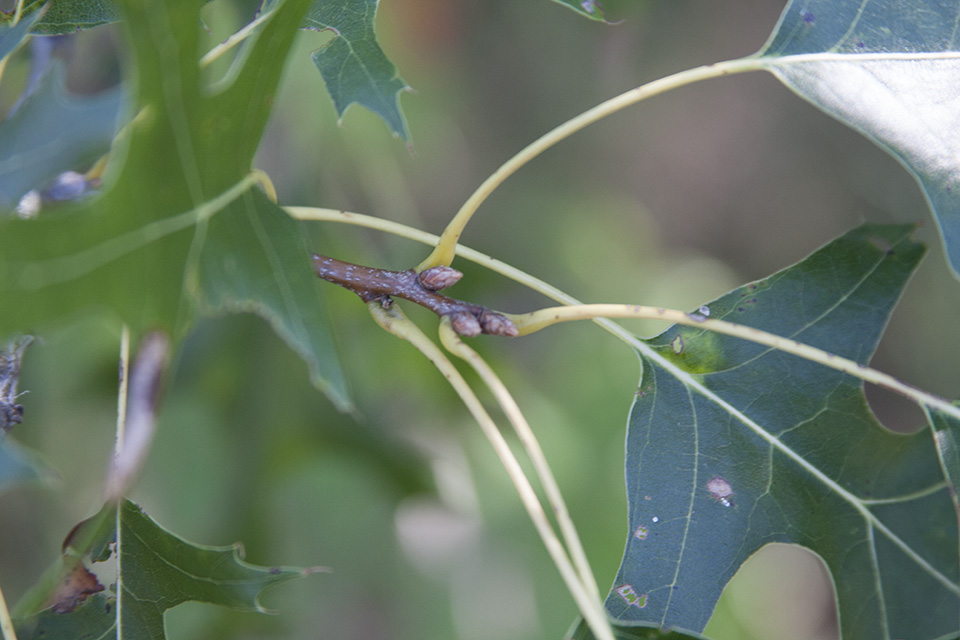
Twigs are dark reddish-brown and hairless. Terminal buds are dark reddish-brown, egg-shaped, conspicuously 5-angled in cross section, and ⅛″ to 3 ⁄16″ long. The scales near the tip are covered with silvery or tawny hairs but the buds are otherwise hairless. They are surrounded by a cluster of lateral buds.
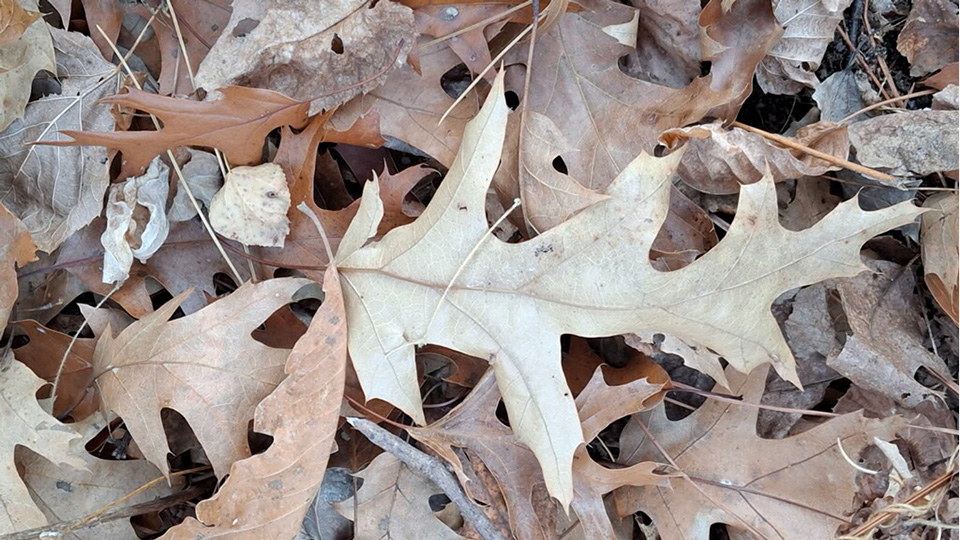
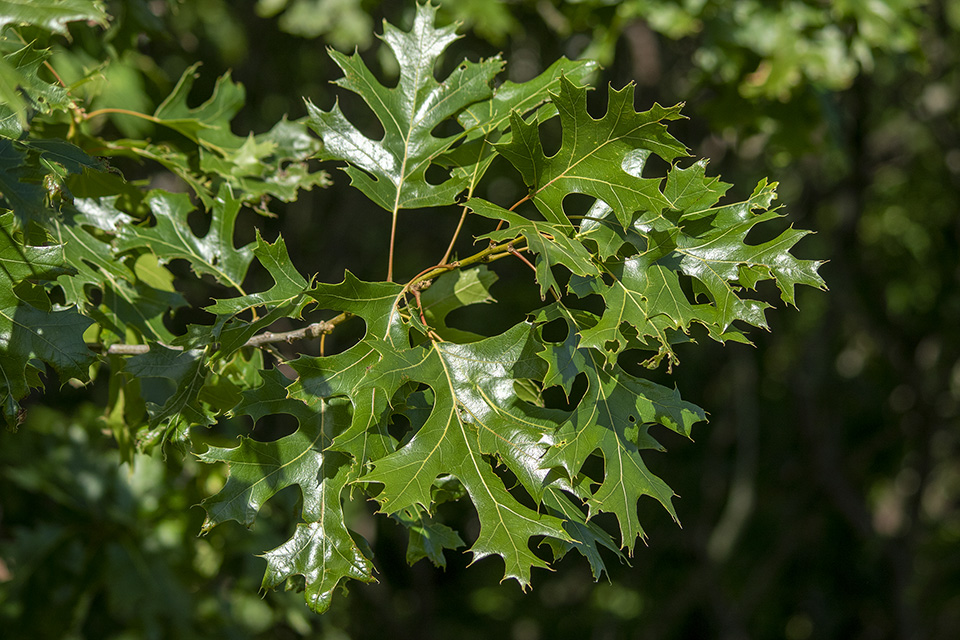
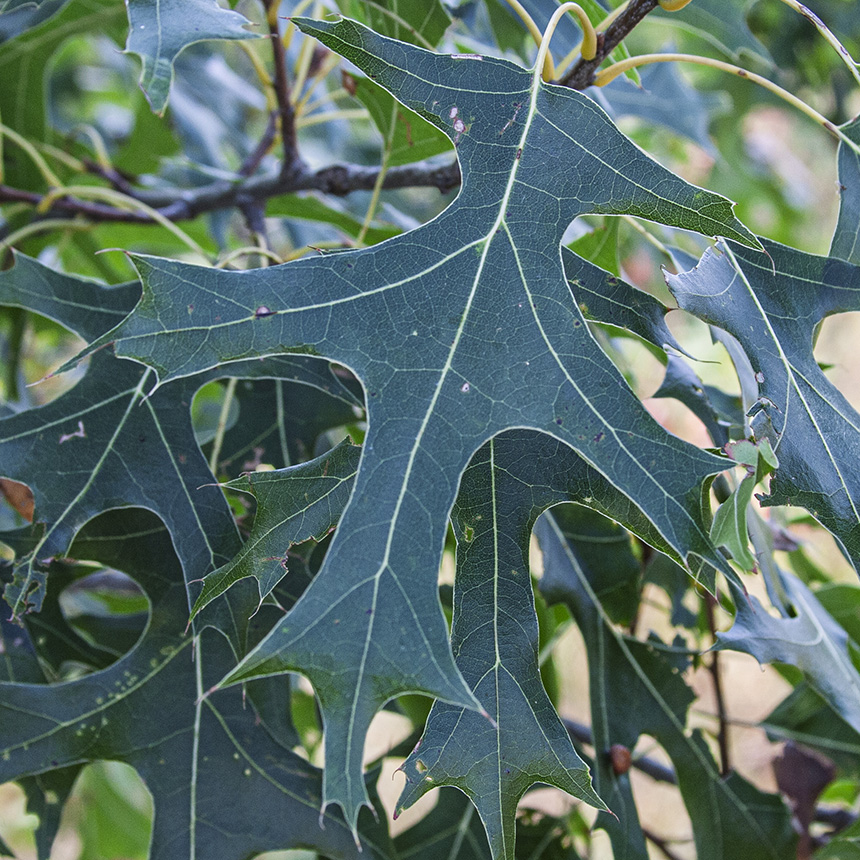
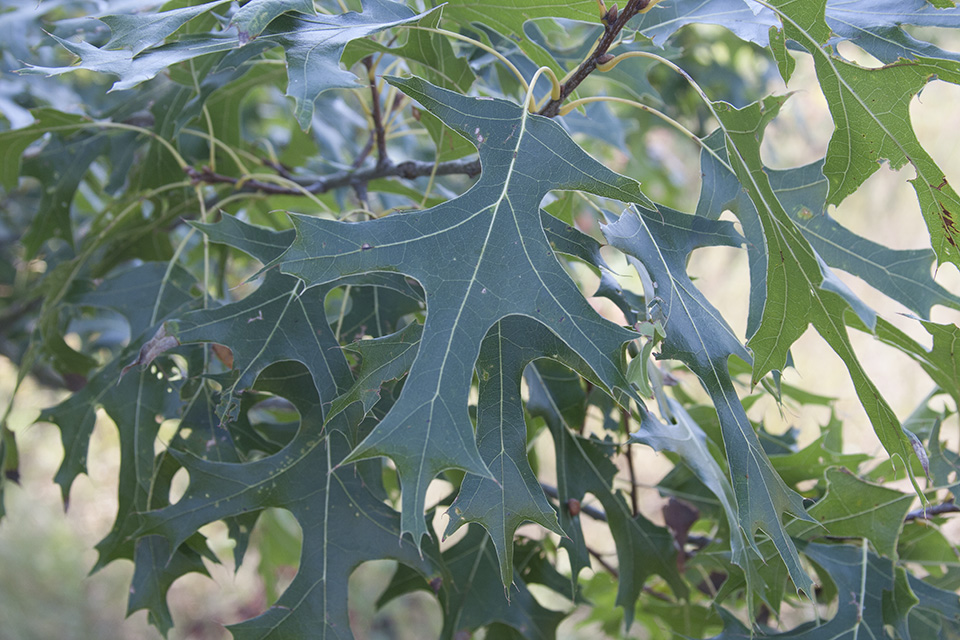
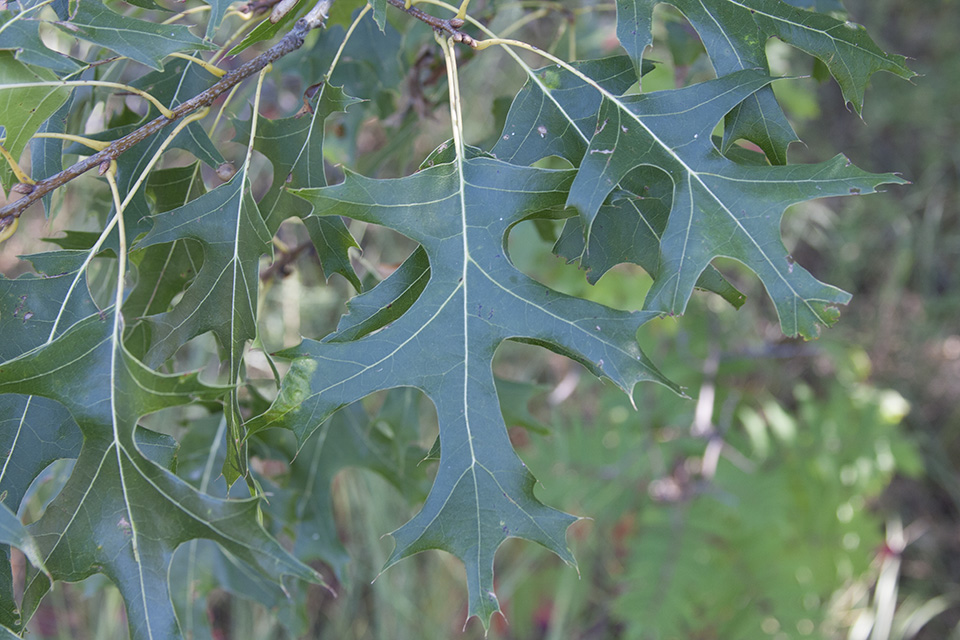
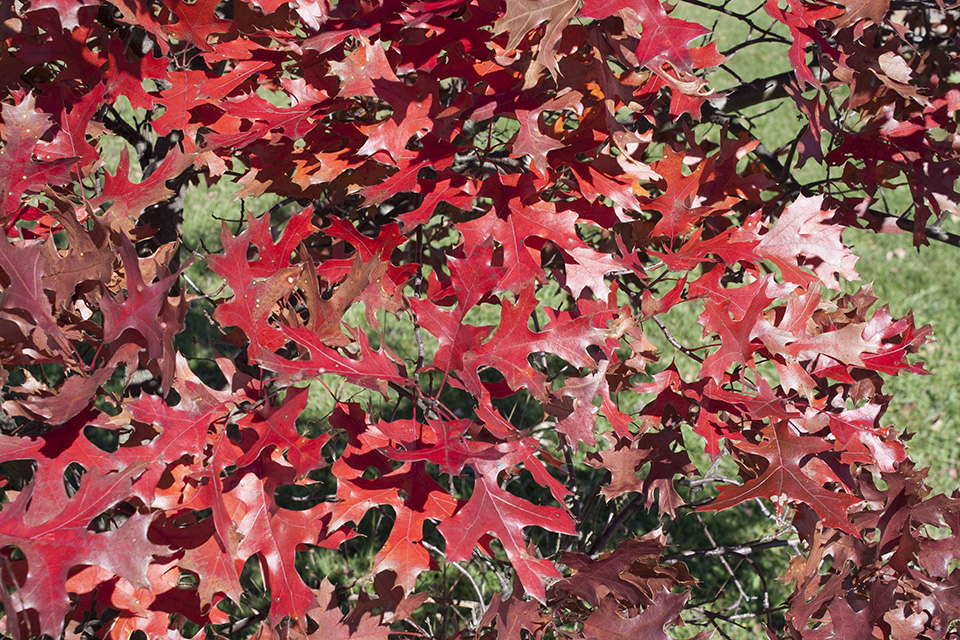
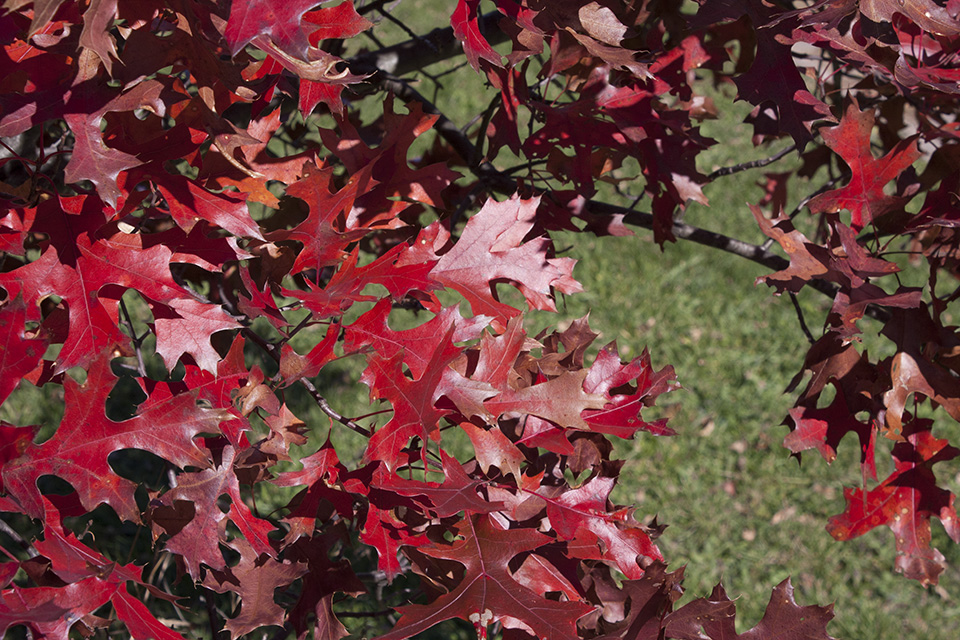
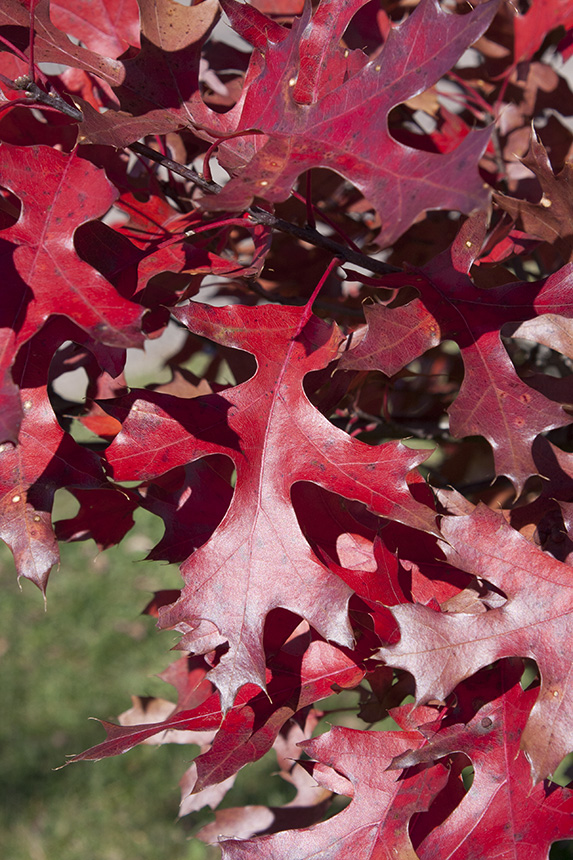
The leaves are alternate, elliptic in outline, 2¾″ to 5½″ long, and 2½″ to 5″ wide. They are on hairless or almost hairless, ¾″ to 1¾″ long leaf stalks. The leaf blade is broadly angled or nearly squared off at the base. There are 2 or 3 primary lobes separated by deep, U-shaped sinuses and 9 to 22 smaller, bristle-tipped, secondary lobes per side. Most of the sinuses extend more than half way to the midrib. The deepest sinuses extend 65% to 90% of the way to the midrib. The upper surface is dark or light green, shiny, and hairless. The lower surface is pale green, hairless except for tufts of hair in the vein axils. In autumn the leaves turn deep red, yellow, brown, or purple.
Male and female flowers are borne on the same branch. Male flowers are in slender, greenish, 1½″ to 4″ long catkins that hang downward from buds on branchlets of the previous year. Female flowers are bright green and appear singly or in clusters of 2 or 3 on a short stalk rising from leaf axils on branchlets of the current year. The flowers appear after the leaves in early May to early June.
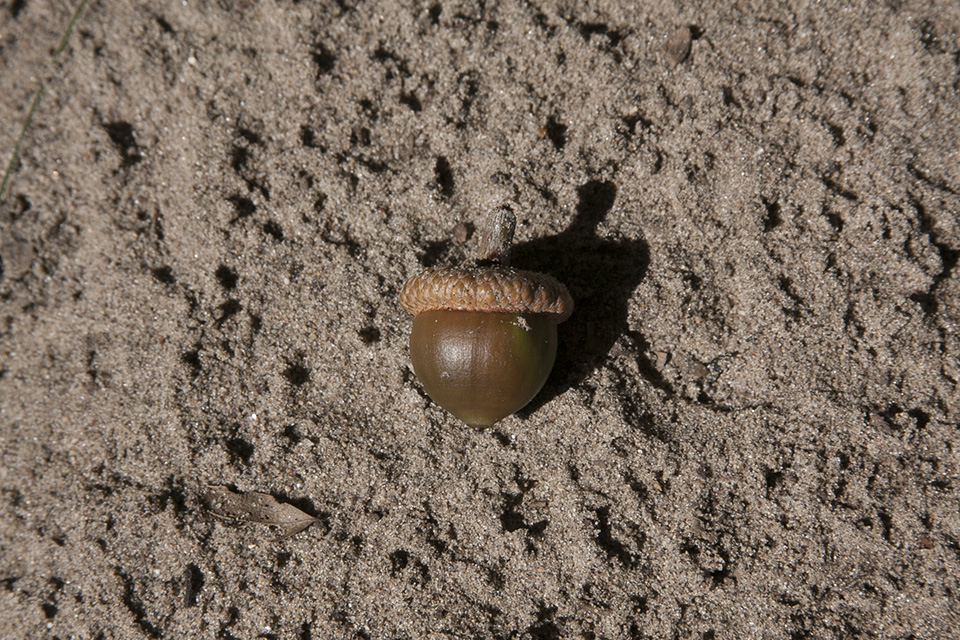
The fruit is an ellipsoidal or egg-shaped, ½″ to ⅝″ long, 5 ⁄16″ to ½″ wide acorn. It occurs singly or in clusters of 2 or 3 on a short, stout stalk. A deep, scaly, bowl-shaped cup encloses ⅓ to ½ of the lower part of the nut. The scales on the cup are flat and the tips of the scales are tightly appressed. The inside of the acorn cup is hairless or, rarely, has a ring of hairs around the scar. The acorns stay on the tree for two growing seasons. The kernel is yellow and tastes very bitter. It ripens in mid-August to mid-September of the second year.
Height
40′ to 60′
Record
The champion northern pin oak in Minnesota is on private property near Caledonia, in Houston County. In 2003 it was measured at 97′ tall and 143″ in circumference (45½″ in diameter), with a crown spread of 85′.
Flower Color
Greenish
Similar Species
Northern pin oak is often misidentified as scarlet oak (Quercus coccinea), but that species does not occur in Minnesota.
Eastern pin oak (Quercus palustris), a non-native tree, has deeper, wider sinuses. It does not occur in Minnesota.
Northern red oak (Quercus rubra) has mature bark broken into long, pale gray ridges that have the appearance of ski trails. Terminal buds much larger and are round in cross section, not 5-angled. The leaf stalks are tinged red or mostly red. The leaf blades are less deeply lobed. Most of the sinuses extend less than half way to the midrib. The deepest sinuses extend 45% to 70% of the way to the midrib. The upper leaf surface is shiny. The acorn is larger, ⅝″ to 1″ long. The kernel is white.
Habitat
Dry. Savannas, upland deciduous forests, sandy plains. Shade intolerant.
Ecology
Flowering
Early May to early June
Pests and Diseases
Use
Oak Anthracnose (Apiognomonia errabunda)
Oak leaf gall midge (Polystepha pilulae)
Oak Wilt (Ceratocystis fagacearum)
Tubakia leaf spot (Tubakia dryina) causes brown or reddish-brown spots on the leaves of all oaks but especially those in the red oak group. It starts in early summer as small, brown, angular spots with a pale center.
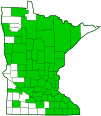
Distribution |
||
|
Sources 2, 3, 5, 7, 8, 24, 28, 29, 30. Biodiversity occurrence data published by: Minnesota Biodiversity Atlas (accessed through the Minnesota Biodiversity Atlas Portal, bellatlas.umn.edu, 11/23/2025). |
|
| 11/23/2025 | ||
Nativity |
||
Native |
||
Occurrence |
||
Common |
||
Taxonomy
Kingdom
Subkingdom
Pteridobiotina
Phylum
Tracheophyta (Vascular Plants)
Class
Order
Fagales (Beeches, Oaks, Walnuts, and Allies)
Family
Fagaceae (Beech)
Subfamily
Fagoideae
Genus
Quercus (Oaks)
Subgenus
Quercus (High-latitude Oaks)
Section
Lobatae (Red Oaks)
Subsection
Coccineae
Subordinate Taxa
Synonyms
Quercus ellipsoidalis var. coccinioides
Quercus ellipsoidalis var. kaposianensis
Common Names
Hill’s oak
Jack oak
northern pin oak
Glossary
Axil
The upper angle where a branch, stem, leaf stalk, or vein diverges.
Catkin
A slim, cylindrical, drooping cluster of many flowers. The flowers have no petals and are either male or female but not both.
Visitor Photos
Share your photo of this plant.
This button not working for you?
Simply email us at info@MinnesotaSeasons.com.
Attach one or more photos and, if you like, a caption.
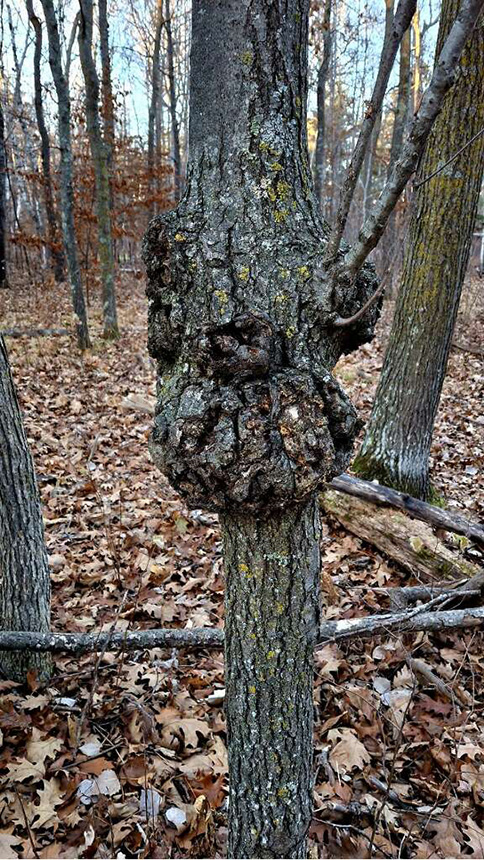
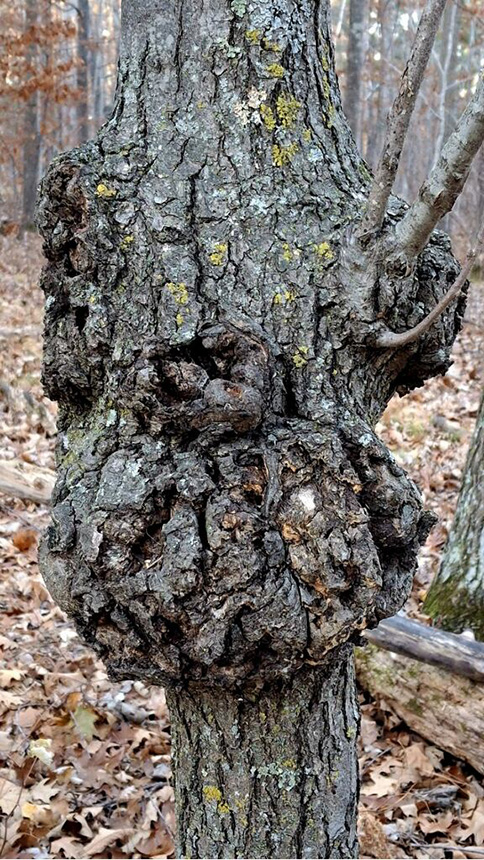
Luciearl |
||
 |
 |
|
 |
||
Greg Watson |
 |
MinnesotaSeasons.com Photos
 |
 |
|
Bark on mature trees |
||
|
||
|
||
Tree |
|
|
 |
 |
|
Bark on mature trees |
Bark on older trees |
|
 |
||
Leaf |
|
|
 |
 |
|
Leaf |
Leaf |
|
 |
 |
|
Petiole |
Fruit |
|
 |
 |
|
Fall color |
Fall color |
|
 |
 |
|
Fall color |
||
|
||
|
||
|
Fall color |

Slideshows
Visitor Videos
Share your video of this plant.
This button not working for you?
Simply email us at info@MinnesotaSeasons.com.
Attach a video, a YouTube link, or a cloud storage link.
Other Videos
Trees with Don Leopold - pin oak
ESFTV
Quercus palustris
ReachOutTouchFait

Visitor Sightings
Report a sighting of this Plant.
This button not working for you?
Simply email us at info@MinnesotaSeasons.com.
Be sure to include a location.
Luciearl
11/19/2025

Location: Lake Shore, MN
Greg Watson
6/19/2022

Location: Apple Blossom Overlook Park
Minnesota Seasons Sightings
Avon Hills Forest SNA, North Unit
Badoura Jack Pine Woodland SNA
Beaver Creek Valley State Park
Bertram Chain of Lakes Regional Park
Cannon River Turtle Preserve SNA
Carpenter St. Croix Valley Nature Center
Charles A. Lindbergh State Park
Clifton E. French Regional Park
Clinton Falls Dwarf Trout Lily SNA
Forestville/Mystery Cave State Park
John Peter Hoffman Spring Brook Valley WMA
Kellogg Weaver Dunes SNA, Weaver Dunes Unit
Mary Schmidt Crawford Woods SNA
Minnesota Valley NWR, Black Dog Unit
Minnesota Valley NWR, Long Meadow Lake Unit
Minnesota Valley NWR, Louisville Swamp Unit
Minnesota Valley NWR, Rapids Lake Unit
Minnesota Valley State Recreation Area, Lawrence Unit
Nerstrand Big Woods State Park
Prairie Creek WMA, Koester Prairie Unit
Robert Ney Memorial Park Reserve
Sand Prairie Wildlife Management and Environmental Education Area
Stanley Eddy Memorial Park Reserve