


whitetail deer
(Odocoileus virginianus)
Conservation • Description • Habitat • Biology • Distribution • Taxonomy
|
|
||||||||||||||
Description |
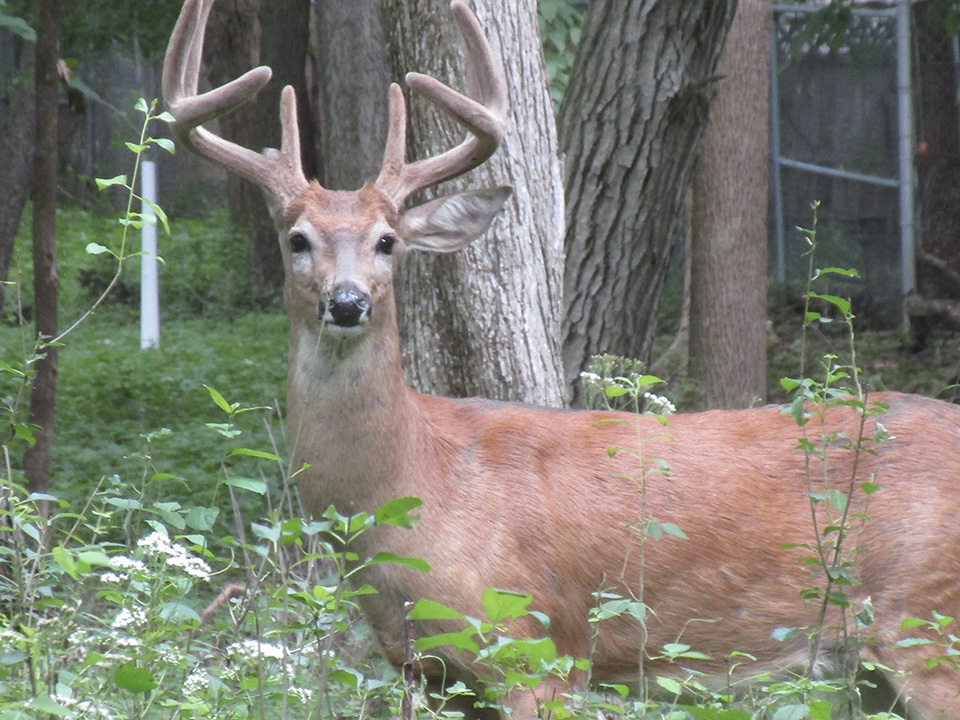
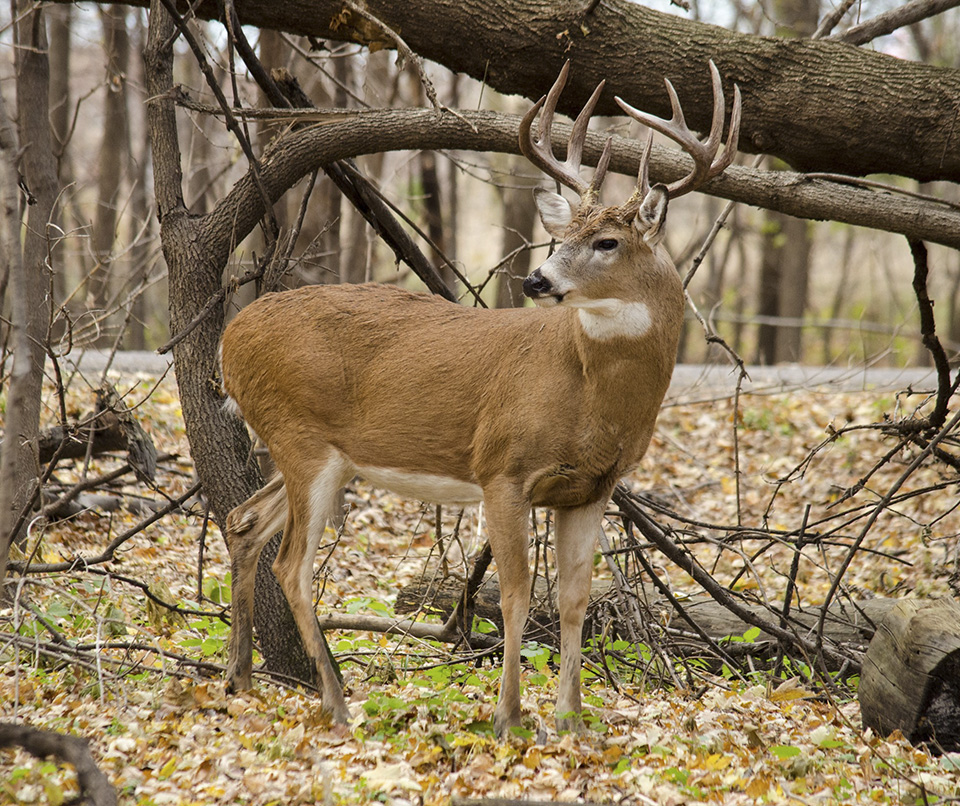
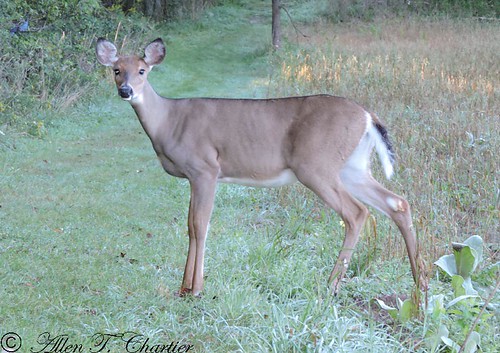
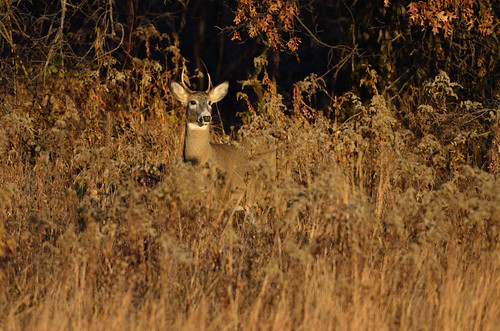
The tail is wide and ends in a black tip. There is no rump patch around the tail. When the animal runs the tail stands erect. On males the antlers develop on a main beam that grows forward. Branches on the antlers are either unbranched prongs, or prongs with minor branches. They do not split equally. The males are about 20% larger than the females. |
Size |
Total length: 71″ to 84¾″ Tail: 11″ to 14″ |
Sign |
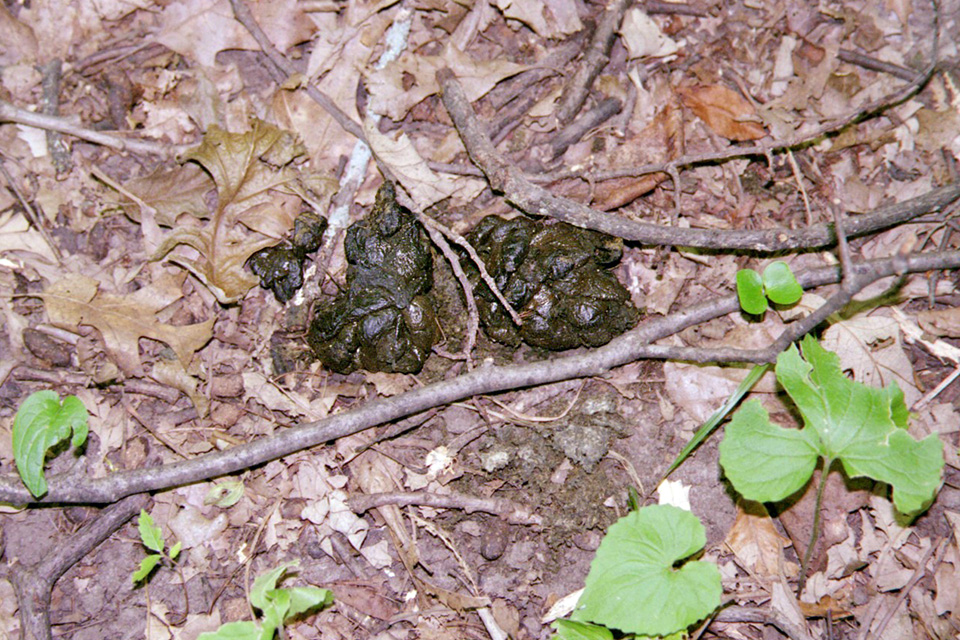
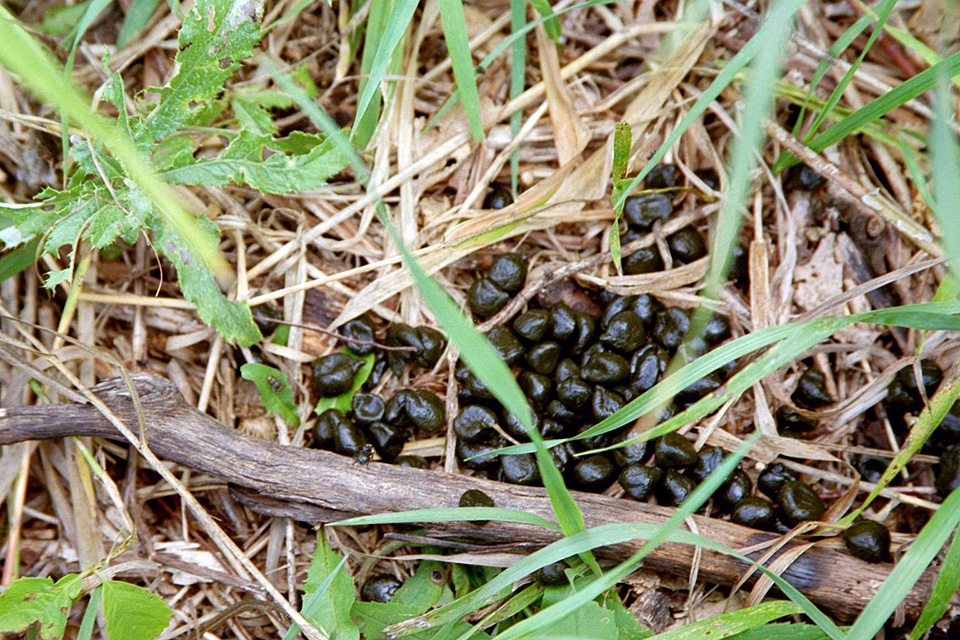
In the winter scat is a pile of pelets. In the summer, when there is more moisture in the diet, the pellets bunch up into larger masses. Fresh scat is dark and shiny. After a few days it loses the sheen. It lightens in color as it ages. |
Similar Species |
Isolated occurances of mule deer (Odocoileus hemionus) in Minnesota have been reported. The mule deer has much larger ears. There is a white rump patch around the tail. The tail is thinner than the tail of the whitetailed deer, and ends in a black tip. When the animal runs the tail hangs down. On males the antlers develop on a main beam that grows upward, rather than forward. Each branch of the antlers are split into a forked pair. |
Habitat |
Prairies, forests, swamps, wood lots, agricultural fields. |
Biology |
Behavior |
|
Lifespan |
2 to 10 years |
Life Cycle |
|
Food |
Leaves, twigs, shoots, acorns, berries, and seeds, grasses, and herbs. |
Distribution |
||
|
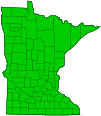
Sources Biodiversity occurrence data published by: Minnesota Biodiversity Atlas (accessed through the Minnesota Biodiversity Atlas Portal, bellatlas.umn.edu, 4/26/2025). The range of Dakota whitetail deer (O. v. dacotensis) extends into western and northwestern Minnesota. The range of Kansas whitetail deer (O. v. macrourus) extends into southern Minnesota to about the Minnesota River Valley. Northern whitetail deer (O. v. borealis) are found in the northeast, north-central, central, metro, and southeast regions of the state. |
|
| 4/26/2025 | ||
|
||
|
||
Occurrence |
||
Common and widespread |
||
Taxonomy |
|
Class |
Mammalia (mammals) |
Subclass |
Theria |
Infraclass |
Eutheria (placental mammals) |
Magnorder |
Boreoeutheria |
Superorder |
Laurasiatheria (ungulates, carnivorans, and allies) |
Order |
Artiodactyla (even-toed ungulates and cetaceans) |
Suborder |
Ruminantia (ruminants) |
Infraorder |
Pecora |
Family |
Cervidae (deer) |
Subfamily |
Capreolinae (New World deer, moose, caribou, and roe deer) |
Tribe |
Odocoileini (true New World deer and caribou) |
Genus |
Odocoileus (white-tailed and mule deer) |
Subordinate Taxa |
|
Avery Island white-tailed deer (Odocoileus virginianus mcilhennyi) Blackbeard Island white-tailed deer (Odocoileus virginianus nigribarbis) Bull Island white-tailed deer (Odocoileus virginianus taurinsulae) Carmen Mountains white-tailed deer (Odocoileus virginianus carminis) Columbian white-tailed deer (Odocoileus virginianus leucurus) Coues white-tailed deer (Odocoileus virginianus couesi) Dakota white-tailed deer (Odocoileus virginianus dacotensis) Florida coastal white-tailed deer (Odocoileus virginianus osceola) Florida white-tailed deer (Odocoileus virginianus seminolus) Hilton Head Island white-tailed deer (Odocoileus virginianus hiltonensis) Hunting Island white-tailed deer (Odocoileus virginianus venatorius) Kansas white-tailed deer (Odocoileus virginianus macrourus) Key deer (Odocoileus virginianus clavium) northern white-tailed deer (Odocoileus virginianus borealis) northwestern white-tailed deer (Odocoileus virginianus ochrourus) Texas white-tailed deer (Odocoileus virginianus texanus) Virginia white-tailed deer (Odocoileus virginianus virginianus) |
|
Synonyms |
|
Cervus virginianus Dama virginiana Odocoileus cooki Odocoileus sheridanus |
|
Common Names |
|
deer Virginia deer whitetail white-tailed deer whitetail deer |
|

Visitor Photos |
||
Share your photo of this mammal. |
||
This button not working for you? |
||
Bobbi Johnson |
||
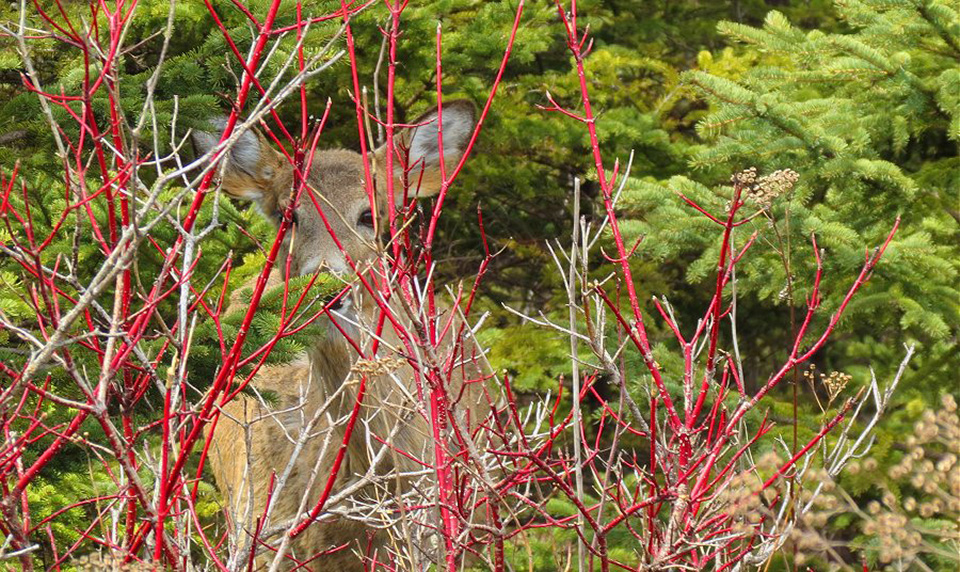
Down in Two Harbors today A lovely sight and very close to where I was walking. |
||
 |
 |
|
 |
 |
|
Dan W. Andree |
||
 |
 |
|
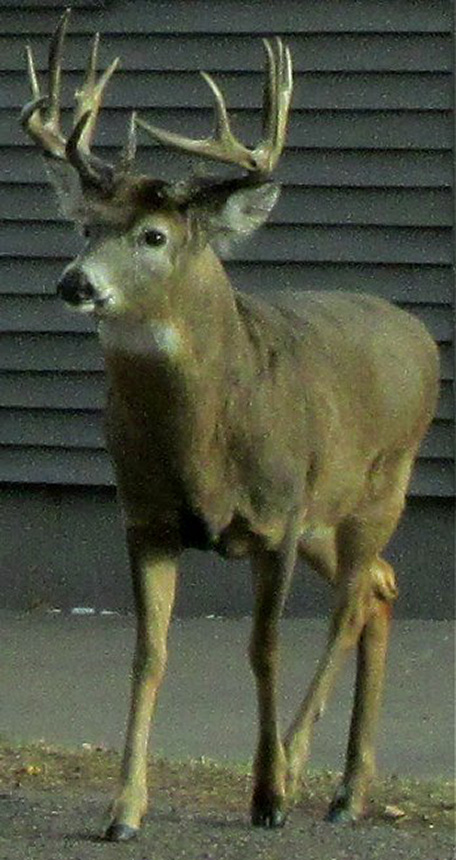
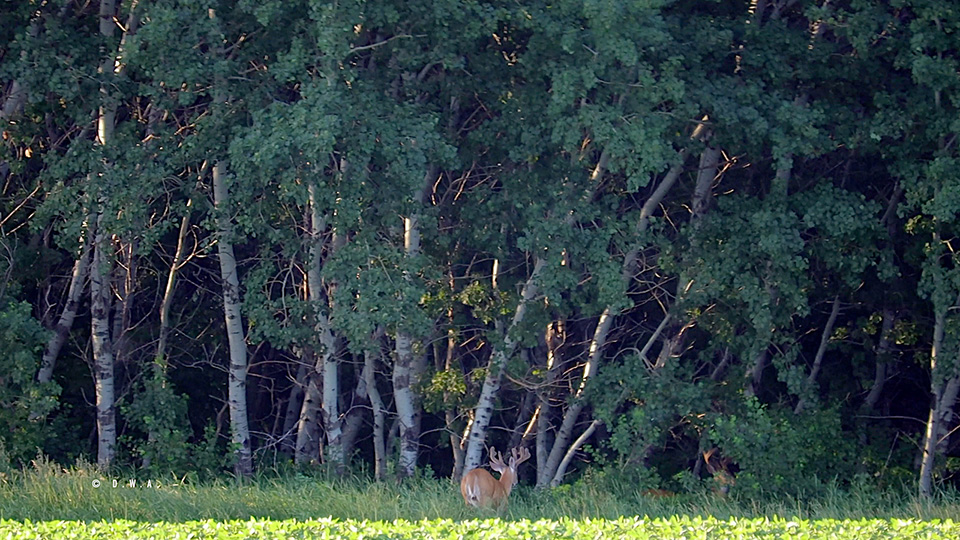
Whitetail Buck in Velvet... There was 2 of them. One ran into the woods right away. I filmed the one just entering the woods as it paused briefly to feed. I was surprised when I uploaded the footage and noticed the larger buck just inside the woods. It turned its head giving a glimpse of its antlers. Nice sized antler growth for early July on them both. Encountered these 2 bucks in velvet on July 6, 2022 in rural Norman Co. Mn. Putting together a short video of the buck in velvet encounter. |
||
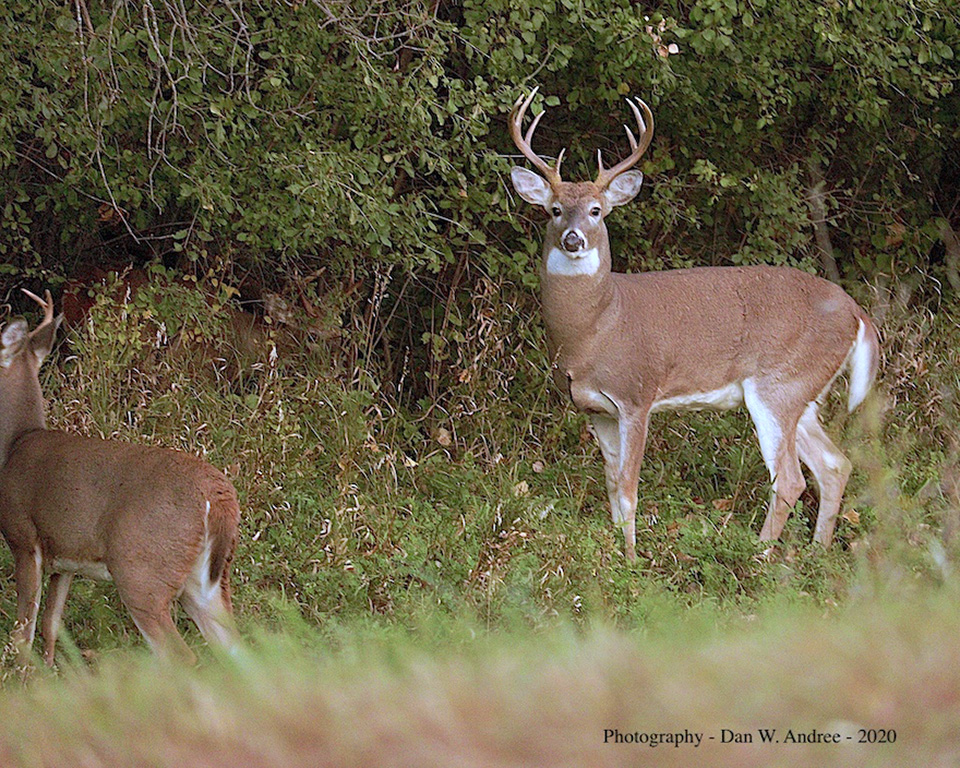
3 Whitetail bucks... If you look close you can see a third buck in the woods. It was nice the largest of the 3 posed nicely. The larger on is a 10 point buck though it may not be the easiest to tell. |
||
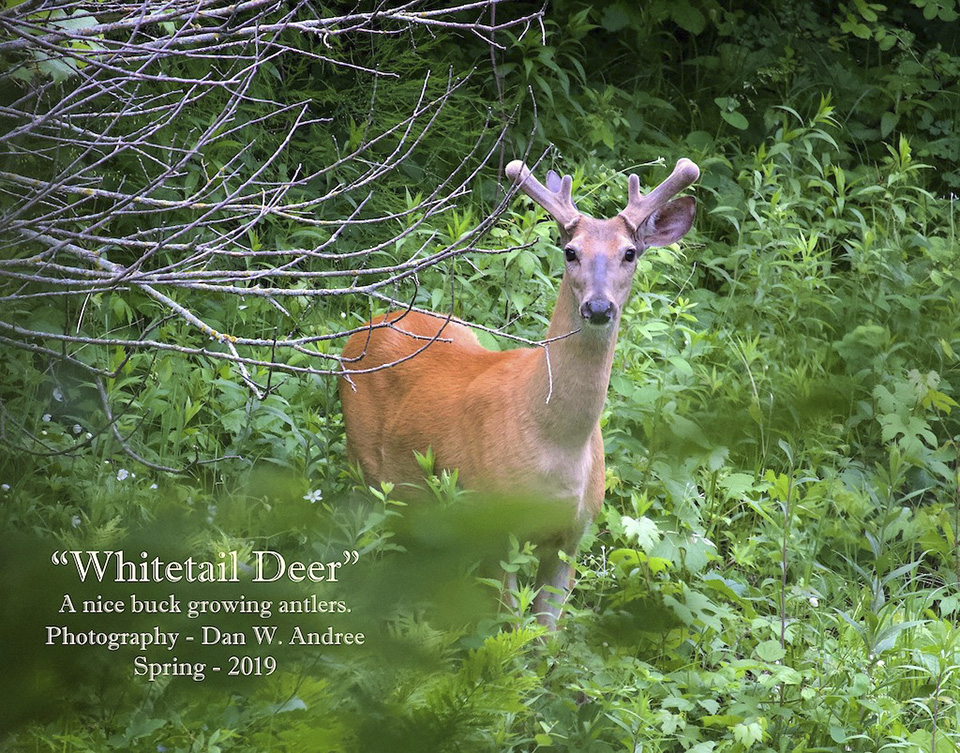
Whitetail buck last Spring... While out in some woods not far from a small creek in rural Norman County, Mn. during the Spring of 2019 I noticed a large deer browsing a distance away. I could only make out parts of the deer due to brush and trees blocking the view. I could tell the body size was rather large but that was it. I was down wind from it so I tried to get closer to get a better look since there was ample trees branches and foliage etc. blocking my view. I managed to get to an opening and noticed the buck watching me so I aimed my camera at him and took the photo. By deer hunting season this buck may have a fairly impressive full rack of antlers. I had this buck encounter June 17, 2019. |
 |
|
 |
 |
|
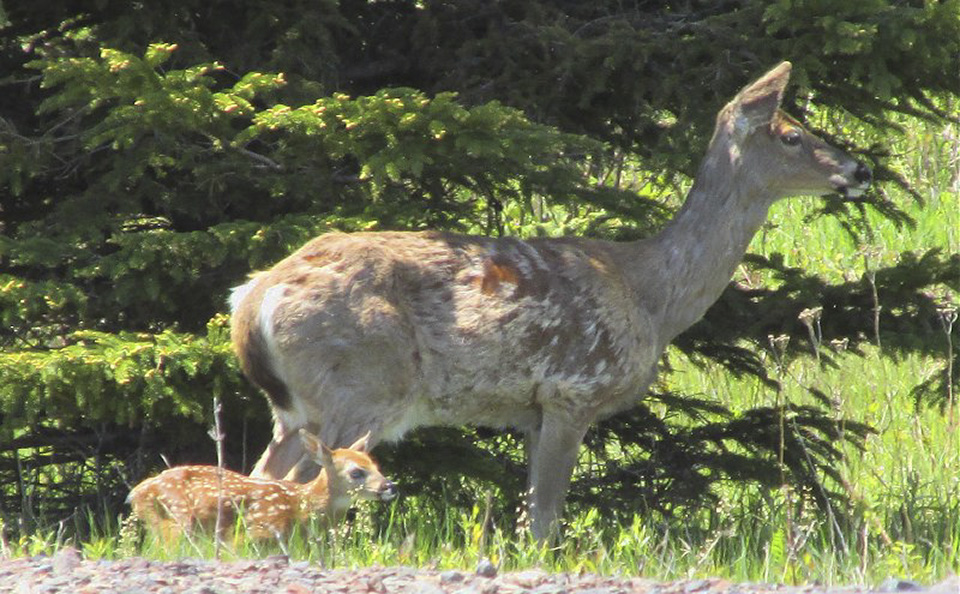
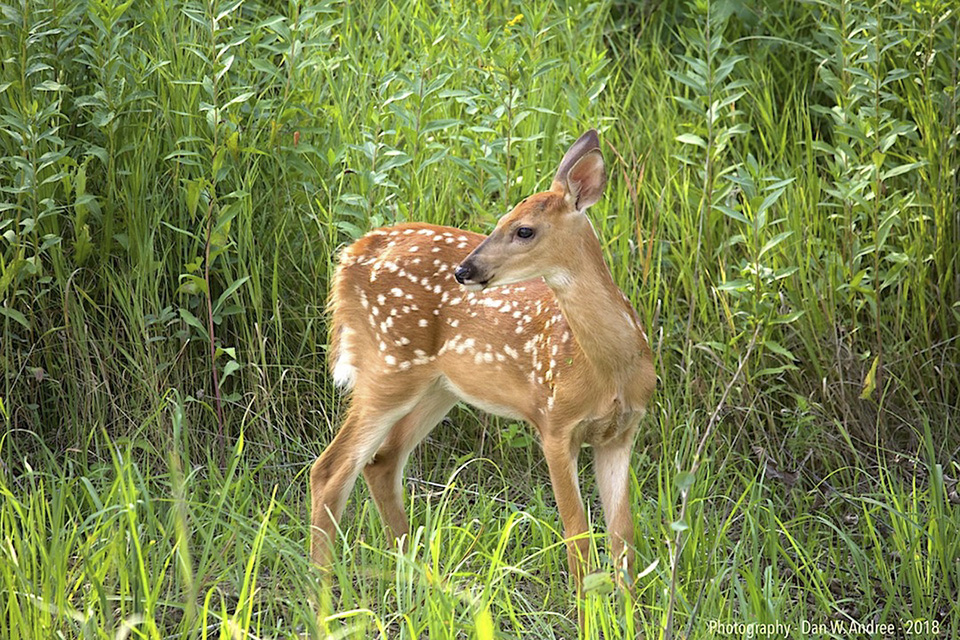
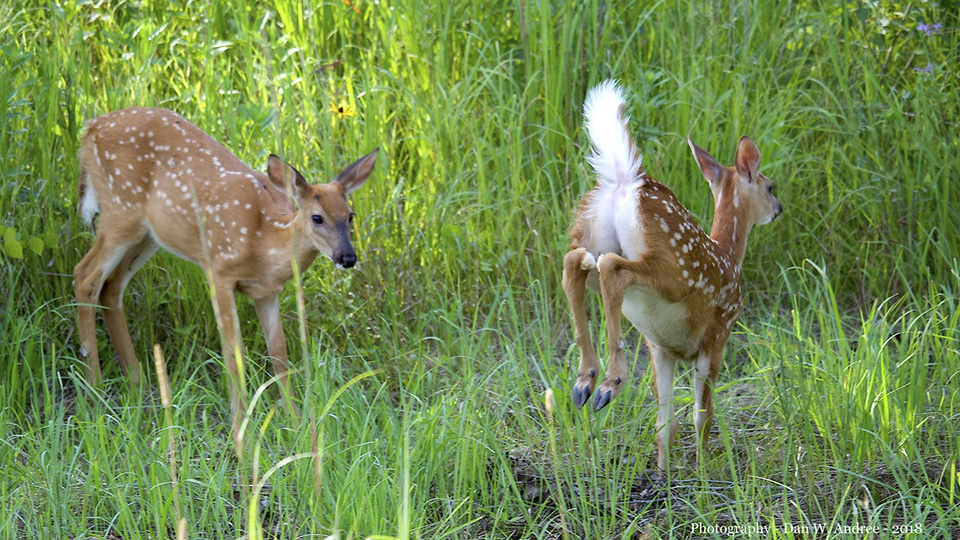
Whitetail deer fawns... They were very cute! |
||
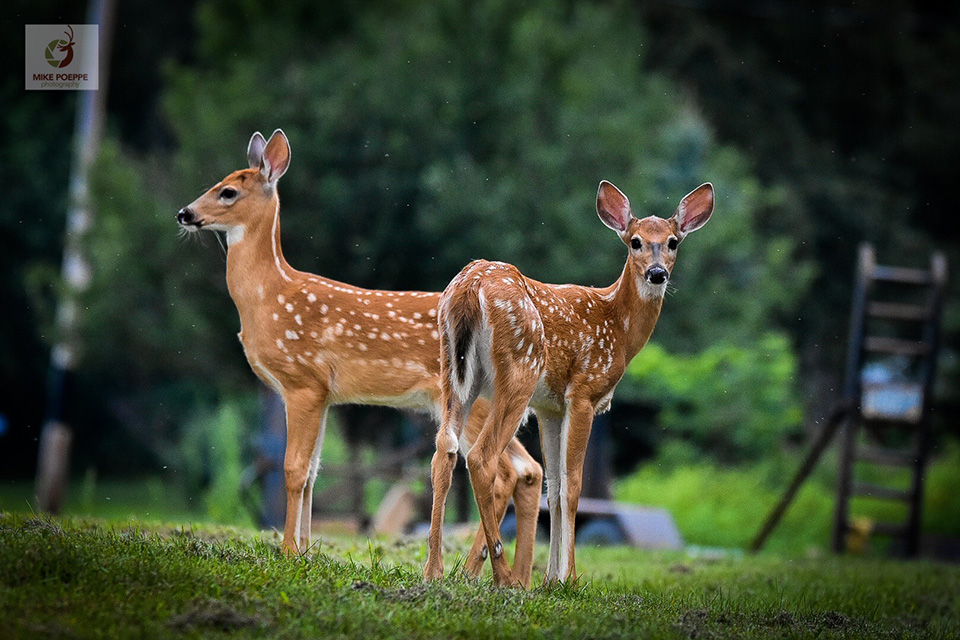
FAWN PORTRAIT... It had a few green plant seeds stuck on it. One on the forehead and a couple on the body front area. Since they are a little bigger they seem to get around more and one needs to watch in out of the way areas or backroads one never knows when one could spook and dart out in front of a vehicle. They are cute that is for sure. |
||
Mike Poeppe |
 |
Molly and Robert Power |
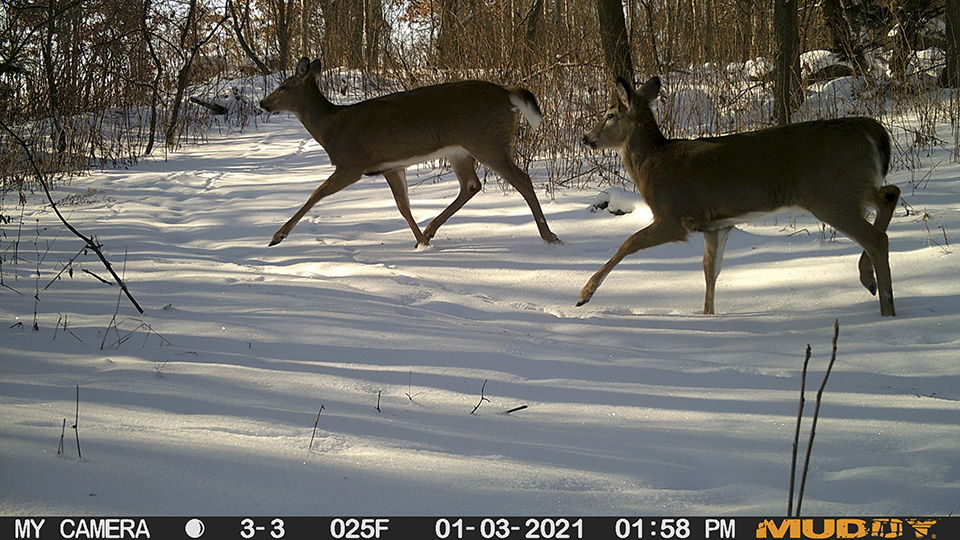 |
Gotta love the game cam! |
Ramona Abrego |
 |
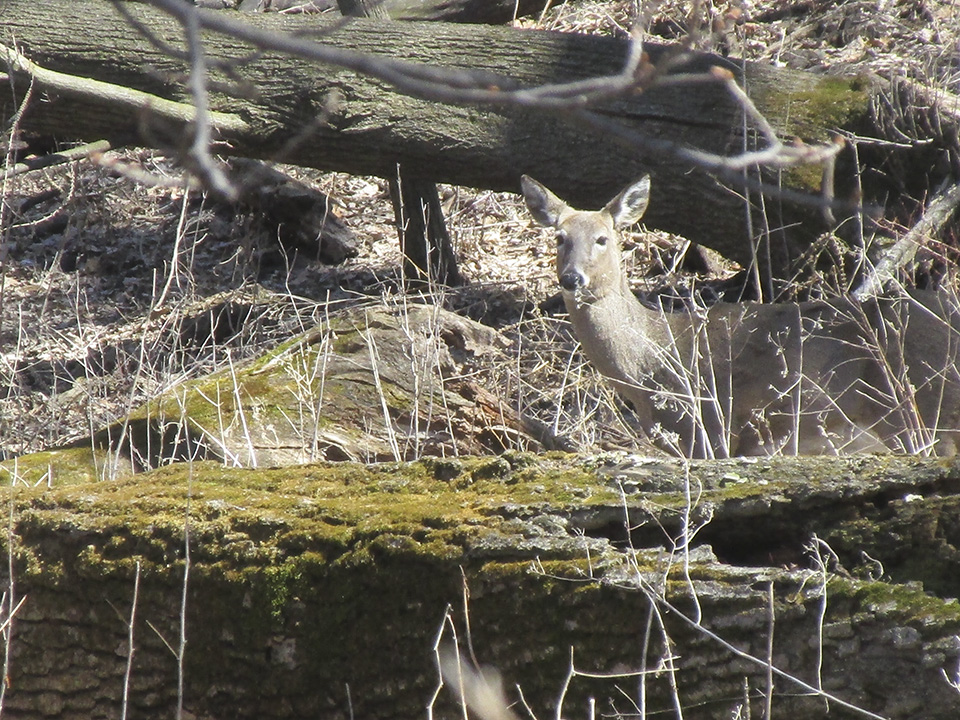
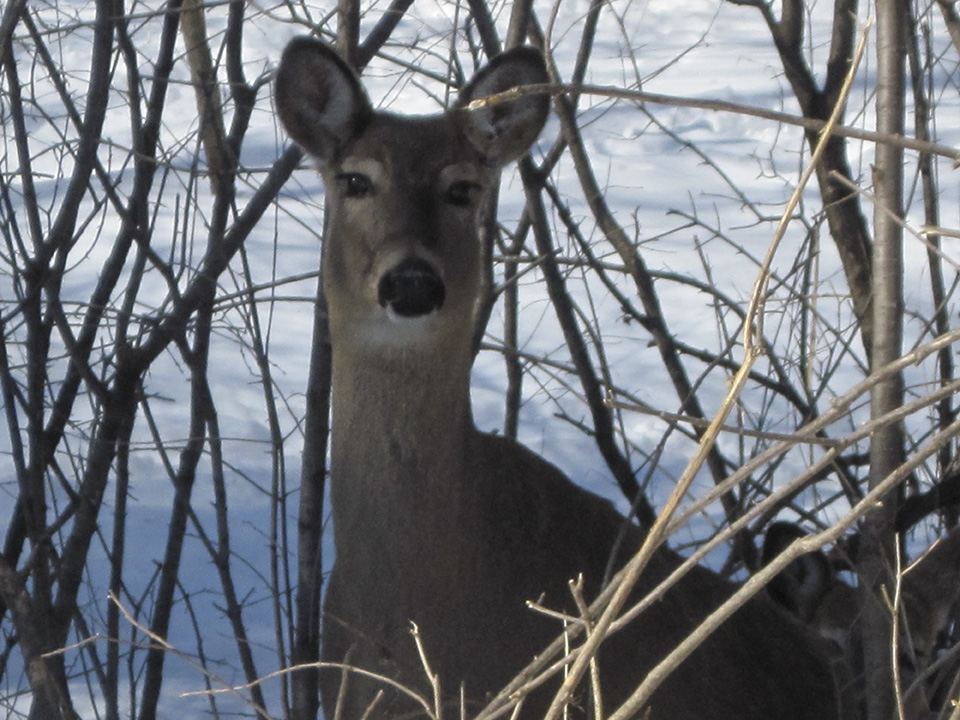
Margot Avey |
||
 |
 |
|
 |
||
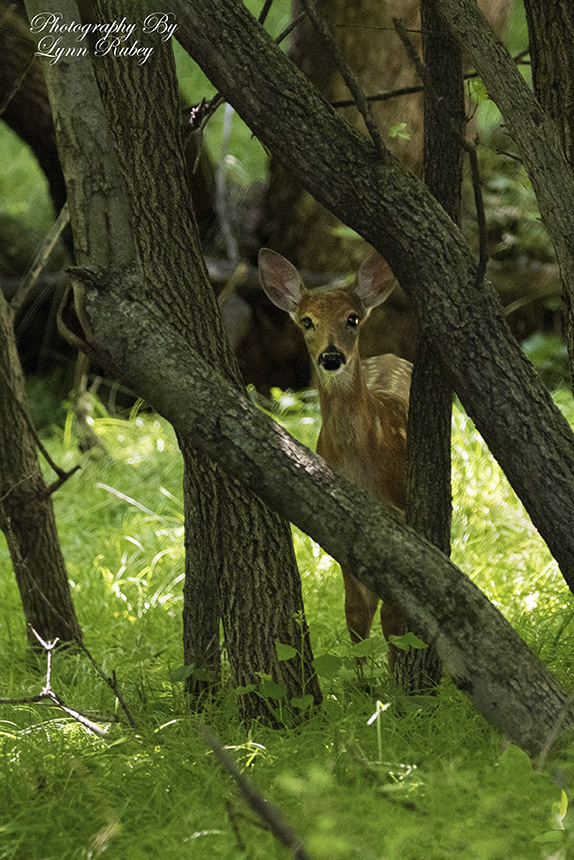
Lynn Rubey |
||
 |
 |
|
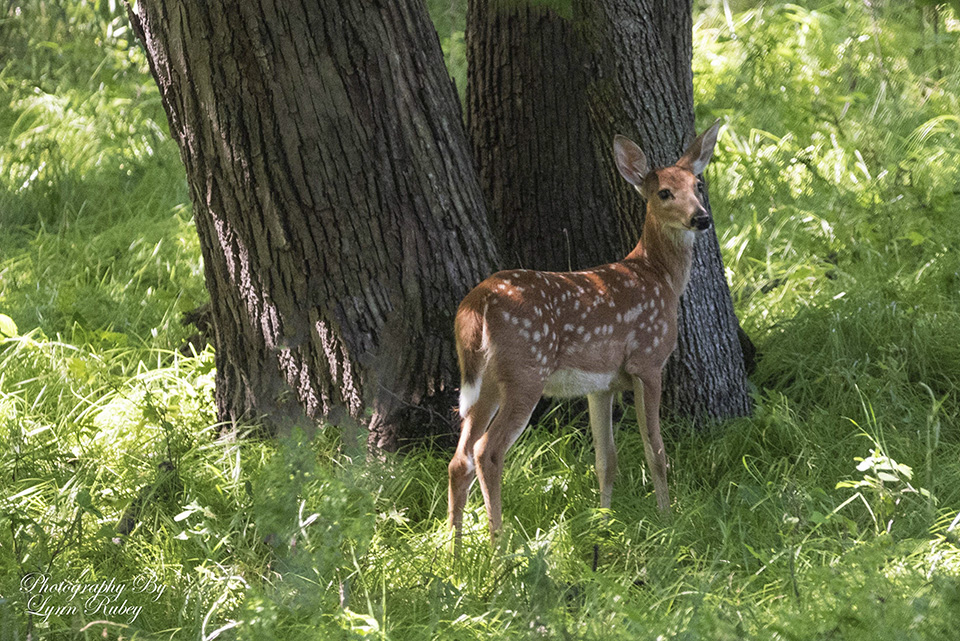
The Whitetail fawn seeing what is making some unexpected noise....children. |
||
A Whitetail fawn stiopped to look at us as we stopped in The Big Stone Lake State Park Bonanza area. |
|
|
 |
 |
|
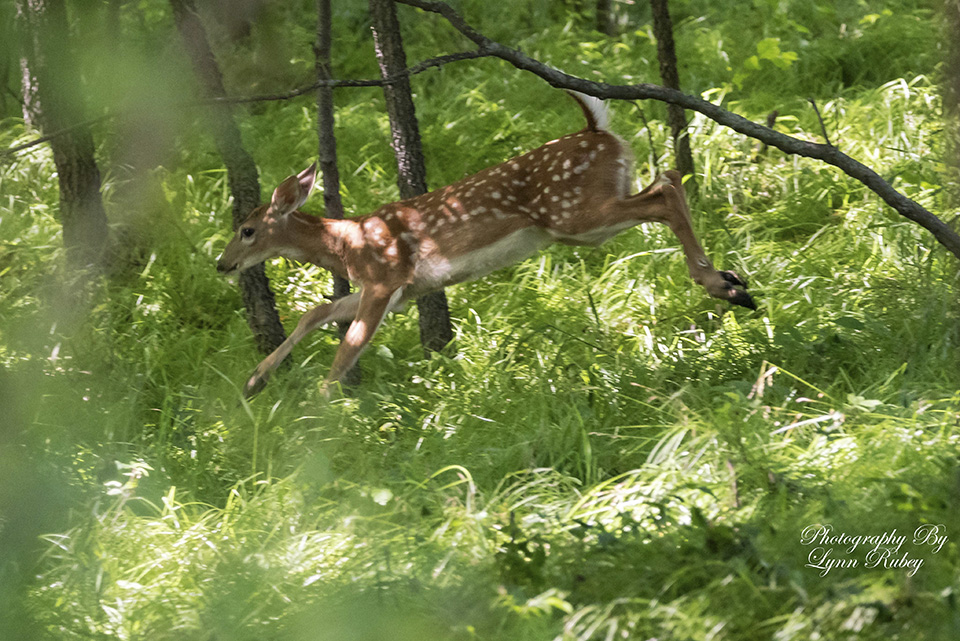
The Whitetail fawn frolicking in the woods before stopping to look at other noises in the deeper wooded area of The Big Stone Lake State Park Bonanza area. |
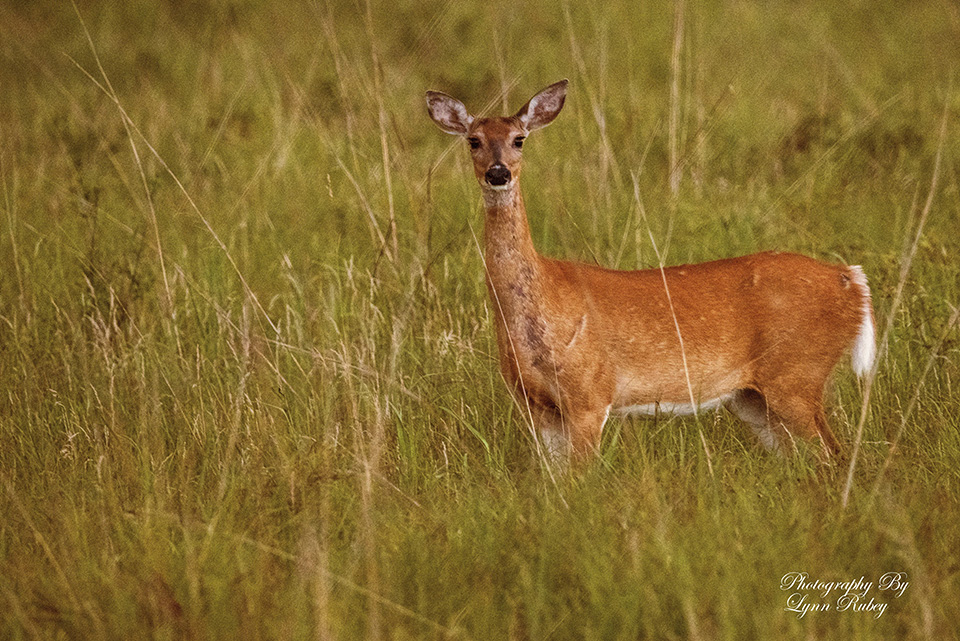
A Whitetail doe at sunset in The Big Stone National Wildlife Refuge pausing for a few moments before taking flight. |
|
 |
||
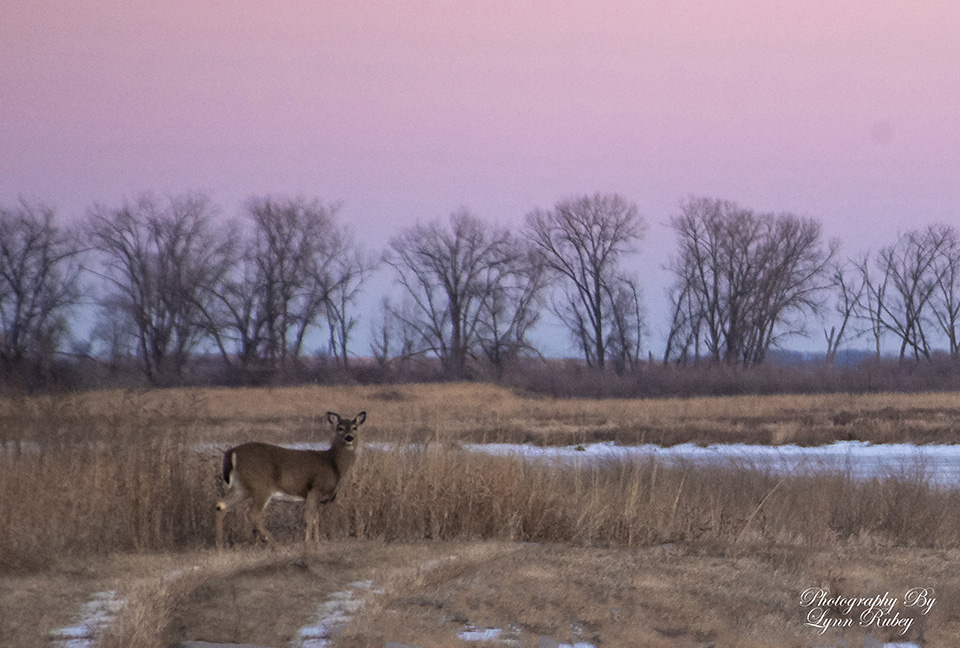
A White Tail Deer at sunset in the Big Stone National Wildlife Refuge. |
||
Kirk Nelson |
||
 |
 |
|
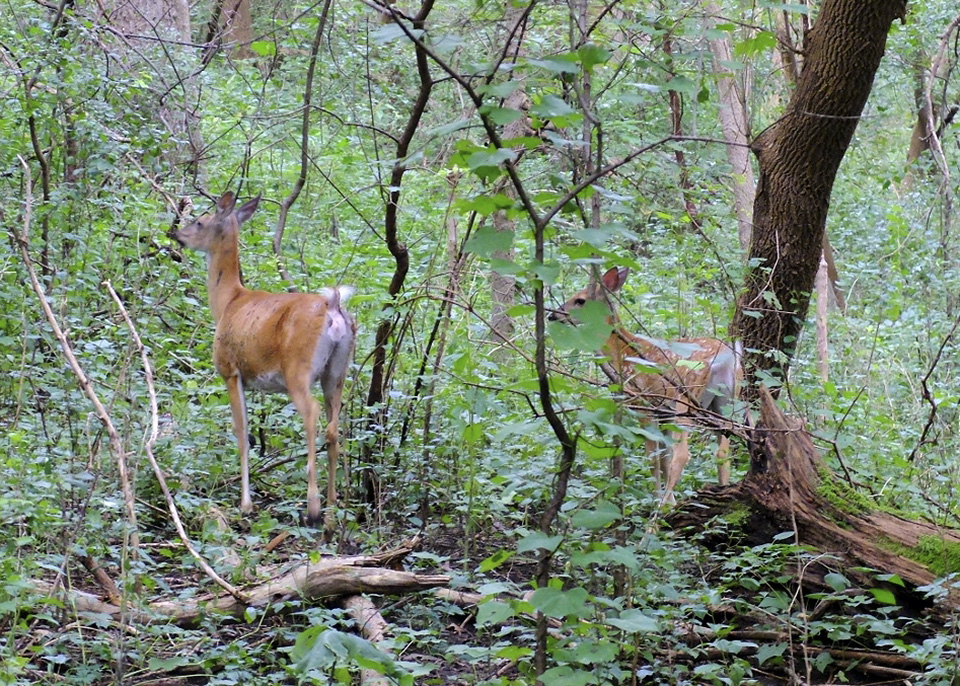
Minnesota Valley National Wildlife Refuge, Long Meadow Lake Unit Doe and fawn, just off the Bluff Trail |
||
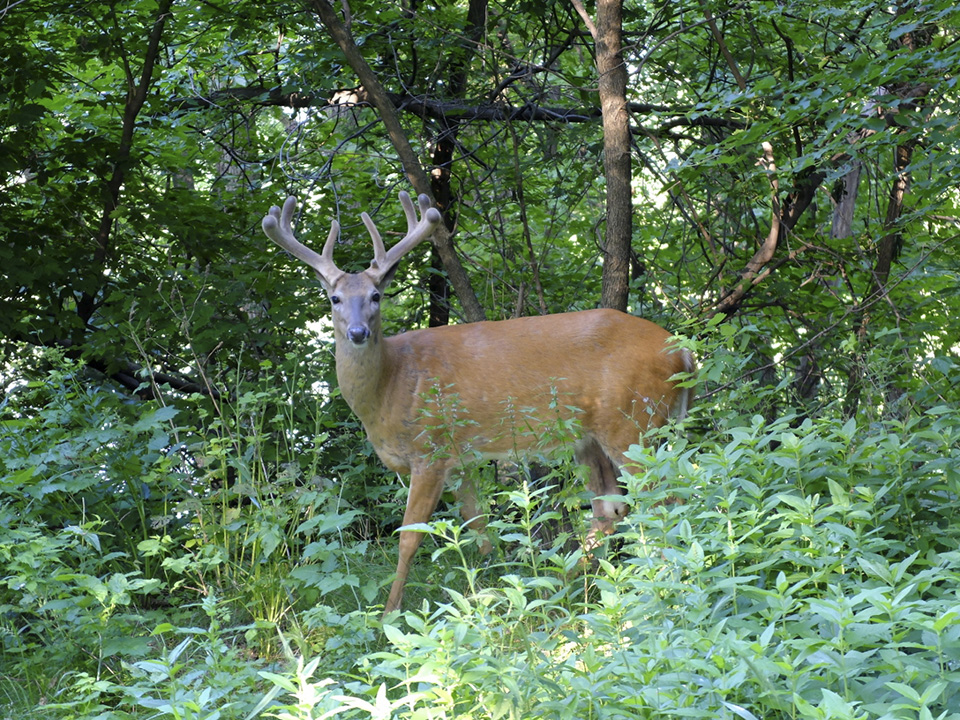
Bruce Vento Nature Sanctuary |
||
 |
 |
|
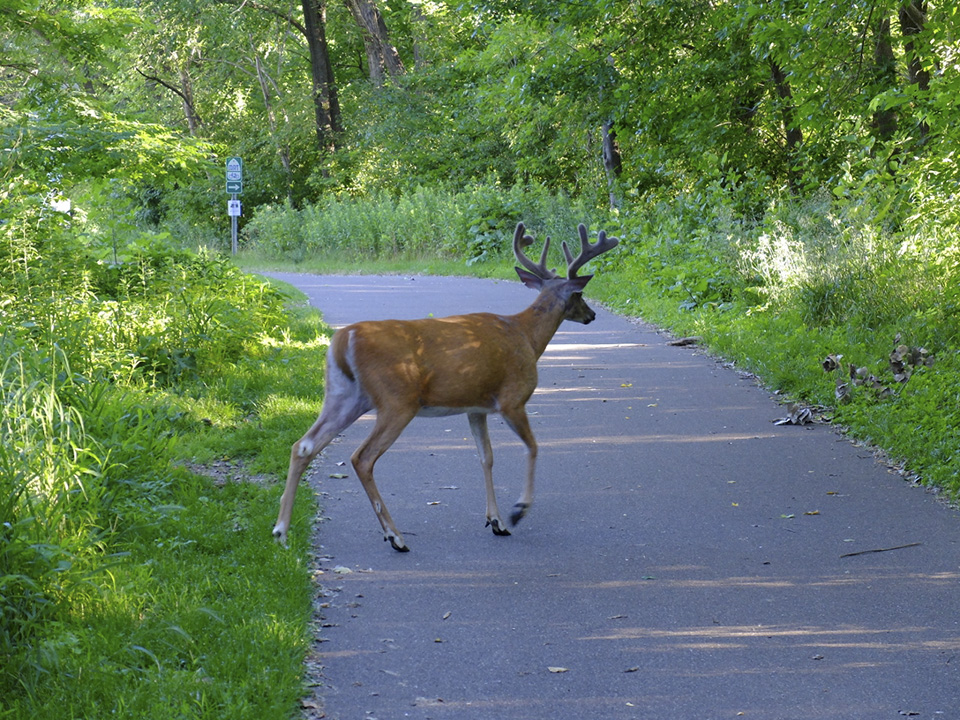
Crosby Farm Regional Park Whitetail deer can be seen throughout the park. I saw this buck near the parking area at Shepard Road and Elway. |
||
 |
||
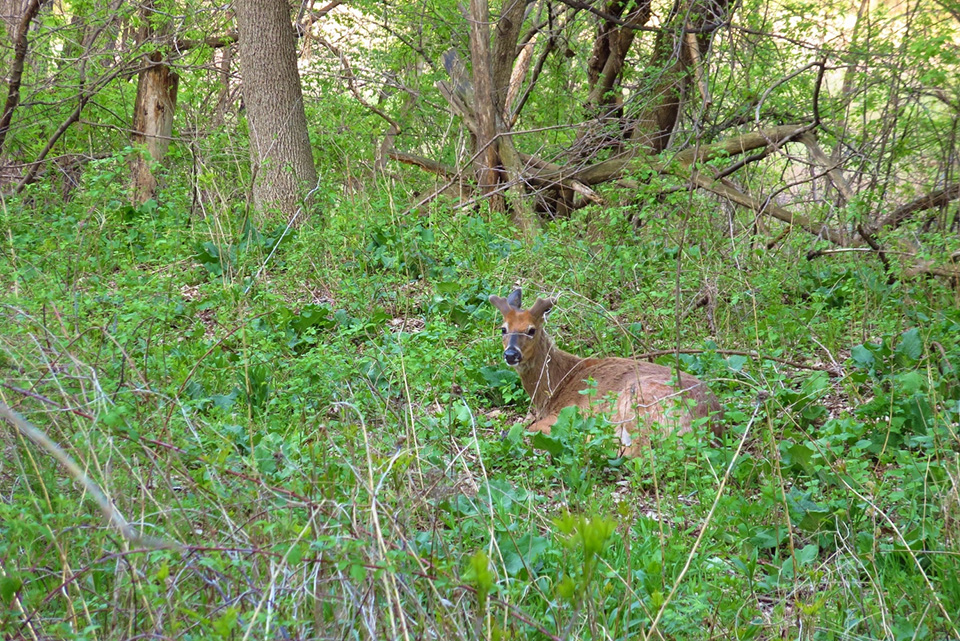
Fort Snelling State Park Resting deer seemed unconcerned that I was only 10-12 yards away |
||
Christa Rittberg |
||
 |
 |
|
 |
 |
|
Wayne Rasmussen |
 |
Bill Reynolds |
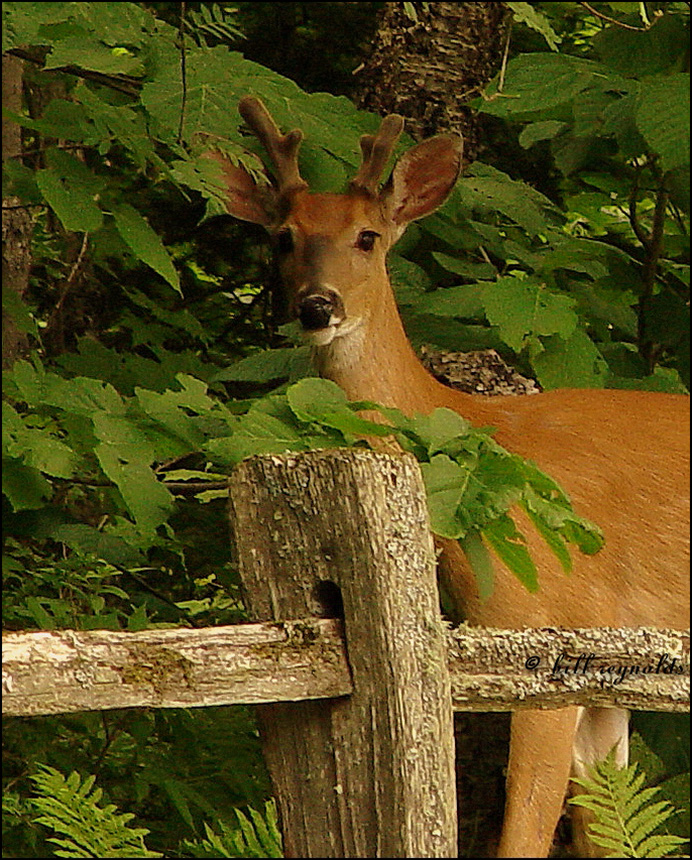 |
Caught this deer working along a backyard in the city of Duluth. |
MinnesotaSeasons.com Photos |
||
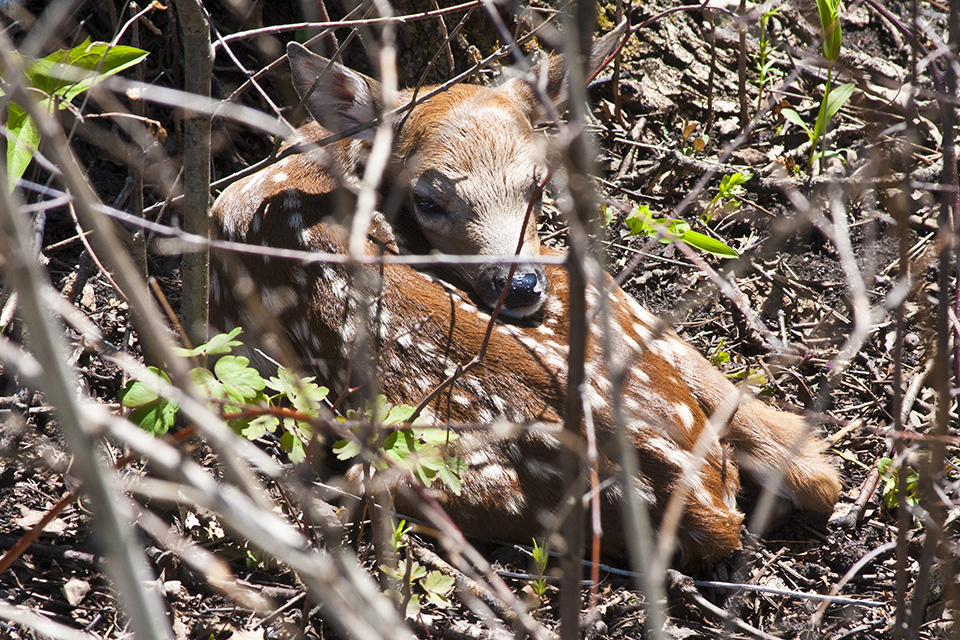
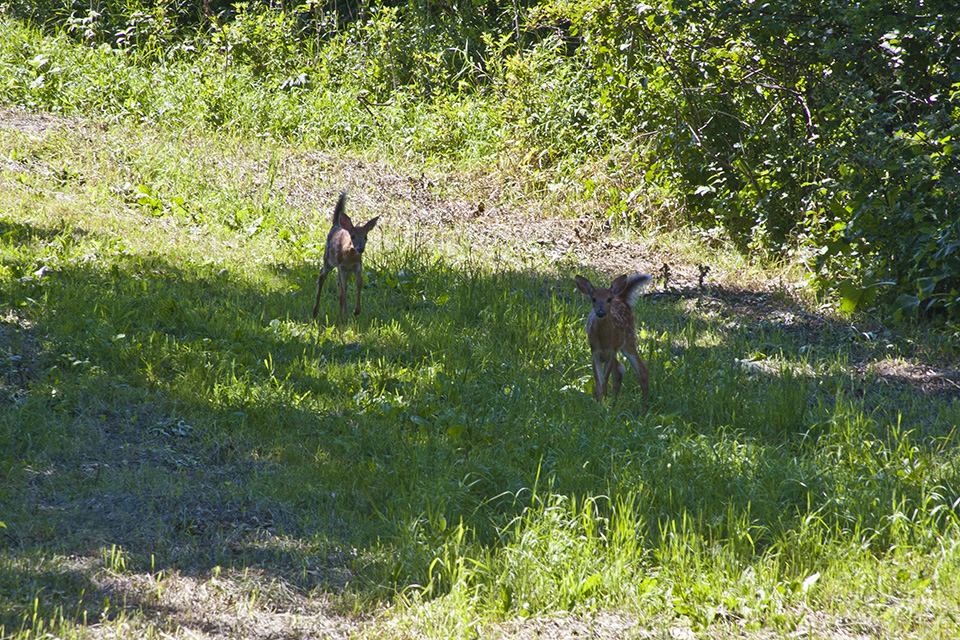
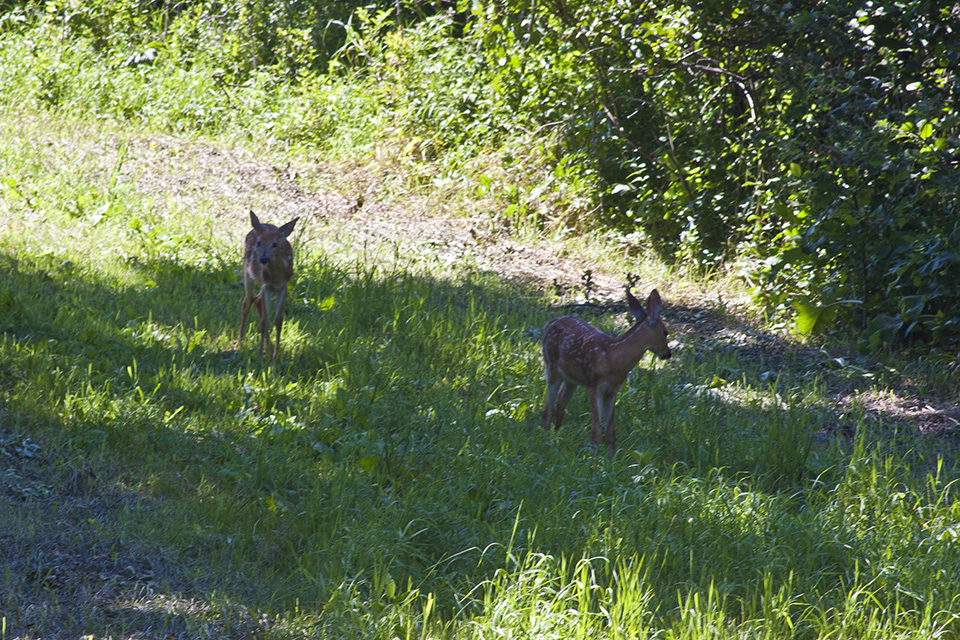
Fawns |
||
 |
 |
|
 |
 |
|
Sign |
||
 |
 |
|
 |
||
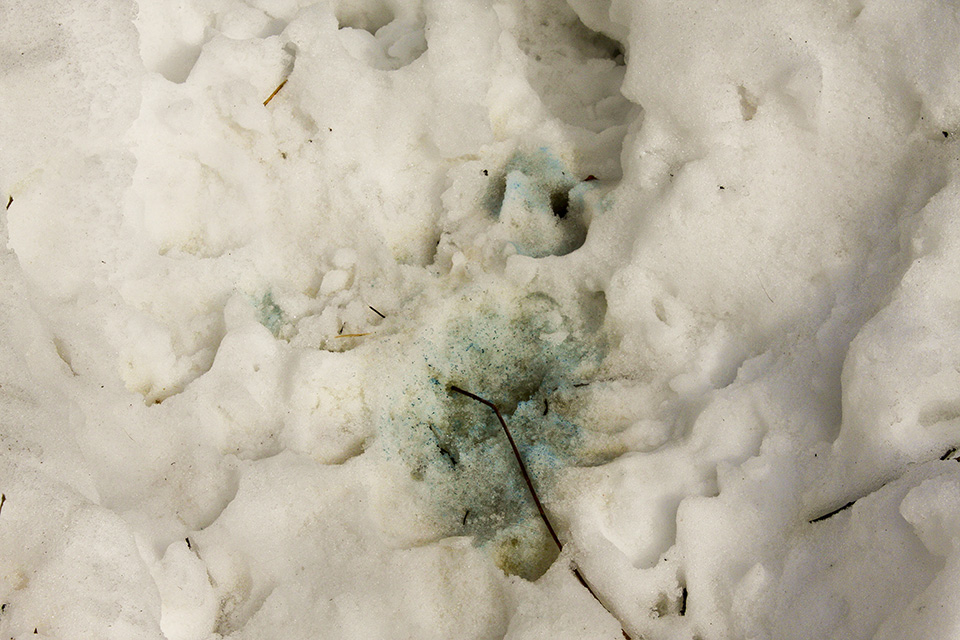
Don’t eat the blue snow This blue urine spot is sign of a deer browsing on common buckthorn. |
||

Slideshows |
Odocoileus virginianus (White-tailed Deer) |
|
Deer |
|

Visitor Videos |
||
Share your video of this mammal. |
||
This button not working for you? |
||
Dan W. Andree |
"Whitetail Deer" Norman Co. Mn. by Dan W Andree 2022 |
About
A quick look at some whitetail deer late fall 2022 out in rural Norman Co. Mn. |
Whitetail doe |
About
A curious doe in early spring. It looks like she is not that far away from giving birth to fawns. |
Fawn |
About
While filming out in the woods I came across a fawn that first ran off then came back. I stood quietly with my camcorder ready as it approached so close I had to stop filming it and just enjoy it's closeness. |
Other Videos |
||
White Tailed Deer (Odocoileus virginianus) |
About
Uploaded on Aug 23, 2010 some deer Odocoileus virginianus shot with a canon t1i in 720p |
Whitetail Deer (Cervidae: Odocoileus virginianus) Antlered Males |
About
Uploaded on Aug 2, 2010 Photographed west of the Agassiz NWR, Minnesota (02 August 2010). This one's for you, Floydstinkyboy. ;-) |
Whitetail deer rut behavior |
About
Uploaded on Nov 13, 2010 A white-tailed deer buck (Odocoileus virginianus) demonstrating typical rutting behavior by rubbing on tree branches and creating a scrape with its front hooves. Visit www.eagleeyeimaging.net to view images of white-tailed deer and other wildlife. |

Visitor Sightings |
||
Report a sighting of this mammal. |
||
This button not working for you? |
||
| Bobbi Johnson 4/24/2025 |
Location: Two Harbors, MN A lovely sight and very close to where I was walking. |
 |
| Bobbi Johnson 11/28/2023 |
Location: Silver Bay, MN Captured yesterday, him just walking down the street, middle of the day. It was pretty cool. |
|
| A/C Christian
Church of
Minneapolis 7/22/2023 |
Location: Westwood Hills Nature Center At the Westwood Hills Nature Center, we saw some life on July 22 this year. This was all found by the A/C Christian Church of Minneapolis. |
|
| Dan W. Andree 7/6/2022 |
Location: rural Norman Co. MN There was 2 of them. One ran into the woods right away. I filmed the one just entering the woods as it paused briefly to feed. I was surprised when I uploaded the footage and noticed the larger buck just inside the woods. It turned its head giving a glimpse of its antlers. Nice sized antler growth for early July on them both. Encountered these 2 bucks in velvet on July 6, 2022 in rural Norman Co. Mn. Putting together a short video of the buck in velvet encounter. |
|
| Mike Poeppe 7/30/2021 |
Location: Houston County, MN |
|
| Molly and Robert Power 1/03/2021 |
Location: Albany MN Gotta love the game cam! |
|
| Dan W. Andree 10/8/2020 |
Location: Norman Co. MN If you look close you can see a third buck in the woods. It was nice the largest of the 3 posed nicely. The larger on is a 10 point buck though it may not be the easiest to tell. |
|
| Ramona Abrego | Location: Gunflint Trail |
|
| Margot Avey 8/20/2019 |
Location: Westwood Hills Nature Center |
|
| Lynn Rubey 8/3/2019 |
Location: The Big Stone Lake State Park The Whitetail fawn frolicking in the woods before stopping to look at other noises in the deeper wooded area of The Big Stone Lake State Park Bonanza area. |
|
| Lynn Rubey 8/3/2019 |
Location: Big Stone National Wildlife Refuge A Whitetail doe at sunset in The Big Stone National Wildlife Refuge pausing for a few moments before taking flight. |
|
| Margot Avey 4/19/2019 |
Location: Westwood Hills Nature Center |
|
| Lynn Rubey 1/1/2019 |
Location: Big Stone National Wildlife Refuge A White Tail Deer at sunset in the Big Stone National Wildlife Refuge. |
|
| Kirk Nelson 8/11/2018 |
Location: Bruce Vento Nature Sanctuary |
|
| Dan W. Andree 8/5/2018 |
Location: rural Norman Co. MN They were very cute! |
|
| Kirk Nelson 8/20/2017 |
Location: Minnesota Valley National Wildlife Refuge, Long Meadow Lake Unit Doe and fawn, just off the Bluff Trail |
|
| Kirk Nelson 6/30/2017 |
Location: Crosby Farm Regional Park Whitetail deer can be seen throughout the park. I saw this buck near the parking area at Shepard Road and Elway. |
|
| Wayne Rasmussen 5/31/2016 |
Location: Gull Lake, MN |
|
| Kirk Nelson 5/8/2014 |
Location: Fort Snelling State Park Resting deer seemed unconcerned that I was only 10-12 yards away |
|
| Margot Avey 3/27/2011 |
Location: Westwood Hills Nature Center |
|
| Bill Reynolds 7/4/2005 |
Location: St. Louis Co. Caught this deer working along a backyard in the city of Duluth. |
|
MinnesotaSeasons.com Sightings |
||
Created: 8/2/2008 Last Updated: © MinnesotaSeasons.com. All rights reserved. |